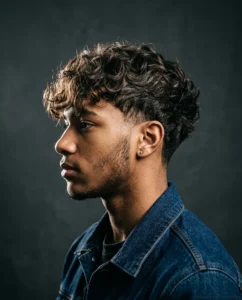
Curl is what makes this cut work in the first place, and the medium-length version gives it room to actually happen instead of getting buzzed away.
Classic Messy Crop

Keep the top around 2 to 3 inches and let the sides stay short but not shaved down. This is the baseline version everyone else riffs on.
Barbers point-cut the ends instead of blunt-cutting them, which is why it looks undone on purpose rather than just uncut. A finger comb after the shower, maybe a scrunch of curl cream, and you’re done in under 5 minutes.
Humidity is the one thing that fights back. On a muggy day the crop swells outward more than you’d expect, and no product fully stops that. Guys with looser curls handle it better than guys with tighter coils.
Messy Crop with Skin Fade

Take the sides all the way down to skin and let the top stay full and curled. The contrast is the whole point here.
This version reads more polished at a distance, even though the top is still deliberately messy. It also grows out fast — expect to be back in the chair every 2 to 3 weeks or the fade line gets fuzzy and loses its edge.
Not every barber blends skin fades into curly hair well. Ask to see examples of curly work specifically before you commit, not just their straight-hair fades.
Messy Crop with Mid Taper Fade

A mid taper sits higher than a low fade but doesn’t go as aggressive as a high fade. It’s the safest fade choice for a first-timer.
The gradual blend means less upkeep between cuts than a skin fade needs. You can usually stretch to 4 weeks before it looks grown out.
It’s a middle-of-the-road choice, and that’s exactly the appeal. Less commitment, less maintenance, still a clear shape change from the curls on top.
Messy Crop with Curly Fringe

Instead of cropping everything to the same length, the front section grows a bit longer and falls forward into a curl-heavy fringe.
And it works especially well on tighter curl patterns, since the fringe holds its shape instead of flopping flat the way straight hair would. Expect it to sit just above the eyebrows once it’s grown in, around 6 to 8 weeks after a fresh cut.
The downside is it needs more active styling than the other crops on this list. Skip the curl cream some mornings and the fringe just sits there instead of framing your face.
Messy Crop with Hard Part
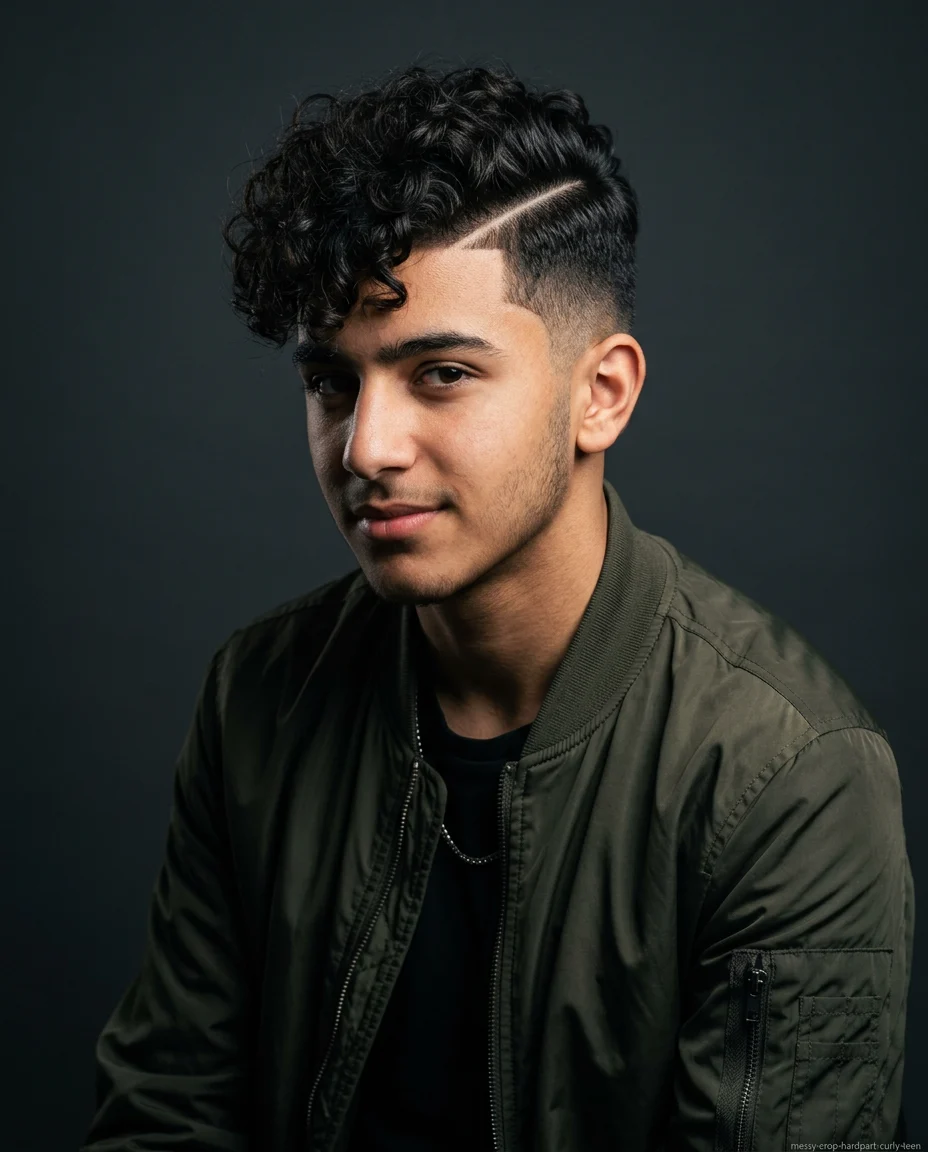
A hard part is a shaved line cut directly into the hair, usually on one side, separating the cropped section from the curled top.
It adds a sharp, deliberate detail to a cut that otherwise looks loose and undone. That contrast is what sells the whole style.
Maintenance is the catch. The line needs a touch-up every 2 weeks or it grows into a fuzzy shadow instead of a crisp part, and at that point it looks like a mistake, not a style choice.
Messy Crop with Low Fade
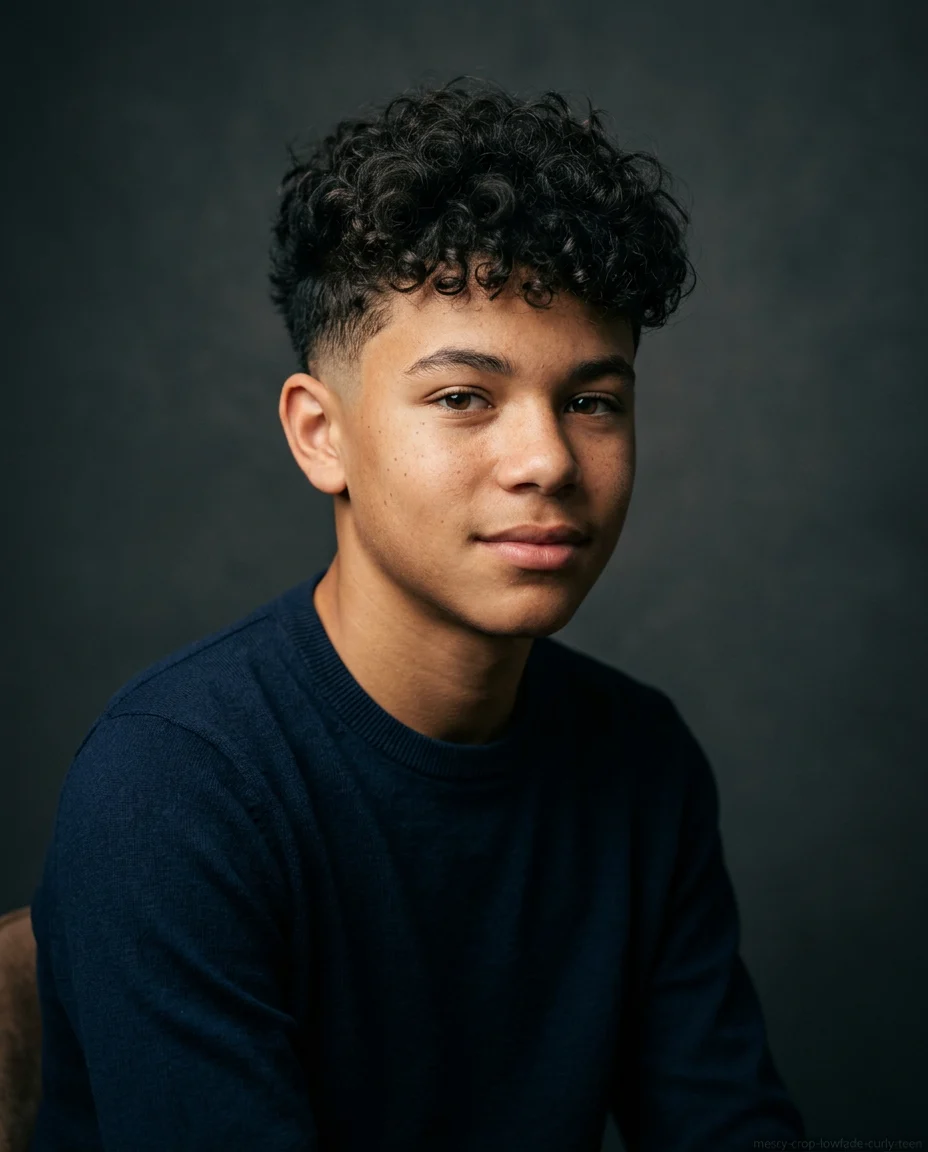
The fade stays close to the ear and neckline here, leaving most of the side length intact above it.
It’s the most forgiving fade option for growing hair out between cuts — the blend zone is small, so it doesn’t look outdated as fast as a high fade does.
This is a good pick if you’re not ready to commit to visiting the barber often. Six weeks between trims is realistic, which most of the higher fades on this list can’t say.
Messy Crop with Disconnected Undercut

Disconnection means there’s no gradual blend at all. The sides get buzzed short and the top starts abruptly, with a visible line between the two lengths.
It’s a bolder statement than a fade, and it reads younger and more current. On thick curly hair, the volume on top makes the disconnection look even more dramatic.
This one isn’t for every school or job dress code, though. Check what’s actually allowed before booking it — some disconnected cuts read as too extreme for stricter environments.
Messy Crop with High Fade
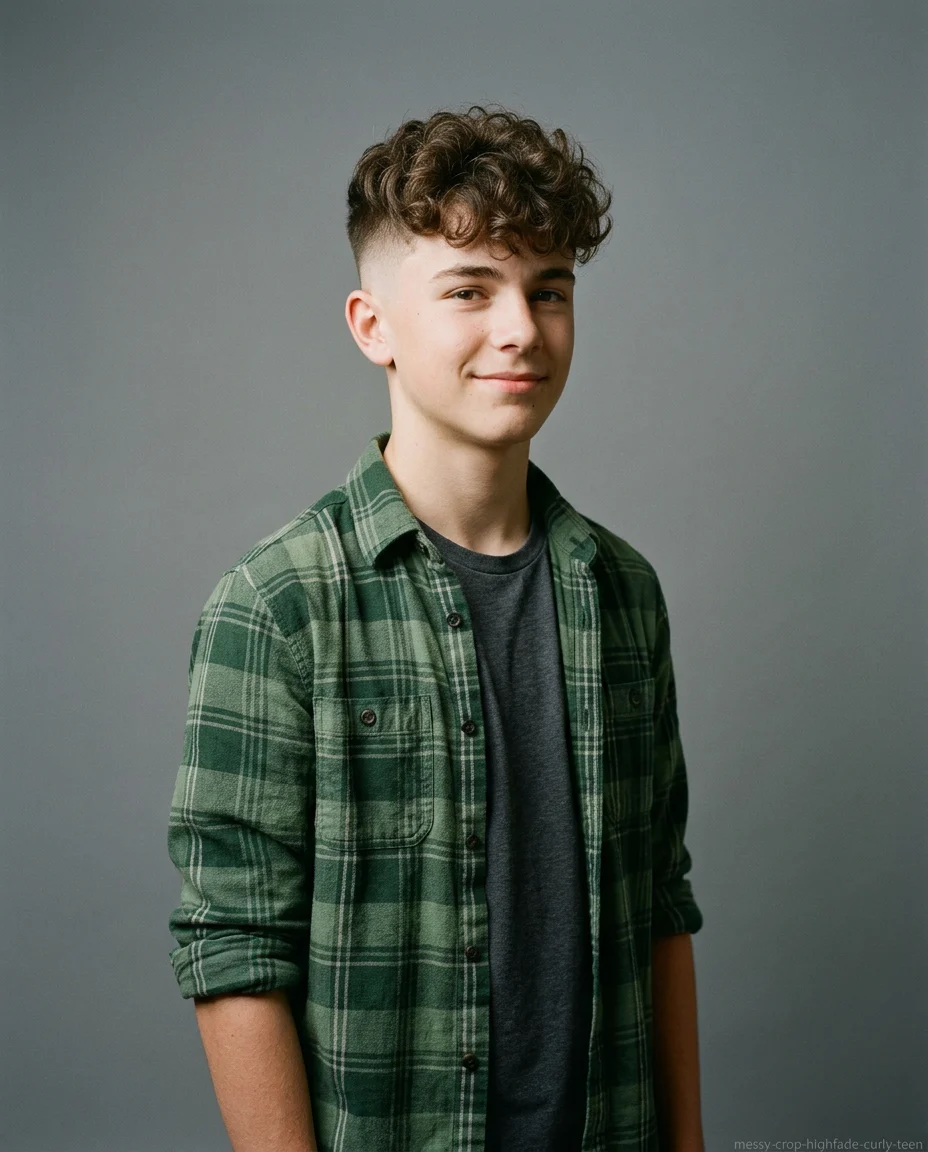
The fade climbs high on the sides here, sometimes close to the parting line, leaving a smaller curled section up top by comparison.
It’s the sharpest-looking version on this list and photographs well, which is probably why it shows up so often. But it also grows out the fastest of any fade height.
Plan on a barber visit every 2 weeks if you want it to stay crisp. Past 3 weeks, the fade starts to blur into just short hair.
Messy Crop with Natural Curl Volume

No fade here at all. The sides and top get cut to a similar length and left to curl however they naturally want to.
This is the lowest-maintenance version by far. There’s no fade line to track and no shape that needs constant upkeep between visits.
The trade-off is volume. Tighter curl types especially will notice the hair gets wider rather than longer as it grows, so a trim every 5 to 6 weeks keeps it from ballooning out of proportion.
Messy Crop with Line-Up

A line-up sharpens the front hairline and temples into a crisp, defined edge while the rest of the crop stays loose and messy.
It’s a small detail that changes how finished the whole cut looks, especially in photos where the hairline is the first thing people notice.
It needs upkeep, though. A hairline blurs within about 10 days as new growth fills it in, so some guys touch it up at home with a trimmer between barber visits instead of going back every week.
Messy Crop Mullet Hybrid
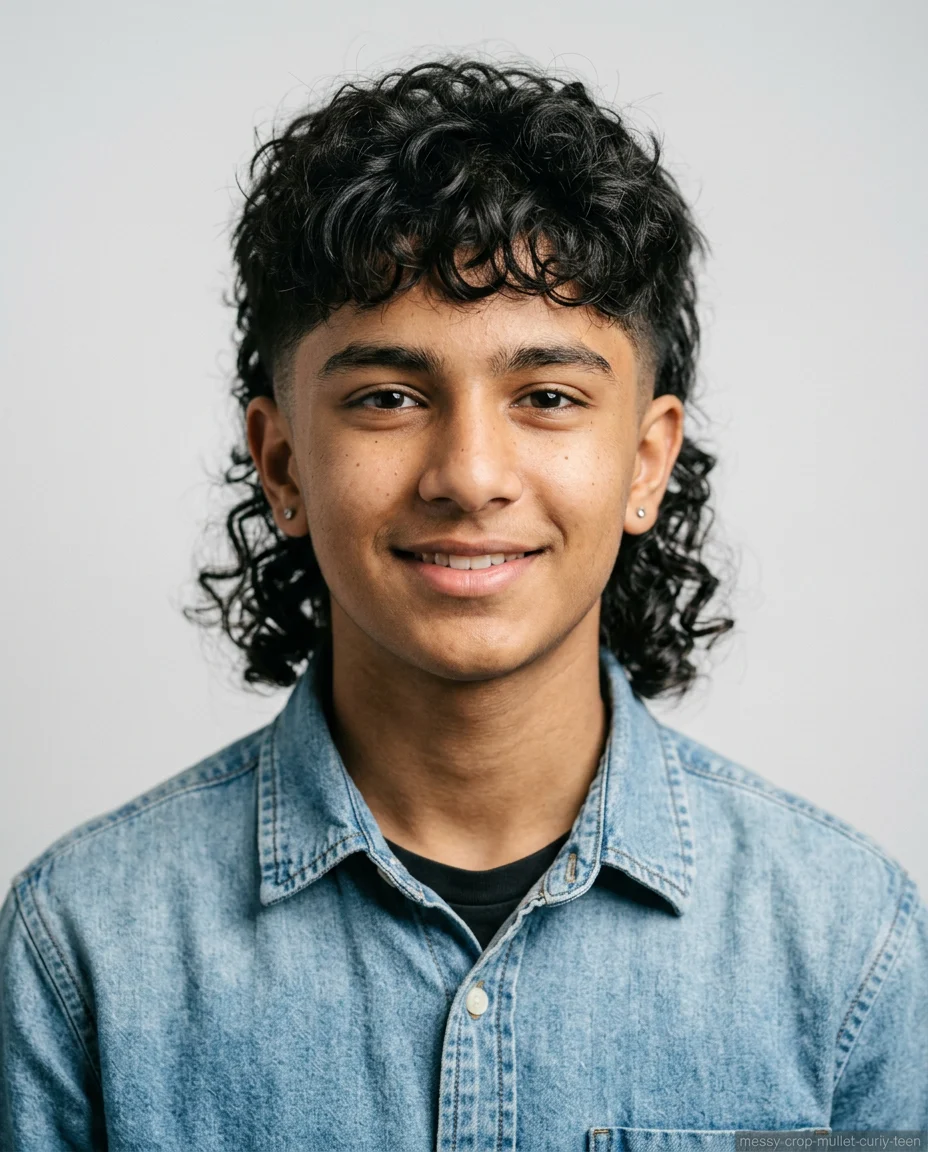
This one borrows the length ratio of a mullet without going full mullet. The back stays a bit longer than the crop up front, but the difference is subtle rather than dramatic.
Curly hair hides the transition better than straight hair does, so it reads as one cohesive style instead of two different haircuts stitched together.
The honest answer is it depends on your school’s grooming rules whether this one flies. It’s the most polarizing option here — barbers either love building it or talk you out of it entirely.