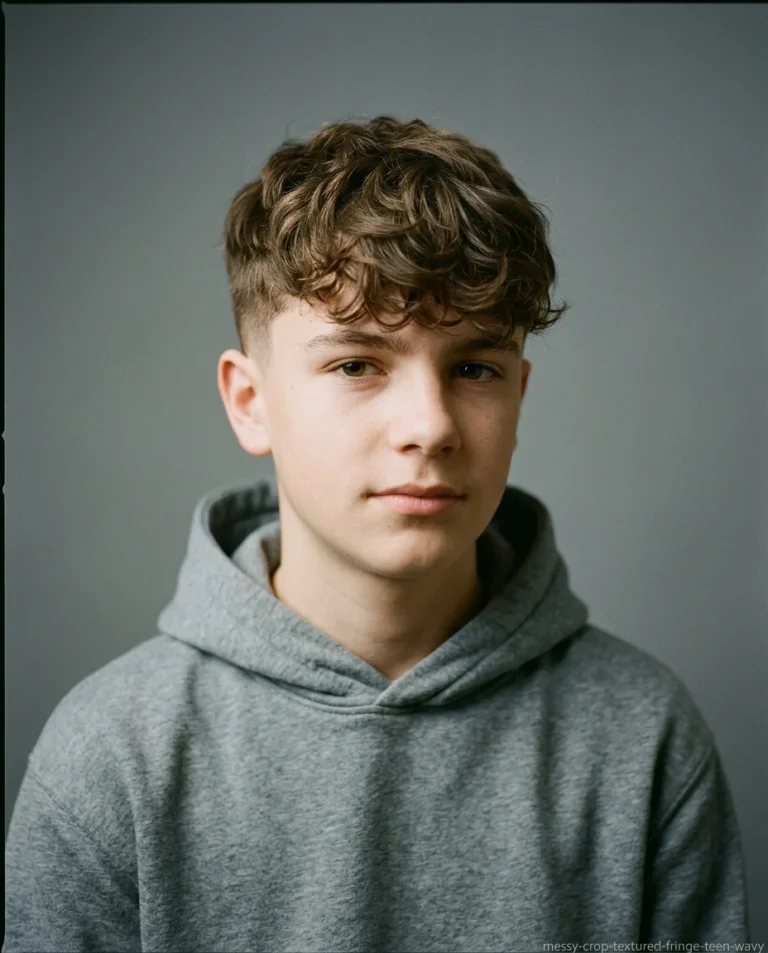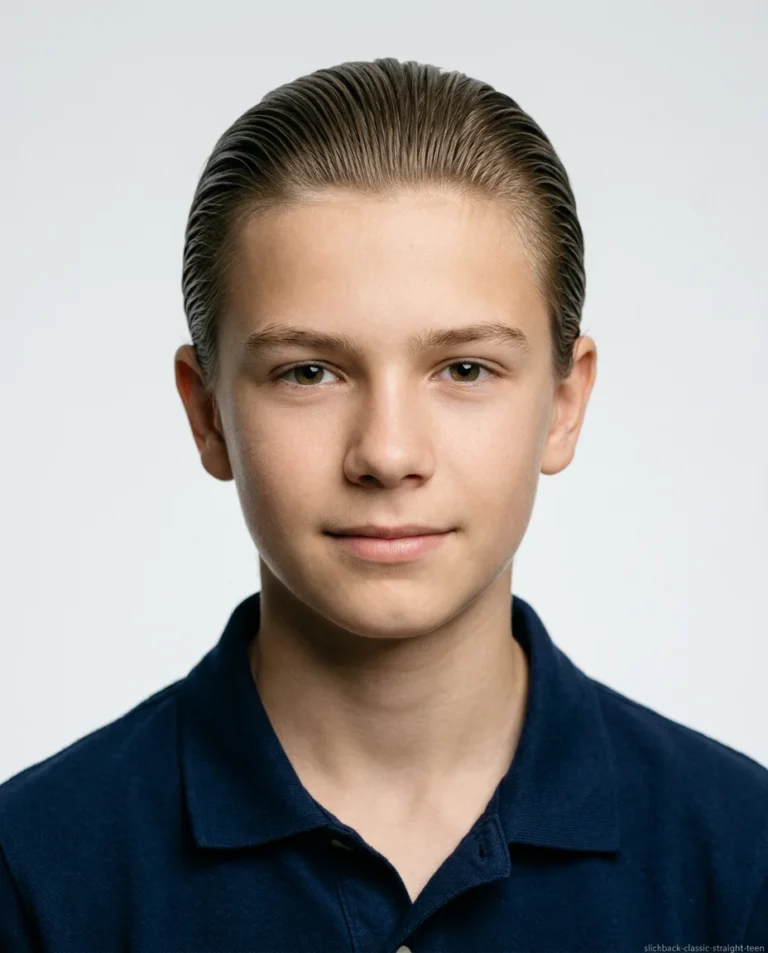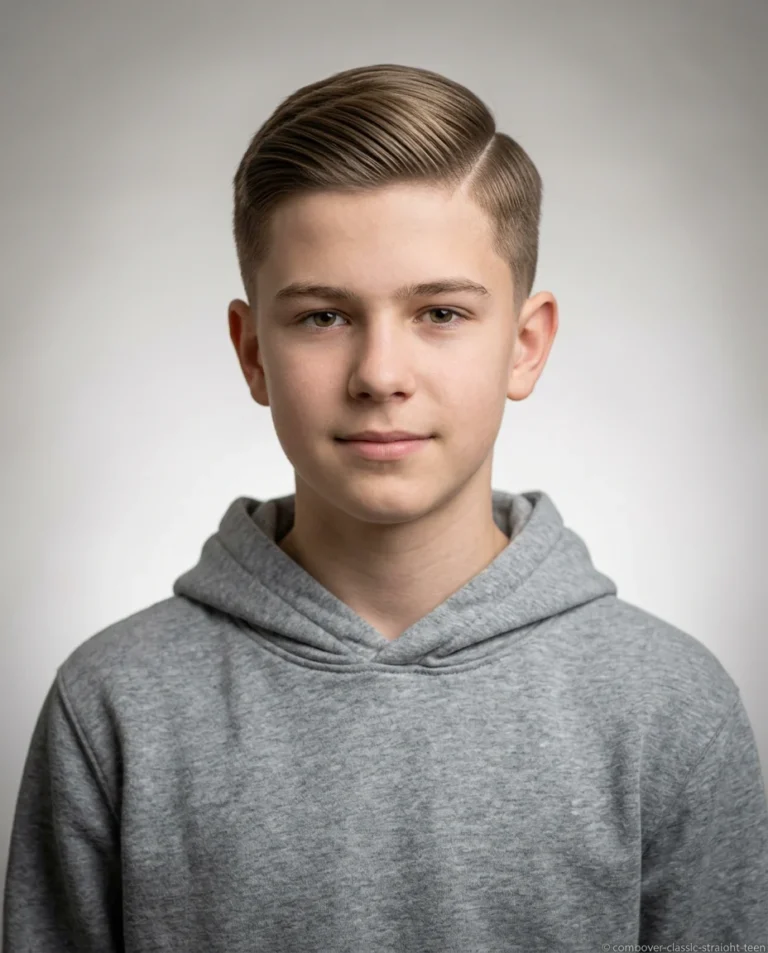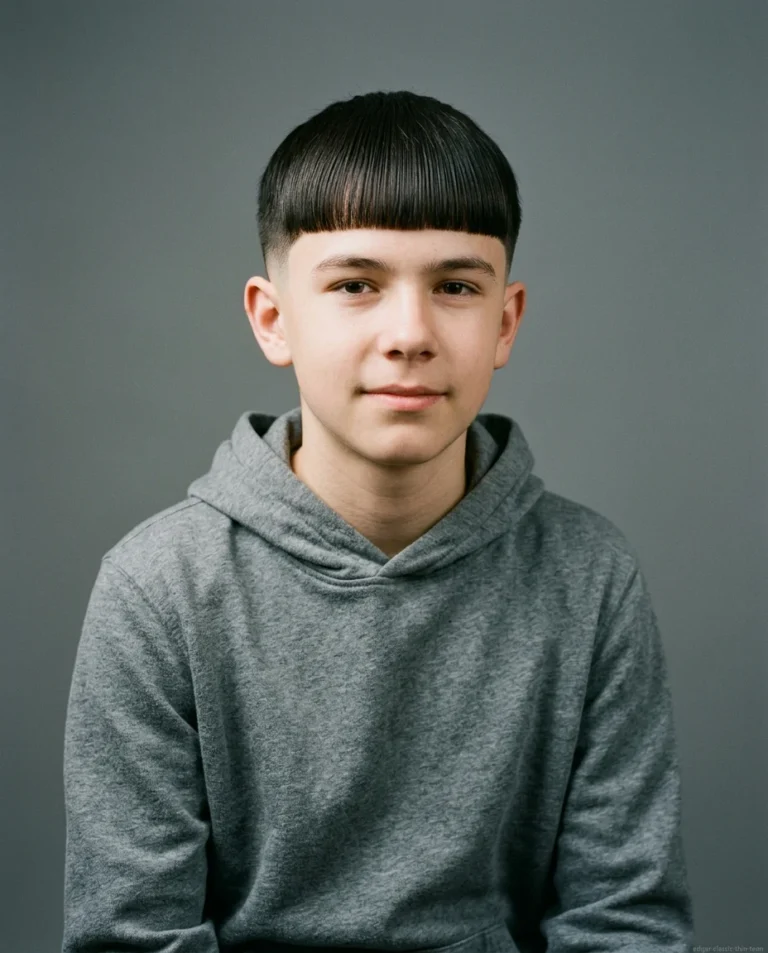
Haircut Styles Fade Cuts Trending About Follow on Pinterest
AGE Fade Haircuts HAIR TYPE Haircuts for Straight Hair Mid Fade Teen Boy Haircuts

Mid Fade Haircuts for Teen Boys with Straight Hair Worth Showing Your Barber


Straight hair on a teen is one of the easier starting points a barber can work with, and a mid fade is one of the better tools to pair with it. The hair lies flat, blends cleanly, and holds the shape of a cut longer than most other hair types. The mid fade — starting around the temple and dropping down to the skin — creates a sharper contrast than a low fade but without the aggressiveness of a high fade. For school, sport, going out with friends, the mid fade sits in the right zone.

What makes this combination particularly good for teen boys is the flexibility. Straight hair with a mid fade works with minimal styling on casual days and cleans up quickly on days that require something more put-together. Most of the cuts on this list take a barber 30 to 40 minutes and hold their shape for 3 to 4 weeks. That's a decent return on one appointment. These 10 options cover the full range — from sharp and structured to relaxed style — so there's something here for everyone style.

1. Mid Fade with Straight French Crop

teen boy with straight hair French crop and mid fade haircut

The French crop with a mid fade is a popular choice for teen boys with straight hair and it earns that popularity. The blunt fringe across the forehead it's flat and precise — straight hair doesn't blur the edge the way wavy or curly hair does — and the mid fade underneath creates a sharper visual separation between the sides and the top than a low fade would give. The result is clean, geometric, and deliberately styled without requiring any actual styling. Most straight-haired teens can walk out of the shower, let it air dry, and this cut looks exactly as intended.

The fringe length is the detail that matters most here. Too long — past the mid-forehead — and it starts reading as a bowl cut, which isn't the look. Too short and the fringe disappears into the top of the cut. The right length is just above or grazing the top of the eyebrows, which gives the French crop its characteristic frame without tipping over into the wrong territory. Maintenance is every 2 to 3 weeks for the fringe specifically — the mid fade can go a bit longer but the blunt fringe line loses precision quickly on straight hair as it grows evenly and fast.

Barber Tip: Ask your barber to cut the fringe with the comb held completely flat — even a slight angle reads clearly on straight hair. The mid fade here works best as a skin fade starting at the temple, which gives the sharpest possible contrast with the cropped top.

2. Mid Fade with Straight Hair Side Part

teen boy with straight hair side part and mid fade haircut

The hard part side part with a mid fade on straight hair it's a bit sharper and looks more polished look than most teens go for — which is exactly why it stands out most of the time. Straight hair is flat on both sides of the shaved part line without any need the hair to hold its direction, so the part reads with maximum clarity. The longer side sweeps across in a natural way and the shorter side drops into the mid fade cleanly. On straight dark hair the contrast between the parted top and the faded sides are very noticeable.

The hard part needs touching up every 10 to 14 days — straight hair grows evenly and the shaved line fills in at a predictable rate. The rest of the cut holds longer, around 3 to 4 weeks. Daily styling is minimal: a light cream or a small amount of pomade combed through the longer side on damp hair takes about 30 seconds and keeps everything in place. This cut works well for school dress codes that require a neat appearance and equally well for casual settings where it just reads as a well-groomed choice.

Barber Tip: Ask for a straight razor on the part line rather than a clipper — it gives a sharper edge that holds longer. The mid fade should be a skin fade on the shorter side for the cleanest contrast with the combed-over top.

3. Mid Fade with Straight Hair Quiff

teen boy with straight hair quiff and mid fade haircut

Straight hair builds a clean quiff with minimal effort and the mid fade underneath amplifies the effect considerably. The sides drop quickly from the temple, which creates a taller visual gap between the tight sides and the fuller top — making the quiff look more elevated and defined than it would with a low fade. On straight hair this is particularly effective because the strands run upward in clean parallel lines without any texture interrupting the direction. It's a structured look but not a stiff one. This is useful for teens who want something that looks intentional without looking like they tried too hard.

Styling takes only 2 to 3 minutes. On damp hair, put a small amount of matte clay through the top section with your fingers and push the front upward and a little bit slightly forward, Then either air dry or give it a quick blow dry to set the shape if you want more volume. Straight hair holds a blow-dried shape well throughout the day, so the morning routine is the only thing that you need.. Top length should sit around 3 to 3.5 inches — enough to build the quiff shape but not so much that the weight starts pulling it flat by lunchtime.

Barber Tip: Ask for the front section to be left a quarter inch longer than the rest of the top — this gives the quiff enough weight at the front to push forward naturally. The mid fade should start at the temple and blend with a 1 guard at the bottom for maximum contrast.

4. Mid Fade with Straight Hair Faux Hawk

teen boy with straight hair faux hawk and mid fade haircut

The faux hawk with a mid fade on straight hair is a bolder option. Straight hair handles it better than most other types because the center strip goes upward in clean. Also, precise lines without any curl or texture pulling it sideways. The mid fade on the sides drops quickly enough to create a wide visual gap between the faded sides and the center strip. It's a confident cut for sure. Not for everyone, but for the teen who wants something that makes a statement without being completely out of place at school, this is a reasonable choice.

Straight hair needs a medium-hold clay or fiber product to keep the center strip upright throughout the day — without product the hair gradually falls flat because there's no natural texture helping it hold its position. Apply on damp hair, concentrate it through the center section, push upward and pinch slightly along the ridge to define the strip, then let it air dry in position. Don't blow dry — straight hair responds too aggressively to heat and the faux hawk can end up looking wider and less defined than intended. The mid fade needs a touch-up every 2 weeks or the shape starts losing its impact.

Barber Tip: The center strip needs at least 2.5 to 3 inches of length for the faux hawk to stand convincingly on straight hair. Ask for the mid fade to drop to a 0 or 1 at the bottom — the clean lines of straight hair make a sharp fade particularly effective on this cut.

5. Mid Fade with Straight Hair Messy Top

teen boy with straight hair messy top and mid fade haircut

The messy top is the most casual option on this list and probably the most popular among teen boys who want a good haircut without committing to anything too structured. The top is left at a medium length — around 2.5 to 3.5 inches — and pushed loosely forward without any particular direction. The mid fade underneath does the heavy lifting which creates enough contrast with the loose top. On straight hair the strands fall in a consistent direction without clumping or frizzing, which gives the messiness a natural quality rather than a chaotic one.

Styling is genuinely minimal. A small amount of matte clay or a light sea salt spray on damp hair, worked through with the fingers in no particular direction, takes about 45 seconds. Don't comb it — the whole point is the slight randomness of where each section falls. Straight hair holds this style well through the day because the strands stay relatively flat rather than expanding or changing shape with humidity. The mid fade needs touching up every 2 to 3 weeks or the sides start blending into the top and the contrast that frames the messy style disappears.

Barber Tip: Ask for point-cutting or razor texturing on the top section — without it, straight hair sits as one flat uniform plane and the messy effect reads as just ungroomed rather than deliberately relaxed. Texturing at the ends creates the separation that makes this cut look intentional.

6. Mid Fade with Straight Curtain Hair

teen boy with straight curtain hair and mid fade haircut

Curtain hair with a mid fade on straight hair is one of the cleaner combinations on this list, particularly on dark straight hair where the contrast between the parted sections and the faded sides reads most sharply. The hair parts in the middle and falls to either side — on straight hair the sections lie flat and smooth rather than waving or curling outward, which gives the curtains a sleek, almost editorial quality. The mid fade underneath modernizes what would otherwise be a purely throwback style and creates enough contrast to make the longer top look intentional rather than just grown out.

The length needs to reach at least past the eyebrows — ideally to the cheekbone — for the curtain shape to develop properly. Shorter than that and there isn't enough length for the sections to fall convincingly to either side. Growing this out from a shorter cut means navigating an in-between phase around weeks 6 to 10 where the hair is long enough to be annoying but not quite long enough to part cleanly. Worth pushing through. A lightweight oil or a leave-in serum which is applied to slightly damp hair and then combed to either side of the part. It keeps the hair lying flat and prevents the frizz that can blur the curtain shape on straight hair in humid weather.

Barber Tip: Ask for the mid fade to start no higher than the temple so the longer curtain top has room to fall naturally. Tell your barber to blend gradually rather than dropping sharply — a soft transition suits the relaxed feel of curtain hair better than a hard fade line.

7. Mid Fade with Straight Hair Ivy League

teen boy with straight hair Ivy League cut and mid fade haircut

The Ivy League with a mid fade is the cut on this list that works best across the widest range of situations. School, a family event, sport photos, casual weekends — it doesn't need adjusting for any of them. The slight extra length at the front gives straight hair something to push forward or part to the side, while the mid fade creates a sharper separation between the top and sides than a traditional Ivy League with a taper would. On straight hair the front section lies flat with a natural direction rather than going in multiple ways at once, which makes the overall cut look consistently clean rather than just good on a good hair day.

This cut sits in a zone where straight hair looks dense and intentional without requiring any significant styling from you. A light cream or a matte clay pushed forward with the fingers on damp hair takes under a minute and holds all day. The mid fade needs touching up every 2 to 3 weeks. That's the complete maintenance requirement — one barber visit every few weeks and 45 seconds in the morning. For a teen who wants a solid cut that requires minimal effort, this is probably the strongest practical choice on the list.

Barber Tip: Ask for the top to be scissor-cut rather than clipped for a cleaner, denser-looking finish on straight hair. Leave 2 to 2.5 inches at the front and taper to about an inch at the crown — this gives the Ivy League its classic proportions without looking too formal.

8. Mid Fade with Straight Hair Edgar Cut

teen boy with straight hair Edgar cut and mid fade haircut

The Edgar cut is the most geometric option on this list — a flat top section with a sharp horizontal fringe line cut straight across, paired here with a mid fade on the sides. Straight hair is genuinely the best type for this cut because the fringe line holds with complete precision — no wave or curl blurring the edge, no texture softening the horizontal line. The mid fade drops the sides quickly from the temple, which creates a bold contrast with the flat, structured top. It's a statement cut. Some schools push back on it in dress code conversations, which is worth knowing before committing, but as a style statement on straight hair it's hard to argue with.

The fringe on an Edgar is cut completely flat and straight — the defining detail is the horizontal line, and any deviation from that reads as a mistake rather than a stylistic choice. Upkeep on this cut is real. The fringe needs trimming every 2 to 3 weeks or it starts softening and losing the precise geometric edge that makes the Edgar look intentional. The mid fade needs a touch-up on a similar schedule. Straight hair makes this easier than other hair types because the fringe grows evenly without developing texture that blurs the line, so each trim is straightforward.

Barber Tip: The fringe line on an Edgar must be cut with the comb held completely flat — check the line from directly in front before finishing. Ask your barber to use the mid fade as a skin fade starting at the temple, which creates the sharp contrast that makes the Edgar's flat top read as intentional rather than simply short.

9. Mid Fade with Straight Hair Slick Back

teen boy with straight hair slick back and mid fade haircut

The slick back with a mid fade is a more mature-looking choice for a teen, which depending on the situation is either exactly what you want or not what you're after. Straight hair goes back cleanly — no wave trying to reassert itself, no texture breaking up the surface — and the mid fade on the sides creates a sharper contrast than a low fade would, making the slicked top look more deliberate and structured. It's the kind of cut that reads well at a school formal, a family photo, or a job interview, but doesn't look out of place on a regular Tuesday either.

The top needs at least 3 to 3.5 inches for the slick back to lay back cleanly without the front section springing up. A light-hold pomade or a water-based product applied on damp hair and combed straight back is all it needs — straight hair doesn't require heavy product to stay in place because there's no opposing texture to fight. Heavy products on straight hair tend to look greasy rather than sleek, so less is genuinely more here. The mid fade needs a touch-up every 2 to 3 weeks or the sides grow in and the sharp contrast with the slicked top starts softening.

Barber Tip: Ask for the top to be left at 3.5 inches minimum and tell your barber you're planning to slick it back — they'll leave the front longest and taper slightly toward the crown, which helps the slick back hold its shape without the front popping up throughout the day.

10. Mid Fade with Straight Hair Textured Crop

teen boy with straight hair textured crop and mid fade haircut

The textured crop with a mid fade is the most versatile and consistently recommended cut on this list for teen boys with straight hair. The top sits at around an inch to an inch and a half, point-cut or razor-textured so the ends sit at slightly different angles rather than lying as one flat sheet. The mid fade underneath creates more contrast than a low fade would give — the sides drop to skin around the temple, which makes the textured top look fuller and more defined by comparison. It works at school, it works on weekends, it works everywhere without any adjustment needed between contexts.

The texturing step is more important on straight hair than on other types. Without it, a short crop on straight hair sits completely flat and featureless — just a dense block of hair with no visual interest. With proper point-cutting the ends break up and each section sits independently, which is what gives the crop its texture and movement. No daily product is required on most days — on days you want more definition a small amount of matte clay through the top takes 30 seconds. The mid fade needs touching up every 2 to 3 weeks on straight hair because clean growth lines are more visible on straight hair than on other types, and the fade starts looking grown out sooner.

Barber Tip: Ask specifically for point-cutting on the top section — this is the step that separates a good textured crop from a mediocre one on straight hair. Without it the cut loses its texture within a day or two of washing and goes back to looking flat and featureless.

Straight hair on a teen is one of the easier starting points a barber can work with, and a mid fade is one of the better tools to pair with it. The hair lies flat, blends cleanly, and holds the shape of a cut longer than most other hair types. The mid fade — starting around the temple and dropping down to the skin — creates a sharper contrast than a low fade but without the aggressiveness of a high fade. For school, sport, going out with friends, the mid fade sits in the right zone.

What makes this combination particularly good for teen boys is the flexibility. Straight hair with a mid fade works with minimal styling on casual days and cleans up quickly on days that require something more put-together. Most of the cuts on this list take a barber 30 to 40 minutes and hold their shape for 3 to 4 weeks. That's a decent return on one appointment. These 10 options cover the full range — from sharp and structured to relaxed and effortless — so there's something here regardless of personal style or school dress code.

1. Mid Fade with Straight French Crop

teen boy with straight hair French crop and mid fade haircut

The French crop with a mid fade is a popular choice for teen boys with straight hair and it earns that popularity. The blunt fringe across the forehead sits flat and precise — straight hair doesn't blur the edge the way wavy or curly hair does — and the mid fade underneath creates a sharper visual separation between the sides and the top than a low fade would give. The result is clean, geometric, and deliberately styled without requiring any actual styling. Most straight-haired teens can walk out of the shower, let it air dry, and this cut looks exactly as intended.

The fringe length is the detail that matters most here. Too long — past the mid-forehead — and it starts reading as a bowl cut, which isn't the look. Too short and the fringe disappears into the top of the cut. The right length is just above or grazing the top of the eyebrows, which gives the French crop its characteristic frame without tipping over into the wrong territory. Maintenance is every 2 to 3 weeks for the fringe specifically — the mid fade can go a bit longer but the blunt fringe line loses precision quickly on straight hair as it grows evenly and fast.

Barber Tip: Ask your barber to cut the fringe with the comb held completely flat — even a slight angle reads clearly on straight hair. The mid fade here works best as a skin fade starting at the temple, which gives the sharpest possible contrast with the cropped top.

2. Mid Fade with Straight Hair Side Part

teen boy with straight hair side part and mid fade haircut

The hard part side part with a mid fade on straight hair it's a bit sharper and looks more polished look than most teens go for — which is exactly why it stands out most of the time. Straight hair is flat on both sides of the shaved part line without any need the hair to hold its direction, so the part reads with maximum clarity. The longer side sweeps across in a natural way and the shorter side drops into the mid fade cleanly. On straight dark hair the contrast between the parted top and the faded sides are very noticeable.

The hard part needs touching up every 10 to 14 days — straight hair grows evenly and the shaved line fills in at a predictable rate. The rest of the cut holds longer, around 3 to 4 weeks. Daily styling is minimal: a light cream or a small amount of pomade combed through the longer side on damp hair takes about 30 seconds and keeps everything in place. This cut works well for school dress codes that require a neat appearance and equally well for casual settings where it just reads as a well-groomed choice.

Barber Tip: Ask for a straight razor on the part line rather than a clipper — it gives a sharper edge that holds longer. The mid fade should be a skin fade on the shorter side for the cleanest contrast with the combed-over top.

3. Mid Fade with Straight Hair Quiff

teen boy with straight hair quiff and mid fade haircut

Straight hair builds a clean quiff with minimal effort and the mid fade underneath amplifies the effect considerably. The sides drop quickly from the temple, which creates a taller visual gap between the tight sides and the fuller top — making the quiff look more elevated and defined than it would with a low fade. On straight hair this is particularly effective because the strands run upward in clean parallel lines without any texture interrupting the direction. It's a structured look but not a stiff one. This is useful for teens who want something that looks intentional without looking like they tried too hard.

Styling takes only 2 to 3 minutes. On damp hair, put a small amount of matte clay through the top section with your fingers and push the front upward and a little bit slightly forward, Then either air dry or give it a quick blow dry to set the shape if you want more volume. Straight hair holds a blow-dried shape well throughout the day, so the morning routine is the only thing that you need.. Top length should sit around 3 to 3.5 inches — enough to build the quiff shape but not so much that the weight starts pulling it flat by lunchtime.

Barber Tip: Ask for the front section to be left a quarter inch longer than the rest of the top — this gives the quiff enough weight at the front to push forward naturally. The mid fade should start at the temple and blend with a 1 guard at the bottom for maximum contrast.

4. Mid Fade with Straight Hair Faux Hawk

teen boy with straight hair faux hawk and mid fade haircut

The faux hawk with a mid fade on straight hair is a bolder option. Straight hair handles it better than most other types because the center strip goes upward in clean. Also, precise lines without any curl or texture pulling it sideways. The mid fade on the sides drops quickly enough to create a wide visual gap between the faded sides and the center strip. It's a confident cut for sure. Not for everyone, but for the teen who wants something that makes a statement without being completely out of place at school, this is a reasonable choice.

Straight hair needs a medium-hold clay or fiber product to keep the center strip upright throughout the day — without product the hair gradually falls flat because there's no natural texture helping it hold its position. Apply on damp hair, concentrate it through the center section, push upward and pinch slightly along the ridge to define the strip, then let it air dry in position. Don't blow dry — straight hair responds too aggressively to heat and the faux hawk can end up looking wider and less defined than intended. The mid fade needs a touch-up every 2 weeks or the shape starts losing its impact.

Barber Tip: The center strip needs at least 2.5 to 3 inches of length for the faux hawk to stand convincingly on straight hair. Ask for the mid fade to drop to a 0 or 1 at the bottom — the clean lines of straight hair make a sharp fade particularly effective on this cut.

5. Mid Fade with Straight Hair Messy Top

teen boy with straight hair messy top and mid fade haircut

The messy top is the most casual option on this list and probably the most popular among teen boys who want a good haircut without committing to anything too structured. The top is left at a medium length — around 2.5 to 3.5 inches — and pushed loosely forward without any particular direction. The mid fade underneath does the heavy lifting which creates enough contrast with the loose top. On straight hair the strands fall in a consistent direction without clumping or frizzing, which gives the messiness a natural quality rather than a chaotic one.

Styling is genuinely minimal. A small amount of matte clay or a light sea salt spray on damp hair, worked through with the fingers in no particular direction, takes about 45 seconds. Don't comb it — the whole point is the slight randomness of where each section falls. Straight hair holds this style well through the day because the strands stay relatively flat rather than expanding or changing shape with humidity. The mid fade needs touching up every 2 to 3 weeks or the sides start blending into the top and the contrast that frames the messy style disappears.

Barber Tip: Ask for point-cutting or razor texturing on the top section — without it, straight hair sits as one flat uniform plane and the messy effect reads as just ungroomed rather than deliberately relaxed. Texturing at the ends creates the separation that makes this cut look intentional.

6. Mid Fade with Straight Curtain Hair

teen boy with straight curtain hair and mid fade haircut

Curtain hair with a mid fade on straight hair is one of the cleaner combinations on this list, particularly on dark straight hair where the contrast between the parted sections and the faded sides reads most sharply. The hair parts in the middle and falls to either side — on straight hair the sections lie flat and smooth rather than waving or curling outward, which gives the curtains a sleek, almost editorial quality. The mid fade underneath modernizes what would otherwise be a purely throwback style and creates enough contrast to make the longer top look intentional rather than just grown out.

The length needs to reach at least past the eyebrows — ideally to the cheekbone — for the curtain shape to develop properly. Shorter than that and there isn't enough length for the sections to fall convincingly to either side. Growing this out from a shorter cut means navigating an in-between phase around weeks 6 to 10 where the hair is long enough to be annoying but not quite long enough to part cleanly. Worth pushing through. A lightweight oil or a leave-in serum which is applied to slightly damp hair and then combed to either side of the part. It keeps the hair lying flat and prevents the frizz that can blur the curtain shape on straight hair in humid weather.

Barber Tip: Ask for the mid fade to start no higher than the temple so the longer curtain top has room to fall naturally. Tell your barber to blend gradually rather than dropping sharply — a soft transition suits the relaxed feel of curtain hair better than a hard fade line.

7. Mid Fade with Straight Hair Ivy League

teen boy with straight hair Ivy League cut and mid fade haircut

The Ivy League with a mid fade is the cut on this list that works best across the widest range of situations. School, a family event, sport photos, casual weekends — it doesn't need adjusting for any of them. The slight extra length at the front gives straight hair something to push forward or part to the side, while the mid fade creates a sharper separation between the top and sides than a traditional Ivy League with a taper would. On straight hair the front section lies flat with a natural direction rather than going in multiple ways at once, which makes the overall cut look consistently clean rather than just good on a good hair day.

This cut sits in a zone where straight hair looks dense and intentional without requiring any significant styling from you. A light cream or a matte clay pushed forward with the fingers on damp hair takes under a minute and holds all day. The mid fade needs touching up every 2 to 3 weeks. That's the complete maintenance requirement — one barber visit every few weeks and 45 seconds in the morning. For a teen who wants a solid cut that requires minimal effort, this is probably the strongest practical choice on the list.

Barber Tip: Ask for the top to be scissor-cut rather than clipped for a cleaner, denser-looking finish on straight hair. Leave 2 to 2.5 inches at the front and taper to about an inch at the crown — this gives the Ivy League its classic proportions without looking too formal.

8. Mid Fade with Straight Hair Edgar Cut

teen boy with straight hair Edgar cut and mid fade haircut

The Edgar cut is the most geometric option on this list — a flat top section with a sharp horizontal fringe line cut straight across, paired here with a mid fade on the sides. Straight hair is genuinely the best type for this cut because the fringe line holds with complete precision — no wave or curl blurring the edge, no texture softening the horizontal line. The mid fade drops the sides quickly from the temple, which creates a bold contrast with the flat, structured top. It's a statement cut. Some schools push back on it in dress code conversations, which is worth knowing before committing, but as a style statement on straight hair it's hard to argue with.

The fringe on an Edgar is cut completely flat and straight — the defining detail is the horizontal line, and any deviation from that reads as a mistake rather than a stylistic choice. Upkeep on this cut is real. The fringe needs trimming every 2 to 3 weeks or it starts softening and losing the precise geometric edge that makes the Edgar look intentional. The mid fade needs a touch-up on a similar schedule. Straight hair makes this easier than other hair types because the fringe grows evenly without developing texture that blurs the line, so each trim is straightforward.

Barber Tip: The fringe line on an Edgar must be cut with the comb held completely flat — check the line from directly in front before finishing. Ask your barber to use the mid fade as a skin fade starting at the temple, which creates the sharp contrast that makes the Edgar's flat top read as intentional rather than simply short.

9. Mid Fade with Straight Hair Slick Back

teen boy with straight hair slick back and mid fade haircut

The slick back with a mid fade is a more mature-looking choice for a teen, which depending on the situation is either exactly what you want or not what you're after. Straight hair goes back cleanly — no wave trying to reassert itself, no texture breaking up the surface — and the mid fade on the sides creates a sharper contrast than a low fade would, making the slicked top look more deliberate and structured. It's the kind of cut that reads well at a school formal, a family photo, or a job interview, but doesn't look out of place on a regular Tuesday either.

The top needs at least 3 to 3.5 inches for the slick back to lay back cleanly without the front section springing up. A light-hold pomade or a water-based product applied on damp hair and combed straight back is all it needs — straight hair doesn't require heavy product to stay in place because there's no opposing texture to fight. Heavy products on straight hair tend to look greasy rather than sleek, so less is genuinely more here. The mid fade needs a touch-up every 2 to 3 weeks or the sides grow in and the sharp contrast with the slicked top starts softening.

Barber Tip: Ask for the top to be left at 3.5 inches minimum and tell your barber you're planning to slick it back — they'll leave the front longest and taper slightly toward the crown, which helps the slick back hold its shape without the front popping up throughout the day.

10. Mid Fade with Straight Hair Textured Crop

teen boy with straight hair textured crop and mid fade haircut

The textured crop with a mid fade is the most versatile and consistently recommended cut on this list for teen boys with straight hair. The top sits at around an inch to an inch and a half, point-cut or razor-textured so the ends sit at slightly different angles rather than lying as one flat sheet. The mid fade underneath creates more contrast than a low fade would give — the sides drop to skin around the temple, which makes the textured top look fuller and more defined by comparison. It works at school, it works on weekends, it works everywhere without any adjustment needed between contexts.

The texturing step is more important on straight hair than on other types. Without it, a short crop on straight hair sits completely flat and featureless — just a dense block of hair with no visual interest. With proper point-cutting the ends break up and each section sits independently, which is what gives the crop its texture and movement. No daily product is required on most days — on days you want more definition a small amount of matte clay through the top takes 30 seconds. The mid fade needs touching up every 2 to 3 weeks on straight hair because clean growth lines are more visible on straight hair than on other types, and the fade starts looking grown out sooner.

Barber Tip: Ask specifically for point-cutting on the top section — this is the step that separates a good textured crop from a mediocre one on straight hair. Without it the cut loses its texture within a day or two of washing and goes back to looking flat and featureless.

Straight hair on a teen is one of the easier starting points a barber can work with, and a mid fade is one of the better tools to pair with it. The hair lies flat, blends cleanly, and holds the shape of a cut longer than most other hair types. The mid fade — starting around the temple and dropping down to the skin — creates a sharper contrast than a low fade but without the aggressiveness of a high fade. For school, sport, going out with friends, the mid fade sits in the right zone.

What makes this combination particularly good for teen boys is the flexibility. Straight hair with a mid fade works with minimal styling on casual days and cleans up quickly on days that require something more put-together. Most of the cuts on this list take a barber 30 to 40 minutes and hold their shape for 3 to 4 weeks. That's a decent return on one appointment. These 10 options cover the full range — from sharp and structured to relaxed and effortless — so there's something here regardless of personal style or school dress code.

1. Mid Fade with Straight French Crop

teen boy with straight hair French crop and mid fade haircut

The French crop with a mid fade is a popular choice for teen boys with straight hair and it earns that popularity. The blunt fringe across the forehead sits flat and precise — straight hair doesn't blur the edge the way wavy or curly hair does — and the mid fade underneath creates a sharper visual separation between the sides and the top than a low fade would give. The result is clean, geometric, and deliberately styled without requiring any actual styling. Most straight-haired teens can walk out of the shower, let it air dry, and this cut looks exactly as intended.

The fringe length is the detail that matters most here. Too long — past the mid-forehead — and it starts reading as a bowl cut, which isn't the look. Too short and the fringe disappears into the top of the cut. The right length is just above or grazing the top of the eyebrows, which gives the French crop its characteristic frame without tipping over into the wrong territory. Maintenance is every 2 to 3 weeks for the fringe specifically — the mid fade can go a bit longer but the blunt fringe line loses precision quickly on straight hair as it grows evenly and fast.

Barber Tip: Ask your barber to cut the fringe with the comb held completely flat — even a slight angle reads clearly on straight hair. The mid fade here works best as a skin fade starting at the temple, which gives the sharpest possible contrast with the cropped top.

2. Mid Fade with Straight Hair Side Part

teen boy with straight hair side part and mid fade haircut

The hard part side part with a mid fade on straight hair it's a bit sharper and looks more polished look than most teens go for — which is exactly why it stands out most of the time. Straight hair is flat on both sides of the shaved part line without any need the hair to hold its direction, so the part reads with maximum clarity. The longer side sweeps across in a natural way and the shorter side drops into the mid fade cleanly. On straight dark hair the contrast between the parted top and the faded sides are very noticeable.

The hard part needs touching up every 10 to 14 days — straight hair grows evenly and the shaved line fills in at a predictable rate. The rest of the cut holds longer, around 3 to 4 weeks. Daily styling is minimal: a light cream or a small amount of pomade combed through the longer side on damp hair takes about 30 seconds and keeps everything in place. This cut works well for school dress codes that require a neat appearance and equally well for casual settings where it just reads as a well-groomed choice.

Barber Tip: Ask for a straight razor on the part line rather than a clipper — it gives a sharper edge that holds longer. The mid fade should be a skin fade on the shorter side for the cleanest contrast with the combed-over top.

3. Mid Fade with Straight Hair Quiff

teen boy with straight hair quiff and mid fade haircut

Straight hair builds a clean quiff with minimal effort and the mid fade underneath amplifies the effect considerably. The sides drop quickly from the temple, which creates a taller visual gap between the tight sides and the fuller top — making the quiff look more elevated and defined than it would with a low fade. On straight hair this is particularly effective because the strands run upward in clean parallel lines without any texture interrupting the direction. It's a structured look but not a stiff one. This is useful for teens who want something that looks intentional without looking like they tried too hard.

Styling takes only 2 to 3 minutes. On damp hair, put a small amount of matte clay through the top section with your fingers and push the front upward and a little bit slightly forward, Then either air dry or give it a quick blow dry to set the shape if you want more volume. Straight hair holds a blow-dried shape well throughout the day, so the morning routine is the only thing that you need.. Top length should sit around 3 to 3.5 inches — enough to build the quiff shape but not so much that the weight starts pulling it flat by lunchtime.

Barber Tip: Ask for the front section to be left a quarter inch longer than the rest of the top — this gives the quiff enough weight at the front to push forward naturally. The mid fade should start at the temple and blend with a 1 guard at the bottom for maximum contrast.

4. Mid Fade with Straight Hair Faux Hawk

teen boy with straight hair faux hawk and mid fade haircut

The faux hawk with a mid fade on straight hair is a bolder option. Straight hair handles it better than most other types because the center strip goes upward in clean. Also, precise lines without any curl or texture pulling it sideways. The mid fade on the sides drops quickly enough to create a wide visual gap between the faded sides and the center strip. It's a confident cut for sure. Not for everyone, but for the teen who wants something that makes a statement without being completely out of place at school, this is a reasonable choice.

Straight hair needs a medium-hold clay or fiber product to keep the center strip upright throughout the day — without product the hair gradually falls flat because there's no natural texture helping it hold its position. Apply on damp hair, concentrate it through the center section, push upward and pinch slightly along the ridge to define the strip, then let it air dry in position. Don't blow dry — straight hair responds too aggressively to heat and the faux hawk can end up looking wider and less defined than intended. The mid fade needs a touch-up every 2 weeks or the shape starts losing its impact.

Barber Tip: The center strip needs at least 2.5 to 3 inches of length for the faux hawk to stand convincingly on straight hair. Ask for the mid fade to drop to a 0 or 1 at the bottom — the clean lines of straight hair make a sharp fade particularly effective on this cut.

5. Mid Fade with Straight Hair Messy Top

teen boy with straight hair messy top and mid fade haircut

The messy top is the most casual option on this list and probably the most popular among teen boys who want a good haircut without committing to anything too structured. The top is left at a medium length — around 2.5 to 3.5 inches — and pushed loosely forward without any particular direction. The mid fade underneath does the heavy lifting which creates enough contrast with the loose top. On straight hair the strands fall in a consistent direction without clumping or frizzing, which gives the messiness a natural quality rather than a chaotic one.

Styling is genuinely minimal. A small amount of matte clay or a light sea salt spray on damp hair, worked through with the fingers in no particular direction, takes about 45 seconds. Don't comb it — the whole point is the slight randomness of where each section falls. Straight hair holds this style well through the day because the strands stay relatively flat rather than expanding or changing shape with humidity. The mid fade needs touching up every 2 to 3 weeks or the sides start blending into the top and the contrast that frames the messy style disappears.

Barber Tip: Ask for point-cutting or razor texturing on the top section — without it, straight hair sits as one flat uniform plane and the messy effect reads as just ungroomed rather than deliberately relaxed. Texturing at the ends creates the separation that makes this cut look intentional.

6. Mid Fade with Straight Curtain Hair

teen boy with straight curtain hair and mid fade haircut

Curtain hair with a mid fade on straight hair is one of the cleaner combinations on this list, particularly on dark straight hair where the contrast between the parted sections and the faded sides reads most sharply. The hair parts in the middle and falls to either side — on straight hair the sections lie flat and smooth rather than waving or curling outward, which gives the curtains a sleek, almost editorial quality. The mid fade underneath modernizes what would otherwise be a purely throwback style and creates enough contrast to make the longer top look intentional rather than just grown out.

The length needs to reach at least past the eyebrows — ideally to the cheekbone — for the curtain shape to develop properly. Shorter than that and there isn't enough length for the sections to fall convincingly to either side. Growing this out from a shorter cut means navigating an in-between phase around weeks 6 to 10 where the hair is long enough to be annoying but not quite long enough to part cleanly. Worth pushing through. A lightweight oil or a leave-in serum which is applied to slightly damp hair and then combed to either side of the part. It keeps the hair lying flat and prevents the frizz that can blur the curtain shape on straight hair in humid weather.

Barber Tip: Ask for the mid fade to start no higher than the temple so the longer curtain top has room to fall naturally. Tell your barber to blend gradually rather than dropping sharply — a soft transition suits the relaxed feel of curtain hair better than a hard fade line.

7. Mid Fade with Straight Hair Ivy League

teen boy with straight hair Ivy League cut and mid fade haircut

The Ivy League with a mid fade is the cut on this list that works best across the widest range of situations. School, a family event, sport photos, casual weekends — it doesn't need adjusting for any of them. The slight extra length at the front gives straight hair something to push forward or part to the side, while the mid fade creates a sharper separation between the top and sides than a traditional Ivy League with a taper would. On straight hair the front section lies flat with a natural direction rather than going in multiple ways at once, which makes the overall cut look consistently clean rather than just good on a good hair day.

This cut sits in a zone where straight hair looks dense and intentional without requiring any significant styling from you. A light cream or a matte clay pushed forward with the fingers on damp hair takes under a minute and holds all day. The mid fade needs touching up every 2 to 3 weeks. That's the complete maintenance requirement — one barber visit every few weeks and 45 seconds in the morning. For a teen who wants a solid cut that requires minimal effort, this is probably the strongest practical choice on the list.

Barber Tip: Ask for the top to be scissor-cut rather than clipped for a cleaner, denser-looking finish on straight hair. Leave 2 to 2.5 inches at the front and taper to about an inch at the crown — this gives the Ivy League its classic proportions without looking too formal.

8. Mid Fade with Straight Hair Edgar Cut

teen boy with straight hair Edgar cut and mid fade haircut

The Edgar cut is the most geometric option on this list — a flat top section with a sharp horizontal fringe line cut straight across, paired here with a mid fade on the sides. Straight hair is genuinely the best type for this cut because the fringe line holds with complete precision — no wave or curl blurring the edge, no texture softening the horizontal line. The mid fade drops the sides quickly from the temple, which creates a bold contrast with the flat, structured top. It's a statement cut. Some schools push back on it in dress code conversations, which is worth knowing before committing, but as a style statement on straight hair it's hard to argue with.

The fringe on an Edgar is cut completely flat and straight — the defining detail is the horizontal line, and any deviation from that reads as a mistake rather than a stylistic choice. Upkeep on this cut is real. The fringe needs trimming every 2 to 3 weeks or it starts softening and losing the precise geometric edge that makes the Edgar look intentional. The mid fade needs a touch-up on a similar schedule. Straight hair makes this easier than other hair types because the fringe grows evenly without developing texture that blurs the line, so each trim is straightforward.

Barber Tip: The fringe line on an Edgar must be cut with the comb held completely flat — check the line from directly in front before finishing. Ask your barber to use the mid fade as a skin fade starting at the temple, which creates the sharp contrast that makes the Edgar's flat top read as intentional rather than simply short.

9. Mid Fade with Straight Hair Slick Back

teen boy with straight hair slick back and mid fade haircut

The slick back with a mid fade is a more mature-looking choice for a teen, which depending on the situation is either exactly what you want or not what you're after. Straight hair goes back cleanly — no wave trying to reassert itself, no texture breaking up the surface — and the mid fade on the sides creates a sharper contrast than a low fade would, making the slicked top look more deliberate and structured. It's the kind of cut that reads well at a school formal, a family photo, or a job interview, but doesn't look out of place on a regular Tuesday either.

The top needs at least 3 to 3.5 inches for the slick back to lay back cleanly without the front section springing up. A light-hold pomade or a water-based product applied on damp hair and combed straight back is all it needs — straight hair doesn't require heavy product to stay in place because there's no opposing texture to fight. Heavy products on straight hair tend to look greasy rather than sleek, so less is genuinely more here. The mid fade needs a touch-up every 2 to 3 weeks or the sides grow in and the sharp contrast with the slicked top starts softening.

Barber Tip: Ask for the top to be left at 3.5 inches minimum and tell your barber you're planning to slick it back — they'll leave the front longest and taper slightly toward the crown, which helps the slick back hold its shape without the front popping up throughout the day.

10. Mid Fade with Straight Hair Textured Crop

teen boy with straight hair textured crop and mid fade haircut

The textured crop with a mid fade is the most versatile and consistently recommended cut on this list for teen boys with straight hair. The top sits at around an inch to an inch and a half, point-cut or razor-textured so the ends sit at slightly different angles rather than lying as one flat sheet. The mid fade underneath creates more contrast than a low fade would give — the sides drop to skin around the temple, which makes the textured top look fuller and more defined by comparison. It works at school, it works on weekends, it works everywhere without any adjustment needed between contexts.

The texturing step is more important on straight hair than on other types. Without it, a short crop on straight hair sits completely flat and featureless — just a dense block of hair with no visual interest. With proper point-cutting the ends break up and each section sits independently, which is what gives the crop its texture and movement. No daily product is required on most days — on days you want more definition a small amount of matte clay through the top takes 30 seconds. The mid fade needs touching up every 2 to 3 weeks on straight hair because clean growth lines are more visible on straight hair than on other types, and the fade starts looking grown out sooner.

Barber Tip: Ask specifically for point-cutting on the top section — this is the step that separates a good textured crop from a mediocre one on straight hair. Without it the cut loses its texture within a day or two of washing and goes back to looking flat and featureless.

Straight hair on a teen is one of the easier starting points a barber can work with, and a mid fade is one of the better tools to pair with it. The hair lies flat, blends cleanly, and holds the shape of a cut longer than most other hair types. The mid fade — starting around the temple and dropping down to the skin — creates a sharper contrast than a low fade but without the aggressiveness of a high fade. For school, sport, going out with friends, the mid fade sits in the right zone.

What makes this combination particularly good for teen boys is the flexibility. Straight hair with a mid fade works with minimal styling on casual days and cleans up quickly on days that require something more put-together. Most of the cuts on this list take a barber 30 to 40 minutes and hold their shape for 3 to 4 weeks. That's a decent return on one appointment. These 10 options cover the full range — from sharp and structured to relaxed and effortless — so there's something here regardless of personal style or school dress code.

1. Mid Fade with Straight French Crop

teen boy with straight hair French crop and mid fade haircut

The French crop with a mid fade is a popular choice for teen boys with straight hair and it earns that popularity. The blunt fringe across the forehead sits flat and precise — straight hair doesn't blur the edge the way wavy or curly hair does — and the mid fade underneath creates a sharper visual separation between the sides and the top than a low fade would give. The result is clean, geometric, and deliberately styled without requiring any actual styling. Most straight-haired teens can walk out of the shower, let it air dry, and this cut looks exactly as intended.

The fringe length is the detail that matters most here. Too long — past the mid-forehead — and it starts reading as a bowl cut, which isn't the look. Too short and the fringe disappears into the top of the cut. The right length is just above or grazing the top of the eyebrows, which gives the French crop its characteristic frame without tipping over into the wrong territory. Maintenance is every 2 to 3 weeks for the fringe specifically — the mid fade can go a bit longer but the blunt fringe line loses precision quickly on straight hair as it grows evenly and fast.

Barber Tip: Ask your barber to cut the fringe with the comb held completely flat — even a slight angle reads clearly on straight hair. The mid fade here works best as a skin fade starting at the temple, which gives the sharpest possible contrast with the cropped top.

2. Mid Fade with Straight Hair Side Part

teen boy with straight hair side part and mid fade haircut

The hard part side part with a mid fade on straight hair it's a bit sharper and looks more polished look than most teens go for — which is exactly why it stands out most of the time. Straight hair is flat on both sides of the shaved part line without any need the hair to hold its direction, so the part reads with maximum clarity. The longer side sweeps across in a natural way and the shorter side drops into the mid fade cleanly. On straight dark hair the contrast between the parted top and the faded sides are very noticeable.

The hard part needs touching up every 10 to 14 days — straight hair grows evenly and the shaved line fills in at a predictable rate. The rest of the cut holds longer, around 3 to 4 weeks. Daily styling is minimal: a light cream or a small amount of pomade combed through the longer side on damp hair takes about 30 seconds and keeps everything in place. This cut works well for school dress codes that require a neat appearance and equally well for casual settings where it just reads as a well-groomed choice.

Barber Tip: Ask for a straight razor on the part line rather than a clipper — it gives a sharper edge that holds longer. The mid fade should be a skin fade on the shorter side for the cleanest contrast with the combed-over top.

3. Mid Fade with Straight Hair Quiff

teen boy with straight hair quiff and mid fade haircut

Straight hair builds a clean quiff with minimal effort and the mid fade underneath amplifies the effect considerably. The sides drop quickly from the temple, which creates a taller visual gap between the tight sides and the fuller top — making the quiff look more elevated and defined than it would with a low fade. On straight hair this is particularly effective because the strands run upward in clean parallel lines without any texture interrupting the direction. It's a structured look but not a stiff one. This is useful for teens who want something that looks intentional without looking like they tried too hard.

Styling takes only 2 to 3 minutes. On damp hair, put a small amount of matte clay through the top section with your fingers and push the front upward and a little bit slightly forward, Then either air dry or give it a quick blow dry to set the shape if you want more volume. Straight hair holds a blow-dried shape well throughout the day, so the morning routine is the only thing that you need.. Top length should sit around 3 to 3.5 inches — enough to build the quiff shape but not so much that the weight starts pulling it flat by lunchtime.

Barber Tip: Ask for the front section to be left a quarter inch longer than the rest of the top — this gives the quiff enough weight at the front to push forward naturally. The mid fade should start at the temple and blend with a 1 guard at the bottom for maximum contrast.

4. Mid Fade with Straight Hair Faux Hawk

teen boy with straight hair faux hawk and mid fade haircut

The faux hawk with a mid fade on straight hair is a bolder option. Straight hair handles it better than most other types because the center strip goes upward in clean. Also, precise lines without any curl or texture pulling it sideways. The mid fade on the sides drops quickly enough to create a wide visual gap between the faded sides and the center strip. It's a confident cut for sure. Not for everyone, but for the teen who wants something that makes a statement without being completely out of place at school, this is a reasonable choice.

Straight hair needs a medium-hold clay or fiber product to keep the center strip upright throughout the day — without product the hair gradually falls flat because there's no natural texture helping it hold its position. Apply on damp hair, concentrate it through the center section, push upward and pinch slightly along the ridge to define the strip, then let it air dry in position. Don't blow dry — straight hair responds too aggressively to heat and the faux hawk can end up looking wider and less defined than intended. The mid fade needs a touch-up every 2 weeks or the shape starts losing its impact.

Barber Tip: The center strip needs at least 2.5 to 3 inches of length for the faux hawk to stand convincingly on straight hair. Ask for the mid fade to drop to a 0 or 1 at the bottom — the clean lines of straight hair make a sharp fade particularly effective on this cut.

5. Mid Fade with Straight Hair Messy Top

teen boy with straight hair messy top and mid fade haircut

The messy top is the most casual option on this list and probably the most popular among teen boys who want a good haircut without committing to anything too structured. The top is left at a medium length — around 2.5 to 3.5 inches — and pushed loosely forward without any particular direction. The mid fade underneath does the heavy lifting which creates enough contrast with the loose top. On straight hair the strands fall in a consistent direction without clumping or frizzing, which gives the messiness a natural quality rather than a chaotic one.

Styling is genuinely minimal. A small amount of matte clay or a light sea salt spray on damp hair, worked through with the fingers in no particular direction, takes about 45 seconds. Don't comb it — the whole point is the slight randomness of where each section falls. Straight hair holds this style well through the day because the strands stay relatively flat rather than expanding or changing shape with humidity. The mid fade needs touching up every 2 to 3 weeks or the sides start blending into the top and the contrast that frames the messy style disappears.

Barber Tip: Ask for point-cutting or razor texturing on the top section — without it, straight hair sits as one flat uniform plane and the messy effect reads as just ungroomed rather than deliberately relaxed. Texturing at the ends creates the separation that makes this cut look intentional.

6. Mid Fade with Straight Curtain Hair

teen boy with straight curtain hair and mid fade haircut

Curtain hair with a mid fade on straight hair is one of the cleaner combinations on this list, particularly on dark straight hair where the contrast between the parted sections and the faded sides reads most sharply. The hair parts in the middle and falls to either side — on straight hair the sections lie flat and smooth rather than waving or curling outward, which gives the curtains a sleek, almost editorial quality. The mid fade underneath modernizes what would otherwise be a purely throwback style and creates enough contrast to make the longer top look intentional rather than just grown out.

The length needs to reach at least past the eyebrows — ideally to the cheekbone — for the curtain shape to develop properly. Shorter than that and there isn't enough length for the sections to fall convincingly to either side. Growing this out from a shorter cut means navigating an in-between phase around weeks 6 to 10 where the hair is long enough to be annoying but not quite long enough to part cleanly. Worth pushing through. A lightweight oil or a leave-in serum which is applied to slightly damp hair and then combed to either side of the part. It keeps the hair lying flat and prevents the frizz that can blur the curtain shape on straight hair in humid weather.

Barber Tip: Ask for the mid fade to start no higher than the temple so the longer curtain top has room to fall naturally. Tell your barber to blend gradually rather than dropping sharply — a soft transition suits the relaxed feel of curtain hair better than a hard fade line.

7. Mid Fade with Straight Hair Ivy League

teen boy with straight hair Ivy League cut and mid fade haircut

The Ivy League with a mid fade is the cut on this list that works best across the widest range of situations. School, a family event, sport photos, casual weekends — it doesn't need adjusting for any of them. The slight extra length at the front gives straight hair something to push forward or part to the side, while the mid fade creates a sharper separation between the top and sides than a traditional Ivy League with a taper would. On straight hair the front section lies flat with a natural direction rather than going in multiple ways at once, which makes the overall cut look consistently clean rather than just good on a good hair day.

This cut sits in a zone where straight hair looks dense and intentional without requiring any significant styling from you. A light cream or a matte clay pushed forward with the fingers on damp hair takes under a minute and holds all day. The mid fade needs touching up every 2 to 3 weeks. That's the complete maintenance requirement — one barber visit every few weeks and 45 seconds in the morning. For a teen who wants a solid cut that requires minimal effort, this is probably the strongest practical choice on the list.

Barber Tip: Ask for the top to be scissor-cut rather than clipped for a cleaner, denser-looking finish on straight hair. Leave 2 to 2.5 inches at the front and taper to about an inch at the crown — this gives the Ivy League its classic proportions without looking too formal.

8. Mid Fade with Straight Hair Edgar Cut

teen boy with straight hair Edgar cut and mid fade haircut

The Edgar cut is the most geometric option on this list — a flat top section with a sharp horizontal fringe line cut straight across, paired here with a mid fade on the sides. Straight hair is genuinely the best type for this cut because the fringe line holds with complete precision — no wave or curl blurring the edge, no texture softening the horizontal line. The mid fade drops the sides quickly from the temple, which creates a bold contrast with the flat, structured top. It's a statement cut. Some schools push back on it in dress code conversations, which is worth knowing before committing, but as a style statement on straight hair it's hard to argue with.

The fringe on an Edgar is cut completely flat and straight — the defining detail is the horizontal line, and any deviation from that reads as a mistake rather than a stylistic choice. Upkeep on this cut is real. The fringe needs trimming every 2 to 3 weeks or it starts softening and losing the precise geometric edge that makes the Edgar look intentional. The mid fade needs a touch-up on a similar schedule. Straight hair makes this easier than other hair types because the fringe grows evenly without developing texture that blurs the line, so each trim is straightforward.

Barber Tip: The fringe line on an Edgar must be cut with the comb held completely flat — check the line from directly in front before finishing. Ask your barber to use the mid fade as a skin fade starting at the temple, which creates the sharp contrast that makes the Edgar's flat top read as intentional rather than simply short.

9. Mid Fade with Straight Hair Slick Back

teen boy with straight hair slick back and mid fade haircut

The slick back with a mid fade is a more mature-looking choice for a teen, which depending on the situation is either exactly what you want or not what you're after. Straight hair goes back cleanly — no wave trying to reassert itself, no texture breaking up the surface — and the mid fade on the sides creates a sharper contrast than a low fade would, making the slicked top look more deliberate and structured. It's the kind of cut that reads well at a school formal, a family photo, or a job interview, but doesn't look out of place on a regular Tuesday either.

The top needs at least 3 to 3.5 inches for the slick back to lay back cleanly without the front section springing up. A light-hold pomade or a water-based product applied on damp hair and combed straight back is all it needs — straight hair doesn't require heavy product to stay in place because there's no opposing texture to fight. Heavy products on straight hair tend to look greasy rather than sleek, so less is genuinely more here. The mid fade needs a touch-up every 2 to 3 weeks or the sides grow in and the sharp contrast with the slicked top starts softening.

Barber Tip: Ask for the top to be left at 3.5 inches minimum and tell your barber you're planning to slick it back — they'll leave the front longest and taper slightly toward the crown, which helps the slick back hold its shape without the front popping up throughout the day.

10. Mid Fade with Straight Hair Textured Crop

teen boy with straight hair textured crop and mid fade haircut

The textured crop with a mid fade is the most versatile and consistently recommended cut on this list for teen boys with straight hair. The top sits at around an inch to an inch and a half, point-cut or razor-textured so the ends sit at slightly different angles rather than lying as one flat sheet. The mid fade underneath creates more contrast than a low fade would give — the sides drop to skin around the temple, which makes the textured top look fuller and more defined by comparison. It works at school, it works on weekends, it works everywhere without any adjustment needed between contexts.

The texturing step is more important on straight hair than on other types. Without it, a short crop on straight hair sits completely flat and featureless — just a dense block of hair with no visual interest. With proper point-cutting the ends break up and each section sits independently, which is what gives the crop its texture and movement. No daily product is required on most days — on days you want more definition a small amount of matte clay through the top takes 30 seconds. The mid fade needs touching up every 2 to 3 weeks on straight hair because clean growth lines are more visible on straight hair than on other types, and the fade starts looking grown out sooner.

Barber Tip: Ask specifically for point-cutting on the top section — this is the step that separates a good textured crop from a mediocre one on straight hair. Without it the cut loses its texture within a day or two of washing and goes back to looking flat and featureless.

Straight hair on a teen is one of the easier starting points a barber can work with, and a mid fade is one of the better tools to pair with it. The hair lies flat, blends cleanly, and holds the shape of a cut longer than most other hair types. The mid fade — starting around the temple and dropping down to the skin — creates a sharper contrast than a low fade but without the aggressiveness of a high fade. For school, sport, going out with friends, the mid fade sits in the right zone.

What makes this combination particularly good for teen boys is the flexibility. Straight hair with a mid fade works with minimal styling on casual days and cleans up quickly on days that require something more put-together. Most of the cuts on this list take a barber 30 to 40 minutes and hold their shape for 3 to 4 weeks. That's a decent return on one appointment. These 10 options cover the full range — from sharp and structured to relaxed and effortless — so there's something here regardless of personal style or school dress code.

1. Mid Fade with Straight French Crop

teen boy with straight hair French crop and mid fade haircut

The French crop with a mid fade is a popular choice for teen boys with straight hair and it earns that popularity. The blunt fringe across the forehead sits flat and precise — straight hair doesn't blur the edge the way wavy or curly hair does — and the mid fade underneath creates a sharper visual separation between the sides and the top than a low fade would give. The result is clean, geometric, and deliberately styled without requiring any actual styling. Most straight-haired teens can walk out of the shower, let it air dry, and this cut looks exactly as intended.

The fringe length is the detail that matters most here. Too long — past the mid-forehead — and it starts reading as a bowl cut, which isn't the look. Too short and the fringe disappears into the top of the cut. The right length is just above or grazing the top of the eyebrows, which gives the French crop its characteristic frame without tipping over into the wrong territory. Maintenance is every 2 to 3 weeks for the fringe specifically — the mid fade can go a bit longer but the blunt fringe line loses precision quickly on straight hair as it grows evenly and fast.

Barber Tip: Ask your barber to cut the fringe with the comb held completely flat — even a slight angle reads clearly on straight hair. The mid fade here works best as a skin fade starting at the temple, which gives the sharpest possible contrast with the cropped top.

2. Mid Fade with Straight Hair Side Part

teen boy with straight hair side part and mid fade haircut

The hard part side part with a mid fade on straight hair it's a bit sharper and looks more polished look than most teens go for — which is exactly why it stands out most of the time. Straight hair is flat on both sides of the shaved part line without any need the hair to hold its direction, so the part reads with maximum clarity. The longer side sweeps across in a natural way and the shorter side drops into the mid fade cleanly. On straight dark hair the contrast between the parted top and the faded sides are very noticeable.

The hard part needs touching up every 10 to 14 days — straight hair grows evenly and the shaved line fills in at a predictable rate. The rest of the cut holds longer, around 3 to 4 weeks. Daily styling is minimal: a light cream or a small amount of pomade combed through the longer side on damp hair takes about 30 seconds and keeps everything in place. This cut works well for school dress codes that require a neat appearance and equally well for casual settings where it just reads as a well-groomed choice.

Barber Tip: Ask for a straight razor on the part line rather than a clipper — it gives a sharper edge that holds longer. The mid fade should be a skin fade on the shorter side for the cleanest contrast with the combed-over top.

3. Mid Fade with Straight Hair Quiff

teen boy with straight hair quiff and mid fade haircut

Straight hair builds a clean quiff with minimal effort and the mid fade underneath amplifies the effect considerably. The sides drop quickly from the temple, which creates a taller visual gap between the tight sides and the fuller top — making the quiff look more elevated and defined than it would with a low fade. On straight hair this is particularly effective because the strands run upward in clean parallel lines without any texture interrupting the direction. It's a structured look but not a stiff one. This is useful for teens who want something that looks intentional without looking like they tried too hard.

Styling takes only 2 to 3 minutes. On damp hair, put a small amount of matte clay through the top section with your fingers and push the front upward and a little bit slightly forward, Then either air dry or give it a quick blow dry to set the shape if you want more volume. Straight hair holds a blow-dried shape well throughout the day, so the morning routine is the only thing that you need.. Top length should sit around 3 to 3.5 inches — enough to build the quiff shape but not so much that the weight starts pulling it flat by lunchtime.

Barber Tip: Ask for the front section to be left a quarter inch longer than the rest of the top — this gives the quiff enough weight at the front to push forward naturally. The mid fade should start at the temple and blend with a 1 guard at the bottom for maximum contrast.

4. Mid Fade with Straight Hair Faux Hawk

teen boy with straight hair faux hawk and mid fade haircut

The faux hawk with a mid fade on straight hair is a bolder option. Straight hair handles it better than most other types because the center strip goes upward in clean. Also, precise lines without any curl or texture pulling it sideways. The mid fade on the sides drops quickly enough to create a wide visual gap between the faded sides and the center strip. It's a confident cut for sure. Not for everyone, but for the teen who wants something that makes a statement without being completely out of place at school, this is a reasonable choice.

Straight hair needs a medium-hold clay or fiber product to keep the center strip upright throughout the day — without product the hair gradually falls flat because there's no natural texture helping it hold its position. Apply on damp hair, concentrate it through the center section, push upward and pinch slightly along the ridge to define the strip, then let it air dry in position. Don't blow dry — straight hair responds too aggressively to heat and the faux hawk can end up looking wider and less defined than intended. The mid fade needs a touch-up every 2 weeks or the shape starts losing its impact.

Barber Tip: The center strip needs at least 2.5 to 3 inches of length for the faux hawk to stand convincingly on straight hair. Ask for the mid fade to drop to a 0 or 1 at the bottom — the clean lines of straight hair make a sharp fade particularly effective on this cut.

5. Mid Fade with Straight Hair Messy Top

teen boy with straight hair messy top and mid fade haircut

The messy top is the most casual option on this list and probably the most popular among teen boys who want a good haircut without committing to anything too structured. The top is left at a medium length — around 2.5 to 3.5 inches — and pushed loosely forward without any particular direction. The mid fade underneath does the heavy lifting which creates enough contrast with the loose top. On straight hair the strands fall in a consistent direction without clumping or frizzing, which gives the messiness a natural quality rather than a chaotic one.

Styling is genuinely minimal. A small amount of matte clay or a light sea salt spray on damp hair, worked through with the fingers in no particular direction, takes about 45 seconds. Don't comb it — the whole point is the slight randomness of where each section falls. Straight hair holds this style well through the day because the strands stay relatively flat rather than expanding or changing shape with humidity. The mid fade needs touching up every 2 to 3 weeks or the sides start blending into the top and the contrast that frames the messy style disappears.

Barber Tip: Ask for point-cutting or razor texturing on the top section — without it, straight hair sits as one flat uniform plane and the messy effect reads as just ungroomed rather than deliberately relaxed. Texturing at the ends creates the separation that makes this cut look intentional.

6. Mid Fade with Straight Curtain Hair

teen boy with straight curtain hair and mid fade haircut

Curtain hair with a mid fade on straight hair is one of the cleaner combinations on this list, particularly on dark straight hair where the contrast between the parted sections and the faded sides reads most sharply. The hair parts in the middle and falls to either side — on straight hair the sections lie flat and smooth rather than waving or curling outward, which gives the curtains a sleek, almost editorial quality. The mid fade underneath modernizes what would otherwise be a purely throwback style and creates enough contrast to make the longer top look intentional rather than just grown out.

The length needs to reach at least past the eyebrows — ideally to the cheekbone — for the curtain shape to develop properly. Shorter than that and there isn't enough length for the sections to fall convincingly to either side. Growing this out from a shorter cut means navigating an in-between phase around weeks 6 to 10 where the hair is long enough to be annoying but not quite long enough to part cleanly. Worth pushing through. A lightweight oil or a leave-in serum which is applied to slightly damp hair and then combed to either side of the part. It keeps the hair lying flat and prevents the frizz that can blur the curtain shape on straight hair in humid weather.

Barber Tip: Ask for the mid fade to start no higher than the temple so the longer curtain top has room to fall naturally. Tell your barber to blend gradually rather than dropping sharply — a soft transition suits the relaxed feel of curtain hair better than a hard fade line.

7. Mid Fade with Straight Hair Ivy League

teen boy with straight hair Ivy League cut and mid fade haircut

The Ivy League with a mid fade is the cut on this list that works best across the widest range of situations. School, a family event, sport photos, casual weekends — it doesn't need adjusting for any of them. The slight extra length at the front gives straight hair something to push forward or part to the side, while the mid fade creates a sharper separation between the top and sides than a traditional Ivy League with a taper would. On straight hair the front section lies flat with a natural direction rather than going in multiple ways at once, which makes the overall cut look consistently clean rather than just good on a good hair day.

This cut sits in a zone where straight hair looks dense and intentional without requiring any significant styling from you. A light cream or a matte clay pushed forward with the fingers on damp hair takes under a minute and holds all day. The mid fade needs touching up every 2 to 3 weeks. That's the complete maintenance requirement — one barber visit every few weeks and 45 seconds in the morning. For a teen who wants a solid cut that requires minimal effort, this is probably the strongest practical choice on the list.

Barber Tip: Ask for the top to be scissor-cut rather than clipped for a cleaner, denser-looking finish on straight hair. Leave 2 to 2.5 inches at the front and taper to about an inch at the crown — this gives the Ivy League its classic proportions without looking too formal.

8. Mid Fade with Straight Hair Edgar Cut

teen boy with straight hair Edgar cut and mid fade haircut

The Edgar cut is the most geometric option on this list — a flat top section with a sharp horizontal fringe line cut straight across, paired here with a mid fade on the sides. Straight hair is genuinely the best type for this cut because the fringe line holds with complete precision — no wave or curl blurring the edge, no texture softening the horizontal line. The mid fade drops the sides quickly from the temple, which creates a bold contrast with the flat, structured top. It's a statement cut. Some schools push back on it in dress code conversations, which is worth knowing before committing, but as a style statement on straight hair it's hard to argue with.

The fringe on an Edgar is cut completely flat and straight — the defining detail is the horizontal line, and any deviation from that reads as a mistake rather than a stylistic choice. Upkeep on this cut is real. The fringe needs trimming every 2 to 3 weeks or it starts softening and losing the precise geometric edge that makes the Edgar look intentional. The mid fade needs a touch-up on a similar schedule. Straight hair makes this easier than other hair types because the fringe grows evenly without developing texture that blurs the line, so each trim is straightforward.

Barber Tip: The fringe line on an Edgar must be cut with the comb held completely flat — check the line from directly in front before finishing. Ask your barber to use the mid fade as a skin fade starting at the temple, which creates the sharp contrast that makes the Edgar's flat top read as intentional rather than simply short.

9. Mid Fade with Straight Hair Slick Back

teen boy with straight hair slick back and mid fade haircut

The slick back with a mid fade is a more mature-looking choice for a teen, which depending on the situation is either exactly what you want or not what you're after. Straight hair goes back cleanly — no wave trying to reassert itself, no texture breaking up the surface — and the mid fade on the sides creates a sharper contrast than a low fade would, making the slicked top look more deliberate and structured. It's the kind of cut that reads well at a school formal, a family photo, or a job interview, but doesn't look out of place on a regular Tuesday either.

The top needs at least 3 to 3.5 inches for the slick back to lay back cleanly without the front section springing up. A light-hold pomade or a water-based product applied on damp hair and combed straight back is all it needs — straight hair doesn't require heavy product to stay in place because there's no opposing texture to fight. Heavy products on straight hair tend to look greasy rather than sleek, so less is genuinely more here. The mid fade needs a touch-up every 2 to 3 weeks or the sides grow in and the sharp contrast with the slicked top starts softening.

Barber Tip: Ask for the top to be left at 3.5 inches minimum and tell your barber you're planning to slick it back — they'll leave the front longest and taper slightly toward the crown, which helps the slick back hold its shape without the front popping up throughout the day.

10. Mid Fade with Straight Hair Textured Crop

teen boy with straight hair textured crop and mid fade haircut

The textured crop with a mid fade is the most versatile and consistently recommended cut on this list for teen boys with straight hair. The top sits at around an inch to an inch and a half, point-cut or razor-textured so the ends sit at slightly different angles rather than lying as one flat sheet. The mid fade underneath creates more contrast than a low fade would give — the sides drop to skin around the temple, which makes the textured top look fuller and more defined by comparison. It works at school, it works on weekends, it works everywhere without any adjustment needed between contexts.

The texturing step is more important on straight hair than on other types. Without it, a short crop on straight hair sits completely flat and featureless — just a dense block of hair with no visual interest. With proper point-cutting the ends break up and each section sits independently, which is what gives the crop its texture and movement. No daily product is required on most days — on days you want more definition a small amount of matte clay through the top takes 30 seconds. The mid fade needs touching up every 2 to 3 weeks on straight hair because clean growth lines are more visible on straight hair than on other types, and the fade starts looking grown out sooner.

Barber Tip: Ask specifically for point-cutting on the top section — this is the step that separates a good textured crop from a mediocre one on straight hair. Without it the cut loses its texture within a day or two of washing and goes back to looking flat and featureless.

Straight hair on a teen is one of the easier starting points a barber can work with, and a mid fade is one of the better tools to pair with it. The hair lies flat, blends cleanly, and holds the shape of a cut longer than most other hair types. The mid fade — starting around the temple and dropping down to the skin — creates a sharper contrast than a low fade but without the aggressiveness of a high fade. For school, sport, going out with friends, the mid fade sits in the right zone.

What makes this combination particularly good for teen boys is the flexibility. Straight hair with a mid fade works with minimal styling on casual days and cleans up quickly on days that require something more put-together. Most of the cuts on this list take a barber 30 to 40 minutes and hold their shape for 3 to 4 weeks. That's a decent return on one appointment. These 10 options cover the full range — from sharp and structured to relaxed and effortless — so there's something here regardless of personal style or school dress code.

1. Mid Fade with Straight French Crop

teen boy with straight hair French crop and mid fade haircut

The French crop with a mid fade is a popular choice for teen boys with straight hair and it earns that popularity. The blunt fringe across the forehead sits flat and precise — straight hair doesn't blur the edge the way wavy or curly hair does — and the mid fade underneath creates a sharper visual separation between the sides and the top than a low fade would give. The result is clean, geometric, and deliberately styled without requiring any actual styling. Most straight-haired teens can walk out of the shower, let it air dry, and this cut looks exactly as intended.

The fringe length is the detail that matters most here. Too long — past the mid-forehead — and it starts reading as a bowl cut, which isn't the look. Too short and the fringe disappears into the top of the cut. The right length is just above or grazing the top of the eyebrows, which gives the French crop its characteristic frame without tipping over into the wrong territory. Maintenance is every 2 to 3 weeks for the fringe specifically — the mid fade can go a bit longer but the blunt fringe line loses precision quickly on straight hair as it grows evenly and fast.

Barber Tip: Ask your barber to cut the fringe with the comb held completely flat — even a slight angle reads clearly on straight hair. The mid fade here works best as a skin fade starting at the temple, which gives the sharpest possible contrast with the cropped top.

2. Mid Fade with Straight Hair Side Part

teen boy with straight hair side part and mid fade haircut

The hard part side part with a mid fade on straight hair it's a bit sharper and looks more polished look than most teens go for — which is exactly why it stands out most of the time. Straight hair is flat on both sides of the shaved part line without any need the hair to hold its direction, so the part reads with maximum clarity. The longer side sweeps across in a natural way and the shorter side drops into the mid fade cleanly. On straight dark hair the contrast between the parted top and the faded sides are very noticeable.

The hard part needs touching up every 10 to 14 days — straight hair grows evenly and the shaved line fills in at a predictable rate. The rest of the cut holds longer, around 3 to 4 weeks. Daily styling is minimal: a light cream or a small amount of pomade combed through the longer side on damp hair takes about 30 seconds and keeps everything in place. This cut works well for school dress codes that require a neat appearance and equally well for casual settings where it just reads as a well-groomed choice.

Barber Tip: Ask for a straight razor on the part line rather than a clipper — it gives a sharper edge that holds longer. The mid fade should be a skin fade on the shorter side for the cleanest contrast with the combed-over top.

3. Mid Fade with Straight Hair Quiff

teen boy with straight hair quiff and mid fade haircut

Straight hair builds a clean quiff with minimal effort and the mid fade underneath amplifies the effect considerably. The sides drop quickly from the temple, which creates a taller visual gap between the tight sides and the fuller top — making the quiff look more elevated and defined than it would with a low fade. On straight hair this is particularly effective because the strands run upward in clean parallel lines without any texture interrupting the direction. It's a structured look but not a stiff one. This is useful for teens who want something that looks intentional without looking like they tried too hard.

Styling takes only 2 to 3 minutes. On damp hair, put a small amount of matte clay through the top section with your fingers and push the front upward and a little bit slightly forward, Then either air dry or give it a quick blow dry to set the shape if you want more volume. Straight hair holds a blow-dried shape well throughout the day, so the morning routine is the only thing that you need.. Top length should sit around 3 to 3.5 inches — enough to build the quiff shape but not so much that the weight starts pulling it flat by lunchtime.

Barber Tip: Ask for the front section to be left a quarter inch longer than the rest of the top — this gives the quiff enough weight at the front to push forward naturally. The mid fade should start at the temple and blend with a 1 guard at the bottom for maximum contrast.

4. Mid Fade with Straight Hair Faux Hawk

teen boy with straight hair faux hawk and mid fade haircut

The faux hawk with a mid fade on straight hair is a bolder option. Straight hair handles it better than most other types because the center strip goes upward in clean. Also, precise lines without any curl or texture pulling it sideways. The mid fade on the sides drops quickly enough to create a wide visual gap between the faded sides and the center strip. It's a confident cut for sure. Not for everyone, but for the teen who wants something that makes a statement without being completely out of place at school, this is a reasonable choice.

Straight hair needs a medium-hold clay or fiber product to keep the center strip upright throughout the day — without product the hair gradually falls flat because there's no natural texture helping it hold its position. Apply on damp hair, concentrate it through the center section, push upward and pinch slightly along the ridge to define the strip, then let it air dry in position. Don't blow dry — straight hair responds too aggressively to heat and the faux hawk can end up looking wider and less defined than intended. The mid fade needs a touch-up every 2 weeks or the shape starts losing its impact.

Barber Tip: The center strip needs at least 2.5 to 3 inches of length for the faux hawk to stand convincingly on straight hair. Ask for the mid fade to drop to a 0 or 1 at the bottom — the clean lines of straight hair make a sharp fade particularly effective on this cut.

5. Mid Fade with Straight Hair Messy Top

teen boy with straight hair messy top and mid fade haircut

The messy top is the most casual option on this list and probably the most popular among teen boys who want a good haircut without committing to anything too structured. The top is left at a medium length — around 2.5 to 3.5 inches — and pushed loosely forward without any particular direction. The mid fade underneath does the heavy lifting which creates enough contrast with the loose top. On straight hair the strands fall in a consistent direction without clumping or frizzing, which gives the messiness a natural quality rather than a chaotic one.

Styling is genuinely minimal. A small amount of matte clay or a light sea salt spray on damp hair, worked through with the fingers in no particular direction, takes about 45 seconds. Don't comb it — the whole point is the slight randomness of where each section falls. Straight hair holds this style well through the day because the strands stay relatively flat rather than expanding or changing shape with humidity. The mid fade needs touching up every 2 to 3 weeks or the sides start blending into the top and the contrast that frames the messy style disappears.

Barber Tip: Ask for point-cutting or razor texturing on the top section — without it, straight hair sits as one flat uniform plane and the messy effect reads as just ungroomed rather than deliberately relaxed. Texturing at the ends creates the separation that makes this cut look intentional.

6. Mid Fade with Straight Curtain Hair

teen boy with straight curtain hair and mid fade haircut

Curtain hair with a mid fade on straight hair is one of the cleaner combinations on this list, particularly on dark straight hair where the contrast between the parted sections and the faded sides reads most sharply. The hair parts in the middle and falls to either side — on straight hair the sections lie flat and smooth rather than waving or curling outward, which gives the curtains a sleek, almost editorial quality. The mid fade underneath modernizes what would otherwise be a purely throwback style and creates enough contrast to make the longer top look intentional rather than just grown out.

The length needs to reach at least past the eyebrows — ideally to the cheekbone — for the curtain shape to develop properly. Shorter than that and there isn't enough length for the sections to fall convincingly to either side. Growing this out from a shorter cut means navigating an in-between phase around weeks 6 to 10 where the hair is long enough to be annoying but not quite long enough to part cleanly. Worth pushing through. A lightweight oil or a leave-in serum which is applied to slightly damp hair and then combed to either side of the part. It keeps the hair lying flat and prevents the frizz that can blur the curtain shape on straight hair in humid weather.

Barber Tip: Ask for the mid fade to start no higher than the temple so the longer curtain top has room to fall naturally. Tell your barber to blend gradually rather than dropping sharply — a soft transition suits the relaxed feel of curtain hair better than a hard fade line.

7. Mid Fade with Straight Hair Ivy League

teen boy with straight hair Ivy League cut and mid fade haircut

The Ivy League with a mid fade is the cut on this list that works best across the widest range of situations. School, a family event, sport photos, casual weekends — it doesn't need adjusting for any of them. The slight extra length at the front gives straight hair something to push forward or part to the side, while the mid fade creates a sharper separation between the top and sides than a traditional Ivy League with a taper would. On straight hair the front section lies flat with a natural direction rather than going in multiple ways at once, which makes the overall cut look consistently clean rather than just good on a good hair day.

This cut sits in a zone where straight hair looks dense and intentional without requiring any significant styling from you. A light cream or a matte clay pushed forward with the fingers on damp hair takes under a minute and holds all day. The mid fade needs touching up every 2 to 3 weeks. That's the complete maintenance requirement — one barber visit every few weeks and 45 seconds in the morning. For a teen who wants a solid cut that requires minimal effort, this is probably the strongest practical choice on the list.

Barber Tip: Ask for the top to be scissor-cut rather than clipped for a cleaner, denser-looking finish on straight hair. Leave 2 to 2.5 inches at the front and taper to about an inch at the crown — this gives the Ivy League its classic proportions without looking too formal.

8. Mid Fade with Straight Hair Edgar Cut

teen boy with straight hair Edgar cut and mid fade haircut

The Edgar cut is the most geometric option on this list — a flat top section with a sharp horizontal fringe line cut straight across, paired here with a mid fade on the sides. Straight hair is genuinely the best type for this cut because the fringe line holds with complete precision — no wave or curl blurring the edge, no texture softening the horizontal line. The mid fade drops the sides quickly from the temple, which creates a bold contrast with the flat, structured top. It's a statement cut. Some schools push back on it in dress code conversations, which is worth knowing before committing, but as a style statement on straight hair it's hard to argue with.

The fringe on an Edgar is cut completely flat and straight — the defining detail is the horizontal line, and any deviation from that reads as a mistake rather than a stylistic choice. Upkeep on this cut is real. The fringe needs trimming every 2 to 3 weeks or it starts softening and losing the precise geometric edge that makes the Edgar look intentional. The mid fade needs a touch-up on a similar schedule. Straight hair makes this easier than other hair types because the fringe grows evenly without developing texture that blurs the line, so each trim is straightforward.

Barber Tip: The fringe line on an Edgar must be cut with the comb held completely flat — check the line from directly in front before finishing. Ask your barber to use the mid fade as a skin fade starting at the temple, which creates the sharp contrast that makes the Edgar's flat top read as intentional rather than simply short.

9. Mid Fade with Straight Hair Slick Back

teen boy with straight hair slick back and mid fade haircut

The slick back with a mid fade is a more mature-looking choice for a teen, which depending on the situation is either exactly what you want or not what you're after. Straight hair goes back cleanly — no wave trying to reassert itself, no texture breaking up the surface — and the mid fade on the sides creates a sharper contrast than a low fade would, making the slicked top look more deliberate and structured. It's the kind of cut that reads well at a school formal, a family photo, or a job interview, but doesn't look out of place on a regular Tuesday either.

The top needs at least 3 to 3.5 inches for the slick back to lay back cleanly without the front section springing up. A light-hold pomade or a water-based product applied on damp hair and combed straight back is all it needs — straight hair doesn't require heavy product to stay in place because there's no opposing texture to fight. Heavy products on straight hair tend to look greasy rather than sleek, so less is genuinely more here. The mid fade needs a touch-up every 2 to 3 weeks or the sides grow in and the sharp contrast with the slicked top starts softening.

Barber Tip: Ask for the top to be left at 3.5 inches minimum and tell your barber you're planning to slick it back — they'll leave the front longest and taper slightly toward the crown, which helps the slick back hold its shape without the front popping up throughout the day.

10. Mid Fade with Straight Hair Textured Crop

teen boy with straight hair textured crop and mid fade haircut

The textured crop with a mid fade is the most versatile and consistently recommended cut on this list for teen boys with straight hair. The top sits at around an inch to an inch and a half, point-cut or razor-textured so the ends sit at slightly different angles rather than lying as one flat sheet. The mid fade underneath creates more contrast than a low fade would give — the sides drop to skin around the temple, which makes the textured top look fuller and more defined by comparison. It works at school, it works on weekends, it works everywhere without any adjustment needed between contexts.

The texturing step is more important on straight hair than on other types. Without it, a short crop on straight hair sits completely flat and featureless — just a dense block of hair with no visual interest. With proper point-cutting the ends break up and each section sits independently, which is what gives the crop its texture and movement. No daily product is required on most days — on days you want more definition a small amount of matte clay through the top takes 30 seconds. The mid fade needs touching up every 2 to 3 weeks on straight hair because clean growth lines are more visible on straight hair than on other types, and the fade starts looking grown out sooner.

Barber Tip: Ask specifically for point-cutting on the top section — this is the step that separates a good textured crop from a mediocre one on straight hair. Without it the cut loses its texture within a day or two of washing and goes back to looking flat and featureless.

Straight hair on a teen is one of the easier starting points a barber can work with, and a mid fade is one of the better tools to pair with it. The hair lies flat, blends cleanly, and holds the shape of a cut longer than most other hair types. The mid fade — starting around the temple and dropping down to the skin — creates a sharper contrast than a low fade but without the aggressiveness of a high fade. For school, sport, going out with friends, the mid fade sits in the right zone.

What makes this combination particularly good for teen boys is the flexibility. Straight hair with a mid fade works with minimal styling on casual days and cleans up quickly on days that require something more put-together. Most of the cuts on this list take a barber 30 to 40 minutes and hold their shape for 3 to 4 weeks. That's a decent return on one appointment. These 10 options cover the full range — from sharp and structured to relaxed and effortless — so there's something here regardless of personal style or school dress code.

1. Mid Fade with Straight French Crop

teen boy with straight hair French crop and mid fade haircut

The French crop with a mid fade is a popular choice for teen boys with straight hair and it earns that popularity. The blunt fringe across the forehead sits flat and precise — straight hair doesn't blur the edge the way wavy or curly hair does — and the mid fade underneath creates a sharper visual separation between the sides and the top than a low fade would give. The result is clean, geometric, and deliberately styled without requiring any actual styling. Most straight-haired teens can walk out of the shower, let it air dry, and this cut looks exactly as intended.

The fringe length is the detail that matters most here. Too long — past the mid-forehead — and it starts reading as a bowl cut, which isn't the look. Too short and the fringe disappears into the top of the cut. The right length is just above or grazing the top of the eyebrows, which gives the French crop its characteristic frame without tipping over into the wrong territory. Maintenance is every 2 to 3 weeks for the fringe specifically — the mid fade can go a bit longer but the blunt fringe line loses precision quickly on straight hair as it grows evenly and fast.

Barber Tip: Ask your barber to cut the fringe with the comb held completely flat — even a slight angle reads clearly on straight hair. The mid fade here works best as a skin fade starting at the temple, which gives the sharpest possible contrast with the cropped top.

2. Mid Fade with Straight Hair Side Part

teen boy with straight hair side part and mid fade haircut

The hard part side part with a mid fade on straight hair it's a bit sharper and looks more polished look than most teens go for — which is exactly why it stands out most of the time. Straight hair is flat on both sides of the shaved part line without any need the hair to hold its direction, so the part reads with maximum clarity. The longer side sweeps across in a natural way and the shorter side drops into the mid fade cleanly. On straight dark hair the contrast between the parted top and the faded sides are very noticeable.

The hard part needs touching up every 10 to 14 days — straight hair grows evenly and the shaved line fills in at a predictable rate. The rest of the cut holds longer, around 3 to 4 weeks. Daily styling is minimal: a light cream or a small amount of pomade combed through the longer side on damp hair takes about 30 seconds and keeps everything in place. This cut works well for school dress codes that require a neat appearance and equally well for casual settings where it just reads as a well-groomed choice.

Barber Tip: Ask for a straight razor on the part line rather than a clipper — it gives a sharper edge that holds longer. The mid fade should be a skin fade on the shorter side for the cleanest contrast with the combed-over top.

3. Mid Fade with Straight Hair Quiff

teen boy with straight hair quiff and mid fade haircut

Straight hair builds a clean quiff with minimal effort and the mid fade underneath amplifies the effect considerably. The sides drop quickly from the temple, which creates a taller visual gap between the tight sides and the fuller top — making the quiff look more elevated and defined than it would with a low fade. On straight hair this is particularly effective because the strands run upward in clean parallel lines without any texture interrupting the direction. It's a structured look but not a stiff one. This is useful for teens who want something that looks intentional without looking like they tried too hard.

Styling takes only 2 to 3 minutes. On damp hair, put a small amount of matte clay through the top section with your fingers and push the front upward and a little bit slightly forward, Then either air dry or give it a quick blow dry to set the shape if you want more volume. Straight hair holds a blow-dried shape well throughout the day, so the morning routine is the only thing that you need.. Top length should sit around 3 to 3.5 inches — enough to build the quiff shape but not so much that the weight starts pulling it flat by lunchtime.

Barber Tip: Ask for the front section to be left a quarter inch longer than the rest of the top — this gives the quiff enough weight at the front to push forward naturally. The mid fade should start at the temple and blend with a 1 guard at the bottom for maximum contrast.

4. Mid Fade with Straight Hair Faux Hawk

teen boy with straight hair faux hawk and mid fade haircut

The faux hawk with a mid fade on straight hair is a bolder option. Straight hair handles it better than most other types because the center strip goes upward in clean. Also, precise lines without any curl or texture pulling it sideways. The mid fade on the sides drops quickly enough to create a wide visual gap between the faded sides and the center strip. It's a confident cut for sure. Not for everyone, but for the teen who wants something that makes a statement without being completely out of place at school, this is a reasonable choice.

Straight hair needs a medium-hold clay or fiber product to keep the center strip upright throughout the day — without product the hair gradually falls flat because there's no natural texture helping it hold its position. Apply on damp hair, concentrate it through the center section, push upward and pinch slightly along the ridge to define the strip, then let it air dry in position. Don't blow dry — straight hair responds too aggressively to heat and the faux hawk can end up looking wider and less defined than intended. The mid fade needs a touch-up every 2 weeks or the shape starts losing its impact.

Barber Tip: The center strip needs at least 2.5 to 3 inches of length for the faux hawk to stand convincingly on straight hair. Ask for the mid fade to drop to a 0 or 1 at the bottom — the clean lines of straight hair make a sharp fade particularly effective on this cut.

5. Mid Fade with Straight Hair Messy Top

teen boy with straight hair messy top and mid fade haircut

The messy top is the most casual option on this list and probably the most popular among teen boys who want a good haircut without committing to anything too structured. The top is left at a medium length — around 2.5 to 3.5 inches — and pushed loosely forward without any particular direction. The mid fade underneath does the heavy lifting which creates enough contrast with the loose top. On straight hair the strands fall in a consistent direction without clumping or frizzing, which gives the messiness a natural quality rather than a chaotic one.

Styling is genuinely minimal. A small amount of matte clay or a light sea salt spray on damp hair, worked through with the fingers in no particular direction, takes about 45 seconds. Don't comb it — the whole point is the slight randomness of where each section falls. Straight hair holds this style well through the day because the strands stay relatively flat rather than expanding or changing shape with humidity. The mid fade needs touching up every 2 to 3 weeks or the sides start blending into the top and the contrast that frames the messy style disappears.

Barber Tip: Ask for point-cutting or razor texturing on the top section — without it, straight hair sits as one flat uniform plane and the messy effect reads as just ungroomed rather than deliberately relaxed. Texturing at the ends creates the separation that makes this cut look intentional.

6. Mid Fade with Straight Curtain Hair

teen boy with straight curtain hair and mid fade haircut

Curtain hair with a mid fade on straight hair is one of the cleaner combinations on this list, particularly on dark straight hair where the contrast between the parted sections and the faded sides reads most sharply. The hair parts in the middle and falls to either side — on straight hair the sections lie flat and smooth rather than waving or curling outward, which gives the curtains a sleek, almost editorial quality. The mid fade underneath modernizes what would otherwise be a purely throwback style and creates enough contrast to make the longer top look intentional rather than just grown out.

The length needs to reach at least past the eyebrows — ideally to the cheekbone — for the curtain shape to develop properly. Shorter than that and there isn't enough length for the sections to fall convincingly to either side. Growing this out from a shorter cut means navigating an in-between phase around weeks 6 to 10 where the hair is long enough to be annoying but not quite long enough to part cleanly. Worth pushing through. A lightweight oil or a leave-in serum which is applied to slightly damp hair and then combed to either side of the part. It keeps the hair lying flat and prevents the frizz that can blur the curtain shape on straight hair in humid weather.

Barber Tip: Ask for the mid fade to start no higher than the temple so the longer curtain top has room to fall naturally. Tell your barber to blend gradually rather than dropping sharply — a soft transition suits the relaxed feel of curtain hair better than a hard fade line.

7. Mid Fade with Straight Hair Ivy League

teen boy with straight hair Ivy League cut and mid fade haircut

The Ivy League with a mid fade is the cut on this list that works best across the widest range of situations. School, a family event, sport photos, casual weekends — it doesn't need adjusting for any of them. The slight extra length at the front gives straight hair something to push forward or part to the side, while the mid fade creates a sharper separation between the top and sides than a traditional Ivy League with a taper would. On straight hair the front section lies flat with a natural direction rather than going in multiple ways at once, which makes the overall cut look consistently clean rather than just good on a good hair day.

This cut sits in a zone where straight hair looks dense and intentional without requiring any significant styling from you. A light cream or a matte clay pushed forward with the fingers on damp hair takes under a minute and holds all day. The mid fade needs touching up every 2 to 3 weeks. That's the complete maintenance requirement — one barber visit every few weeks and 45 seconds in the morning. For a teen who wants a solid cut that requires minimal effort, this is probably the strongest practical choice on the list.

Barber Tip: Ask for the top to be scissor-cut rather than clipped for a cleaner, denser-looking finish on straight hair. Leave 2 to 2.5 inches at the front and taper to about an inch at the crown — this gives the Ivy League its classic proportions without looking too formal.

8. Mid Fade with Straight Hair Edgar Cut

teen boy with straight hair Edgar cut and mid fade haircut

The Edgar cut is the most geometric option on this list — a flat top section with a sharp horizontal fringe line cut straight across, paired here with a mid fade on the sides. Straight hair is genuinely the best type for this cut because the fringe line holds with complete precision — no wave or curl blurring the edge, no texture softening the horizontal line. The mid fade drops the sides quickly from the temple, which creates a bold contrast with the flat, structured top. It's a statement cut. Some schools push back on it in dress code conversations, which is worth knowing before committing, but as a style statement on straight hair it's hard to argue with.

The fringe on an Edgar is cut completely flat and straight — the defining detail is the horizontal line, and any deviation from that reads as a mistake rather than a stylistic choice. Upkeep on this cut is real. The fringe needs trimming every 2 to 3 weeks or it starts softening and losing the precise geometric edge that makes the Edgar look intentional. The mid fade needs a touch-up on a similar schedule. Straight hair makes this easier than other hair types because the fringe grows evenly without developing texture that blurs the line, so each trim is straightforward.

Barber Tip: The fringe line on an Edgar must be cut with the comb held completely flat — check the line from directly in front before finishing. Ask your barber to use the mid fade as a skin fade starting at the temple, which creates the sharp contrast that makes the Edgar's flat top read as intentional rather than simply short.

9. Mid Fade with Straight Hair Slick Back

teen boy with straight hair slick back and mid fade haircut

The slick back with a mid fade is a more mature-looking choice for a teen, which depending on the situation is either exactly what you want or not what you're after. Straight hair goes back cleanly — no wave trying to reassert itself, no texture breaking up the surface — and the mid fade on the sides creates a sharper contrast than a low fade would, making the slicked top look more deliberate and structured. It's the kind of cut that reads well at a school formal, a family photo, or a job interview, but doesn't look out of place on a regular Tuesday either.

The top needs at least 3 to 3.5 inches for the slick back to lay back cleanly without the front section springing up. A light-hold pomade or a water-based product applied on damp hair and combed straight back is all it needs — straight hair doesn't require heavy product to stay in place because there's no opposing texture to fight. Heavy products on straight hair tend to look greasy rather than sleek, so less is genuinely more here. The mid fade needs a touch-up every 2 to 3 weeks or the sides grow in and the sharp contrast with the slicked top starts softening.

Barber Tip: Ask for the top to be left at 3.5 inches minimum and tell your barber you're planning to slick it back — they'll leave the front longest and taper slightly toward the crown, which helps the slick back hold its shape without the front popping up throughout the day.

10. Mid Fade with Straight Hair Textured Crop

teen boy with straight hair textured crop and mid fade haircut

The textured crop with a mid fade is the most versatile and consistently recommended cut on this list for teen boys with straight hair. The top sits at around an inch to an inch and a half, point-cut or razor-textured so the ends sit at slightly different angles rather than lying as one flat sheet. The mid fade underneath creates more contrast than a low fade would give — the sides drop to skin around the temple, which makes the textured top look fuller and more defined by comparison. It works at school, it works on weekends, it works everywhere without any adjustment needed between contexts.

The texturing step is more important on straight hair than on other types. Without it, a short crop on straight hair sits completely flat and featureless — just a dense block of hair with no visual interest. With proper point-cutting the ends break up and each section sits independently, which is what gives the crop its texture and movement. No daily product is required on most days — on days you want more definition a small amount of matte clay through the top takes 30 seconds. The mid fade needs touching up every 2 to 3 weeks on straight hair because clean growth lines are more visible on straight hair than on other types, and the fade starts looking grown out sooner.

Barber Tip: Ask specifically for point-cutting on the top section — this is the step that separates a good textured crop from a mediocre one on straight hair. Without it the cut loses its texture within a day or two of washing and goes back to looking flat and featureless.

Straight hair on a teen is one of the easier starting points a barber can work with, and a mid fade is one of the better tools to pair with it. The hair lies flat, blends cleanly, and holds the shape of a cut longer than most other hair types. The mid fade — starting around the temple and dropping down to the skin — creates a sharper contrast than a low fade but without the aggressiveness of a high fade. For school, sport, going out with friends, the mid fade sits in the right zone.

What makes this combination particularly good for teen boys is the flexibility. Straight hair with a mid fade works with minimal styling on casual days and cleans up quickly on days that require something more put-together. Most of the cuts on this list take a barber 30 to 40 minutes and hold their shape for 3 to 4 weeks. That's a decent return on one appointment. These 10 options cover the full range — from sharp and structured to relaxed and effortless — so there's something here regardless of personal style or school dress code.

1. Mid Fade with Straight French Crop

teen boy with straight hair French crop and mid fade haircut

The French crop with a mid fade is a popular choice for teen boys with straight hair and it earns that popularity. The blunt fringe across the forehead sits flat and precise — straight hair doesn't blur the edge the way wavy or curly hair does — and the mid fade underneath creates a sharper visual separation between the sides and the top than a low fade would give. The result is clean, geometric, and deliberately styled without requiring any actual styling. Most straight-haired teens can walk out of the shower, let it air dry, and this cut looks exactly as intended.

The fringe length is the detail that matters most here. Too long — past the mid-forehead — and it starts reading as a bowl cut, which isn't the look. Too short and the fringe disappears into the top of the cut. The right length is just above or grazing the top of the eyebrows, which gives the French crop its characteristic frame without tipping over into the wrong territory. Maintenance is every 2 to 3 weeks for the fringe specifically — the mid fade can go a bit longer but the blunt fringe line loses precision quickly on straight hair as it grows evenly and fast.

Barber Tip: Ask your barber to cut the fringe with the comb held completely flat — even a slight angle reads clearly on straight hair. The mid fade here works best as a skin fade starting at the temple, which gives the sharpest possible contrast with the cropped top.

2. Mid Fade with Straight Hair Side Part

teen boy with straight hair side part and mid fade haircut

The hard part side part with a mid fade on straight hair it's a bit sharper and looks more polished look than most teens go for — which is exactly why it stands out most of the time. Straight hair is flat on both sides of the shaved part line without any need the hair to hold its direction, so the part reads with maximum clarity. The longer side sweeps across in a natural way and the shorter side drops into the mid fade cleanly. On straight dark hair the contrast between the parted top and the faded sides are very noticeable.

The hard part needs touching up every 10 to 14 days — straight hair grows evenly and the shaved line fills in at a predictable rate. The rest of the cut holds longer, around 3 to 4 weeks. Daily styling is minimal: a light cream or a small amount of pomade combed through the longer side on damp hair takes about 30 seconds and keeps everything in place. This cut works well for school dress codes that require a neat appearance and equally well for casual settings where it just reads as a well-groomed choice.

Barber Tip: Ask for a straight razor on the part line rather than a clipper — it gives a sharper edge that holds longer. The mid fade should be a skin fade on the shorter side for the cleanest contrast with the combed-over top.

3. Mid Fade with Straight Hair Quiff

teen boy with straight hair quiff and mid fade haircut

Straight hair builds a clean quiff with minimal effort and the mid fade underneath amplifies the effect considerably. The sides drop quickly from the temple, which creates a taller visual gap between the tight sides and the fuller top — making the quiff look more elevated and defined than it would with a low fade. On straight hair this is particularly effective because the strands run upward in clean parallel lines without any texture interrupting the direction. It's a structured look but not a stiff one. This is useful for teens who want something that looks intentional without looking like they tried too hard.

Styling takes only 2 to 3 minutes. On damp hair, put a small amount of matte clay through the top section with your fingers and push the front upward and a little bit slightly forward, Then either air dry or give it a quick blow dry to set the shape if you want more volume. Straight hair holds a blow-dried shape well throughout the day, so the morning routine is the only thing that you need.. Top length should sit around 3 to 3.5 inches — enough to build the quiff shape but not so much that the weight starts pulling it flat by lunchtime.

Barber Tip: Ask for the front section to be left a quarter inch longer than the rest of the top — this gives the quiff enough weight at the front to push forward naturally. The mid fade should start at the temple and blend with a 1 guard at the bottom for maximum contrast.

4. Mid Fade with Straight Hair Faux Hawk

teen boy with straight hair faux hawk and mid fade haircut

The faux hawk with a mid fade on straight hair is a bolder option. Straight hair handles it better than most other types because the center strip goes upward in clean. Also, precise lines without any curl or texture pulling it sideways. The mid fade on the sides drops quickly enough to create a wide visual gap between the faded sides and the center strip. It's a confident cut for sure. Not for everyone, but for the teen who wants something that makes a statement without being completely out of place at school, this is a reasonable choice.

Straight hair needs a medium-hold clay or fiber product to keep the center strip upright throughout the day — without product the hair gradually falls flat because there's no natural texture helping it hold its position. Apply on damp hair, concentrate it through the center section, push upward and pinch slightly along the ridge to define the strip, then let it air dry in position. Don't blow dry — straight hair responds too aggressively to heat and the faux hawk can end up looking wider and less defined than intended. The mid fade needs a touch-up every 2 weeks or the shape starts losing its impact.

Barber Tip: The center strip needs at least 2.5 to 3 inches of length for the faux hawk to stand convincingly on straight hair. Ask for the mid fade to drop to a 0 or 1 at the bottom — the clean lines of straight hair make a sharp fade particularly effective on this cut.

5. Mid Fade with Straight Hair Messy Top

teen boy with straight hair messy top and mid fade haircut

The messy top is the most casual option on this list and probably the most popular among teen boys who want a good haircut without committing to anything too structured. The top is left at a medium length — around 2.5 to 3.5 inches — and pushed loosely forward without any particular direction. The mid fade underneath does the heavy lifting which creates enough contrast with the loose top. On straight hair the strands fall in a consistent direction without clumping or frizzing, which gives the messiness a natural quality rather than a chaotic one.

Styling is genuinely minimal. A small amount of matte clay or a light sea salt spray on damp hair, worked through with the fingers in no particular direction, takes about 45 seconds. Don't comb it — the whole point is the slight randomness of where each section falls. Straight hair holds this style well through the day because the strands stay relatively flat rather than expanding or changing shape with humidity. The mid fade needs touching up every 2 to 3 weeks or the sides start blending into the top and the contrast that frames the messy style disappears.

Barber Tip: Ask for point-cutting or razor texturing on the top section — without it, straight hair sits as one flat uniform plane and the messy effect reads as just ungroomed rather than deliberately relaxed. Texturing at the ends creates the separation that makes this cut look intentional.

6. Mid Fade with Straight Curtain Hair

teen boy with straight curtain hair and mid fade haircut

Curtain hair with a mid fade on straight hair is one of the cleaner combinations on this list, particularly on dark straight hair where the contrast between the parted sections and the faded sides reads most sharply. The hair parts in the middle and falls to either side — on straight hair the sections lie flat and smooth rather than waving or curling outward, which gives the curtains a sleek, almost editorial quality. The mid fade underneath modernizes what would otherwise be a purely throwback style and creates enough contrast to make the longer top look intentional rather than just grown out.

The length needs to reach at least past the eyebrows — ideally to the cheekbone — for the curtain shape to develop properly. Shorter than that and there isn't enough length for the sections to fall convincingly to either side. Growing this out from a shorter cut means navigating an in-between phase around weeks 6 to 10 where the hair is long enough to be annoying but not quite long enough to part cleanly. Worth pushing through. A lightweight oil or a leave-in serum which is applied to slightly damp hair and then combed to either side of the part. It keeps the hair lying flat and prevents the frizz that can blur the curtain shape on straight hair in humid weather.

Barber Tip: Ask for the mid fade to start no higher than the temple so the longer curtain top has room to fall naturally. Tell your barber to blend gradually rather than dropping sharply — a soft transition suits the relaxed feel of curtain hair better than a hard fade line.

7. Mid Fade with Straight Hair Ivy League

teen boy with straight hair Ivy League cut and mid fade haircut

The Ivy League with a mid fade is the cut on this list that works best across the widest range of situations. School, a family event, sport photos, casual weekends — it doesn't need adjusting for any of them. The slight extra length at the front gives straight hair something to push forward or part to the side, while the mid fade creates a sharper separation between the top and sides than a traditional Ivy League with a taper would. On straight hair the front section lies flat with a natural direction rather than going in multiple ways at once, which makes the overall cut look consistently clean rather than just good on a good hair day.

This cut sits in a zone where straight hair looks dense and intentional without requiring any significant styling from you. A light cream or a matte clay pushed forward with the fingers on damp hair takes under a minute and holds all day. The mid fade needs touching up every 2 to 3 weeks. That's the complete maintenance requirement — one barber visit every few weeks and 45 seconds in the morning. For a teen who wants a solid cut that requires minimal effort, this is probably the strongest practical choice on the list.

Barber Tip: Ask for the top to be scissor-cut rather than clipped for a cleaner, denser-looking finish on straight hair. Leave 2 to 2.5 inches at the front and taper to about an inch at the crown — this gives the Ivy League its classic proportions without looking too formal.

8. Mid Fade with Straight Hair Edgar Cut

teen boy with straight hair Edgar cut and mid fade haircut

The Edgar cut is the most geometric option on this list — a flat top section with a sharp horizontal fringe line cut straight across, paired here with a mid fade on the sides. Straight hair is genuinely the best type for this cut because the fringe line holds with complete precision — no wave or curl blurring the edge, no texture softening the horizontal line. The mid fade drops the sides quickly from the temple, which creates a bold contrast with the flat, structured top. It's a statement cut. Some schools push back on it in dress code conversations, which is worth knowing before committing, but as a style statement on straight hair it's hard to argue with.

The fringe on an Edgar is cut completely flat and straight — the defining detail is the horizontal line, and any deviation from that reads as a mistake rather than a stylistic choice. Upkeep on this cut is real. The fringe needs trimming every 2 to 3 weeks or it starts softening and losing the precise geometric edge that makes the Edgar look intentional. The mid fade needs a touch-up on a similar schedule. Straight hair makes this easier than other hair types because the fringe grows evenly without developing texture that blurs the line, so each trim is straightforward.

Barber Tip: The fringe line on an Edgar must be cut with the comb held completely flat — check the line from directly in front before finishing. Ask your barber to use the mid fade as a skin fade starting at the temple, which creates the sharp contrast that makes the Edgar's flat top read as intentional rather than simply short.

9. Mid Fade with Straight Hair Slick Back

teen boy with straight hair slick back and mid fade haircut

The slick back with a mid fade is a more mature-looking choice for a teen, which depending on the situation is either exactly what you want or not what you're after. Straight hair goes back cleanly — no wave trying to reassert itself, no texture breaking up the surface — and the mid fade on the sides creates a sharper contrast than a low fade would, making the slicked top look more deliberate and structured. It's the kind of cut that reads well at a school formal, a family photo, or a job interview, but doesn't look out of place on a regular Tuesday either.

The top needs at least 3 to 3.5 inches for the slick back to lay back cleanly without the front section springing up. A light-hold pomade or a water-based product applied on damp hair and combed straight back is all it needs — straight hair doesn't require heavy product to stay in place because there's no opposing texture to fight. Heavy products on straight hair tend to look greasy rather than sleek, so less is genuinely more here. The mid fade needs a touch-up every 2 to 3 weeks or the sides grow in and the sharp contrast with the slicked top starts softening.

Barber Tip: Ask for the top to be left at 3.5 inches minimum and tell your barber you're planning to slick it back — they'll leave the front longest and taper slightly toward the crown, which helps the slick back hold its shape without the front popping up throughout the day.

10. Mid Fade with Straight Hair Textured Crop

teen boy with straight hair textured crop and mid fade haircut

The textured crop with a mid fade is the most versatile and consistently recommended cut on this list for teen boys with straight hair. The top sits at around an inch to an inch and a half, point-cut or razor-textured so the ends sit at slightly different angles rather than lying as one flat sheet. The mid fade underneath creates more contrast than a low fade would give — the sides drop to skin around the temple, which makes the textured top look fuller and more defined by comparison. It works at school, it works on weekends, it works everywhere without any adjustment needed between contexts.

The texturing step is more important on straight hair than on other types. Without it, a short crop on straight hair sits completely flat and featureless — just a dense block of hair with no visual interest. With proper point-cutting the ends break up and each section sits independently, which is what gives the crop its texture and movement. No daily product is required on most days — on days you want more definition a small amount of matte clay through the top takes 30 seconds. The mid fade needs touching up every 2 to 3 weeks on straight hair because clean growth lines are more visible on straight hair than on other types, and the fade starts looking grown out sooner.

Barber Tip: Ask specifically for point-cutting on the top section — this is the step that separates a good textured crop from a mediocre one on straight hair. Without it the cut loses its texture within a day or two of washing and goes back to looking flat and featureless.

Straight hair on a teen is one of the easier starting points a barber can work with, and a mid fade is one of the better tools to pair with it. The hair lies flat, blends cleanly, and holds the shape of a cut longer than most other hair types. The mid fade — starting around the temple and dropping down to the skin — creates a sharper contrast than a low fade but without the aggressiveness of a high fade. For school, sport, going out with friends, the mid fade sits in the right zone.

What makes this combination particularly good for teen boys is the flexibility. Straight hair with a mid fade works with minimal styling on casual days and cleans up quickly on days that require something more put-together. Most of the cuts on this list take a barber 30 to 40 minutes and hold their shape for 3 to 4 weeks. That's a decent return on one appointment. These 10 options cover the full range — from sharp and structured to relaxed and effortless — so there's something here regardless of personal style or school dress code.

1. Mid Fade with Straight French Crop

teen boy with straight hair French crop and mid fade haircut

The French crop with a mid fade is a popular choice for teen boys with straight hair and it earns that popularity. The blunt fringe across the forehead sits flat and precise — straight hair doesn't blur the edge the way wavy or curly hair does — and the mid fade underneath creates a sharper visual separation between the sides and the top than a low fade would give. The result is clean, geometric, and deliberately styled without requiring any actual styling. Most straight-haired teens can walk out of the shower, let it air dry, and this cut looks exactly as intended.

The fringe length is the detail that matters most here. Too long — past the mid-forehead — and it starts reading as a bowl cut, which isn't the look. Too short and the fringe disappears into the top of the cut. The right length is just above or grazing the top of the eyebrows, which gives the French crop its characteristic frame without tipping over into the wrong territory. Maintenance is every 2 to 3 weeks for the fringe specifically — the mid fade can go a bit longer but the blunt fringe line loses precision quickly on straight hair as it grows evenly and fast.

Barber Tip: Ask your barber to cut the fringe with the comb held completely flat — even a slight angle reads clearly on straight hair. The mid fade here works best as a skin fade starting at the temple, which gives the sharpest possible contrast with the cropped top.

2. Mid Fade with Straight Hair Side Part

teen boy with straight hair side part and mid fade haircut

The hard part side part with a mid fade on straight hair it's a bit sharper and looks more polished look than most teens go for — which is exactly why it stands out most of the time. Straight hair is flat on both sides of the shaved part line without any need the hair to hold its direction, so the part reads with maximum clarity. The longer side sweeps across in a natural way and the shorter side drops into the mid fade cleanly. On straight dark hair the contrast between the parted top and the faded sides are very noticeable.

The hard part needs touching up every 10 to 14 days — straight hair grows evenly and the shaved line fills in at a predictable rate. The rest of the cut holds longer, around 3 to 4 weeks. Daily styling is minimal: a light cream or a small amount of pomade combed through the longer side on damp hair takes about 30 seconds and keeps everything in place. This cut works well for school dress codes that require a neat appearance and equally well for casual settings where it just reads as a well-groomed choice.

Barber Tip: Ask for a straight razor on the part line rather than a clipper — it gives a sharper edge that holds longer. The mid fade should be a skin fade on the shorter side for the cleanest contrast with the combed-over top.

3. Mid Fade with Straight Hair Quiff

teen boy with straight hair quiff and mid fade haircut

Straight hair builds a clean quiff with minimal effort and the mid fade underneath amplifies the effect considerably. The sides drop quickly from the temple, which creates a taller visual gap between the tight sides and the fuller top — making the quiff look more elevated and defined than it would with a low fade. On straight hair this is particularly effective because the strands run upward in clean parallel lines without any texture interrupting the direction. It's a structured look but not a stiff one. This is useful for teens who want something that looks intentional without looking like they tried too hard.

Styling takes only 2 to 3 minutes. On damp hair, put a small amount of matte clay through the top section with your fingers and push the front upward and a little bit slightly forward, Then either air dry or give it a quick blow dry to set the shape if you want more volume. Straight hair holds a blow-dried shape well throughout the day, so the morning routine is the only thing that you need.. Top length should sit around 3 to 3.5 inches — enough to build the quiff shape but not so much that the weight starts pulling it flat by lunchtime.

Barber Tip: Ask for the front section to be left a quarter inch longer than the rest of the top — this gives the quiff enough weight at the front to push forward naturally. The mid fade should start at the temple and blend with a 1 guard at the bottom for maximum contrast.

4. Mid Fade with Straight Hair Faux Hawk

teen boy with straight hair faux hawk and mid fade haircut

The faux hawk with a mid fade on straight hair is a bolder option. Straight hair handles it better than most other types because the center strip goes upward in clean. Also, precise lines without any curl or texture pulling it sideways. The mid fade on the sides drops quickly enough to create a wide visual gap between the faded sides and the center strip. It's a confident cut for sure. Not for everyone, but for the teen who wants something that makes a statement without being completely out of place at school, this is a reasonable choice.

Straight hair needs a medium-hold clay or fiber product to keep the center strip upright throughout the day — without product the hair gradually falls flat because there's no natural texture helping it hold its position. Apply on damp hair, concentrate it through the center section, push upward and pinch slightly along the ridge to define the strip, then let it air dry in position. Don't blow dry — straight hair responds too aggressively to heat and the faux hawk can end up looking wider and less defined than intended. The mid fade needs a touch-up every 2 weeks or the shape starts losing its impact.

Barber Tip: The center strip needs at least 2.5 to 3 inches of length for the faux hawk to stand convincingly on straight hair. Ask for the mid fade to drop to a 0 or 1 at the bottom — the clean lines of straight hair make a sharp fade particularly effective on this cut.

5. Mid Fade with Straight Hair Messy Top

teen boy with straight hair messy top and mid fade haircut

The messy top is the most casual option on this list and probably the most popular among teen boys who want a good haircut without committing to anything too structured. The top is left at a medium length — around 2.5 to 3.5 inches — and pushed loosely forward without any particular direction. The mid fade underneath does the heavy lifting which creates enough contrast with the loose top. On straight hair the strands fall in a consistent direction without clumping or frizzing, which gives the messiness a natural quality rather than a chaotic one.

Styling is genuinely minimal. A small amount of matte clay or a light sea salt spray on damp hair, worked through with the fingers in no particular direction, takes about 45 seconds. Don't comb it — the whole point is the slight randomness of where each section falls. Straight hair holds this style well through the day because the strands stay relatively flat rather than expanding or changing shape with humidity. The mid fade needs touching up every 2 to 3 weeks or the sides start blending into the top and the contrast that frames the messy style disappears.

Barber Tip: Ask for point-cutting or razor texturing on the top section — without it, straight hair sits as one flat uniform plane and the messy effect reads as just ungroomed rather than deliberately relaxed. Texturing at the ends creates the separation that makes this cut look intentional.

6. Mid Fade with Straight Curtain Hair

teen boy with straight curtain hair and mid fade haircut

Curtain hair with a mid fade on straight hair is one of the cleaner combinations on this list, particularly on dark straight hair where the contrast between the parted sections and the faded sides reads most sharply. The hair parts in the middle and falls to either side — on straight hair the sections lie flat and smooth rather than waving or curling outward, which gives the curtains a sleek, almost editorial quality. The mid fade underneath modernizes what would otherwise be a purely throwback style and creates enough contrast to make the longer top look intentional rather than just grown out.

The length needs to reach at least past the eyebrows — ideally to the cheekbone — for the curtain shape to develop properly. Shorter than that and there isn't enough length for the sections to fall convincingly to either side. Growing this out from a shorter cut means navigating an in-between phase around weeks 6 to 10 where the hair is long enough to be annoying but not quite long enough to part cleanly. Worth pushing through. A lightweight oil or a leave-in serum which is applied to slightly damp hair and then combed to either side of the part. It keeps the hair lying flat and prevents the frizz that can blur the curtain shape on straight hair in humid weather.

Barber Tip: Ask for the mid fade to start no higher than the temple so the longer curtain top has room to fall naturally. Tell your barber to blend gradually rather than dropping sharply — a soft transition suits the relaxed feel of curtain hair better than a hard fade line.

7. Mid Fade with Straight Hair Ivy League

teen boy with straight hair Ivy League cut and mid fade haircut

The Ivy League with a mid fade is the cut on this list that works best across the widest range of situations. School, a family event, sport photos, casual weekends — it doesn't need adjusting for any of them. The slight extra length at the front gives straight hair something to push forward or part to the side, while the mid fade creates a sharper separation between the top and sides than a traditional Ivy League with a taper would. On straight hair the front section lies flat with a natural direction rather than going in multiple ways at once, which makes the overall cut look consistently clean rather than just good on a good hair day.

This cut sits in a zone where straight hair looks dense and intentional without requiring any significant styling from you. A light cream or a matte clay pushed forward with the fingers on damp hair takes under a minute and holds all day. The mid fade needs touching up every 2 to 3 weeks. That's the complete maintenance requirement — one barber visit every few weeks and 45 seconds in the morning. For a teen who wants a solid cut that requires minimal effort, this is probably the strongest practical choice on the list.

Barber Tip: Ask for the top to be scissor-cut rather than clipped for a cleaner, denser-looking finish on straight hair. Leave 2 to 2.5 inches at the front and taper to about an inch at the crown — this gives the Ivy League its classic proportions without looking too formal.

8. Mid Fade with Straight Hair Edgar Cut

teen boy with straight hair Edgar cut and mid fade haircut

The Edgar cut is the most geometric option on this list — a flat top section with a sharp horizontal fringe line cut straight across, paired here with a mid fade on the sides. Straight hair is genuinely the best type for this cut because the fringe line holds with complete precision — no wave or curl blurring the edge, no texture softening the horizontal line. The mid fade drops the sides quickly from the temple, which creates a bold contrast with the flat, structured top. It's a statement cut. Some schools push back on it in dress code conversations, which is worth knowing before committing, but as a style statement on straight hair it's hard to argue with.

The fringe on an Edgar is cut completely flat and straight — the defining detail is the horizontal line, and any deviation from that reads as a mistake rather than a stylistic choice. Upkeep on this cut is real. The fringe needs trimming every 2 to 3 weeks or it starts softening and losing the precise geometric edge that makes the Edgar look intentional. The mid fade needs a touch-up on a similar schedule. Straight hair makes this easier than other hair types because the fringe grows evenly without developing texture that blurs the line, so each trim is straightforward.

Barber Tip: The fringe line on an Edgar must be cut with the comb held completely flat — check the line from directly in front before finishing. Ask your barber to use the mid fade as a skin fade starting at the temple, which creates the sharp contrast that makes the Edgar's flat top read as intentional rather than simply short.

9. Mid Fade with Straight Hair Slick Back

teen boy with straight hair slick back and mid fade haircut

The slick back with a mid fade is a more mature-looking choice for a teen, which depending on the situation is either exactly what you want or not what you're after. Straight hair goes back cleanly — no wave trying to reassert itself, no texture breaking up the surface — and the mid fade on the sides creates a sharper contrast than a low fade would, making the slicked top look more deliberate and structured. It's the kind of cut that reads well at a school formal, a family photo, or a job interview, but doesn't look out of place on a regular Tuesday either.

The top needs at least 3 to 3.5 inches for the slick back to lay back cleanly without the front section springing up. A light-hold pomade or a water-based product applied on damp hair and combed straight back is all it needs — straight hair doesn't require heavy product to stay in place because there's no opposing texture to fight. Heavy products on straight hair tend to look greasy rather than sleek, so less is genuinely more here. The mid fade needs a touch-up every 2 to 3 weeks or the sides grow in and the sharp contrast with the slicked top starts softening.

Barber Tip: Ask for the top to be left at 3.5 inches minimum and tell your barber you're planning to slick it back — they'll leave the front longest and taper slightly toward the crown, which helps the slick back hold its shape without the front popping up throughout the day.

10. Mid Fade with Straight Hair Textured Crop

teen boy with straight hair textured crop and mid fade haircut

The textured crop with a mid fade is the most versatile and consistently recommended cut on this list for teen boys with straight hair. The top sits at around an inch to an inch and a half, point-cut or razor-textured so the ends sit at slightly different angles rather than lying as one flat sheet. The mid fade underneath creates more contrast than a low fade would give — the sides drop to skin around the temple, which makes the textured top look fuller and more defined by comparison. It works at school, it works on weekends, it works everywhere without any adjustment needed between contexts.

The texturing step is more important on straight hair than on other types. Without it, a short crop on straight hair sits completely flat and featureless — just a dense block of hair with no visual interest. With proper point-cutting the ends break up and each section sits independently, which is what gives the crop its texture and movement. No daily product is required on most days — on days you want more definition a small amount of matte clay through the top takes 30 seconds. The mid fade needs touching up every 2 to 3 weeks on straight hair because clean growth lines are more visible on straight hair than on other types, and the fade starts looking grown out sooner.

Barber Tip: Ask specifically for point-cutting on the top section — this is the step that separates a good textured crop from a mediocre one on straight hair. Without it the cut loses its texture within a day or two of washing and goes back to looking flat and featureless.

Straight hair on a teen is one of the easier starting points a barber can work with, and a mid fade is one of the better tools to pair with it. The hair lies flat, blends cleanly, and holds the shape of a cut longer than most other hair types. The mid fade — starting around the temple and dropping down to the skin — creates a sharper contrast than a low fade but without the aggressiveness of a high fade. For school, sport, going out with friends, the mid fade sits in the right zone.

What makes this combination particularly good for teen boys is the flexibility. Straight hair with a mid fade works with minimal styling on casual days and cleans up quickly on days that require something more put-together. Most of the cuts on this list take a barber 30 to 40 minutes and hold their shape for 3 to 4 weeks. That's a decent return on one appointment. These 10 options cover the full range — from sharp and structured to relaxed and effortless — so there's something here regardless of personal style or school dress code.

1. Mid Fade with Straight French Crop

teen boy with straight hair French crop and mid fade haircut

The French crop with a mid fade is a popular choice for teen boys with straight hair and it earns that popularity. The blunt fringe across the forehead sits flat and precise — straight hair doesn't blur the edge the way wavy or curly hair does — and the mid fade underneath creates a sharper visual separation between the sides and the top than a low fade would give. The result is clean, geometric, and deliberately styled without requiring any actual styling. Most straight-haired teens can walk out of the shower, let it air dry, and this cut looks exactly as intended.

The fringe length is the detail that matters most here. Too long — past the mid-forehead — and it starts reading as a bowl cut, which isn't the look. Too short and the fringe disappears into the top of the cut. The right length is just above or grazing the top of the eyebrows, which gives the French crop its characteristic frame without tipping over into the wrong territory. Maintenance is every 2 to 3 weeks for the fringe specifically — the mid fade can go a bit longer but the blunt fringe line loses precision quickly on straight hair as it grows evenly and fast.

Barber Tip: Ask your barber to cut the fringe with the comb held completely flat — even a slight angle reads clearly on straight hair. The mid fade here works best as a skin fade starting at the temple, which gives the sharpest possible contrast with the cropped top.

2. Mid Fade with Straight Hair Side Part

teen boy with straight hair side part and mid fade haircut

The hard part side part with a mid fade on straight hair it's a bit sharper and looks more polished look than most teens go for — which is exactly why it stands out most of the time. Straight hair is flat on both sides of the shaved part line without any need the hair to hold its direction, so the part reads with maximum clarity. The longer side sweeps across in a natural way and the shorter side drops into the mid fade cleanly. On straight dark hair the contrast between the parted top and the faded sides are very noticeable.

The hard part needs touching up every 10 to 14 days — straight hair grows evenly and the shaved line fills in at a predictable rate. The rest of the cut holds longer, around 3 to 4 weeks. Daily styling is minimal: a light cream or a small amount of pomade combed through the longer side on damp hair takes about 30 seconds and keeps everything in place. This cut works well for school dress codes that require a neat appearance and equally well for casual settings where it just reads as a well-groomed choice.

Barber Tip: Ask for a straight razor on the part line rather than a clipper — it gives a sharper edge that holds longer. The mid fade should be a skin fade on the shorter side for the cleanest contrast with the combed-over top.

3. Mid Fade with Straight Hair Quiff

teen boy with straight hair quiff and mid fade haircut

Straight hair builds a clean quiff with minimal effort and the mid fade underneath amplifies the effect considerably. The sides drop quickly from the temple, which creates a taller visual gap between the tight sides and the fuller top — making the quiff look more elevated and defined than it would with a low fade. On straight hair this is particularly effective because the strands run upward in clean parallel lines without any texture interrupting the direction. It's a structured look but not a stiff one. This is useful for teens who want something that looks intentional without looking like they tried too hard.

Styling takes only 2 to 3 minutes. On damp hair, put a small amount of matte clay through the top section with your fingers and push the front upward and a little bit slightly forward, Then either air dry or give it a quick blow dry to set the shape if you want more volume. Straight hair holds a blow-dried shape well throughout the day, so the morning routine is the only thing that you need.. Top length should sit around 3 to 3.5 inches — enough to build the quiff shape but not so much that the weight starts pulling it flat by lunchtime.

Barber Tip: Ask for the front section to be left a quarter inch longer than the rest of the top — this gives the quiff enough weight at the front to push forward naturally. The mid fade should start at the temple and blend with a 1 guard at the bottom for maximum contrast.

4. Mid Fade with Straight Hair Faux Hawk

teen boy with straight hair faux hawk and mid fade haircut

The faux hawk with a mid fade on straight hair is a bolder option. Straight hair handles it better than most other types because the center strip goes upward in clean. Also, precise lines without any curl or texture pulling it sideways. The mid fade on the sides drops quickly enough to create a wide visual gap between the faded sides and the center strip. It's a confident cut for sure. Not for everyone, but for the teen who wants something that makes a statement without being completely out of place at school, this is a reasonable choice.

Straight hair needs a medium-hold clay or fiber product to keep the center strip upright throughout the day — without product the hair gradually falls flat because there's no natural texture helping it hold its position. Apply on damp hair, concentrate it through the center section, push upward and pinch slightly along the ridge to define the strip, then let it air dry in position. Don't blow dry — straight hair responds too aggressively to heat and the faux hawk can end up looking wider and less defined than intended. The mid fade needs a touch-up every 2 weeks or the shape starts losing its impact.

Barber Tip: The center strip needs at least 2.5 to 3 inches of length for the faux hawk to stand convincingly on straight hair. Ask for the mid fade to drop to a 0 or 1 at the bottom — the clean lines of straight hair make a sharp fade particularly effective on this cut.

5. Mid Fade with Straight Hair Messy Top

teen boy with straight hair messy top and mid fade haircut

The messy top is the most casual option on this list and probably the most popular among teen boys who want a good haircut without committing to anything too structured. The top is left at a medium length — around 2.5 to 3.5 inches — and pushed loosely forward without any particular direction. The mid fade underneath does the heavy lifting which creates enough contrast with the loose top. On straight hair the strands fall in a consistent direction without clumping or frizzing, which gives the messiness a natural quality rather than a chaotic one.

Styling is genuinely minimal. A small amount of matte clay or a light sea salt spray on damp hair, worked through with the fingers in no particular direction, takes about 45 seconds. Don't comb it — the whole point is the slight randomness of where each section falls. Straight hair holds this style well through the day because the strands stay relatively flat rather than expanding or changing shape with humidity. The mid fade needs touching up every 2 to 3 weeks or the sides start blending into the top and the contrast that frames the messy style disappears.

Barber Tip: Ask for point-cutting or razor texturing on the top section — without it, straight hair sits as one flat uniform plane and the messy effect reads as just ungroomed rather than deliberately relaxed. Texturing at the ends creates the separation that makes this cut look intentional.

6. Mid Fade with Straight Curtain Hair

teen boy with straight curtain hair and mid fade haircut

Curtain hair with a mid fade on straight hair is one of the cleaner combinations on this list, particularly on dark straight hair where the contrast between the parted sections and the faded sides reads most sharply. The hair parts in the middle and falls to either side — on straight hair the sections lie flat and smooth rather than waving or curling outward, which gives the curtains a sleek, almost editorial quality. The mid fade underneath modernizes what would otherwise be a purely throwback style and creates enough contrast to make the longer top look intentional rather than just grown out.

The length needs to reach at least past the eyebrows — ideally to the cheekbone — for the curtain shape to develop properly. Shorter than that and there isn't enough length for the sections to fall convincingly to either side. Growing this out from a shorter cut means navigating an in-between phase around weeks 6 to 10 where the hair is long enough to be annoying but not quite long enough to part cleanly. Worth pushing through. A lightweight oil or a leave-in serum which is applied to slightly damp hair and then combed to either side of the part. It keeps the hair lying flat and prevents the frizz that can blur the curtain shape on straight hair in humid weather.

Barber Tip: Ask for the mid fade to start no higher than the temple so the longer curtain top has room to fall naturally. Tell your barber to blend gradually rather than dropping sharply — a soft transition suits the relaxed feel of curtain hair better than a hard fade line.

7. Mid Fade with Straight Hair Ivy League

teen boy with straight hair Ivy League cut and mid fade haircut

The Ivy League with a mid fade is the cut on this list that works best across the widest range of situations. School, a family event, sport photos, casual weekends — it doesn't need adjusting for any of them. The slight extra length at the front gives straight hair something to push forward or part to the side, while the mid fade creates a sharper separation between the top and sides than a traditional Ivy League with a taper would. On straight hair the front section lies flat with a natural direction rather than going in multiple ways at once, which makes the overall cut look consistently clean rather than just good on a good hair day.

This cut sits in a zone where straight hair looks dense and intentional without requiring any significant styling from you. A light cream or a matte clay pushed forward with the fingers on damp hair takes under a minute and holds all day. The mid fade needs touching up every 2 to 3 weeks. That's the complete maintenance requirement — one barber visit every few weeks and 45 seconds in the morning. For a teen who wants a solid cut that requires minimal effort, this is probably the strongest practical choice on the list.

Barber Tip: Ask for the top to be scissor-cut rather than clipped for a cleaner, denser-looking finish on straight hair. Leave 2 to 2.5 inches at the front and taper to about an inch at the crown — this gives the Ivy League its classic proportions without looking too formal.

8. Mid Fade with Straight Hair Edgar Cut

teen boy with straight hair Edgar cut and mid fade haircut

The Edgar cut is the most geometric option on this list — a flat top section with a sharp horizontal fringe line cut straight across, paired here with a mid fade on the sides. Straight hair is genuinely the best type for this cut because the fringe line holds with complete precision — no wave or curl blurring the edge, no texture softening the horizontal line. The mid fade drops the sides quickly from the temple, which creates a bold contrast with the flat, structured top. It's a statement cut. Some schools push back on it in dress code conversations, which is worth knowing before committing, but as a style statement on straight hair it's hard to argue with.

The fringe on an Edgar is cut completely flat and straight — the defining detail is the horizontal line, and any deviation from that reads as a mistake rather than a stylistic choice. Upkeep on this cut is real. The fringe needs trimming every 2 to 3 weeks or it starts softening and losing the precise geometric edge that makes the Edgar look intentional. The mid fade needs a touch-up on a similar schedule. Straight hair makes this easier than other hair types because the fringe grows evenly without developing texture that blurs the line, so each trim is straightforward.

Barber Tip: The fringe line on an Edgar must be cut with the comb held completely flat — check the line from directly in front before finishing. Ask your barber to use the mid fade as a skin fade starting at the temple, which creates the sharp contrast that makes the Edgar's flat top read as intentional rather than simply short.

9. Mid Fade with Straight Hair Slick Back

teen boy with straight hair slick back and mid fade haircut

The slick back with a mid fade is a more mature-looking choice for a teen, which depending on the situation is either exactly what you want or not what you're after. Straight hair goes back cleanly — no wave trying to reassert itself, no texture breaking up the surface — and the mid fade on the sides creates a sharper contrast than a low fade would, making the slicked top look more deliberate and structured. It's the kind of cut that reads well at a school formal, a family photo, or a job interview, but doesn't look out of place on a regular Tuesday either.

The top needs at least 3 to 3.5 inches for the slick back to lay back cleanly without the front section springing up. A light-hold pomade or a water-based product applied on damp hair and combed straight back is all it needs — straight hair doesn't require heavy product to stay in place because there's no opposing texture to fight. Heavy products on straight hair tend to look greasy rather than sleek, so less is genuinely more here. The mid fade needs a touch-up every 2 to 3 weeks or the sides grow in and the sharp contrast with the slicked top starts softening.

Barber Tip: Ask for the top to be left at 3.5 inches minimum and tell your barber you're planning to slick it back — they'll leave the front longest and taper slightly toward the crown, which helps the slick back hold its shape without the front popping up throughout the day.

10. Mid Fade with Straight Hair Textured Crop

teen boy with straight hair textured crop and mid fade haircut

The textured crop with a mid fade is the most versatile and consistently recommended cut on this list for teen boys with straight hair. The top sits at around an inch to an inch and a half, point-cut or razor-textured so the ends sit at slightly different angles rather than lying as one flat sheet. The mid fade underneath creates more contrast than a low fade would give — the sides drop to skin around the temple, which makes the textured top look fuller and more defined by comparison. It works at school, it works on weekends, it works everywhere without any adjustment needed between contexts.

The texturing step is more important on straight hair than on other types. Without it, a short crop on straight hair sits completely flat and featureless — just a dense block of hair with no visual interest. With proper point-cutting the ends break up and each section sits independently, which is what gives the crop its texture and movement. No daily product is required on most days — on days you want more definition a small amount of matte clay through the top takes 30 seconds. The mid fade needs touching up every 2 to 3 weeks on straight hair because clean growth lines are more visible on straight hair than on other types, and the fade starts looking grown out sooner.

Barber Tip: Ask specifically for point-cutting on the top section — this is the step that separates a good textured crop from a mediocre one on straight hair. Without it the cut loses its texture within a day or two of washing and goes back to looking flat and featureless.

Fade Haircuts Haircuts for Men in 30s Haircuts for Straight Hair Mid Fade Modern Haircuts Short Haircuts

The Best 10 Mid Fade Haircuts for Men with Straight Hair That Barbers Actually Enjoy Cutting

Straight hair and a mid fade is one of those combinations barbers genuinely look forward to. The hair lies flat and predictable, the fade blends cleanly without fighting the texture, and the finished cut holds its shape longer than almost any other hair type. A mid fade starts at around the temple — higher than a low fade, lower than a high fade — which creates a more defined contrast between the sides and the top. On straight hair that contrast reads sharply. Clean lines, clear shape, no ambiguity.

The difference between a mid fade and a low fade on straight hair is more significant than most people realize before they try it. The mid fade removes more length from the sides, which makes the top look fuller and taller by comparison. For straight hair specifically, that contrast is flattering on most face shapes — it adds height and draws the eye upward rather than outward. These 10 cuts show exactly what straight hair can do when the mid fade is dialed in correctly.

1. Mid Fade with Straight Hair Slick Back

man with straight hair slick back and mid fade haircut

The slick back with a mid fade is probably the most polished cut on this list, and straight hair makes it easier to execute than any other type. The hair runs back from the forehead in clean, parallel lines — the natural direction straight hair wants to go anyway — and the mid fade on the sides creates a sharp transition that frames the slicked top with real definition. On a suit this looks deliberate and authoritative. On a casual outfit it reads as someone who knows what they're doing with their hair, which is its own kind of statement.

The mid fade here is doing more work than it does on the low fade version of this cut. The sides drop to skin around the temple area, which creates a more dramatic contrast with the full slicked top. That contrast makes the top look more voluminous than it actually is — a useful effect on straight hair that can sometimes lie flat and one-dimensional without the right cut underneath it. Product choice matters: a medium-hold pomade with a light shine applied to damp hair, combed straight back, keeps everything in place without making the hair look wet or heavy. Reapply every 2 to 3 weeks when the mid fade starts growing in and the sharp line softens.

Barber Tip: Ask for at least 3.5 to 4 inches on top for the slick back to reach back cleanly without the front section springing up. Tell your barber you want the mid fade to start at the temple and drop to skin — this creates the sharpest possible contrast with the slicked top.

2. Mid Fade with Straight Hair Textured Crop

man with straight hair textured crop and mid fade haircut

The textured crop with a mid fade is one of the most popular cuts going right now, and straight hair is genuinely one of the better types to get it on. The top sits at around an inch to an inch and a half, point-cut or razor-textured so each section falls at a slightly different angle rather than lying as one flat sheet. The mid fade underneath drops the sides quickly enough to create real visual contrast with the short top — more contrast than a low fade would give, which makes the textured top look fuller and more defined. It's a cut that photographs well and holds its shape for 3 to 4 weeks without much effort.

On straight hair the texturing step is more important than on other hair types. Without it, a short crop on straight hair just sits flat and dense with no movement or interest. With proper point-cutting the ends break up and each section sits independently, which is what gives the crop its visual texture. No product required most days — on days you want more definition a small amount of matte clay worked through with the fingers takes about 30 seconds. The mid fade needs touching up every 2 to 3 weeks on straight hair because clean growth lines are more visible on straight hair than on other types.

Barber Tip: Ask specifically for point-cutting on the top rather than bulk-cutting straight across — this is the single most important step for straight hair crops. Without it the top lies flat and the cut loses its texture entirely within a day or two of washing.

3. Mid Fade with Straight Hair Quiff

man with straight hair quiff and mid fade haircut

Straight hair builds a clean quiff better than almost any other type — the hair goes where you direct it and stays there without much argument. The mid fade underneath amplifies the effect significantly. Where a low fade gives a subtle contrast, the mid fade creates a sharper visual break between the tight sides and the fuller top, which makes the quiff look taller and more defined. On straight hair especially, that height contrast is the difference between a cut that looks like a styled quiff and one that just looks like longer hair on top.

Styling is straightforward. On damp hair, work a medium-hold matte clay through the top section with your fingers, push the front upward and slightly forward, and either air dry or give it a quick 2-minute blow dry with a round brush to set the shape with more volume. Straight hair holds a blow-dried shape well because there's no wave pattern trying to reassert itself once the product sets. The quiff stays in place all day with minimal touch-ups. Top length should sit at around 3 to 3.5 inches for the quiff to have enough material to work with but not so much that the weight starts pulling it flat by midday.

Barber Tip: Ask for the front section to be left slightly longer than the crown — around a quarter inch difference — so the quiff has enough weight at the front to push forward naturally. The mid fade should start at the temple and blend with a 1 guard at the bottom for maximum contrast with the fuller top.

4. Mid Fade with Straight Hair Pompadour

man with straight hair pompadour and mid fade haircut

The pompadour on straight hair with a mid fade is a cut that barbers enjoy because straight hair holds the shape cleanly without the texture fighting the structure. The volume goes upward and back, the hair runs in smooth parallel lines across the top, and the mid fade on the sides drops quickly enough to make the height on top look genuinely dramatic rather than just slightly elevated. It's a more committed look than the quiff — more height, more product, more maintenance — but the result on straight hair is one of the cleaner pompadours you can get on any hair type.

Styling takes about 5 to 7 minutes and requires a blow dryer. Apply a medium-hold pomade to damp hair, then blow dry the top section upward and back with a round brush, moving from the front of the hairline toward the crown. Once the shape sets, finish with a light pass of pomade over the surface for hold and a slight shine. Straight hair responds well to this because it doesn't have a natural wave or texture pattern pulling the style in a different direction. The mid fade needs touching up every 2 weeks or the sides grow in and start closing the contrast gap that makes the pompadour height look proportional.

Barber Tip: Ask for at least 4 inches on top and tell your barber you're styling a pompadour — they'll leave the front section longest and taper it toward the crown, which gives the style its characteristic forward-sweeping shape when blow dried back.

5. Mid Fade with Straight Hair Ivy League

man with straight hair Ivy League cut and mid fade haircut

The Ivy League with a mid fade is cleaner and more modern than the traditional version of this cut, which typically uses a taper rather than a fade. The extra length at the front — enough to push forward or part to the side — gives straight hair something to work with, while the mid fade on the sides creates a sharper separation between the top and sides than a soft taper allows. It's a cut that works in formal and casual environments without adjustment, which makes it genuinely useful rather than just good-looking in photos.

On straight hair the Ivy League looks particularly sharp because the hair at the front lies flat with a natural direction rather than flopping in multiple directions the way wavier or curlier types might. At around 2 to 2.5 inches at the front tapering shorter toward the crown, the top sits in the ideal zone — long enough to push forward and show a slight texture, short enough to stay controlled throughout the day. A light cream or a matte clay on damp hair, pushed forward with the fingers or a comb, takes about 45 seconds and holds all day on straight hair without reapplication.

Barber Tip: Ask for the top to be scissor-cut rather than clipped for a cleaner, more precise finish. Tell your barber to leave 2 to 2.5 inches at the front and taper it to about an inch at the crown — this gives the Ivy League its classic proportions without looking too formal or too casual.

6. Mid Fade with Straight Hair Side Part

man with straight hair side part and mid fade haircut

The hard part side part with a mid fade on straight hair is one of the sharpest cuts on this list. Straight hair lies flat on both sides of the part line without needing product to hold its direction, which means the hard part reads with maximum clarity — a precise shaved line running through hair that sits cleanly on either side of it. The mid fade on the shorter side drops the hair quickly and creates a stark contrast between the faded temple and the longer hair on top. It's a high-precision look. Either you want that level of sharpness or you don't, but if you do, straight hair is the best type to get it on.

This cut reads as formal without being stiff — it works in a suit or with a T-shirt, which is harder to achieve than most styled cuts allow. The longer side needs a medium-hold pomade or a light cream to stay flat throughout the day on straight hair, applied on damp hair and combed across in the direction of the part. The hard part itself needs touching up every 10 to 14 days — straight hair grows evenly and the shaved line fills in at a consistent rate, so if you want to maintain the sharp look you'll need more frequent visits than the rest of the cut requires.

Barber Tip: Ask for a straight razor on the part line rather than a clipper blade for the sharpest possible edge. The mid fade should be a skin fade starting at the temple — on straight hair the clean lines of a skin fade against the hard part look considerably sharper than a standard taper would.

7. Mid Fade with Straight Hair Faux Hawk

man with straight hair faux hawk and mid fade haircut

The faux hawk on straight hair with a mid fade is a bolder option than the low fade version, and it earns its place on this list specifically because straight hair executes the center strip with more precision than other hair types. The center section goes up and stays up in clean parallel lines — no curl pattern interrupting the direction, no texture breaking up the surface. It's a geometric, almost architectural look when done well. The mid fade drops the sides quickly, which creates a wider visual gap between center and sides and makes the faux hawk shape read more dramatically.

Straight hair needs a medium-hold clay or a fiber product to build height in the center strip — without product the hair will gradually fall flat over the course of the day because there's no natural texture to help it hold its position. Apply on damp hair, concentrate the product through the center section, and use the fingers to push upward and pinch slightly along the ridge to define the center strip shape. Let it air dry in position rather than blow drying, which can add too much volume on straight hair and make the faux hawk look wider than intended. Touch up the mid fade every 2 weeks or the sides grow in and the faux hawk shape loses its impact.

Barber Tip: Ask for the center strip to be at least 2.5 to 3 inches long for the faux hawk to have enough length to stand convincingly on straight hair. The mid fade should drop to a 0 or 1 at the bottom — straight hair's clean growth lines make a sharp fade line especially effective on this cut.

8. Mid Fade with Straight Hair Messy Top

man with straight hair messy top and mid fade haircut

A deliberately messy top on straight hair sounds like it requires effort to achieve, but the mid fade does most of the work. The tight sides create enough contrast that even a loosely styled, undirected top reads as intentional rather than just unkempt. At around 2.5 to 3.5 inches, pushed roughly forward and upward with the fingers on damp hair, straight hair falls in a relaxed, slightly disheveled way that hits a casual, lived-in note that other more structured cuts on this list don't reach. It's a good cut for men who want to look like they don't overthink their hair — while still looking like they got a decent cut.

Straight hair is actually well suited to this style because the strands fall in a consistent direction without clumping or frizzing, which gives the messiness a natural quality rather than a chaotic one. A small amount of matte clay or a sea salt spray applied to damp hair and then worked through with the fingers — no combing, no direction — is the entire routine. The mid fade underneath keeps the overall shape controlled so the loose top has a clean frame. Without the fade the messy top would read as genuinely overgrown rather than casually styled.

Barber Tip: Ask for razor texturing or point-cutting on the top section so the ends of the straight hair don't sit in one flat uniform plane. Texturing at the ends creates the separation and movement that makes the messy top look natural rather than just ungroomed.

9. Mid Fade with Straight Hair French Crop

man with straight hair French crop and mid fade haircut

The French crop with a mid fade is where straight hair really shows its advantage. The blunt fringe line across the forehead sits flat and precise — no wave pulling sections in different directions, no curl blurring the edge. The fringe reads as a clean horizontal line, and the mid fade underneath drops the sides sharply enough to create a bold contrast with the cropped top. This is a more aggressive version of the French crop than the low fade variant. The higher fade makes the cut look more architectural, more deliberate, more confident.

Fringe length is the variable that makes or breaks this cut on straight hair. At the right length — just grazing the top of the eyebrows — the fringe lies flat and the blunt edge reads clearly. Too long and the fringe starts to push against the eyelashes and creates a bowl cut effect. Too short and the fringe disappears into the top of the cut and the whole style loses its defining feature. Straight hair holds the fringe line well between barber visits because the hair grows evenly and stays flat — you'll get about 3 weeks before the fringe starts looking overgrown and loses its sharpness.

Barber Tip: Ask your barber to cut the fringe with the comb held completely flat against the forehead — even a slight angle shows immediately on straight hair. The mid fade here works best as a skin fade starting at the temple for maximum contrast with the cropped top.

10. Mid Fade with Straight Hair Crew Cut

man with straight hair crew cut and mid fade haircut

The crew cut with a mid fade is the most reliable cut on this list. Not the most exciting, not the most involved — but the most consistently good across different face shapes, ages, and settings. On straight hair the crew cut looks clean from day one and keeps looking clean for longer than most cuts because straight hair grows evenly and holds the shape of the cut as it grows rather than distorting it. The mid fade underneath gives it more definition and a sharper look than the traditional crew cut with a taper, which makes it feel more current without changing the fundamental simplicity of the style.

Top length on a crew cut for straight hair should sit between half an inch and an inch depending on how much coverage you have and how defined you want the top to look. Shorter reads more military, longer gives you slightly more to work with for styling. Either way, no daily product is required — straight hair holds the crew cut shape well on its own. On days you want it to look slightly more intentional, a small amount of matte clay takes about 20 seconds and pushes the top forward slightly for a bit more texture. The mid fade needs touching up every 2 to 3 weeks. That's the whole maintenance requirement for this cut.

Barber Tip: Ask for the top to be scissor-cut rather than clipped all over — scissors give straight hair a cleaner, denser-looking finish at the ends. The mid fade should blend from a skin fade at the bottom up to a 2 or 3 guard where it meets the natural hair length.
AGE Fade Haircuts HAIR TYPE Haircuts for Men in 30s Haircuts for Thin Hair Low Fade

Low Fade Haircuts for Men with Thin Hair That Barbers Swear By

Thin hair gets bad advice more than almost any other hair type. Go longer to add weight. Avoid short cuts. Use volumizing products. Some of that is true some of the time, but the broader picture is more straightforward: the right cut matters far more than any product you put in afterward. And the right cut for thin hair, more often than not, involves a low fade.

Here's why barbers recommend it. A low fade removes length from the sides gradually, which reduces the visual contrast between the hair on top and the near-bare sides. That contrast is what makes thin hair look sparse — when there's a hard line between full and empty, the eye goes straight to the empty. A low fade softens that line. The top looks denser by comparison, and the overall shape looks more proportional. These 10 cuts are what experienced barbers reach for when a client with thin hair sits in the chair and asks what actually works.

1. Low Fade with Buzz Cut

man with thin hair buzz cut and low fade haircut

The buzz cut is the most honest cut on this list — it doesn't try to disguise thin hair, it just makes the whole head uniformly short so the thinness stops being a variable. When every section of hair is the same length, there's no contrast between dense and sparse areas, and sparse patches that were visible at longer lengths simply disappear into the overall texture. Paired with a low fade, the sides blend gradually into the buzz rather than dropping sharply, which gives the cut a finished, deliberate look rather than something you did yourself with clippers on a Sunday afternoon.

This works better than most men with thin hair expect. The objection is usually that going short will make thinning look more obvious — but that's backwards. Length on thin hair emphasizes the gaps between strands. Short hair closes those gaps visually. The only real limitation is face shape: very long or very narrow faces benefit from a slightly longer top to balance the proportions, so a pure buzz is worth thinking through before committing. If that's a concern, the crew cut or the Ivy League further down the list give you the same density benefits with a bit more length on top.

Barber Tip: Ask for a number 3 or 4 guard on top blending into a number 1 or 2 at the sides with a low fade. The low fade here should be very gradual — almost a taper — so the transition from sides to top is seamless rather than abrupt.

2. Low Fade with Thin Hair Side Part

man with thin hair side part and low fade haircut

A side part on thin hair works better at shorter lengths than most guides admit. The longer the hair on top, the more the thinness shows — strands separate, the scalp becomes visible through the part, and the comb-over effect starts looking like exactly what it is. At around 1.5 to 2 inches on the longer side, though, the hair has enough density relative to its length to hold a clean part without gapping. The low fade on the shorter side removes the bulk comparison that makes thin hair look even thinner, and the overall shape reads as neat and considered.

This cut suits men in their 30s and 40s particularly well — it's a classic shape that ages well and reads as intentional at any setting from casual to professional. The styling is minimal: a light pomade or a low-hold cream combed through on damp hair, parted on the natural side, and left to dry. Avoid heavy products — they weigh thin hair down and make it look flat and greasy rather than styled. The fade needs touching up every 3 weeks, and the top can go a week or two longer before it starts losing the clean part definition.

Barber Tip: Keep the top no longer than 2 inches — any more and thin hair starts to separate and the scalp shows through the part. Ask for a soft low taper rather than a skin fade on the shorter side, which keeps the transition looking natural rather than severe.

3. Low Fade with Thin Hair Quiff

man with thin hair quiff and low fade haircut

A quiff on thin hair sounds counterintuitive — you'd think it needs volume to work. But a short, tight quiff at around 2 to 2.5 inches actually creates the illusion of density because the hair is pushed forward and slightly upward, which reduces the surface area visible from the front and makes the strands appear closer together. The key word is short. A long quiff on thin hair deflates and separates. A short one stays compact and looks fuller than it has any right to.

Blow drying is your friend on this cut specifically. On thin hair, a quick 2-minute blow dry on low heat — lifting the front section upward and forward with a round brush or your fingers while drying — adds body that stays in place significantly better than air drying. A volumizing mousse applied to damp hair before blow drying amplifies this effect further. Finish with a light matte clay for hold without weight. The low fade keeps the sides tight enough that the modest volume on top reads as a real quiff rather than just hair that hasn't been combed down yet.

Barber Tip: Ask for the front section to be scissor-cut rather than clipped — scissors give thin hair a blunter, denser-looking edge at the ends. Keep the top at 2 to 2.5 inches maximum so the quiff stays compact and doesn't collapse under its own length.

4. Low Fade with Thin Hair French Crop

man with thin hair French crop and low fade haircut

The French crop is one of the better-kept secrets for thin hair. The blunt fringe line across the forehead does something clever — it creates a visual boundary at the front that makes the hair above it look denser by contrast. On thin hair, a fringe that ends in a clean horizontal line draws the eye to the edge rather than to the scalp behind it. The result is a cut that reads as having more coverage than it actually does. Barbers who work with thin hair regularly tend to recommend this cut more than any other, and the fringe is exactly why.

The fringe length matters more on thin hair than on other types. Too long — past the mid-forehead — and thin hair starts to look wispy rather than blunt. The fringe should sit just at or slightly above the eyebrows for the density illusion to hold. No product is required on this cut for most men, which is a genuine advantage. The low skin fade underneath keeps the sides tight enough to frame the cropped top without exposing too much scalp at the temples. Touch up the fringe every 2 to 3 weeks — thin hair grows evenly but the blunt edge loses its precision quickly.

Barber Tip: Ask for the fringe to be cut with the hair dry rather than wet — thin hair shrinks less than other types when wet but still moves, and cutting dry guarantees the fringe sits exactly where you want it. The blunter the fringe line, the more density it creates visually.

5. Low Fade with Thin Hair Crew Cut

man with thin hair crew cut and low fade haircut

The crew cut is probably the most consistently recommended cut for thin hair among barbers, and it earns that reputation. Short on the sides, slightly longer on top — usually around half an inch to an inch — with the top tapered slightly toward the front. At that length, thin hair looks intentionally short rather than sparse, and the low fade underneath blends the sides into the top so smoothly that the whole cut reads as one uniform shape rather than hair that's doing its best against thin odds. It's a very clean, very reliable option.

What makes the crew cut work specifically for thin hair is the length ratio. The top is short enough that individual strands don't have room to separate and expose the scalp, but long enough to have a direction and a slight texture. The sides, faded down to almost nothing, remove all the comparison points that would make the top look thin by contrast. Maintenance is easy — every 3 to 4 weeks, no daily styling required, and on the days you want to look slightly more put together a small amount of matte clay through the top takes about 30 seconds.

Barber Tip: Ask for the top to be cut with scissors rather than clippers — scissor-cut ends look blunter and denser on thin hair. Keep the top between half an inch and an inch depending on how much coverage you have. Shorter is almost always better on thin hair.

6. Low Fade with Thin Hair Ivy League

man with thin hair Ivy League cut and low fade haircut

The Ivy League is a crew cut with slightly more length at the front — enough to push forward or part to the side. On thin hair this extra length at the front is actually useful because it gives you the option to cover the hairline slightly, which is where thinning tends to show first on most men. At around 1.5 to 2 inches at the front tapering shorter toward the crown, the Ivy League sits in the exact right zone for thin hair — long enough to style, short enough to look dense. The low fade keeps the sides from competing with whatever coverage you have on top.

This cut also ages well as hairlines recede, which is worth thinking about if you're already noticing some thinning at the temples. The front section can be pushed forward to cover the hairline partially, and the low fade blends the temples cleanly without drawing attention to where the hair starts and stops. A lightweight volumizing spray on damp hair, blow dried forward with the fingers, gives the front section enough body to hold a slight forward push all day. Avoid heavy pomades — they separate thin strands and defeat the whole purpose of the cut.

Barber Tip: Ask for the front section to be left at 1.5 to 2 inches and scissor-cut for density. The low fade should be a soft taper rather than a hard skin fade — a skin fade at the temples can emphasize thinning by creating a stark line where the hair begins.

7. Low Fade with Thin Hair Slick Back

man with thin hair slick back and low fade haircut

The slick back on thin hair is a more committed choice than the others on this list — it requires the right product, the right length, and a willingness to lean into a more polished, deliberately styled look. Done right, it works because slicking thin hair back flattens the strands against the scalp, which actually reduces the visibility of thinning by eliminating the air gaps between strands that make sparse hair look sparser. The hair reads as sleek rather than thin. The low fade underneath keeps the sides tight so the slicked top has enough contrast to look intentional.

Product selection is everything here. A light-hold gel or a water-based pomade — not a heavy oil-based product — applied to damp hair and combed straight back is the approach. Heavy products weigh thin hair down so much that it stops sitting against the scalp and starts clumping, which is the opposite of what you want. The cut needs at least 2.5 to 3 inches on top for the slick back to have enough length to reach the crown and lay flat. Shorter than that and the hair won't reach back cleanly and will start flipping up at the front within an hour.

Barber Tip: Ask for at least 2.5 inches on top and tell your barber you're planning to slick it back — they'll cut the top with more length at the front and taper it slightly toward the crown, which helps the slick back hold its shape throughout the day without the front section springing up.

8. Low Fade with Thin Hair Comb Over

man with thin hair comb over and low fade haircut

The comb over on thin hair is genuinely underrated when it's done at the right length. Keep it short — around 1.5 to 2 inches on the longer side — and the comb-over reads as a clean, modern side part rather than a compensating move. The hair sweeps to one side naturally, the low fade keeps the shorter side tight, and the overall effect is a well-groomed, considered cut that suits thin hair better than most men realize. The mistake most people make is going too long on top, which is where the comb-over starts to look desperate rather than deliberate.

A light cream or a low-hold pomade combed through on damp hair is enough to direct thin hair to one side without weighing it down. Let it air dry in position or give it a quick blow dry in the direction you want it to fall. Thin hair actually holds a comb-over direction well once it dries because there's less weight pulling it back to its natural fall. This cut suits men of most ages and works in most professional settings, which makes it one of the more practical options here for men who need a cut that covers multiple contexts without overthinking it.

Barber Tip: Keep the longer side at 1.5 to 2 inches maximum and ask for a scissor cut rather than clippers on the top section. A soft low taper rather than a skin fade on the shorter side keeps the comb-over looking natural — a hard fade line can draw attention to the part in a way that works against thin hair.

9. Low Fade with Thin Hair Messy Top

man with thin hair messy top and low fade haircut

A deliberately messy top on thin hair works surprisingly well at short lengths, and the reason is simple: texture hides thinness. When thin hair is combed flat or slicked down, every gap between strands is visible. When it's pushed in different directions with a matte product, the strands cross over each other and create the visual impression of more coverage than actually exists. At around an inch to an inch and a half, pushed loosely upward and forward with the fingers and a small amount of clay, the top reads as textured rather than sparse. The low fade ties the whole thing together.

This is the lowest-maintenance cut on the list from a daily styling perspective. A tiny amount of matte clay — seriously, less than you think — worked through dry or slightly damp hair with the fingers, pushed roughly upward, takes about 45 seconds. That's the entire routine. The matte finish is important: shine products on thin hair emphasize the scalp showing through, while matte products create a light-diffusing effect that makes the hair look denser. This works better on darker hair than on very light or grey hair, where the scalp contrast is higher, but it's a solid option across most hair colors.

Barber Tip: Ask for light point-cutting on the top section to add texture to the ends — this helps thin hair sit in multiple directions more naturally rather than lying flat in one direction. Keep the top at an inch to an inch and a half for the messy effect to work without exposing too much scalp.

10. Low Fade with Thin Hair Textured Crop

man with thin hair textured crop and low fade haircut

The textured crop is the cut that barbers most consistently recommend for thin hair, and it's on this list last but not because it's the least effective — it's the opposite. It gets the final spot because it's the summary of everything that works for thin hair in one cut: short enough that thinness doesn't show, textured enough that what hair exists looks deliberate and full, and paired with a low fade that frames the top without exposing the scalp at the sides. On a wide range of thinning patterns and hair types, this cut delivers a better result than almost anything else.

The crop works particularly well when the barber takes the time to point-cut the top section rather than bulk-cutting it straight across. That texturing at the ends is what gives thin hair its apparent fullness — each strand ends at a slightly different length, which prevents the hair from laying flat in one transparent sheet. At around an inch on top, the crop sits in the ideal zone for thin hair: short enough to hide thinning, long enough to show texture. No product needed on most days. On days you want the texture to read more clearly, a small amount of sea salt spray on dry hair does the job in about 10 seconds.

Barber Tip: Ask specifically for point-cutting on the top rather than clipper-cutting straight across — this is the single most important technical detail for making thin hair look fuller in a crop. A low skin fade starting just above the ear gives the cleanest result without exposing too much scalp at the temples.
AGE Fade Haircuts HAIR LENGTH HAIR TYPE Haircuts for Men in 30s Haircuts for Thick Hair Low Fade Short Haircuts

What Happens When Thick Hair Meets a Low Fade — 10 Cuts Worth Showing Your Barber

Thick hair and a low fade is one of the more satisfying combinations a barber can work with — and one of the more frustrating hair types to manage on your own without the right cut. Left unmanaged, thick hair adds bulk in all the wrong places and turns any style into a battle by midday. But get it into the right shape with a low fade underneath and the weight suddenly becomes an asset. The volume that worked against you starts working for you.

The low fade is the right call for thick hair specifically because it removes bulk from the sides gradually rather than abruptly. A mid or high fade on thick hair can look disconnected — the contrast between the full top and the closely shaved sides is too stark. The low fade eases the transition, keeping the overall shape balanced and proportional. These 9 cuts cover the full range of what thick hair can pull off when it's cut properly, from tight and structured to loose and relaxed.

1. Low Fade with Thick Textured Crop

man with thick textured crop and low fade haircut

The textured crop is one of the best things that ever happened to thick hair. Without texturing, a short crop on thick hair just sits as one dense, heavy block — no movement, no shape, no interest. With proper texturing — point-cutting or razor work through the top section — the weight breaks up and each section of hair sits independently, giving the top real visual texture rather than a flat mat. At around an inch to an inch and a half, this is short enough to keep the thickness manageable but long enough to show the texture properly. The low fade underneath removes the bulk from the sides without taking the cut too far into high-contrast territory.

This works better than most people expect on thick hair, particularly if you've been fighting bulk your whole life and defaulting to longer cuts to try to weigh it down. Shorter and well-textured actually controls thick hair more effectively than length does. Maintenance is every 3 to 4 weeks — thick hair grows visibly faster than finer hair types, so the clean fade line starts blurring sooner. No product needed daily, but a small amount of matte clay worked through the top on damp hair adds definition without making the cut look heavy or product-heavy.

Barber Tip: Ask specifically for point-cutting or razor texturing on the top — bulk-cutting thick hair leaves it looking dense and flat. Tell your barber to remove internal weight rather than just cutting the length, which is what actually controls thick hair over time.

2. Low Fade with Thick Side Part

man with thick hair side part and low fade haircut

Thick hair makes a side part look genuinely good in a way that finer hair types struggle to replicate. The volume on the longer side sweeps across with real body and authority — it doesn't flop or deflate by afternoon the way thinner hair does. A hard part shaved in at the natural part line adds precision to what the hair is already doing naturally, turning a casual comb-over into something that reads as deliberate and polished. With a low skin fade on the shorter side, this is one of the more versatile cuts on this list — it goes from casual Friday to client meeting without any adjustment.

Thick hair does need thinning on the longer side for this cut to sit properly. Without it, the weight of the hair lifts slightly from the roots and the comb-over loses its flat, controlled look within a couple of hours. A good barber will thin the underside of the longer section with thinning shears before finishing — if yours doesn't mention this, bring it up yourself. A medium-hold pomade, applied on damp hair and combed across, keeps everything in place. The hard part needs touching up every 10 to 14 days. The rest of the cut holds well for 3 to 4 weeks.

Barber Tip: Ask your barber to thin the underside of the longer section with thinning shears — this is the step most people skip and it's why the side part loses shape so quickly on thick hair. Without it the top section lifts rather than lying flat.

3. Low Fade with Thick Messy Top

man with thick messy top and low fade haircut

The messy top is where thick hair is genuinely in its element. Other hair types work to create the volume and texture that this look needs. Thick hair just has it. The top is left at a medium length — around 3 to 4 inches — with the ends textured and the hair pushed upward and slightly forward with the fingers rather than combed into any particular direction. The result is a cut that looks effortless in the best possible way. The low fade keeps the sides controlled so the fullness on top reads as styled rather than just unkempt.

Styling takes about 2 minutes. On damp hair after a shower, work a small amount of matte clay or a light wax through the top section with your fingers, push it upward and slightly forward, and leave it. Don't comb it, don't smooth it — the deliberate roughness is the point. Thick hair holds this shape all day without much assistance. The honest trade-off is that without regular thinning appointments the top can get too heavy and start lying flat rather than sitting with the loose, textured movement you want. Every other barber visit, ask for internal thinning on the top section to keep the weight manageable.

Barber Tip: Ask for internal thinning on the top section at every other visit — this prevents the hair from getting so heavy that it collapses the style. The low fade here works best starting just above the ear, giving the messy top enough visual weight to balance the sides.

4. Low Fade with Thick Curtain Hair

man with thick curtain hair and low fade haircut

Curtain hair on thick straight hair — particularly Asian hair types where thickness and density are most pronounced — is one of the cleaner looks going right now. The hair parts in the middle and falls to either side, framing the face with sections that have real weight and presence. On thick hair the curtains don't just hang — they drape. The low fade underneath is what modernizes the style and stops it from reading like a throwback. Without the fade, long curtain hair on thick hair looks either vintage or simply overgrown. With it, the combination is current and deliberate.

The length on this cut needs to reach at least to the cheekbone — ideally past the ear — for the curtain shape to develop properly. Shorter than that and there isn't enough length for the sections to fall convincingly to either side. The honest challenge with thick curtain hair is bulk management. The sections can get very heavy as the length increases, which causes them to push outward rather than fall straight. A lightweight serum or hair oil applied to damp sections and then left to dry flat keeps the weight controlled. Ask for thinning on the ends specifically, not the roots — thinning at the roots on thick hair creates unwanted volume.

Barber Tip: Ask for thinning shears on the ends of the curtain sections rather than the roots — end thinning removes bulk while keeping the drape and flow intact. Root thinning on thick hair creates volume you don't want in this cut.

5. Low Fade with Thick French Crop

man with thick French crop and low fade haircut

Thick hair makes the French crop look more purposeful than it does on any other hair type. The fringe sits flat and dense across the forehead — not because of product but because the hair has enough weight to hold that position naturally. The blunt horizontal line reads sharper on thick hair because there's no wispiness or thinning at the ends to blur the edge. It's a bold, geometric look. Not everyone can pull it off, and the fringe length matters more here than in most cuts — too long and it looks heavy, too short and it reads more like an Edgar. The right length is just above the eyebrows, maybe grazing the top of them.

The low skin fade underneath is doing important work on this cut. Thick hair without a close fade on the sides can look boxy — too much volume everywhere with no contrast to give the shape definition. The skin fade from just above the ear creates the visual separation that makes the cropped top look intentional. Maintenance is every 2 to 3 weeks for the fringe line specifically — thick hair grows fast and the blunt edge starts losing its precision quickly. The rest of the cut can go a bit longer, but the fringe is what defines this style and it needs to stay sharp.

Barber Tip: Ask your barber to cut the fringe line with a comb held completely flat against the forehead — any angle, even slight, shows immediately on a blunt fringe. On thick hair, a half-inch variation in the fringe length changes the whole feel of the cut.

6. Low Fade with Thick Quiff

man with thick hair quiff and low fade haircut

Thick hair builds a quiff with almost no effort. Other hair types need product and blow drying to create the forward lift and volume that a quiff requires. Thick hair just does it naturally — push it forward and slightly upward with your fingers on damp hair, let it set, and you have a quiff. The challenge isn't building the volume, it's controlling it. Too much length and the quiff gets top-heavy and starts falling in multiple directions. Too little and there isn't enough hair to form the shape. Around 3 to 3.5 inches at the front is the sweet spot for most thick hair types.

The low fade here suits the quiff's slightly casual energy well. A higher fade would push this cut into more formal territory, which works for some guys but isn't the point of a textured quiff. A small amount of matte clay through the front section on damp hair, pushed forward with the fingers, is all the styling this needs. The clay provides light hold without making the hair look stiff or product-heavy, which on thick hair can happen fast if you use too much. Touch up the fade every 3 weeks or the sides start closing in on the quiff and the height contrast that defines this cut disappears.

Barber Tip: Ask for internal thinning on the front section so the quiff sits with controlled volume rather than pushing upward with too much force. Thick hair without internal thinning can make the quiff look exaggerated — like it's trying too hard.

7. Low Fade with Thick Pompadour

man with thick hair pompadour and low fade haircut

Thick hair and a pompadour is a combination that barbers genuinely enjoy working on because the hair has enough substance to hold the shape without much assistance. The volume goes upward and slightly back, the sides drop into a low fade, and the whole thing has a natural authority that you simply can't manufacture with fine hair. What thick hair adds specifically is density — the pompadour doesn't just go up, it stays up, and the ridges of hair that form across the top catch light in a way that gives the style real depth and dimension.

The styling requirement here is higher than most cuts on this list — about 5 to 7 minutes in the morning. A medium-hold pomade, worked through damp hair, then blow dried upward and slightly back with a round brush to set the shape. Finish with a light pass of pomade over the surface for hold and shine. Thick hair responds well to blow drying because the heat adds temporary structure that helps the style hold longer. Skip the blow dry and the pompadour can drop slightly by midday, especially in warmer weather. The low fade needs touching up every 2 to 3 weeks or the proportions start falling apart as the sides grow in.

Barber Tip: Ask for at least 4 inches on top for the pompadour to have enough length to lift convincingly. On thick hair especially, the barber should remove internal weight from the top section before finishing — without this the pompadour sits too dense and loses the airy, layered quality that makes this cut work.

8. Low Fade with Thick Slick Back

man with thick hair slick back and low fade haircut

Thick hair slicked back is one of those cuts where the hair type is genuinely doing most of the work. The density of the hair creates natural ridges as it runs back from the forehead, and those ridges catch light along their length, giving the slick back a depth and dimension that finer hair simply doesn't have. The low fade underneath keeps the look sharp without letting it tip over into something that reads too formal or theatrical. This is the cut for a job interview, a first date, and a casual dinner with the same outfit on — the range is real.

The one thing to know about slicking back thick hair is product quantity. Thick hair absorbs product quickly, which means most guys use too much trying to get the hold they want, and end up with hair that looks wet and heavy all day rather than sleek and controlled. A medium-hold pomade — applied sparingly on damp hair and combed straight back — gives you 80 percent of the hold with none of the weight. Let it set for a minute before you leave the house. Reapplication during the day is rarely needed. The fade needs a touch-up every 3 weeks or the sides start blending into the slicked top.

Barber Tip: Ask for at least 3.5 to 4 inches on top for the slick back to lie flat all the way back without springing up at the crown. On thick hair, the barber should thin the underneath of the top section lightly — this stops the hair from sitting too high off the scalp when slicked back.

9. Low Fade with Thick Faux Hawk

man with thick hair faux hawk and low fade haircut

Thick hair builds a faux hawk that holds all day without much help from product. The center strip goes upward with real height and stays there — the density of the hair provides enough structure that you're mostly just directing it rather than manufacturing volume from scratch. The low fade on the sides keeps it from looking too aggressive. A mid or high fade on a thick faux hawk pushes the cut into mohawk territory aesthetically, which is a different thing entirely. The low version is bolder than a quiff but wearable enough for most environments, which is roughly the right middle ground for a faux hawk in 2026.

Styling takes about 4 to 5 minutes. A medium-hold clay or a light pomade worked through the center section on damp hair, then pushed upward with the fingers and pinched slightly along the ridge to define the center strip. Let it air dry in position — blow drying adds too much volume on thick hair and the faux hawk can end up looking wider than intended. The real maintenance challenge here is keeping the center section at the right length. Too long and the weight of thick hair starts pulling the center strip down and the faux hawk shape collapses. Around 2.5 to 3 inches on top is the optimal length for most thick hair types.

Barber Tip: Ask for internal thinning on the center section specifically — without it, thick hair can make the faux hawk look solid and blocky rather than having a defined ridge. The low fade should drop to skin just above the ear and blend upward with a 2 guard to give the center strip maximum contrast.
AGE Fade Haircuts HAIR LENGTH HAIR TYPE Haircuts for Men in 30s Haircuts for Wavy Hair Low Fade Medium Haircuts

The Best Low Fade Haircuts for Men with Wavy Hair That Barbers Actually Love Cutting

Wavy hair sits in an interesting middle ground. It has more natural movement than straight hair but less structure than curly hair, which means it responds well to a low fade without needing much product to hold a shape. The wave does the visual work on top — the fade just frames it. Get the balance right and you end up with a cut that looks considered on day one and still presentable on day four when you've done basically nothing to it.

Barbers genuinely enjoy cutting wavy hair because the texture is cooperative. It moves the way you ask it to, holds a style without fighting you, and photographs well at almost every length. The low fade is the right pairing here specifically — it's subtle enough not to compete with the wave pattern on top, and clean enough to make the whole cut look intentional. These 10 options run from sharp and structured to loose and relaxed, covering the full range of what wavy hair can do with the right cut underneath it.

1. Low Fade with Wavy Textured Crop

man with wavy textured crop and low fade haircut

The wavy textured crop is one of those cuts that barbers actually look forward to because wavy hair makes it significantly easier to execute well. The top sits at around an inch to an inch and a half, short enough to keep the waves compact and defined rather than falling loose and formless. At that length the wave pattern shows clearly — each section sits slightly differently from the next, giving the top real texture without any product required. The low fade underneath keeps the sides tight and gives the short top enough visual contrast to read as a deliberate style rather than a neglected one.

Maintenance on this cut is about as low as it gets. Every 3 to 4 weeks to the barber, a light sea salt spray on damp hair if you want more wave definition, and you're done. The honest limitation is face shape — this cut works well on oval, square, and diamond faces where the short top doesn't draw attention to length. On longer face shapes it can make the face appear even longer, so it's worth thinking about before committing. A good barber will flag this, but not all of them do.

Barber Tip: Ask for point-cutting on the top section rather than bulk-cutting — this lets each wave sit independently rather than clumping together. Keep the low fade starting right at the temple for the cleanest contrast with the textured top.

2. Low Fade with Wavy Slick Back

man with wavy slick back and low fade haircut

Wavy hair slicked back looks better than straight hair slicked back — full stop. The waves add movement and dimension to what on straight hair can look flat and one-dimensional. The wave pattern runs from front to back, catching light along each ridge and giving the whole top a natural depth that requires zero effort to achieve. Paired with a low fade and a blazer, this is one of the most versatile looks on this list — it works at a job interview, a wedding, and a casual dinner without changing anything about the cut.

The product choice matters more here than on most other cuts. A medium-hold pomade with some shine keeps the waves visible and the slick back in place without looking greasy. A light wax is the alternative if you want less shine and a slightly more relaxed finish. Either way, apply on damp hair after a shower, comb straight back, and let it set. Avoid heavy gels — they stiffen the waves and kill the movement that makes this cut work. Touch up the fade every 3 weeks or the sides start blending into the top and the slick back loses its definition.

Barber Tip: Ask for at least 3 to 4 inches on top so the waves have enough length to lay back cleanly. A gradual low taper fade rather than a skin fade works slightly better here — it keeps the transition softer and suits the more polished overall feel of this cut.

3. Low Fade with Wavy Side Part

man with wavy side part and low fade haircut

The wavy side part with a hard part shaved in is one of those cuts that looks like it belongs in a boardroom and on a rooftop bar simultaneously. The hard part — a razor line cut directly into the hair at the natural part — gives this cut an edge that a soft part simply doesn't have. On wavy hair the longer side sweeps across with natural body and movement, which means you get a structured look without the stiffness that straight hair sometimes brings to this style. The low fade on the shorter side blends cleanly into the shaved part line.

This is a higher-maintenance cut than it looks. The hard part softens within 10 days and starts blending back into the surrounding hair, so if you want to keep the sharp look you'll need touch-ups more often than the rest of the cut requires. The fade and top can go 3 to 4 weeks easily, but the part is closer to every 2 weeks for those who want it crisp. A medium-hold cream on the longer wavy side — worked through on damp hair and combed across — keeps the wave pattern intact without the crunch of a gel.

Barber Tip: Use a straight razor for the part line rather than a clipper blade — it gives a sharper, cleaner edge that holds longer. Ask for the fade to be a skin fade on the shorter side so the hard part reads as a deliberate design detail rather than just where the hair ends.

4. Low Fade with Wavy Ivy League

man with wavy ivy league cut and low fade haircut

The Ivy League is essentially a longer crew cut — short on the sides, slightly longer on top, with enough length at the front to push forward or to the side. On wavy hair it's one of the cleanest options available because the waves add texture to what on straight hair can look almost too neat and flat. The wave pattern at the front creates a natural, slightly disheveled finish that stops the cut from looking stiff or overly corporate. It's the kind of haircut that works in an office five days a week and doesn't require any adjustment for the weekend.

The low fade here is a softer touch than a standard Ivy League usually gets — traditional versions often use a higher fade or a taper, but the low version is more relaxed and suits wavy hair's natural looseness better. Top length should sit at about 2 to 2.5 inches to give the waves enough room to develop but not so much that the cut starts losing its classic proportions. Almost no product needed — a small amount of matte cream on damp hair, pushed forward slightly, is enough to define the wave at the front without looking styled.

Barber Tip: Ask for the top to be scissor-cut rather than clipped — scissors give a softer, more natural finish that works better with wavy texture. Tell your barber to leave just enough length at the front to push forward, around 2 to 2.5 inches.

5. Low Fade with Wavy Fringe

man with wavy fringe and low fade haircut

Wavy fringe falling forward is one of those combinations that looks genuinely effortless — and mostly is. The waves in the fringe section fall toward the forehead in a loose, natural cluster rather than a blunt straight line, which gives this cut a relaxed European quality that's hard to achieve with straight hair. The low fade underneath keeps the sides controlled so the fuller fringe doesn't make the overall shape look heavy or overgrown. At around 2 to 3 inches at the front, the fringe has enough length to wave rather than just flop.

The main thing to know upfront: humidity affects this cut more than almost any other on this list. On dry days the fringe falls forward in clean waves and everything looks intentional. On humid days the waves can swell outward rather than falling forward, and the fringe shape shifts noticeably. An anti-humidity spray helps but most men won't bother. The honest answer is you accept the slight variation and move on — it still looks fine, just different. Daily styling is minimal: a small amount of wave cream scrunched into damp fringe, left to air dry, and done.

Barber Tip: Ask your barber to cut the fringe dry rather than wet — wavy hair can shrink significantly when wet and cutting it damp risks taking off more than intended. Each section of the fringe should be cut to fall at a slightly different length for the most natural result.

6. Low Fade with Wavy Messy Top

man with wavy messy top and low fade haircut

The messy wavy top with a low fade is the most forgiving cut on this list, and that's not a criticism — it's the point. The top is left at a medium length, around 3 to 4 inches, with the ends textured so the waves fall loosely without any particular direction. It looks like you ran your hands through it once after a shower and called it done. On wavy hair that actually is all it takes. The low fade underneath stops it from tipping over into looking unkempt by giving the sides a clean edge that signals the messiness on top is deliberate.

This is the cut most wavy-haired men end up with when they describe wanting something low-maintenance that still looks good. It delivers on that better than most guides admit. The only real styling requirement is not over-drying with a towel after washing — rough towel drying breaks up the wave pattern and creates frizz rather than the loose texture you want. Squeeze the hair gently with the towel instead, apply a light sea salt spray or a curl cream while it's still damp, and let it air dry in whatever direction it falls naturally. Takes about 2 minutes.

Barber Tip: Ask for razor texturing or point-cutting on the ends of the top section — this breaks up the weight and lets each wave move independently. Without this step the top can sit as one heavy, flat section rather than the loose, layered result you're after.

7. Low Fade with Long Wavy Top

man with long wavy top and low fade haircut

Long wavy hair on top paired with a low fade is where this hair type really shows what it can do. At 4 to 6 inches the waves develop full length and movement — they fall with real weight, shift when you move, and catch light across the ridges in a way shorter lengths simply can't replicate. The low fade is doing critical work here: without it, the longer top blends into the sides and the cut loses its shape entirely, looking more overgrown than styled. With it, the contrast between the full wavy top and the tapered sides is what makes the whole thing read as intentional.

Growing this out takes time and patience. The awkward phase hits around weeks 6 to 10 when the top is long enough to be annoying but not long enough to style properly — it flops in different directions without committing to any of them. Most men give up here, which is a shame because another 4 to 6 weeks usually gets you past it. A leave-in conditioner on wash days and a light oil on dry days keeps the waves defined and prevents the frizz that comes with length. Daily maintenance runs about 4 to 6 minutes, which is the real cost of this cut.

Barber Tip: Ask for a soft, gradual low fade rather than a hard drop — a sharp fade line under long wavy hair looks disconnected and breaks the flow of the cut. The transition from faded sides to full wavy top should be smooth enough that the eye moves naturally between the two sections.

8. Low Fade with Wavy Pompadour

man with wavy pompadour and low fade haircut

The wavy pompadour is one of those cuts where the hair type actively improves the style. A classic pompadour on straight hair can look almost theatrical — very precise, very deliberate, very high-shine. On wavy hair the same shape reads as naturally voluminous rather than forced, because the waves add body to the lift without needing product to manufacture it. The hair goes upward and slightly back, the waves run through the length of it, and the low fade underneath keeps the sides tight enough to make the volume on top look proportional rather than overwhelming.

Styling takes about 5 minutes and requires a medium-hold pomade — enough to keep the lift in place without making the waves look crunchy or wet. Apply on damp hair, blow dry upward and slightly back with a round brush to set the shape, then finish with a light pass of pomade through the top for hold. Don't overdo the product — wavy hair holds shape more naturally than straight hair and needs less assistance than you think. The fade needs touching up every 2 to 3 weeks or the sides grow in and reduce the contrast that makes the pompadour volume pop.

Barber Tip: Ask for at least 3.5 to 4 inches on top for the pompadour to have enough length to lift and fall back convincingly. A skin fade starting just above the ear gives the cleanest contrast with the fuller top — anything higher starts competing with the volume rather than framing it.

9. Low Fade with Wavy Quiff

man with wavy quiff and low fade haircut

The wavy quiff sits between the pompadour and the messy top in terms of structure — more intentional than the latter, less formal than the former. The hair at the front is pushed forward and slightly upward, the waves add natural lift without requiring blow drying, and the whole thing falls into place with minimal intervention. On wavy hair this cut works better than most people expect because the wave pattern does most of the heavy lifting. The front section has enough body to hold a slight rise on its own, which means you're maintaining a shape rather than building one from scratch every morning.

The low fade here suits the relaxed energy of the quiff well — a higher fade would make it feel more structured and less casual, which isn't really the point. Top length should be around 3 to 4 inches for the quiff to have room to work with. A lightweight curl cream or a sea salt spray on damp hair, pushed forward with the fingers and left to air dry, is all the styling most wavy-haired men will need. On days you want more definition, a small amount of matte clay through the front section adds hold without killing the natural movement.

Barber Tip: Ask your barber to leave the front section slightly longer than the rest of the top — around a half inch more — so it has enough weight to fall forward naturally into the quiff shape without needing product to force it.

10. Low Fade with Wavy Curtain Hair

man with wavy curtain hair and low fade haircut

Curtain hair on wavy hair is genuinely one of the better combinations going right now. The hair parts in the middle and falls to either side — on wavy hair the sections don't fall flat the way they do on straight hair, they curve outward and frame the face with real movement. The length at the sides of the top can reach the cheekbones or just past the ear depending on how long you've grown it, and the waves get more pronounced and better defined as the length increases. The low fade underneath is the modern detail that stops this from looking like a throwback — without it, long curtain hair reads differently, more period-specific, less current.

Growing curtain hair out from a shorter cut takes around 4 to 6 months, with the genuinely difficult stretch happening between weeks 8 and 14 when the hair is in an in-between length that doesn't part cleanly or fall neatly. A small amount of lightweight oil — argan or jojoba — applied to slightly damp hair and then left alone does most of what you need on a daily basis. The low fade needs touching up every 3 weeks or the sides start growing in and closing the gap between the faded section and the longer top, which softens the contrast that makes this cut so clean.

Barber Tip: Ask for a soft low fade that starts no higher than the temple — this gives the longer curtain top plenty of room to fall naturally without the fade cutting into it too early. Tell your barber to blend gradually rather than dropping sharply at the fade line.
AGE Fade Haircuts HAIR LENGTH HAIR TYPE Haircuts for Curly Hair Low Fade Medium Haircuts Teen Boy Haircuts

10 Low Fade Haircuts for Teen Boys with Curly Hair That Work on Any Curl Type

Curly hair on teen boys gets treated like a problem to solve when it's actually the opposite — it's a built-in advantage. The texture does visual work that straight hair simply can't replicate, and a low fade underneath gives it structure without fighting the natural pattern. The result is a cut that looks intentional on good hair days and still passable on the days you roll out of bed and do nothing. That's a harder combination to find than most people realize.

The low fade specifically works well for teens because it's clean enough for school and relaxed enough for everything else. It sits just above the ear and tapers down gradually — subtle compared to a mid or high fade, but still sharp enough to make the curly top pop. These 10 cuts cover tight coils, loose waves, fringe, volume, everything in between. Whatever curl type your hair falls into, something on this list translates.

1. Low Fade with Short Curly Crop

teen boy with short curly crop and low fade haircut

The curly crop is one of the cleanest options a teen with natural curl can get. The top stays short — around an inch to an inch and a half — which keeps the curls tight and compact rather than springing outward in every direction. On tighter curl patterns like 3c to 4a, that length is actually ideal. The curls are dense enough at that height to show real texture without needing any product to hold them in place. Combined with a low skin fade, the whole cut reads sharp and deliberate without looking like you spent more than 10 minutes thinking about it.

What makes this cut work for teens specifically is the maintenance. Once a month to the barber, maybe every 5 weeks if your hair grows slowly, and you're done. No styling routine required in the morning. A light moisturizer every couple of days keeps the curls looking defined rather than dry — skip it and the top starts looking dull and flat, which defeats the whole point. The fade placement matters more than most guides admit: keep it low, right at or just above the ear, so the cropped top has enough visual weight to balance the sides.

Barber Tip: Ask for a low skin fade that starts no higher than the temple and blends up to a 1 guard. Leave at least an inch on top — any shorter and the curl texture disappears entirely and it reads as a basic buzz cut.

2. Low Fade with Afro Top

teen boy with afro top and low skin fade haircut

This is a genuinely bold choice for a teen, and it pulls off something most cuts can't — it looks confident without trying to look cool. The afro top is left natural and rounded, shaped lightly with a pick to keep the silhouette even, while the low skin fade drops the sides down to almost nothing. The contrast between the full top and the tight fade is what makes this work. Get the shape right and it's a head-turner. Get it wrong — uneven afro, fade starting too high — and it just looks overgrown on a bad day.

The honest maintenance reality here is about 10 minutes every 2 to 3 days at home. A good afro butter or light sheen spray keeps the curls defined and prevents the dryness that makes the top look shapeless. Come to barber appointments with a freshly moisturized afro so the barber can see the true shape before trimming. The fade needs touching up roughly every 3 weeks — let it go longer and the sides start creeping up, which shrinks the contrast that makes this cut so striking in the first place.

Barber Tip: Ask your barber to shape and even out the afro top before starting the fade — not after. Doing it in that order means the fade is blended to the final shape rather than approximated, which gives a much cleaner result overall.

3. Low Fade with Curly Comb Over

teen boy with curly comb over and low fade haircut

Adding a hard part to a curly comb over is a smart move for teens who want something that reads more put-together without straightening their hair or using a lot of product. The curls on top sweep to one side naturally — there's enough weight in curly hair to hold a direction — and the shaved part line gives the whole cut a precision detail that elevates it. On looser curl patterns, type 2c to 3b, the comb over effect is especially clean because the curls flow to the side in loose spirals rather than stacking on top of each other.

The part line is the maintenance-heavy part of this cut. It's shaved in with a straight razor and looks crisp for about 10 days before it softens and starts blending back into the surrounding hair. If you want to keep the sharp effect, you'll need a touch-up more frequently than the rest of the cut requires — the fade and the top can go 3 to 4 weeks, but the part is closer to every 2 weeks. That's the real trade-off with this style. Worth knowing before you commit.

Barber Tip: Have your barber use a straight razor for the part line rather than a clipper blade — a wider blade makes the line look sloppy. Ask for the fade to be a skin fade on the shorter side so the asymmetry reads clean and deliberate.

4. Low Fade with Curly Burst Top

teen boy with curly burst top and low fade haircut

The curly burst top is volume without going full afro. The curls on top are left full enough to spring upward and outward from the crown — creating a wide, rounded shape from the front — while the low fade keeps the sides tight and close. It's a bigger, bolder silhouette than the crop or the comb over, and it suits teens who want their hair to make a statement. On type 3b to 4b curl patterns, the hair has enough spring to hold the rounded shape on its own throughout the day without any product stiffening it up.

Softer wave patterns, anything below 3b, tend to struggle with this cut. The curls don't have enough spring to maintain the volume and the shape collapses into a flatter, wider profile by mid-afternoon. If that's your curl type, the textured top or the quiff options further down this list will serve you better. For tighter curl types though, this is one of the more low-effort cuts on the list — the hair does the shape naturally, the fade does the structure, and you really don't need to do much else beyond keeping the curls moisturized.

Barber Tip: Ask for the low fade to curve slightly rather than going in a straight horizontal line — this supports the rounded silhouette of the top and keeps the overall shape looking intentional rather than geometric.

5. Low Fade with Defined Coils

teen boy with defined curl coils and low fade haircut

Defined coils with a low fade is the most precise-looking option on this list, and it suits type 4a and 4b curl patterns almost exclusively. At roughly 1.5 to 2 inches on top, the individual coil springs are visible and distinct from each other rather than clumping into a general mass of texture. The low skin fade underneath creates a clean border that makes the coil detail on top stand out even more by contrast. This cut doesn't look like a teen who just grew his hair out. It looks like someone who actually knows what they're doing with their curl type, which at that age is a genuine flex.

Getting coils this defined is less about the barber and more about what you do at home on wash day. A curl defining cream or a medium-hold gel applied to soaking wet hair, section by section, then left completely alone while it dries — that's the process. The part most people mess up is touching the hair while it dries. Even one scrunch too many breaks up the curl clumps and you end up with frizz instead of definition. Between wash days, a water-based refresher spray revives the shape without weighing the coils down.

Barber Tip: Come to your appointment with freshly washed and moisturized coils so the barber can see the true curl pattern before cutting. Ask for a skin fade starting right at the ear — this gives the sharpest possible border between the faded sides and the coil top.

6. Low Fade with Curly Faux Hawk

teen boy with curly faux hawk and low fade haircut

The curly faux hawk looks more aggressive than it is. The center strip of hair on top is left longer and encouraged to sit upright, while the sides fade down — giving the impression of a mohawk without actually removing any hair from the sides. On curly hair, the effect is naturally dramatic because the curls add height to the center strip without needing gel or heavy product to force them up. The low fade keeps the overall look from going too intense — a mid or high fade on this cut reads significantly bolder, so starting with a low fade is the right move if you're not sure how committed you want to be.

Styling takes about 3 to 4 minutes. A medium-hold curl cream worked through the center section on damp hair, scrunched upward, then left to air dry in position. Don't blow dry it — heat loosens the curl pattern and reduces the height you're trying to maintain. Most schools won't have an issue with this cut since the sides are faded rather than shaved, but it's worth a quick check if your school has a specific hair policy. The fade needs touching up every 2 to 3 weeks or the contrast between center and sides softens enough to make the faux hawk effect disappear.

Barber Tip: The center section needs at least 2.5 inches of length for the curls to stand up convincingly. Ask your barber to keep the sides tight with a low skin fade — the width difference between center and sides is most of what creates the faux hawk shape.

7. Low Fade with Long Curly Top

teen boy with long curly top and low fade haircut

Long curly hair on top with a low fade is the highest-commitment option on this list, and also one of the most rewarding when it works. The top needs to be at least 4 inches — ideally closer to 5 or 6 — for the curls to develop the length and movement that makes this cut look intentional rather than just overgrown. At that length, curls shift from tight coils into longer, looser spirals that fall with real weight. The low fade underneath is what stops the long top from blending into the sides and losing its shape entirely. Without it, long curly hair on a teen just looks like he hasn't been to the barber in months.

Growing this out from a shorter cut means pushing through an awkward phase around weeks 8 to 12 where the hair is long enough to be annoying but not long enough to style properly. Most guys give up here. The ones who don't end up with one of the better looking cuts on this list. A leave-in conditioner on wash days and a light oil on dry days keeps the curls from frizzing out as the length increases. This cut has the most daily upkeep of anything here — roughly 5 to 7 minutes most mornings — so go in with realistic expectations.

Barber Tip: Ask for a soft, gradual low fade rather than a sharp drop — a harsh fade line under very long curly hair looks disconnected. The transition from faded sides to full curly top should be smooth enough that the eye moves naturally between the two.

8. Low Fade with Curly Fringe

teen boy with curly fringe and low fade haircut

Curly fringe doesn't get nearly enough attention in teen haircut guides. When the length is right — around 2 to 3 inches at the front — the curls fall forward toward the forehead in a loose, natural cluster that frames the face in a way straight fringe simply can't replicate. It's an effortless look that works especially well on type 2c to 3b curl patterns where the hair has enough wave to form visible curls but not so much spring that the fringe stands up rather than falling forward. The low fade underneath keeps the sides clean and stops the overall shape from looking heavy.

The main thing to know about this cut is humidity. On dry days the fringe falls forward cleanly and the cut looks exactly as intended. On humid days the fringe can puff outward and upward, changing the shape entirely. There's not a lot you can do about this short of an anti-humidity product, which at that age most guys won't bother with — and honestly, the slightly puffier version still looks fine, just different. A tiny amount of curl cream scrunched into the fringe on damp hair is all the daily styling this cut needs.

Barber Tip: Ask your barber to trim the fringe dry, curl by curl, rather than cutting straight across while wet. Wet curls shrink significantly — cutting them wet risks taking off 30 to 40 percent more length than intended, which can turn curly fringe into something closer to a crop.

9. Low Fade with Textured Curly Top

teen boy with textured curly top and low fade haircut

The textured curly top is the most versatile option on this list. The curls on top are left at a medium length — around 2 to 3 inches — and the ends are point-cut or lightly razor-cut to break up the weight and add movement. The result is a cut that sits somewhere between structured and natural: not as tight as the crop, not as bold as the burst top, not as long as the quiff. It adapts well to almost every curl pattern from 2b all the way to 4a, which makes it the safest recommendation if you're not sure what direction to go or if it's your first time getting a proper fade.

The low fade paired with this top length creates a cut that genuinely works in multiple contexts — school, sport, going out, family events — without needing to change anything about the styling. A small amount of matte curl cream on damp hair, scrunched in and left to air dry, gives you defined texture with no crunch and no shine. Alternatively, do nothing and it still looks good. That flexibility is actually rare in a haircut and it's the main reason this one works better for most teens than the more specific options higher up the list.

Barber Tip: Ask specifically for point-cutting on the top section rather than bulk-cutting — a lazy version of this cut just looks like an uneven crop. The texturing is what gives the curls their movement and stops the top from sitting as one flat, heavy sheet.

10. Low Fade with Curly Quiff

teen boy with curly quiff and low fade haircut

The curly quiff is a natural fit for teens with looser wave patterns — type 2b to 3a — where the hair has enough body to sweep forward and to one side without needing gel or heavy product to hold it. At around 3 to 4 inches on top, the curls or waves fall in a relaxed sweep that frames the face without looking stiff or styled. The low fade underneath keeps it from reading as just overgrown on the sides, and the contrast between the fuller top and the tapered sides gives the cut its shape. It's a genuinely good-looking cut that requires less maintenance than it appears to.

Styling is minimal. On damp hair after a shower, apply a small amount of lightweight curl cream or a leave-in conditioner, push the hair forward and slightly to one side with your fingers, and let it air dry in that position. Don't touch it while it dries or you'll break up the wave pattern and end up with frizz rather than defined movement. The cut holds its shape well for about 3 to 4 weeks before the top gets long enough to lose the quiff silhouette and start looking heavy. Tighter curl patterns can attempt this cut but the result reads differently — more of a textured top than a true quiff, which is still a solid look but a separate thing.

Barber Tip: Ask for the top to be cut dry so your barber can see how the wave or curl pattern naturally falls — wet hair shrinks by up to 40 percent on tighter curl types and your barber may take off significantly more than intended. A gradual low fade with a 1 to 2 guard at the bottom works best with this top length.
Fade Haircuts HAIR LENGTH HAIR TYPE Haircuts for Curly Hair Low Fade Medium Haircuts

9 Low Fade Haircuts for Men with Curly Hair That Are Worth Showing Your Barber

Curly hair and a low fade is one of those combinations that sounds simple but actually takes a decent barber to get right. The curl pattern does most of the visual work on top, and the low fade — starting just above the ear and tapering down — keeps the sides clean without choking out the volume. Get the balance wrong and the top looks overwhelming. Get it right and the whole cut looks intentional, even on days you've done nothing to it.

What makes this pairing work so well is contrast. Curly hair already has natural texture and movement, so you don't need a high fade or heavy styling to make it interesting. The low fade adds just enough structure to frame the face without competing with what's happening on top. These 9 cuts cover a wide range — tight coils, loose waves, afro volume, fringe — so wherever your curl pattern lands, something on this list is worth bringing to your next appointment.

1. Low Fade with Loose Curly Quiff

man with loose curly quiff and low fade haircut

The curly quiff is one of those cuts that looks like it took effort but mostly just needs the right length and a little product. The curls on top are left long enough — usually around 3 to 4 inches — to fall forward and slightly to one side, creating a natural sweep without any aggressive styling. Paired with a low skin fade, the whole thing reads as polished without being stiff. This works especially well on looser curl patterns, type 2c to 3b, where the hair has enough wave to move but enough body to hold a shape.

The honest trade-off here is that the length on top needs managing. If you let it go past about 5 inches without a trim, the quiff shape disappears and it just looks overgrown. A light curl cream or a small amount of mousse on damp hair is all you need — apply it, scrunch once, and let it air dry. Don't touch it while it's drying or you'll break up the curl definition. The low fade underneath should blend gradually with a 1 to 2 guard so the transition doesn't look abrupt against the fuller top.

Barber Tip: Ask for the top to be cut dry so your barber can see exactly how your curls fall naturally. Wet curls shrink by about 30 to 40 percent depending on your curl type, which means cutting wet often takes off more than intended.

2. Low Fade Curly Crop

man with short curly crop and low fade haircut

This is probably the most low-maintenance cut on this list. The top is kept short — roughly an inch to an inch and a half — so the curls sit tight and compact rather than springing out in all directions. It reads clean and deliberate. On tighter curl patterns like type 3c to 4a, this length is actually ideal because the curls are dense enough to create visible texture without needing any extra volume. The low fade slides in below naturally and the whole shape stays sharp for about 3 to 4 weeks before it starts losing definition.

What most people don't realize about this cut is how much the fade placement matters. Too high and the short top looks even smaller, which throws off the proportions. The fade needs to sit low — right at or just above the ear — so there's a clear visual weight to the sides even after they taper down. No product required on a daily basis, which is a genuine advantage if you're not someone who wants a morning routine. A light moisturizer every couple of days keeps the curls looking defined rather than dry and dull.

Barber Tip: Ask for a low skin fade that starts no higher than the temple. Tell your barber to leave at least an inch on top — any shorter and the curl texture disappears and it just reads as a buzz cut.

3. Low Fade with Curly Comb Over

man with curly comb over and low fade haircut

The curly comb over with a hard part is a more structured take on what's usually a pretty relaxed hair type. The curls on top are swept to one side with a shaved line cut in to define the part — typically about an inch long, sitting right where the natural part falls. On tight curl patterns especially, this adds a level of intentionality that most curly cuts don't have. It's a smart choice if you want something that looks put-together at work or in more formal settings without having to straighten or dramatically alter your natural texture.

The hard part is the detail that makes or breaks this cut. A sloppy part line — cut at an angle or too wide — loses the whole effect. Done correctly with a straight razor or thin clipper blade, it creates a sharp division that holds up even as the curls start to grow out a bit. Maintenance is roughly every 2 to 3 weeks for the part specifically, since it softens faster than the rest of the cut. The fade here benefits from being a skin fade rather than a standard taper — the contrast between the shaved part and the faded side reads cleaner that way.

Barber Tip: Have your barber use a straight razor for the part line, not a clipper. Ask for a skin fade on the shorter side that blends up into a 2 guard about halfway up — this keeps the comb over looking deliberately asymmetric rather than uneven.

4. Low Fade with Curly Fringe

man with curly fringe and low fade haircut

Curly fringe gets ignored in most haircut guides, which is a mistake. When it works, it really works — the curls fall forward toward the forehead in a loose, natural cluster that frames the face without any of the stiffness you get from straight fringe styles. The key is keeping the fringe long enough to curl rather than just flop. On most curl types that's somewhere around 2 to 3 inches at the front, which gives the hair enough length to form a visible curl shape rather than just a blunt overhang.

Paired with a low fade, this cut has a casual, slightly European feel to it — less barbershop precise, more effortlessly styled. The fade should blend softly rather than drop sharply, keeping the overall silhouette relaxed. The fringe itself needs almost no product. A tiny amount of curl defining cream on damp hair, scrunched in at the front, is enough to keep the curls grouped and prevent frizz. The honest downside is that humidity affects the fringe more than the rest of the cut — on very humid days it can puff outward rather than falling forward, which changes the whole shape.

Barber Tip: Ask your barber to trim the fringe dry and curl by curl rather than cutting straight across. A blunt line on curly fringe looks harsh — each curl should hang at a slightly different length for the most natural result.

5. Low Fade with Curly Burst Top

man with curly burst top and low fade haircut

This is the cut for guys who want volume without going full afro. The top is left full and rounded — curls spring upward and outward from the crown, creating a wide, almost square silhouette when viewed from the front. The low fade underneath keeps it anchored. Without the fade, all that top volume would blend into the sides and lose its shape entirely. With it, the contrast is what makes the cut look intentional rather than just grown out.

Works best on type 3b to 4b curl patterns where the hair has enough spring to hold the rounded shape on its own. Softer wave patterns tend to collapse under the weight and the shape flattens by mid-afternoon. The maintenance side of this cut is real — the top needs regular moisturizing and a light hold cream to stay defined, and the fade needs touching up every 2 to 3 weeks as the sides grow in and start closing the gap between the top and the faded section. Skip the touch-ups and the proportions fall apart pretty quickly.

Barber Tip: Ask for a low skin fade that drops to zero at the bottom and blends up to a 3 or 4 guard where it meets the natural hair. The fade line should curve slightly rather than going straight across — this supports the rounded shape of the top.

6. Low Skin Fade with Afro Top

man with afro top and low skin fade haircut

The afro with a low skin fade is a cleaner, more modern take on a classic shape. The top is left natural and rounded — shaped lightly with a pick to keep the silhouette even — while the sides drop to skin right at the ear line. That contrast between the full natural top and the razor-close fade is sharp in a way that most cuts aren't. It doesn't look like you tried too hard. It looks like you know exactly what you're doing with your hair type, which is honestly the best thing a haircut can communicate.

The shape of the afro itself matters more than most barbers tell you. An uneven afro with a tight fade below it reads as messy, not styled. Before each barber visit, make sure you're coming in with a moisturized, detangled afro so the barber can see the true shape and trim any uneven sections before doing the fade. At home, a light sheen spray or an afro butter applied every 2 to 3 days keeps the curls defined and prevents the dryness that makes the top look dull and shapeless. This cut needs about 10 minutes of maintenance every few days — not daily, but not zero either.

Barber Tip: Ask your barber to shape the afro with a sharp trimmer before starting the fade — not after. Doing it in that order gives a cleaner overall silhouette because the fade is blended to match the final shape rather than guessing at it.

7. Low Fade with Curly Faux Hawk

man with curly faux hawk and low fade haircut

The curly faux hawk is a bolder option, but not as high-commitment as it looks. The center section of hair on top is left longer and encouraged to stand upward, while the sides are faded down — giving the impression of a mohawk without actually shaving the sides down to nothing. On curly hair the effect is naturally dramatic because the curls add height and volume to the center strip without needing gel or heavy product to force the hair up. The low fade keeps it from looking too aggressive — a mid or high fade on this cut reads more intense, so the low version is the safer starting point if you're on the fence.

Styling this takes about 3 to 5 minutes in the morning. A medium-hold curl cream or a light pomade worked through the center section on damp hair, then scrunched upward, is all it needs. Let it air dry in position rather than blow drying — heat tends to loosen the curl pattern and reduce the height you're trying to maintain. The sides need touching up every 2 to 3 weeks or the fade grows in and the contrast between center and sides softens, which is most of what makes this cut work.

Barber Tip: Ask for the center section to be at least 2.5 to 3 inches long — anything shorter and the curls don't have enough length to stand up convincingly. The low fade should taper tightly from just above the ear downward so the width difference between center and sides is clear.

8. Low Fade with Long Curly Top

man with long curly top and low fade haircut

Long curly hair on top with a low fade underneath is the most contrast-heavy option on this list. The top can be anywhere from 4 to 7 inches depending on how far you've grown it out, and the curls at that length take on a different quality — they're looser, heavier, and fall in longer spirals rather than tight coils. It's a genuinely striking combination on the right person. The low fade here does a specific job: it stops the long curly top from blending into the sides and looking like one big untrimmed shape. Without it, long curly hair on its own can look unintentional. The fade is what signals it's a deliberate style choice.

Growing this out is the hard part. Most guys hit a difficult stretch around 8 to 12 weeks where the top is long enough to be annoying but not yet long enough to look styled. Worth pushing through. Once you're past that point the length starts working in your favor — the curls develop more movement and the low fade starts making visual sense. At full length, use a leave-in conditioner on damp hair every wash day and a light oil on dry days to keep the curls from frizzing out. This cut takes the most daily maintenance of anything on this list, roughly 5 to 8 minutes most mornings.

Barber Tip: Ask for a soft low fade that blends gradually rather than dropping sharply — a harsh fade line under very long curly hair looks disconnected. The transition should be gentle enough that the eye moves smoothly from the faded sides up into the full top.

9. Low Fade with Defined Curl Coils

man with defined curl coils and low fade haircut

Defined coils with a low fade is the most precise-looking option here, and it suits tighter curl patterns — type 4a and 4b — better than almost any other cut. The top is kept at a length where individual coil springs are visible and distinct from each other, usually around 1.5 to 2.5 inches. At that length the coils sit upright and compact, and the overall shape reads as intentionally groomed rather than simply grown out. The low fade underneath brings the sides to skin and creates a clean border that makes the coil texture on top stand out even more sharply by comparison.

Getting the coils looking this defined requires a consistent wash day routine more than it requires anything at the barber. A good curl defining cream or a gel with medium hold, applied to soaking wet hair section by section and then left to dry completely without touching, is what produces the separated coil look. Touching the hair while it dries is where most people go wrong — it breaks up the curl clumps and leaves the finish looking frizzy rather than defined. Rehydrate with a water-based refresher spray between wash days to revive the shape. The fade needs a touch-up every 2 to 3 weeks to maintain the clean contrast.

Barber Tip: Come to your appointment with freshly washed and moisturized coils so your barber can see the true curl pattern before cutting. Ask for the fade to start right at the ear with a skin fade at the bottom — this gives the cleanest possible border between the faded sides and the coil top.
AGE Fade Haircuts HAIR LENGTH HAIR TYPE Haircuts for Straight Hair Low Fade Short Haircuts Teen Boy Haircuts

6 Low Fade Haircuts for Teen Boys with Straight Hair That Actually Look Cool

Straight hair and a low fade are honestly one of the better combinations a teen guy can work with. The hair sits flat and clean, the fade keeps the sides tight without going too aggressive, and the whole thing looks intentional without requiring much effort to maintain. Most of the cuts on this list take your barber about 30 to 45 minutes and hold their shape for 3 to 4 weeks before they start looking overgrown. That's a pretty good deal.

The low fade itself starts just above the ear and tapers down toward the neckline, which is a softer look than a mid or high fade. For straight hair specifically, that subtlety works well — the hair on top lies naturally without fighting the fade, so the overall shape stays clean even on days you do nothing to it. These 11 options cover everything from sharp and structured to loose and relaxed, so there's something here regardless of your school's dress code or your personal style.

1. French Crop with Low Fade

teen boy with french crop and low fade on straight hair

The French crop gets a bad reputation for looking too blunt, but on straight hair it actually works cleaner than almost anything else. The fringe sits flat across the forehead — somewhere between half an inch and an inch past the hairline — and the low fade underneath keeps it from looking heavy. It's a very specific look. Either you want it or you don't, but if you do, straight hair is the best type to pull it off with.

What makes this cut tricky is the fringe length. Too long and it looks like a bowl cut. Too short and it reads more like an Edgar. The sweet spot is having the barber cut the fringe so it just grazes the top of your eyebrows, then blend the fade low enough that there's a clear visual break between the cropped top and the sides. Upkeep is real with this one — you're looking at a trim every 3 weeks or the fringe starts losing its shape fast.

Barber Tip: Ask for a skin fade that starts right at the temple and blends up into a 1 or 2 guard. Tell your barber to keep the fringe line straight, not rounded — a rounded fringe on this cut looks dated.

2. Textured Crop with Low Fade

teen boy with textured crop and low fade on straight hair

This is probably the most popular cut on this list right now, and for good reason. The textured crop takes the same short-on-top structure as the French crop but loosens everything up — the ends are point-cut or razor-cut to break up the weight, so the hair sits with a bit of natural movement instead of lying completely flat. On straight hair, you get a relaxed, slightly disheveled finish that looks genuinely good with zero product. Or a small amount of matte clay if you want more definition. Either way works.

The trade-off with this cut is that it needs a barber who actually knows how to texture hair rather than just bulk-cutting the top. A lazy version of this cut just looks like a messy crop. A good version has the ends feathered so each section falls slightly differently. If your barber does it right, you'll know — the hair won't clump into one flat sheet when it air-dries. Budget an extra few minutes explaining what you want, or bring a reference photo.

Barber Tip: Ask specifically for point-cutting or razor texturing on the top section. Pair with a low skin fade that stops about a finger's width above the ear for the cleanest result.

3. Slick Back with Low Fade

teen boy with slick back and low fade on straight hair

Straight hair is genuinely made for the slick back. Other hair types fight it — wavy hair won't stay flat, thick hair adds too much volume, curly hair just refuses entirely. Straight hair glides back with minimal product and stays there. The low fade underneath anchors the sides and keeps the whole thing looking sharp rather than greasy. This is a more mature look for a teen, which depending on your situation is either exactly what you want or not what you're going for at all.

To get it right, the top needs to be long enough to actually slick back — at least 3 to 4 inches so it clears the crown and lays flat without springing up. A medium-hold pomade or a light wax does the job without making the hair look wet all day. The low fade here should blend gradually rather than drop sharply, which keeps the overall silhouette smooth. This one requires about 2 minutes of styling in the morning. It's not a wash-and-go cut.

Barber Tip: Ask for a low taper fade that blends with a 2 guard at the bottom and gradually works up to your natural hair length. Leave at least 3.5 inches on top for the slick back to have enough length to work with.

4. Hard Part with Low Fade

teen boy with hard part and low fade on straight hair

The hard part is a shaved line cut directly into the hair to define a side part — usually about an inch long, sitting right where the natural part falls. It sounds like a small detail, but it completely changes how structured the cut looks. On straight hair the effect is sharper than on any other hair type, because the hair on either side lays flat and doesn't blur the line. The result is a very clean, polished look that works at school, at a family event, or just out with friends.

Paired with a low fade, this cut reads as put-together without being stiff. The side with less hair gets blended into the fade, while the longer side gets combed over with a little pomade or light cream to keep it in place. Maintenance on this one is moderate — the shaved part grows back within about 10 days and starts looking soft, so if you want to keep the effect sharp you'll need touch-ups more often than the rest of the cut requires. That's the honest trade-off with hard parts.

Barber Tip: Have your barber use a straight razor or a very thin clipper blade for the part line — a wider blade makes the line look sloppy. Comb the longer side with a medium-hold cream, not a gel, so it doesn't look crunchy.

5. Curtain Hair with Low Fade

teen boy with curtain haircut and low fade on straight hair

Curtain hair has been everywhere for the past few years and it genuinely suits straight hair better than it suits almost any other type. The hair parts in the middle and falls to either side — typically reaching somewhere around the cheekbone or just past the ear depending on how long you're growing it. The low fade underneath is a more recent combination. It adds a clean edge to what's otherwise a longer, looser style, and the contrast between the relaxed top and the tight sides is a big part of why this works so well.

Growing this out from a shorter cut takes time — realistically about 4 to 6 months depending on how fast your hair grows. The awkward phase is around the 6 to 10 week mark when the sides aren't quite long enough to part cleanly but aren't short enough to look intentional either. Worth pushing through. Once the length is there, straight hair falls into the curtain shape almost on its own. A small amount of lightweight oil or no-hold serum keeps it smooth without weighing it down.

Barber Tip: Keep the low fade starting no higher than the temple so the longer top has room to flow naturally. Ask for a soft blend rather than a hard line where the fade meets the longer hair.

6. Edgar Cut with Low Fade

teen boy with edgar cut and low fade on straight hair

The Edgar is basically a French crop taken to its most geometric extreme. The top is kept flat and uniform, and the fringe is cut in a sharp horizontal line straight across — no softness, no angle, no taper. It's a bold cut. Some schools have pushed back on it in dress code conversations, which is worth knowing before you commit. That said, on straight black or dark hair especially, the contrast between the flat top and the sharp fringe line is genuinely striking.

The low fade version is slightly less aggressive than the Edgar with a mid or high fade, which makes it a reasonable middle ground if you like the look but want something that reads a bit less intense. The fade here should end close to the skin near the temples and blend upward quickly so the transition is tight. Straight hair makes the fringe line easier to hold throughout the day — other hair types tend to shift or frizz and blur the edge. Touch-ups every 2 to 3 weeks are basically non-negotiable if you want the fringe to stay sharp.

Barber Tip: The fringe line on an Edgar should be cut with the comb held completely flat — even a slight angle ruins the effect. Ask your barber to check the line from the front before finishing. A half-inch difference reads clearly on this cut.
Fade Haircuts HAIR LENGTH HAIR TYPE Haircuts for Straight Hair Low Fade Short Haircuts

9 Low Fade Haircuts for Straight Hair That Look Sharp Every Time

The low fade doesn't get enough credit. Most of the conversation around fades goes to the skin fade and the high fade — the dramatic ones, the ones that make an obvious statement. The low fade is quieter. It starts close to the natural hairline, graduates subtly, and leaves the sides looking clean without going so short that it demands constant refreshing. For straight hair specifically, that subtlety is an advantage.

Straight hair shows off a low fade better than almost any other texture. The clean graduation reads clearly because there's no curl or wave to soften the line work — every millimeter of the fade is visible and precise. These 9 styles were chosen specifically because they work well with straight hair and a low fade. Some are zero-effort. Some take a few minutes. All of them look sharp.

1. Low Fade with Textured Crop

Low fade with textured crop haircut for straight hair men

The textured crop with a low fade is probably the most versatile combination on this list. The low fade keeps the sides defined without going extreme, and the textured crop on top — around 1.5 to 2.5 inches — uses the natural structure of straight hair to create a surface that looks like it has more going on than it actually does. Straight hair holds texture well at this length. Push it slightly forward, scrunch it a bit, and the fringe creates a soft horizontal line that frames the face cleanly.

The low fade specifically suits the textured crop because it doesn't compete with the top. A high fade would pull attention to the sides. A low fade just frames the whole thing quietly. A small amount of matte clay worked through dry hair gives the texture definition without any shine or weight. Morning routine: under 2 minutes. That's the honest reality of this style done right.

Barber Tip: Ask for a low skin fade with a visible disconnection between the fade and the crop — that gap is what makes the style look sharp rather than just grown out. Tell your barber to keep the fringe at around 1.5 to 2 inches and point cut the top for texture rather than cutting it bluntly.

2. Low Fade with Side Part

Low fade with side part haircut for straight hair men

Straight hair and a side part is a combination that has worked for about 80 years and will keep working because the logic behind it is sound. Straight hair holds a side part without any help — no spray, no pins, no fighting the hair into position every morning. The strands fall naturally to one side and stay there. The low fade underneath keeps the sides from looking heavy, which is the main thing that can go wrong with a side part on straight hair when it's left without any graduation.

This is the most office-appropriate style on this list. It reads as polished and intentional without requiring much effort to maintain. The low fade grows out more gracefully than a skin fade — you can go 3 to 4 weeks between cuts without it looking obviously grown-out. A light-hold pomade combed through damp hair and swept to one side is all this needs. Apply it, comb it, walk out the door.

Barber Tip: Ask for a hard part — a razor line cut into the scalp on whichever side you naturally part your hair. It transforms the side part from looking like it just happened to looking completely deliberate. Combined with a low skin fade, it's one of the cleanest combinations a barber can produce.

3. Low Fade with Slick Back

Low fade with slick back haircut for straight hair men

The slick back on straight hair is one of those combinations where the texture does the work for you. Straight hair falls naturally backward without any encouragement — there's no curl to fight, no wave pulling it in a different direction, no volume you have to beat down with product. You comb it back, it goes back, it stays. The low fade keeps the sides from adding unnecessary width to what is already a full-on-top silhouette.

The low fade version of the slick back is more wearable day-to-day than the high fade version. The fuller sides balance the slicked-back top more naturally, and the whole thing looks less aggressive — more suited to a range of contexts rather than just one specific aesthetic. You need at least 3 inches on top for the slick back to read properly. A medium-hold pomade with some shine worked through damp hair and combed straight back is the standard approach. Air dry for the most natural finish.

Barber Tip: Make sure you have enough length before attempting this style. If your hair is shorter than 3 inches on top the slick back won't lie flat and will just stick up instead. Ask your barber to keep the top long at every visit until you have enough length to work with.

4. Low Fade with French Crop

Low fade with French crop haircut for straight hair men

The French crop is the most underrated style on this list. Short blunt top, fringe sitting just above the eyebrows, low fade keeping the sides clean. No styling required. At all. You wash it, towel dry, walk out, it looks exactly right. For men who want a haircut that works without any morning effort — not as a compromise but as a genuine goal — the French crop with a low fade is the answer.

Straight hair is the ideal texture for the French crop because the blunt fringe sits flat and even without any product. The strands have uniform weight and fall forward in a clean horizontal line. No curl to fight, no wave bouncing the fringe back up. The main maintenance requirement is the fringe edge — it needs to stay clean, so barber visits every 4 to 5 weeks are non-negotiable. Let it grow and the whole shape falls apart. Stay on top of it and the style maintains itself almost automatically.

Barber Tip: Ask for the fringe to sit half an inch above the eyebrows — not higher. Too high and it looks like a bowl cut. Too short and the French crop loses its shape. That specific fringe length is where the style works. Ask your barber to check from the front before finishing.

5. Low Fade with Crew Cut

Low fade with crew cut haircut for straight hair men

The crew cut with a low fade has been working in barbershops for six decades. There's a reason it hasn't been replaced. Short on top — around 1 to 1.5 inches — clean on the sides, low graduation that doesn't draw attention to itself. Straight hair at crew cut length stands slightly upright, which gives the illusion of more volume than there actually is. The low fade adds just enough definition to make the whole thing look like a deliberate choice rather than just a short haircut.

This grows out better than almost anything else on this list. The low taper means the sides look acceptable for 4 weeks without anyone noticing it's grown out. If you're someone who can only get to the barber every month, the low fade crew cut is your best option. No product needed. No styling needed. It's the definition of set-it-and-forget-it haircut strategy.

Barber Tip: Ask for a taper rather than a fade if you want the most conservative, slowest-to-grow-out version of this style. A number 1 or 2 at the bottom blending into a number 3 or 4 on the sides, with around 1 to 1.5 inches on top, is the standard crew cut formula for straight hair.

6. Low Fade with Comb Over

Low fade with comb over haircut for straight hair men

The low fade comb over is probably the most versatile style on this list in terms of context. It works at the office. It works at a wedding. It works on a first date. It works on a Sunday. The low fade keeps the sides defined without going so short that the style reads as aggressively styled, and the straight hair comb over sweeps naturally to one side with minimal product and stays there all day. The combination is effortlessly put-together in a way that takes about 90 seconds to achieve.

What makes straight hair particularly good for a comb over is direction — the strands flow naturally to one side without fighting. Wavy hair sometimes resists. Curly hair springs back. Straight hair just goes where you comb it. A light-hold cream or pomade fingertip-applied and combed to one side is genuinely all this needs. Keep it light — too much product and the comb over starts to look stiff rather than natural.

Barber Tip: Ask for 2 to 3 inches on top — enough for the comb over to sweep visibly to one side. Too short and there's nothing to sweep. A low skin fade on the sides keeps everything clean without making the comb over look top-heavy. Ask your barber which side your hair naturally falls toward before they start cutting.

7. Low Fade with Quiff

Low fade with quiff haircut for straight hair men

The quiff on straight hair is more achievable than most men expect. There's a common belief that you need volume or texture to build a quiff — that straight hair won't hold it. That's not accurate. Straight hair with the right product and a blow dryer builds a clean, structured quiff that holds for 6 to 8 hours without touching it again. The low fade on the sides keeps the contrast relatively subtle, which suits a quiff well — the top is doing all the work visually and the sides don't need to compete.

Getting the shape right requires a blow dryer and a round brush. Air drying a quiff on straight hair leaves it flat — the roots need heat and lift to build upward. Blow dry on medium heat aimed at the roots, brush upward and slightly forward, until the shape holds. A medium-hold matte clay worked through before blow-drying gives grip and definition without the stiffness that gel produces. Stop blow-drying when the hair is about 80% dry and let it finish naturally.

Barber Tip: Ask for 3 to 4 inches on top — the quiff needs length to work. Too short and there's not enough hair to build the upward sweep. A low skin fade with some disconnection at the sides gives the quiff a clean base to sit above without any blending that softens the shape.

8. Low Fade with Buzz Cut

Low fade with buzz cut haircut for straight hair men

The buzz cut with a low fade is the most honest style on this list. It doesn't try to create the illusion of anything. It's not trying to look like more hair or more volume or more length. It's just a clean, short haircut with a subtle graduation on the sides that gives it shape without adding complexity. On straight hair, the buzz cut catches light evenly across the scalp — a subtle sheen that actually looks good rather than just flat.

The low fade adds shape to what would otherwise be a completely uniform buzz. It defines the hairline and gives the sides a clean structure that the buzz cut alone doesn't have. Every few weeks maintenance is straightforward — the low fade is forgiving enough that it looks acceptable for 3 to 4 weeks between cuts. Zero styling, zero product, zero morning routine. If any part of your day involves not wanting to think about your hair, this is the correct choice.

Barber Tip: A number 2 or 3 on top blending into a low skin fade works for most head shapes. If your head is rounder, go slightly longer on top — a number 3 or 4 — to add a bit of visual length to the overall silhouette. Going too short on a rounder head emphasizes the shape rather than balancing it.

9. Low Fade with Ivy League

Low fade with ivy league haircut for straight hair men

The Ivy League — sometimes called the Princeton clip — is essentially a longer crew cut with a side part. It's one of those styles that looks unremarkable in a description and genuinely sharp in person. The low fade keeps the sides clean, the top has enough length to sweep to one side, and the overall result is a put-together look that grows out well and requires minimal daily maintenance. Straight hair handles the Ivy League better than almost any other texture — the side part holds naturally and the top sweeps cleanly without needing constant product.

The Ivy League sits at a useful length — around 2 to 3 inches on top — that's long enough to style in multiple directions if you want to change things up but short enough that it never looks unkempt. It's the kind of style you can wear to a job interview and to the pub the same day without anyone thinking it looks out of place in either context. A small amount of light-hold pomade is all it needs. Goes on in 60 seconds, stays in place all day.

Barber Tip: Ask for a hard part on whichever side feels natural and a low skin fade on the sides. Keep the top at 2 to 3 inches — the Ivy League needs that length to sweep properly. Go with your natural growth direction for the part rather than fighting it. Your barber can tell you which side your hair naturally wants to go.

Final Thoughts

The low fade earns its place on straight hair precisely because it doesn't try to do too much. It defines the sides quietly, lets the top style take the lead, and grows out well enough that you're not locked into barber visits every 10 days. Every style on this list benefits from that restraint in a different way — some use it to create a polished professional look, others use it to let a more dramatic top style speak without competition.

Pick the one that matches how much time you want to spend in front of a mirror. Save it to Pinterest, bring the photo to your next appointment, and let the barber take it from there. Showing a picture is worth about five minutes of trying to describe what you want in words.

Fade Haircuts Haircuts for Thin Hair Short Haircuts

The Thin Hair Problem Is Solved — Try These 8 Fade Haircuts

Thin hair has one specific enemy — length. The longer thin hair gets, the more it reveals exactly what it is: sparse, flat, reluctant to hold any shape. The solution isn't a magic product or a complicated styling routine. It's a haircut that works with the density you have rather than pretending you have more of it.

A fade does something specific for thin hair that most men don't think about. By removing hair from the sides gradually, it creates the illusion that the density is intentional — that the hair is supposed to look that way — rather than just thin. The contrast between the graduated sides and the top draws the eye upward, away from the sides where thin hair shows most obviously. These 8 styles exploit that principle in different ways. All of them work. Pick the one that fits your life.

1. Mid Fade with Textured Crop

Mid fade with textured crop haircut for men with thin hair

The textured crop is probably the single most recommended haircut for thin hair — and the recommendation is justified. Keeping the top short, around 1.5 to 2 inches, means there's less length for the thinness to show. Texture breaks up the surface so instead of a flat, transparent sheet of hair, you get movement and dimension. The mid fade handles the sides cleanly without going so extreme that it draws attention to any sparse areas near the temples.

The key product for thin hair texture is a volumizing matte paste or clay — not gel, not wax with shine. Shiny product on thin hair makes it look wet and transparent. Matte product adds grip and the appearance of density without the giveaway shine. Work it through dry hair, scrunch slightly, and don't over-apply. Less is more with thin hair — too much product weighs the strands down and the whole thing collapses.

Barber Tip: Ask your barber to point cut the top rather than cutting it bluntly. Point cutting creates uneven ends that add the appearance of density. Blunt cuts on thin hair make the sparseness more visible by cutting every strand to the same length and exposing the scalp more evenly.

2. Skin Fade with Side Part

Skin fade with side part haircut for men with thin hair

The side part on thin hair is counterintuitive — most men assume a side part would expose the scalp and make thinness more obvious. Done right, it does the opposite. A clean side part creates a defined line that makes the hair on each side look deliberate rather than sparse. The skin fade underneath removes all the side bulk that would otherwise thin out visibly as it graduated, and the result is a look that reads as intentional rather than just thin.

The key is keeping the top at a length where the side part actually holds — around 2 to 3 inches on the longer side. Too short and there's nothing to sweep. Too long and thin hair lies flat and reveals the scalp underneath. A light-hold pomade with a slight sheen — just enough to keep the part in place without making the hair look wet — applied to slightly damp hair and combed to one side is the formula. Avoid matte products here — a tiny bit of shine actually helps thin hair look denser in a side part.

Barber Tip: Ask for a hard part — a razor line cut directly into the scalp. On thin hair specifically, a hard part makes the whole style look intentional rather than sparse. It defines the side part so clearly that the thinness of the hair becomes irrelevant. Small detail, huge impact.

3. Low Fade with Buzz Cut

Low fade with buzz cut haircut for men with thin hair

The buzz cut is the most honest solution on this list. Rather than trying to create the appearance of density, it removes the variable entirely. When all the hair is the same short length, thinness stops being visible — there's no length for the sparseness to show through, no contrast between areas of different density, no flat sections catching light and revealing scalp. A buzz cut with a low fade gives the whole thing a bit more shape than a uniform buzz, adding definition without adding complexity.

This is also the lowest-maintenance option by a significant margin. No styling, no product, no morning routine. You wash it, towel dry, done. The trade-off is that a buzz cut requires a certain confidence to pull off — it's not a style that hides anything. But for men who are tired of fighting their thin hair every morning, that trade-off is often worth it. A number 2 or 3 on top blending into a number 1 at the bottom of the low fade is the standard formula.

Barber Tip: If you have any areas of significant thinning or recession, a slightly longer buzz — number 3 or 4 — hides them better than a very short buzz does. Going too short on a buzz with thin hair can make sparse patches more visible rather than less. Go slightly longer than you think you need and adjust from there.

4. High Fade with Slick Back

High fade with slick back haircut for men with thin hair

The slick back on thin hair is a bold choice — and it works precisely because it's bold. Rather than trying to add the appearance of volume, it goes in the opposite direction: sleek, flat, controlled. The high fade removes the sides dramatically, which means all the visual attention goes to the clean slicked-back top. Thin hair, when slicked back properly, looks intentionally streamlined rather than just flat.

This is the one style on this list where a product with shine actually works in your favour. A medium-hold pomade with a sheen worked through damp hair and combed straight back gives thin hair a sleek, polished look that reads as a deliberate aesthetic choice. Keep the top at around 2.5 to 3 inches — long enough to slick back cleanly, short enough that the thinness doesn't become obvious as it dries. Air dry rather than blow dry — heat can make thin hair look even finer.

Barber Tip: Ask for a high fade with plenty of length on top — at least 2.5 inches. The slick back needs enough length to sweep straight back and lie flat. Too short and the hair won't slick properly and just sticks up instead. The high fade does the visual work so the top doesn't need to.

5. Taper Fade with Crew Cut

Taper fade with crew cut haircut for men with thin hair

The crew cut is one of the most reliable choices for thin hair because it keeps everything short enough that density stops being a visible issue. At 1 to 1.5 inches on top, thin hair doesn't have enough length to lie flat and expose scalp — it sits upright naturally, which actually creates the appearance of more volume than longer thin hair does. The taper fade on the sides is more gradual than a standard fade, which suits thin hair well because the subtlety is less likely to draw attention to any temples that are thinning.

This is also one of the most universally wearable styles on this list. It works for every age, every profession, every face shape. It grows out well — the gradual taper means it doesn't look noticeably grown-out after 3 weeks the way a skin fade does. For men who want a cut that just works consistently without requiring much thought, the taper fade crew cut is the answer.

Barber Tip: Keep the top at 1 to 1.5 inches maximum. Resist the temptation to leave it longer — longer thin hair looks thinner, not fuller. A number 1 at the bottom of the taper blending into a number 3 on the sides, with the top cut short and slightly textured on top, is the formula.

6. Temple Fade with Comb Over

Temple fade with comb over haircut for men with thin hair

The temple fade with a comb over is the most sophisticated option on this list — and one of the most effective for thin hair specifically. The temple fade tightens up only around the temples and forehead hairline, leaving the sides relatively full. This matters for thin hair because it avoids exposing the areas where thinning is most likely to show — the temples — while still giving the sides a defined, clean look. The comb over sweeps the top hair to one side, creating a concentrated band of hair that appears denser than it actually is.

This style works particularly well for men whose hair is thinning at the temples or crown. By keeping the sides fuller and directing the top hair to one side, it creates a shape that draws attention away from sparse areas. A light-hold pomade combed to one side on slightly damp hair holds the comb over in place without weighing thin strands down. This is also the most age-appropriate style on this list — it works as well at 45 as it does at 25.

Barber Tip: Tell your barber specifically that you want a temple fade rather than a full mid or high fade. The fuller sides preserved by the temple fade are what make this style work for thinning hair. A full skin fade on the sides of thin hair can make the head look disproportionate.

7. Mid Fade with French Crop

Mid fade with French crop haircut for men with thin hair

The French crop is one of the best-kept secrets for thin hair. The blunt fringe across the front creates a horizontal line that draws the eye across rather than down — which means the eye never travels down to where thin hair might show sparse. The mid fade on the sides keeps the shape clean. The top is kept at 1.5 to 2 inches, short enough that the thinness doesn't read as flat. The whole combination creates an illusion of density that's surprisingly effective.

The fringe is the critical element. On thin hair, a fringe sitting just above the eyebrows — no more than half an inch above — creates a frame for the face that the thinness of the hair simply can't undermine. It exists as a shape, not as a mass of hair, and that shape reads as intentional regardless of how fine the individual strands are. No product needed for most thin hair French crops — the short length and blunt fringe hold their shape naturally throughout the day.

Barber Tip: Ask your barber to keep the fringe at exactly half an inch above the eyebrows — not higher. A higher fringe on thin hair loses the visual weight that makes the French crop work. The fringe needs to sit close to the face to create the horizontal line effect that makes thin hair look denser.

8. Low Fade with Caesar Cut

Low fade with Caesar cut haircut for men with thin hair

The Caesar cut is an underrated solution for thin hair that deserves more attention than it gets. Similar to the French crop but shorter and more uniform across the top, the Caesar keeps all the hair at a consistent 1 to 1.5 inch length with a short horizontal fringe. On thin hair, this uniformity is an advantage — there's no longer section that can lie flat and expose scalp, no area of different length that makes the sparseness obvious. Everything is short, everything is even, everything looks intentional.

The low fade is the right choice here rather than a higher, more dramatic fade. On thin hair — especially for men with any noticeable thinning at the temples — a low fade preserves more hair around the sides and avoids drawing attention to the hairline. The Caesar cut itself needs no product to maintain its shape at 1 to 1.5 inches. The short fringe stays in place on its own. This is arguably the most genuinely zero-effort style on this list.

Barber Tip: Keep the Caesar at a consistent 1 to 1.5 inches across the entire top — the uniformity is what makes it work for thin hair. Ask for a low skin fade rather than a mid or high fade. The lower graduation keeps more hair around the sides and preserves the overall balance of the style on thinner hair.

Final Thoughts

Thin hair responds well to the right cut in a way that no product can replicate. Every style on this list works by creating structure and shape that draws attention away from density — whether that's through a dramatic contrast like the slick back, a visual trick like the French crop fringe, or simple uniformity like the buzz cut and Caesar. The solution to thin hair has always been the same: stop fighting it and start working with what you have.

The worst thing you can do with thin hair is leave it too long. Length exposes thinness. Every style above keeps the hair short enough that density stops being the story. Pick one, book the appointment, and save the ones you like to Pinterest for reference at the barbershop.