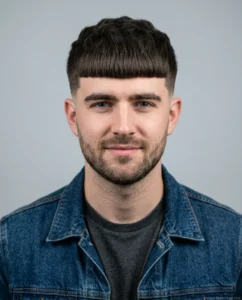
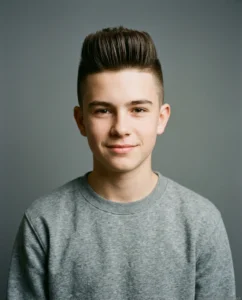
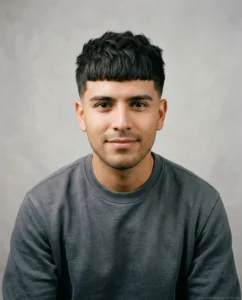
Thick hair is said to make a bro flow harder work than it really is. Thick hair holds a flow better than almost any other texture — it just asks for the right length and a cut that respects how much of it there actually is. Here are twelve ways to wear it.
1. Classic Bro Flow

This is the shape most guys picture first: medium length on top, swept straight back off the forehead, sides trimmed close enough that the top does all the talking. Thick hair gives it real body without product doing the heavy lifting. You’ll still want something light-hold to keep flyaways down after a shower, but the base shape needs almost no help.
Does this cut work for a receding hairline?
Yes, actually better than most — pushing thick hair straight back draws attention away from the hairline rather than framing it.
Growth window is short. Most guys get four to five weeks before the sides need a trim again, and the top can go two to three months before it starts looking shaggy instead of styled.
2. Bro Flow with Skin Fade
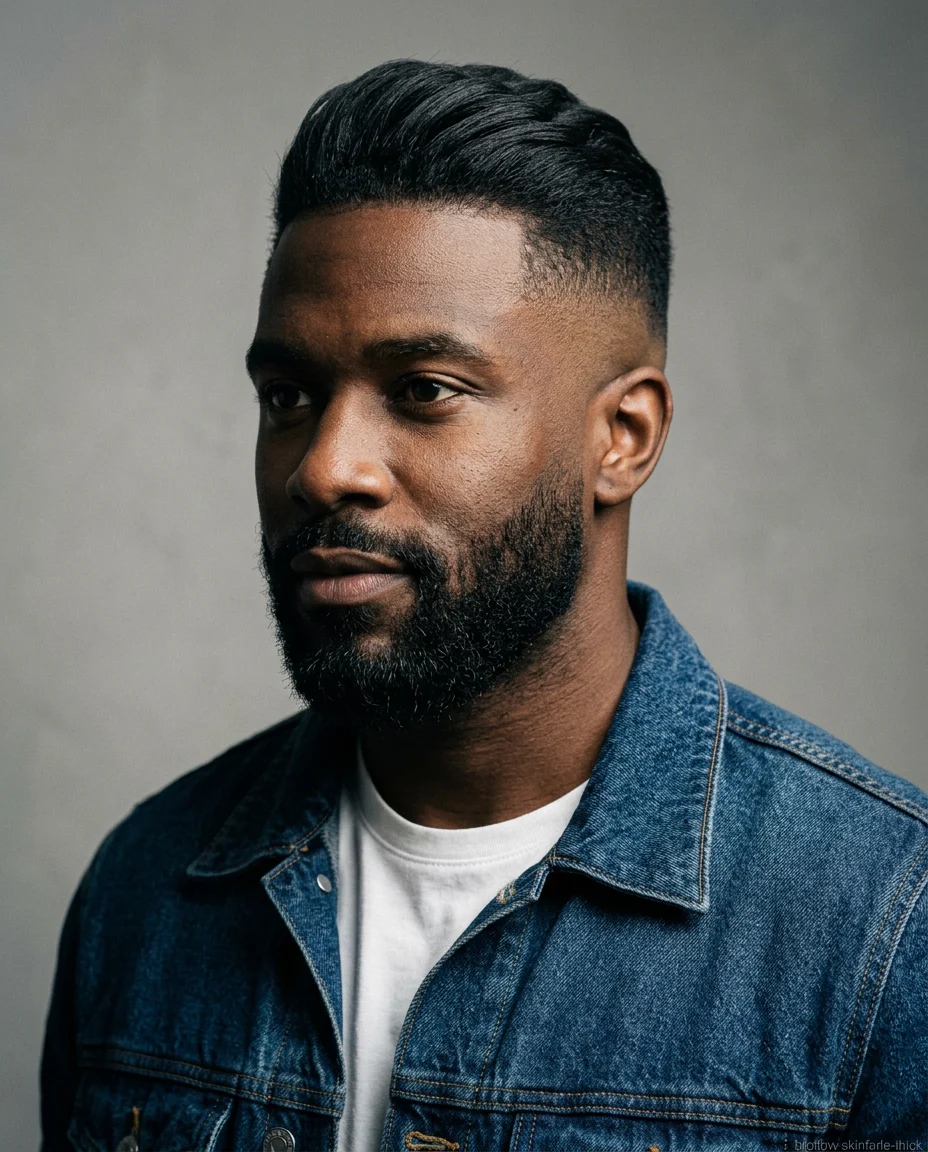
Same swept-back top, but the sides drop all the way to skin instead of a soft taper. It reads sharper, more gym-and-office than surf shop. Thick hair makes the contrast louder — the top looks even denser sitting above bare skin, which is the whole point of pairing these two.
Is a skin fade harder to maintain than a regular taper?
A bit. The fade line grows out visibly within two weeks, so you’re back in the chair sooner than you would be with a taper.
Ask for the fade to start above the ear rather than at it — with thick hair up top, a lower fade line tends to fight the volume instead of framing it.
3. Curly Bro Flow
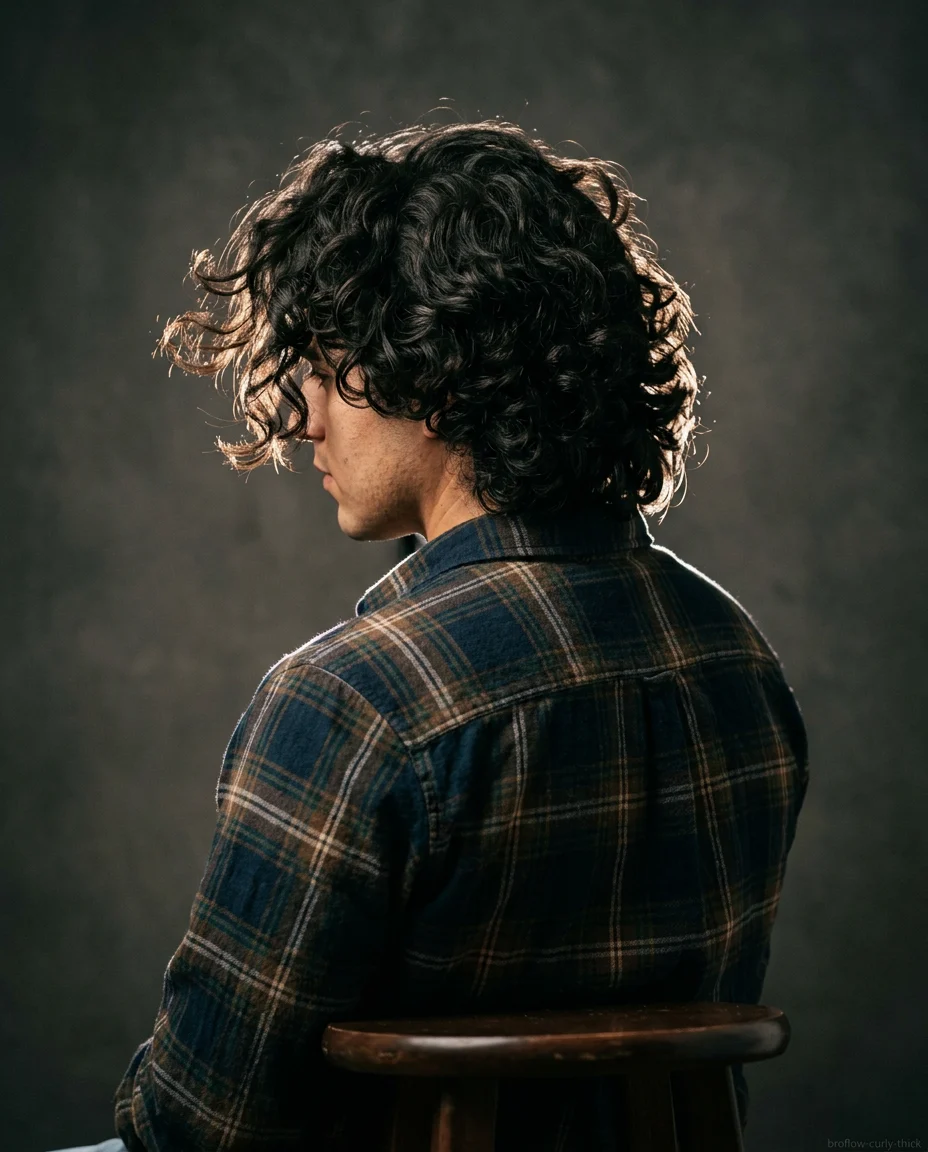
Thick and curly is its own category, and most guides skip it entirely, which is why people get it wrong. The flow shape still works, but you’re not slicking curls back flat — you’re letting them fall into a loose sweep and using a diffuser to keep the pattern instead of blowing it out straight.
Will curly hair ruin the “flow” look?
No, but it changes it. Expect a wavier, less uniform sweep rather than the smooth glass-like fall you’d get with straight thick hair.
Skip anything with alcohol in it. A curl cream with light hold does more here than a wax or pomade ever will.
4. Bro Flow with Middle Part

Split the top down the center and let it fall to both sides instead of sweeping back in one direction. It’s had a resurgence for a reason — thick hair holds a middle part without looking flat, which is the risk this style runs on finer hair.
Does a middle part suit every face shape?
Rounder faces should be careful — the horizontal fall on both sides can widen the face. Longer or oval faces handle it easily.
This one needs a blow-dry with a round brush to set the part, not just a comb. Skipping that step is the most common reason it falls flat by midday.
5. Textured Bro Flow with Taper

A textured version uses a point-cut top instead of a blunt one, so the ends look choppy rather than smooth. Paired with a taper instead of a fade, it’s the lower-maintenance option on this list. Thick hair carries texture cuts especially well because there’s enough density for the choppy ends to actually show.
Do I need a specific product for texture to show?
A matte clay or paste works best — anything glossy flattens the texture and pushes the look back toward the classic sweep.
You can stretch six to seven weeks between cuts here, longer than almost anything else on this list, since a taper grows out gradually instead of leaving a hard line.
6. Bro Flow Mullet Hybrid
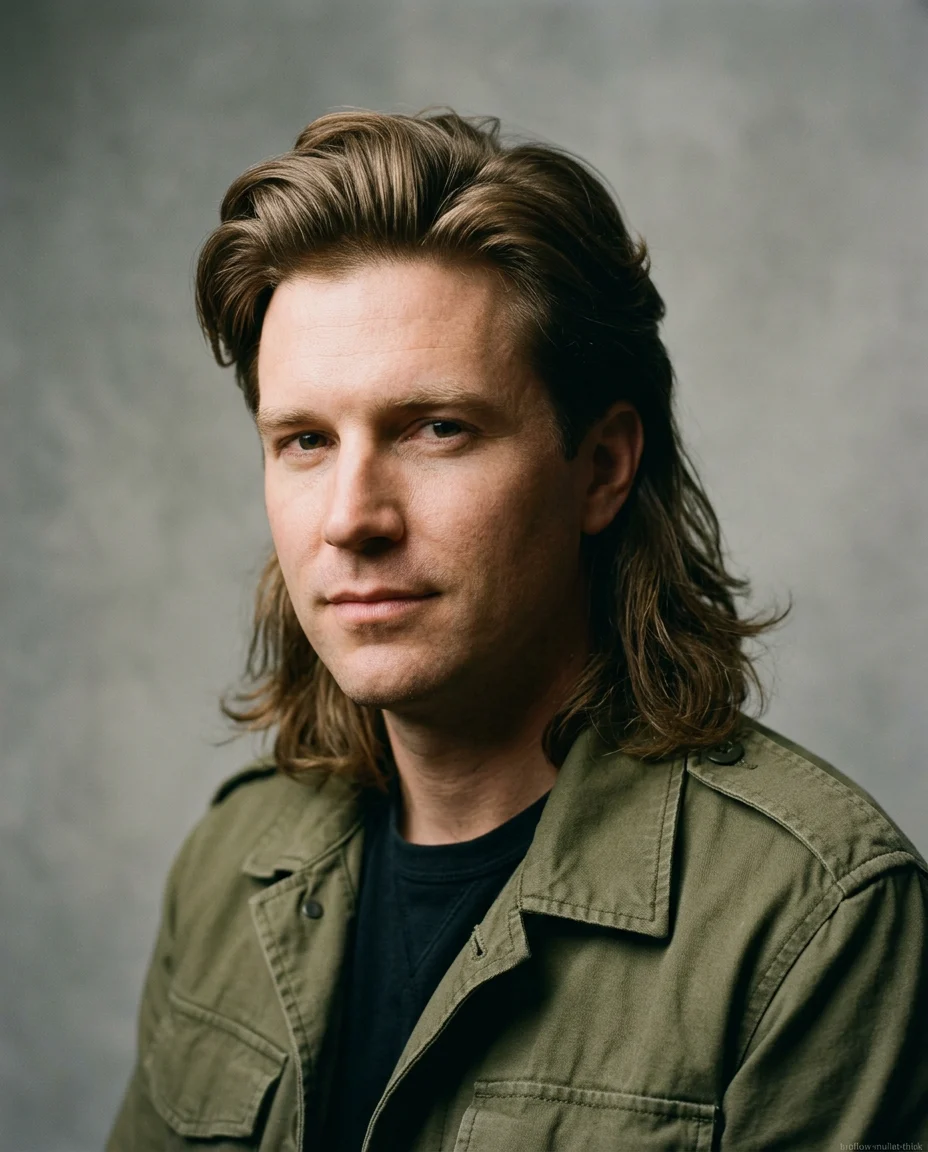
Keep the swept-back front and top, then let the back grow out past the collar instead of tapering it in. It’s a commitment cut. And it’s not subtle. Thick hair back there grows fast, roughly half an inch a month, so this one needs patience before it looks intentional instead of just overdue for a trim.
How long before the back actually looks like a mullet?
Around three to four months from a standard cut, depending on how long the back was left the first time.
Barbers will tell you this works with any texture. The honest answer is it depends on your workplace more than your hair.
7. Bro Flow with Undercut
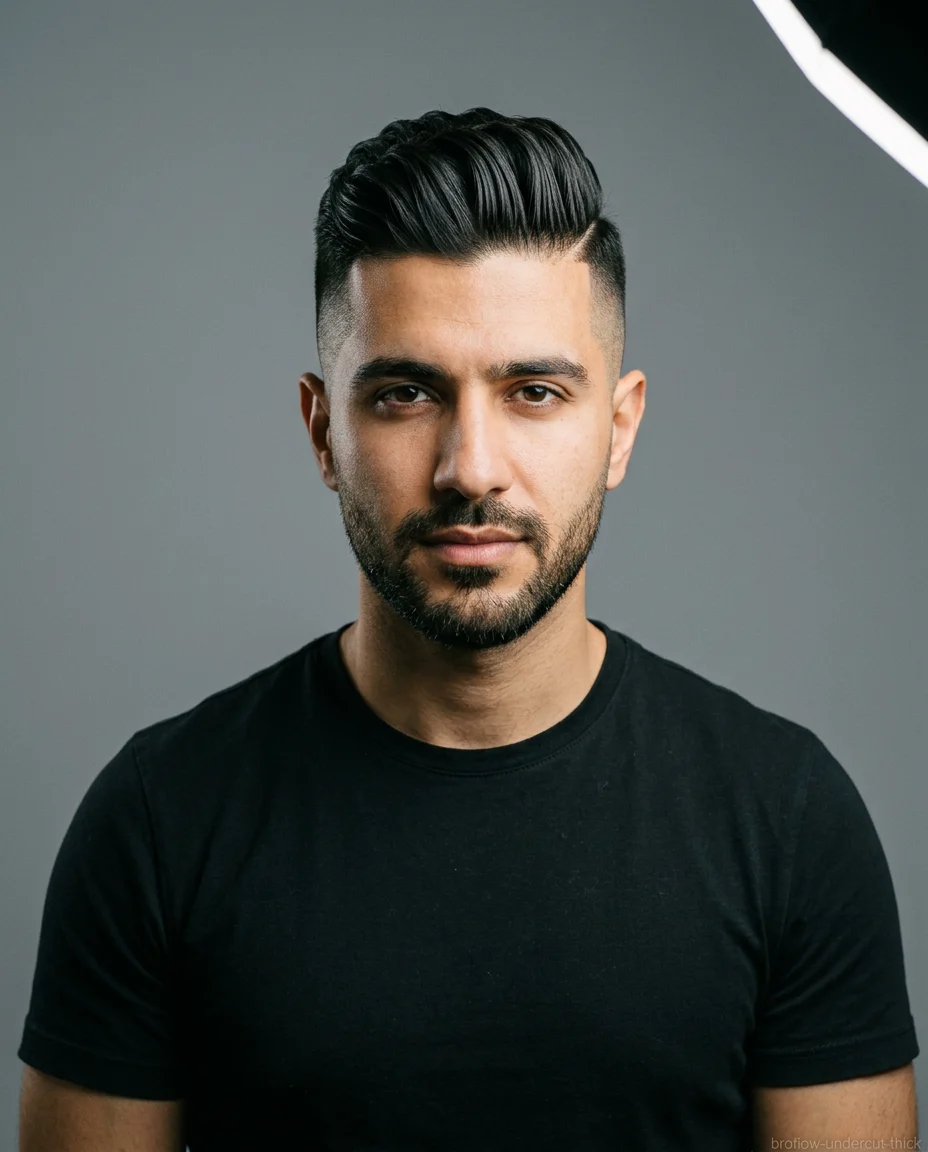
The disconnected version: sides and back buzzed short and left that way, with a hard line separating them from the long swept top rather than a gradual fade. Thick hair makes the disconnection look more deliberate, since the volume up top reads as a clear contrast against the buzzed sides.
Is a disconnected undercut higher maintenance than a fade?
The sides need less attention since there’s no blend line to maintain, but the top needs daily styling to keep the contrast sharp.
This is one of the few cuts on this list where growing it out looks worse before it looks better — the hard line takes months to soften on its own.
8. Wavy Bro Flow

Wavy thick hair splits the difference between the classic sweep and the curly version — natural movement without a defined curl pattern to manage. Air-drying with a sea salt spray usually gets you further here than a blow-dryer, which tends to smooth waves out entirely.
Should waves be styled wet or dry?
Apply product to damp hair, then let it air-dry most of the way. Styling fully dry hair rarely reactivates the wave pattern.
This texture holds a flow for two to three days without a wash, longer than straight thick hair, which tends to fall flat by day two.
9. Bro Flow with Low Fade
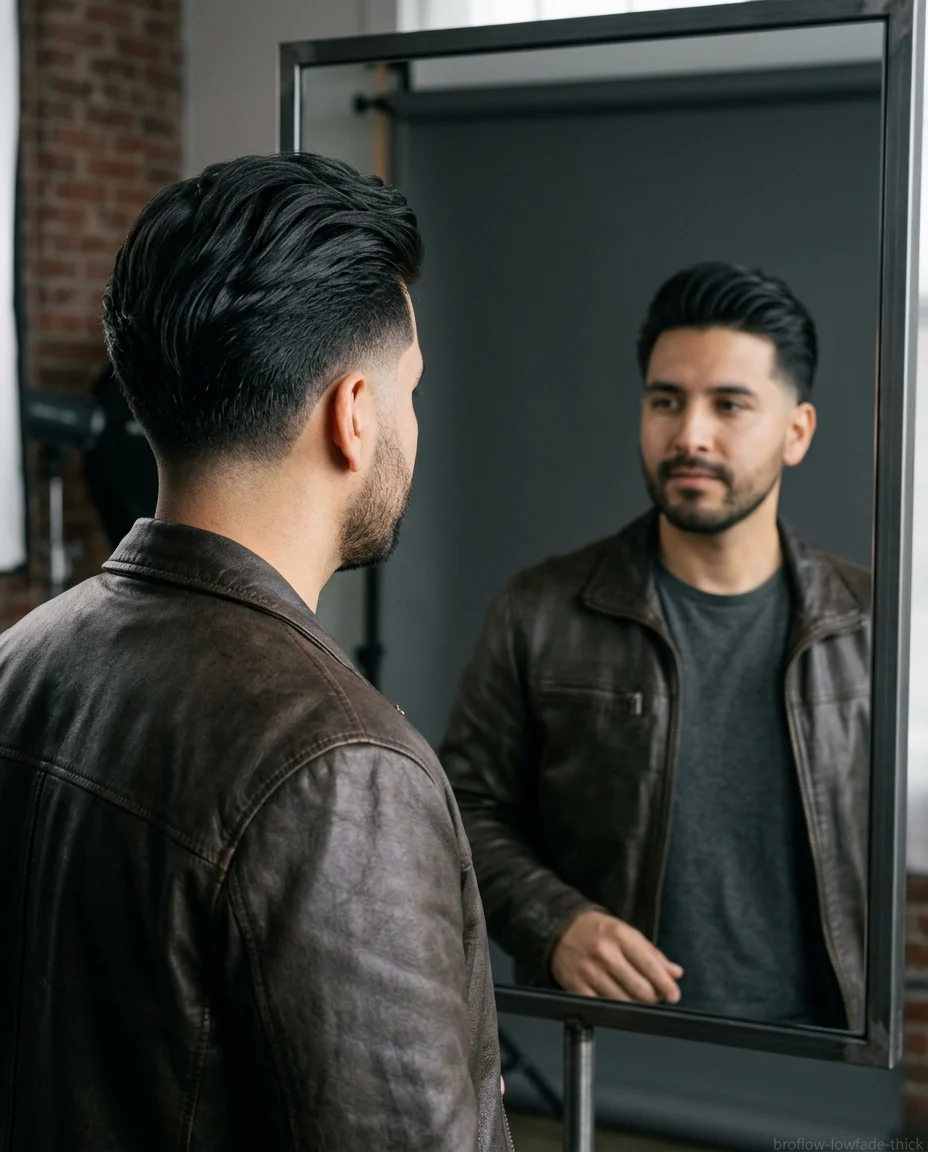
A low fade starts closer to the neckline than a mid or high fade, keeping most of the side length intact. It’s the version that ages best in an office setting — less dramatic than a skin fade, still cleaner than a straight taper. Thick hair on top balances it out without looking top-heavy.
Does a low fade need touch-ups as often as a high fade?
Less often. Because the fade sits lower, regrowth is less visible, so five to six weeks between cuts is realistic instead of three.
Ask your barber to leave slightly more length at the temple. With thick hair, a too-tight temple fade can make the top look disproportionately large.
10. Slicked Bro Flow
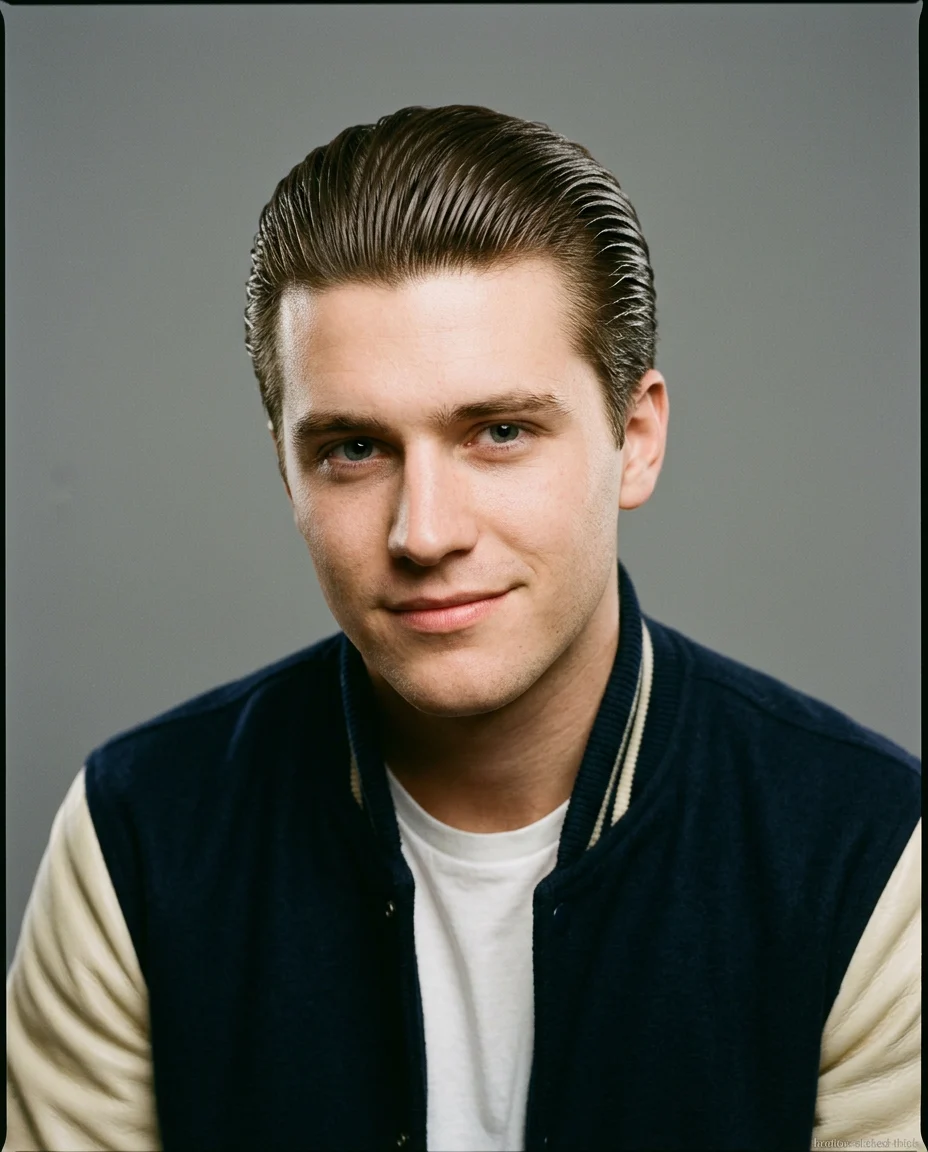
Wet-look styling, high shine, every strand in place — this version trades texture for control. A strong-hold pomade with real shine, not a matte clay, gets you there. Thick hair takes this style well since the density hides the scalp show-through that thinner hair struggles with under heavy product.
Is this style harder to wash out than a matte look?
Yes, oil-based pomades need shampoo, not just water, or you’ll end up with residue buildup after a few days.
This one photographs better than it feels. Expect a stiffer, less natural texture to the touch than any other cut on this list.
11. Bro Flow with Long Layers
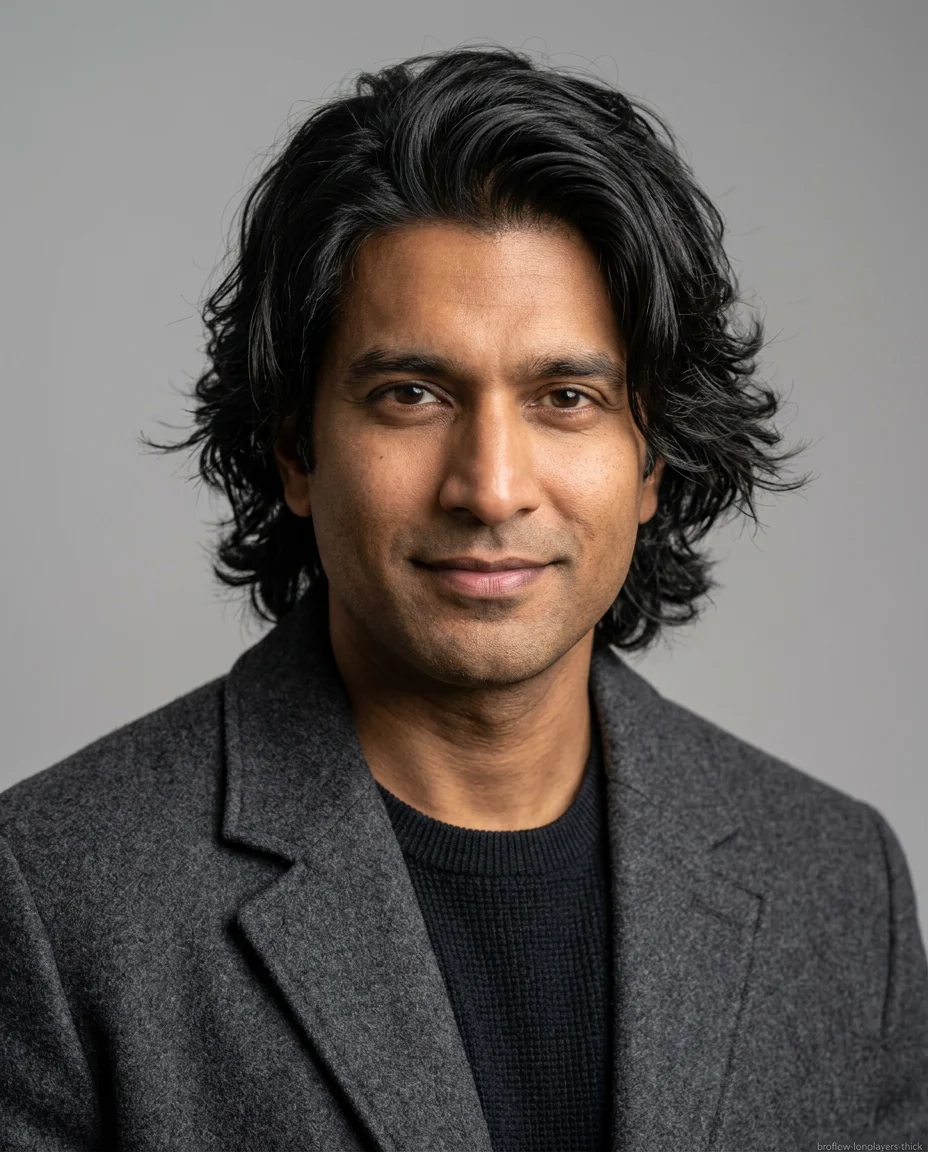
Layering the top instead of cutting it blunt removes weight without shortening the overall length, which is exactly what thick hair usually needs. Without layers, thick hair on top tends to sit like a helmet. With them, it moves.
Will layering make thick hair look thinner?
It reduces bulk, not density — the hair still looks full, it just falls with more shape instead of sitting in one solid block.
This is the cut to ask for if your last flow felt heavy or hard to move. Many barbers under-layer thick hair by default unless you specifically ask for it.
12. Bro Flow Curtain Fringe
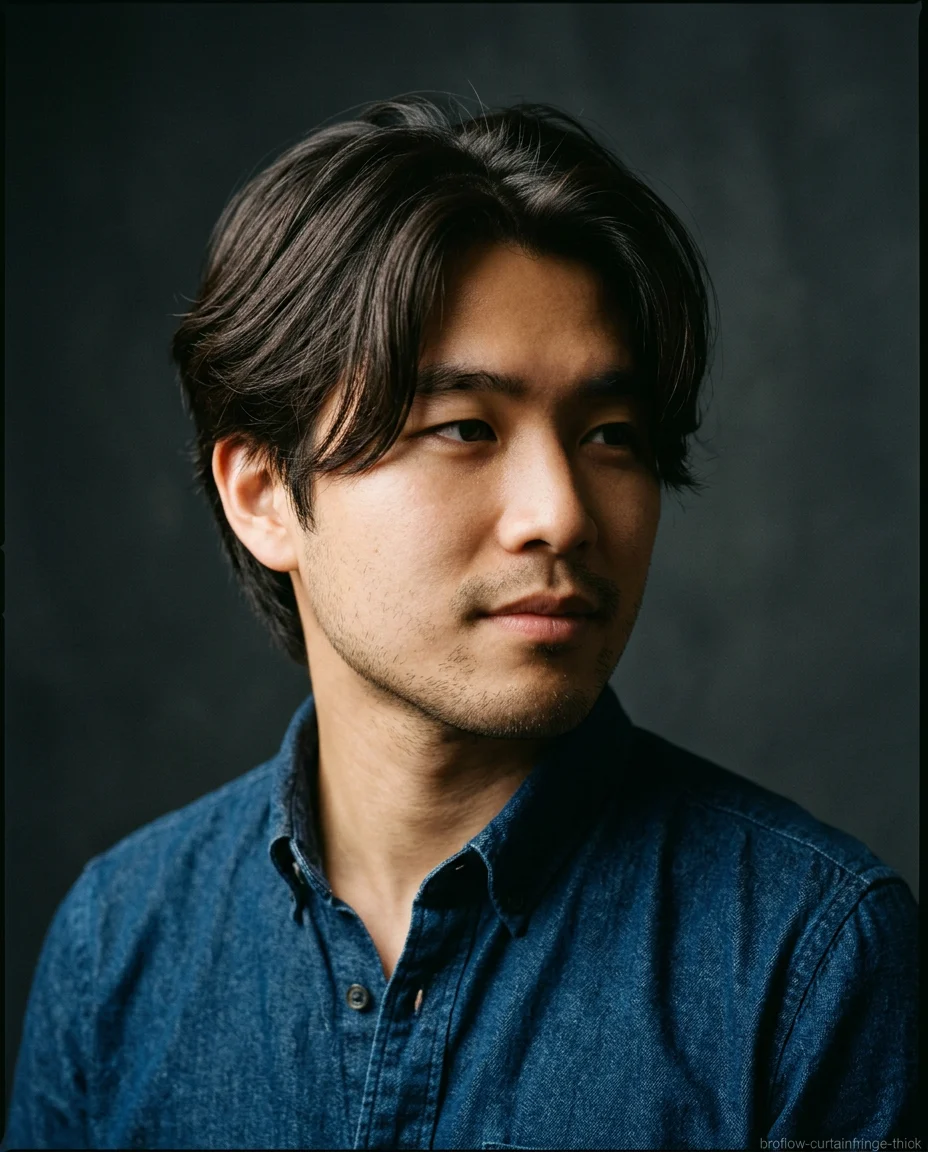
Instead of sweeping the whole top straight back, the front section splits into a soft curtain fringe that frames the forehead on both sides. It’s a softer entry point into the bro flow family, and it works particularly well for guys easing out of a longer growing-out phase.
Does this style need bangs to actually fall as a curtain?
You need at least three to four inches of length at the front — anything shorter won’t have enough weight to fall into the split.
Blow-dry the fringe forward first, then part it, rather than parting wet hair straight away. Skipping that step is the most common reason the curtain doesn’t sit right by afternoon.