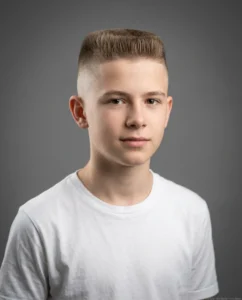
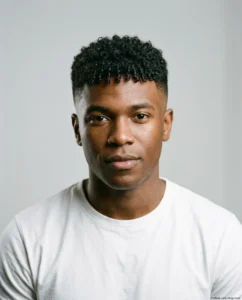
Thick hair is a genuine advantage — most men with fine or thinning hair would trade places with you immediately. But thick hair comes with its own specific set of problems that nobody really talks about: the sides puff out, the top gets heavy, styles collapse by midday, and a bad haircut can make your head look twice its actual size. A fade solves most of that.
The fade removes bulk from the sides — exactly where thick hair causes the most trouble — and gives the whole head a clean, structured shape. The 10 styles below were chosen specifically because they work with thick hair’s natural density rather than fighting it. Each one has been picked for a different reason. Some use the thickness as a feature. Others manage it so it stops being a problem. All of them look considerably better than just letting thick hair do whatever it wants.
1. Mid Fade with Thick Textured Crop

The textured crop is probably the single best haircut for thick hair. The mid fade removes the bulk from the sides cleanly, the crop keeps the top at a manageable length — around 1.5 to 2.5 inches — and the texture breaks up the density so the hair doesn’t sit in one heavy block on top of the head. It works on straight thick hair, wavy thick hair, and everything in between.
What thick hair does well in a textured crop is hold. Thin hair needs product to maintain texture. Thick hair holds it naturally — the strands have enough weight and structure to stay where you put them. A small amount of matte clay worked through dry hair and scrunched slightly is genuinely all most men need. More product than that and the thickness starts to weigh the texture down rather than support it.
2. Skin Fade with Thick Side Part

Thick hair and a side part is a combination that has been working in barbershops for about 80 years. The reason is simple — thick hair holds a side part naturally. No spray, no product, no pins. The weight of the strands keeps them in the direction you comb them. The skin fade underneath removes the side bulk that would otherwise make the side part look wide and heavy, and the result is one of the cleanest, most polished looks you can get.
The trade-off is maintenance. Skin fades need refreshing every 10 to 14 days — the precision of the graduation is what makes the style work, and it deteriorates quickly as the hair grows. If that’s a problem, a mid fade version of this style works almost as well and gives you an extra week before it starts to look grown-out. A light-hold pomade combed through the top is enough to keep everything in place all day.
3. Low Fade with Thick Natural Top

The low fade with a natural thick top is about letting the hair do what it does, with just enough structure at the sides to make it look intentional. The graduation starts close to the hairline and stays subtle — nothing dramatic — while the thick natural top is left at its natural volume and shape. For men with genuinely thick hair who want to embrace the density rather than fight it, this is often the best starting point.
The honest reality of this style is that it works better on some thick hair types than others. Tight coils and kinked textures do particularly well — the natural shape has enough definition to read as intentional on its own. Very straight thick hair can sometimes look heavy and formless without some texturizing or product to break it up. Worth discussing with your barber before committing to the length.
4. High Fade with Thick Slick Back

Thick hair and a slick back is one of those combinations where the texture becomes an asset rather than a liability. The high fade takes the sides all the way up — tight, precise, almost architectural — and the thick hair on top is slicked straight back. Thick hair holds the slick back shape all day without constant reapplication. Fine hair slips out of position. Thick hair stays where you put it.
The silhouette is dramatic on purpose — bare sides, full structured top — and the high fade with thick hair creates more visual impact than the same style on thinner hair because the contrast is sharper. You need at least 3 to 4 inches on top for the slick back to have enough length to read properly. A medium-hold pomade with some shine worked through damp hair and combed straight back is the classic approach. Don’t use too much — thick hair picks up product quickly and too much makes it look wet and heavy rather than sleek.
5. Drop Fade with Thick Fringe

The drop fade with a thick fringe is one of the more interesting combinations on this list because thick hair does something unique with a fringe — it gives it weight and presence that thinner hair simply doesn’t have. The fringe sits forward with authority. It doesn’t flop or go flat. It stays. The drop fade curving down behind the ear keeps the sides from competing with the strong fringe, and the result is a clean, modern look with a clear focal point.
The main challenge with a thick fringe is keeping it from getting too heavy. Beyond a certain length, thick hair fringe starts to pull downward and cover the eyes rather than sitting cleanly above the eyebrows. The sweet spot for thick hair is around 2 to 2.5 inches at the front — slightly shorter than the same style on finer hair because thick hair appears longer than it measures. No product needed for most thick hair fringe styles — the weight of the strands does all the work.
6. Taper Fade with Thick Crew Cut

The crew cut on thick hair is one of the most reliable haircuts in existence. It has been working for decades across every age group, every profession, every context. The taper fade — more gradual than a standard fade — keeps the sides conservative and clean, and the thick crew cut on top sits neat and structured without needing any styling. Thick hair at crew cut length holds itself in shape naturally. You wash it, it dries, it looks correct.
The trade-off with the crew cut on thick hair is that the top can look flat and uniform without some internal texturizing. Ask your barber to work with thinning shears through the top after the cut — not enough to change the length, just enough to remove interior density. The difference between a thinned crew cut and an unthinned one on thick hair is significant. One looks sculpted. The other looks like a block sitting on your head.
7. Temple Fade with Thick Comb Over

The temple fade with a thick comb over is the most office-appropriate style on this list and one of the most underrated. The fade tightens up only around the temples and forehead hairline, leaving the sides relatively full — which suits thick hair well because it prevents the sides from looking too sparse. The comb over on top uses the natural weight of thick hair to create a full, structured sweep to one side that looks genuinely polished.
Thick hair handles the comb over better than almost any other texture. The strands are heavy enough to stay in direction without product fighting them, and the natural density creates a comb over with visible body and movement rather than the flat, thin look that fine hair produces. A light-hold cream finger-combed to one side is all the product this needs. Anything heavier makes thick hair look oily rather than styled.
8. Mid Fade with Thick Pompadour

Thick hair was made for the pompadour. The style requires volume, structure, and the ability to hold a shape for hours — thick hair delivers all three without much product assistance. The mid fade keeps the sides defined from the temples without going as extreme as a skin fade, and the thick pompadour on top builds upward and back into a full, structured shape that would take much more effort to achieve with finer hair.
The pompadour on thick hair has one specific challenge — weight management. Too much length on top and the thickness causes the whole thing to collapse forward rather than sweep back. Around 3 to 4 inches on top is the sweet spot. Long enough for the sweep to read, short enough for the thick strands to hold the upward direction. A medium-hold pomade with some shine, worked through and combed back with a round brush and blow dryer on medium heat, builds the shape. Let it cool before touching — that’s when thick hair sets.
9. Skin Fade with Thick Quiff

The thick quiff with a skin fade is one of the highest-impact styles on this list. The skin fade creates maximum contrast — bare sides, full volume on top — and the thick quiff builds upward and forward into a shape that catches light and commands attention. Thick hair gives the quiff a fullness and presence that thinner hair has to work very hard to approximate. The natural density does most of the heavy lifting.
Getting the shape right with thick hair is slightly different from thinner hair. Thick hair is heavier, which means it resists going upward more than fine hair does. A blow dryer on medium heat aimed at the roots — working upward with a round brush — overcomes that resistance and builds the lift. Once it’s shaped and cooled, a matte clay or paste adds definition and hold without making the quiff look stiff. Avoid gel — on thick hair, gel makes the quiff look like a solid mass rather than textured volume.
10. Low Fade with Thick French Crop

The French crop on thick hair is probably the most low-maintenance option on this list and it looks better on thick hair than almost any other texture. The low fade keeps the sides subtle and the blunt fringe across the top creates a clean horizontal line that thick hair holds sharply — the density of the strands keeps the fringe edge crisp and defined between cuts in a way that fine hair simply can’t maintain.
Zero styling required. That’s the honest selling point of the French crop on thick hair. You wash it, it dries into the shape, and the thick fringe sits exactly where it should without any product or effort. The only maintenance requirement is the fringe line itself — it needs to stay clean, which means barber visits every 4 to 5 weeks. Let it go longer than that and the blunt edge that makes the style work grows out and the whole shape falls apart.
Final Thoughts
Thick hair responds to a fade better than almost any other texture — the contrast between the dense top and the clean graduated sides creates a shape that thinner hair has to work much harder to achieve. The 10 styles above cover the full range from zero-effort (the French crop, the crew cut) to statement cuts that use the thickness as a genuine feature (the pompadour, the slick back, the quiff).
The one thing every style on this list has in common is texturizing. Ask your barber to remove interior bulk from the top on every single cut — it’s the most consistently impactful thing a barber can do for thick hair and it’s almost always skipped unless you ask for it specifically. That single request will improve every haircut you get from this point forward.