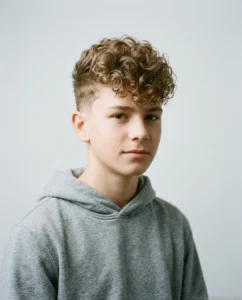
Thick hair and a low fade is one of the more satisfying combinations a barber can work with — and one of the more frustrating hair types to manage on your own without the right cut. Left unmanaged, thick hair adds bulk in all the wrong places and turns any style into a battle by midday. But get it into the right shape with a low fade underneath and the weight suddenly becomes an asset. The volume that worked against you starts working for you.
The low fade is the right call for thick hair specifically because it removes bulk from the sides gradually rather than abruptly. A mid or high fade on thick hair can look disconnected — the contrast between the full top and the closely shaved sides is too stark. The low fade eases the transition, keeping the overall shape balanced and proportional. These 9 cuts cover the full range of what thick hair can pull off when it’s cut properly, from tight and structured to loose and relaxed.
1. Low Fade with Thick Textured Crop

The textured crop is one of the best things that ever happened to thick hair. Without texturing, a short crop on thick hair just sits as one dense, heavy block — no movement, no shape, no interest. With proper texturing — point-cutting or razor work through the top section — the weight breaks up and each section of hair sits independently, giving the top real visual texture rather than a flat mat. At around an inch to an inch and a half, this is short enough to keep the thickness manageable but long enough to show the texture properly. The low fade underneath removes the bulk from the sides without taking the cut too far into high-contrast territory.
This works better than most people expect on thick hair, particularly if you’ve been fighting bulk your whole life and defaulting to longer cuts to try to weigh it down. Shorter and well-textured actually controls thick hair more effectively than length does. Maintenance is every 3 to 4 weeks — thick hair grows visibly faster than finer hair types, so the clean fade line starts blurring sooner. No product needed daily, but a small amount of matte clay worked through the top on damp hair adds definition without making the cut look heavy or product-heavy.
2. Low Fade with Thick Side Part

Thick hair makes a side part look genuinely good in a way that finer hair types struggle to replicate. The volume on the longer side sweeps across with real body and authority — it doesn’t flop or deflate by afternoon the way thinner hair does. A hard part shaved in at the natural part line adds precision to what the hair is already doing naturally, turning a casual comb-over into something that reads as deliberate and polished. With a low skin fade on the shorter side, this is one of the more versatile cuts on this list — it goes from casual Friday to client meeting without any adjustment.
Thick hair does need thinning on the longer side for this cut to sit properly. Without it, the weight of the hair lifts slightly from the roots and the comb-over loses its flat, controlled look within a couple of hours. A good barber will thin the underside of the longer section with thinning shears before finishing — if yours doesn’t mention this, bring it up yourself. A medium-hold pomade, applied on damp hair and combed across, keeps everything in place. The hard part needs touching up every 10 to 14 days. The rest of the cut holds well for 3 to 4 weeks.
3. Low Fade with Thick Messy Top

The messy top is where thick hair is genuinely in its element. Other hair types work to create the volume and texture that this look needs. Thick hair just has it. The top is left at a medium length — around 3 to 4 inches — with the ends textured and the hair pushed upward and slightly forward with the fingers rather than combed into any particular direction. The result is a cut that looks effortless in the best possible way. The low fade keeps the sides controlled so the fullness on top reads as styled rather than just unkempt.
Styling takes about 2 minutes. On damp hair after a shower, work a small amount of matte clay or a light wax through the top section with your fingers, push it upward and slightly forward, and leave it. Don’t comb it, don’t smooth it — the deliberate roughness is the point. Thick hair holds this shape all day without much assistance. The honest trade-off is that without regular thinning appointments the top can get too heavy and start lying flat rather than sitting with the loose, textured movement you want. Every other barber visit, ask for internal thinning on the top section to keep the weight manageable.
4. Low Fade with Thick Curtain Hair

Curtain hair on thick straight hair — particularly Asian hair types where thickness and density are most pronounced — is one of the cleaner looks going right now. The hair parts in the middle and falls to either side, framing the face with sections that have real weight and presence. On thick hair the curtains don’t just hang — they drape. The low fade underneath is what modernizes the style and stops it from reading like a throwback. Without the fade, long curtain hair on thick hair looks either vintage or simply overgrown. With it, the combination is current and deliberate.
The length on this cut needs to reach at least to the cheekbone — ideally past the ear — for the curtain shape to develop properly. Shorter than that and there isn’t enough length for the sections to fall convincingly to either side. The honest challenge with thick curtain hair is bulk management. The sections can get very heavy as the length increases, which causes them to push outward rather than fall straight. A lightweight serum or hair oil applied to damp sections and then left to dry flat keeps the weight controlled. Ask for thinning on the ends specifically, not the roots — thinning at the roots on thick hair creates unwanted volume.
5. Low Fade with Thick French Crop

Thick hair makes the French crop look more purposeful than it does on any other hair type. The fringe sits flat and dense across the forehead — not because of product but because the hair has enough weight to hold that position naturally. The blunt horizontal line reads sharper on thick hair because there’s no wispiness or thinning at the ends to blur the edge. It’s a bold, geometric look. Not everyone can pull it off, and the fringe length matters more here than in most cuts — too long and it looks heavy, too short and it reads more like an Edgar. The right length is just above the eyebrows, maybe grazing the top of them.
The low skin fade underneath is doing important work on this cut. Thick hair without a close fade on the sides can look boxy — too much volume everywhere with no contrast to give the shape definition. The skin fade from just above the ear creates the visual separation that makes the cropped top look intentional. Maintenance is every 2 to 3 weeks for the fringe line specifically — thick hair grows fast and the blunt edge starts losing its precision quickly. The rest of the cut can go a bit longer, but the fringe is what defines this style and it needs to stay sharp.
6. Low Fade with Thick Quiff

Thick hair builds a quiff with almost no effort. Other hair types need product and blow drying to create the forward lift and volume that a quiff requires. Thick hair just does it naturally — push it forward and slightly upward with your fingers on damp hair, let it set, and you have a quiff. The challenge isn’t building the volume, it’s controlling it. Too much length and the quiff gets top-heavy and starts falling in multiple directions. Too little and there isn’t enough hair to form the shape. Around 3 to 3.5 inches at the front is the sweet spot for most thick hair types.
The low fade here suits the quiff’s slightly casual energy well. A higher fade would push this cut into more formal territory, which works for some guys but isn’t the point of a textured quiff. A small amount of matte clay through the front section on damp hair, pushed forward with the fingers, is all the styling this needs. The clay provides light hold without making the hair look stiff or product-heavy, which on thick hair can happen fast if you use too much. Touch up the fade every 3 weeks or the sides start closing in on the quiff and the height contrast that defines this cut disappears.
7. Low Fade with Thick Pompadour

Thick hair and a pompadour is a combination that barbers genuinely enjoy working on because the hair has enough substance to hold the shape without much assistance. The volume goes upward and slightly back, the sides drop into a low fade, and the whole thing has a natural authority that you simply can’t manufacture with fine hair. What thick hair adds specifically is density — the pompadour doesn’t just go up, it stays up, and the ridges of hair that form across the top catch light in a way that gives the style real depth and dimension.
The styling requirement here is higher than most cuts on this list — about 5 to 7 minutes in the morning. A medium-hold pomade, worked through damp hair, then blow dried upward and slightly back with a round brush to set the shape. Finish with a light pass of pomade over the surface for hold and shine. Thick hair responds well to blow drying because the heat adds temporary structure that helps the style hold longer. Skip the blow dry and the pompadour can drop slightly by midday, especially in warmer weather. The low fade needs touching up every 2 to 3 weeks or the proportions start falling apart as the sides grow in.
8. Low Fade with Thick Slick Back

Thick hair slicked back is one of those cuts where the hair type is genuinely doing most of the work. The density of the hair creates natural ridges as it runs back from the forehead, and those ridges catch light along their length, giving the slick back a depth and dimension that finer hair simply doesn’t have. The low fade underneath keeps the look sharp without letting it tip over into something that reads too formal or theatrical. This is the cut for a job interview, a first date, and a casual dinner with the same outfit on — the range is real.
The one thing to know about slicking back thick hair is product quantity. Thick hair absorbs product quickly, which means most guys use too much trying to get the hold they want, and end up with hair that looks wet and heavy all day rather than sleek and controlled. A medium-hold pomade — applied sparingly on damp hair and combed straight back — gives you 80 percent of the hold with none of the weight. Let it set for a minute before you leave the house. Reapplication during the day is rarely needed. The fade needs a touch-up every 3 weeks or the sides start blending into the slicked top.
9. Low Fade with Thick Faux Hawk

Thick hair builds a faux hawk that holds all day without much help from product. The center strip goes upward with real height and stays there — the density of the hair provides enough structure that you’re mostly just directing it rather than manufacturing volume from scratch. The low fade on the sides keeps it from looking too aggressive. A mid or high fade on a thick faux hawk pushes the cut into mohawk territory aesthetically, which is a different thing entirely. The low version is bolder than a quiff but wearable enough for most environments, which is roughly the right middle ground for a faux hawk in 2026.
Styling takes about 4 to 5 minutes. A medium-hold clay or a light pomade worked through the center section on damp hair, then pushed upward with the fingers and pinched slightly along the ridge to define the center strip. Let it air dry in position — blow drying adds too much volume on thick hair and the faux hawk can end up looking wider than intended. The real maintenance challenge here is keeping the center section at the right length. Too long and the weight of thick hair starts pulling the center strip down and the faux hawk shape collapses. Around 2.5 to 3 inches on top is the optimal length for most thick hair types.