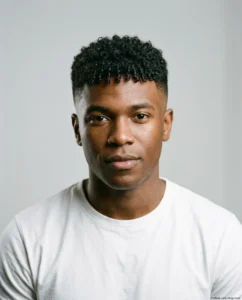
1. Classic Medium Fade with Side Part

A hard part does something thin hair can’t manage on its own — it fakes density. The line itself reads as a shape, so the eye stops noticing how much scalp shows through the top.
Barbers usually cut this at a number 3 on the sides, blending up around the temple. You’ll want a matte clay here, not gel, or the part looks wet and thin instead of sharp.
Redo the part every morning. Skip a day and thin strands fall flat across the line by noon, and the whole look reads unfinished by lunch.
2. Medium Fade Crew Cut

Short on top, tapered into a medium fade. This hides thinning fastest, because there’s no length left to look sparse — nothing past half an inch up top.
And that’s the whole point. Fine hair standing at a short length reads thicker than the same hair grown out to two inches and lying flat.
Upkeep runs every 3 weeks, sometimes 4 if you’re not picky about the fade growing out. Cheap to maintain, but you lose styling flexibility — not a cut you dress up for a night out.
3. Textured Crop with Medium Fade
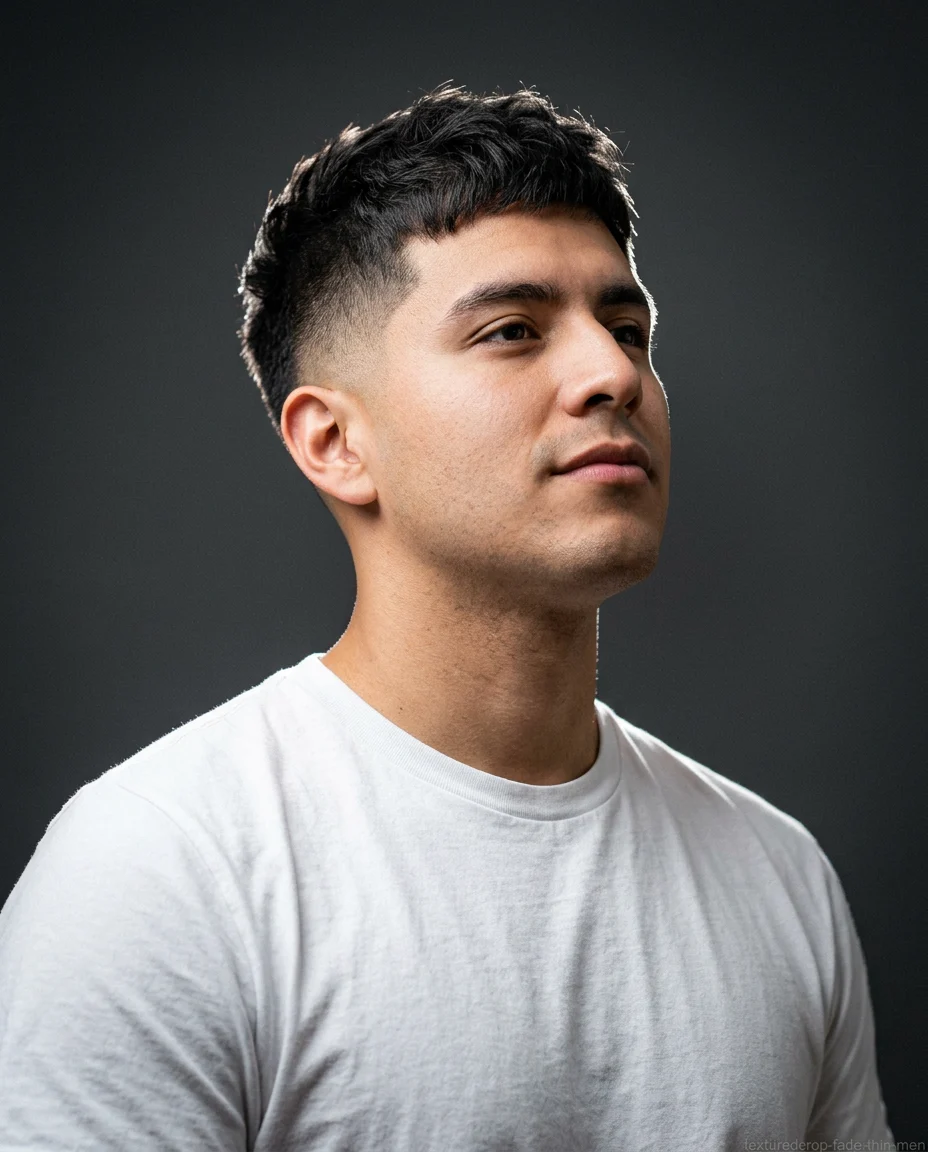
Choppy, disconnected texture on top does more for thin hair than most guys expect. Uneven ends throw shadow, and shadow reads as volume even when the strand count says otherwise.
A texturizing spray at the root, blow-dried up and away, gets you there in under 5 minutes. Skip the heavy pomades. They weigh fine hair down and undo the entire effect.
This needs scissors on top, not clippers — ask for point-cutting specifically, or you’ll end up with a crop that looks patchy instead of textured.
4. Medium Fade Comb Over
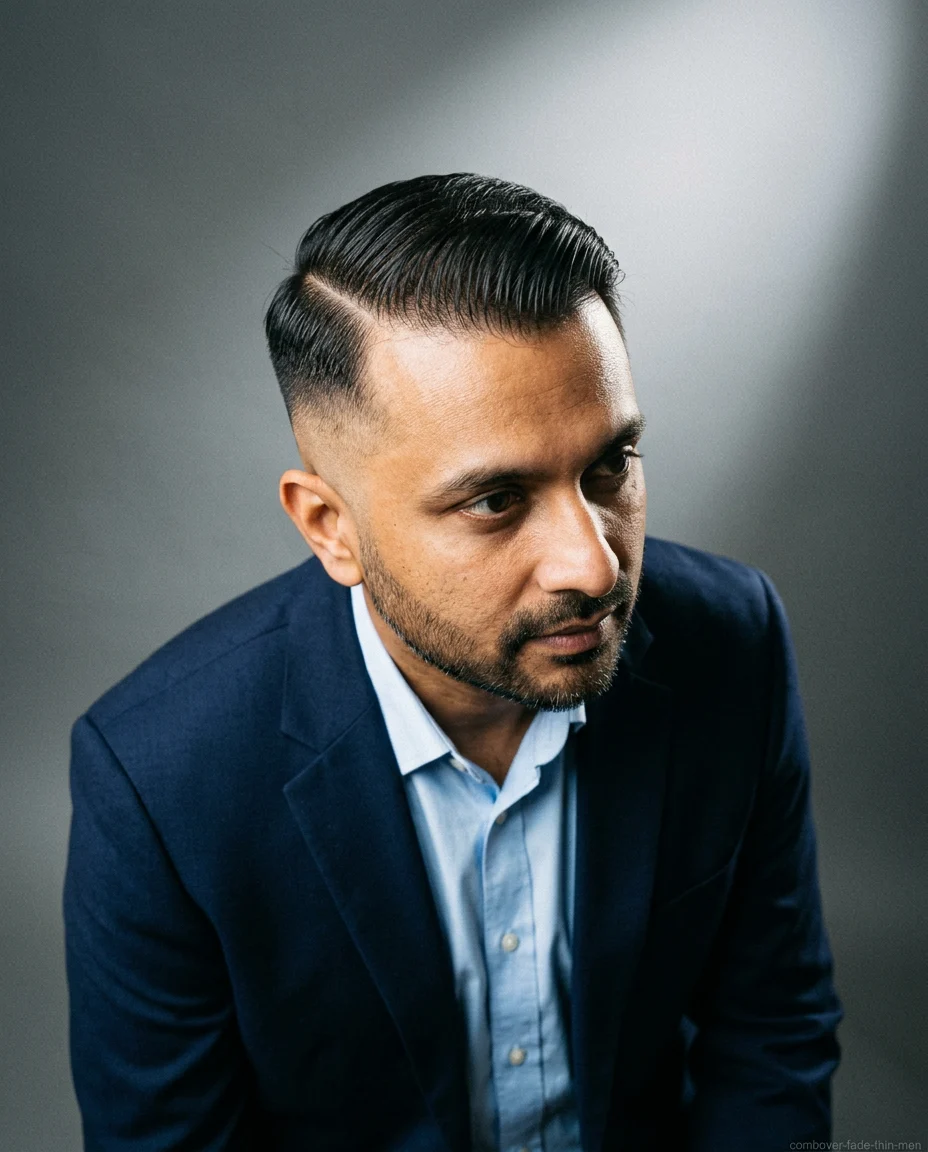
The comb over survives because it’s honest about what thin hair actually needs: length on one side, swept across, with the fade doing the heavy lifting underneath.
Most guides skip this part. The fade has to sit higher than usual, around mid-temple, or the comb over looks like it’s floating over nothing.
A light-hold cream keeps the sweep in place without the shine that exposes thinning at the crown. Reapply midday if you’re out past 6 or 7 hours.
5. Slick Back Medium Fade
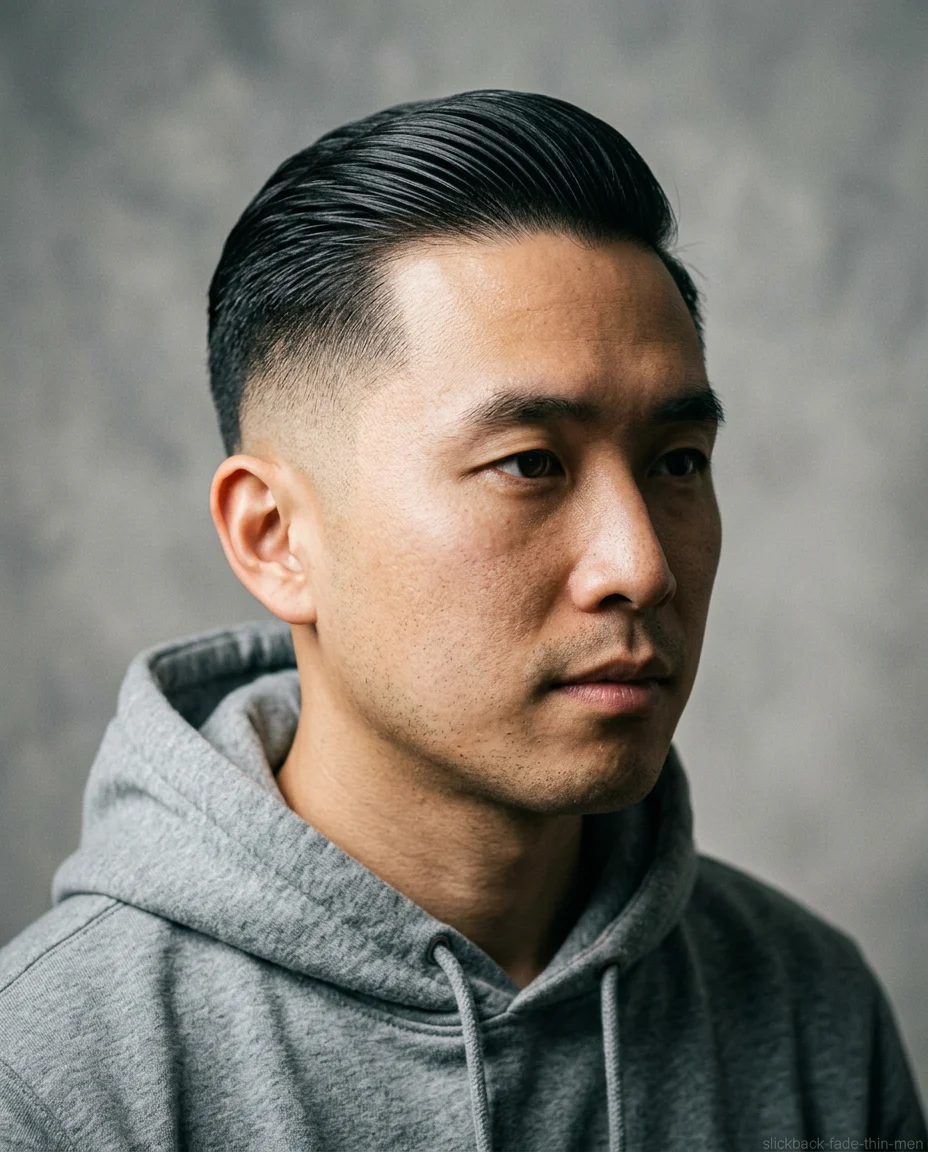
Slicked straight back, this one trades the illusion of thickness for a different kind of confidence. It doesn’t hide thin hair. It just doesn’t apologize for it either.
You’ll want at least 2.5 inches on top for a clean sweep without gaps. Shorter than that and the fade underneath shows through in patches.
The honest answer is this works better on guys who’ve already made peace with a receding line. Slicking back over a low hairline usually backfires.
6. Medium Fade Quiff
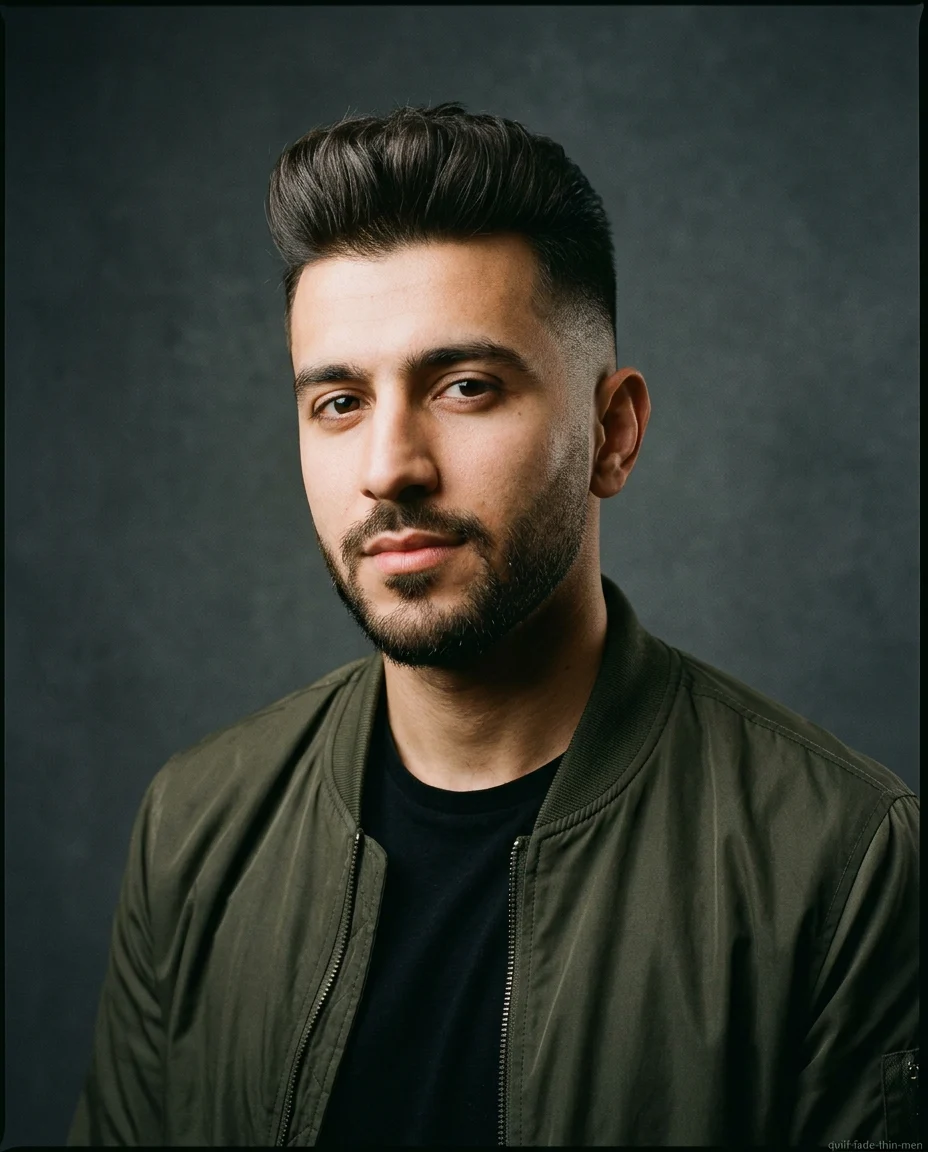
Height at the front, fading down the sides. The quiff is basically an engineering trick for thin hair — lift at the root does what length never can.
A blow-dryer on a round brush, worked against the direction of growth, builds the base. Then a strong-hold paste locks it before gravity wins.
It won’t hold all day in humidity without touch-ups. Carry a travel-size paste if you’re out past noon and expect the lift to matter later.
7. Faux Hawk Medium Fade

A faux hawk pulls hair toward the center, concentrating whatever density thin hair actually has into one visible strip instead of spreading it thin across the scalp.
The fade needs to run tight and high for this one. Anything below mid-fade and the sides compete with the strip instead of framing it.
Styling takes practice — expect the first few tries to look more bedhead than intentional. It’s a cut that rewards repetition, not a first attempt.
8. Medium Fade Buzz Cut
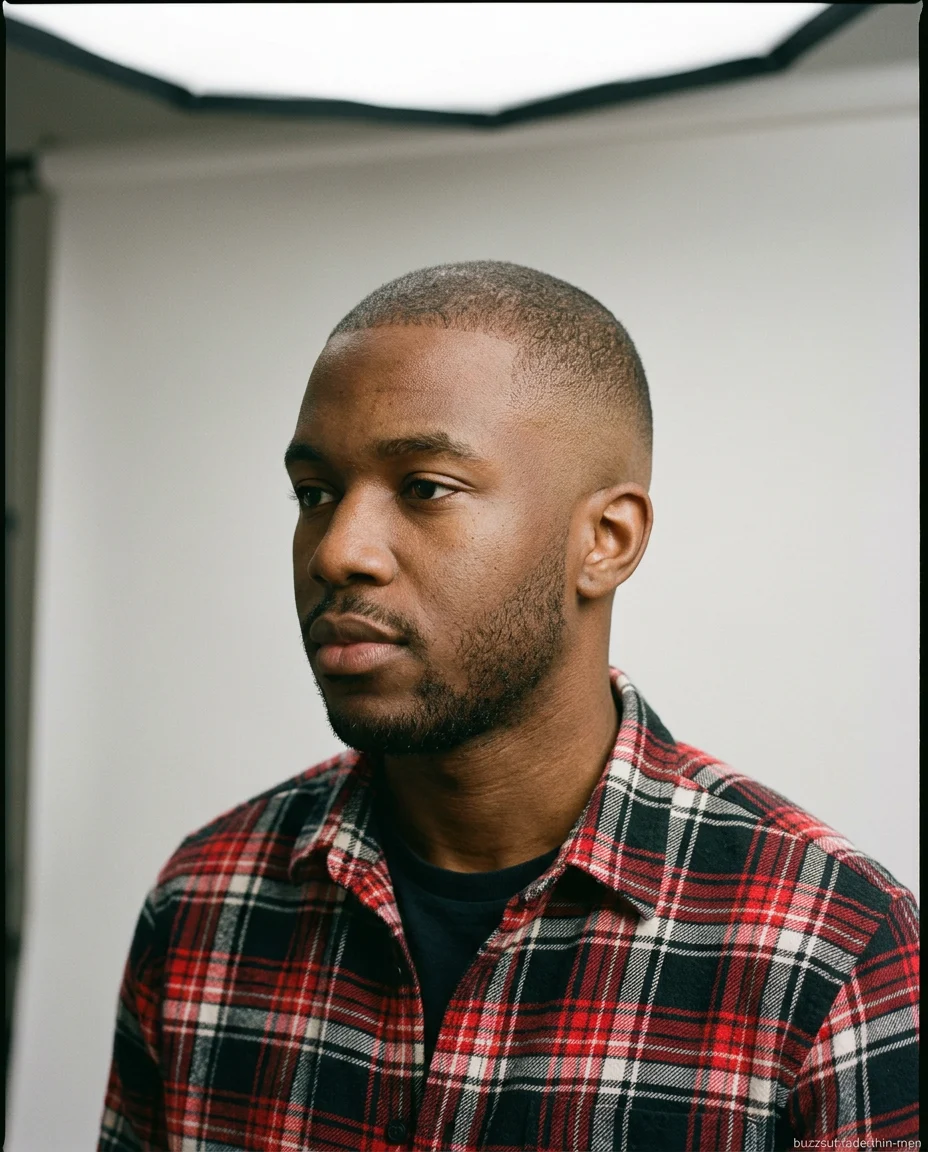
Buzzed to a uniform length on top with a medium fade underneath removes the length-versus-thinning problem entirely. Nothing left to fall flat or show gaps.
Guards between a number 2 and a number 4 on top keep enough texture that it doesn’t read as a shave. Go shorter and it starts looking like a decision made for you, not by you.
Zero styling time, which matters on tight mornings. The trade-off: no option to dress this up for a wedding or an interview.
9. Medium Fade with Hard Part
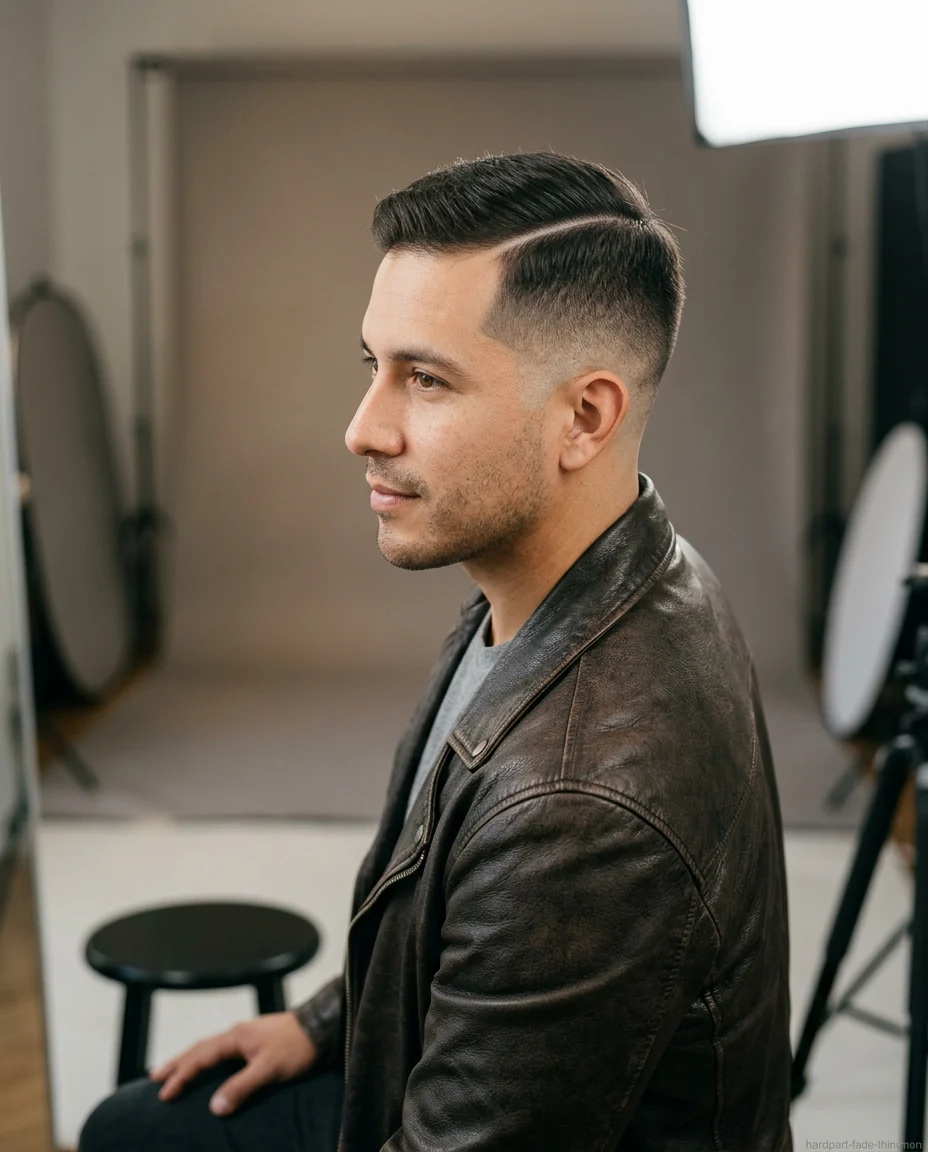
Similar to the side part, but the razor line here goes deeper and stays visible even a few days out — a small detail that reads as intentional grooming, not a lazy part.
Ask specifically for a shaved part, not just a part. Plenty of barbers will comb-part instead unless you name it outright.
The line itself needs a touch-up every 2 weeks, separate from the fade schedule. Skip that and it softens into a regular part within days.
10. Pompadour Medium Fade

Big volume up front, fading hard on the sides. On paper this shouldn’t work for thin hair. In practice, the contrast between the fade and the height is what sells it.
You need real product here — a strong pomade, blow-dried in sections, not just combed up dry. Skipping the blow-dry step is the biggest reason this fails on fine hair.
Budget 15 to 20 minutes every morning. If that’s too much, the quiff above gets you most of the look for a third of the effort.
11. Medium Fade French Crop Fringe

A short, blunt fringe sitting just above the eyebrows does something clever with thin hair — it draws the eye down to a straight, dense-looking edge instead of up toward a thinning crown.
Cut this around 1.5 inches, then point-cut the ends so the fringe doesn’t sit as one flat, thin-looking line.
Fine hair won’t hold a crisp fringe past a day without a light gel, though. Reality check aside, it’s one of the lower-maintenance options here once the initial cut is dialed in.
12. Medium Fade Undercut Slick
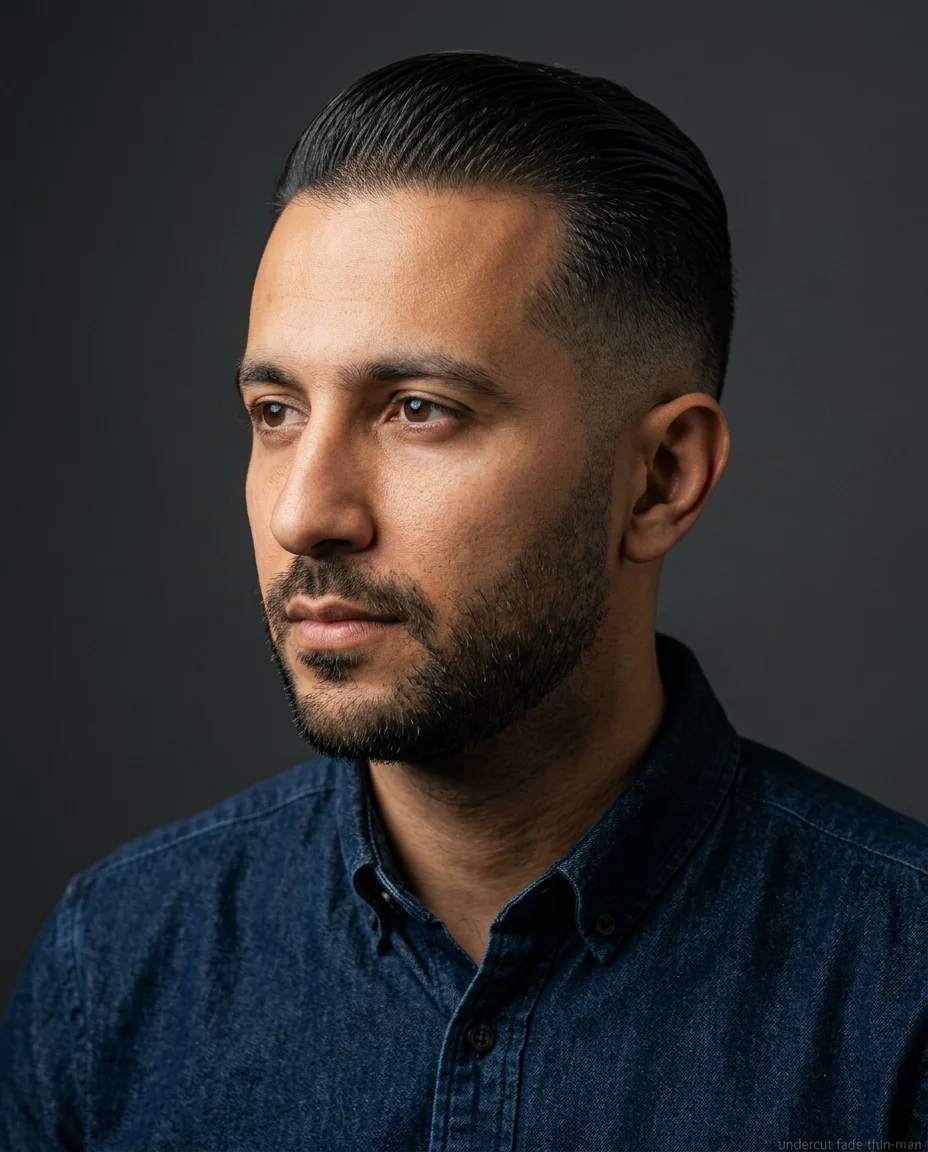
An undercut pushes the fade higher than usual, closer to a disconnect, then slicks whatever’s left on top straight back or off to one side.
Because the sides sit so short, any length up top reads as thicker by comparison. That contrast is doing more work than the actual hair density.
Reapply pomade by early afternoon on a full day out. It’s a sharp look for a few hours, but thin hair loses the slick finish faster than thick hair does — plan around that.