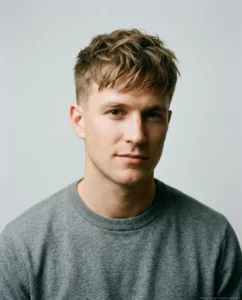
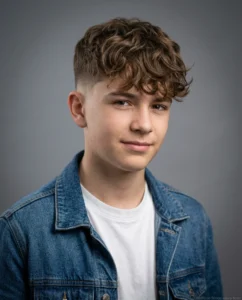
A mid fade sits the blend right between the temple and the crown, which happens to be the spot that works best with curls: tight enough on the sides to read clean, loose enough on top to let the texture actually show. Thirteen versions of it are below, starting with the lowest-maintenance options.
1. Medium Mid Fade with a Curly Fringe
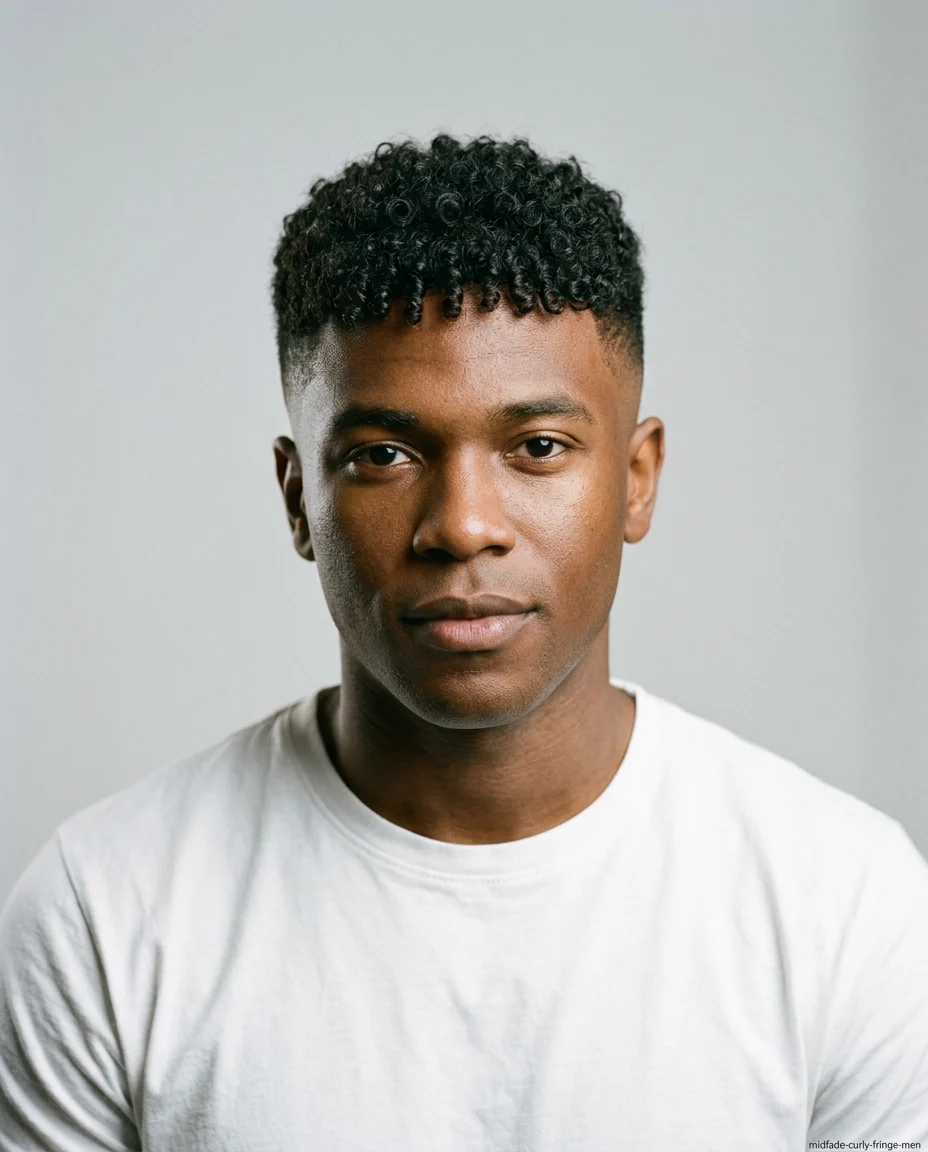
This is the version most barbers reach for first when a curly-haired client says “something manageable.” The fade starts around the temple and blends into 2 to 3 inches of curl on top, cut short enough that the fringe rests just above the eyebrows instead of flopping into them.
It needs less product than people expect. A dime of curl cream worked in damp, then air-dried or diffused on low heat for about 6 minutes. Tighter coils get more definition here than loose waves do, which surprises most first-timers.
The trade-off is regrowth at the fringe line. It starts looking heavy by week 3, so this cut wants a trim every 3 to 4 weeks if the fringe is going to stay sharp instead of shaggy.
2. Medium Mid Fade with a Curly Afro Top
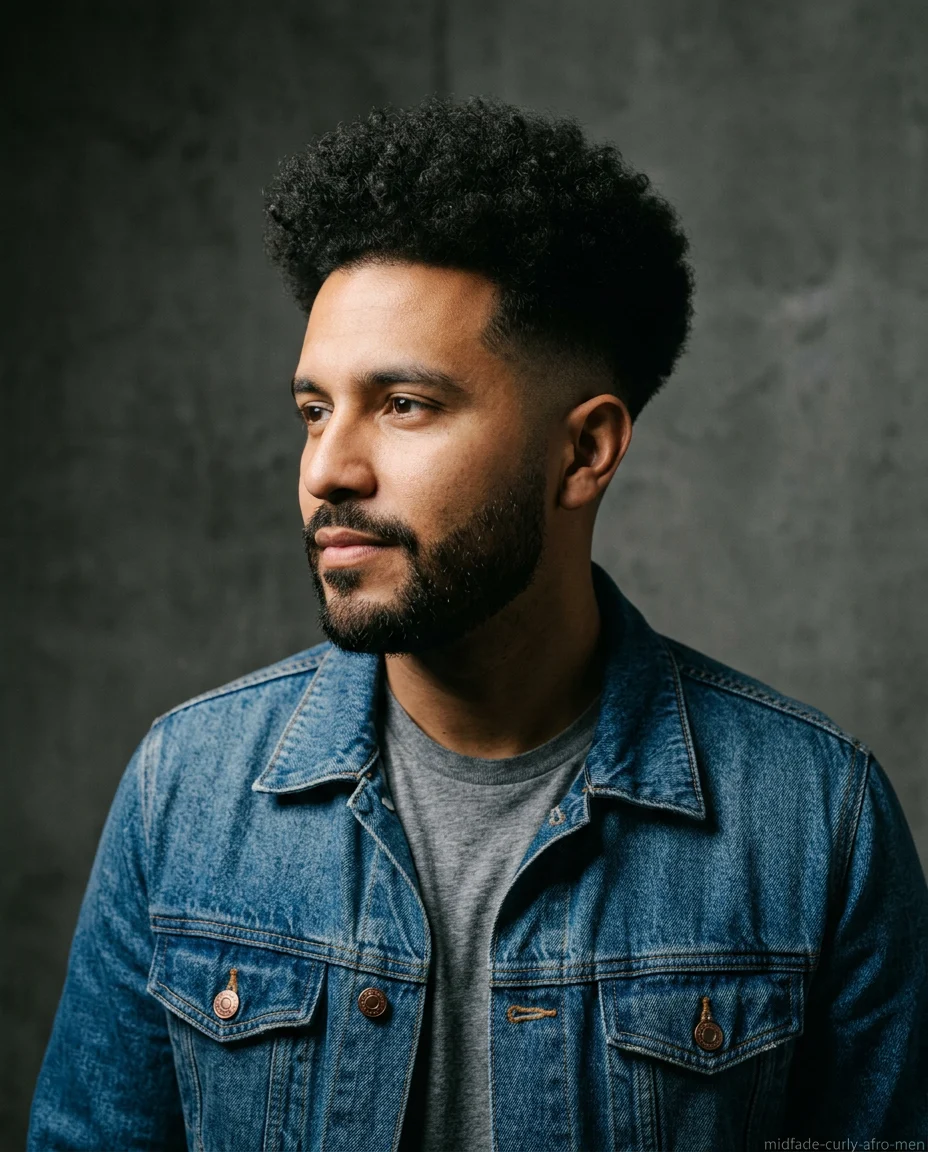
Skip the fringe and let the curls build up and out instead of down. The fade stays mid-height on the sides while the top grows to about 3 to 4 inches, shaped into a rounded silhouette rather than combed flat.
This one rewards curl pattern more than anything else on this list. Tighter coils hold the rounded shape on their own. Looser waves need a diffuser and a curl-defining gel to get there, and even then the shape sits a little flatter by afternoon.
Maintenance lives at the sides, not the top. The fade needs a touch-up every 2 weeks to keep the silhouette from creeping into a full grown-out look, though most guys let the top go 6 to 8 weeks between shape-ups.
3. Medium Mid Fade with a Curly Quiff
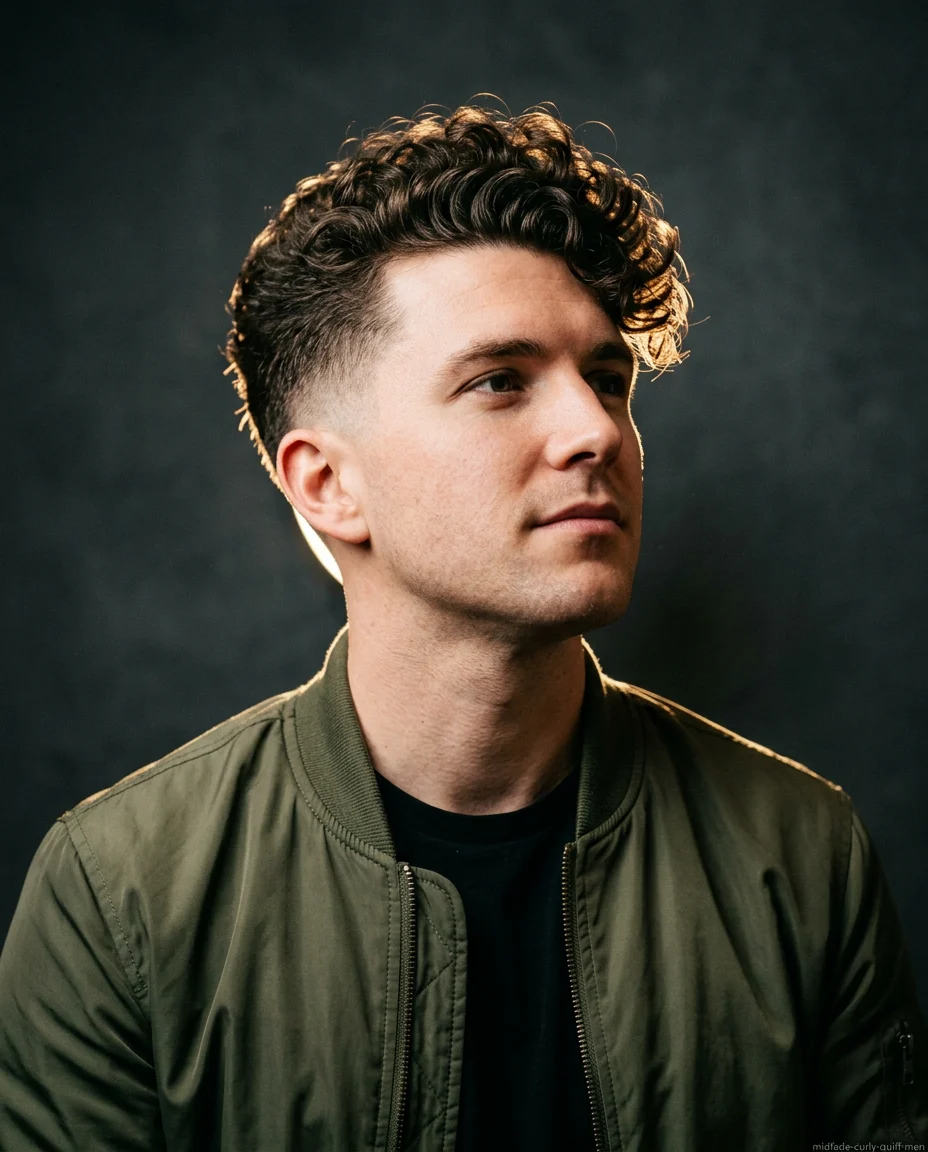
A quiff needs length up front and almost nothing everywhere else, and the mid fade handles the “everywhere else” part. Top length runs 3 to 4 inches at the front, tapering back toward the crown, with the fade blending in around ear height.
Curly hair actually makes a quiff easier to hold than straight hair does. The natural bend gives the front lift without much product. A light-hold paste, maybe a quarter-size amount, is usually enough — heavier pomades weigh curls down and kill the shape by midday.
It does take more daily effort than the other cuts here. Expect a 5-minute styling routine most mornings, and don’t count on it surviving a humid commute without a touch-up.
4. Medium Mid Fade with a Textured Curly Crop
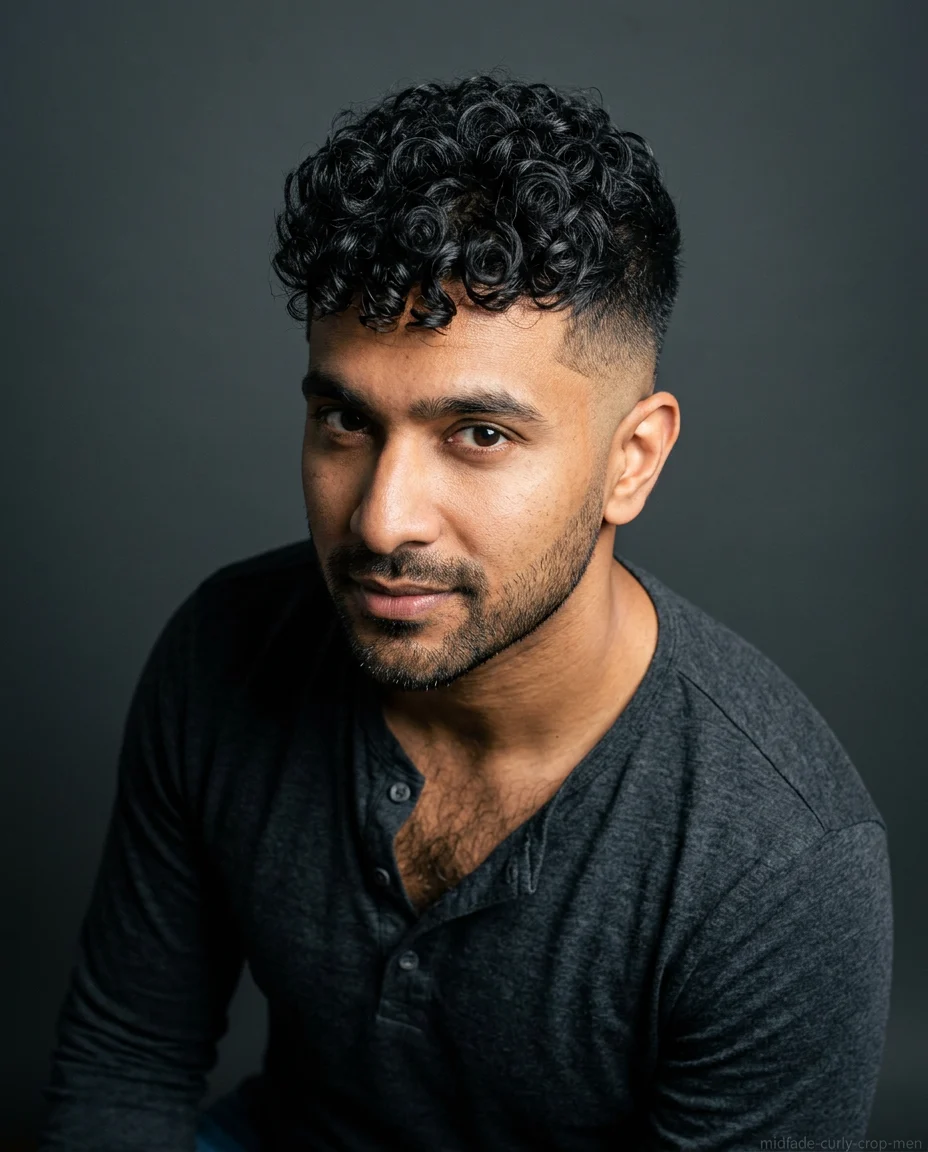
The crop is for guys who want short all over but still want the curls visible. Top length stays around 1.5 to 2 inches, cut with texturizing shears so individual curls separate instead of clumping into one mass.
This is the lowest-maintenance option by a wide margin. A finger-comb and a small amount of curl cream is genuinely all it needs most days, and it still looks intentional on day two, unwashed.
The honest downside is definition. Tighter cuts flatten curl pattern over time, so if maximum bounce is the goal, this isn’t it. For a 9-to-5 with zero styling time, though, it’s hard to beat.
5. Medium Mid Fade with Buzzed Sides and Loose Curls on Top
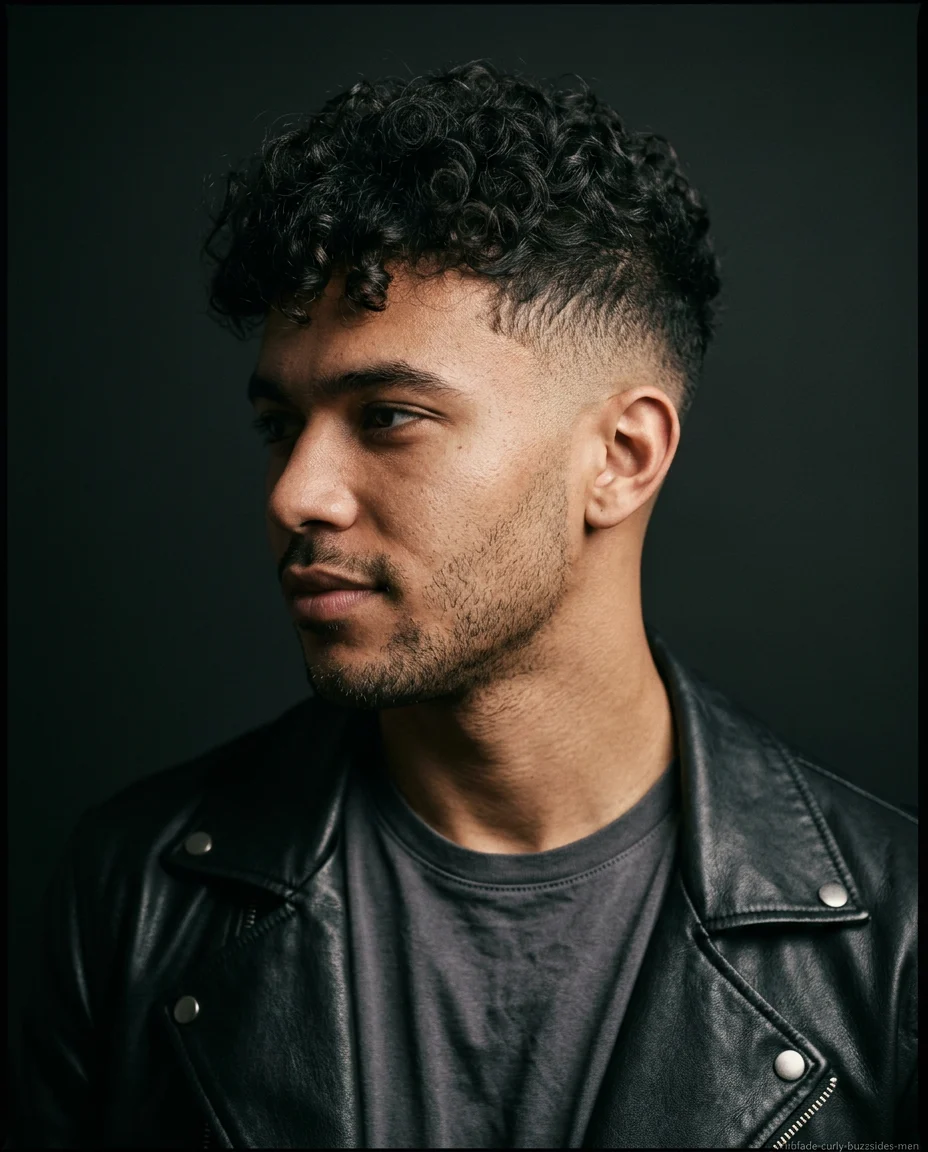
This version pushes the fade lower and tighter than the others, closer to a skin fade at the bottom, blending into a mid-height taper before hitting about 2.5 inches of loose curl on top.
The contrast is the entire point. Tight, almost-bald sides next to loose, undefined curl reads more dramatic in photos than it does in person, and most guys who pick this cut know exactly why they’re picking it.
It grows out unevenly, which is the real trade-off. The sides need a fresh line every 10 to 14 days or the contrast disappears, while the top can go a full 6 weeks without losing much shape.
6. Medium Mid Fade with a Curly Pompadour
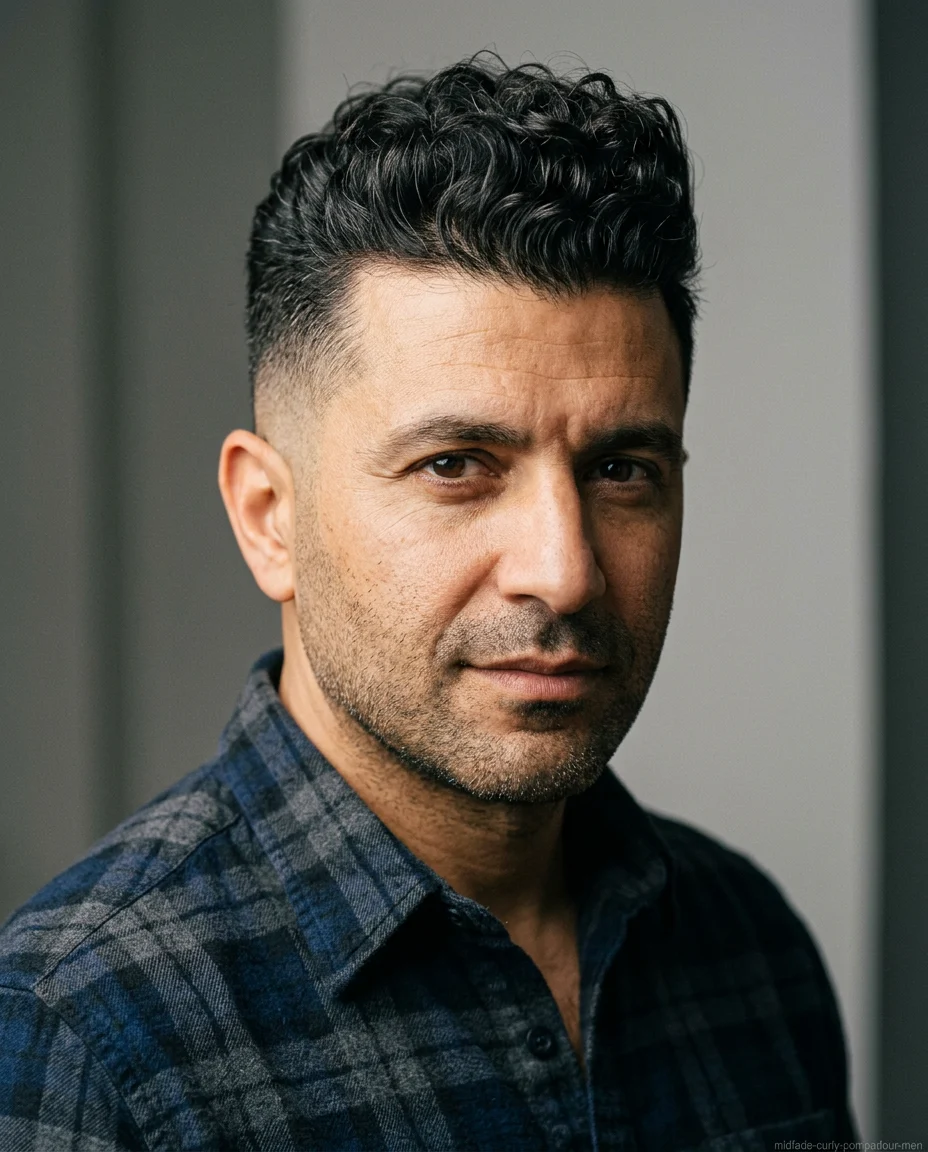
The pompadour asks the most of any cut on this list, and it looks it. Top length runs 4 to 5 inches, swept up and back off the forehead, with the mid fade blending underneath so the sides don’t compete with the height.
Curls actually help build the volume a pompadour needs, but they fight the sweep-back direction more than straight hair does. A strong-hold gel, not cream, not paste, combed through while damp is the only combination that’s held up in practice.
This is the one cut here that won’t survive a gym session or a humid afternoon without a comb-through. If low maintenance matters more than height, one of the other five is the better call.
7. Medium Mid Fade with a Curly Side Part

A hard or soft part gets cut or combed in above the ear, and the fade rises to meet it on the shorter side. Curls on top get pushed to one direction, usually 3 inches or so.
This is the cut barbers recommend for interviews and weddings — it reads as put-together with almost no effort. But the part has to be re-combed daily on tighter curl patterns, since coils spring back across the line by midafternoon.
Reality check: a razor-cut part lasts longer between touch-ups than a comb-drawn one, but it costs more at the chair.
8. Medium Mid Fade with a Curly Mohawk
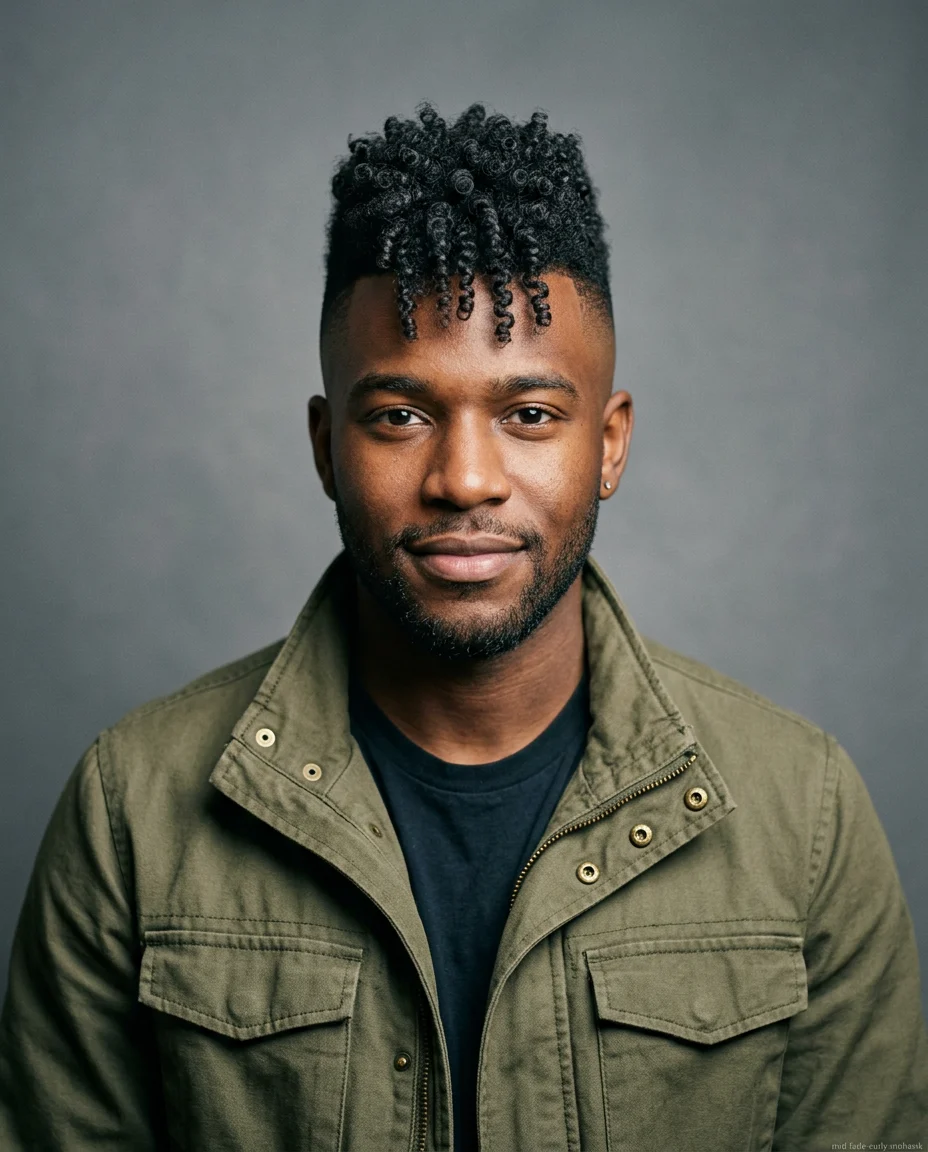
A strip of length runs from the forehead back to the crown, roughly 3 inches wide, while the fade clears both sides down to skin or near-skin. Curls stacked in that center strip look denser than they would spread across a full head.
This is the boldest option here, not the most practical one. The fade needs upkeep every 10 to 14 days to keep the contrast sharp, and the strip has to stay trimmed evenly or it starts leaning without you noticing.
Reality check: this style draws attention. If you work somewhere conservative, ask before you book, not after.
9. Medium Mid Fade with a Slicked Curly Comb-Over
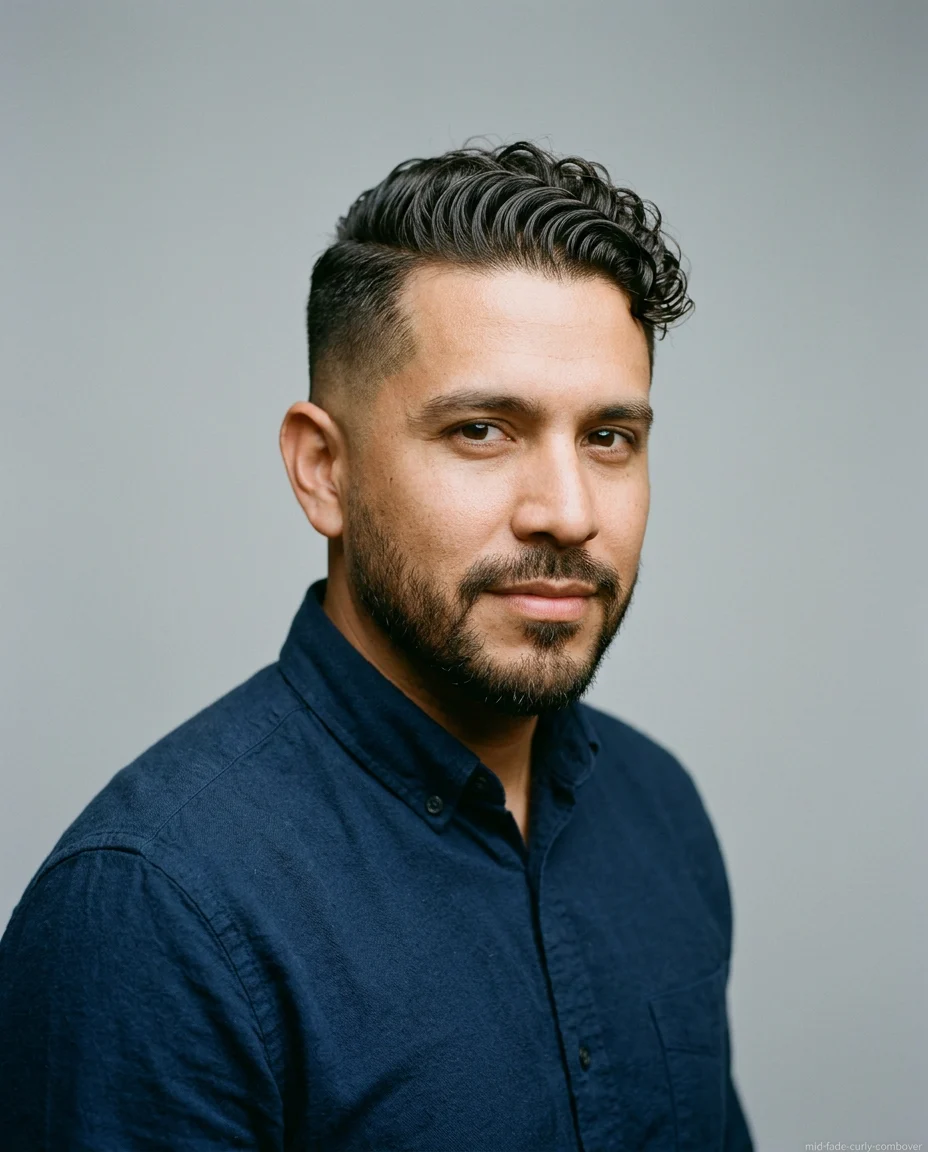
The top gets combed to one side and pressed down with a strong-hold product, flattening the curl pattern into a smoother, directional shape. The fade rises higher on the shorter side than most cuts on this list.
This one fights the hair’s natural texture, so it takes more product than anything else here — a pomade with real hold, not a curl cream. Expect it to loosen by late afternoon on humid days, curls slowly reasserting themselves.
Reality check: if you’re not willing to touch up midday, skip this one for a long event.
10. Medium Mid Fade with a Curly Shag
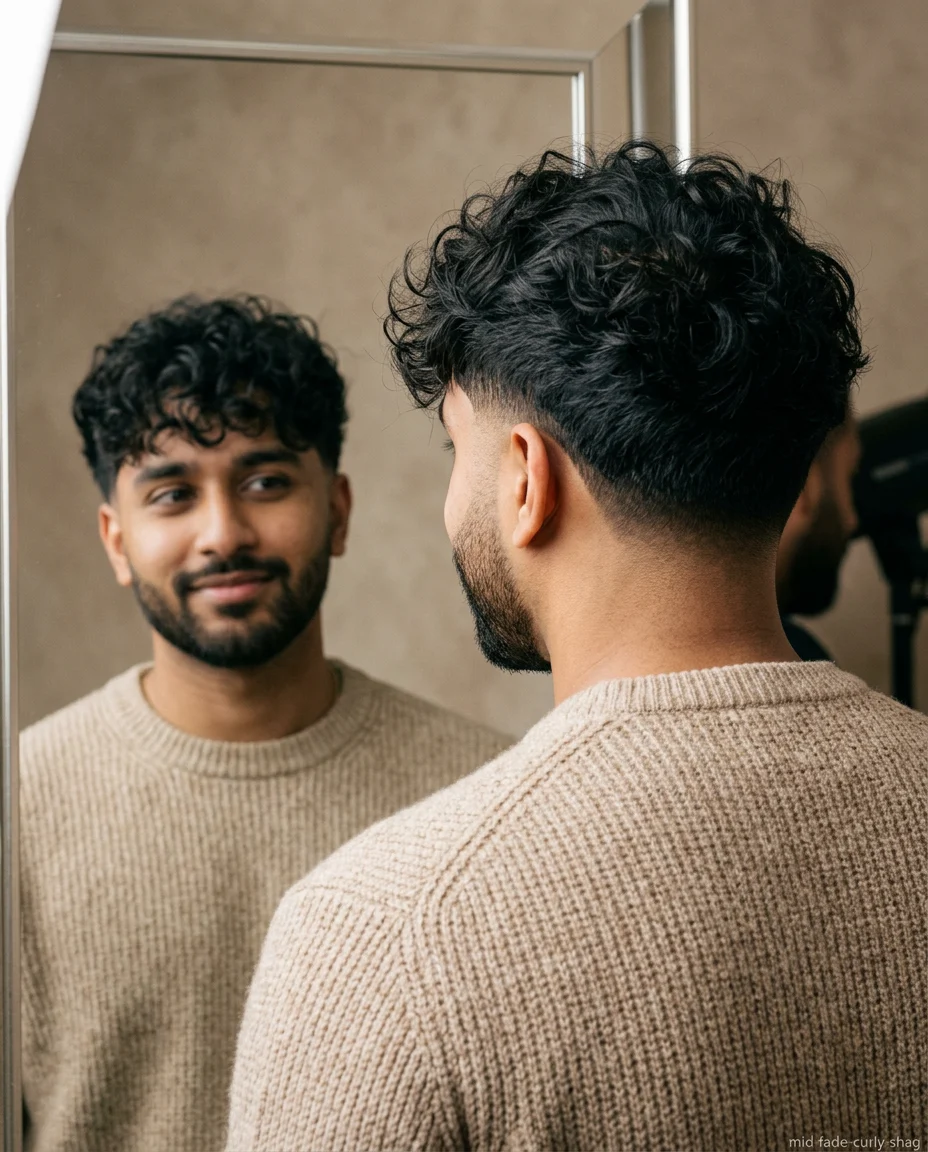
Layers get cut throughout the top and sides, around 3 to 4 inches, so the curls stack unevenly instead of falling in one uniform shape. The fade stays lower and softer here — this cut is about texture up top, not contrast at the sides.
The shag is forgiving in a way tighter fades aren’t. Grown-out layers still look intentional for an extra week or two past when a crisp fade would need redoing. The trade-off is definition, since curls need more product to stay separated.
Reality check: ask for “shag layers,” not just “layers.” How a barber sections the hair changes the whole result.
11. Medium Mid Fade with a Curly Spiky Top

Shorter length on top, around 2 inches, gets scrunched and lifted so individual curls stand up rather than lying flat. The fade underneath is tight and high, keeping the whole style compact instead of sprawling.
A strong gel, not a cream, holds the spikes through the day — curl cream is built for definition, not lift. This is a quick style, 3 minutes tops once you know your own hair, and it suits almost every face shape.
Reality check: reads noticeably younger than most cuts on this list. Keep that in mind for a more polished look.
12. Medium Mid Fade with a Curly Undercut Fringe
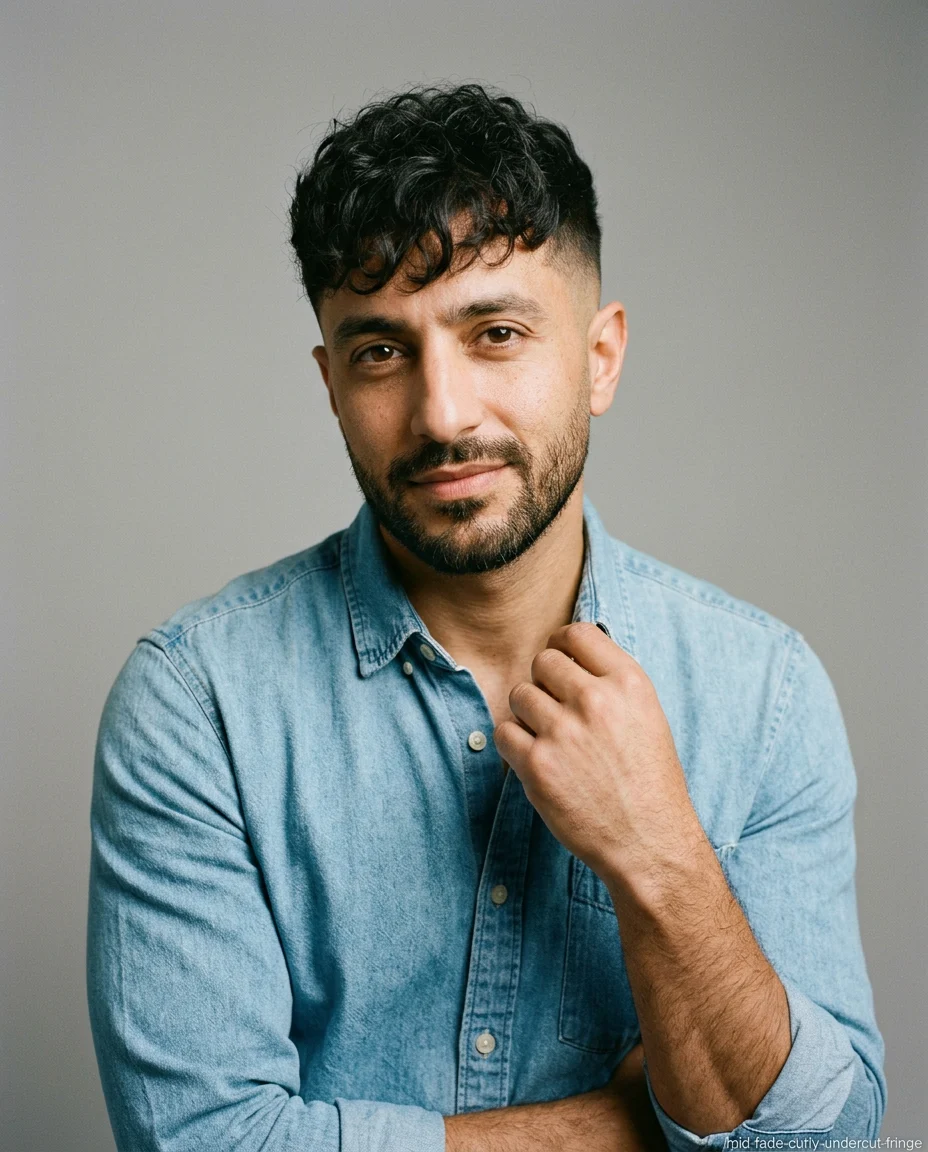
The back and sides go short with a disconnected undercut rather than a gradual blend, while the top stays long enough — about 3 inches — to fall forward into a curly fringe. The contrast is sharper than a standard mid fade gives you.
This isn’t technically a mid fade in the traditional sense, but barbers file it under the same family since the sides still taper to nearly nothing. The fringe needs trimming closer to every 3 weeks than the 5 or 6 other cuts here allow.
Reality check: the disconnected line is less forgiving of grow-out. Expect a visible step between sections by week 4.
13. Medium Mid Fade with a Voluminous Curly Crown
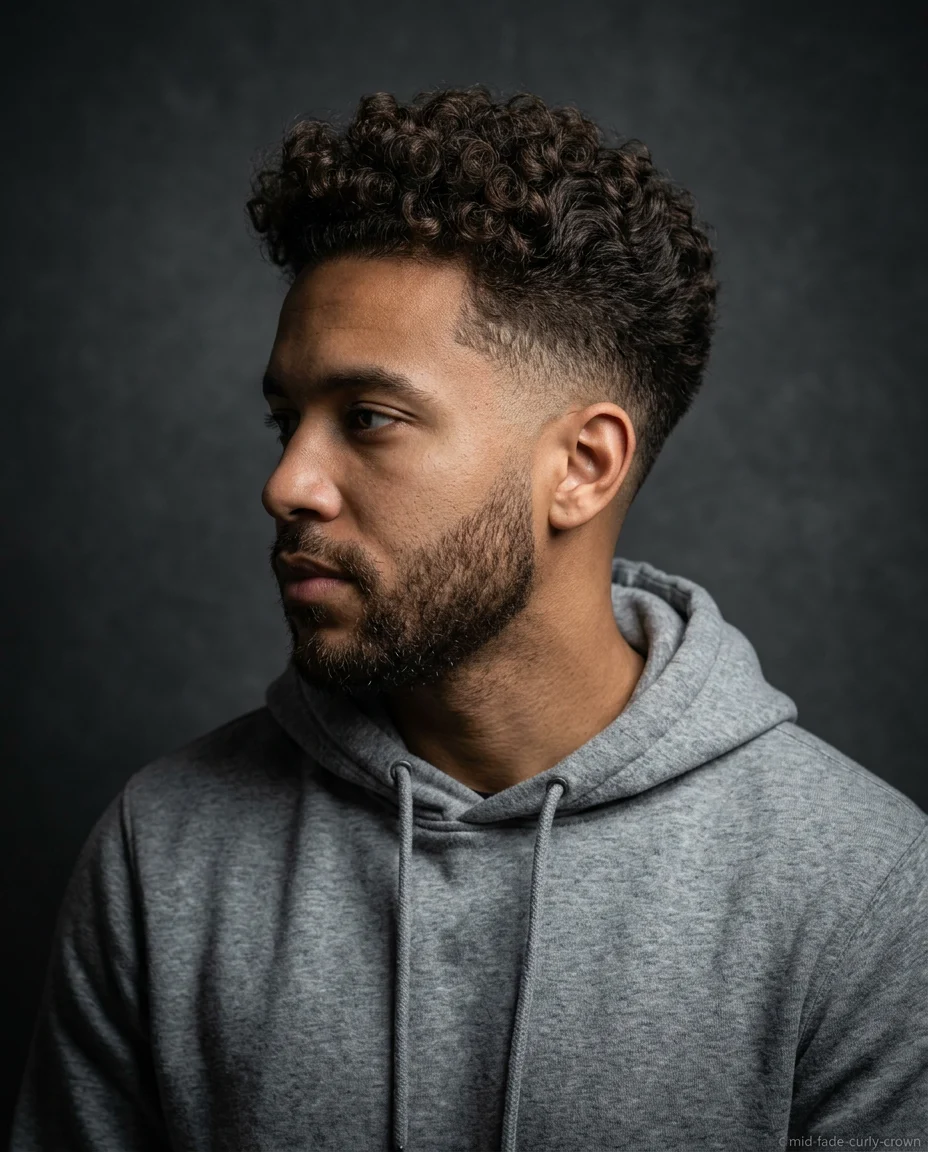
Extra length is left specifically at the crown, sometimes 4 to 5 inches, while the rest of the top and the fade stay closer to standard medium length. It adds height at the back of the head instead of the front, which most cuts on this list focus on.
This works best if your curl pattern is naturally denser at the crown already — the cut exaggerates something your hair is already doing. If your crown runs thin, ask your barber first; added length can make thin spots more visible, not less.
Reality check: photographs better than it feels day-to-day. Expect flyaways by hour 4 no matter what product you use.