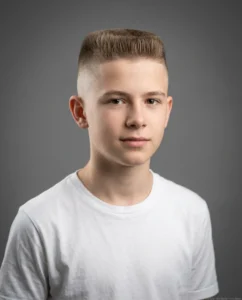
1. Classic Flat Top

The classic flat top is exactly what it sounds like: the top gets cut dead level with a flat-top comb, usually around 1/2 to 3/4 inch, while the sides taper down to skin or a 1 guard. It’s the original barbershop version, dating back to the 1950s military cuts.
On thinning hair, that flat plane does more work than volume ever could. You’re not faking density up top — you’re creating one clean, even surface that catches light uniformly instead of showing patchy coverage underneath.
The catch is upkeep. A flat top starts losing its edge after about 10 days as new growth pokes through the flat line, so you’re looking at a trim every 2 weeks minimum, and it has to be someone who actually owns a flat-top comb. Not every barber does.
2. Textured Flat Top with Taper Fade

This version softens the boxy 90-degree edges of a classic flat top into a slightly rounded finish, with a taper fade running down the sides instead of a hard line. The top still sits flat, just with more movement built in using thinning shears.
For guys over 40 who don’t want to look like they’re auditioning for a drill sergeant role, this is usually the compromise that lands. The fade gives the sides a graduated look, and the soft texture on top hides gaps between thinning strands better than a razor-sharp edge does.
It takes longer in the chair, about 35 to 40 minutes versus 20 for a classic flat top. And it needs a matte texturizing paste, not a wax — shine on thin spots reads as bald patches under overhead lighting fast.
3. Flat Top with Skin Fade
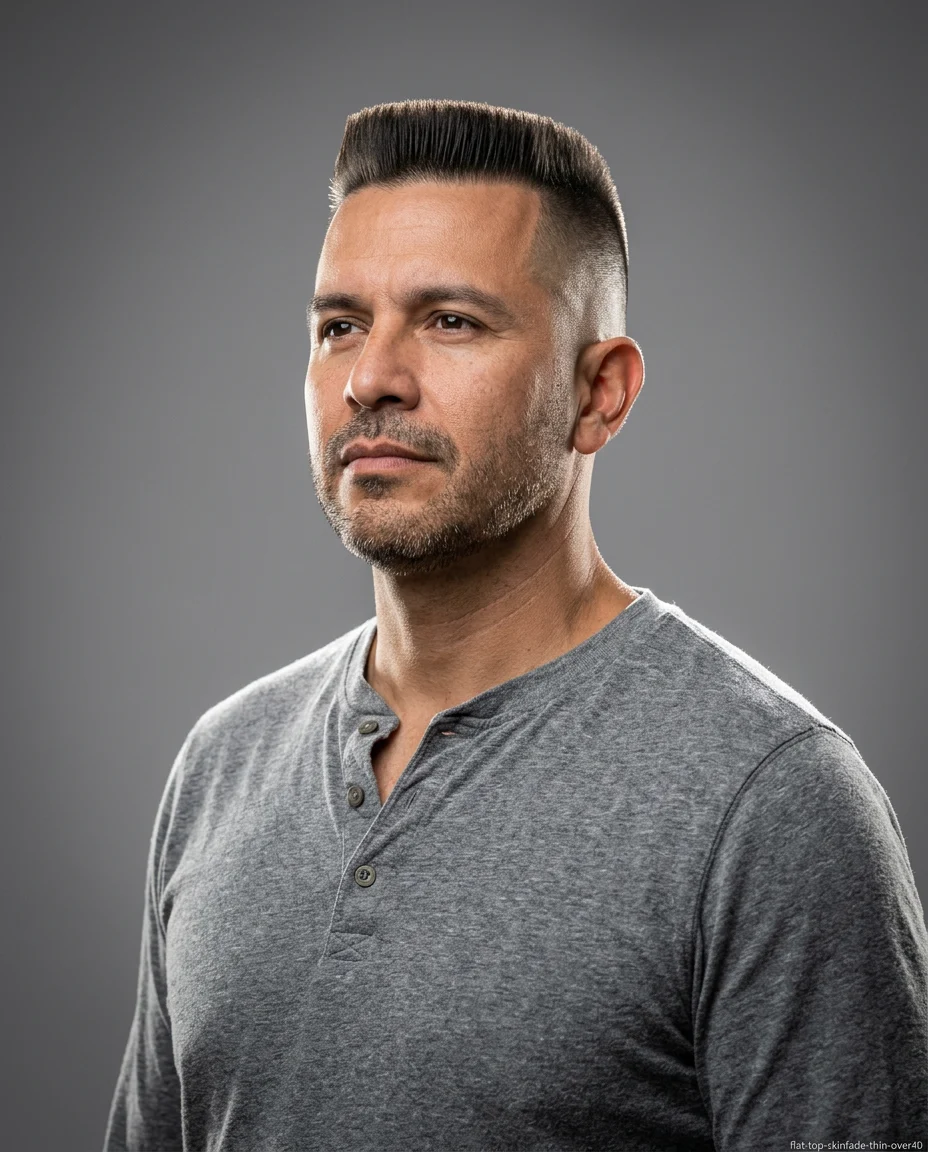
Here the sides drop all the way to skin, usually starting around the temple and blending into the flat top an inch or two above the ear. It’s the highest-contrast version of the cut, and it pulls the eye straight up toward the top section.
That contrast is exactly why it works on thinning hair. A skin fade gives the eye a hard stopping point, so nobody’s attention lingers on the crown long enough to clock what’s thin and what isn’t. It reads as a style choice, not hair loss management.
Skin fades grow out fast, though. Expect visible regrowth at the temples within 8 to 10 days — which means more frequent barber visits than almost anything else on this list, every 12 to 14 days if you want it staying sharp.
4. Ivy League Flat Top

Ivy League flat tops keep a little more length on top, somewhere around 1 to 1.5 inches, with a shorter taper on the sides than a true military flat top. Less severe, closer to what you’d see on a finance guy in his 40s than a recruit.
That extra length gives you more to work with if the thinning concentrates at the crown rather than spreading across the whole top. You can comb the front section slightly forward for the appearance of coverage without it looking like a comb-over.
The honest trade-off: it’s not as low-maintenance as a true flat top. You’ll still need product every morning, usually a light pomade worked in with a comb, and it looks noticeably better fresh-cut than it does at the 3-week mark.
5. Butch Cut Flat Top

A butch cut flat top takes everything down short and uniform, clippered to somewhere between a 2 and a 4 guard all over, with just enough flat-top comb work on top to keep a subtle plane instead of a rounded crew cut.
This is the lowest-maintenance option here by a wide margin. No morning styling, no product required, and it holds its shape for close to 3 weeks before it needs a redo. Uniform short length everywhere means there’s no long-versus-short contrast exposing gaps.
It’s also the least forgiving of head shape. A flat spot at the back of your skull, noticeable asymmetry — this length shows it. There’s no length left anywhere to camouflage it.
6. Soft Rounded Flat Top
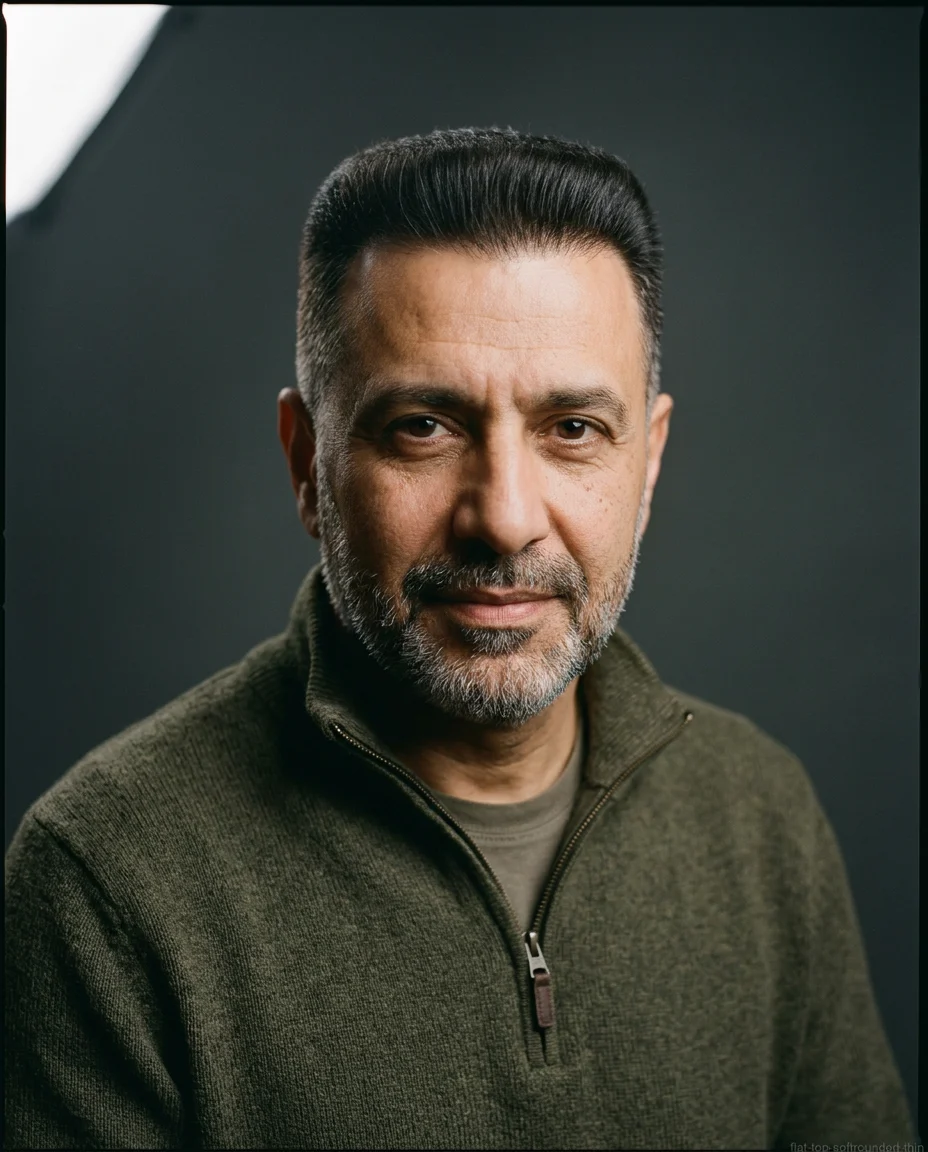
Instead of the sharp 90-degree corners of a traditional flat top, this version rounds the edges where the top meets the sides, giving a softer silhouette that’s still clearly a flat top from a few feet away.
It’s a good pick if the thinning is patchy rather than uniform across the crown. The rounded transition gives a barber more room to blend length over uneven spots than a hard-edged flat top allows. Most guys who’ve tried both say the rounded version photographs better, less severe in a headshot.
It still needs proper flat-top comb technique to get the plane right on top, so this isn’t a cut you want from someone who’s only ever used clippers on a guard setting. Ask specifically if they do flat tops before booking.
7. Flat Top with Line Up
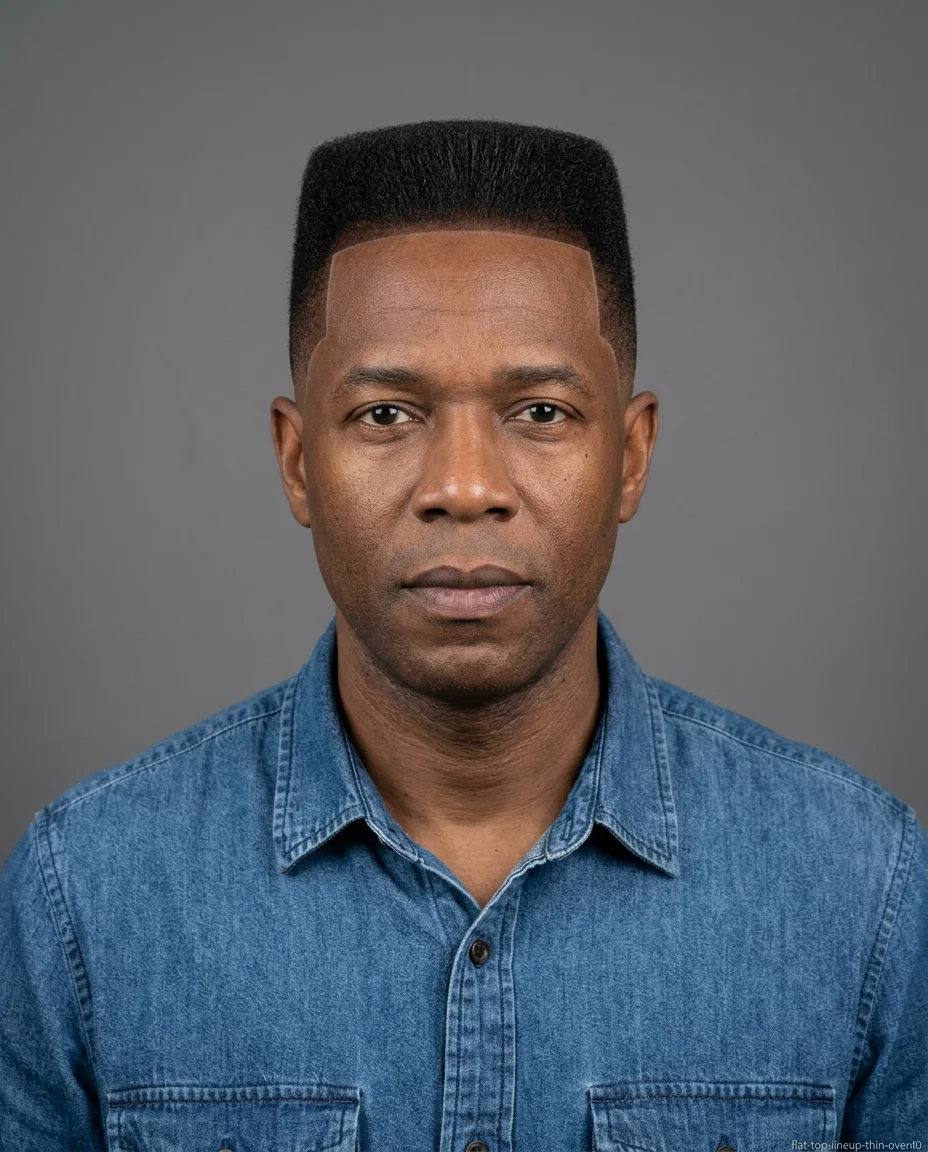
This adds a crisp, defined line at the hairline and temples, usually done with a straight razor or T-blade trimmer, on top of an otherwise standard flat top. More common among guys who pair it with thicker facial hair or a beard.
The line up draws a hard boundary that, like the skin fade, redirects attention away from the crown. It also looks sharper on day one out of the chair, which matters if you’re getting this done ahead of something specific — a wedding, a work event, whatever it is.
Lines grow out within about a week, faster than the rest of the cut fades. So if you get one, plan on a quick edge-up appointment between full cuts, or learn to do it yourself with a trimmer at home.
8. High and Tight Flat Top

High and tight takes the taper way up, almost to the crown, leaving a narrow flat top section and a lot of skin showing on the sides. The most military-adjacent option here, closer to what you’d see on active-duty guys than in a barbershop portfolio.
For significant thinning — not just a receding hairline but real diffuse loss across the top — this is often the most honest option. There’s so little length left anywhere that thinning stops being the focal point. The cut itself becomes the statement.
It’s not for everyone. It exposes more scalp than anything else on this list, so skin tone and scalp condition matter more here than with a softer style. Guys with visible scarring or uneven pigmentation usually get better results from the soft rounded version instead.
9. Flat Top Crew Fade

This combines a shorter flat top, closer to 3/4 inch than a full inch, with a low fade that starts higher and blends faster than a typical taper. A hybrid built for guys who want the flat top’s clean top section without the higher-maintenance skin fade sides.
It sits in a practical middle ground: sharper than a classic flat top, lower-maintenance than a skin fade version, and it holds shape for close to 2.5 weeks before the fade needs redoing. Less length differential to manage day to day, which matters most on thinning hair.
One thing worth knowing before you ask for this by name — not every shop calls it the same thing. Bring a photo. “Crew fade” and “flat top fade” get used interchangeably depending on who’s behind the chair.