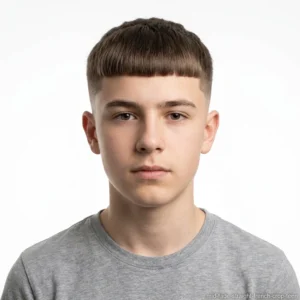
Straight hair is actually the easiest texture for pulling off a sharp flat top — the strands stand up cleaner with less product, and the shape holds through most of a school day without a single touch-up. Every version below works on straight hair with nothing more than a comb and maybe a little clay. Fifteen ways to wear it, from barely-there fades to full shaved lines.
1. Classic Flat Top
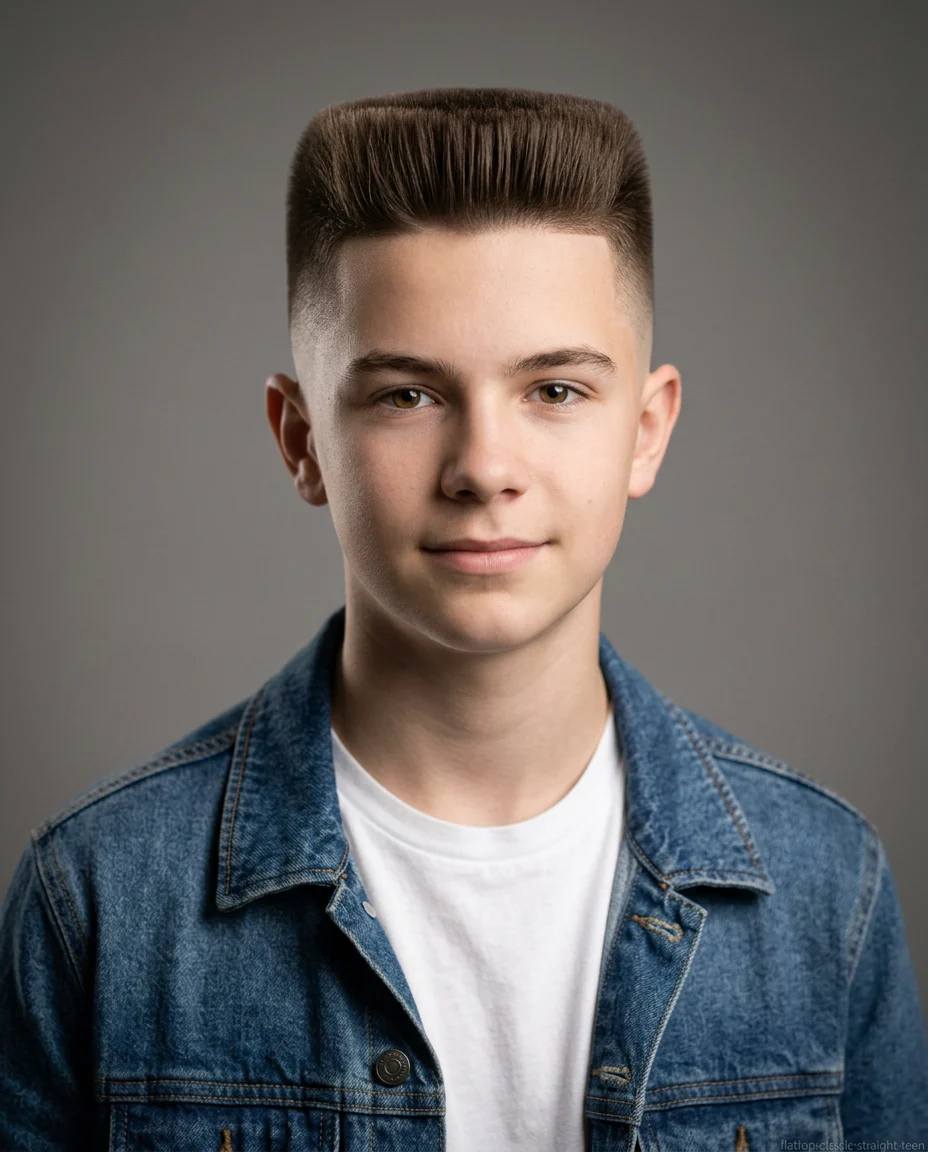
The classic flat top is just straight sides — usually a fade or a close taper — running into a top that’s cut dead level, somewhere between 1 and 2 inches tall depending on how much height you want. Straight hair holds that flat plane better than any other texture. Curly or wavy hair needs a blow dryer and a flat brush to fake this shape. Yours just needs a comb and about 5 minutes.
Ask for the sides tapered to a 1 or a 2, and tell the barber you want the top cut with clippers over a flat top comb, not scissors — that’s what gives you the sharp edge instead of a rounded dome. Upkeep runs every 3 weeks if you want it looking fresh. Skip a cut past week 4 and the edges start softening into something closer to a regular crop.
2. High Flat Top with Skin Fade
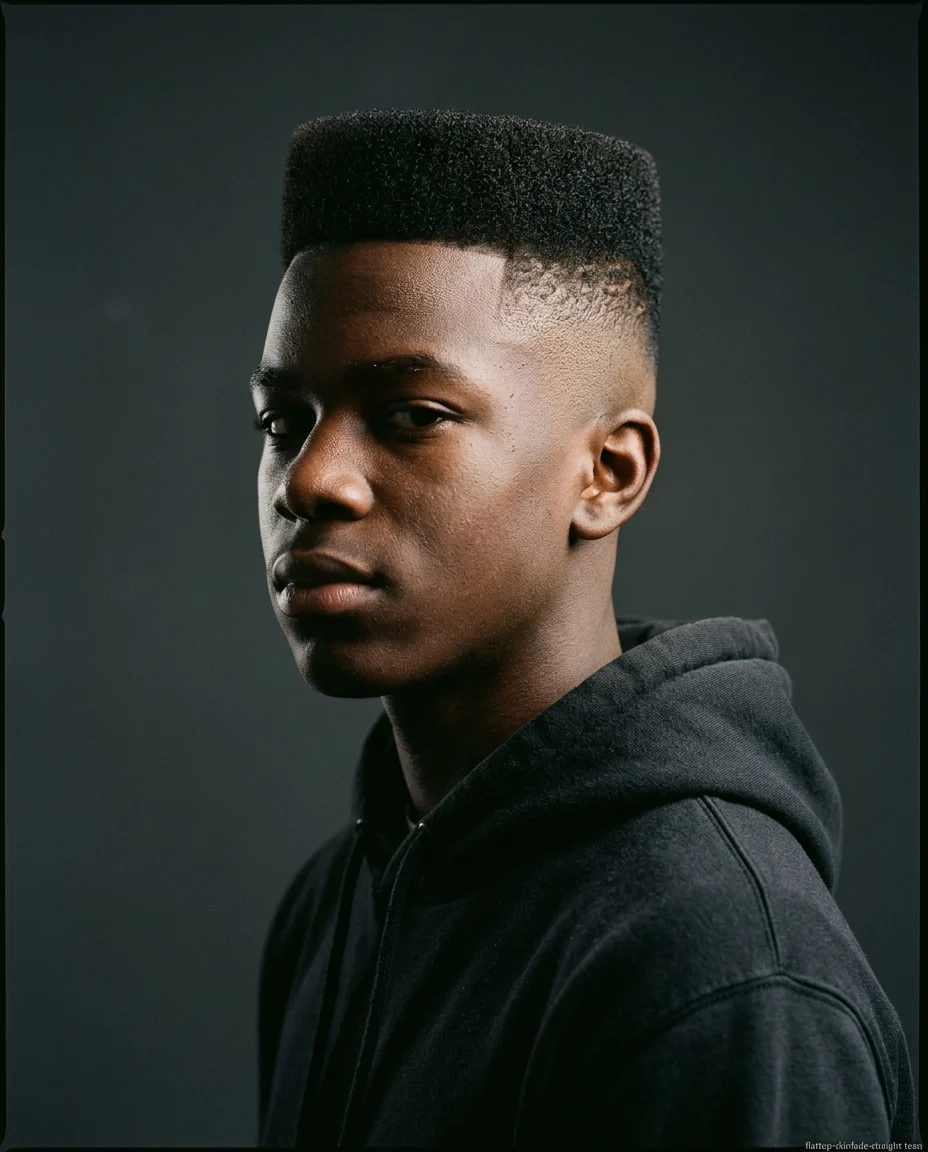
Take the classic shape and drop the sides all the way to skin, usually starting around the temple. The contrast between bare skin and a full, straight top reads a lot more dramatic in person than in photos. Most 16 and 17-year-olds asking for this already have some idea what they want — it’s the cut you request when a regular fade feels too plain.
The catch is maintenance. A skin fade grows out fast, and the line where skin meets hair gets blurry after about 10 days. You’re looking at a touch-up every 2 weeks minimum if you want the fade to stay sharp, not just a full haircut every 3 to 4 weeks. That’s more barber visits than most guys expect going in.
3. Flat Top with Taper Fade
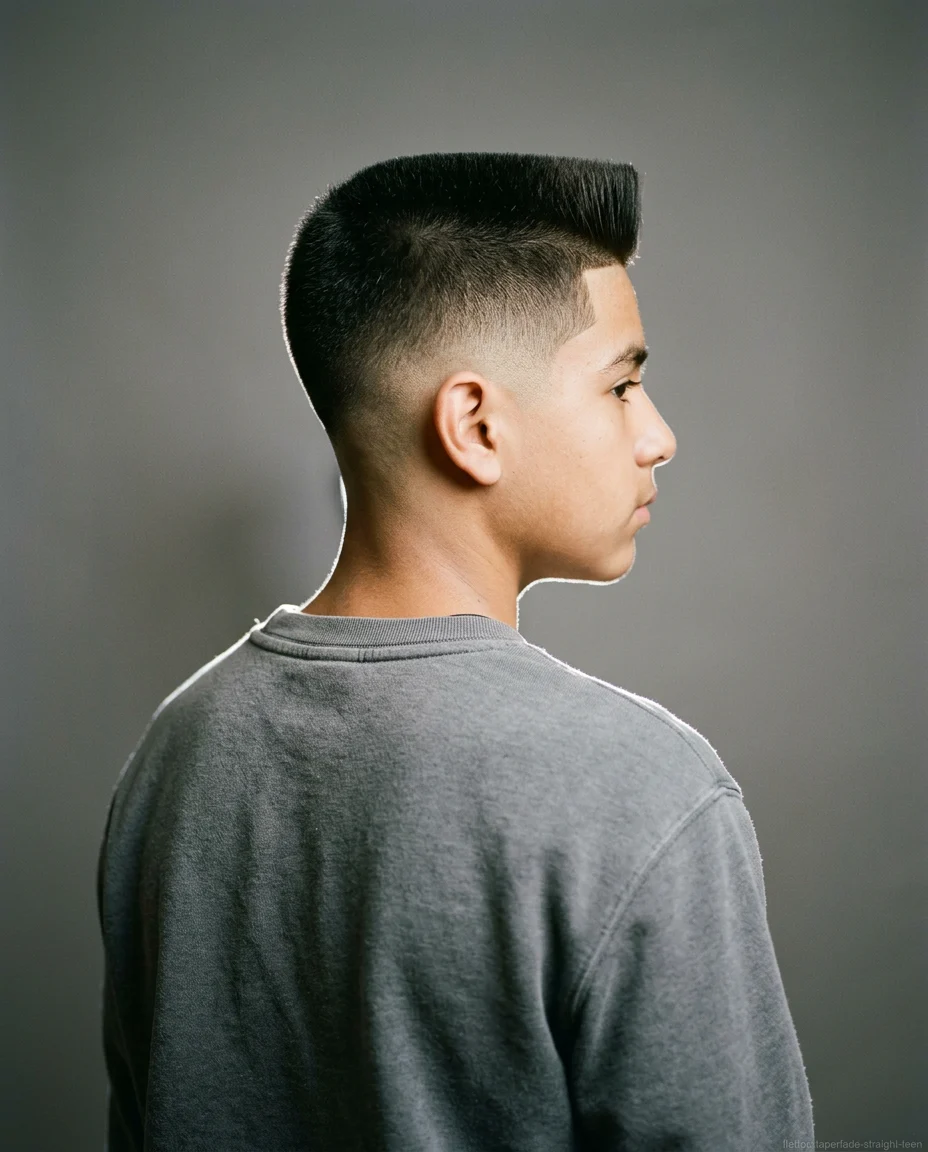
A taper fade is the lower-maintenance cousin of the skin fade — the sides gradually shorten toward the neckline and ears without ever hitting bare skin. It’s a good starting point if you’ve never had a flat top before and aren’t sure about committing to something sharper. The top still gets cut flat and level, usually a bit shorter than the high-fade version, around 1 to 1.5 inches.
This version grows out more forgivingly. You can usually stretch to 4 weeks between cuts before it looks messy, compared to 2 or 3 for a skin fade. The trade-off is less contrast — from a distance it reads more like a neat crop than a statement cut. Most barbers will talk you into this one first if you’re new to short cuts.
4. Textured Flat Top
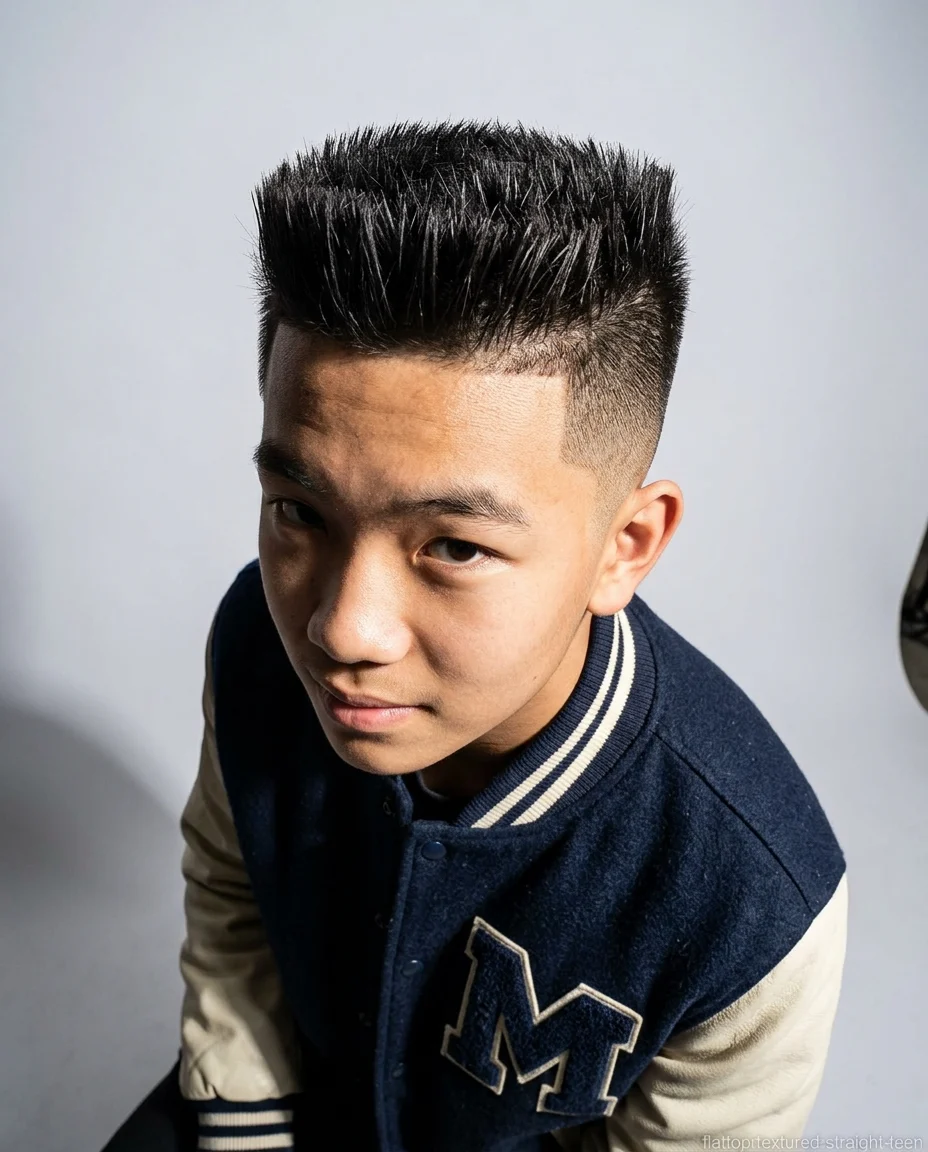
Instead of a perfectly smooth, blunt top, the textured version gets point-cut so individual strands show instead of one flat plane. On straight hair this looks less severe than the classic version — closer to a modern crop with a flat-ish silhouette than an old-school flat top. It works well if you want the shape without looking like you’re in the military.
You’ll need a matte paste, not a gel, to keep the texture visible — about a dime-sized amount worked through damp hair. Gel flattens the texture back down within an hour. This cut also hides a bad haircut day better than the classic version; a slightly overgrown textured top still looks intentional at week 5, where a classic flat top starts looking sloppy by week 4.
5. Flat Top with Hard Part
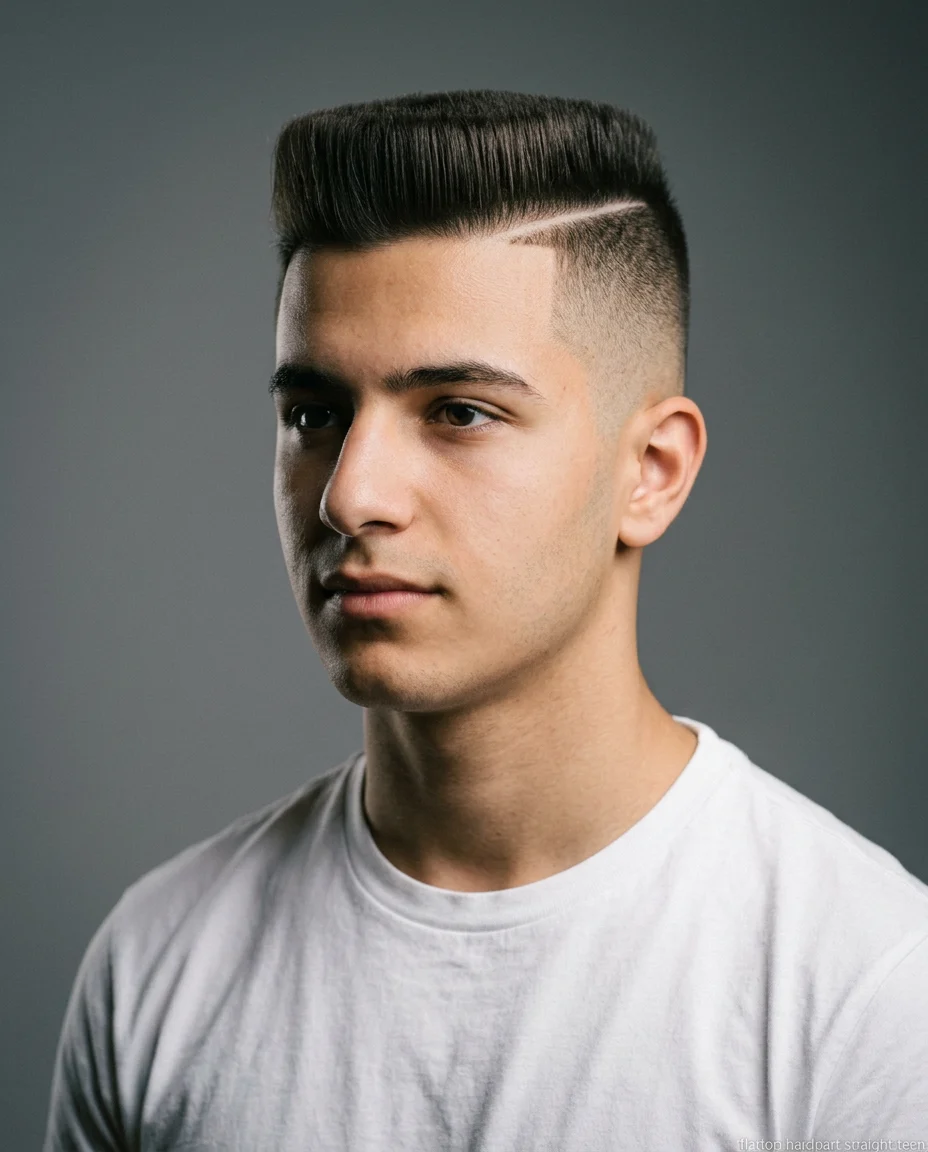
A hard part is a shaved line, usually on one side, separating the top from the fade. Paired with a flat top, it adds a graphic element that a plain fade doesn’t have. It reads sharper and a little more grown-up, which is probably why 18-year-olds ask for this more than 14-year-olds.
The line needs redefining every 5 to 7 days or it grows in and disappears — faster than the rest of the fade needs touching up. If you’re not willing to see your barber that often, or don’t own clippers to touch it up yourself between visits, skip this one. It looks precise or it looks like nothing; there’s no in-between with a hard part.
6. Low Flat Top Fade
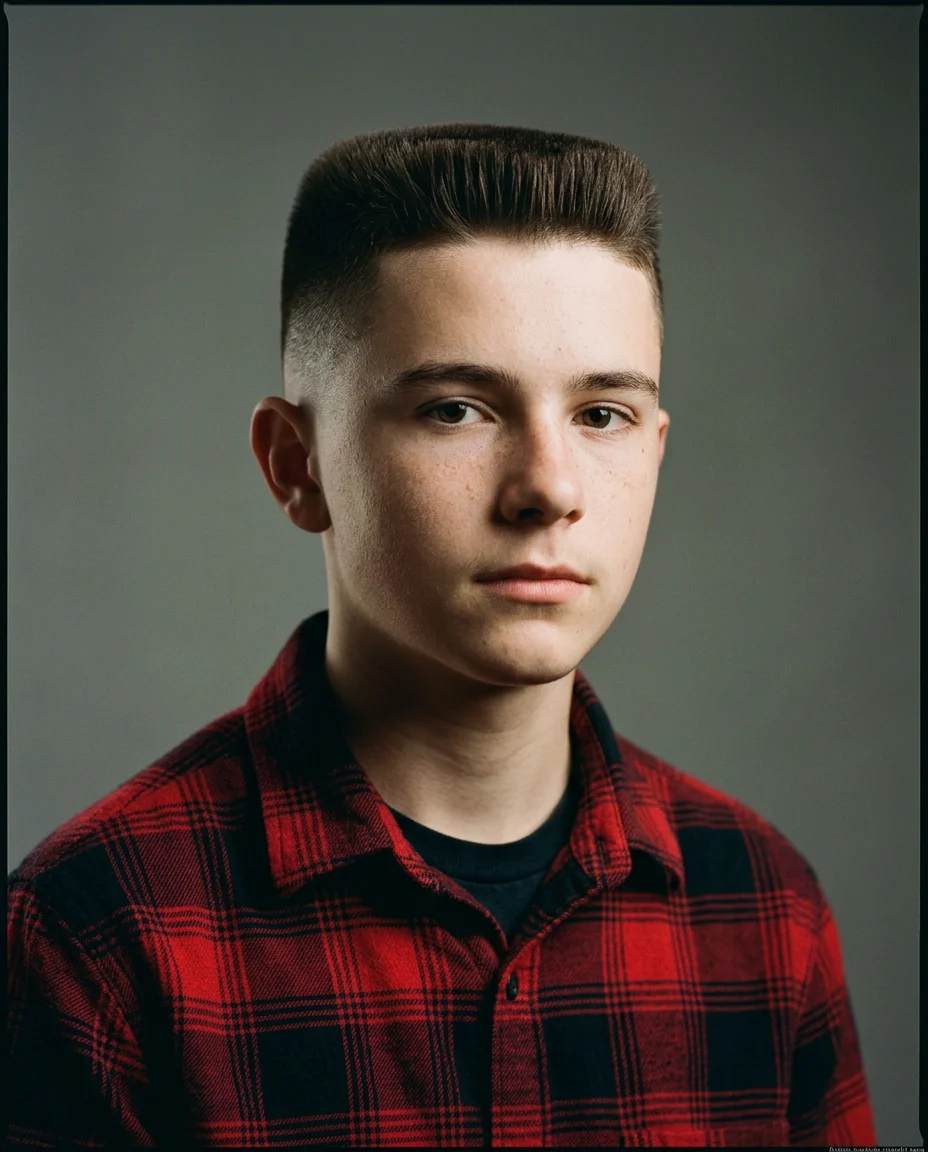
Where a high fade starts near the temple, a low fade keeps length longer and starts the taper closer to the ear, right around the hairline. It’s a subtler way to wear a flat top — less dramatic, more office-appropriate if that’s ever a concern for an older teen with a part-time job. The flat top itself stays the same: level, clipper-cut, usually 1.5 inches.
Because there’s less bare skin involved, this fade holds its shape longer than a high or skin fade — often 4 weeks before it needs real attention. It’s also more forgiving for a first flat top. If the shape ends up slightly uneven on top, a low fade doesn’t draw as much attention to the sides the way a high, skin-tight fade would.
7. Flat Top with Fringe
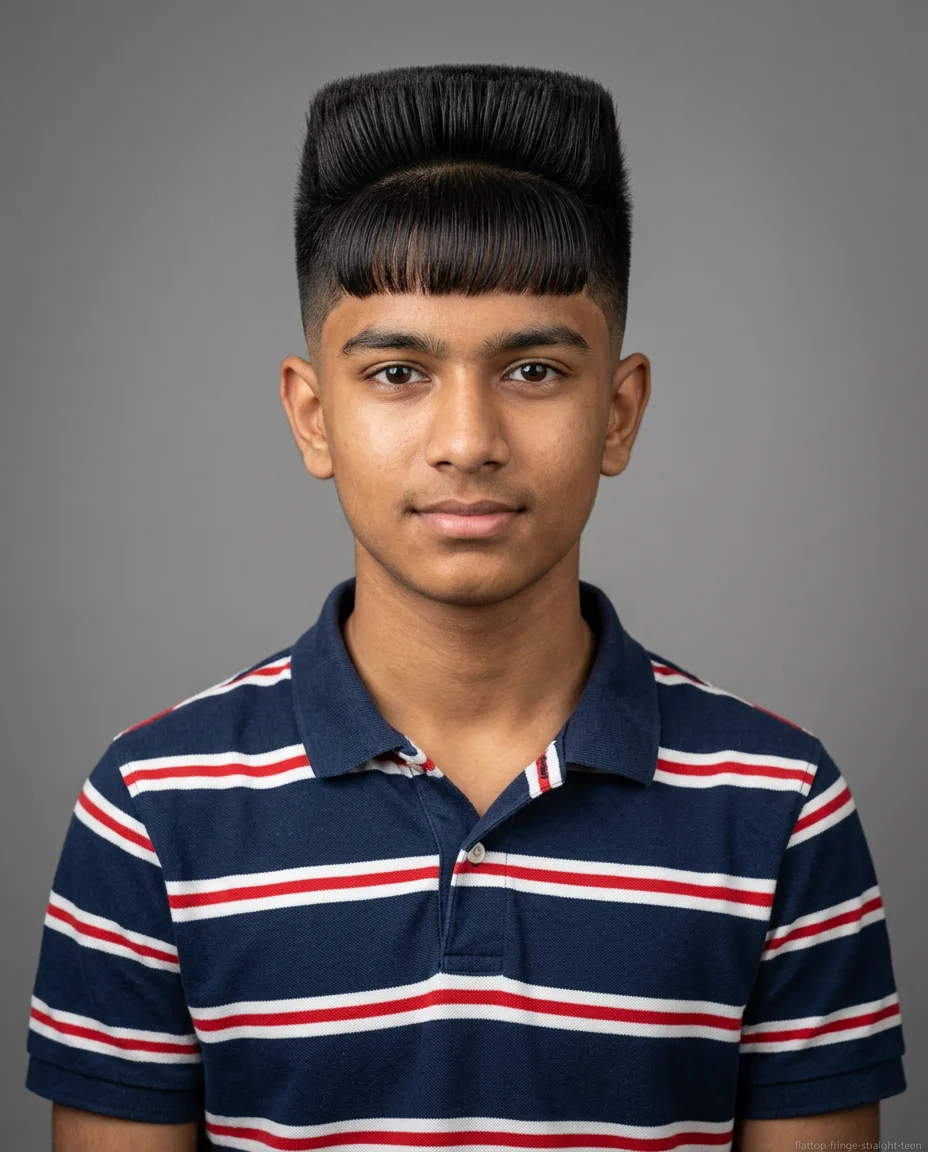
Most flat tops push everything up and back, but this version leaves a short section of fringe at the front, usually 1 to 2 inches, that falls forward instead of standing straight up. Straight hair lets that fringe lie flat without curling or lifting, which is what makes this combination work at all — it looks messy fast on wavy hair.
You’ll want a light pomade on just the front section, not the whole top, or the fringe will blend into the flat top instead of standing apart from it. This version also needs more frequent trims up front — about every 2 weeks — since fringe that’s even slightly too long starts covering the eyebrows and losing the shape entirely.
8. Square Flat Top
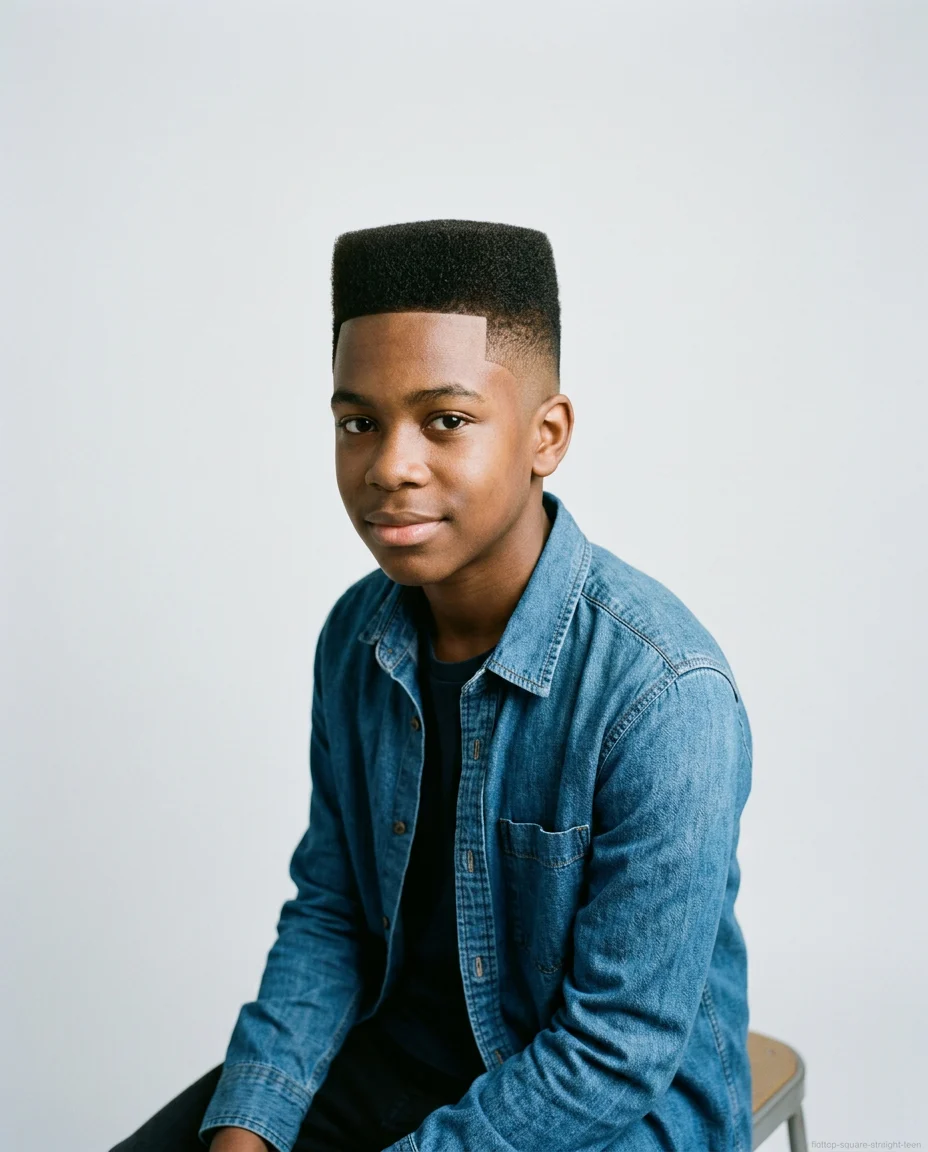
This is the sharpest-edged version on the list — the top isn’t just flat, the front hairline is cut to a visible square corner instead of following your natural head shape. It takes real skill to get right, and not every barber does it well. Ask to see photos of a barber’s previous square flat top work before committing, especially if you’re 14 or 15 and this is a first-time cut.
A slightly rounder head shape can make the squared edges look less crisp than they would on someone with a flatter forehead line. That’s not something you can fix with styling — it’s a head-shape thing, not a product thing. If your barber suggests softening the corners slightly, that’s usually the right call rather than forcing a perfectly geometric square.
9. Flat Top with Undercut Sides
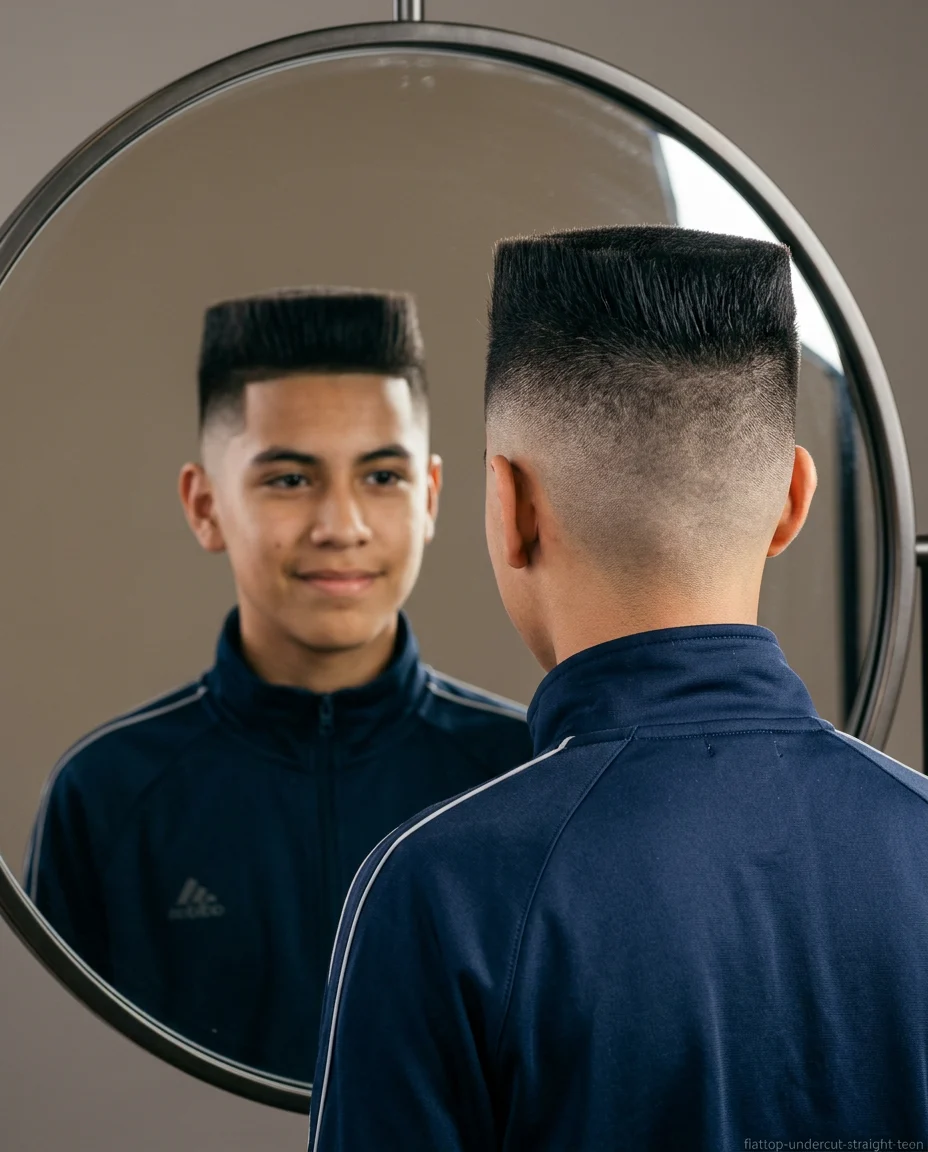
An undercut keeps the sides genuinely short — clippered close, not just tapered — creating a harder line under the flat top than a standard fade gives you. It’s a more aggressive look overall, closer to what you’d see paired with a mohawk than a traditional flat top. Sixteen and seventeen-year-olds tend to ask for this version when they want something that reads as edgier at school.
Because the sides are cut so short and uniform, this version is actually easier to maintain than a graduated fade — there’s no blending to mess up, just one length all the way around. Expect to go in every 3 weeks. The one downside: it’s a bigger visual jump if you’re used to longer sides, so it can look more severe than expected the first time you see it in a mirror.
10. Flat Top Mohawk Fade
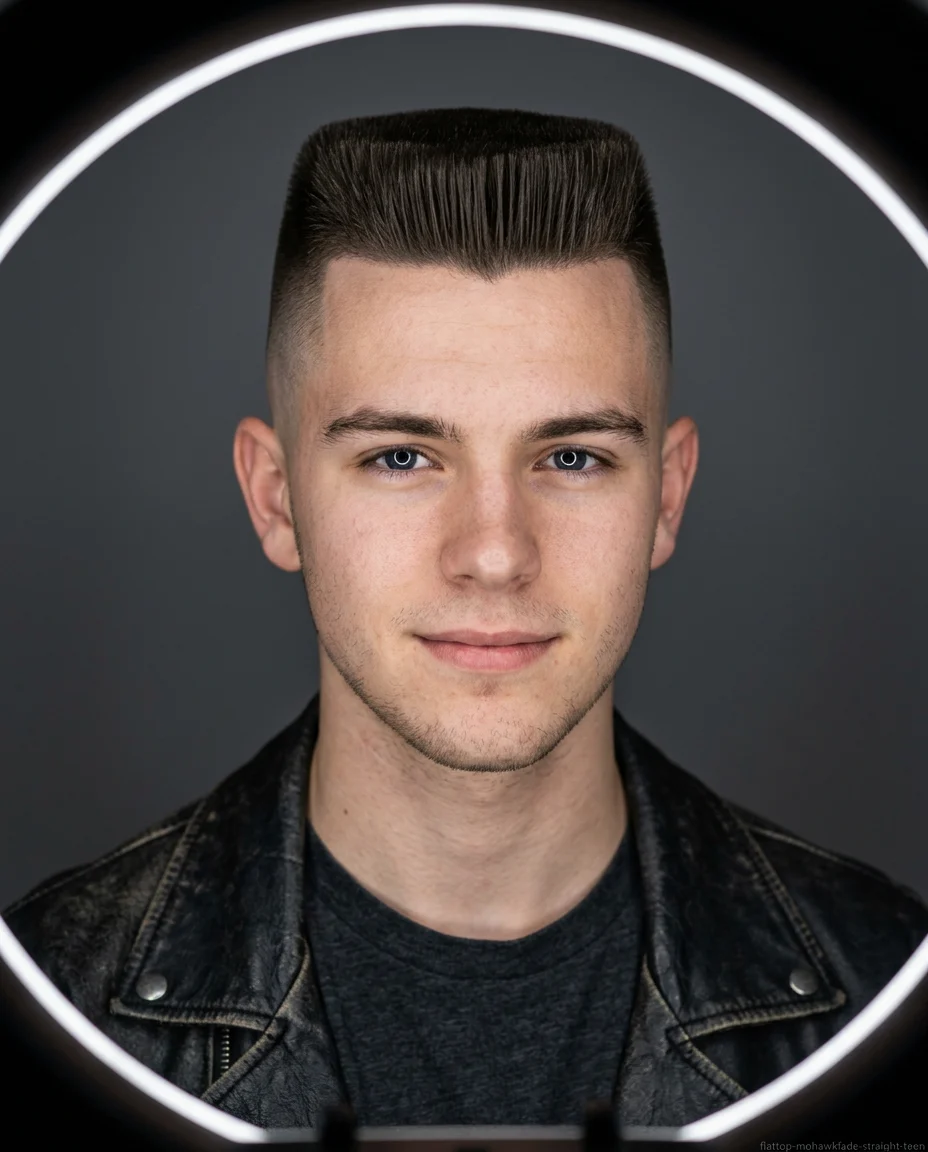
This version narrows the top into a mohawk-width strip while keeping it flat instead of spiked, with the sides faded down to skin or close to it. It’s the most dramatic cut on this list, and it draws attention — which is either the whole point or a reason to skip it, depending on how you feel about being noticed. Straight hair keeps the narrow strip standing at attention without gel doing all the work.
You’ll need actual pomade or wax daily to keep the strip looking deliberate rather than flopped over to one side — figure on about a pea-sized amount, worked in with your fingers, not a comb. Growth is unforgiving here too. Once the strip gets past 2.5 inches it starts leaning instead of standing, and the whole look falls apart until your next cut.
11. Flat Top with Line Up
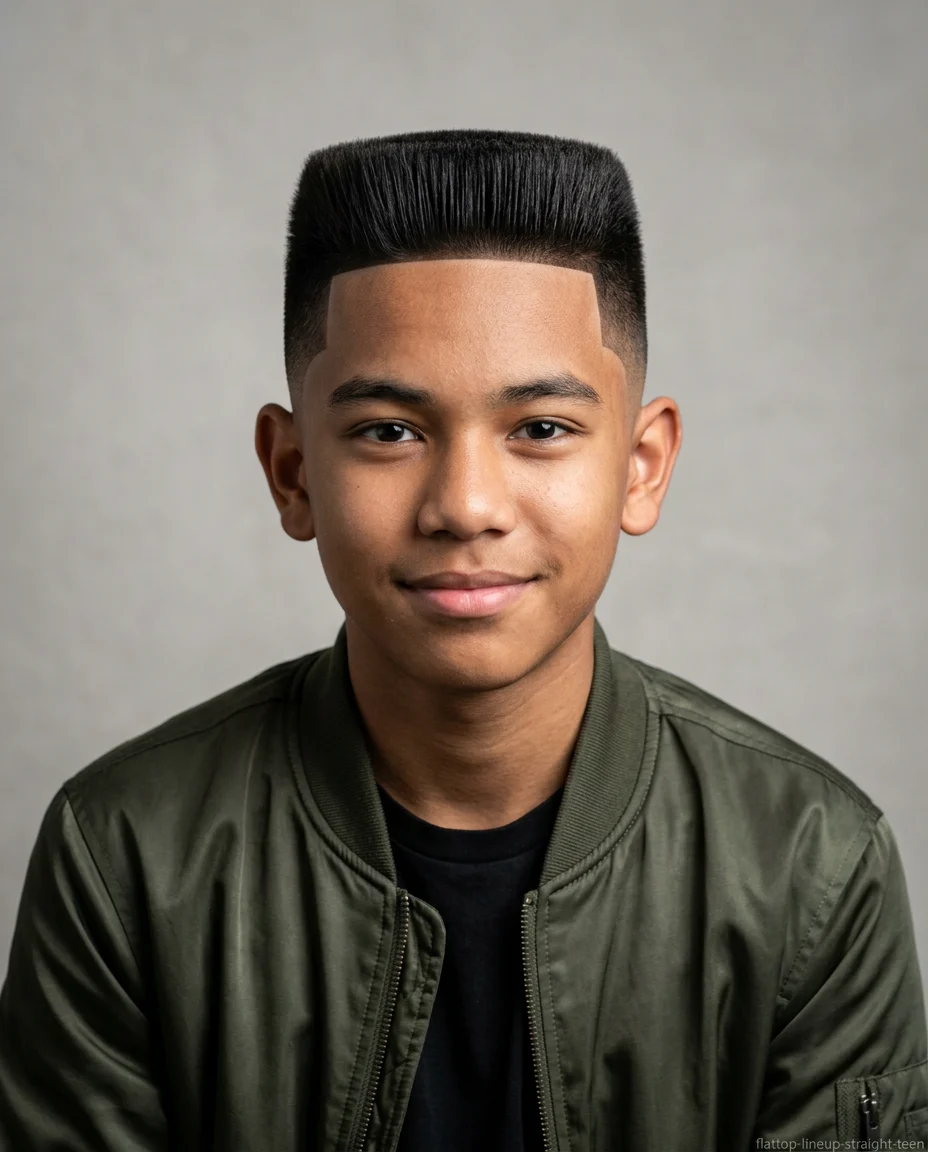
A line up is a razor-sharp edge cut along the hairline, temples, and sideburns — most flat tops get some version of this, but this variant makes the line the main event, cut crisp enough to see from across a room. It pairs especially well with darker hair against lighter skin, where the contrast actually shows.
Lines need redefining every 7 to 10 days, faster than almost anything else on this list, which is why a lot of guys learn to touch theirs up at home with a T-liner between full haircuts. If you’re not going to maintain the line between visits, it’s better to ask for a softer, blended edge instead — a half-grown-out line up looks worse than no line at all.
12. Flat Top with Temple Fade
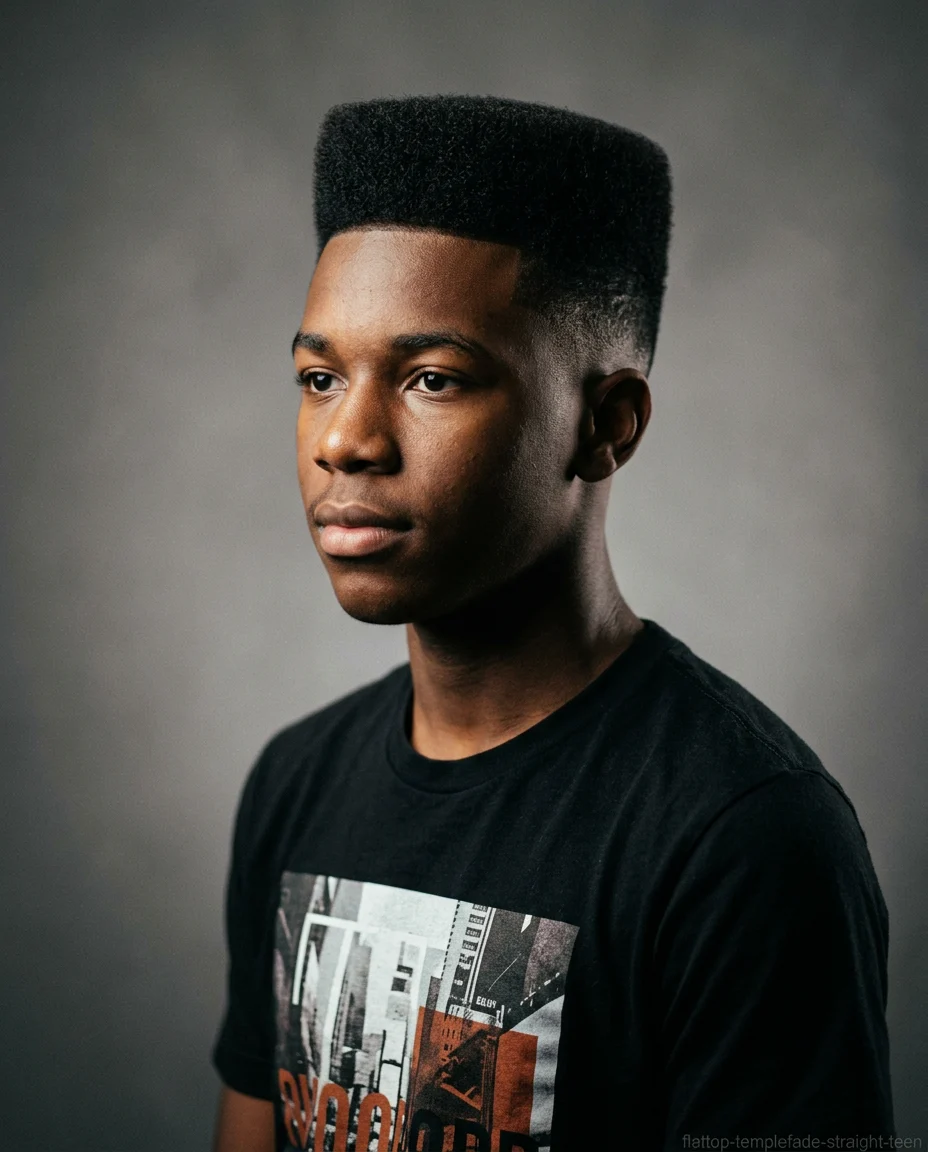
A temple fade tapers the hair specifically around the temple area while leaving more length toward the back and crown — it’s a way to add some fade detail without committing to a full high or skin fade everywhere. Combined with a flat top, it draws the eye toward the front of the face rather than the sides.
This is a good option if your hair grows in with a cowlick or an uneven hairline near the temple, since the fade can be used to disguise it rather than fight it. It holds its shape for about 3 to 4 weeks, similar to a low fade, and it’s genuinely one of the more forgiving options if you’re prone to skipping haircut appointments.
13. Rounded Flat Top
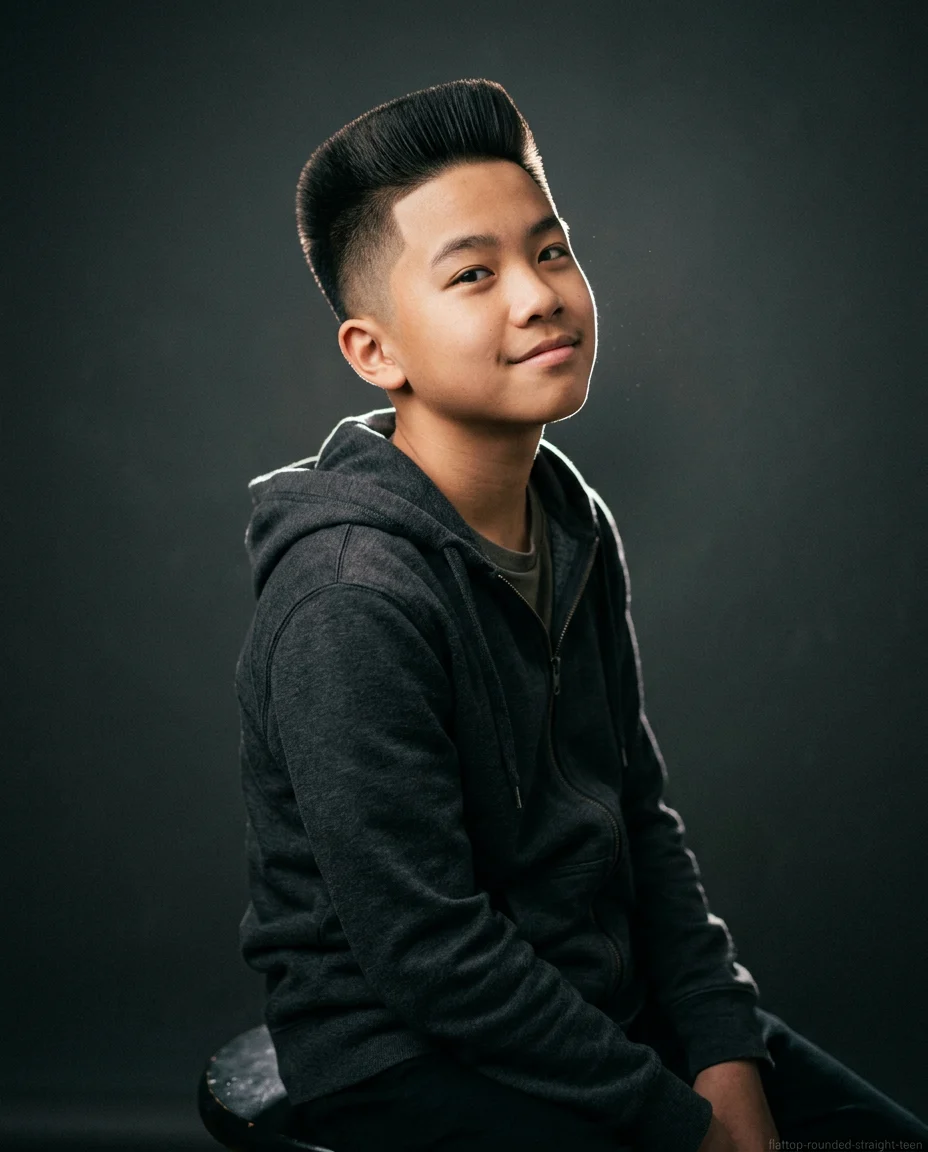
Instead of sharp corners at the front hairline, this version keeps the top flat but softens the edges into a rounder shape that follows your head more naturally. It’s a good middle ground if the square flat top looks too severe on you, but you still want the flat silhouette rather than a rounded crop or fade-only style.
This is also the easiest flat top for a first-time barber visit, since there’s less precision required at the hairline compared to the square version. A slightly uneven edge is much less noticeable when the whole shape is already rounded. Plan on a trim every 3 to 4 weeks — a little longer than the square version since growth is less obvious without hard corners to reveal it.
14. Flat Top with Curtain Fringe
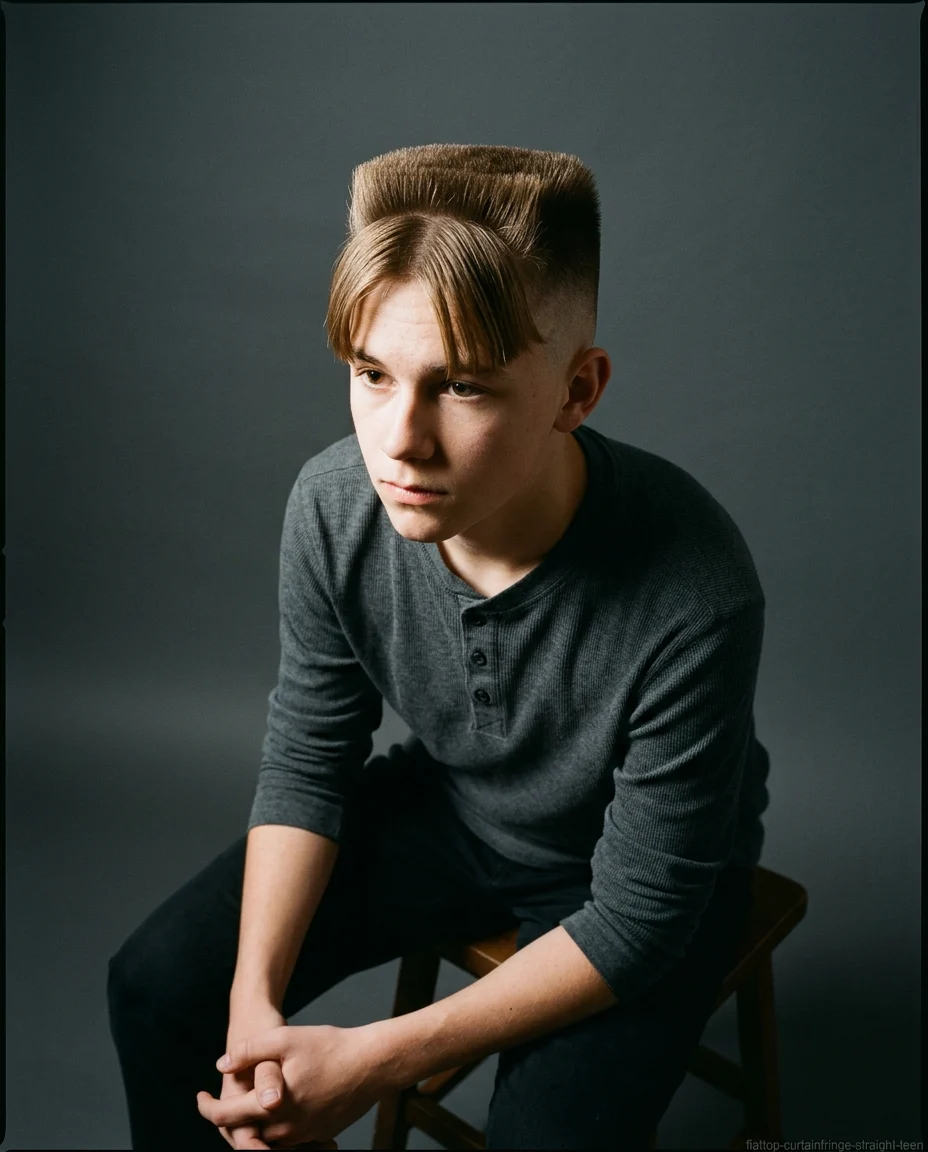
This combines two very different silhouettes — a flat top on the crown and sides, with the front section split down the middle and parted into curtains instead of buzzed or left flat. It only works cleanly on straight hair, since curtains rely on hair falling flat and parting on its own without curling back up.
The curtain section needs to be grown out longer than a standard flat top’s front area — usually 3 to 4 inches — so there’s an awkward middle stretch of a few weeks where it’s too short to part properly and too long to blend with the flat top. Most guys push through that stage once and don’t want to repeat it every haircut.
15. Flat Top Fade with Shaved Design
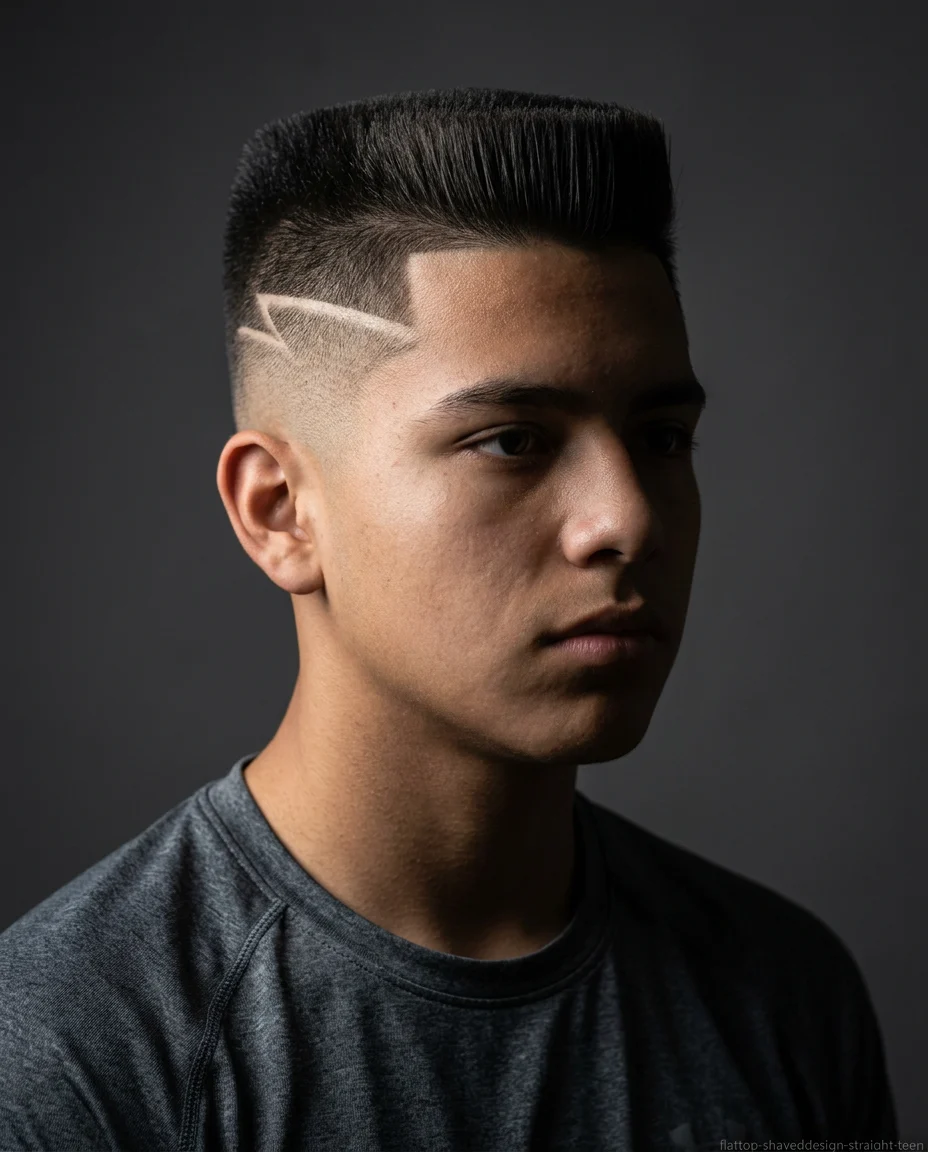
The last option adds a shaved design — a line or a small stripe — cut into the faded sides beneath a standard flat top. It’s less about the flat top itself and more about using it as a canvas for something more personalized. Straight, dark hair against pale skin gives the cleanest design contrast; lighter or thinner hair makes fine lines harder to see.
Designs need touching up on the same schedule as a hard part — every 5 to 7 days — since the shaved lines grow in and blur faster than the surrounding fade. This is also the option most likely to need a specific barber who does freehand or stencil design work, not just any barber who can do a standard fade. Ask to see design examples before booking.