1. The Classic Slick Back on Thick Hair
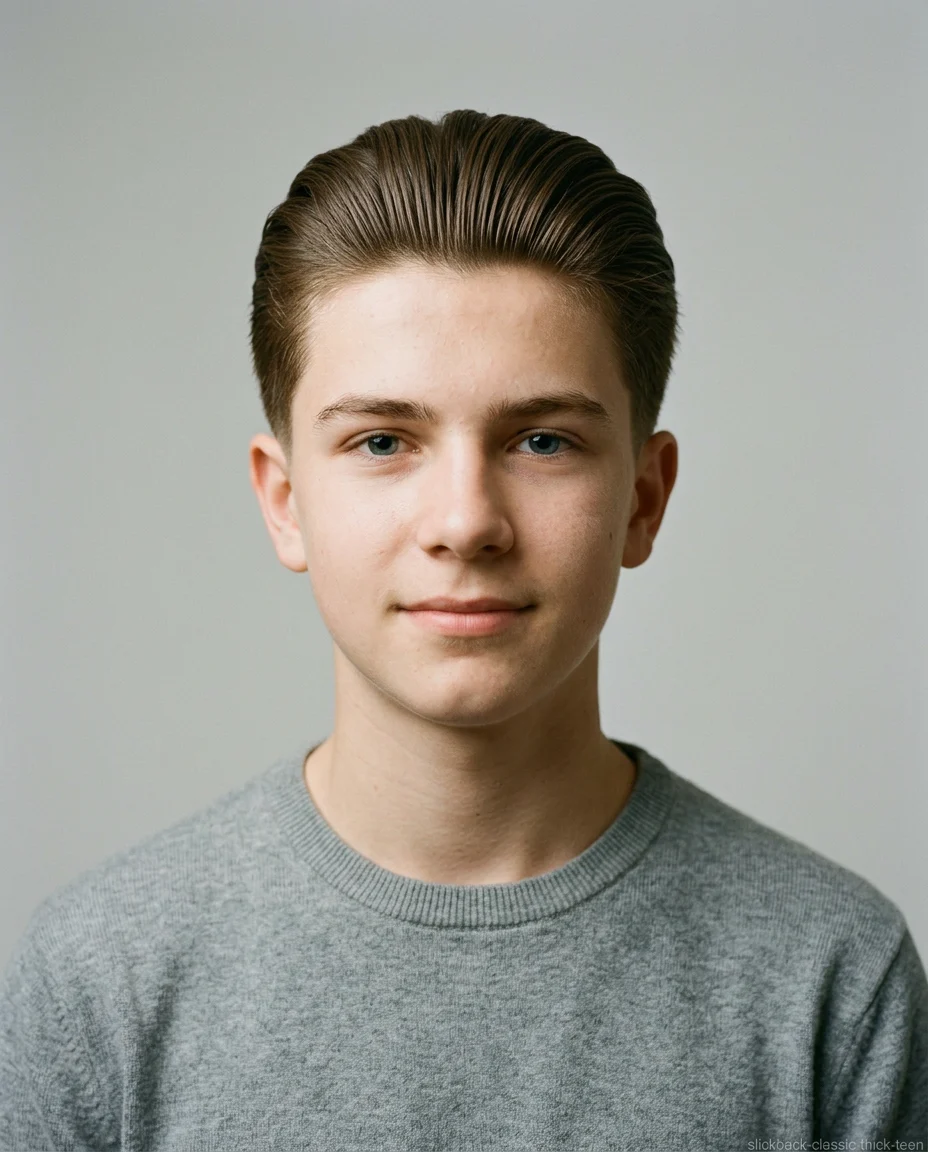
Start with the baseline. Hair combed straight back, medium length on top, somewhere around 3 to 4 inches, with the sides kept close but not shaved down to skin.
Thick hair gives this natural hold. A dime-sized amount of pomade is usually enough; heavier product just weighs the top down into a flat cap instead of a wave.
Rebook every 4 weeks. Wait longer than that and the sides creep up into the top length, and the whole shape starts looking shaggy instead of sharp.
2. Textured Slick Back That Cuts the Bulk

Not every slick back needs to look wet or glassy. A textured version uses a matte clay instead of pomade, so strands separate instead of blending into one solid piece.
Thick hair is honestly the easiest texture to work with here, it already has natural body, so you are not fighting to create movement that is not there.
It takes about 5 minutes to style once he has got the product amount dialed in. Less than that and it looks unfinished; more and it goes greasy fast.
3. Taper Fade Slick Back: The Forgiving Blend
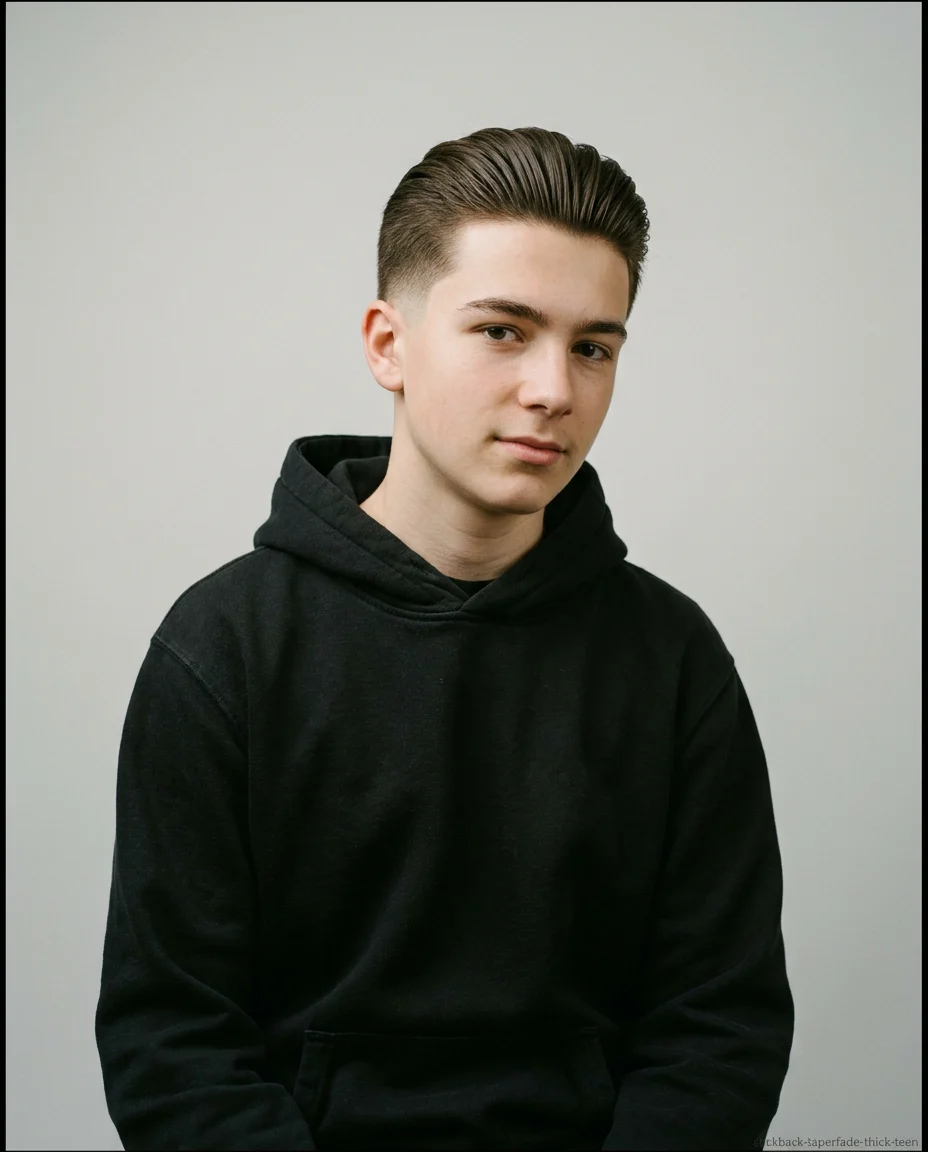
A taper fade is the middle ground between a skin fade and a basic trim, it blends gradually down the sides instead of dropping straight to skin.
This is the safer choice for a first fade. Less dramatic, less noticeable when it starts growing out, which matters if he is not going back to the barber every 3 weeks like clockwork.
The honest answer is it depends on how disciplined the maintenance schedule actually is. Taper fades forgive a missed appointment better than skin fades ever will.
4. Messy Slick Back Thick Hair Holds
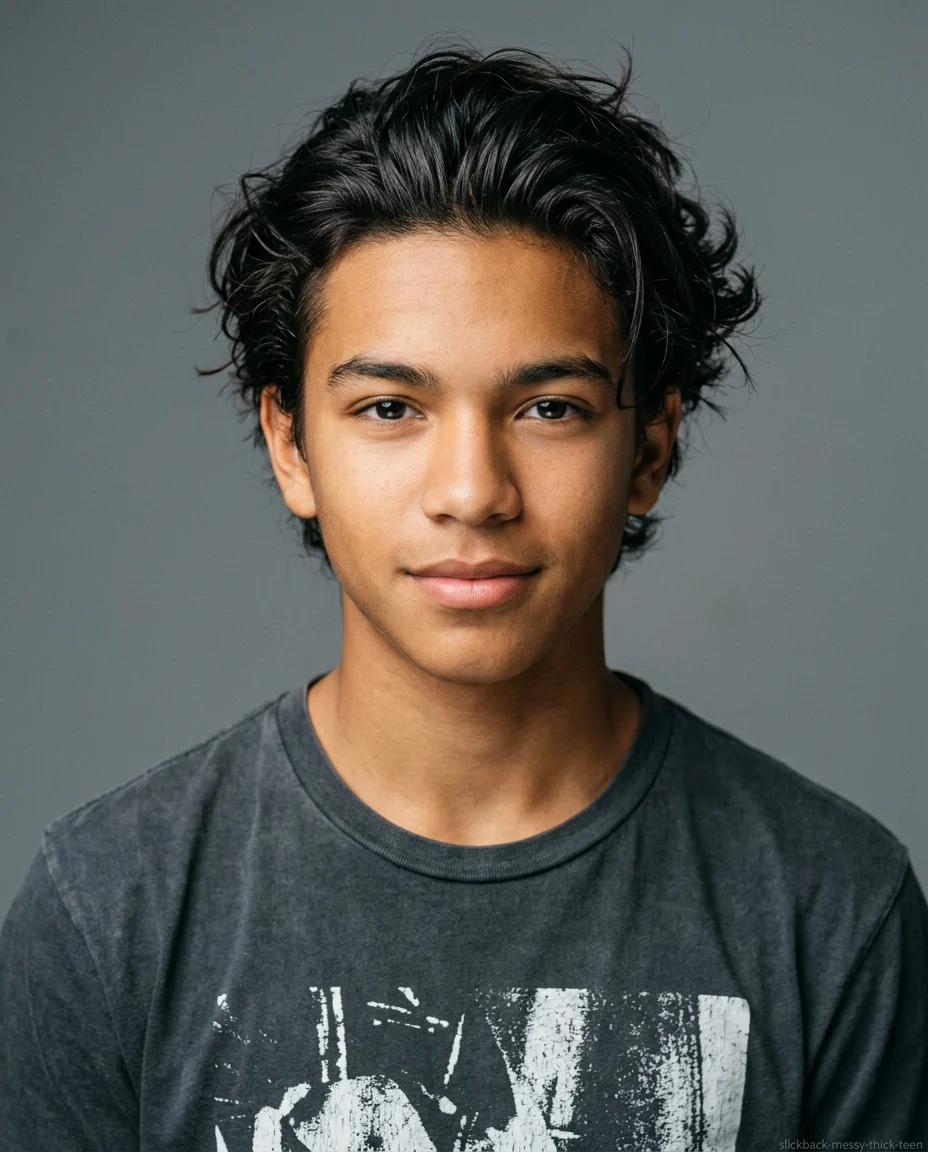
Not everything has to be combed into place. A messy slick back pushes the hair back with fingers instead of a comb, leaving natural gaps and a bit of lift at the crown.
Thick hair is what makes this work. Fine hair falls flat within an hour; thick hair holds the pushed-back shape and the texture at the same time.
Use a light sea-salt spray before pushing it back, about a 2-second spritz is plenty. Overdo it and the texture turns crunchy instead of tousled.
5. Undercut Slick Back That Removes Side Volume
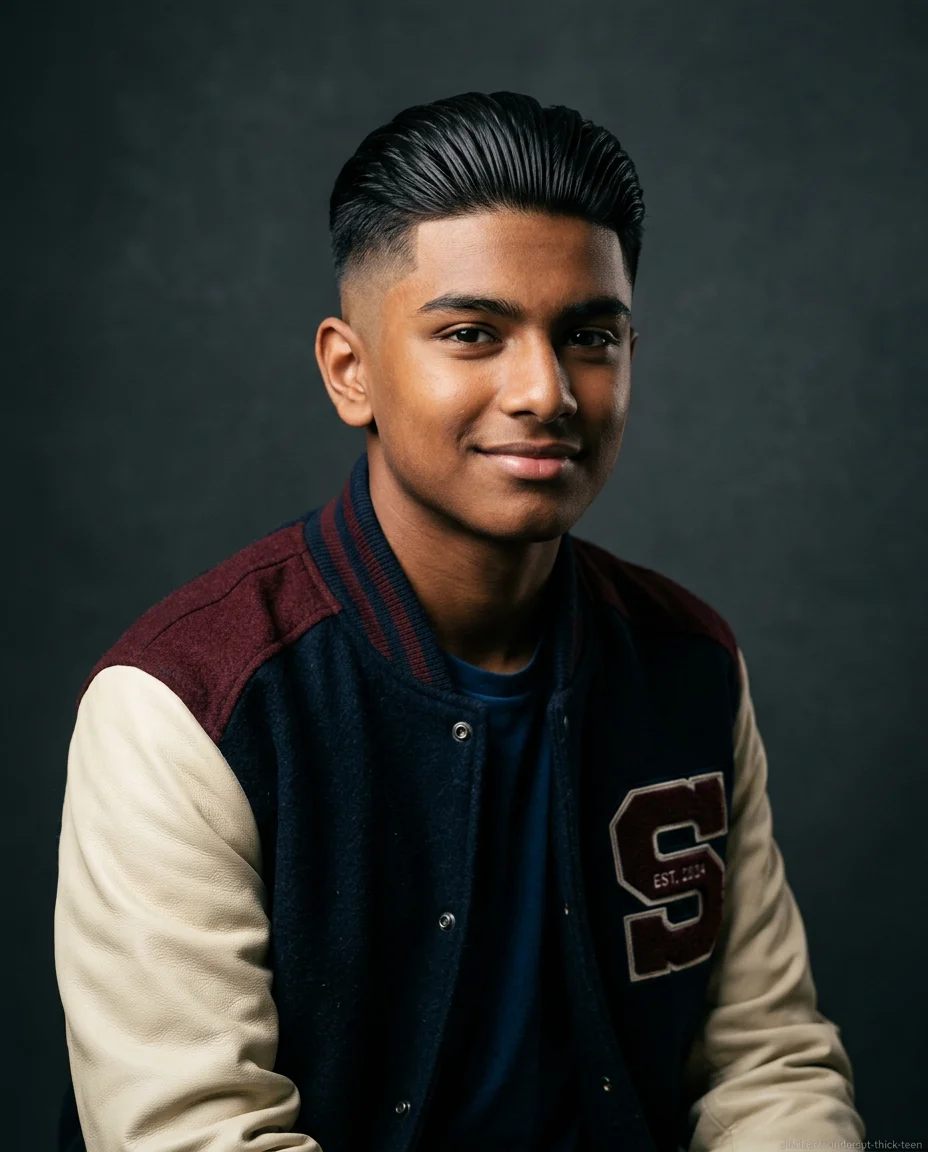
An undercut takes the sides down close with clippers, usually a 1 or a 0.5 guard, while the top stays untouched at medium length.
The contrast is bigger than a taper gives you. On thick hair specifically, that contrast is what keeps the top from reading as one heavy, shapeless mass.
Most guides skip this part: undercuts need the top brushed forward and re-slicked back daily, or the spot where short meets long starts looking uneven.
6. Slick Back Pompadour Fusion With Real Height
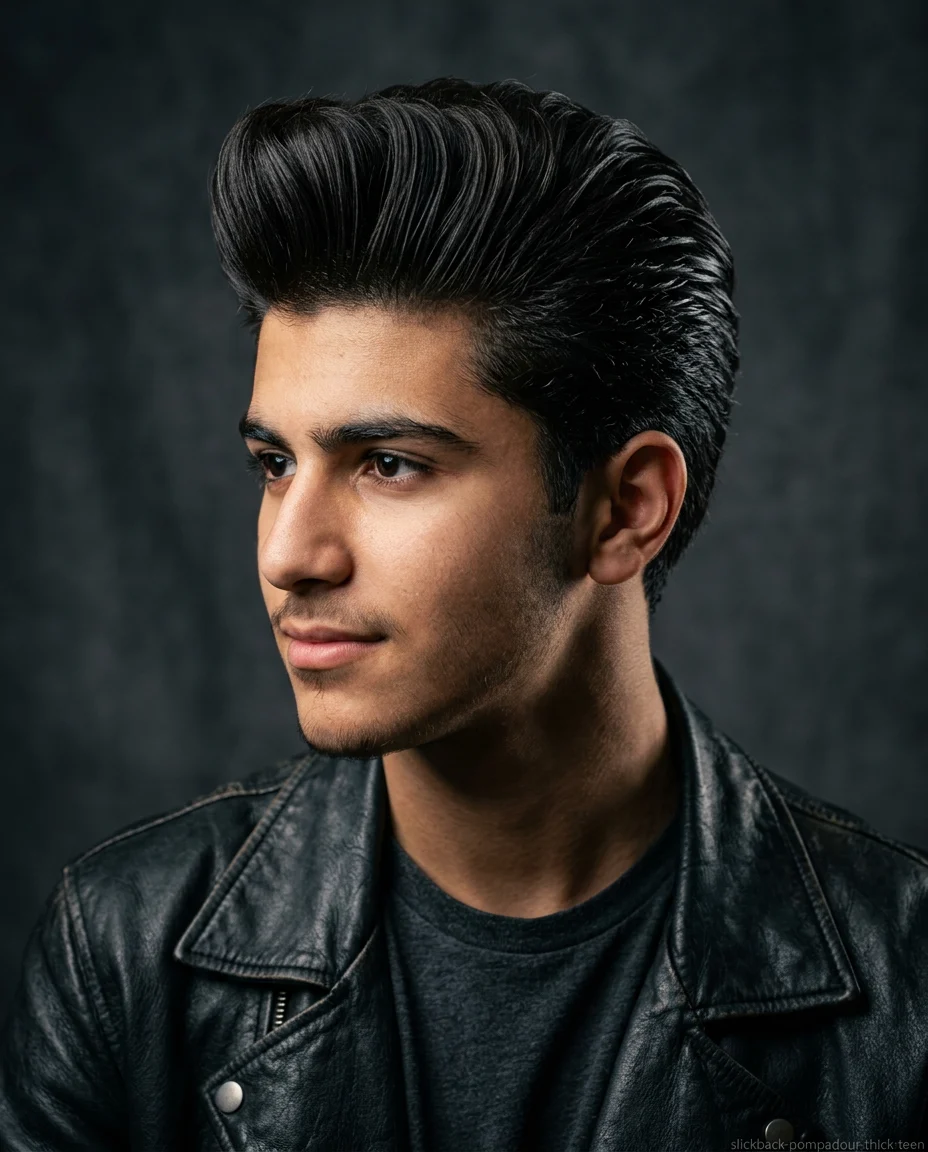
This one borrows height from a pompadour and blends it into a slicked-back finish toward the crown, instead of keeping everything flat front to back.
It needs more length up front to work, closer to 4 inches than 3, and a strong-hold pomade to keep the lift from collapsing by lunch.
Styling takes closer to 8 minutes with a blow-dryer and round brush first. Skip the blow-dry step and the height mostly disappears within an hour.
7. Side Part Slick Back Blend
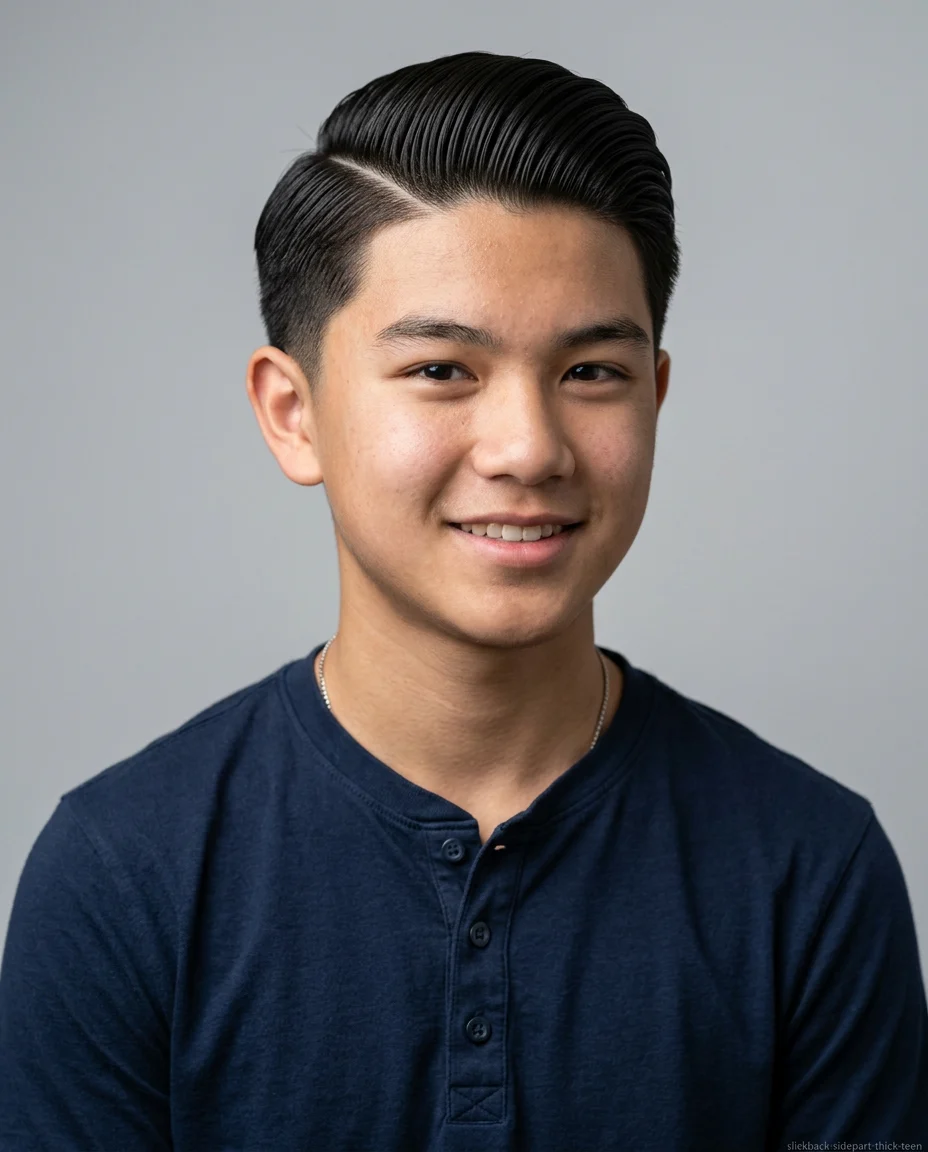
Add a defined side part into the top length before slicking it back, and the style picks up a slightly more formal edge without changing the sides at all.
On thick hair, the part has to be combed in while the hair is still damp, otherwise it fights its way back to a natural fall within the hour.
This version works better than most people expect for interviews or formal events, since it dresses up without needing a totally different haircut underneath.
8. Low Fade Slick Back for Longer Gaps

A low fade keeps the fading action close to the ears and neckline instead of climbing up toward the temple. It is a quieter version of the fade family.
Parents tend to prefer this one for school. It reads as neat rather than aggressive, and it clears most dress-code language about hair around the ears.
Growth is more forgiving too. A low fade can stretch to 5 weeks between cuts before it looks like it needs attention, longer than a high or skin fade allows.
9. Slick Back With a Fringe Left Forward
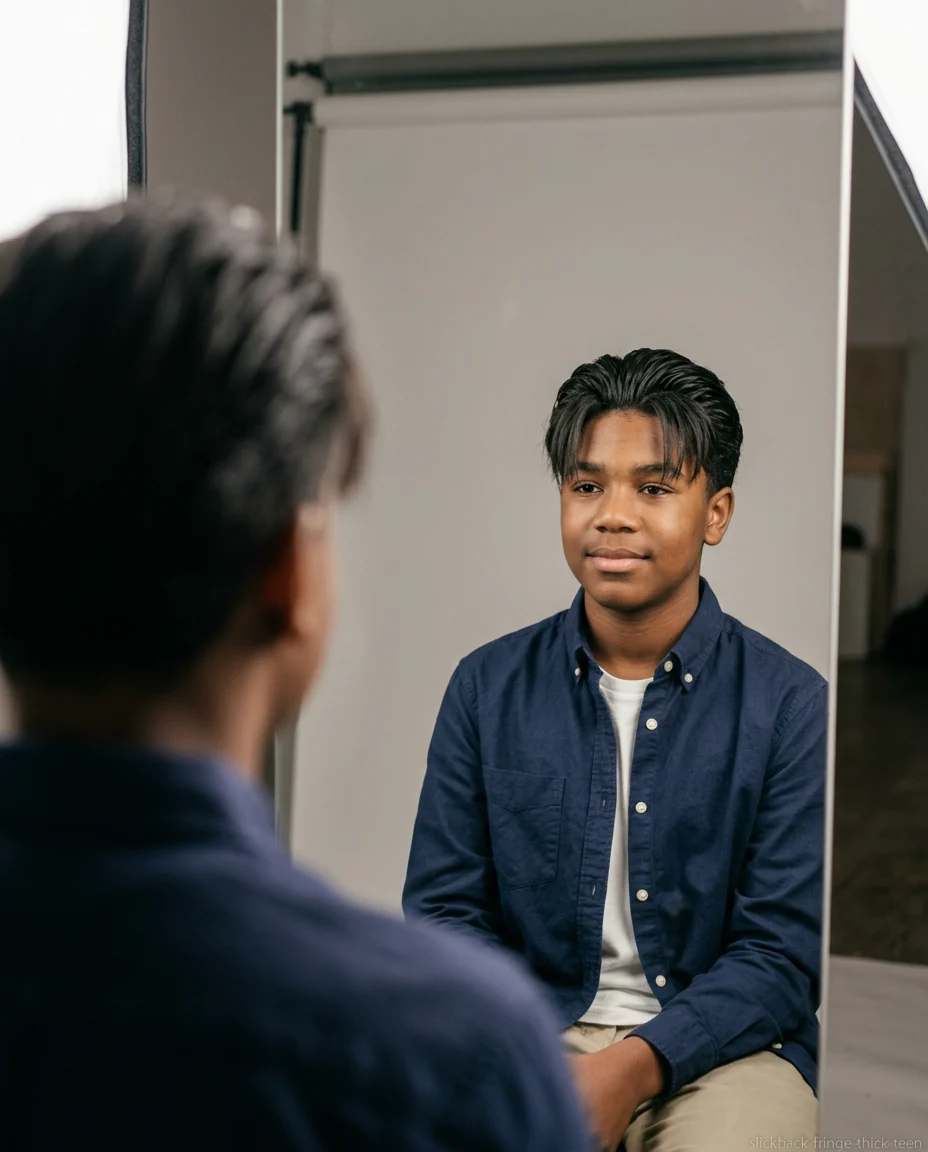
Leave a section at the front slightly longer and let it fall forward instead of slicking it fully back. That is the whole difference here, and it is smaller than it sounds.
Thick hair holds a fringe without flopping into the eyes constantly, which is the usual complaint with finer hair types trying this same look.
It needs trimming more often than the rest of the cut, every 2 to 3 weeks, or the fringe outgrows the slicked-back sides and throws off the proportion.
10. The Wet-Look Slick Back
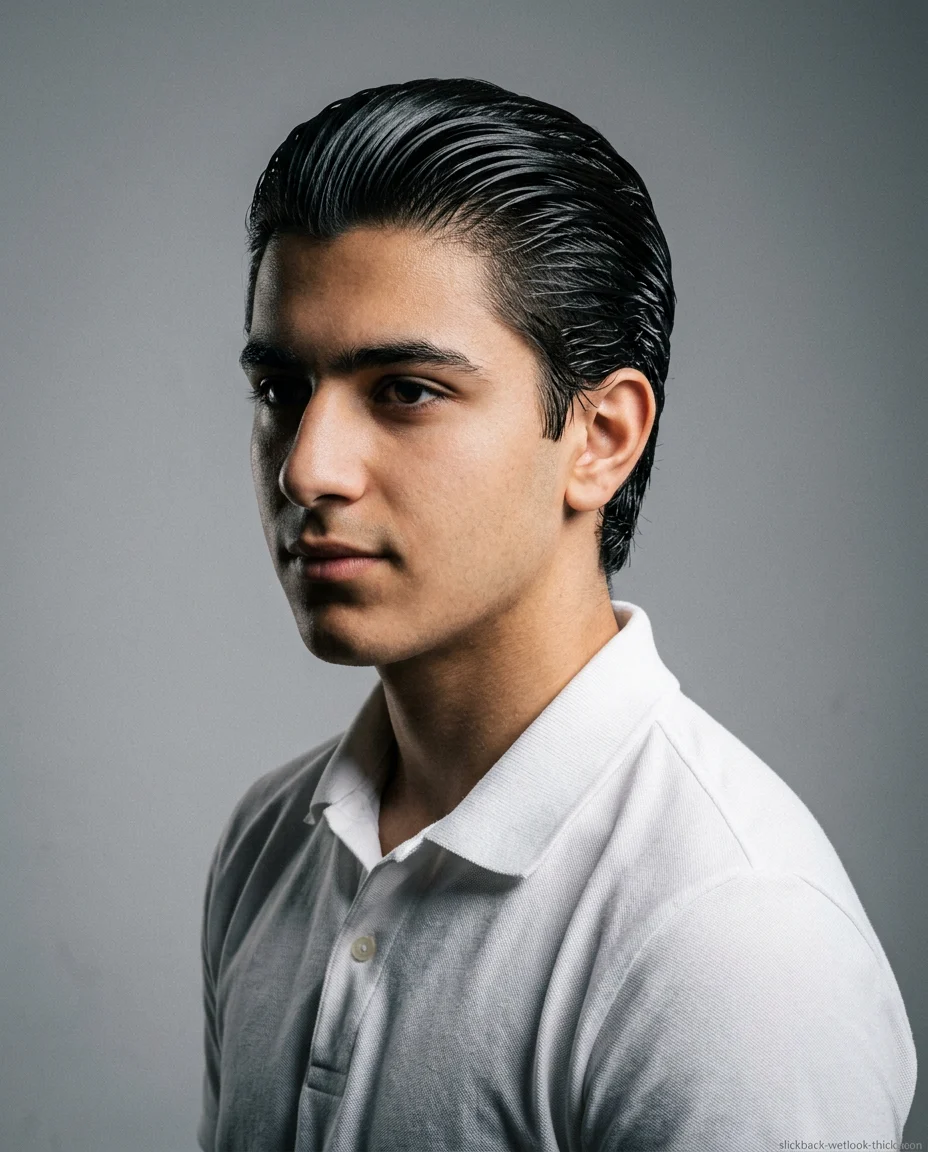
This is the version that shows up most on Pinterest, high shine, every strand visibly slicked, almost like he just stepped out of the shower.
Getting the wet look right on thick hair means a gel-pomade hybrid, applied to damp hair, not dry. Dry application on thick strands tends to sit on top instead of sinking in.
It looks best for maybe 6 to 8 hours before the shine flattens out. Fine for a school photo day, less practical as an everyday look.
11. Skin Fade Slick Back Against Dense Top
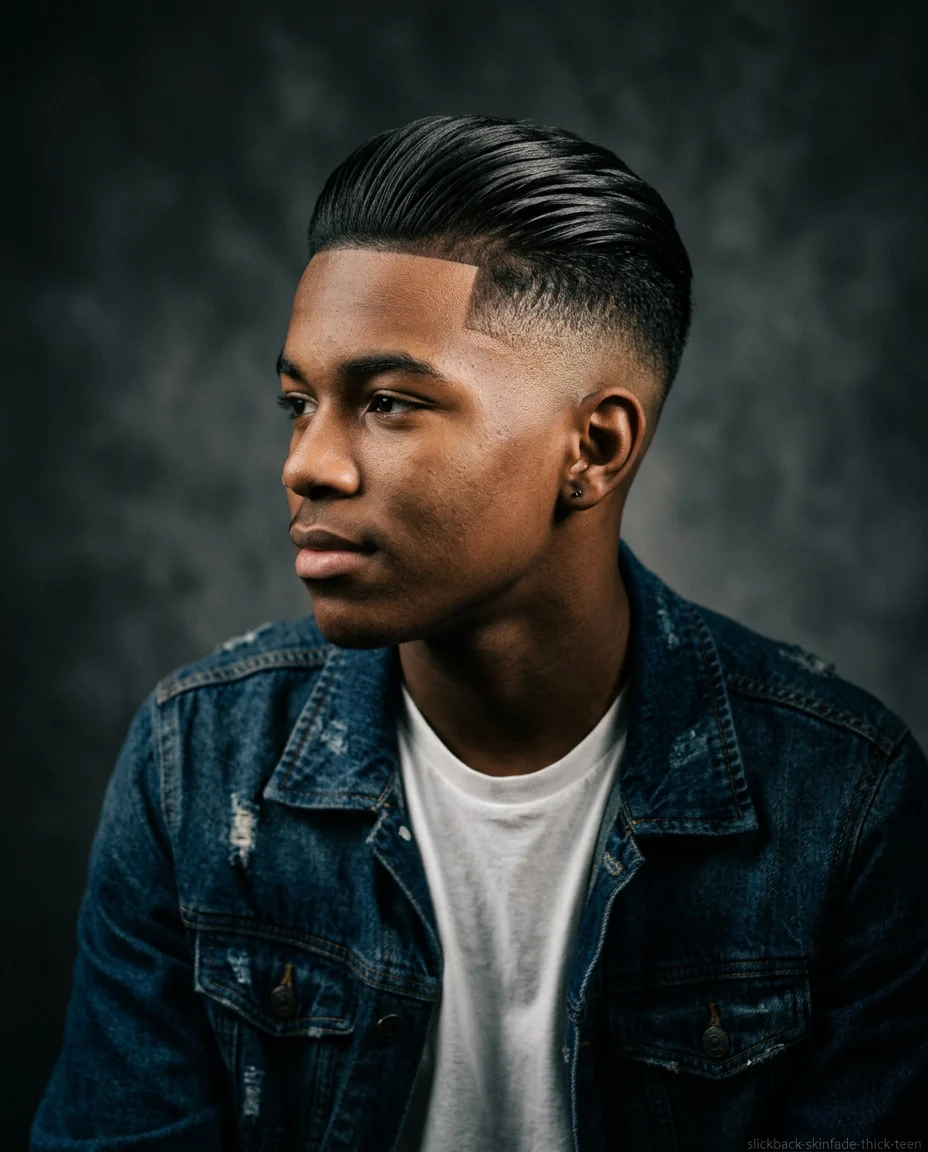
Swap the close sides for a true skin fade and the top reads sharper immediately. More contrast, less bulk around the ears, which matters more on thick hair than people expect.
This is the version usually suggested for teens specifically. It photographs well and it is low-maintenance between visits, which counts for something when a 16-year-old is not styling every morning.
The trade-off: skin fades grow out fast. Expect a touch-up around the 3-week mark, not 4, or the fade line starts blurring into an awkward in-between.
12. Hard Part Slick Back Framed by Density
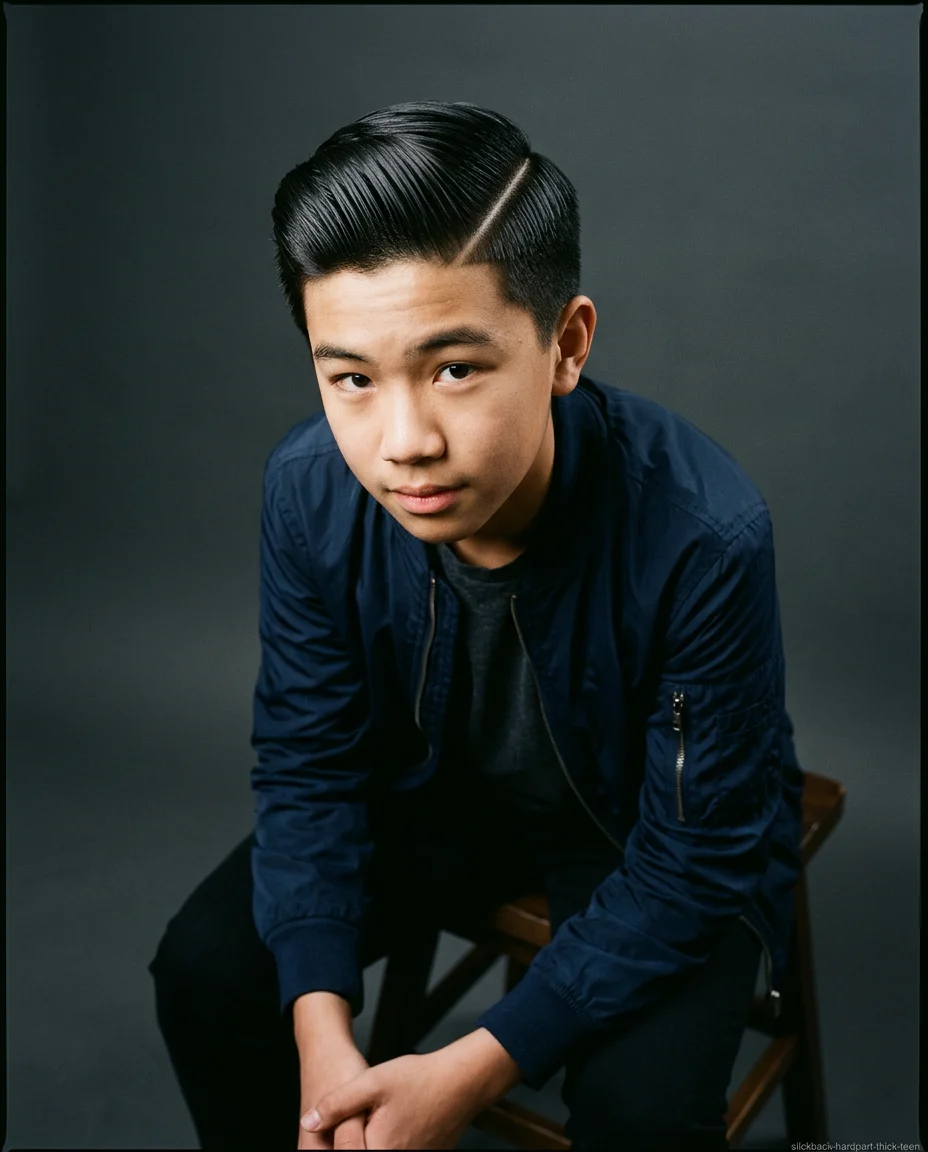
A hard part, a razor line shaved straight into the side, turns a basic slick back into something with an actual design element. It is a small detail that changes the whole read.
Thick hair holds the line well once it is cut in, but it needs redefining roughly every 2 weeks, since regrowth fills it in faster than people assume.
Skip this one if he is not committed to upkeep. A grown-out hard part just looks like a scar in the hairline, not a style choice.
13. Disconnected Undercut Slick Back
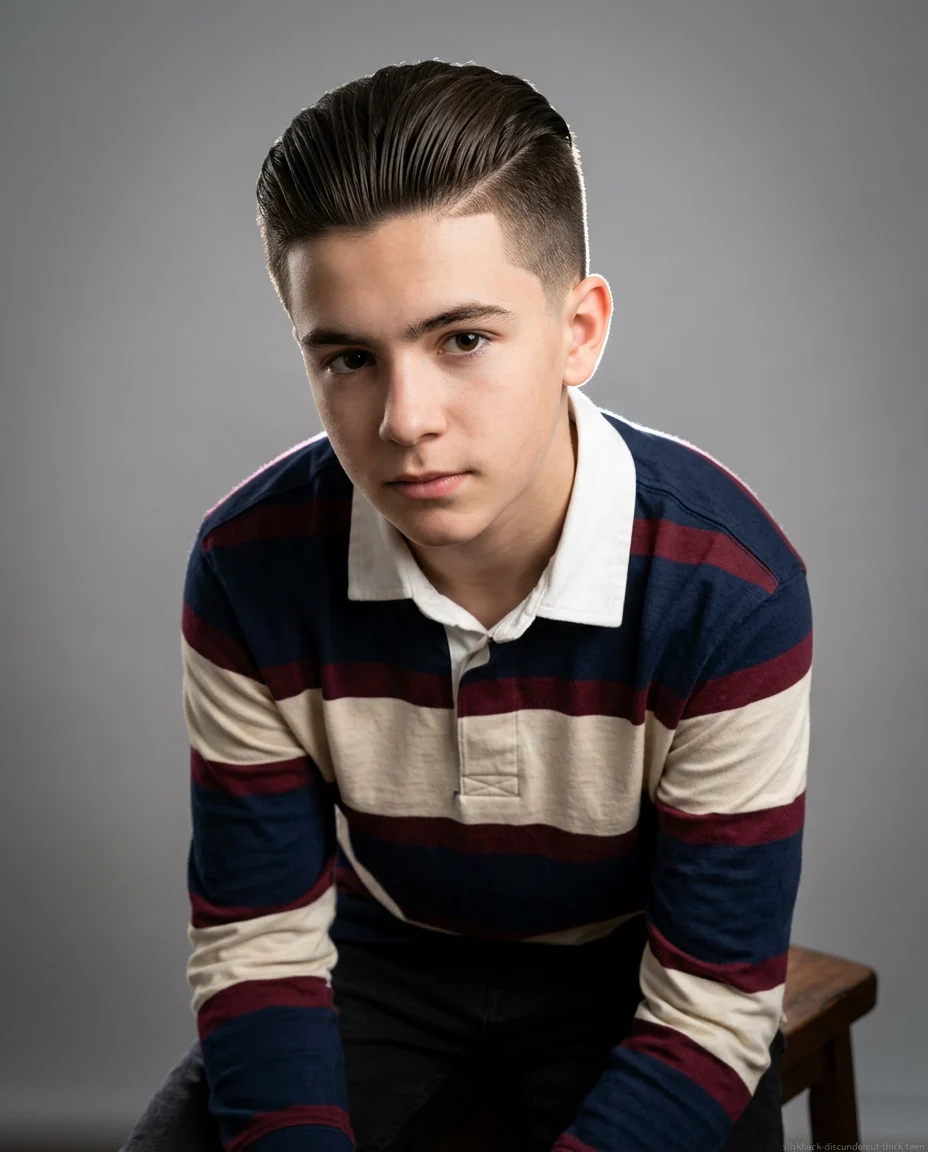
Here the top and sides are not blended at all, there is a visible, deliberate break between the slicked-back length and the closely clipped sides underneath.
It is the boldest option on this list. Thick hair sits over the disconnect like a shelf, which is exactly the effect this cut is going for.
Reality check: this is the hardest one to grow out gracefully. If he is not ready to keep it maintained for a few months straight, start with the hard part or taper fade instead.