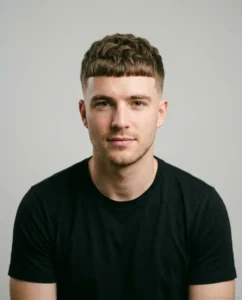
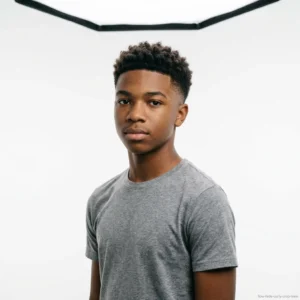
Straight hair holds a slick back better than any other texture, and a medium length gives you enough to actually style without breaking a dozen rules along the way. Here are 21 ways to wear it, from barely-there to full-on statement.
1. Classic Medium Slick Back

This is the version every barber can do with their eyes closed. Hair gets combed straight back from the forehead, no part, no fade drama — just length and direction. On straight hair it sits flat almost immediately, no fighting the grain the way you would with waves or curls that want to spring back up.
You’ll need about 2 to 3 inches on top to get real slick-back length, which usually means growing out a fade for 6 to 8 weeks first. A dime-size amount of pomade, comb it back while damp, and you’re done in under 5 minutes most mornings — closer to 3 once you’ve done it enough times to skip the mirror.
It reads a little older than most school cuts, honestly, closer to something a dad would wear to an office than a teenager would wear to first period. Works fine for picture day, works fine for a formal event. Gets boring fast if it’s the only thing you ever do with your hair, since there’s nothing here to vary week to week.
2. Medium Slick Back with Taper Fade
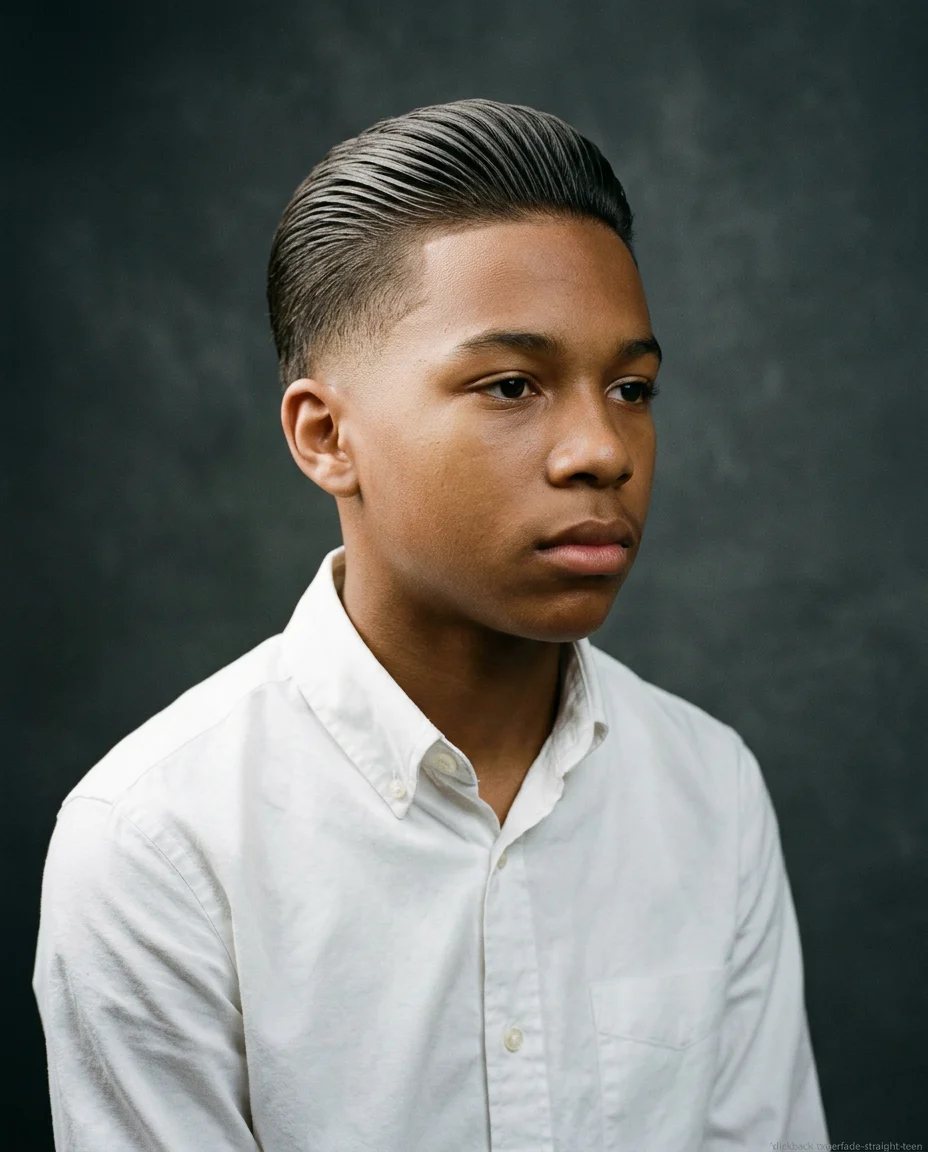
Add a taper fade and the slick back stops looking flat from the side. The top stays long and combed back while the sides taper down gradually into the hairline, no hard lines anywhere, no obvious point where one length switches to another.
Ask for a 1-inch taper that starts above the ear — that’s short enough to read as clean-cut, long enough that it doesn’t need a touch-up every 2 weeks like a tighter fade would. Most barbers can knock this out in about 20 minutes, fade included.
This is probably the safest version to bring to a school that has vague grooming rules, since it splits the difference between a full fade and no fade at all. It looks intentional without looking like a statement, which matters more than people admit when the goal is just to blend in and get through the day.
3. Medium Slick Back with Skin Fade
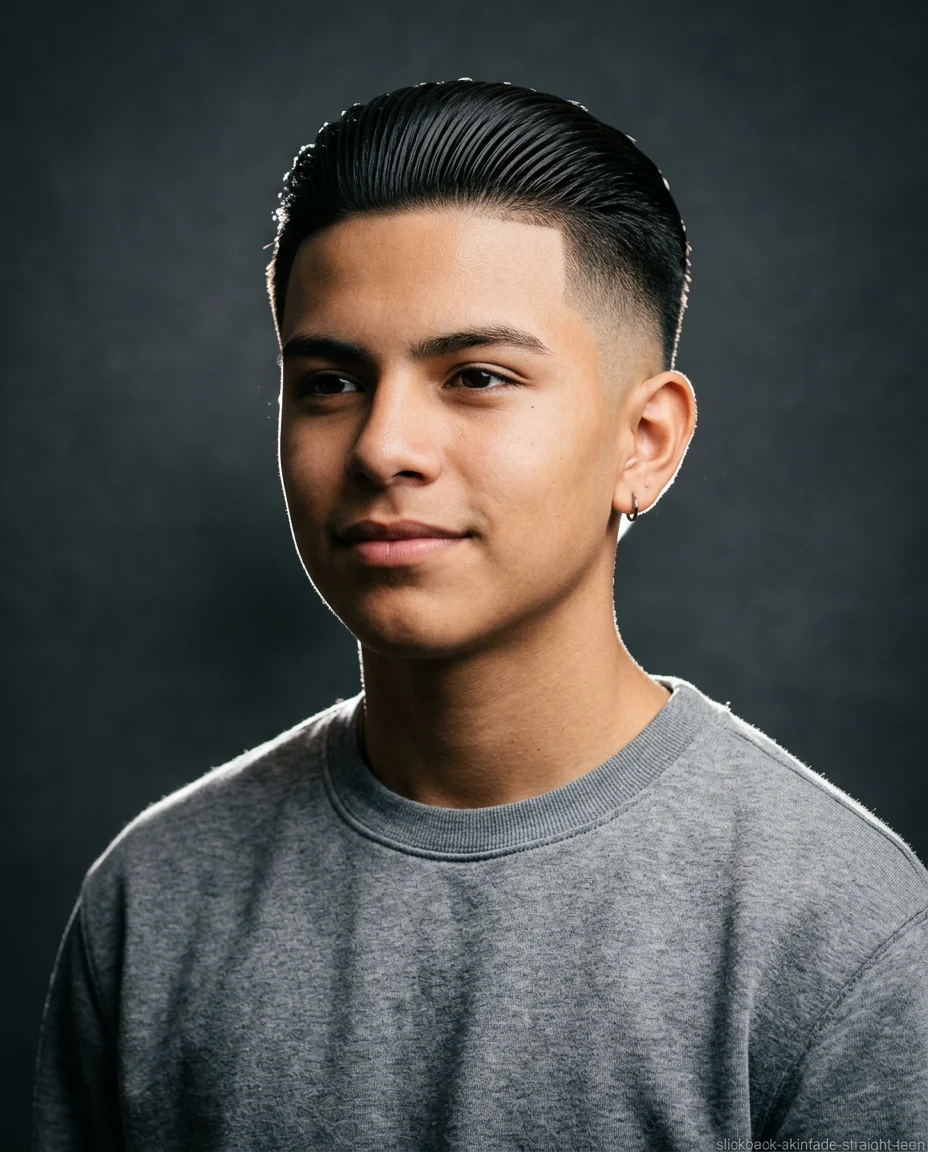
The skin fade version trades subtlety for contrast. Sides go down to bare skin, top stays slicked back and full, and the difference between the two does most of the work visually instead of relying on shine or product to make the cut stand out.
It needs a refresh every 10 to 14 days or the fade grows out and blurs into something messier, closer to a shadow than a clean line. That upkeep cost is real — factor in the extra barber visits before booking the first cut, because the look only works while the fade stays sharp.
Some schools flag skin fades as too sharp for the dress code, especially at the temple where it’s most visible from the front. Check before committing, because growing it out mid-semester is its own headache — there’s an awkward stretch where it’s neither fade nor faded-out that lasts a couple weeks.
4. Textured Medium Slick Back
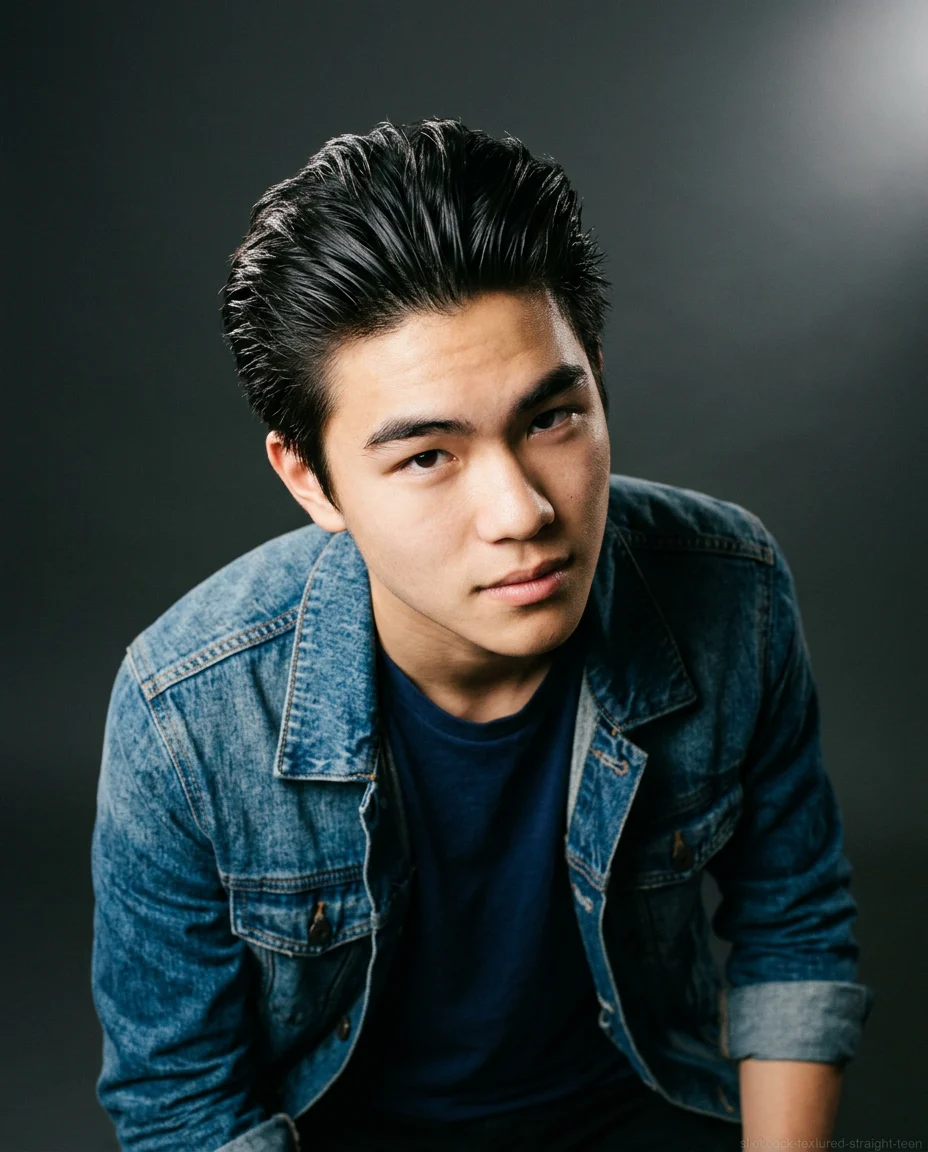
Not every slick back needs to be glass-smooth. This version keeps hair pushed back but leaves individual strands visible instead of pressing everything into one flat sheet, which gives it more movement and a little less formality.
A matte clay or fiber paste works better here than a wet-look gel, since gel tends to clump the texture into chunks instead of separating it. Rake it through with fingers, not a comb, and stop before it goes fully flat — you want visible separation, not a solid mass.
It’s more forgiving on a rushed morning — a little messiness actually helps the look instead of ruining it, unlike the classic version which shows every stray strand. The classic slick back doesn’t offer that same margin for error, so this is the better pick on days you’re running late.
5. Medium Slick Back with Side Part
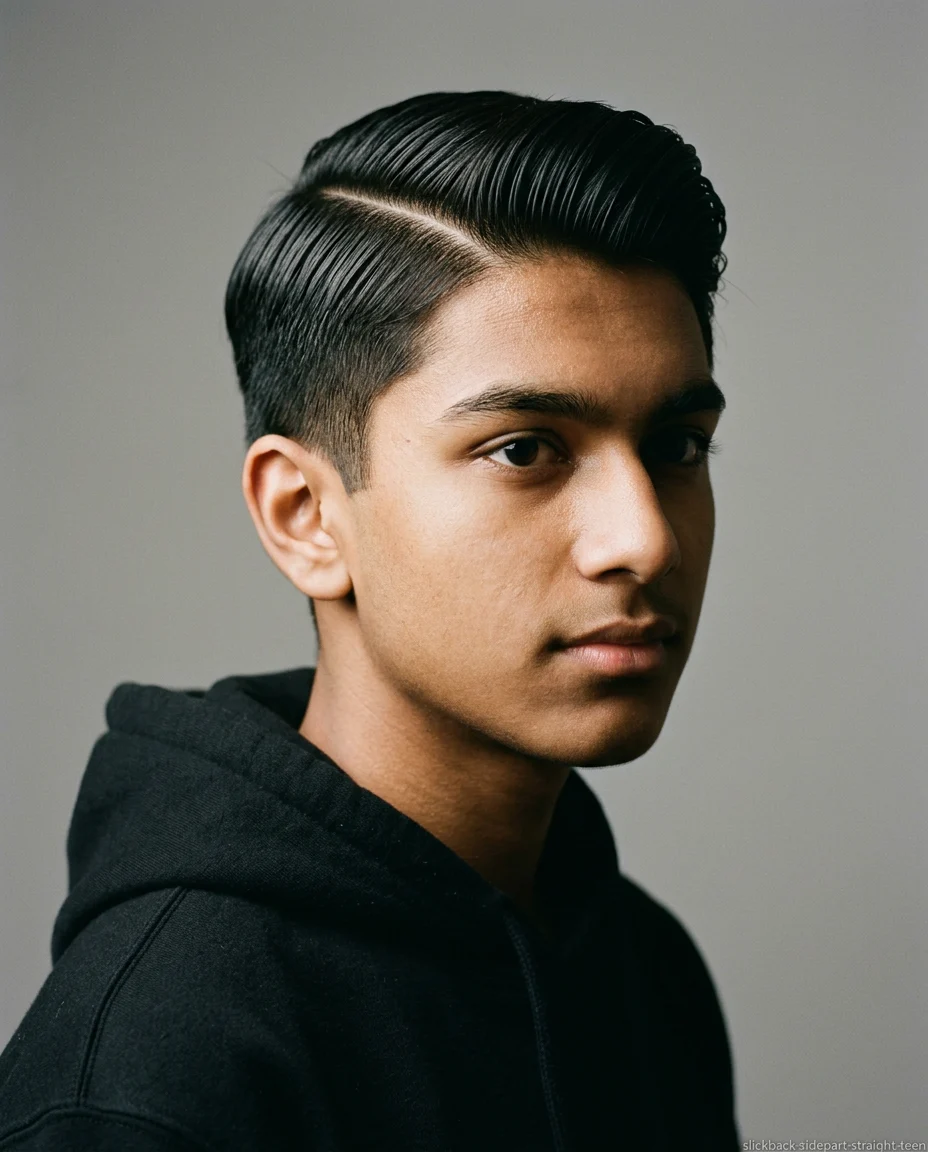
A hard-cut part changes the whole feel of a slick back. Instead of one uniform direction, the hair splits at a defined line and sweeps back on both sides of it, giving the cut a more structured, deliberate look than a plain sweep-back.
Straight hair holds a part cleanly, which curly or wavy textures struggle to do without constant product touch-ups. You get maybe 3 to 4 days between restyles before the part starts drifting and needs to be re-combed into place with a little water or pomade.
It reads more formal than a plain slick back, which makes it a solid pick for uniform-heavy schools that already lean toward a buttoned-up look. Just don’t expect it to survive gym class untouched — sweat and a helmet or headgear will erase the part line fast.
6. Wet-Look Medium Slick Back
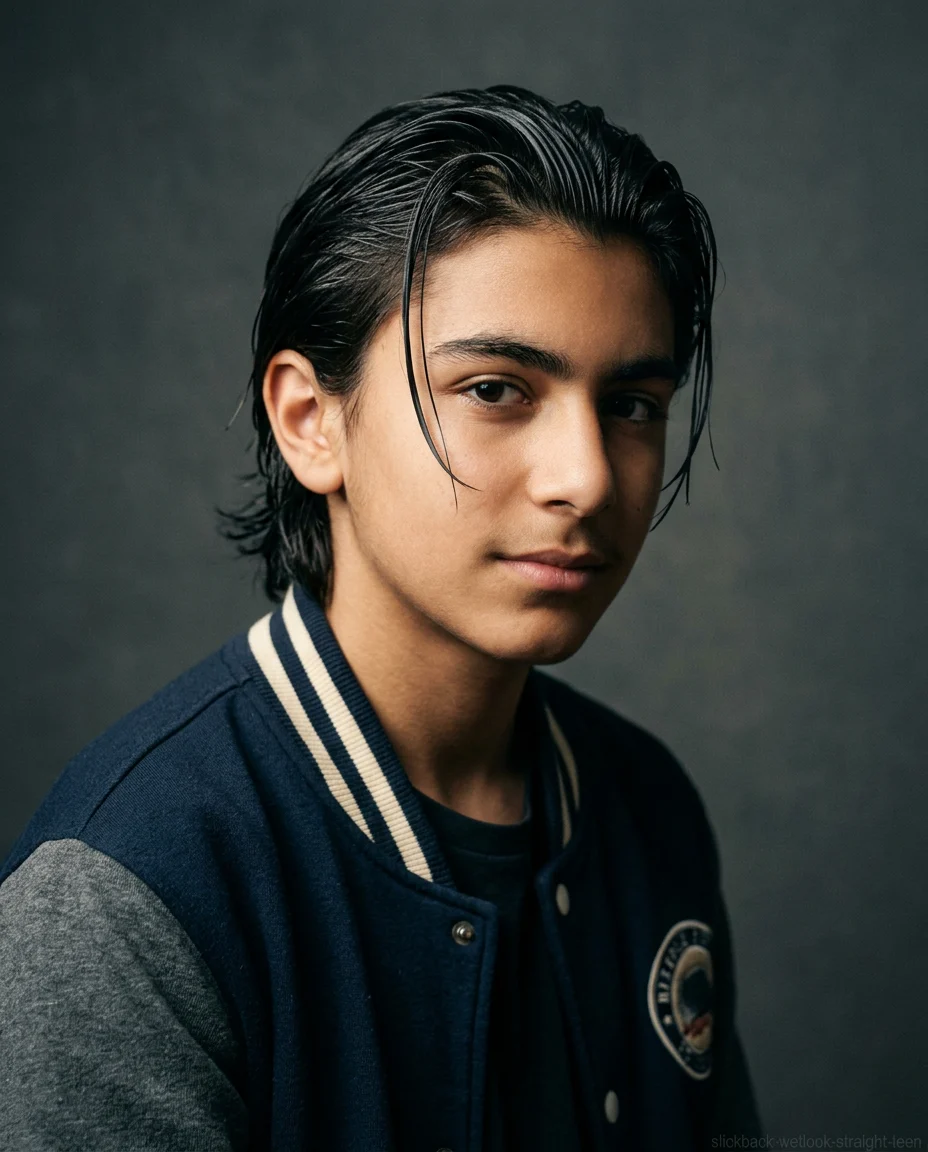
This is the high-shine version — hair combed back so smooth it looks freshly wet all day, even hours after it’s actually dried, which is the whole appeal for anyone who wants a polished, almost formal finish.
A gel with real hold, not a light-hold pomade, is what gets you there. Comb it through while the hair is still damp and let it air-dry into place rather than using a blow-dryer, which can dull the shine before it even sets.
It looks sharp for maybe half a school day before natural oil and movement start dulling the shine and loosening the direction near the crown. Not the pick for anyone who hates re-styling at lunch, since a midday touch-up is basically part of the deal.
7. Matte Medium Slick Back
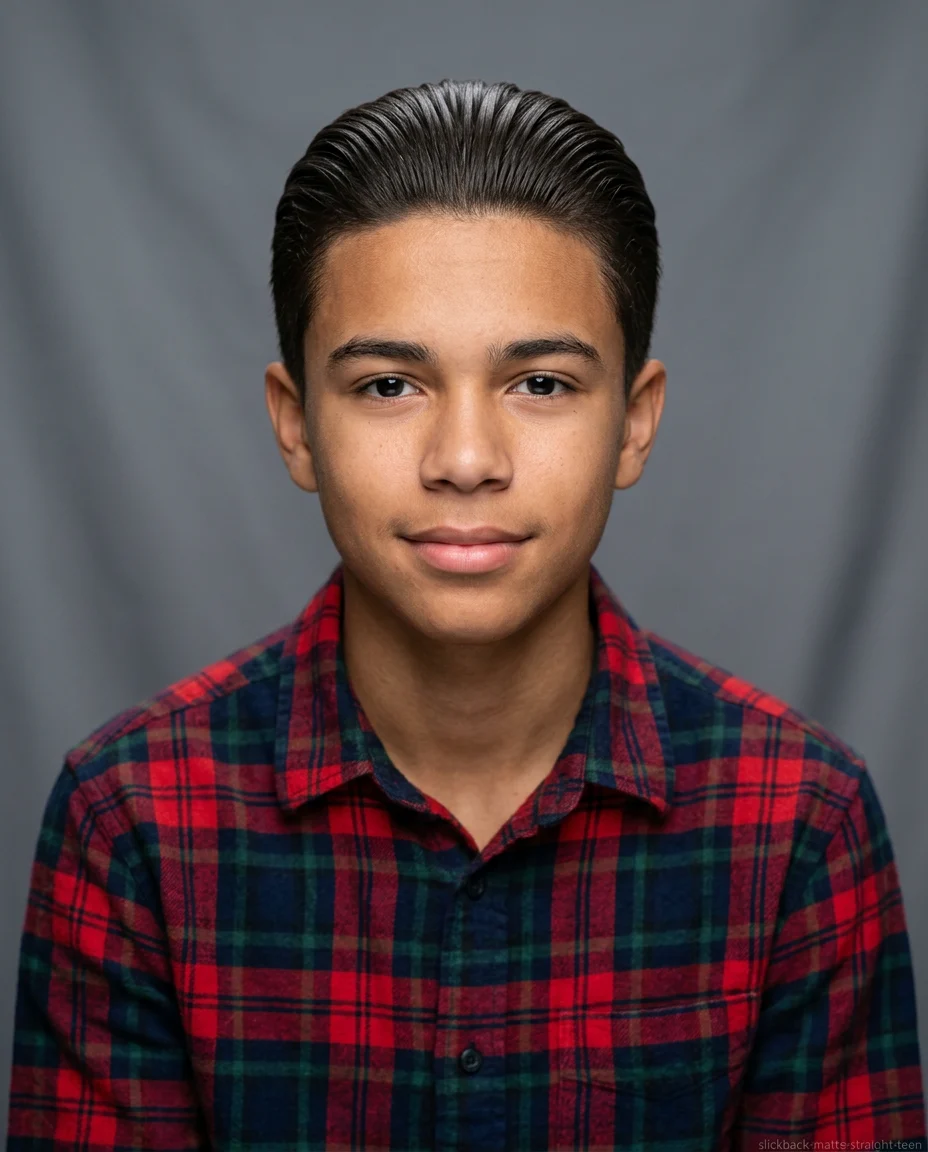
Same shape as the classic slick back, opposite finish. A matte product holds the hair back without the shine, so it reads more like a natural direction than a styled look, which some guys prefer for an everyday, low-key finish.
Clay-based pomades are the move here. They give firm hold with zero gloss, and they hold up better through a full day than most gel formulas do, especially once the classroom gets warm in the afternoon and other products start breaking down.
It’s the version that gets the fewest comments, which for a school setting is usually the point — nobody asks who did your hair, nobody notices it at all. Understated isn’t a bad word, and for a lot of guys that’s exactly the goal.
8. Medium Slick Back with Hard Part
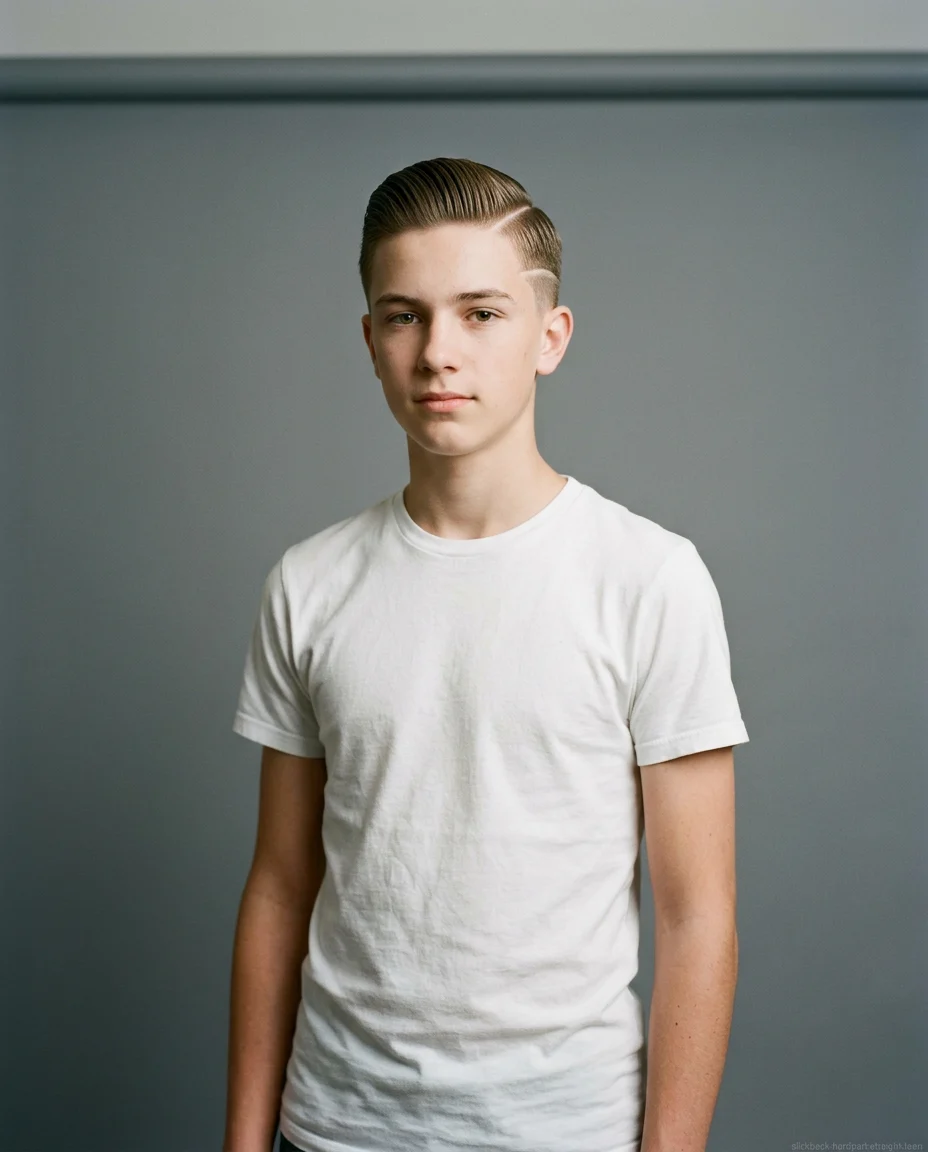
A hard part is a razor-thin line shaved directly into the hair above the ear, then the slick back combs away from it on both sides, creating a sharp visual break that a regular comb part can’t quite match.
It needs upkeep — that line grows out fast, usually within 7 to 10 days, and once it’s fuzzy the whole look loses its edge and starts to look unfinished rather than intentional. Plan on a quick touch-up appointment between full cuts.
Some schools consider a hard part borderline for dress code since it’s technically a shaved design, not just a styling choice. Worth a quick check before your barber cuts it in, especially if your school has strict rules about visible shaved lines or patterns.
9. Medium Slick Back Undercut
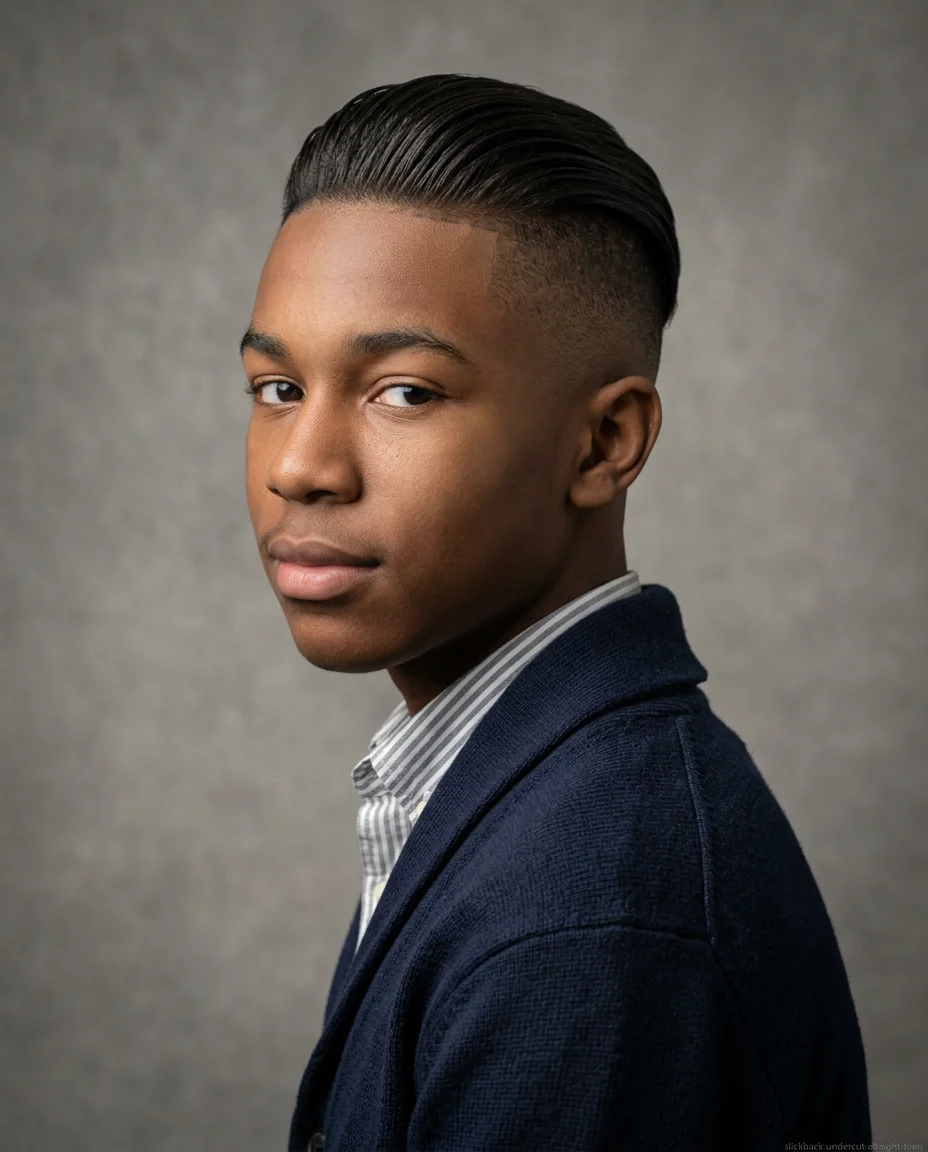
Pair the slick back with a proper undercut and the contrast gets aggressive. Sides and back are cut short and even, top stays long and pushed straight back, with a clear, visible line where the two lengths meet.
This holds its shape longer than a fade does since there’s no gradient to grow out unevenly — just one length that stays one length for weeks at a time, which actually makes it lower-maintenance than it looks at first glance.
It’s a bolder statement than most of the versions on this list, closer to something you’d see at a barbershop competition than a standard trim. Great if that’s the goal, less great if you’re trying to stay under the radar at a school that frowns on anything too sharp.
10. Medium Slick Back with Fringe
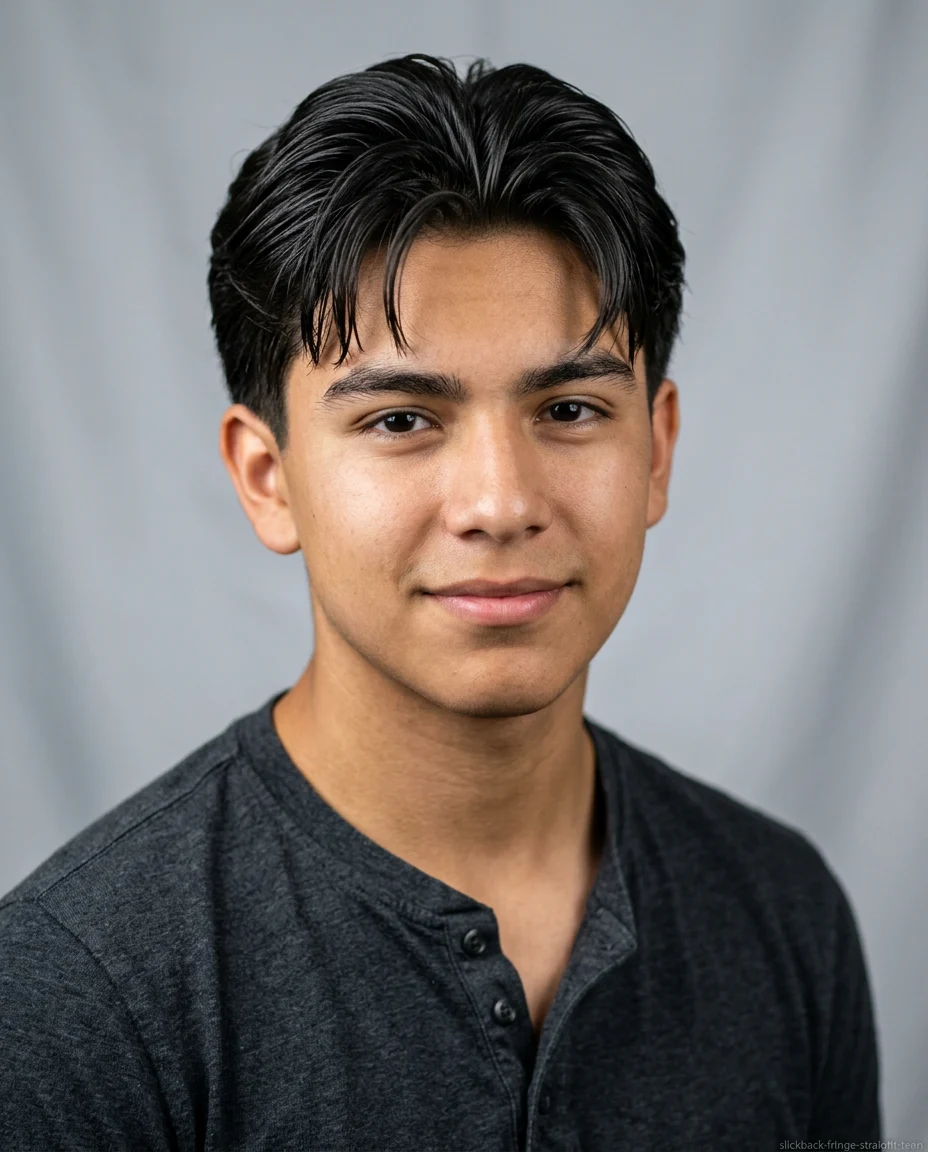
Instead of combing every strand straight back, this version lets the front section fall forward into a soft fringe while the crown and back stay slicked, splitting the style into two distinct directions instead of one.
It softens the whole look — less severe, more like something you’d see on a normal Tuesday than picture day. Straight hair keeps the fringe from puffing up or curling at the ends, which is part of why this version works so well on this hair type specifically.
The trade-off is upkeep on two fronts instead of one. You’re managing the fringe’s length and the slick-back direction separately, which means more frequent trims to keep the fringe from getting long enough to fall into your eyes during class.
11. Low-Maintenance Medium Slick Back
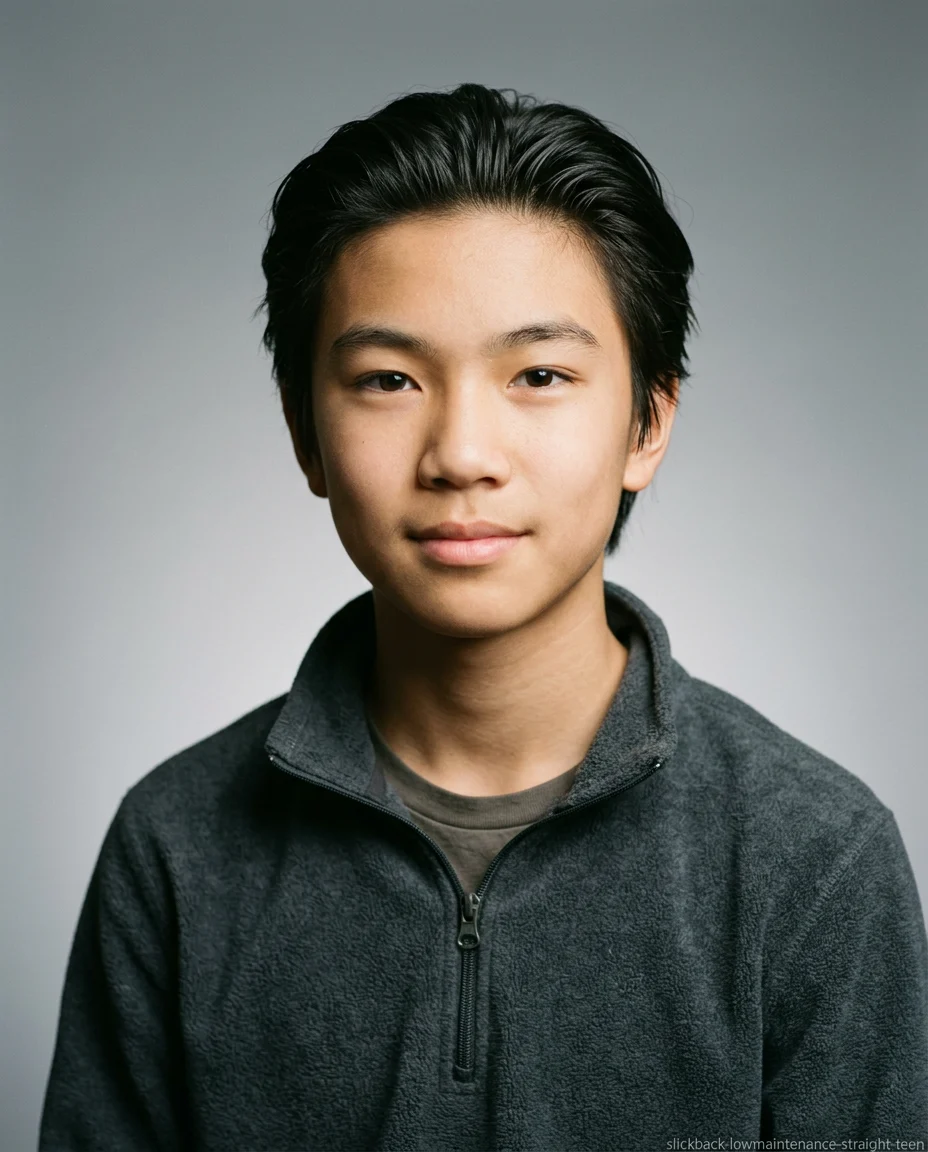
This is the version for anyone who doesn’t want to think about their hair before 7 a.m. Comb it back loosely, skip the heavy product, done — no measuring pomade, no precise part, no second pass in the mirror.
A light pomade or even just water gets straight hair to hold a rough backward direction for a few hours, which is honestly enough for most school days where nobody’s checking that closely anyway. Reapply once around lunch if you want it to last until the final bell.
It won’t look as sharp in photos, and it starts falling forward again by mid-afternoon without a touch-up. That’s the trade you’re making for a routine that takes under 2 minutes — less polish, but almost zero effort required to get there.
12. Medium Slick Back with High Fade
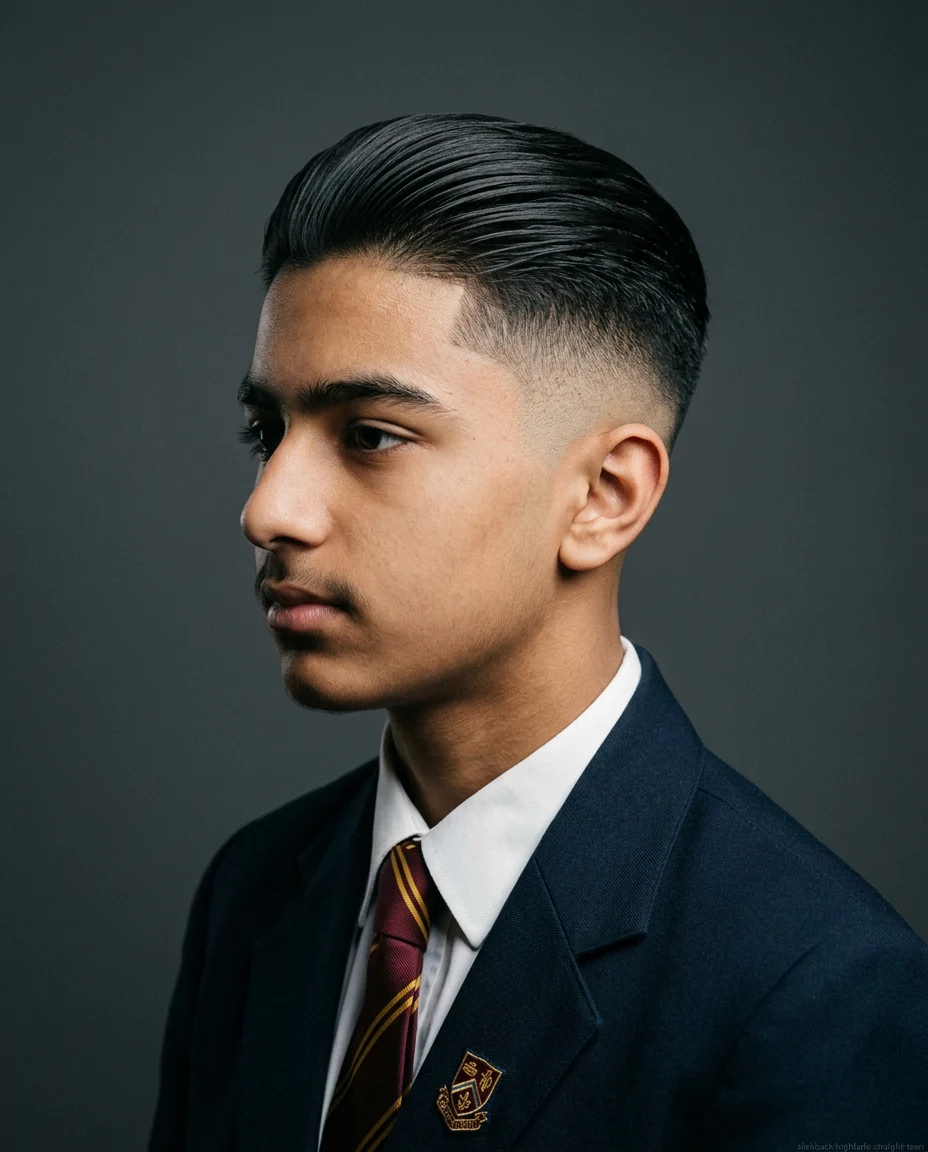
A high fade climbs well above the ear before it blends into the slicked-back top, which makes the top section look even longer than it actually is by comparison against all that bare or buzzed skin underneath.
This combo needs the most frequent barber visits on this list — every 2 weeks, sometimes sooner, since a high fade shows regrowth faster than a low one simply because there’s more fade surface area to grow out.
If your school allows it, it’s one of the sharper-looking options here, with a lot of visual contrast for not much extra styling effort on top. If your barber budget is tight, though, it’s also the most expensive one to maintain over a full school year.
13. Glossy Medium Slick Back
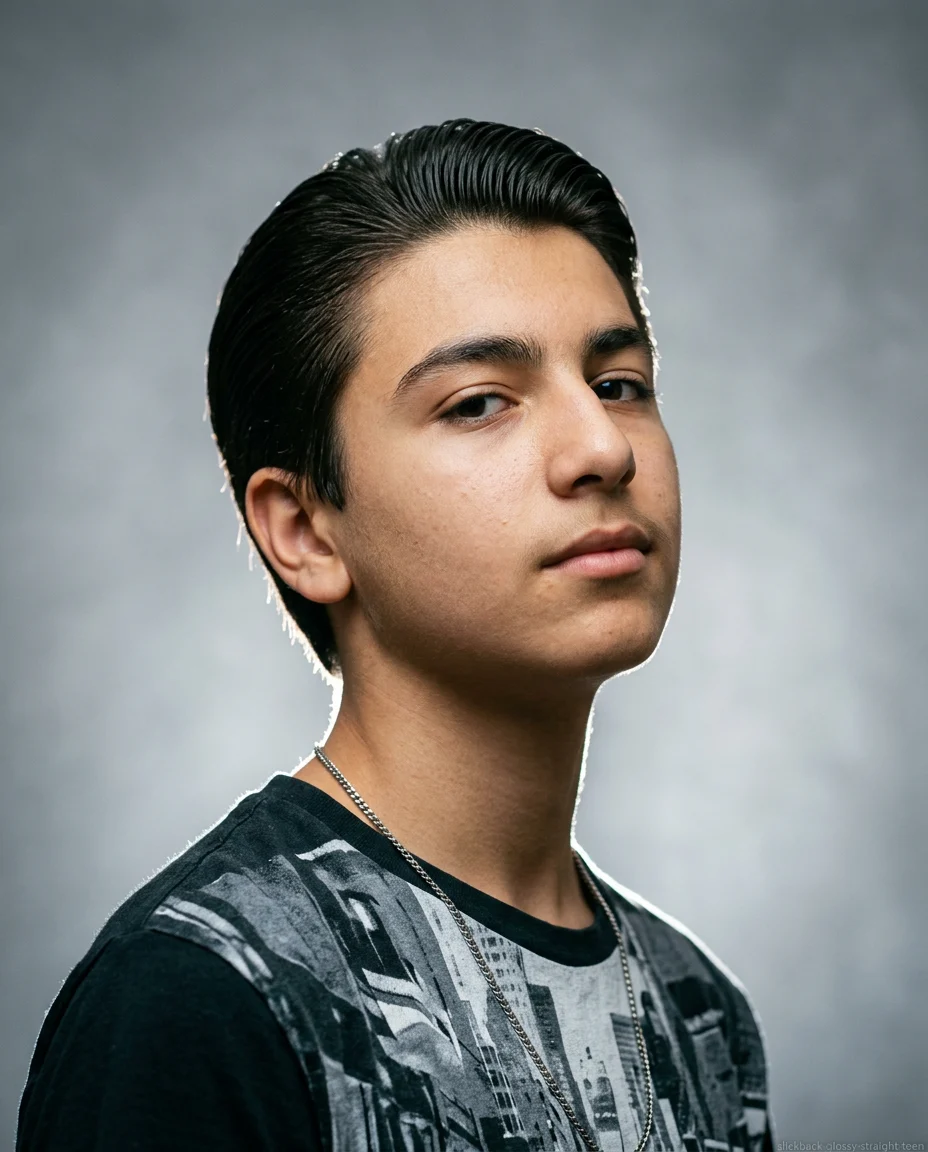
Take the wet-look version and push the shine further with a true pomade — the oil-based kind, not a water-based gel — for a finish that looks almost lacquered under classroom lighting.
It holds through humidity better than gel does, which matters if your school doesn’t have air conditioning in September and the hallways get sticky by third period. Washing it out takes an actual shampoo, not just water, since oil-based product clings to the hair shaft.
It’s a lot of shine for a classroom, more suited to a wedding or a photo shoot than a Monday morning. Save it for photo days and dial back the product the rest of the week to something with less gloss.
14. Medium Slick Back with Temple Fade
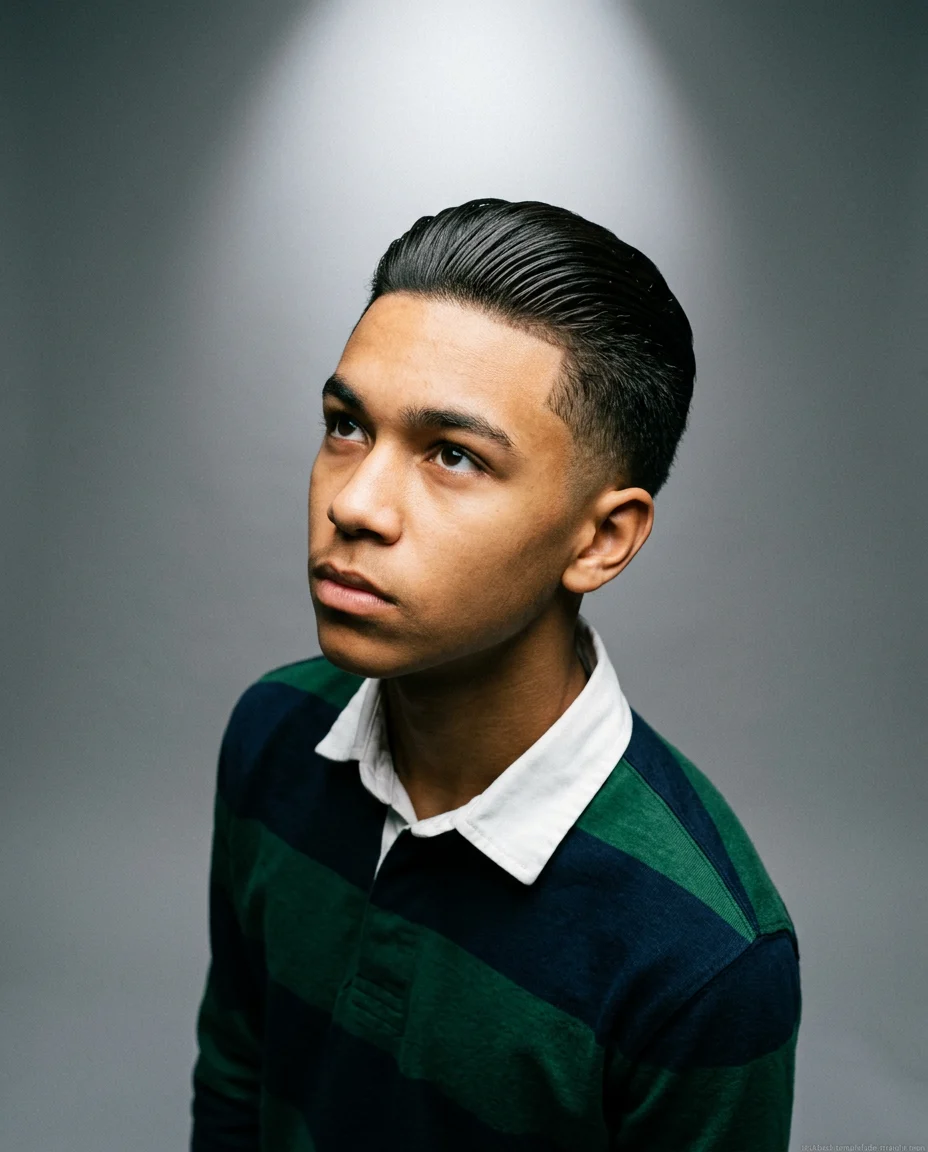
A temple fade only touches the hair right around the temples, leaving the rest of the sides longer than a full fade would and keeping most of the length intact everywhere else. It’s the smallest, most conservative fade on this entire list.
It’s a smaller commitment than a taper or skin fade — less to grow out, less that can look uneven between cuts, and less of a shock if you decide you don’t like fades after all.
This is a good starter fade if you’ve never had one before. It’s subtle enough that a dress code review probably won’t even flag it, and it’s an easy style to explain to a barber who’s never cut your hair before.
15. Voluminous Medium Slick Back
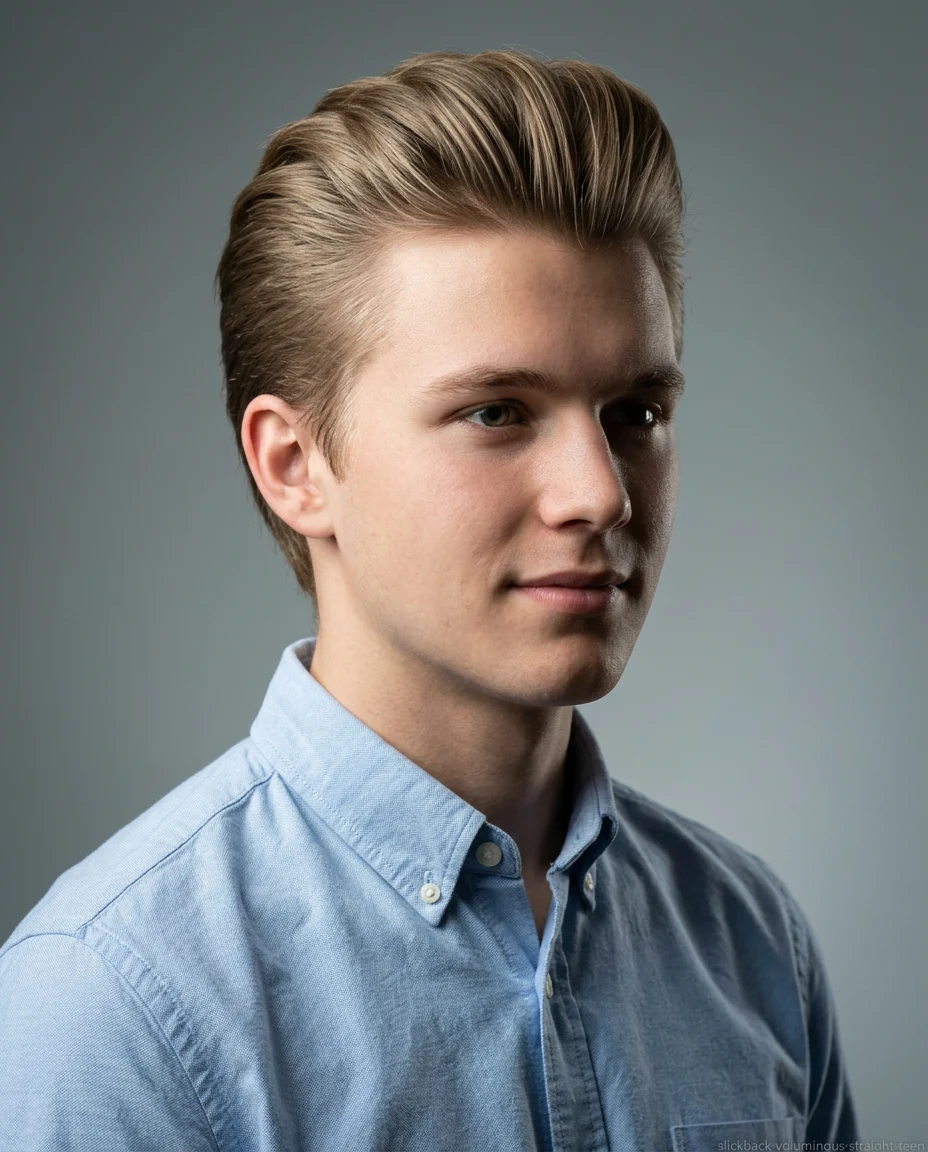
This version adds lift at the root before the hair sweeps back, so the top has real height instead of lying flat against the scalp the way a plain slick back usually does.
Blow-drying with a round brush against the direction of growth, then combing back once it cools, is what creates the volume. Straight hair needs that heat step — it won’t hold lift on its own no matter how much product goes into it.
It takes closer to 10 minutes most mornings, which is more than half the other looks on this list, plus the extra step of pulling out a blow-dryer before school. Worth it if height is actually the goal, not worth it if you’re already running late most days.
16. Medium Slick Back with Disconnected Undercut
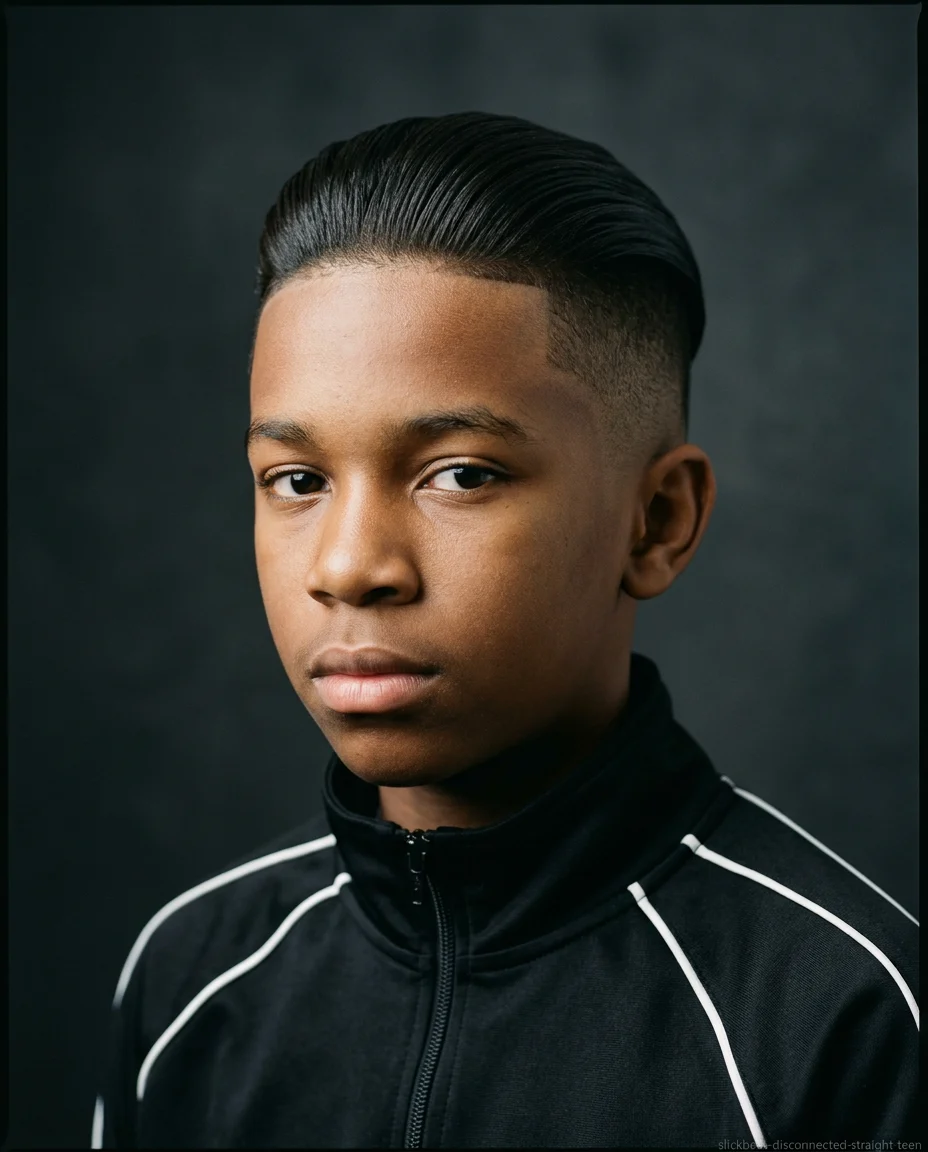
A disconnected undercut skips the gradual blend entirely. The sides are cut short and stop abruptly, with an obvious line where the long top begins, instead of the soft transition a fade would give you.
It’s a sharper, more graphic look than a blended fade — more contrast, less transition. Straight hair keeps that top section from softening the line accidentally the way curlier textures sometimes do when they start to flop over the edge.
It’s also one of the harder cuts to grow out cleanly. Expect an awkward in-between stage if you skip a scheduled trim, since the disconnect gets more obvious, not less, as the top grows longer relative to the short sides.
17. Slim Medium Slick Back

Instead of volume, this version goes for a close, streamlined shape — hair slicked back tight to the head with minimal lift anywhere, which reads clean rather than styled. It’s about as simple as a slick back gets.
A light gel and a fine-tooth comb get straight hair to sit this flat without much effort. It’s arguably the fastest style on this whole list to execute, done in under 3 minutes once the product is in.
It can read a little severe under fluorescent classroom lighting, especially with a sharper part or angular face shape. Pair it with a softer side part or slight texture at the crown if that severity is a concern for you.
18. Medium Slick Back with Low Fade
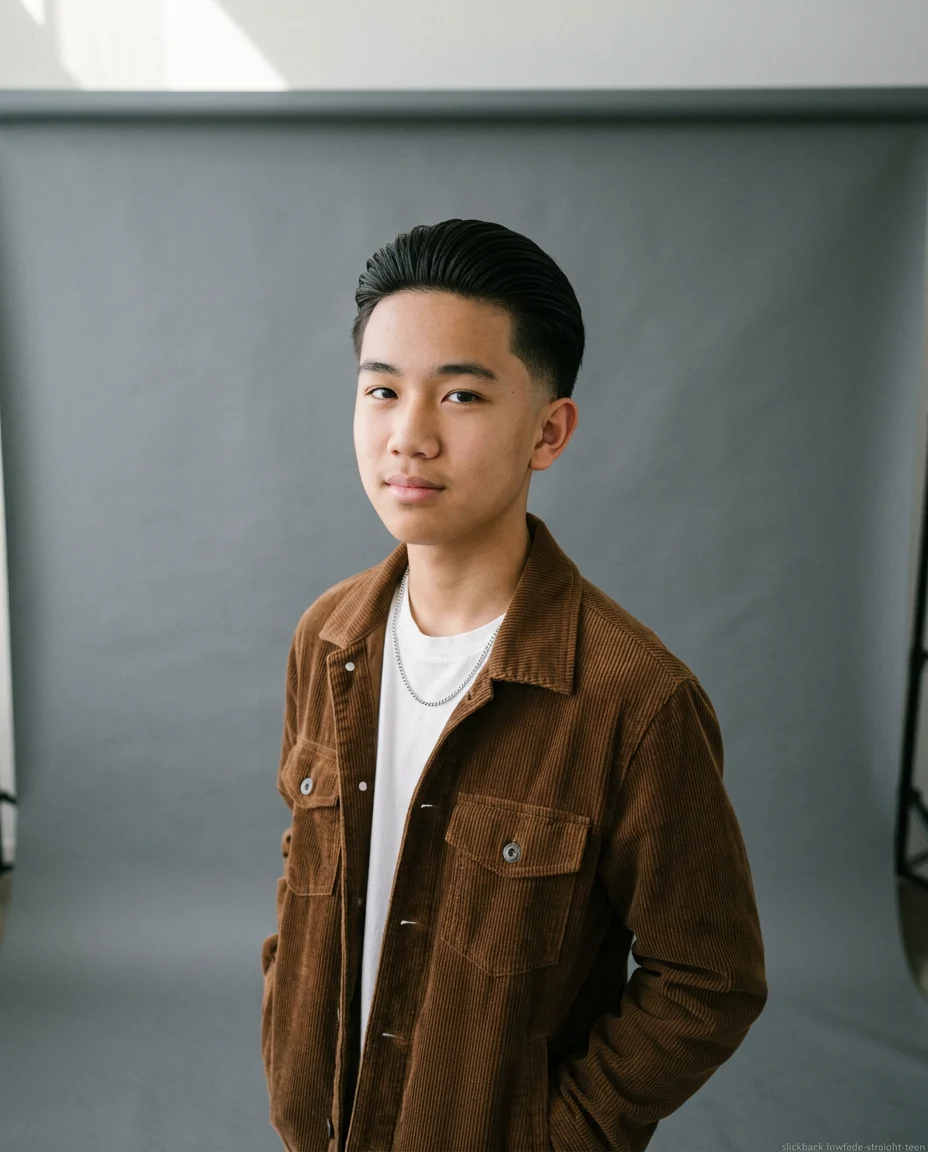
A low fade stays close to the hairline, barely climbing past the ear before it blends into the slicked-back top, which keeps most of the visual weight up top where the length is.
It’s the most forgiving fade to grow out — you get closer to 3 weeks before it needs attention, compared to 2 for a high fade, which adds up over a school year in both time and barber costs.
For a first fade or a strict dress code, this is usually the safest place to start. It won’t turn heads, and that’s fine — not every haircut needs to make a statement to be worth getting.
19. Medium Slick Back Pompadour Blend
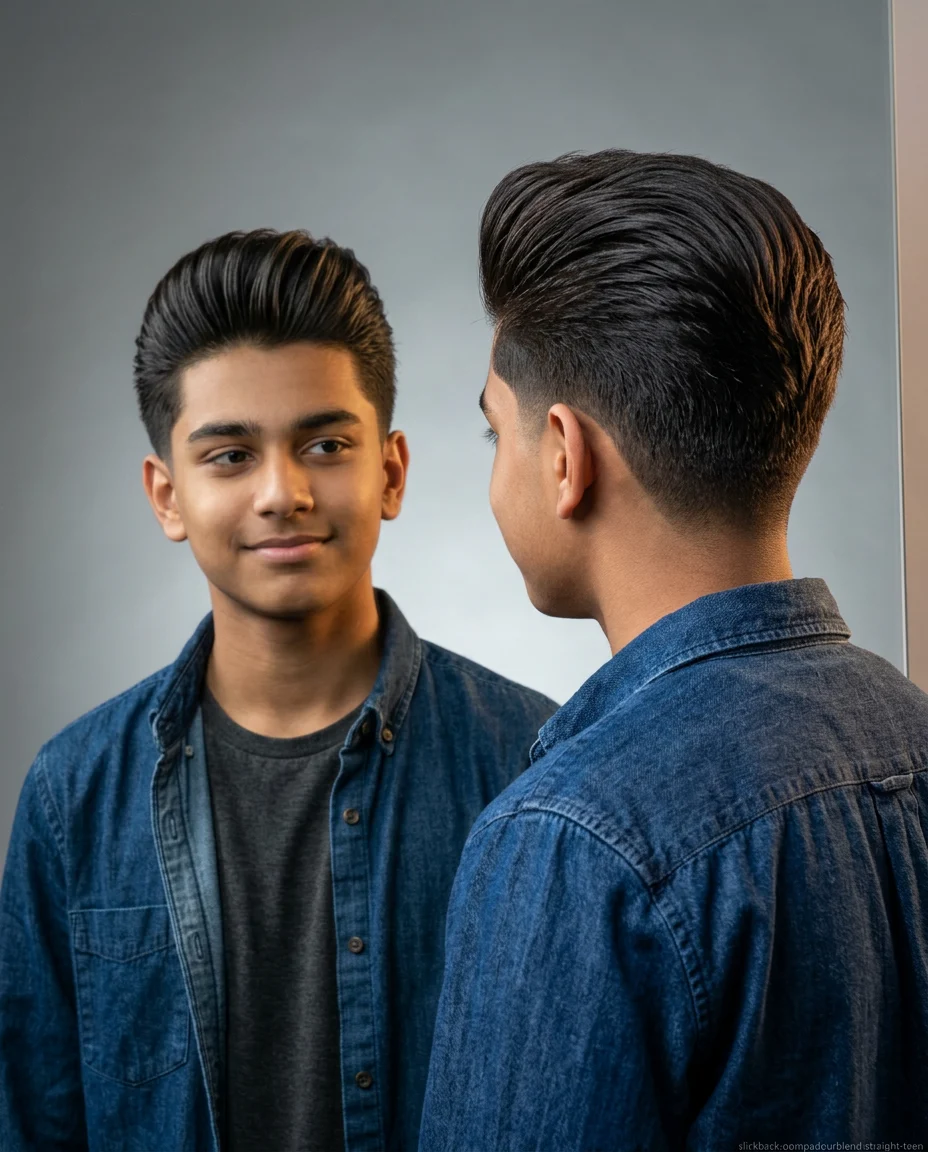
This one borrows height from a pompadour and direction from a slick back — extra volume at the front, smoothing into a full backward sweep toward the crown instead of staying flat the whole way through.
It needs a blow-dryer and a comb, not just fingers and product. Straight hair takes the shape well once it’s dry, but getting there takes real styling time — this isn’t a wash-and-go option on a rushed morning.
Closer to 8 minutes most mornings, and it won’t survive a gym class unless you’re carrying a comb in your bag to rebuild the height afterward. It’s a commitment, not a quick fix.
20. Casual Medium Slick Back

Skip the comb entirely for this one. Fingers pushed through damp hair with a light product get a rougher, less uniform version of the same backward direction, without the precision of a comb-styled look.
It looks intentionally undone rather than sloppy, as long as the length is even to begin with. A bad haircut underneath won’t hide well here, since there’s no comb work smoothing over an uneven trim.
This is the one that survives an actual school day best — gym class, rain, a hoodie pulled on and off, none of it ruins the look because there was never a precise shape to begin with. Practical beats polished most of the time.
21. Medium Slick Back with Razor Part
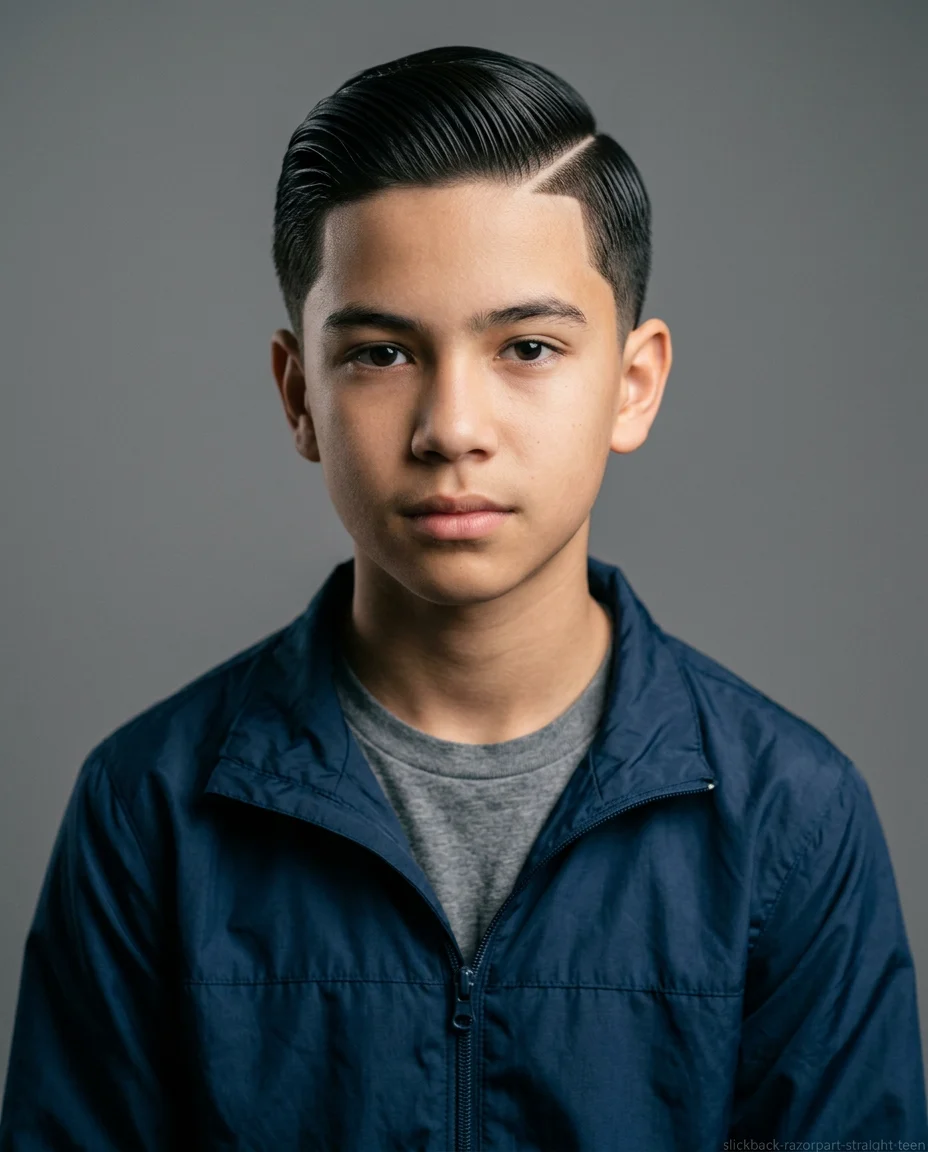
A razor part swaps the usual comb-cut line for one cut with a straight razor, which reads thinner and cleaner than a standard part and holds its shape without the fuzzy edges a comb part can develop.
It costs more at the barber and takes longer in the chair — expect an extra 5 to 10 minutes compared to a regular part, since the razor work has to be precise or it looks worse than no part at all.
It also holds its crisp line longer between cuts than a comb part does. Worth the upcharge if you’re getting your hair cut every 3 weeks anyway, since you’re already paying for the visit regardless.