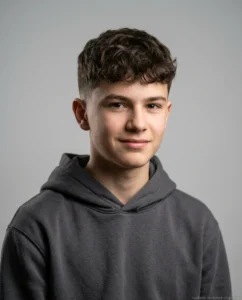
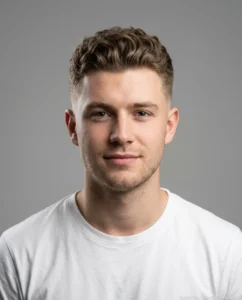
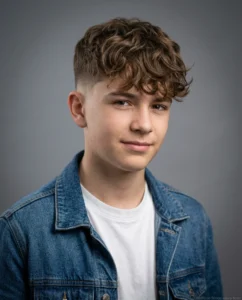
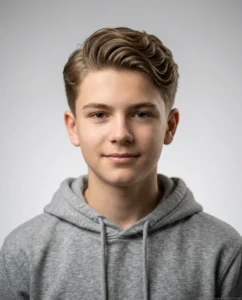
There is a real difference between fading wavy hair and fading straight hair, and there is also a lot of noise about it. A little of both, honestly. Wavy texture holds a fade’s edge differently than straight hair does, and picking the wrong style on top can waste the work your barber just put into the sides.
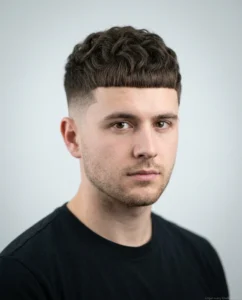
Medium Fade Textured Crop

This is the version many barbers reach for first when a guy with wavy hair sits down and says “surprise me.” The fade sits at medium height, usually around an inch and a half above the ear, and the top gets textured with a matte finish so the natural wave shows instead of fighting it. No heavy product needed here. A dime-sized amount of clay knocks down the shine and lets the wave pattern do the actual styling — genuinely one of the lowest-effort cuts on this list, maybe 3 minutes with a blow dryer and you’re done.
Does this work on 2b or 3a wave patterns?
Both, though tighter 3a waves hold shape longer between washes — closer to 4 to 5 days versus 2 to 3 for looser 2b waves.
The trade-off shows up around week 3, when the fade needs a touch-up but the top hasn’t grown enough to look intentional yet. Budget for a fade-only appointment every 2 to 3 weeks if you want the line sharp the whole time.
Medium Fade Pompadour
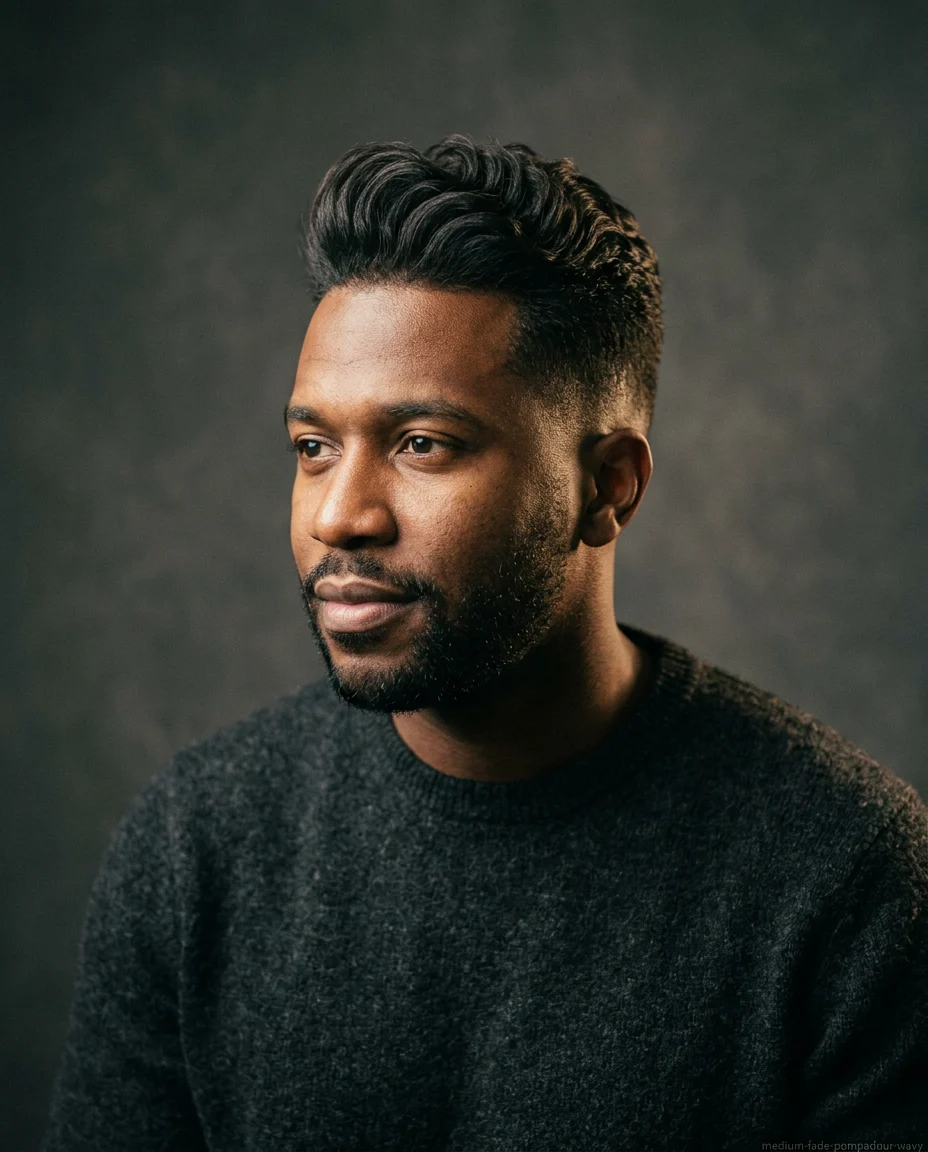
Wavy hair actually makes a pompadour easier to build, not harder — the natural lift at the root means less time spent teasing volume into the front with a comb. Sides taper into a medium fade, sharp but not shaved-down aggressive, while the top sweeps back and up into that classic wall of height. Guys with fine wavy hair sometimes worry this cut needs thick hair to work. It doesn’t. A light sea salt spray before the blow-dry adds the texture a pomade needs to grip.
How much length do you need on top for a proper pompadour?
About 4 to 5 inches at the front, tapering down to 2 at the crown — anything shorter and the height collapses by midday.
Styling takes roughly 10 minutes once you’ve got the technique down, longer the first few tries. And humidity is the real enemy here, not product choice — a strong hold pomade in July still won’t survive a subway platform the way it will in October.
Medium Fade Wavy Quiff
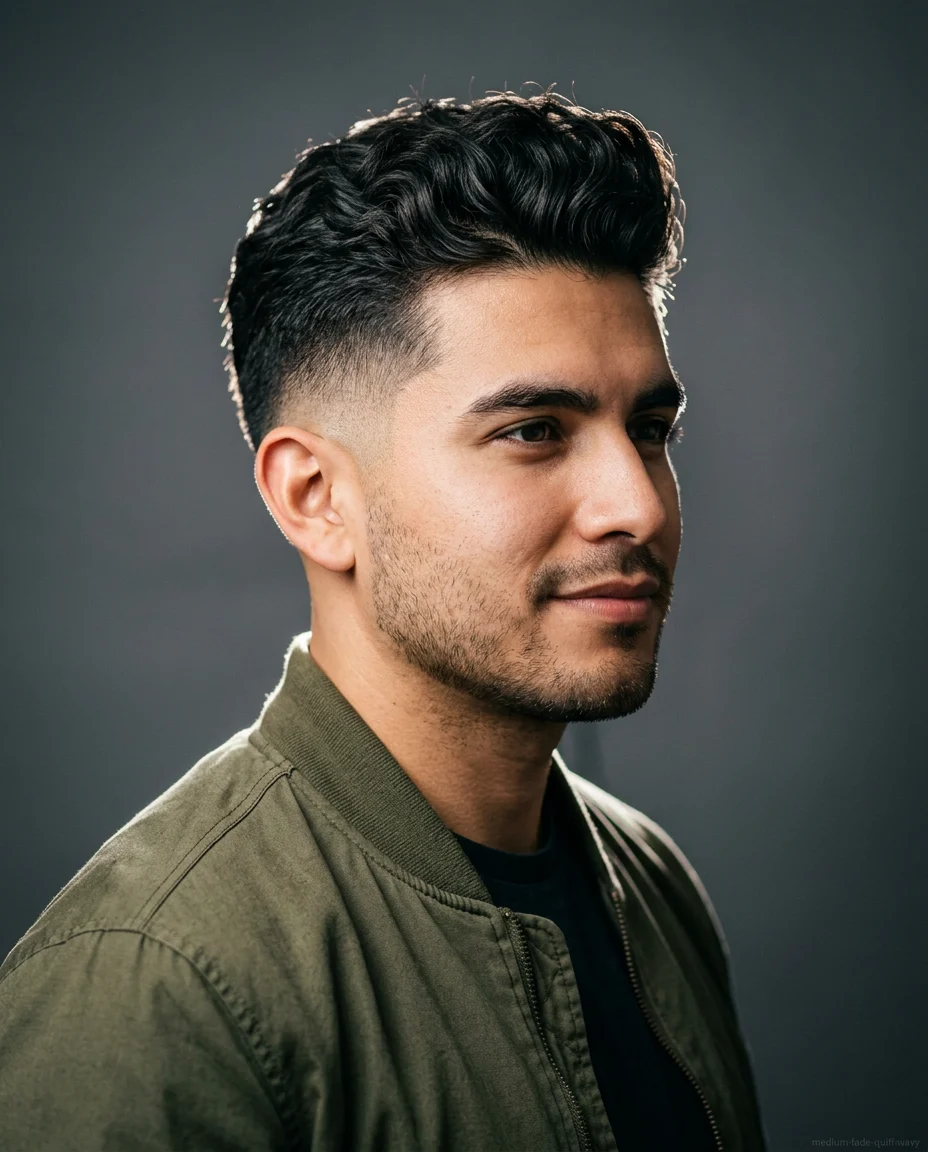
A quiff asks less of you than a pompadour but still reads as deliberate rather than just “I didn’t do anything today.” The fade stays medium on the sides, and the top gets pushed up and slightly forward rather than straight back. Wavy hair gives this cut a textured, almost undone look that a flat-ironed quiff can’t fake. Most guys get this wrong by over-brushing it — the wave is the style, so a fingers-only application of matte paste works better than a comb.
Does this need daily restyling?
Usually not. A wave-pattern quiff holds its shape through a light gym session; a straight-hair version needs a full redo after any sweat.
Where it falls short: fine wavy hair with low density can look thin at the crown once the sides are faded down. Ask your barber about point-cutting the top if that’s you — it adds the illusion of thickness without extra length.
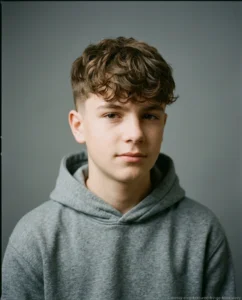
Medium Fade Curly Fringe
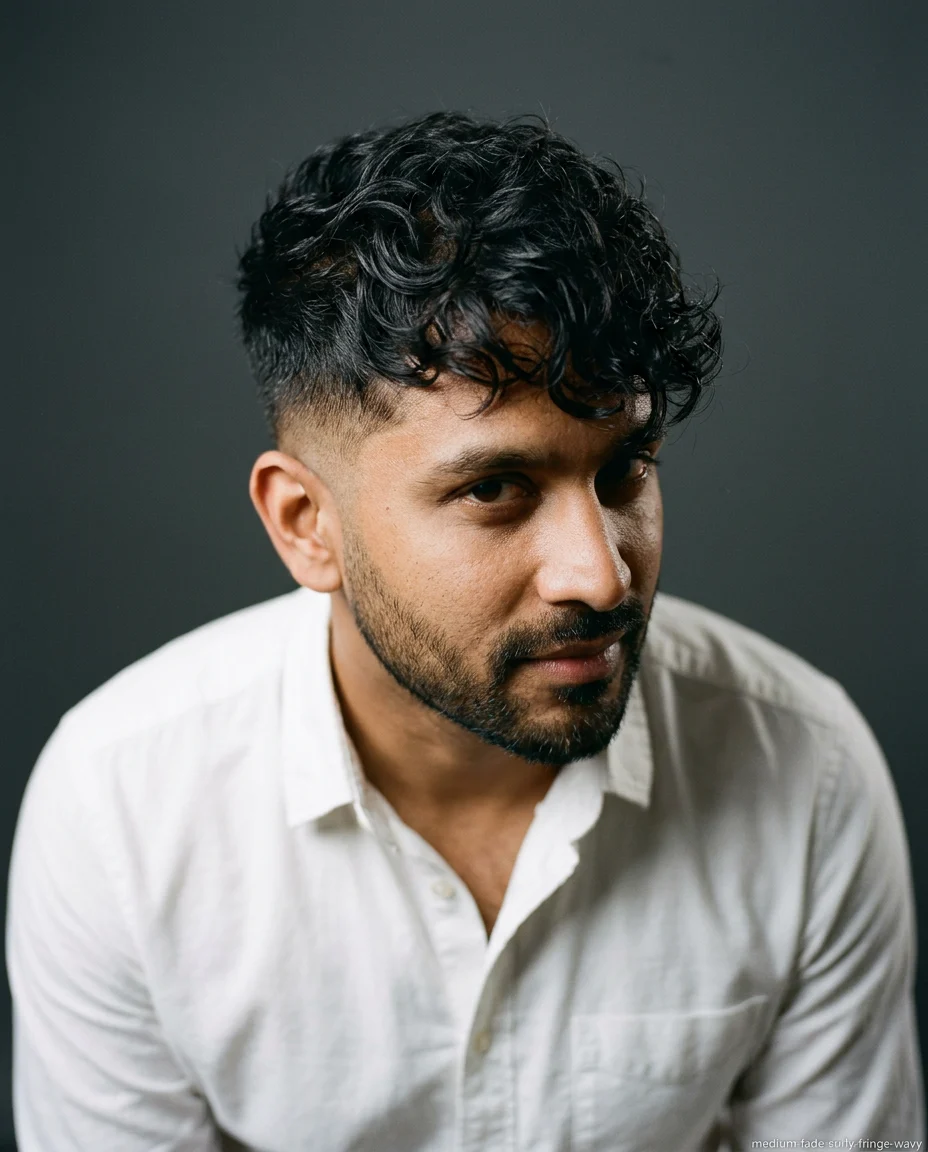
This one leans into the wave instead of managing it. The fringe stays long and loose across the forehead while the fade climbs to a medium height underneath, creating contrast between the tight sides and the looser curl pattern up top. It works best on 2c to 3b textures — anything looser tends to fall flat instead of holding the fringe shape. Most guys skip this because they think curly-adjacent styles need daily maintenance. They don’t, not with the right cut.
Skip this if what?
Skip it if your hairline sits high or uneven — a heavy fringe draws attention to the forehead line in a way that back-swept styles don’t.
Wash day matters more here than styling routine. A leave-in conditioner applied to damp hair, scrunched rather than combed, keeps the curl pattern defined for 2 to 3 days before it needs a refresh.
Medium Fade Side Part
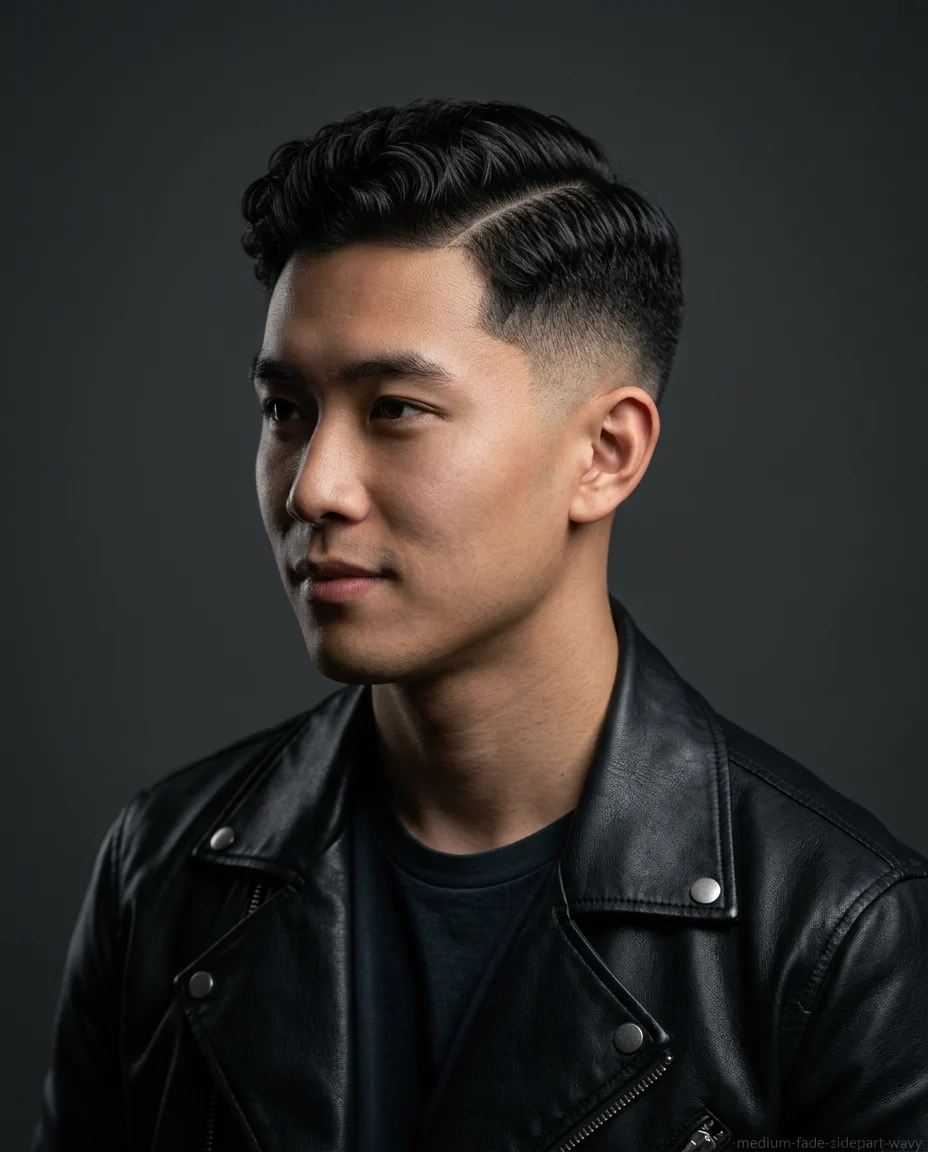
The side part is the cut barbers recommend when someone says they want “low maintenance but still put together” — and for wavy hair, it happens to be true. A hard or soft part gets cut or combed in above the ear, the sides fade to medium length, and the top lies mostly flat with the wave adding just enough texture to keep it from looking corporate. This isn’t the flashiest option on this list. It’s the one that ages best across job interviews, weddings, and every ordinary Tuesday in between.
Hard part or soft part for wavy hair?
Soft part, most of the time — a hard shaved line looks sharper on straight hair, but wavy texture blurs a hard line’s edge within about a week anyway.
Product-wise, a light-hold cream beats gel here. Gel flattens the wave into something closer to straight hair, which defeats the reason you’re wearing this cut in the first place.
Medium Drop Fade with Wavy Top

A drop fade curves down behind the ear instead of staying level, which rounds out a face that a straight fade line can make look boxier than it is. Pair it with wavy hair left at a medium length on top, and you get a cut that reads athletic without trying to. This is a common request among guys who play a sport or just spend time outdoors — the fade grows out slower than a high fade would, so gym schedules don’t wreck the shape as fast.
Does a drop fade suit every face shape?
Round and square faces benefit the most from the curve; a long, narrow face sometimes looks better with a straighter fade line instead.
Upkeep sits around every 3 to 4 weeks, a bit more forgiving than a high skin fade’s 2-week cycle. That alone is why a lot of guys switch to this style once they get tired of constant barber visits.
Medium Fade Wavy Mohawk
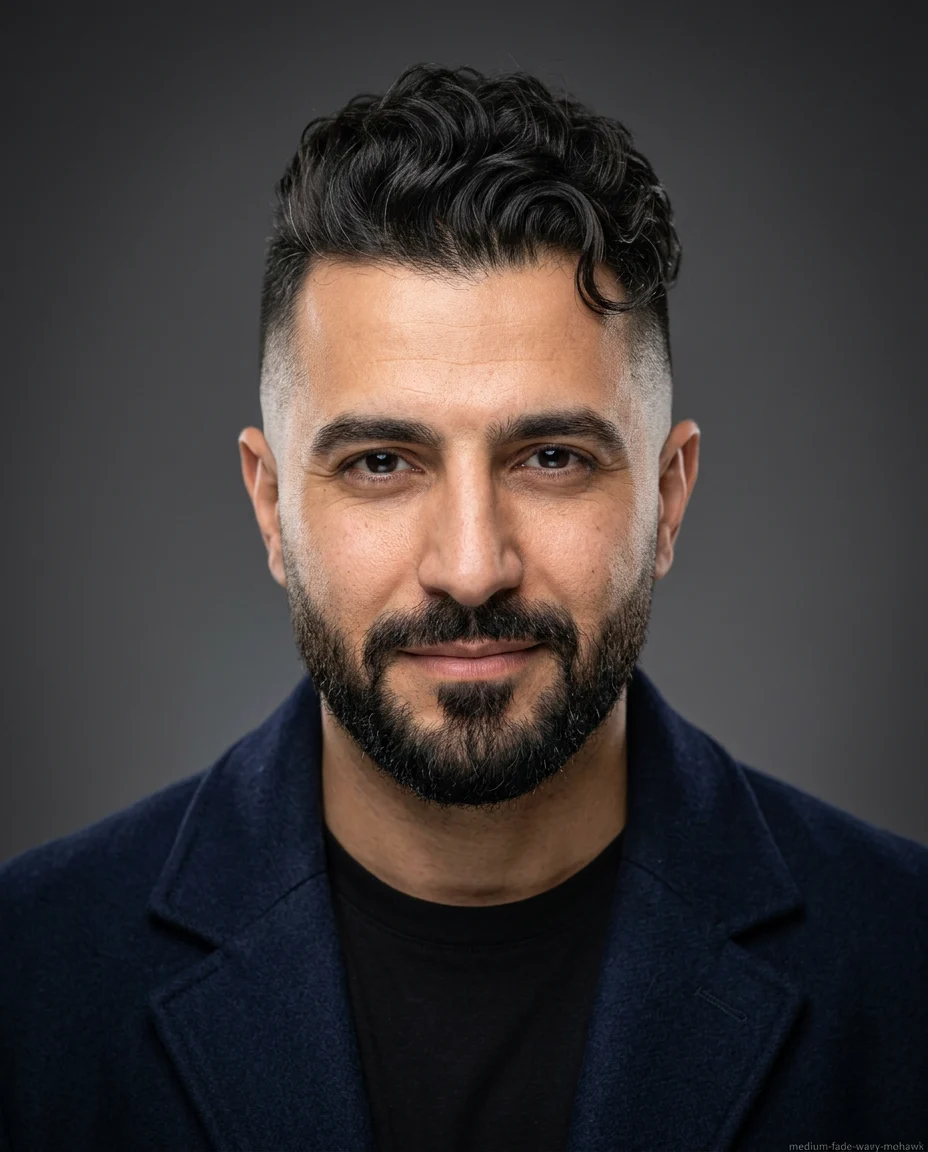
Not the spiked, aggressive version from a decade ago — this is a softer take, where the sides fade to medium and the center strip of wavy hair is left long enough to fall rather than stand straight up. It reads more “textured strip” than “mohawk” in the traditional sense, which is exactly why it works in an office as easily as it does on a weekend. The wave pattern does most of the visual work without a single drop of hard-hold gel.
Is this a hard cut to grow out?
Not really — since the top strip is already longer than the sides, growing out just blends the two lengths closer together over 6 to 8 weeks.
The one risk: a barber unfamiliar with wave patterns sometimes cuts the center strip too uniform, and it ends up looking flat instead of textured. Bring a reference photo. It matters more here than on almost any other cut on this list.
Medium Fade Slick Back
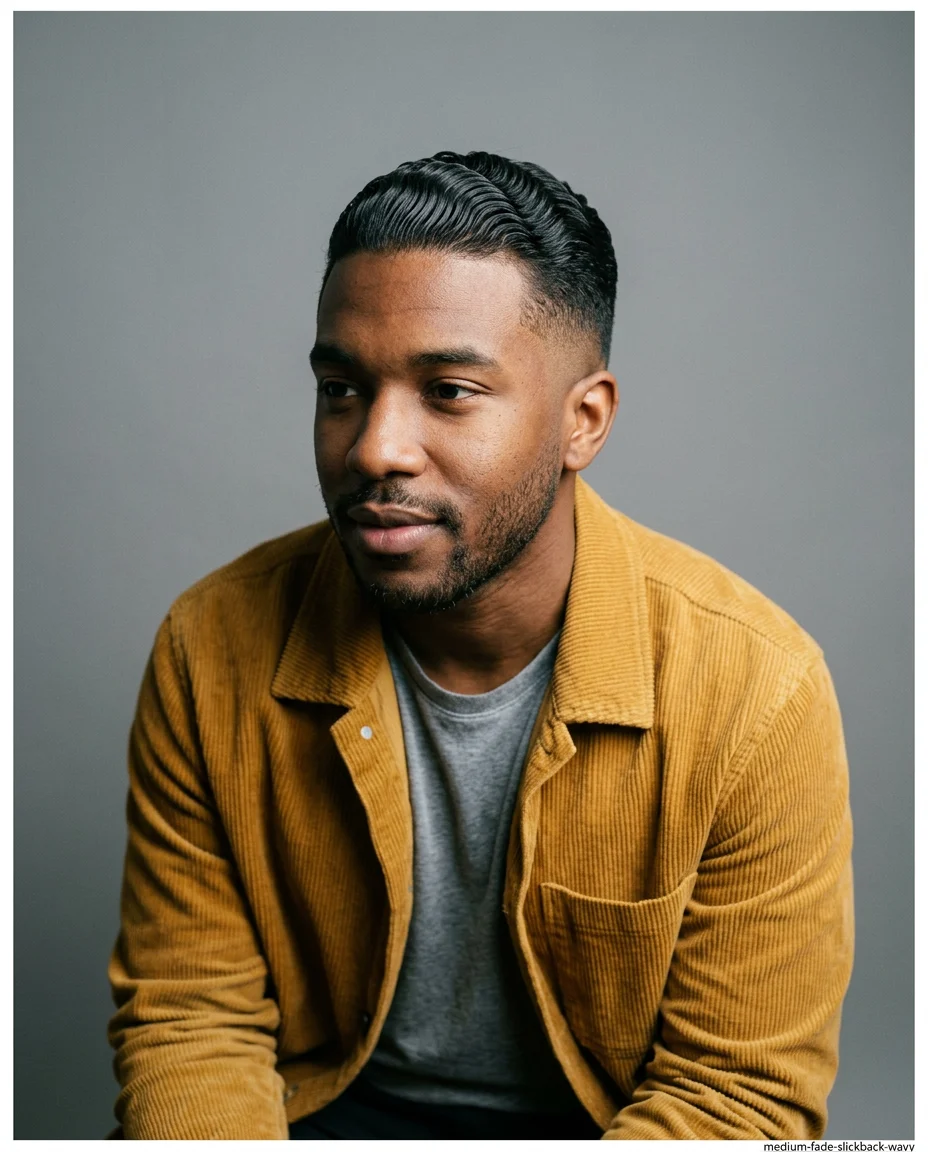
This is the cut for guys who want the fade’s structure without the top doing anything unpredictable. Hair gets slicked straight back off a medium fade, and wavy texture actually helps here — it adds a slight ridge and shadow instead of the glassy, wet-look shine a straight-haired slick back gets stuck with. A strong pomade, warmed between the palms first, is non-negotiable. Skip it and the wave fights the direction all day.
Does this need to be worn wet-look, or can it be matte?
Matte works, and honestly looks better on wavy hair — a matte clay slicks it back without the shine that makes waves look greasy instead of styled.
The maintenance is mostly about the sides, not the top. Keep the fade sharp every 3 weeks and the slick-back style itself barely changes week to week.
Medium Burst Fade Wavy Crop
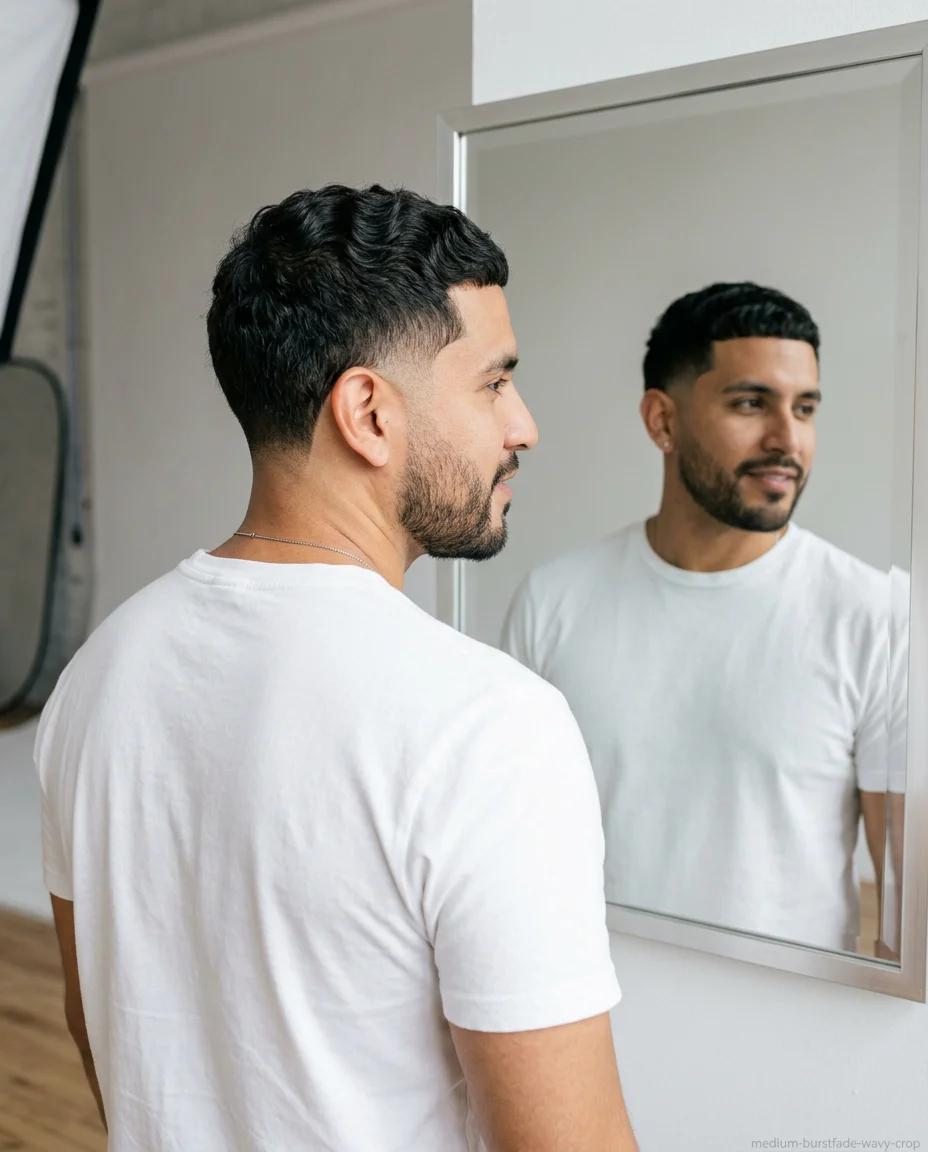
A burst fade curves around the ear in a half-circle instead of running in a straight line down the neck, and it pairs unusually well with a short wavy crop on top. The effect is a rounded, almost sculpted look at the sides with loose texture up top that never needs more than a towel-dry and a run-through with fingers. This is one of the faster cuts on this list to maintain, styling-wise — genuinely under 5 minutes most mornings.
Cost or time note?
Because the burst pattern is more detailed to cut than a standard fade, expect the appointment itself to run 10 to 15 minutes longer, and possibly a few dollars more depending on the shop.
Where it struggles: very fine, sparse wavy hair doesn’t give the crop enough texture to look intentional, and the burst shape needs contrast to read correctly. Ask about added texture through point-cutting if your density runs on the thinner side.
Medium Fade Wavy Undercut

An undercut fades harder and more abruptly than a standard taper, creating a visible line between the short sides and a longer wavy top that can be styled several different ways — pushed back, left loose, or parted. It’s the most versatile cut on this list day to day, since the same base cut supports several distinct looks depending on how you style it that morning. The trade-off is a starker regrowth line.
Reality check on the harsh line?
It grows out fast and unevenly — expect to book a fade touch-up every 2 weeks if you want the undercut’s edge to stay crisp rather than shaggy.
Wavy hair on top means you can skip a flat iron entirely and still pull off a few different silhouettes from one cut. That flexibility is the actual reason this style keeps showing up on “most requested” lists at barbershops.
Medium Fade Comb Over
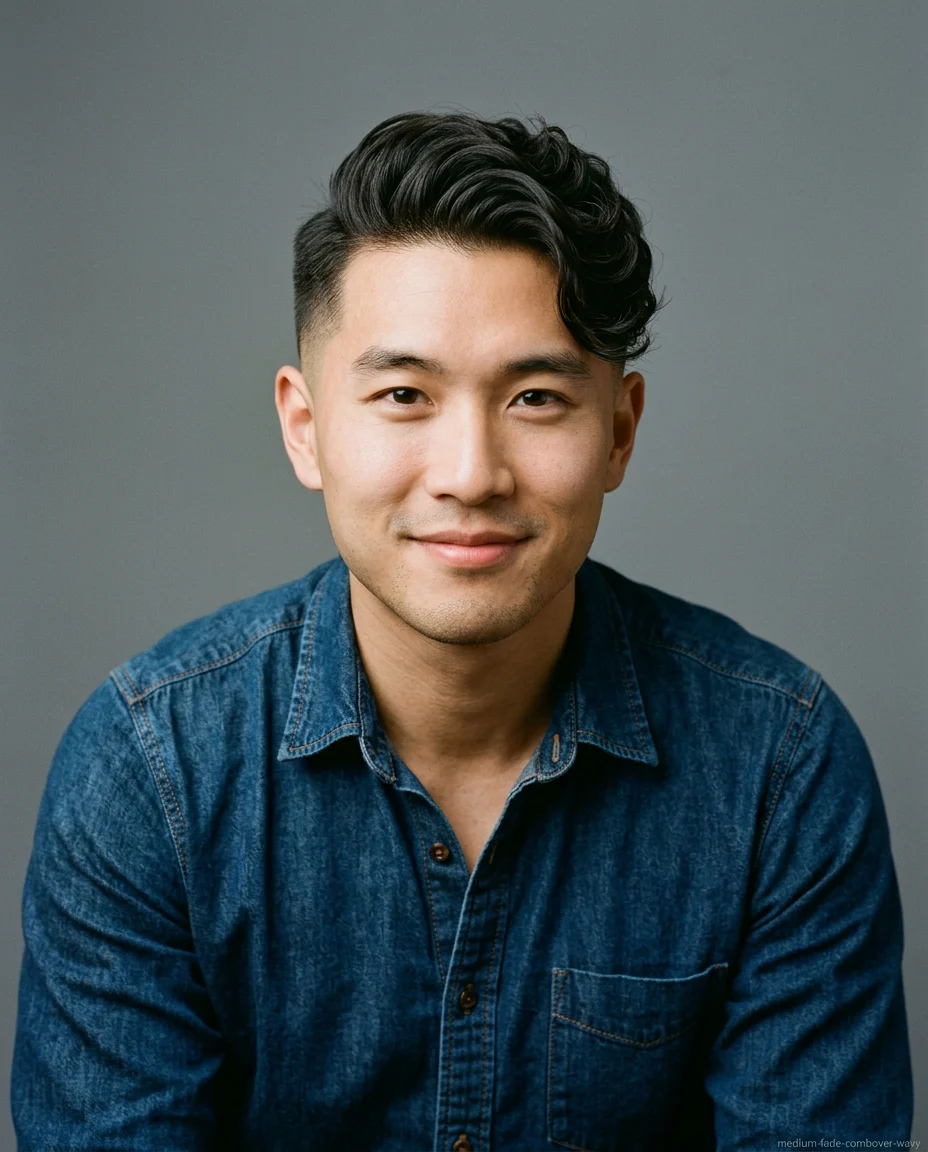
The comb over is the least trend-driven cut on this list, and that’s the point — it’s been a barbershop staple for decades because it works on nearly every wave pattern and most face shapes. A medium fade climbs the sides, and the top gets combed over to one side with the wave adding movement a straight comb-over can’t manage. This isn’t a cut you experiment with. It’s the one you get when you want to look put-together without anyone asking what changed.
Does this read as too formal for everyday wear?
Not with wavy texture — the wave keeps a comb over from looking as stiff as it does on straight hair, so it works fine outside the office too.
The honest answer on maintenance: it depends on how disciplined you are about the part. Skip styling for even 2 days and the comb over loses its shape faster than most cuts on this list, wave or no wave.