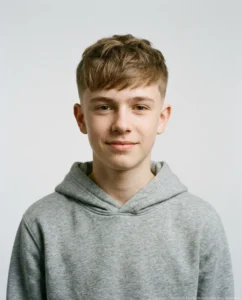
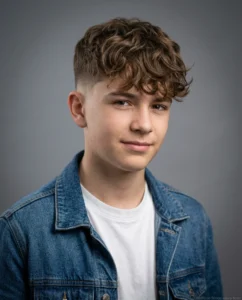
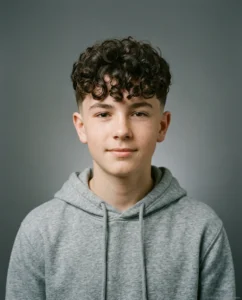
Wave pattern under a fade is one of those things that gets over-explained. A medium low fade sits at the one length where wave pattern reads as texture instead of frizz, which is exactly why it works so well on teenagers who don’t want to fuss with product every morning. Here are six ways to wear it.
Medium Low Fade with Textured Crop
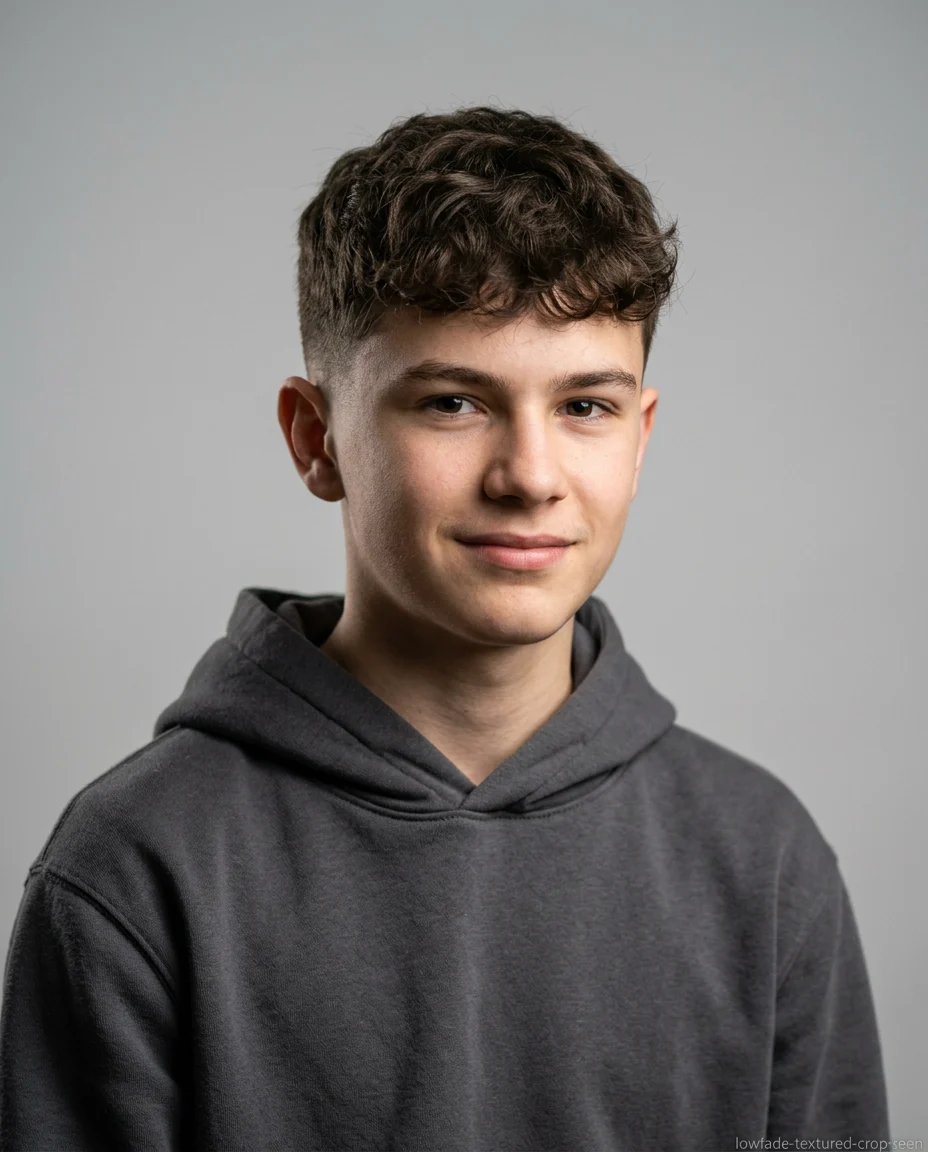
The fade line sits about an inch above the ear, low enough that most people won’t clock it as a fade unless they’re standing close. On top, the wave gets left at 2 to 3 inches and cut with texturizing shears so the natural movement does most of the styling on its own. Scrunch in a dab of sea-salt spray while it’s still damp and you’re done in under 5 minutes.
Does this need product every single day?
Pretty much — skip it once and the wave flattens out by lunch. A dime-size amount of texture cream is enough, no more.
Barbers usually blend the fade down to skin at the neckline with a #2 guard doing the heavy lifting higher up. Because the blend is low, it hides regrowth for close to 3 weeks before a touch-up starts looking necessary.
Low Fade Curly Quiff
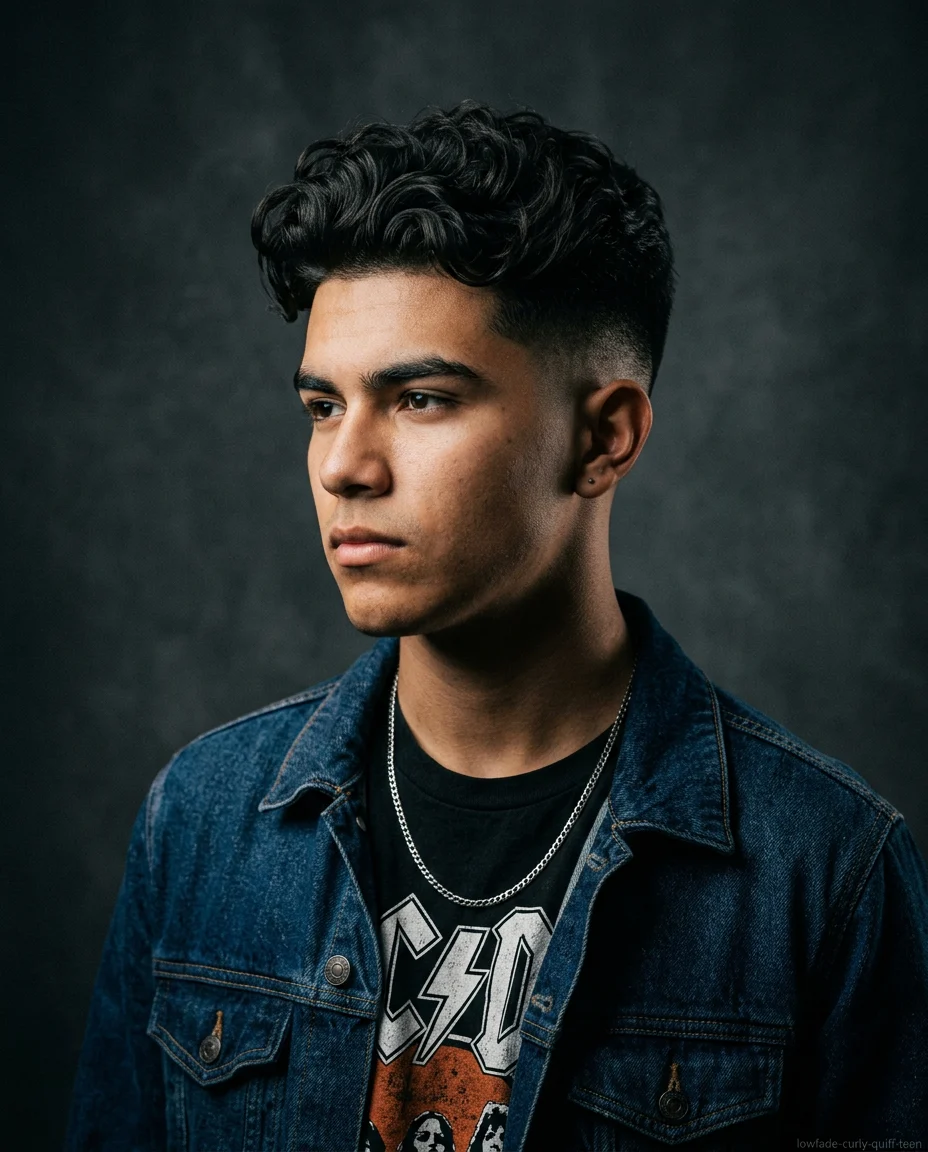
Wave that leans closer to curl actually works better here than looser wavy hair. The sides taper low and stay tight while the top runs 3 to 4 inches, then gets pushed up and back with a blow dryer on medium heat. It reads older than a crop — closer to something you’d see on a college freshman than a ninth grader.
Is this too much upkeep for a school morning?
It’s the most time this list asks for, honestly — figure 8 minutes with a diffuser, not a flat nozzle, or the curl clumps blow straight and lose their shape.
Here’s the part most guides skip entirely: a light-hold paste worked into the roots, not the ends, is what keeps the front standing through a full day of gym class and hallway humidity.
Medium Low Fade with Side Part
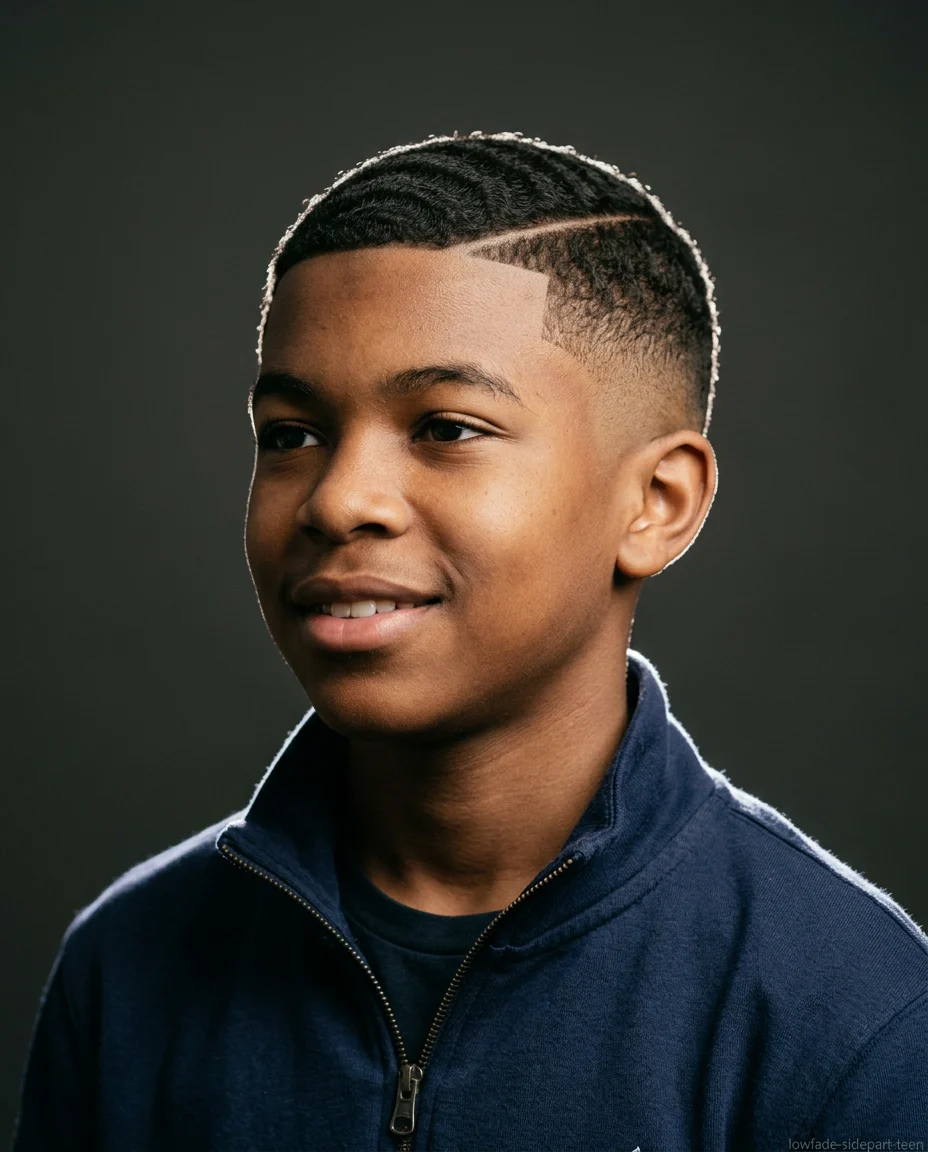
A side part on wavy hair looks deliberate instead of like bedhead, and that’s the main reason it keeps showing up in barber references for this age group. The fade stays low and tapered rather than sharp, blending into the sideburn around a #3 guard. Top length runs about 2.5 inches, parted with a comb while damp, then dried with a brush to keep the wave from puffing out sideways.
Does the part need to be razor-sharp to look right?
No — a soft, natural part suits wavy hair better than a hard line. A shaved-in part looks strange once the waves start moving around it later in the day.
The trade-off is the part itself drifts. Wavy hair wants to fall back toward its natural pattern by afternoon, so a light gel applied right at the part line matters more than anything done to the rest of the head.
Low Fade Wavy Fringe

Fringe cuts work with wave instead of against it — the natural bend keeps a heavy fringe from lying flat like a curtain over the forehead. The fade drops low, nearly invisible above the ear, while the fringe itself sits around 3 inches and gets point-cut to break up the line. Texturizing cream worked through damp hair brings out the separation without any greasy shine.
Is that much hair near the eyes going to be an issue at school?
Rarely. It sits above the eyebrow on most face shapes. If it’s borderline, tell the barber to trim the sides shorter than usual to balance it out.
Worth naming plainly: fringe needs a trim more often than the rest of this list, closer to every 4 weeks, or the front grows past the point where styling still holds it up.
Medium Low Fade Mohawk
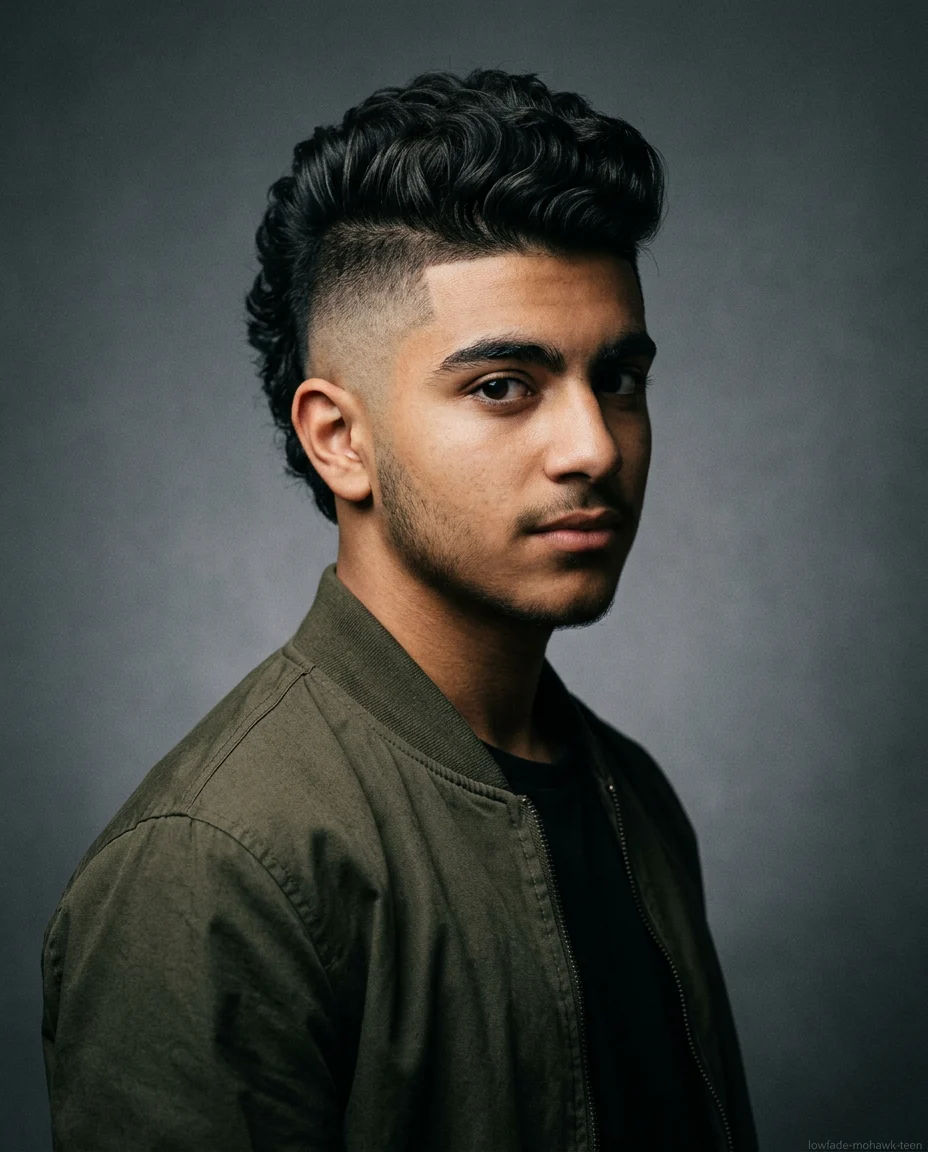
This is the boldest cut on the list, and it’s not for every kid — it takes commitment, both from whoever’s wearing it and from whoever has to explain it to a teacher. The sides fade low and clean, nearly to skin near the ear, while a center strip stays at 3 to 4 inches, styled up and slightly forward so it works with the wave instead of forcing it straight up.
Will it actually stay standing with wavy hair, or fall flat by noon?
With a strong-hold pomade and the roots lifted while blow-drying, it holds. Skip either step and it collapses sideways well before lunch.
The honest answer is this one reads differently depending on the school and the kid wearing it. Plenty of barbers will walk a nervous parent through a softer version first before committing to the full strip.
Low Fade Wavy Pompadour

A pompadour built on wavy hair looks less stiff than the same cut on straight hair, since the wave supplies volume a barber would otherwise have to fake with product. The fade sits low, blending around a #2 into the base of the style, and the top runs 3.5 to 4 inches, swept back and slightly up off the forehead.
Is this harder to maintain than the rest of the list?
A bit. Most mornings it wants a blow-dry and a comb-through, closer to 8 minutes than the 5 minutes some of the shorter cuts here take.
It’s worth the extra effort if the hair’s already growing out anyway — this gives it direction instead of letting it drift through an awkward stage. Worst case, it drops into a low-effort side part on the mornings there’s no time to style it properly.