Straight hair and fade haircuts were made for each other. Most people don’t realize this — they think fades are mainly a curly hair thing. They’re not. Straight hair shows off a clean fade better than almost any other texture, because there’s nothing to distract from the line work. Every gradient, every taper, every skin-close edge reads exactly as intended.
The hard part is picking one. There are easily 30 or 40 fade variations out there, and most guides just throw them all at you without helping you figure out which ones actually make sense for your hair. This one’s different. These 12 were chosen specifically because they work well with straight hair — not just in theory, but in practice, at the chair, on real people.
1. Mid Fade with Textured Crop

This is probably the most-requested style in barbershops right now, and honestly, the hype is deserved. The fade hits around the temples — not too high, not too low — and the top is cut short with enough length to push some texture into it. Around 2 to 3 inches on top is the sweet spot. Any shorter and you lose the texture. Any longer and it starts to feel like a different cut entirely.
What makes this work so well for straight hair is that the strands hold their shape without product weight dragging them down. A fingertip of matte clay — worked through dry hair and scrunched slightly — gives you all the texture you need. Takes about 90 seconds. That’s it.
2. Skin Fade with Side Part

Sharp. That’s the only word for it. The sides go all the way down to the skin, and the top is combed to one side with a clean, defined part. It’s a traditional combination — but when it’s done right on straight hair, it looks genuinely polished in a way that most styles don’t.
Straight hair handles the side part better than any other texture. There’s no frizz to fight, no curl pulling the part out of line. Comb it in the morning and it stays. A light pomade — nothing too heavy — keeps it in place without making the hair look greasy by midday. The trade-off with a skin fade is maintenance. You’ll need to go back every 2 weeks or the sides start to look grown-out fast.
3. Low Fade Buzz Cut

People underestimate the buzz cut. They think it’s a cop-out — a cut for men who don’t want to think about their hair. But a buzz cut with a low fade is a real style. The fade adds shape to what would otherwise be a flat, uniform cut. It brings definition to the sides and makes the whole thing look considered rather than convenient.
For straight hair specifically, the buzz cut does something interesting — it catches light differently across the scalp, giving a subtle sheen that actually looks good. It also grows out more evenly than on curly hair, which means you get an extra week or so before it starts to look unkempt.
4. High Fade with Slick Back

This one makes a statement. The fade starts high — right above the temples — and the sides are kept extremely tight, almost to the skin. The top is left longer, anywhere from 3 to 5 inches, and slicked straight back with pomade. The contrast between the tight sides and the full top is dramatic. That’s the point.
Straight hair is probably the best possible texture for a slick back. The strands fall naturally backward without any encouragement. You don’t need much product to get them to stay — and if you use too much, it looks overdone. A medium-hold pomade with some shine worked through damp hair, combed straight back, is all this needs. Air dry or use a blow dryer on low. Either works.
5. Drop Fade with Textured Fringe
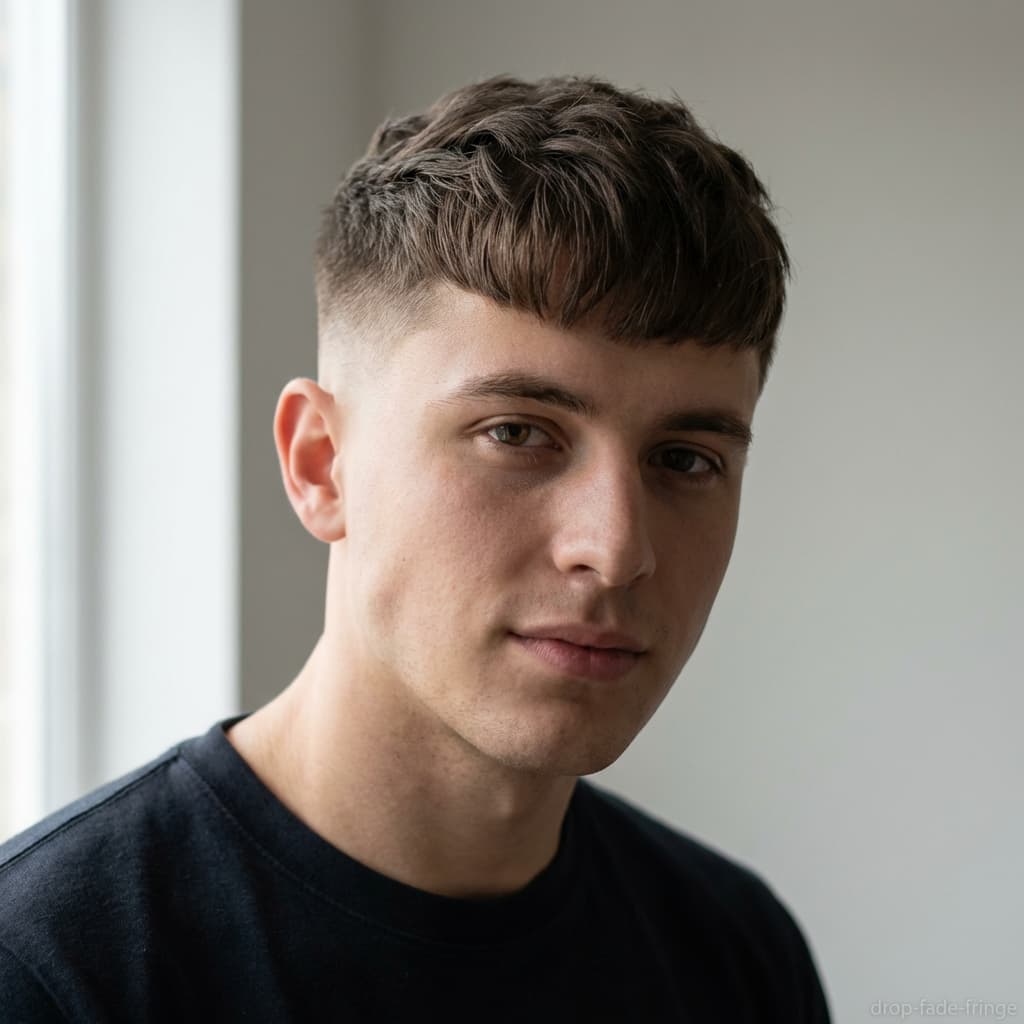
The drop fade curves downward behind the ear and follows the head’s natural shape before tapering into the neck. It’s a softer, more relaxed version of a standard fade — less aggressive, more wearable for everyday life. Paired with a textured fringe pushed forward, you get a look that’s been all over barbershop Instagram for the past year and a half.
Here’s why this works for straight hair: the fringe sits naturally forward without any product holding it in place. Wavy or curly hair tends to bounce back. Straight hair just… stays there. A light sea salt spray on damp hair, scrunched and air-dried, adds enough texture to make the fringe look deliberate rather than flat. Takes maybe 3 minutes total.
6. Taper Fade with Crew Cut
There’s a reason this combination has been in barbershops for 60-plus years. It works. Every time. The taper — which is more gradual than a fade, starting closer to the natural hairline — gives a subtle, clean graduation on the sides. The crew cut on top is short, uniform, easy to manage. Together they create a silhouette that looks put-together without looking like you tried too hard.
The honest truth about the crew cut is that it’s boring to some people — and that’s fine. It’s not trying to be interesting. It’s trying to look sharp with minimal effort, and on straight hair it does exactly that. Works at the office. Works on a date. Works at a wedding. That kind of versatility is genuinely rare in a haircut.
7. Burst Fade with Mohawk

Not for everyone. But if you want something people will actually notice, the burst fade with a mohawk is hard to beat. The burst fade radiates outward from behind the ear in a semicircle — it’s more sculptural than a standard fade, more intentional-looking. The mohawk strip on top is kept longer, usually around 3 to 4 inches, and styled upward with a strong-hold product.
Straight hair handles this surprisingly well. The mohawk strip stands up cleanly because the strands have natural weight and structure. Curly hair can be harder to control in a mohawk — it goes in its own direction. Straight hair goes where you point it. A strong-hold wax or gel applied to the strip and pushed upward with your fingers gives a clean, defined shape that holds for most of the day.
8. Temple Fade with Comb Over

The temple fade — some barbers call it a Brooklyn fade — is tighter around the temples and forehead hairline but leaves the sides fuller than a standard fade. It’s a more conservative look, which is actually a selling point for a lot of men. You get the clean lines of a fade without the dramatic contrast of a skin fade on the sides.
Paired with a comb over, this is one of the more office-appropriate cuts on this list. Straight hair makes the comb over effortless — the strands sweep to one side and stay there. Minimal product needed. The downside is that the fuller sides require slightly more upkeep than a high or skin fade because the graduation isn’t as obvious when it grows out.
9. Mid Fade with Pompadour
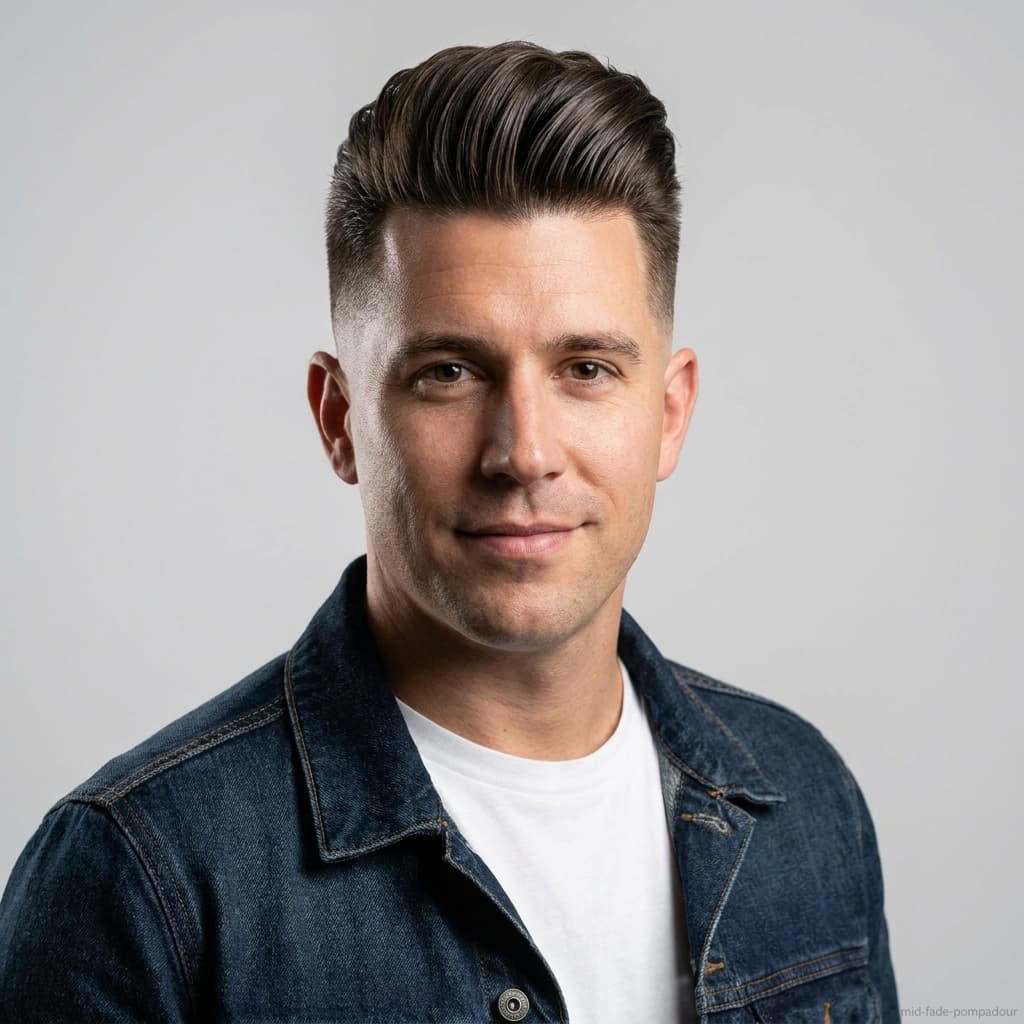
The pompadour has been declared dead about a dozen times in the last 20 years. It keeps coming back. The modern version — paired with a mid fade instead of the classic all-over length — is actually more wearable than the original. The sides are tight and clean, the top is the focus, and the volume is more controlled than a traditional pompadour.
Straight hair is the right texture for this. The weight of the strands gives the pompadour its structure — it holds the shape without collapsing like fine or wavy hair sometimes does. A medium-hold pomade with some shine, worked through and combed back with a round brush and blow dryer, gives the most volume. Skip the blow dryer and you still get a decent shape, just flatter.
10. Low Fade with French Crop

The French crop is probably the most underrated cut on this list. Short blunt top, short fringe sitting just above the eyebrows, low fade on the sides. That’s it. No styling required. You wash it, it dries, it looks good. For men who want a genuinely low-effort style that still reads as deliberate — this is the answer.
Straight hair is ideal here. The blunt fringe sits flat and even without any product because straight strands naturally fall forward with uniform weight. The only real maintenance issue is that the blunt edge of the fringe grows out faster than it looks, so you’ll want to go back to the barber every 4 to 5 weeks to keep the line clean.
11. Skin Fade with Quiff
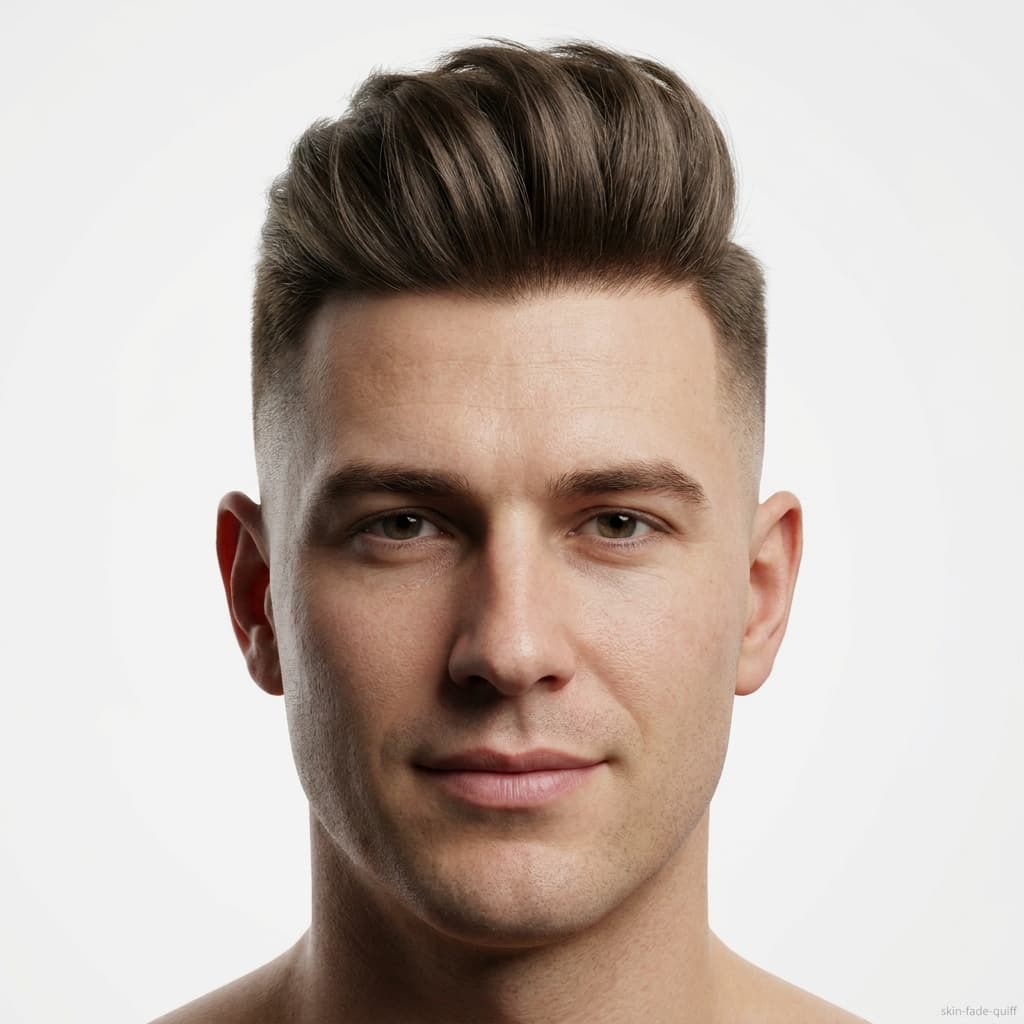
The quiff works better on straight hair than most people expect. There’s a common assumption that you need volume and texture for a quiff — that fine, straight hair won’t hold it. That’s only partially true. Straight hair doesn’t give you volume for free, but with a blow dryer and the right product, you can build a clean, structured quiff that holds for 6 to 8 hours without reapplying anything.
The skin fade underneath keeps the sides from competing with the top. All the attention goes to the quiff. The contrast between the tight sides and the full, upward-swept top is what makes this style work — and straight hair, with its natural weight, gives the quiff a clean edge that curly or wavy hair doesn’t always manage.
12. Mid Fade with Ivy League

The Ivy League cut — also known as the Princeton clip — is essentially a slightly longer crew cut with a side part. It’s one of those styles that looks unremarkable in a photo but looks genuinely sharp in person. The mid fade keeps the sides clean, the top has enough length to sweep to one side, and the overall result is a put-together look that requires almost no effort to maintain.
For straight hair, this is about as easy as it gets. The side part holds naturally — no spray, no pins. A small amount of light-hold pomade is all it takes. The style grows out well too, which means you’re not rushing back to the barber every 10 days. Every 3 to 4 weeks is fine.
Final Thoughts
Straight hair gives you more options with fades than most men realize. The texture works in your favour — clean lines, natural hold, styles that last through the day without constant upkeep. The cuts on this list range from completely zero-effort (the French crop, the buzz cut) to styles that need a few minutes in the morning (the pompadour, the quiff). Pick one that matches how much time you actually want to spend, not the one that looks best in a photo.
Save the ones you like to Pinterest and bring a reference photo to your next appointment. Showing your barber a picture is worth about five minutes of trying to describe what you want.