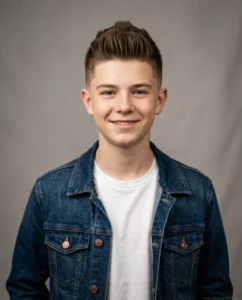
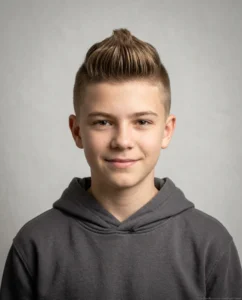
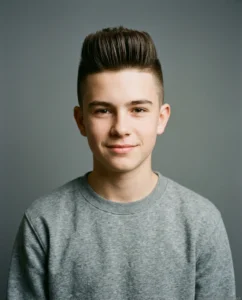
Straight hair is often said to fight a faux hawk. It doesn’t. Straight hair holds the center ridge just fine once the sides come down short enough to stop competing with it. Here are eight short faux hawk styles built around that texture, no product miracles required.
1. Classic Short Faux Hawk

This is the version every barber can do half asleep, and that’s exactly why it works. Sides get clipped to a #2 or #3, the top stays around 2 to 3 inches, and a matte paste pushes everything toward the center. Straight hair holds this ridge better than wavy hair — less flyaway, more control, less arguing with your own strands by 3pm.
Q: How long does styling actually take?
A: About 5 minutes once the cut is fresh. Work a dime-sized amount of paste through damp hair, blow-dry the top upward, then rake fingers through the center to build the ridge.
Maintenance runs every 3 to 4 weeks to keep the fade sharp. Let it grow past that and the whole shape softens into a regular short crop — not a bad backup look, but it stops being a faux hawk.
2. Textured Faux Hawk with Skin Fade
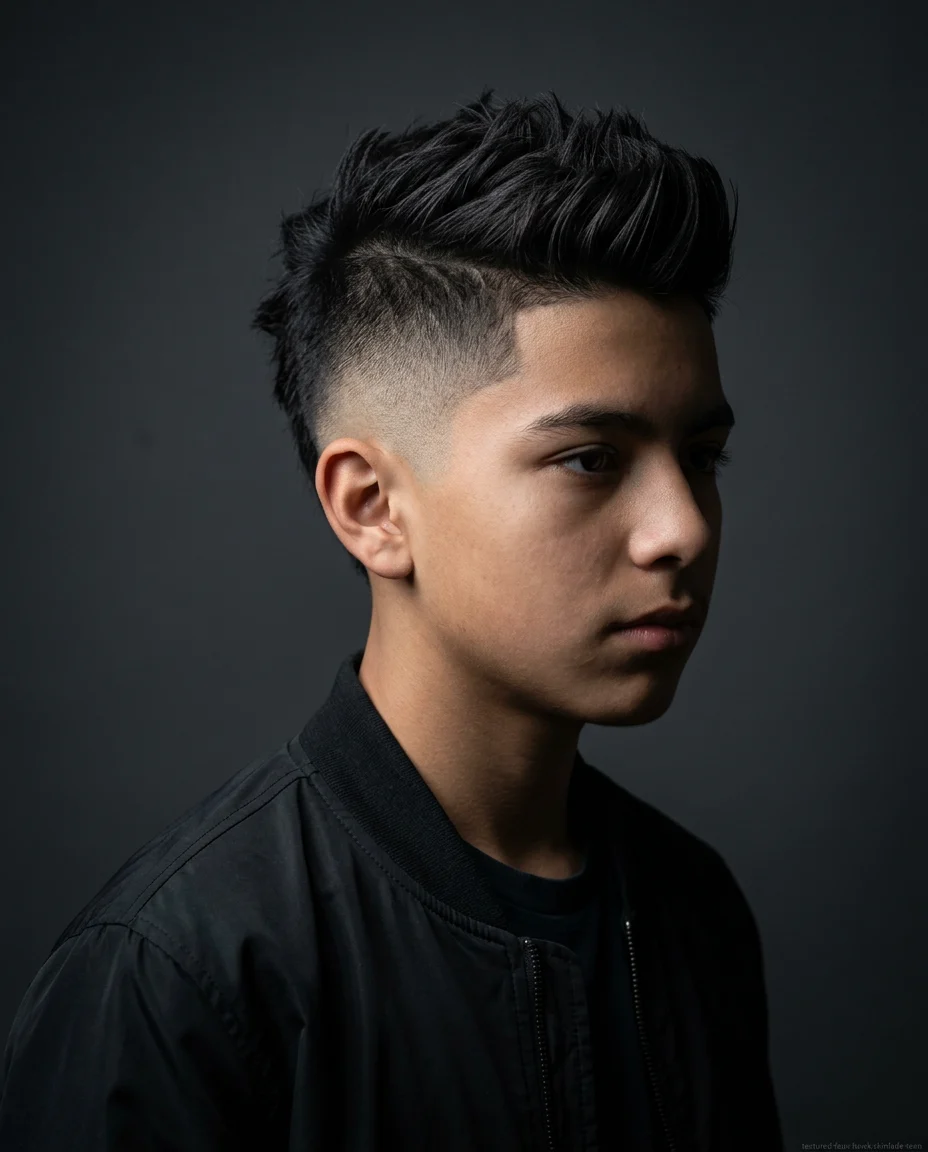
Add texture and flat straight strands stop looking glued down. A skin fade on the sides, bald right above the ear, makes the ridge on top read taller than it actually is. Ask for point-cutting or texturizing shears up top specifically. Straight hair takes texturizing better than curly hair does, since the choppy ends stay separated instead of clumping into one mass.
Q: Is a skin fade harder to maintain than a regular taper?
A: Yes. A skin fade needs a touch-up every 2 weeks or the bald line grows in fuzzy and uneven. A taper stretches to 4 weeks without much complaint.
Worth the extra barber visits, though — the contrast is what sells the whole cut. Skip this one if you’re not going back regularly, because a grown-out skin fade looks worse than one that was never sharp to begin with.
3. Faux Hawk Undercut
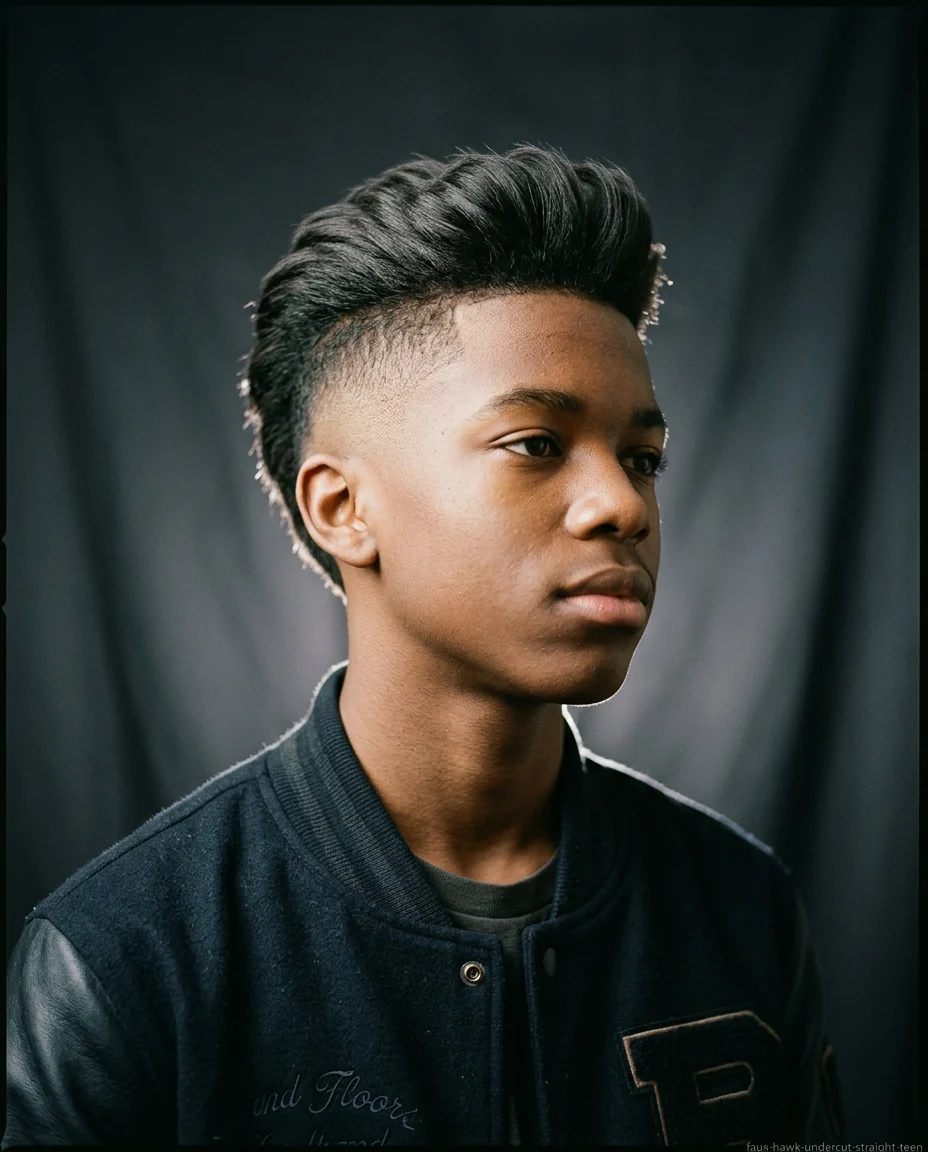
This drops the sides shorter than a fade, clippers with no guard or close to it, and leaves noticeably more length on top, usually 3 to 4 inches. Straight hair swings here instead of sitting rigid, so the ridge moves a little when you walk. Some guys like that motion. Some think it looks unfinished.
Q: Does this pass most school dress codes?
A: Mostly, yes. Most handbooks flag shaved patterns or extreme color, not plain short sides. Check yours anyway — a handful of schools do cap sides at a #1.
Styling needs a stronger hold than the classic version calls for, a clay or fiber rather than a light paste, since there’s more length up top working against gravity all day. Skip the second application and expect a flat ridge by lunch.
4. Spiky Faux Hawk with Fade
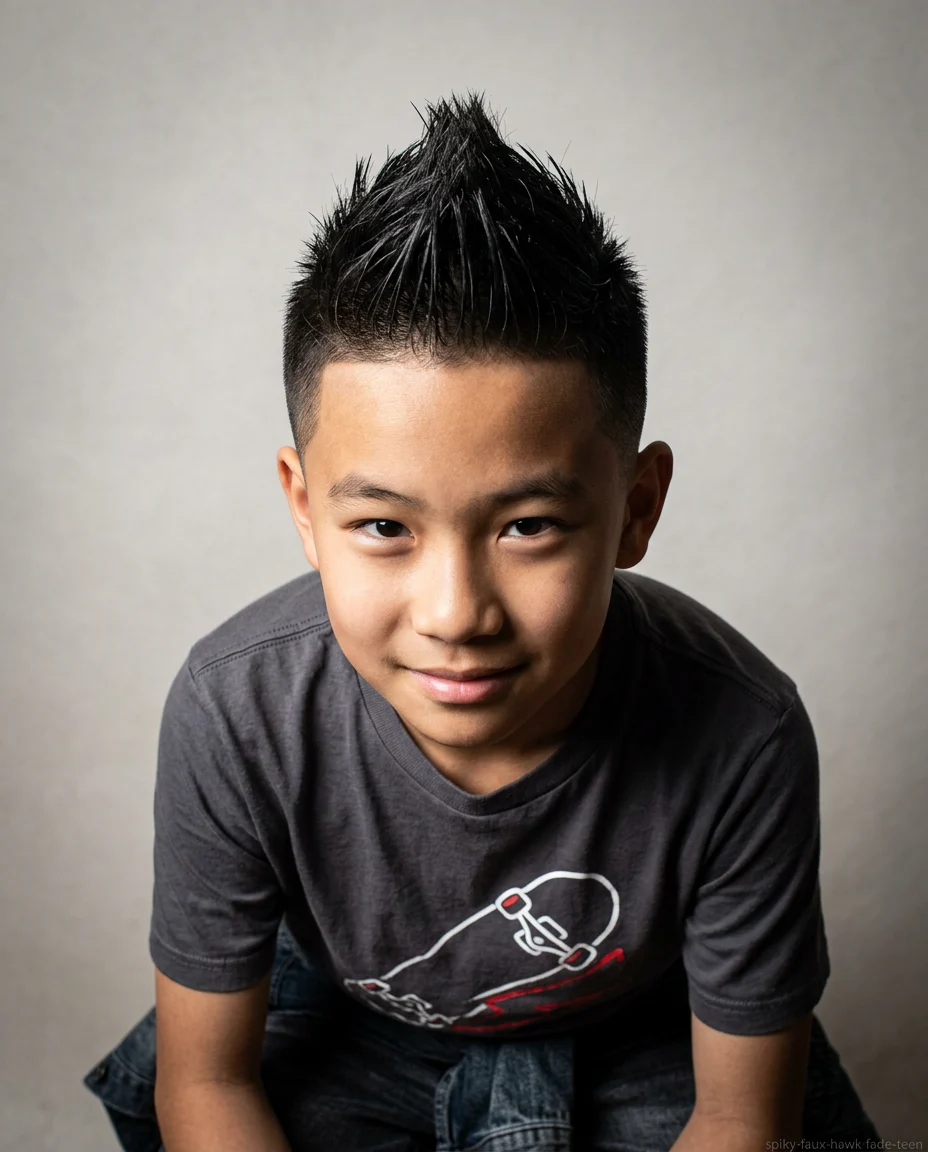
This leans hard into spiky rather than swept. The top gets cut to about 2 inches, blow-dried straight up section by section, then locked in with a strong-hold gel instead of paste. Straight hair spikes cleaner than curly hair, too — strands stay as individual pieces instead of clumping into random tufts.
Q: Will gel make straight hair look greasy?
A: Only with too much of it. Start with a pea-sized amount and add more only if pieces start falling flat by hour four.
This one reads younger and sharper-edged than the classic version, and for a lot of teen guys that’s the entire point. Doesn’t suit a job interview. Suits basically everything else on the calendar.
5. Faux Hawk with Hard Part
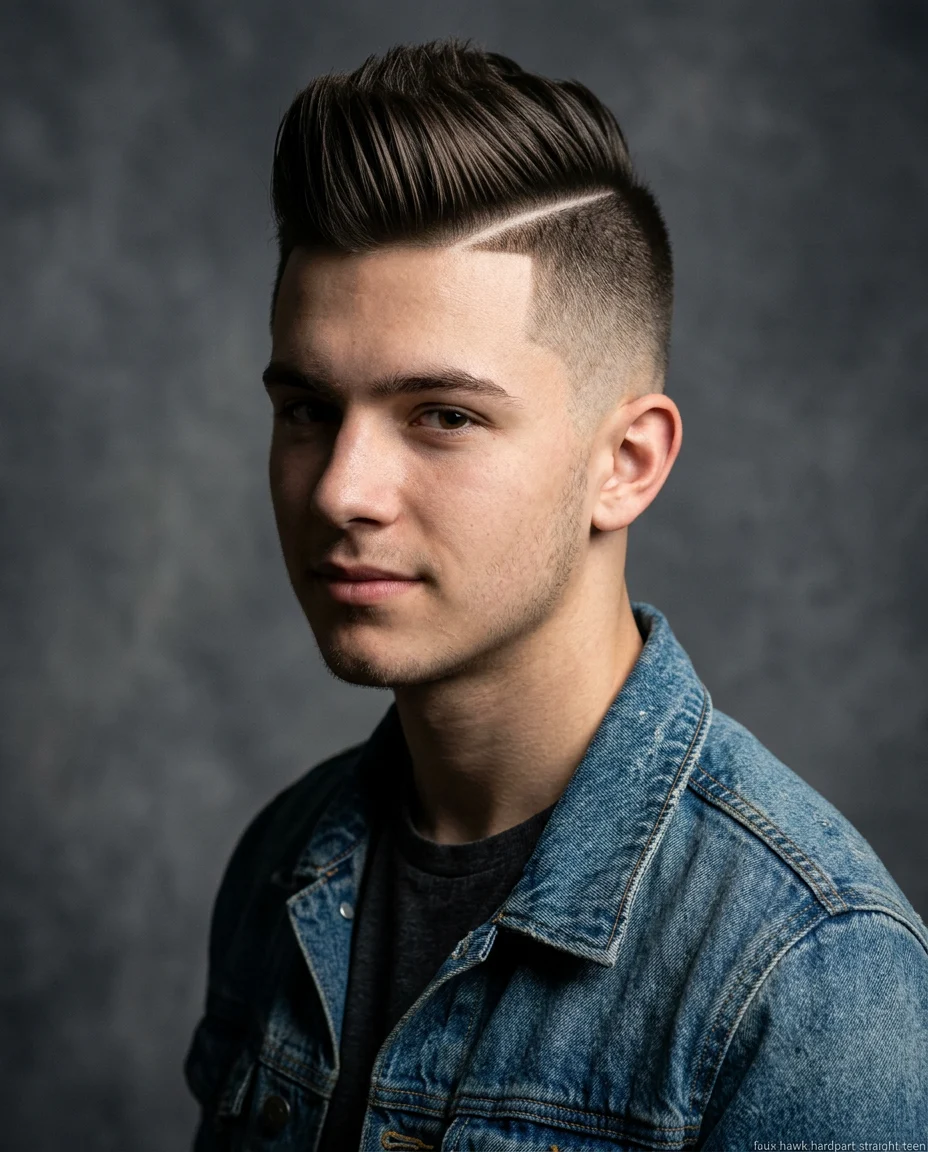
A hard part, a shaved line cut straight into the fade, turns a standard faux hawk into something more deliberate-looking. The part usually starts above the temple and curves back toward the crown, framing where the ridge begins. Barbers use a straight razor or detail trimmer for this — regular clippers can’t hold the line clean enough.
Q: How often does the part need touching up?
A: Every 10 to 14 days. It grows out faster than the fade around it, since the line is so thin that a few days of stubble erases it completely.
This is the highest-maintenance option on this list, full stop. Worth it if you like a crisp, almost architectural look. Skip it if a barber visit every two weeks isn’t realistic for you.
6. Messy Textured Faux Hawk
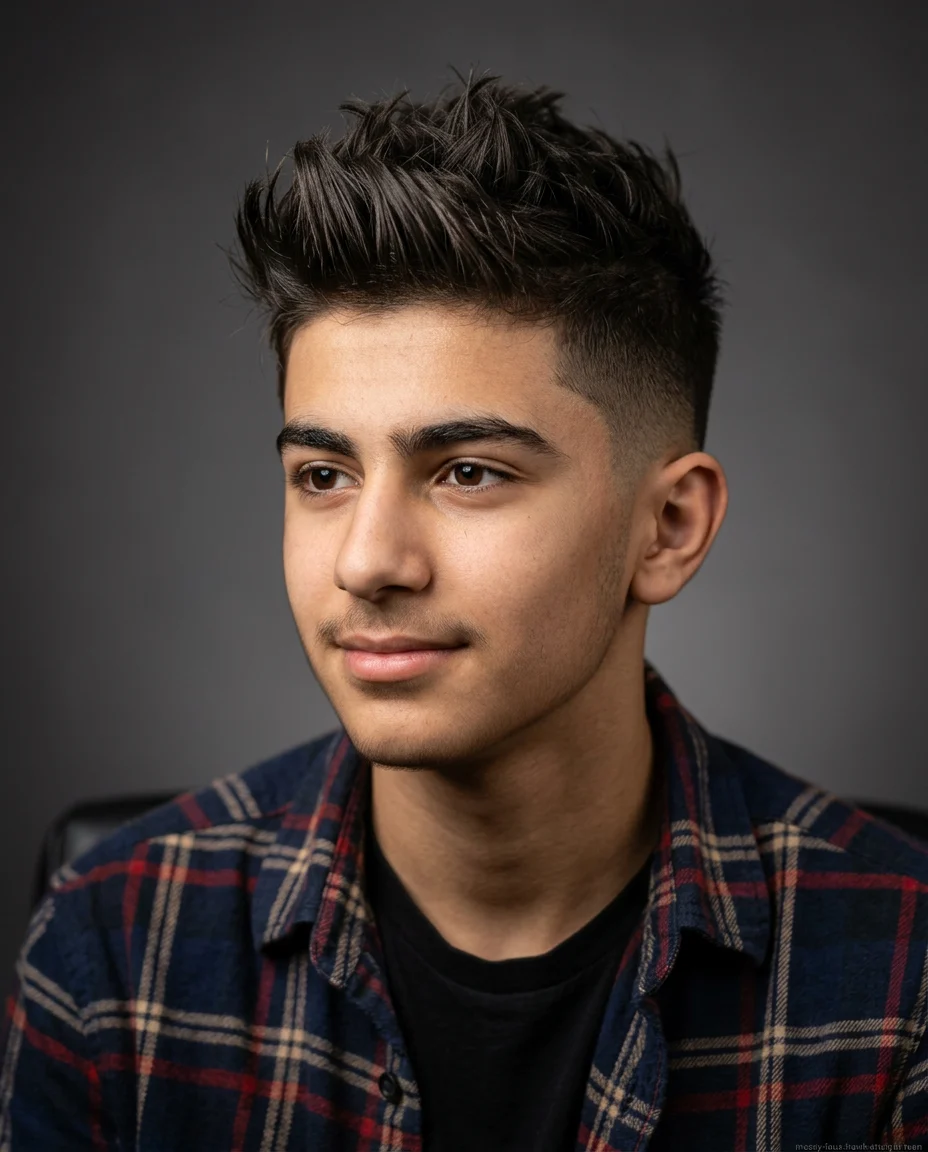
Not every faux hawk needs to look combed. This version keeps the same short-sides, longer-top structure but skips the precise center part. Rough-dry the top with your fingers instead of a brush, let a few pieces fall out of line, then finish with a matte clay that holds without adding shine.
Q: Does this actually take less time than the classic version?
A: About the same, honestly, maybe 4 minutes instead of 5. The difference is in what you’re aiming for, not how long it takes to get there.
Works especially well on straight hair that’s a little overdue for a cut, since growing-out sides read as intentional instead of sloppy. It also hides a bad hair day better than anything else on this list.
7. Faux Hawk Crop with Fringe
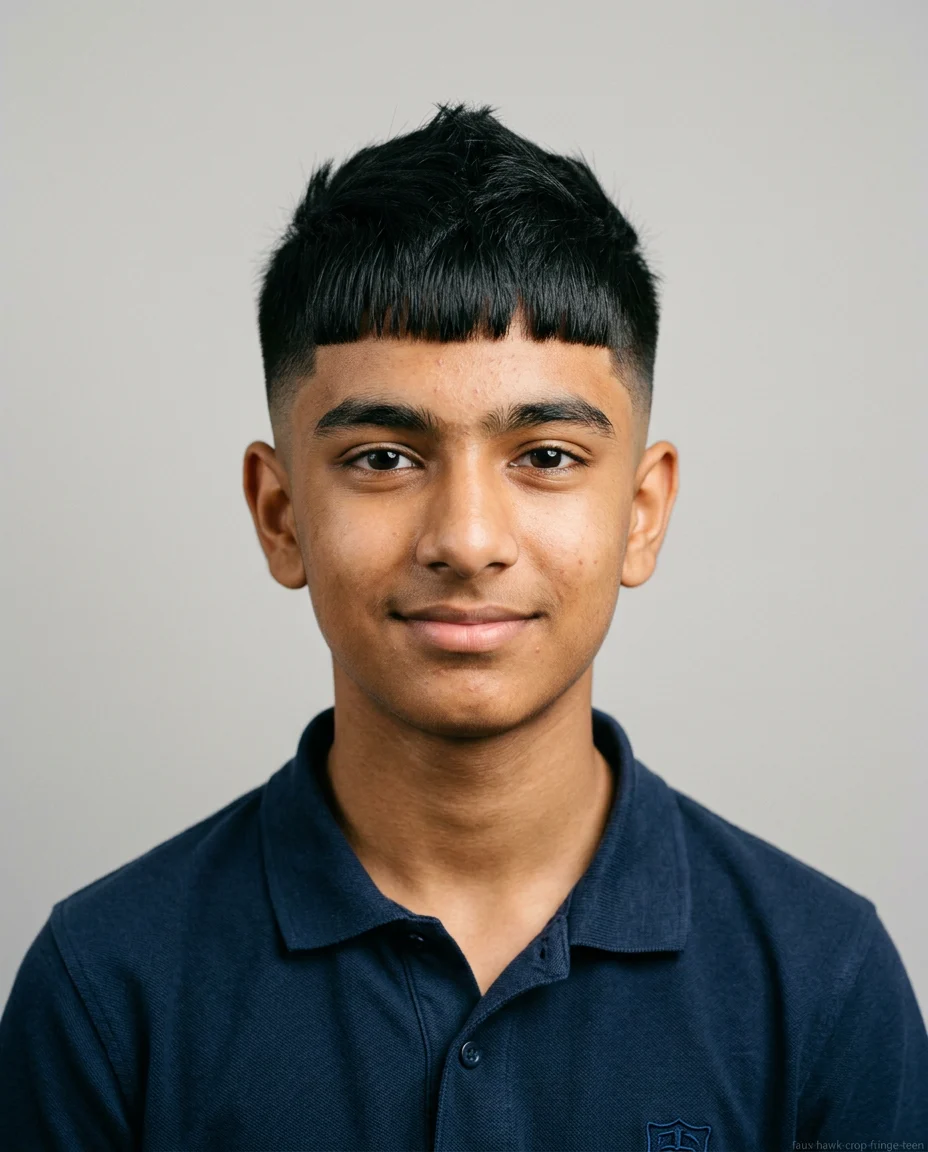
This pulls the classic French crop into faux hawk territory. A straight, blunt fringe sits at the front while the rest of the top builds into a subtle ridge behind it. Sides stay short, usually a #2 fade. Straight hair keeps that fringe flat and even, which is the whole appeal of a crop to begin with.
Q: Does the fringe get in the way during sports or PE?
A: It can, depending on length. Keep it at eyebrow length or shorter, and a headband or light gel hold handles the rest.
This is the softest, least aggressive faux hawk on the list — a solid pick if you want the shape without it reading as a statement haircut. Not the one to choose if height is the goal.
8. Low Fade Faux Hawk

A low fade keeps the fade line close to the ear instead of climbing toward the temple, which makes this the most low-key version here. The top stays around 2.5 inches, styled up and back rather than straight up. It’s the faux hawk you could wear to a family dinner and nobody would clock it as one.
Q: Is a low fade lower maintenance than a mid or high fade?
A: A bit. The fade line sits closer to hair that’s already short, so regrowth is less obvious — touch-ups can stretch to 5 weeks instead of 3.
The honest trade-off is impact. A low fade won’t turn heads the way a skin fade or hard part does. Pick this one if you want the shape without the commitment.