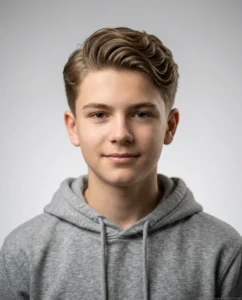
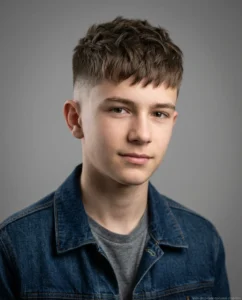
Wave actually gives medium-length Ivy League cuts more to work with, not less. Here are thirteen versions barbers are cutting right now for that exact hair type.
1. Medium Ivy League with a Low Taper Fade
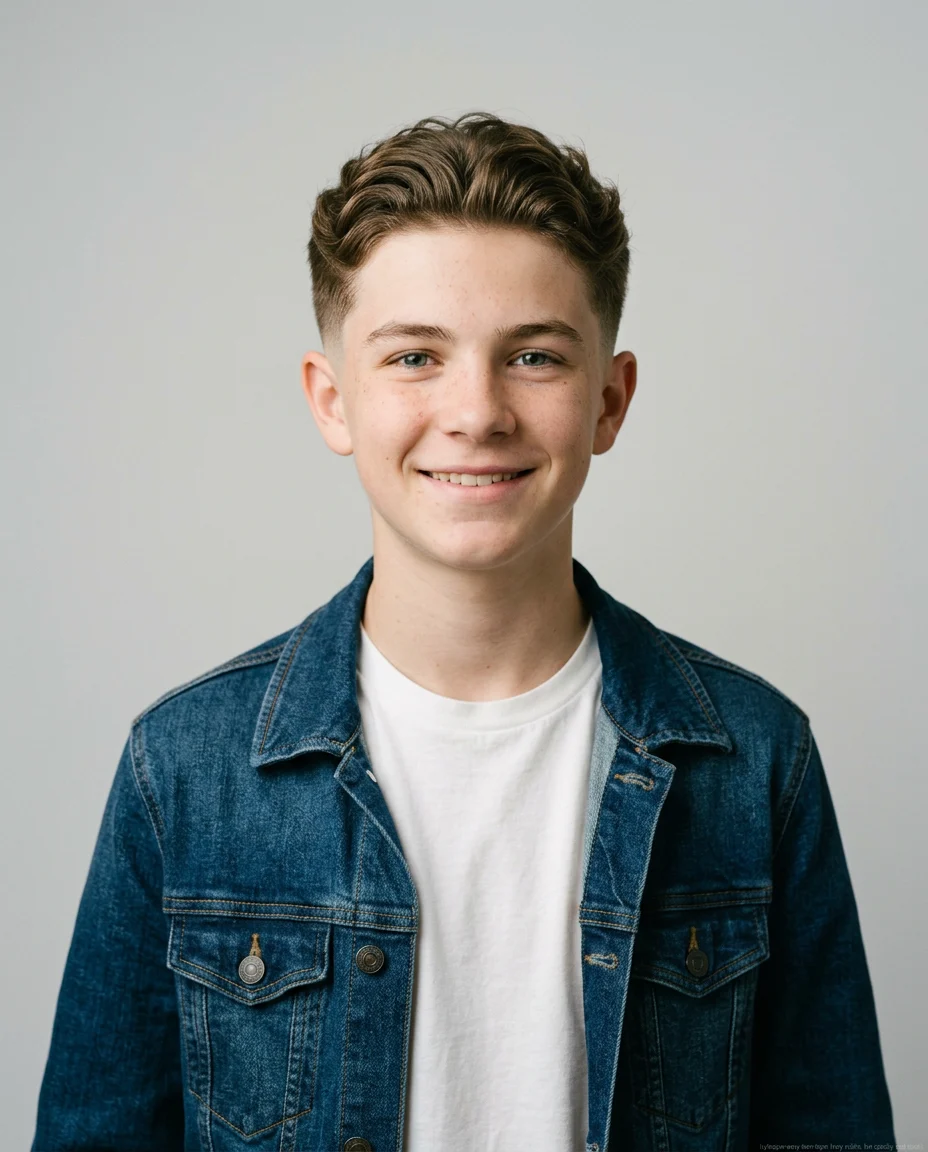
This is the base version, and it’s the one most shops default to when a teen just says “Ivy League” without specifying anything else. Top length runs about 2.5 to 3 inches, long enough for the wave pattern to actually show instead of getting cut off before it curls. The taper starts low, just above the ear, and fades out gradually rather than snapping to skin.
Wavy hair holds this shape better than straight hair does, honestly — the texture gives the top natural separation without product doing all the work. You’ll still need a light pomade or clay most mornings. Skip it and the wave can look unfinished instead of styled.
2. Medium Ivy League with a Skin Fade
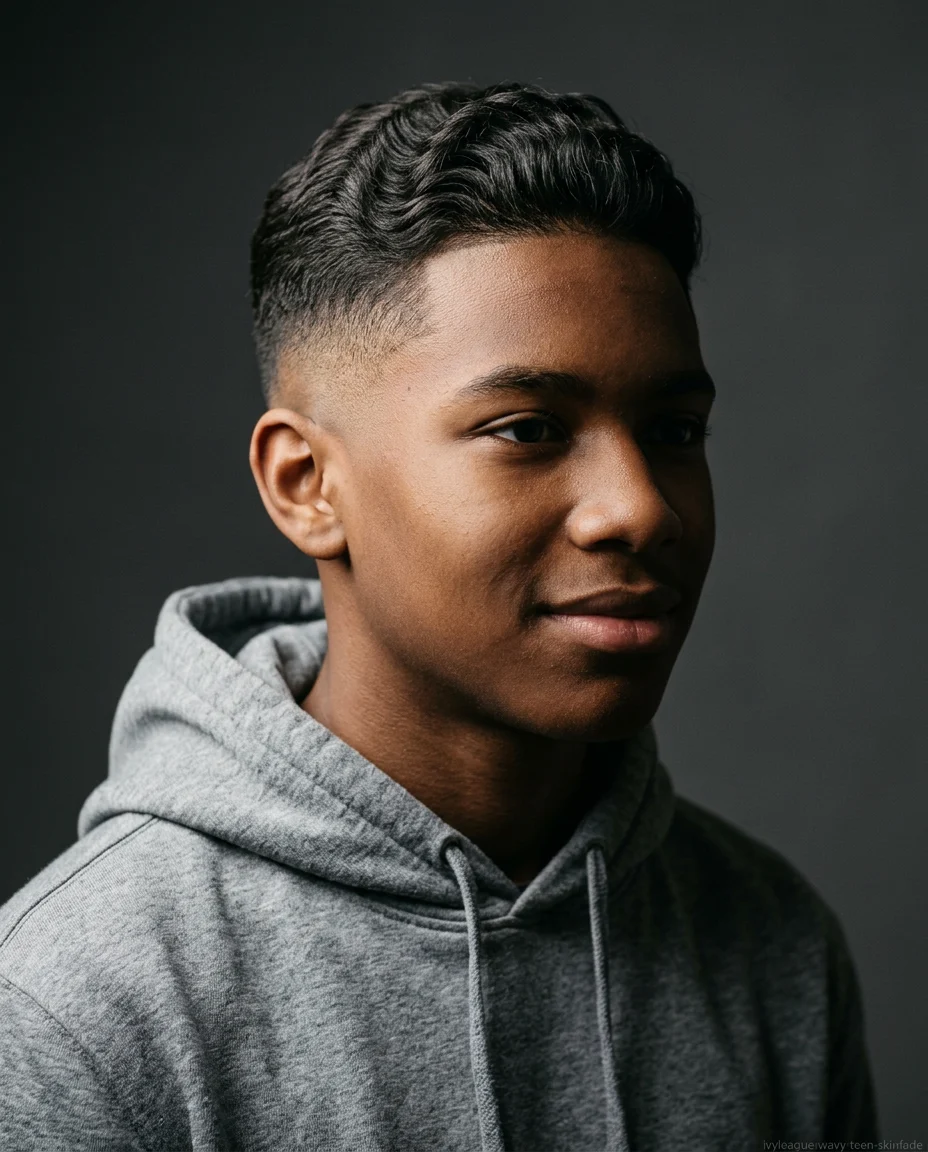
Trade the soft taper for a skin fade and the whole cut reads sharper, almost formal, even though the top is doing something looser and more relaxed. That contrast is the appeal. The sides go down to skin around the temple and drop off fast, usually within half an inch of length change.
Here’s the trade-off nobody mentions upfront: skin fades on teenagers grow out fast, and a fade that’s crisp on day one looks patchy by day 12. Plan on a touch-up every 2 to 3 weeks if you want it to stay sharp, not every 5 or 6 like a looser taper allows.
3. Medium Ivy League with a Deep Side Part
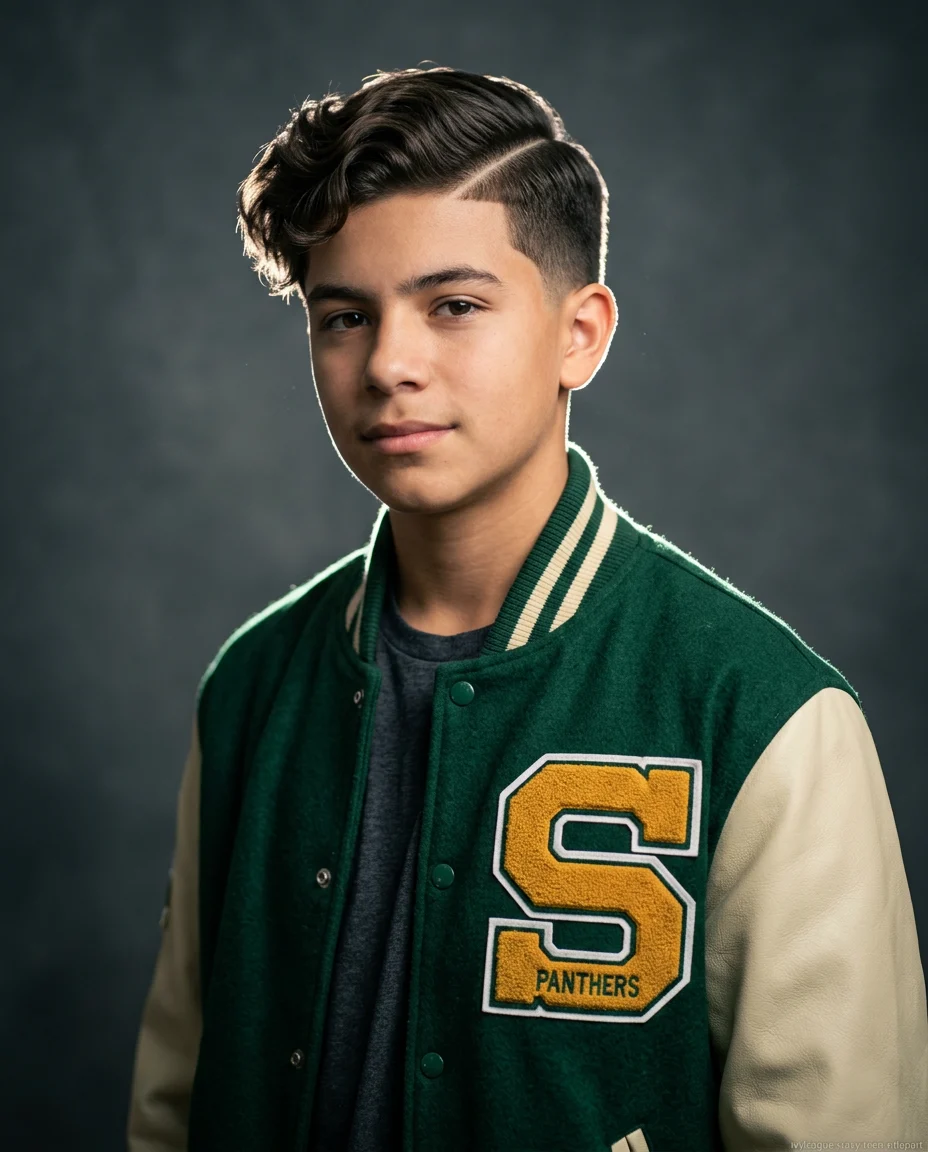
A hard part cut into the side changes how the whole style reads — it pulls the eye toward structure even while the wave on top does its own thing. The part itself is usually shaved in with a trimmer or straight razor, sitting an inch or two above the ear on whichever side the hair naturally falls.
Wavy hair fights a deep part more than straight hair does. It wants to drift back toward its natural pattern within a day or two, which means the part needs re-defining more often than most guides admit. A comb and a dab of pomade handle it in under a minute once you’ve done it a few times.
4. Medium Ivy League with a Wavy Fringe
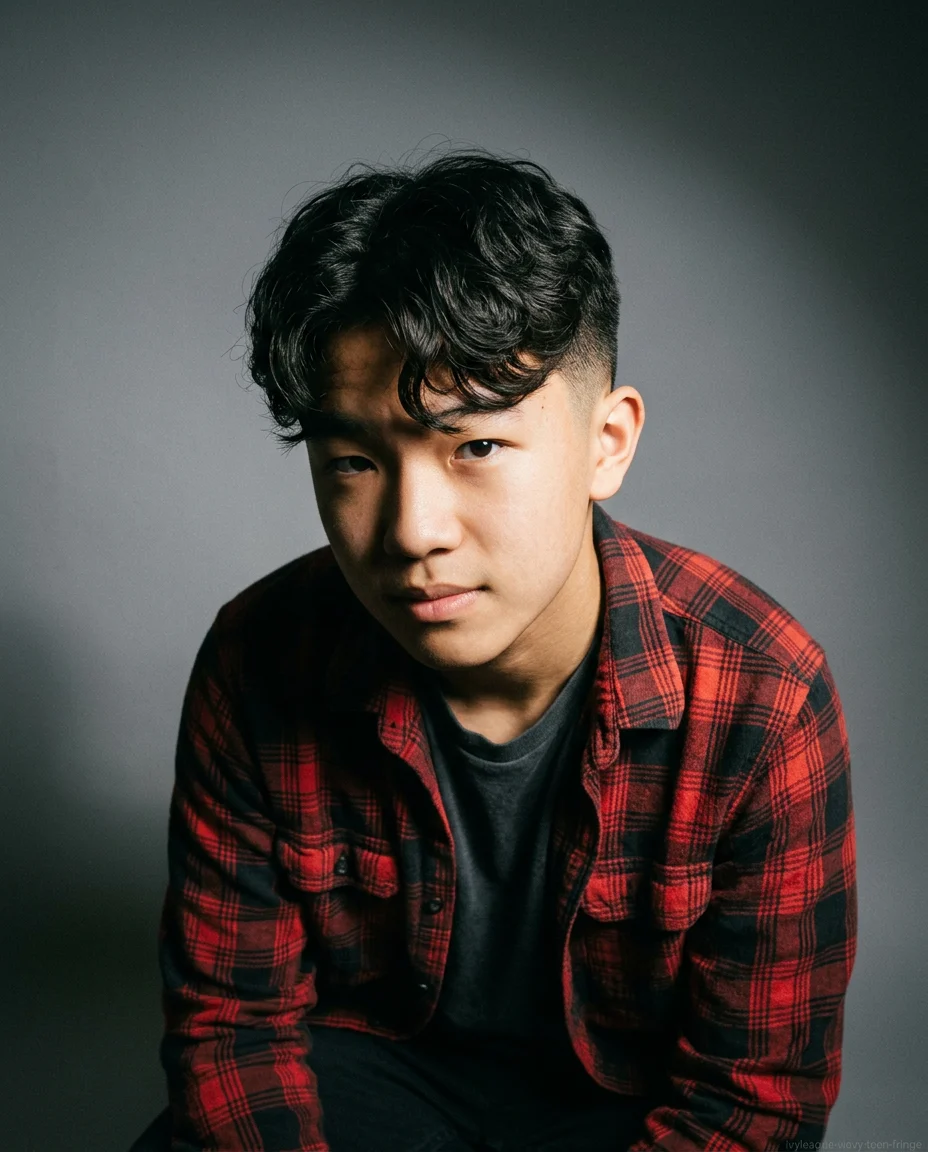
Instead of combing everything back or to the side, this version lets a section of fringe fall forward across the brow. It’s the least “formal” take on Ivy League in this list, closer to a casual crop than a prep-school cut, and that’s exactly why it’s popular with younger guys who don’t want to look like they tried too hard.
The fringe needs to stay above the eyebrow — any longer and it stops being Ivy League and starts being a curtain fringe with extra steps. Length on the sides and back stays short and neat, which does most of the work keeping the style from looking sloppy.
5. Medium Ivy League with a High Fade
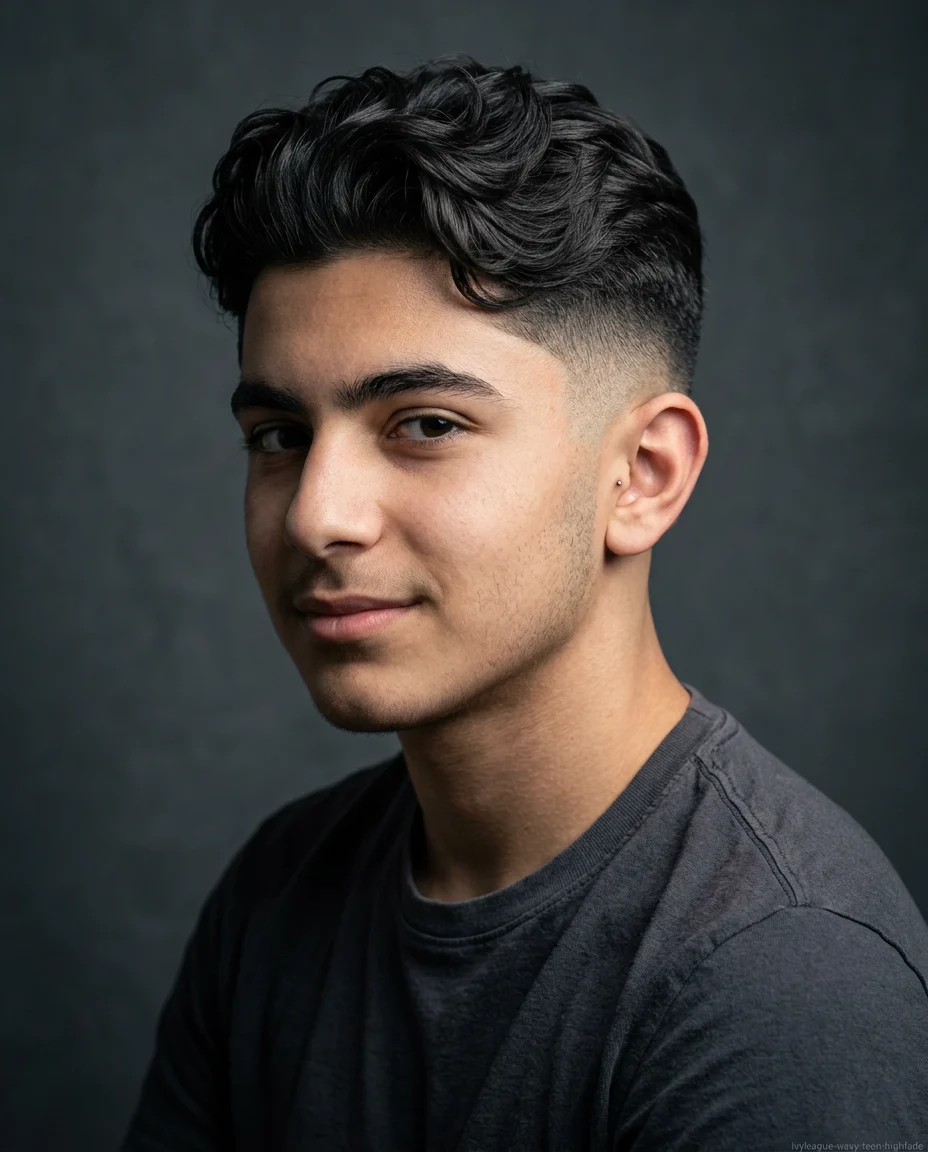
Push the fade up past the temple and the top suddenly has to do more visual work, since there’s less side hair to balance it. This version needs slightly more length on top than the low-fade take — closer to 3 inches — or the proportions end up looking top-heavy in a bad way.
High fades also show scalp shape more than any other version on this list, so it’s worth mentioning before you commit: uneven head shape shows up here in a way it doesn’t with a low taper. Most barbers will tell you honestly if it’s a good fit for your head. Ask.
6. Medium Ivy League with a Messy Quiff
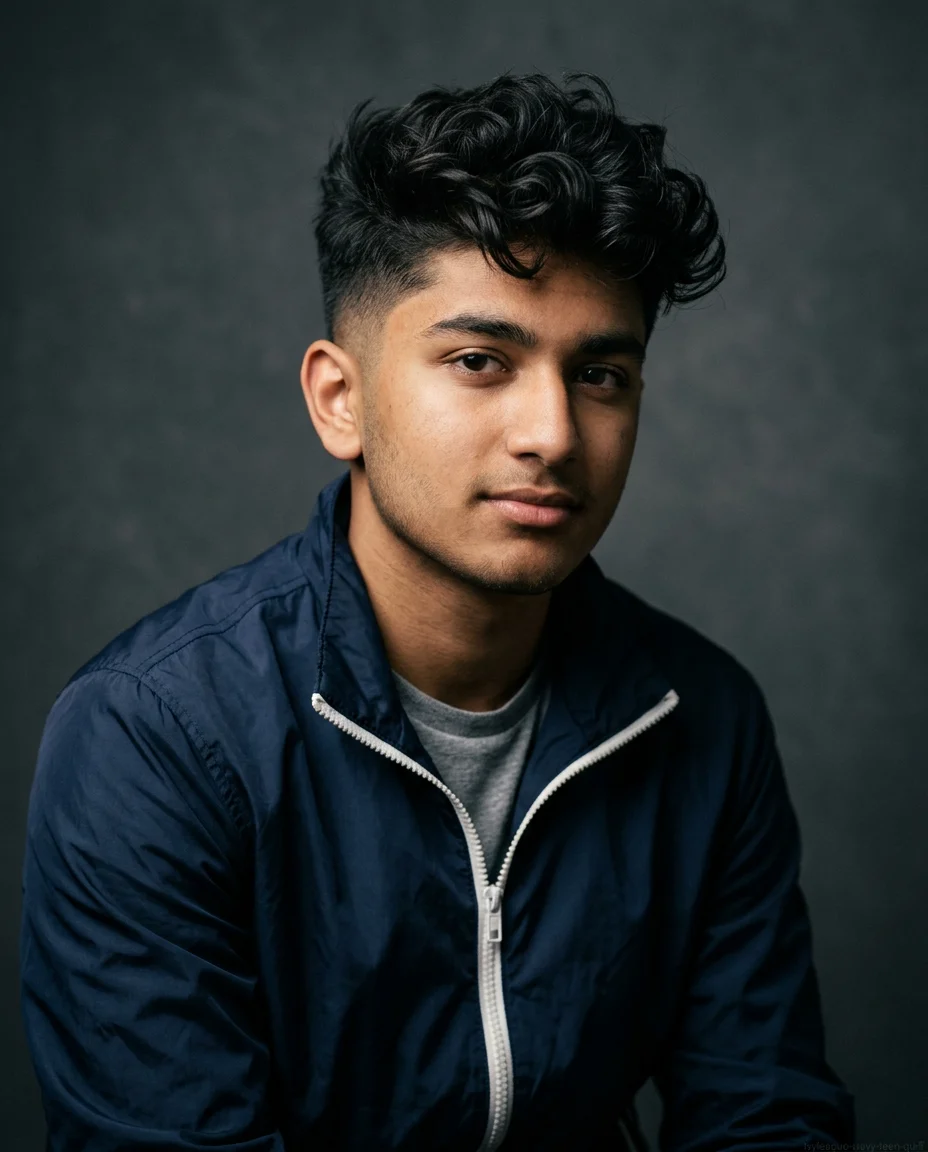
This version pushes the top up and slightly forward instead of straight back, giving it height without the stiffness of a full pompadour. Wavy hair is honestly the ideal texture for this — the natural bend gives the quiff volume that straight hair usually needs a blow-dryer and round brush to fake.
Styling takes about 5 minutes: rough-dry with fingers, work in a small amount of matte paste, push up from the root. It looks effortless in the final result, which is a little misleading, since it does require you to actually do something every morning. Skip the styling and it just falls flat by lunch.
7. Medium Ivy League with a Natural Part
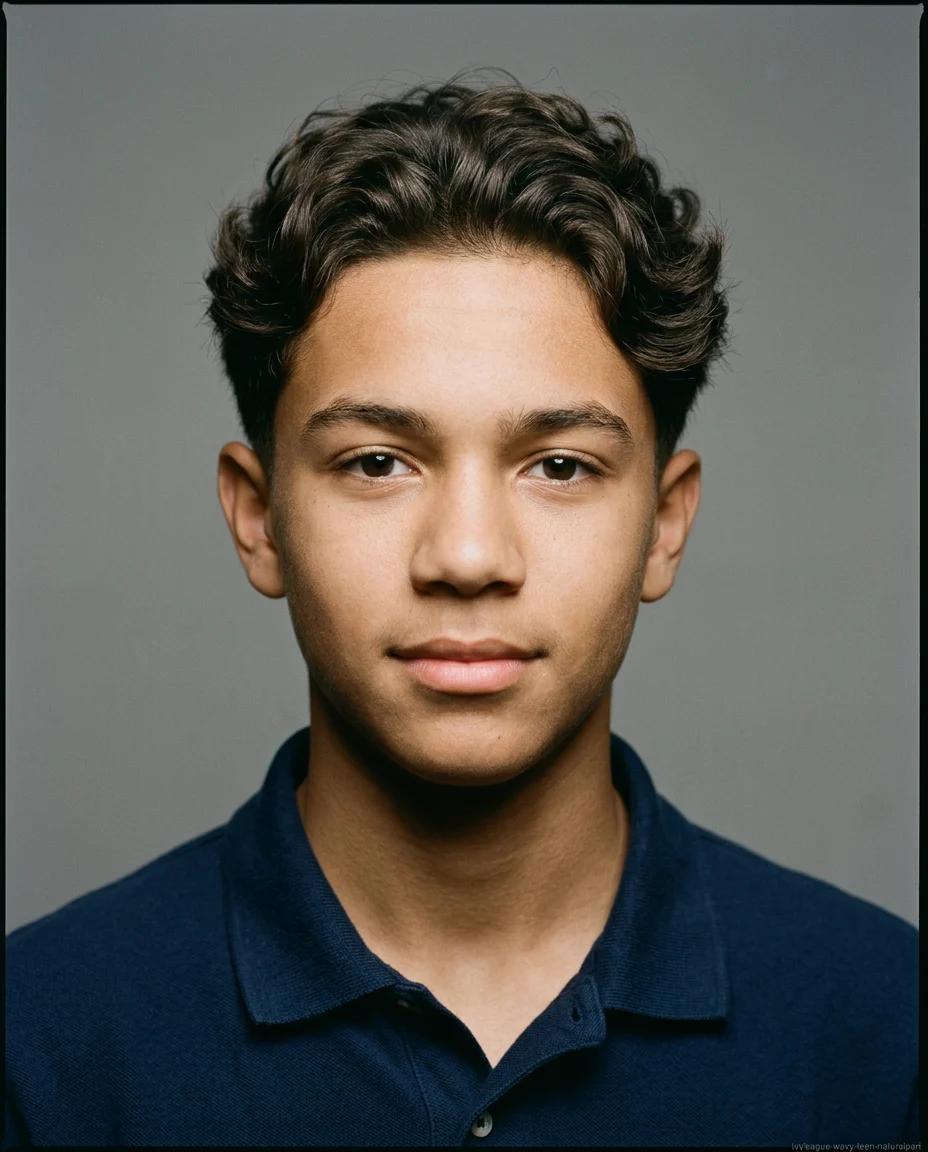
Rather than cutting in a hard line, this version works with wherever the hair already wants to part on its own. It’s the lowest-maintenance cut on this list by a wide margin, and probably the best starting point for a teen who’s never had an Ivy League cut before and doesn’t want to commit to daily styling.
The downside is it looks less deliberate. There’s no crisp part line to photograph, no dramatic fade to show off. What you get instead is a cut that looks the same whether you styled it or just toweled off and left the house, which for a lot of 14 and 15-year-olds is actually the whole point.
8. Medium Ivy League with a Textured Crop Top
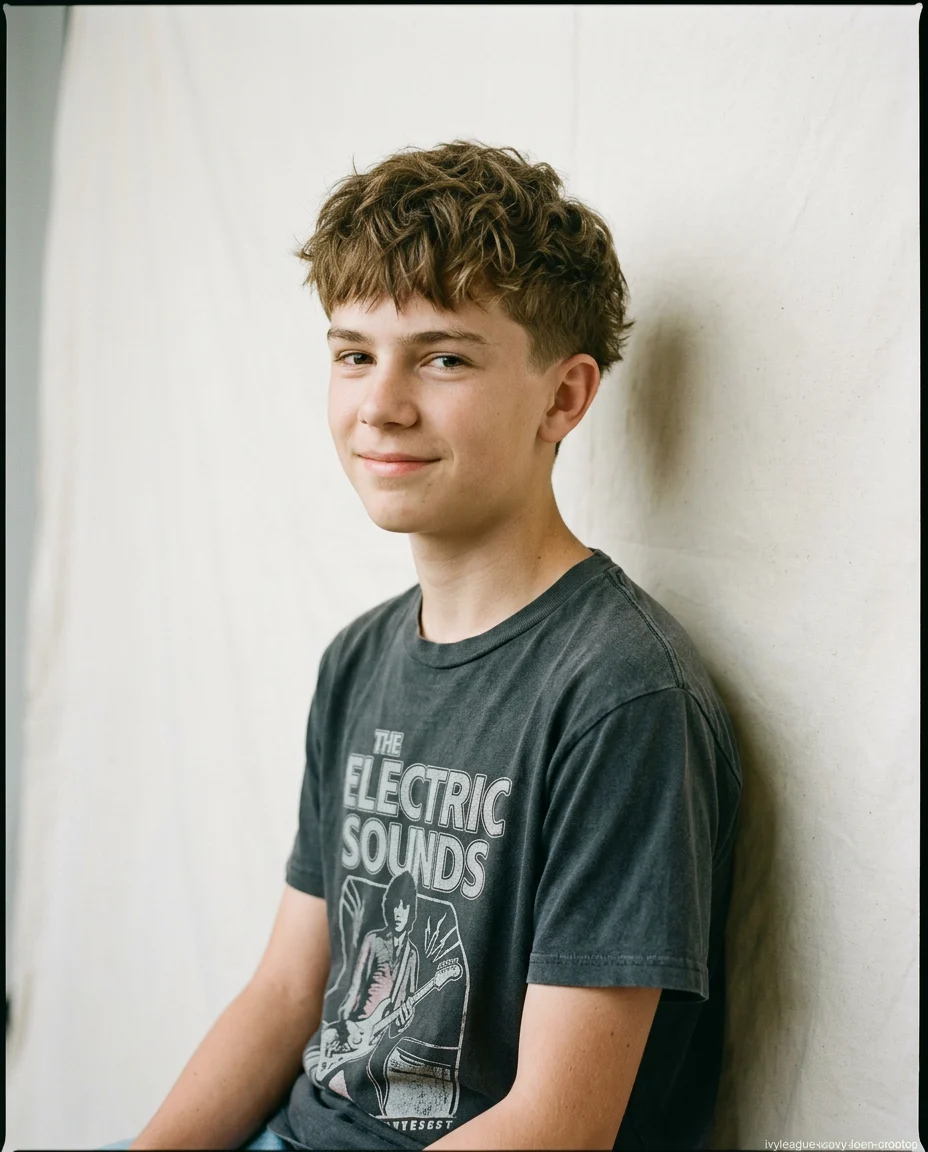
Borrowed from the French crop trend and grafted onto Ivy League proportions, this version keeps the top short and heavily textured rather than combed into any particular direction. Length stays around 2 inches, and the ends get point-cut or razored to break up the natural wave pattern into something choppier.
It reads younger than most of the other cuts here, which is part of why it’s a common request from guys around 15 or 16 specifically. There’s a real risk of it looking unfinished if the texturing is too heavy, though — ask to see it dry before you leave the chair, not just wet.
9. Medium Ivy League with an Undercut
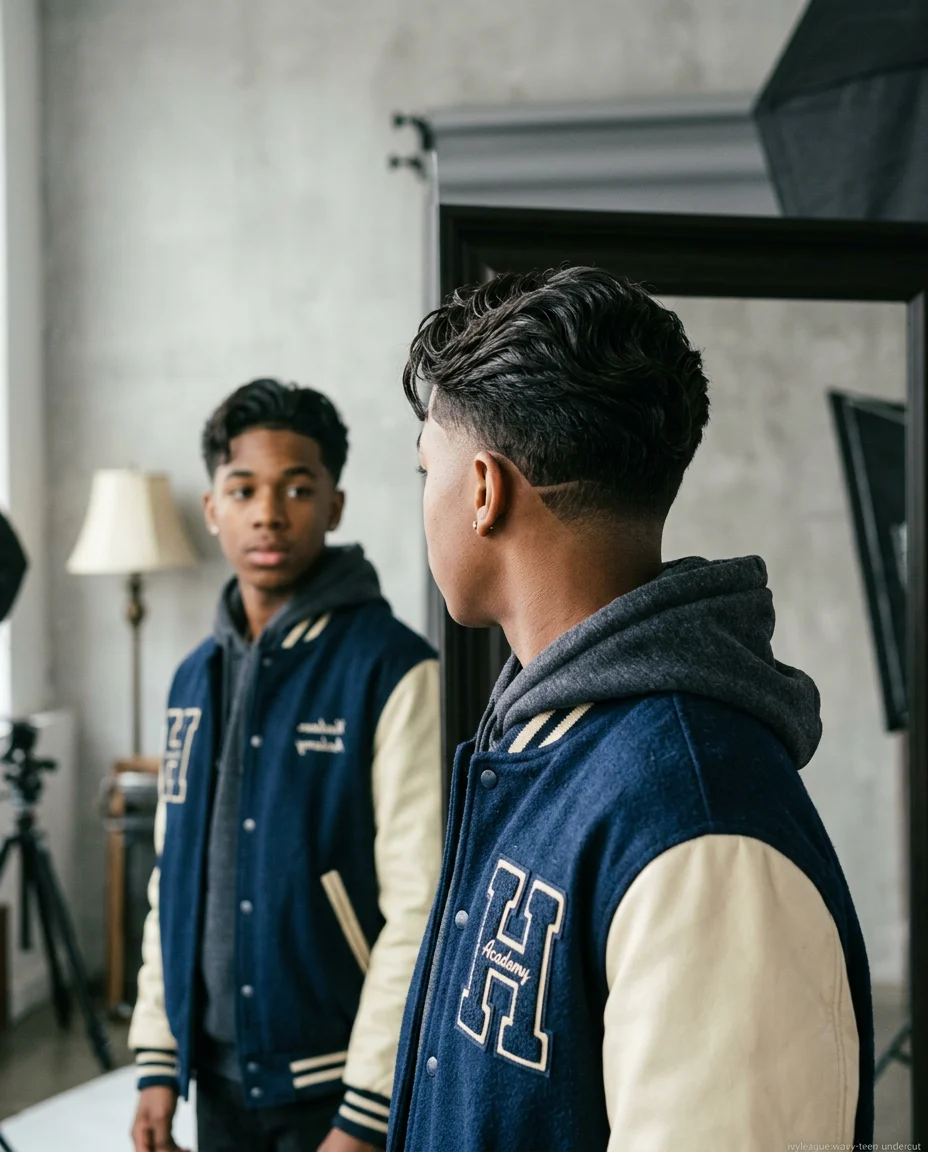
An undercut is more aggressive than a taper or fade — the sides get cut short with clippers and stay one length rather than gradually blending, so there’s a visible line where the long top meets the short sides. It’s a bolder look, and it reads older than most of the other versions here.
Growing this one out is rougher than growing out a fade. Because there’s no gradient, the line between lengths becomes obvious again within 3 weeks, well before a tapered version would need a redo. If you’re not committed to regular upkeep, this probably isn’t the one to pick.
10. Medium Ivy League with a Brushed-Back Finish
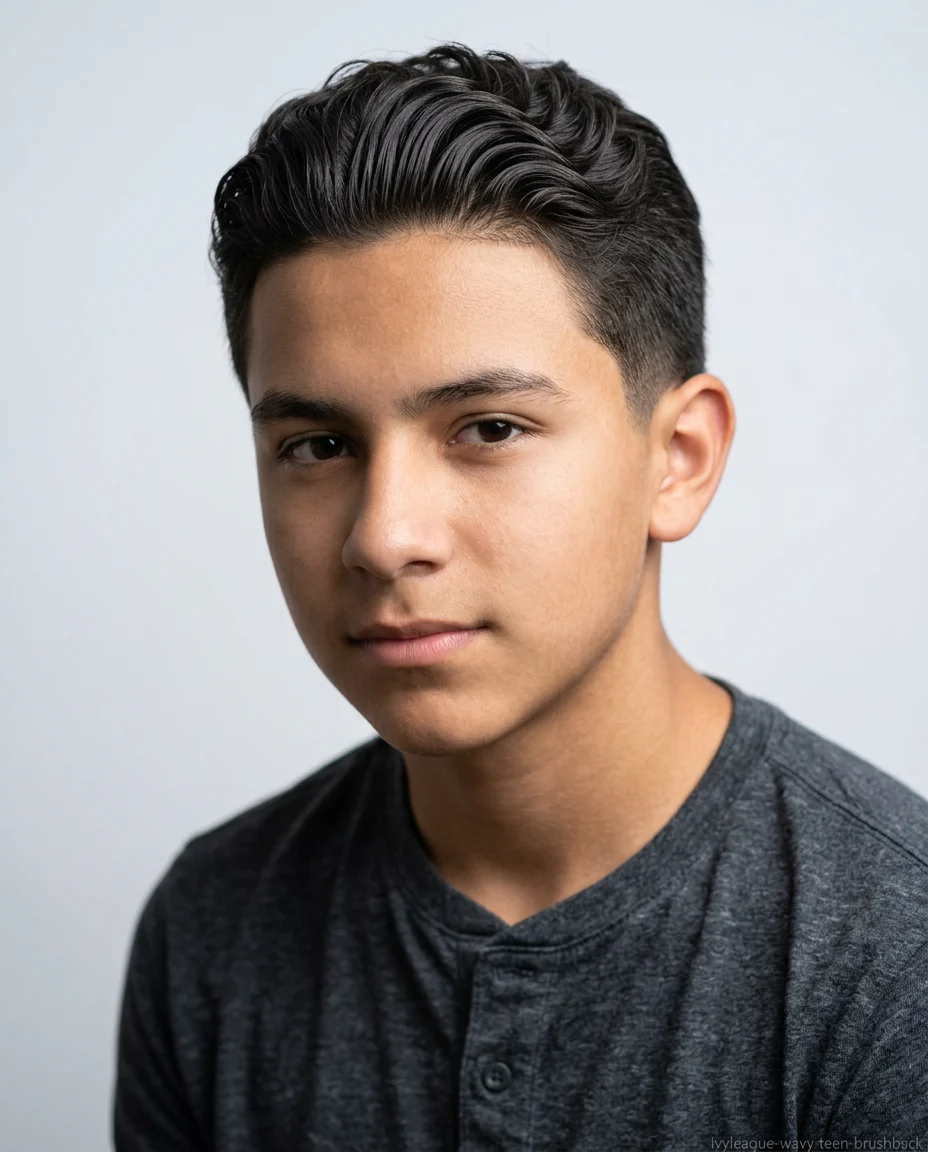
All the top length gets combed straight back off the face here, no part, no fringe forward. It’s closer to the original 1950s Ivy League look than most of the modern variations on this list, and it tends to be a request from kids trying to match an older photo they found rather than something they saw on social media.
Wavy hair brushed straight back holds shape for maybe half a day before pieces start lifting at the crown. A stronger hold product is basically required — this is the one cut here where a light styling cream won’t cut it.
11. Medium Ivy League with a Mid Fade
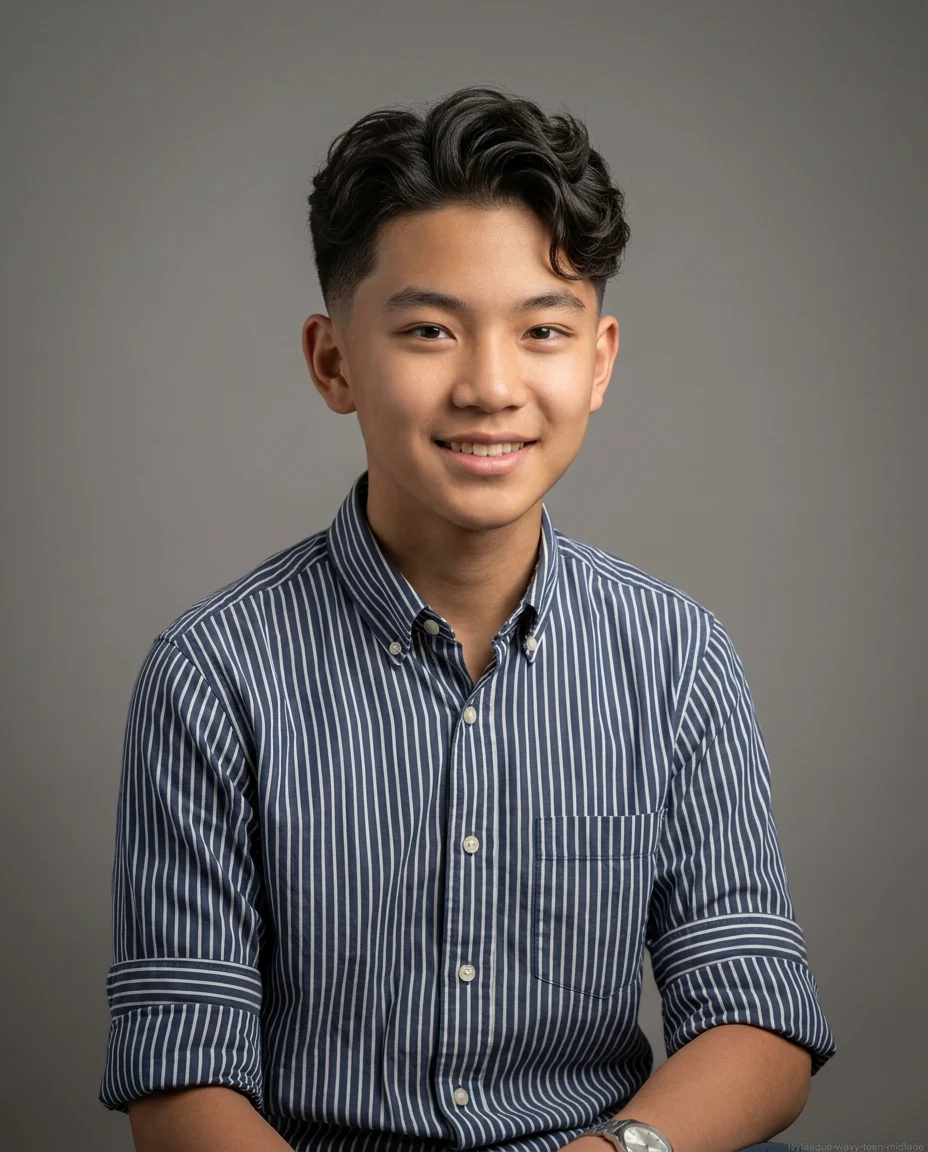
Sitting between the low and high fade versions already covered, a mid fade starts blending around the middle of the side of the head. Most barbers consider this the safest fade height for a first-timer, since it balances out most face shapes without drawing too much attention to the ears or jawline either way.
It’s also the most forgiving option if you’re growing it out between appointments — a mid fade looks acceptable at 3 weeks in a way a high fade just doesn’t. That flexibility is probably why it’s the single most requested fade height across every Ivy League variation, not just this one.
12. Medium Ivy League with a Wavy Pompadour Blend
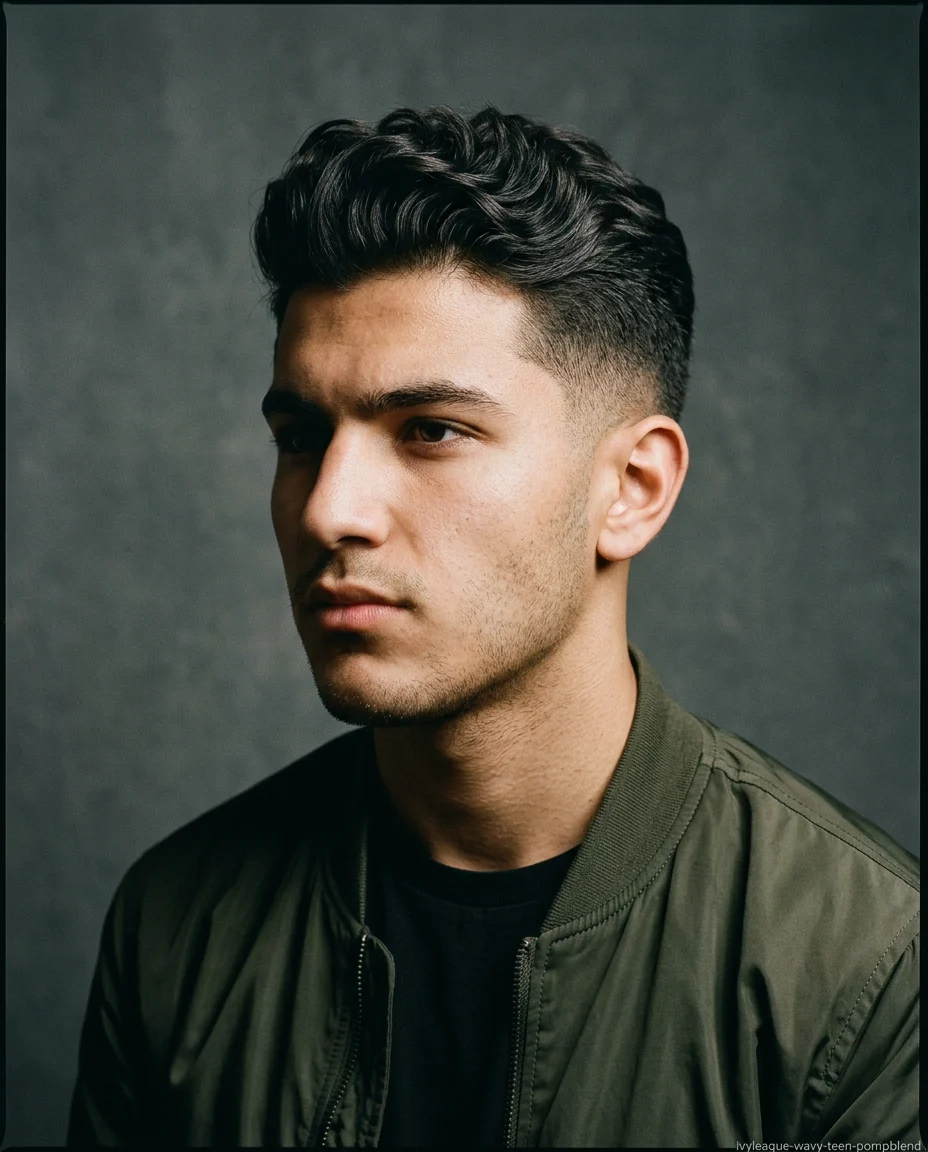
This one borrows the pompadour’s front volume but keeps the sides tighter and shorter, more in line with a standard Ivy League than a true pompadour would call for. The front section runs slightly longer than the rest of the top, around 3.5 inches, giving it enough length to sweep up and back without a blow-dryer forcing the issue.
It takes longer to style than almost anything else on this list — figure on 8 to 10 minutes most mornings between drying, combing, and product. That’s the honest trade-off for the most dramatic silhouette here. Guys who don’t want a styling routine should look elsewhere on this list.
13. Medium Ivy League with a Classic Ivy Part
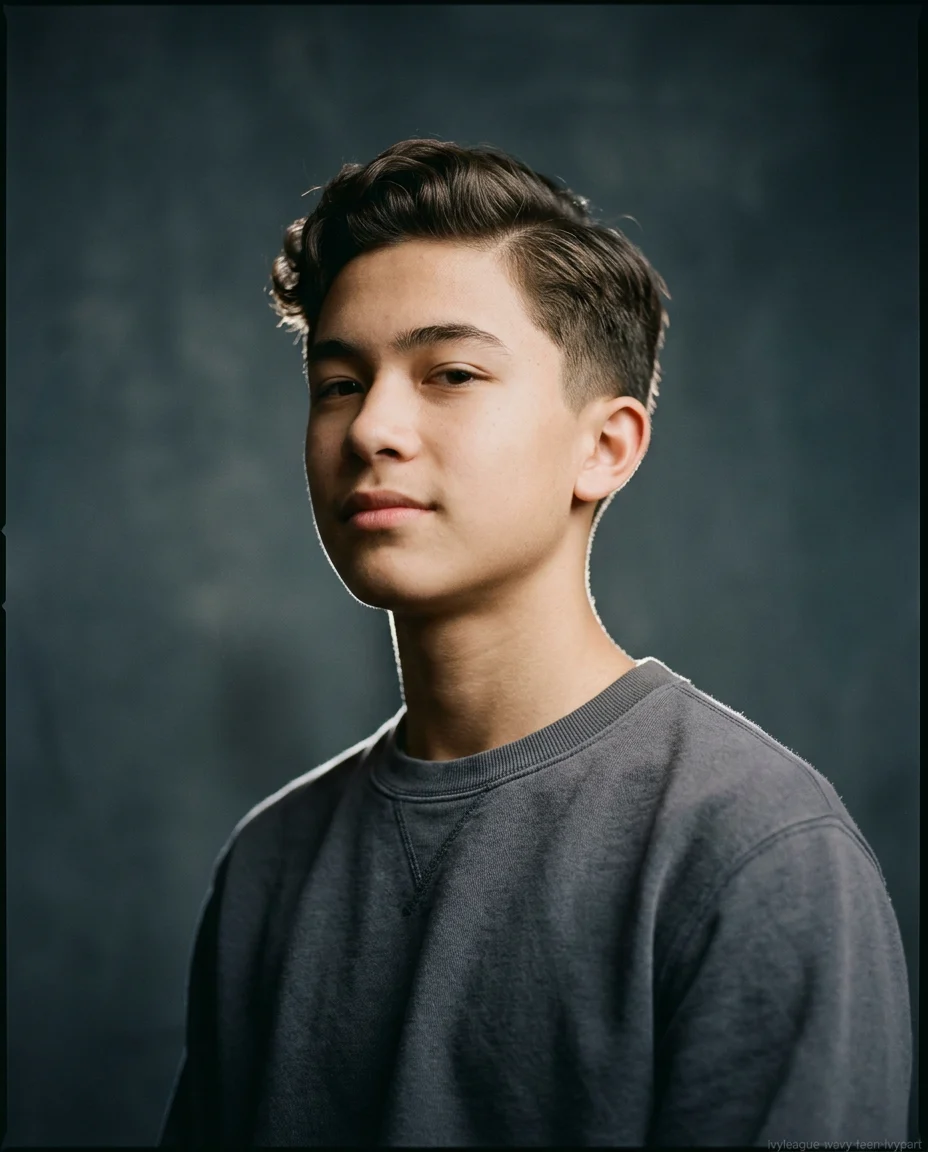
This is the version the whole style is named after — a soft side part, moderate length on top, sides trimmed short but not faded aggressively. No hard lines, no shaved parts, nothing borrowed from a newer trend. If a barber shows you an old reference photo of the “original” Ivy League cut, this is usually it.
It’s also the easiest version to get cut wrong through sheer plainness — there’s nowhere for a mediocre cut to hide behind texture or a dramatic fade line. A good barber makes this one look effortless. A rushed one makes it look like a cut that just needs a trim.