Length on top does more for a curl pattern than most people assume. Buzz it too short and the texture disappears completely. Here are 10 versions worth bringing to your next appointment.
1. Classic Ivy League with Curly Taper
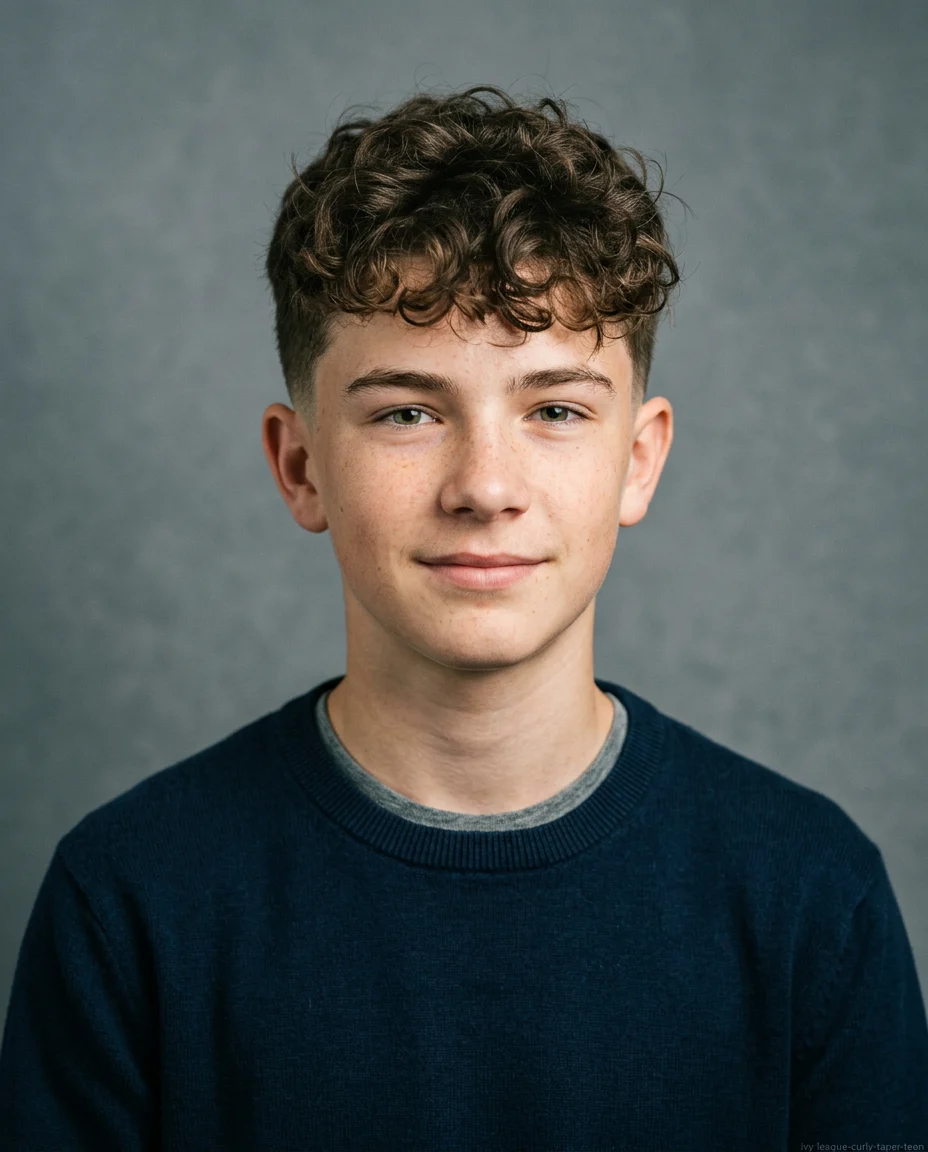
This is the version most barbers already know by heart. Top stays around 2 to 3 inches, curls left loose enough to move, sides tapered down close but not shaved. It reads clean without looking overworked.
Curly hair holds this length surprisingly well. You lose some density up top from the taper, so the curls on top get to do the talking instead of competing with bulk on the sides.
Expect a trim every 4 to 5 weeks to keep the taper from growing shaggy. Skip this one if you’re not willing to use a diffuser at least twice a week — untamed, the curls puff instead of coil.
2. Ivy League Crop with Curly Fringe
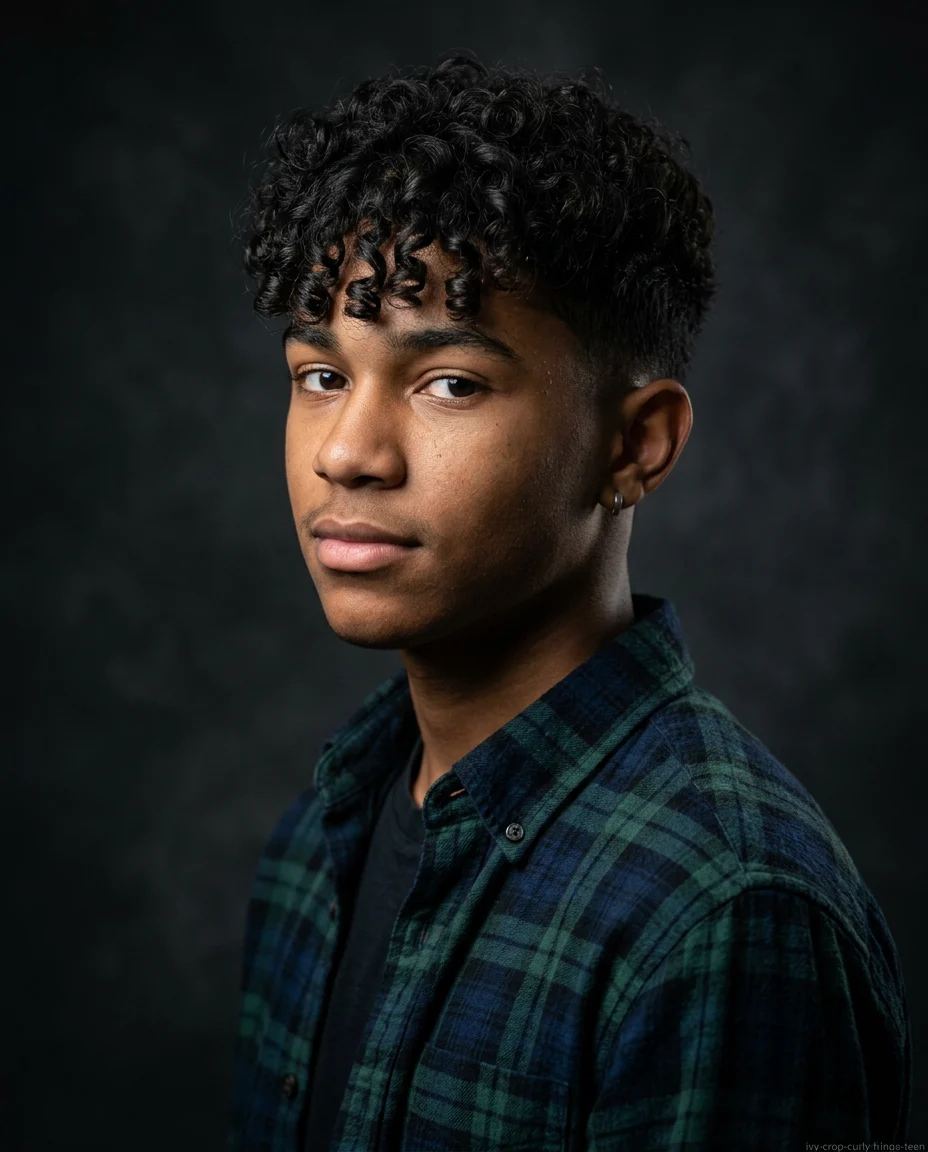
Push the fringe forward instead of parting it, and the crop version of this cut turns into something closer to a curly quiff without the height. Sides stay short, maybe a number 2, while the top holds around 2.5 inches.
The fringe is the whole point here. It falls forward over the forehead in loose curls, framing the face instead of sweeping back.
Most guys underestimate how much product this needs. A light curl cream, worked in damp, keeps the fringe from drying stiff. Skip the gel — it flattens the curl pattern instead of defining it.
3. Textured Ivy League with Natural Curls
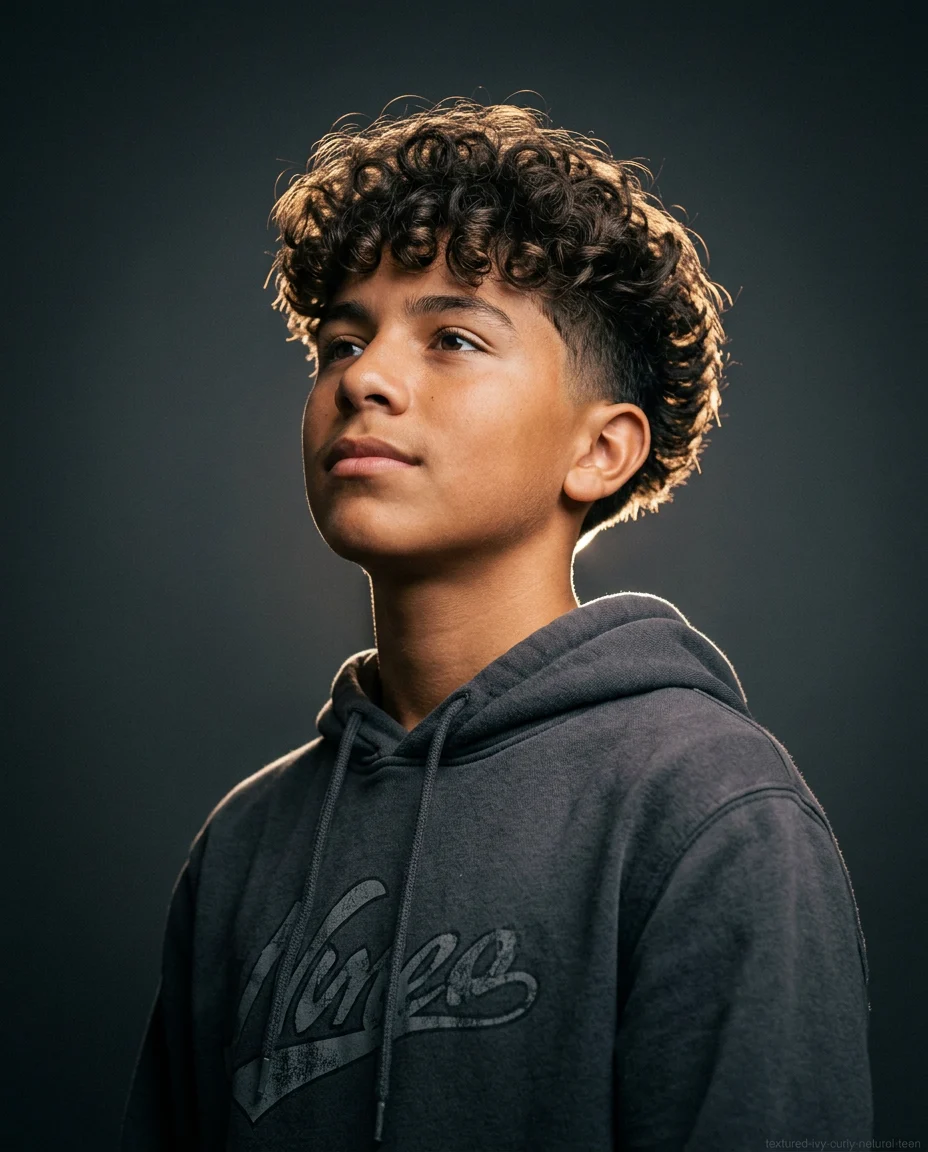
No product, no diffuser, just the curl doing what it does naturally. This version leans into texture rather than fighting it, which makes it the lowest-maintenance option on this list.
Top length sits around 3 inches so the curls have room to spring up instead of lying flat. Sides taper gradually, no hard line anywhere on the head.
It looks different every single day, and that’s honestly the appeal. Rainy days add volume, dry days calm it down. The trade-off is unpredictability — some mornings it just won’t sit right, no matter what you do.
4. Ivy League with Curly Quiff
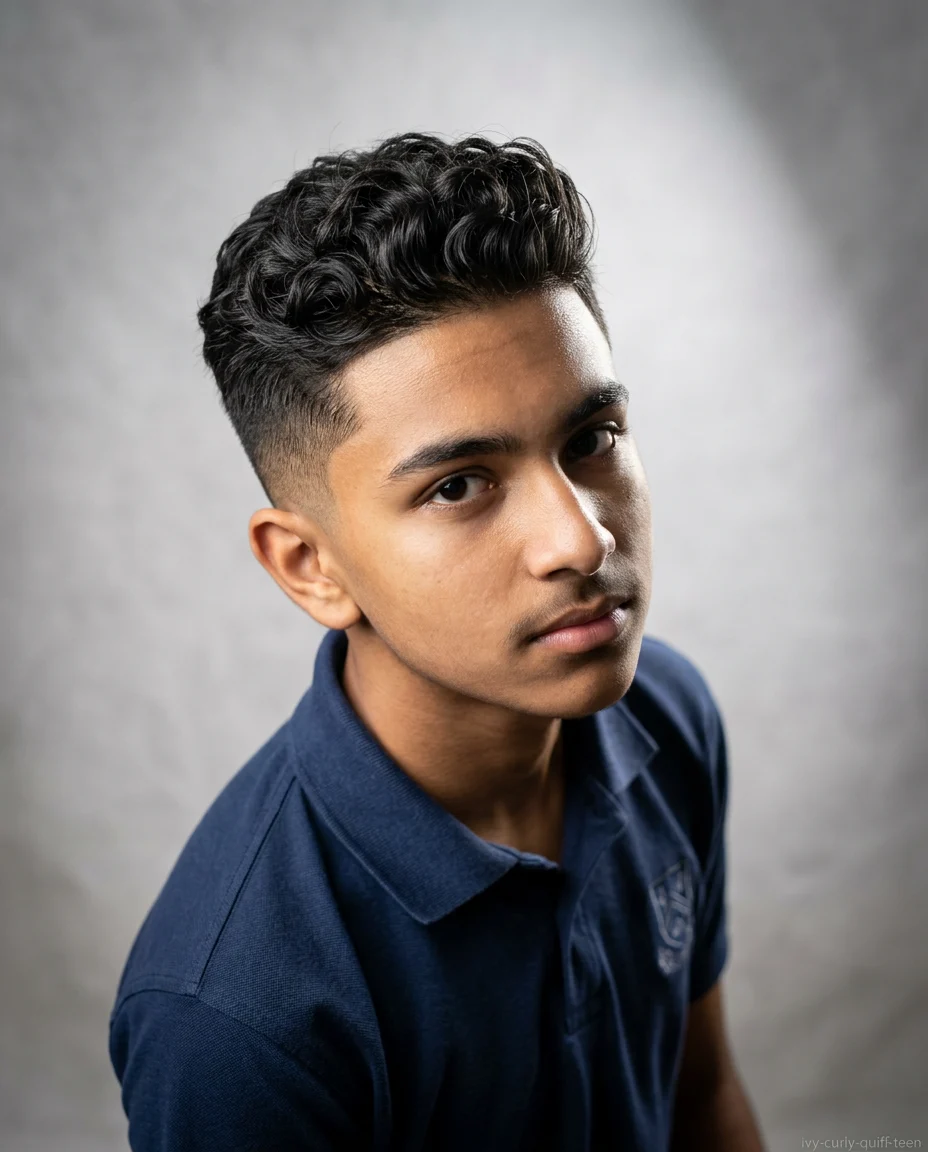
Add height at the front and this stops being a plain Ivy League and starts looking like a curly quiff hybrid. Top length runs 3 to 3.5 inches, longer than the classic version, with sides kept tight around a number 1 or 2.
Getting the front to stand needs more than curl cream. A blow-dryer on medium heat, lifting the roots while the curls are still damp, does most of the actual work.
This one takes about 10 minutes each morning, more than any other cut here. Worth it if you like the height. Skip it if mornings are already tight.
5. Ivy League Fade with Curly Top
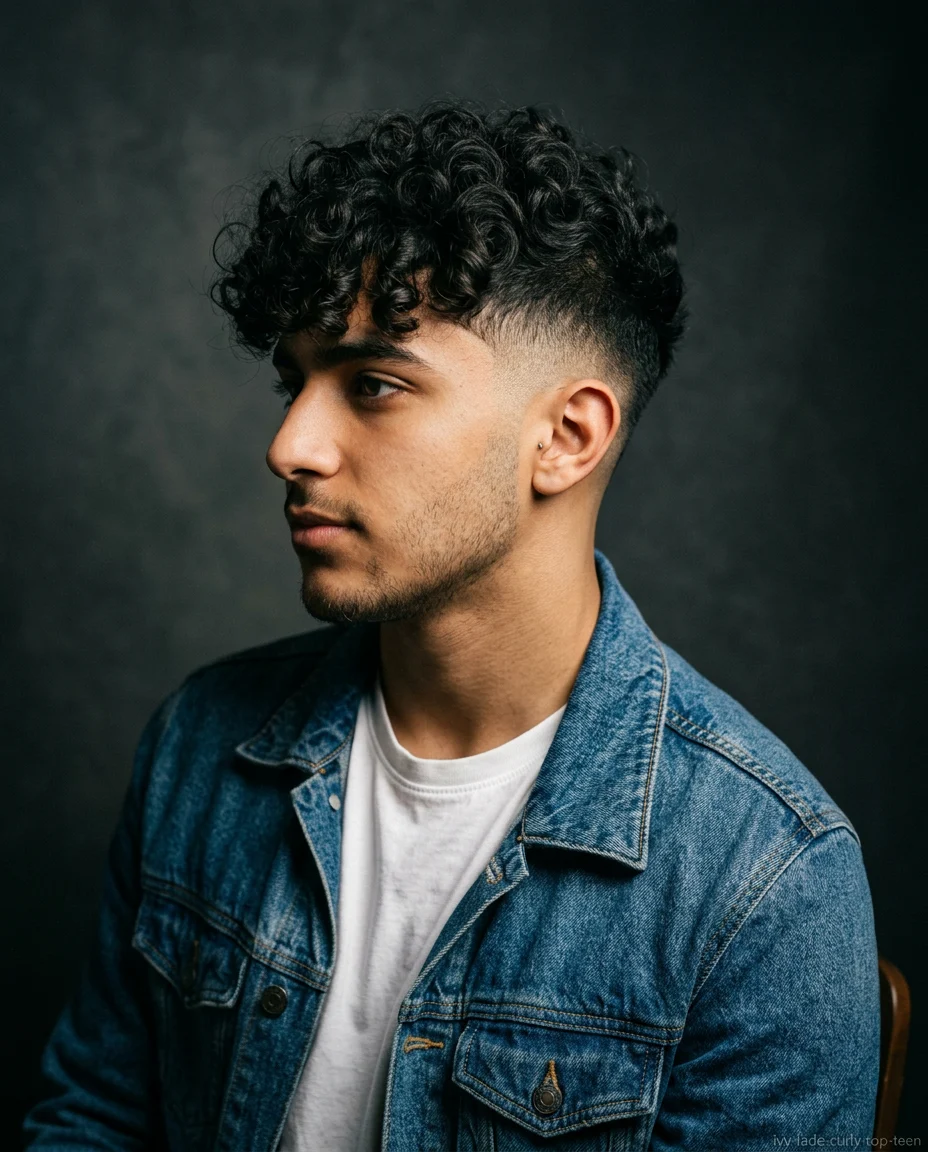
Swap the taper for a skin fade and the whole cut reads sharper. Curls stay untouched up top — usually left around 2.5 inches — while the sides drop to skin just above the ear.
The contrast is the draw. Tight, faded sides next to loose, springy curls make the top look fuller than it actually is.
Fades need upkeep every 2 to 3 weeks or the line grows out fast and looks messy. That’s more frequent than a taper, and it costs more per visit too — most shops charge extra for skin fades.
6. Ivy League with Loose Curls and Side Part
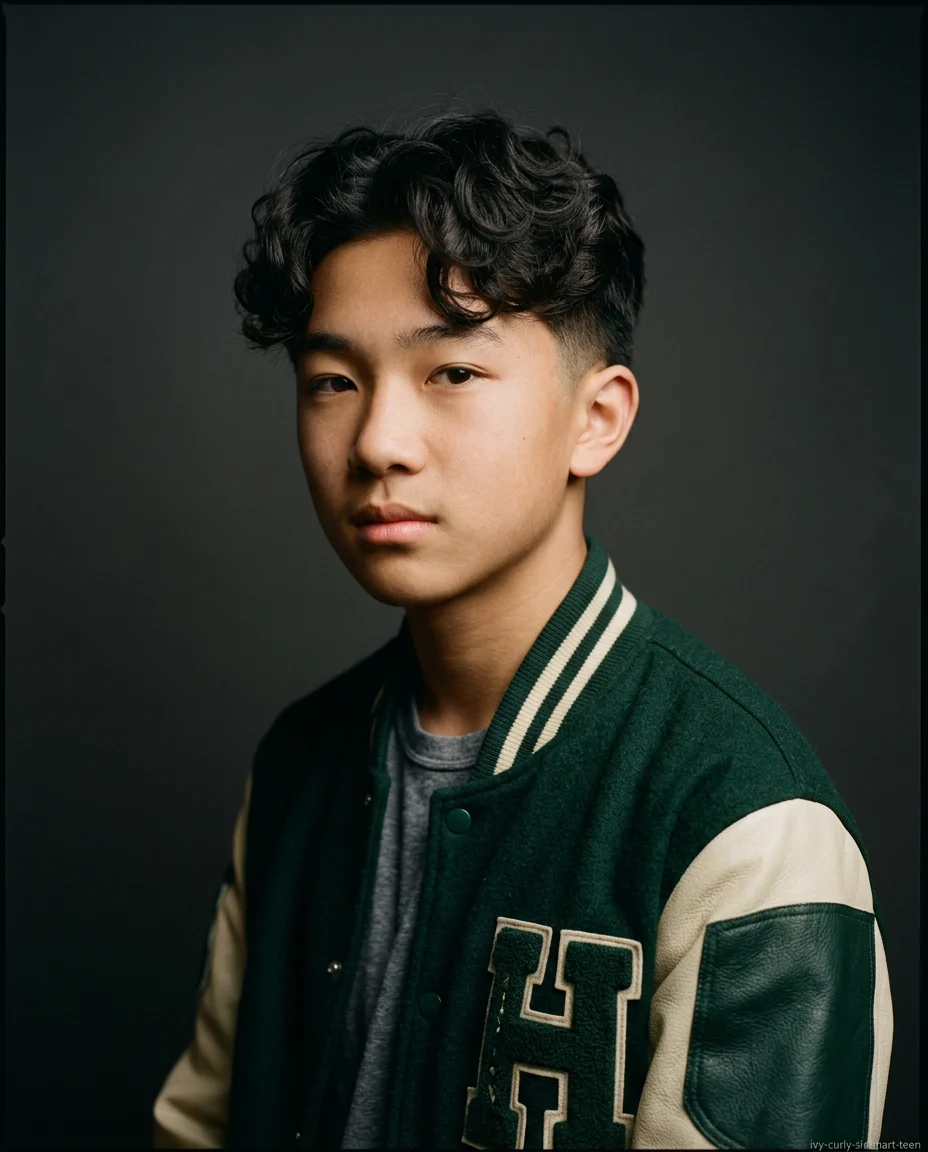
A side part on curly hair looks different than it does on straight hair — instead of a crisp line, you get a soft break where the curls naturally separate. Top length stays around 2.5 to 3 inches.
This works best on looser curl patterns, closer to a 2A or 2B. Tighter coils fight the part and it disappears by midday.
Ask your barber to cut a defined part line while the hair’s wet, then let the curls settle around it once dry. It won’t look identical to a straight-hair side part, and that’s fine — it’s not supposed to.
7. Curly Ivy League Undercut
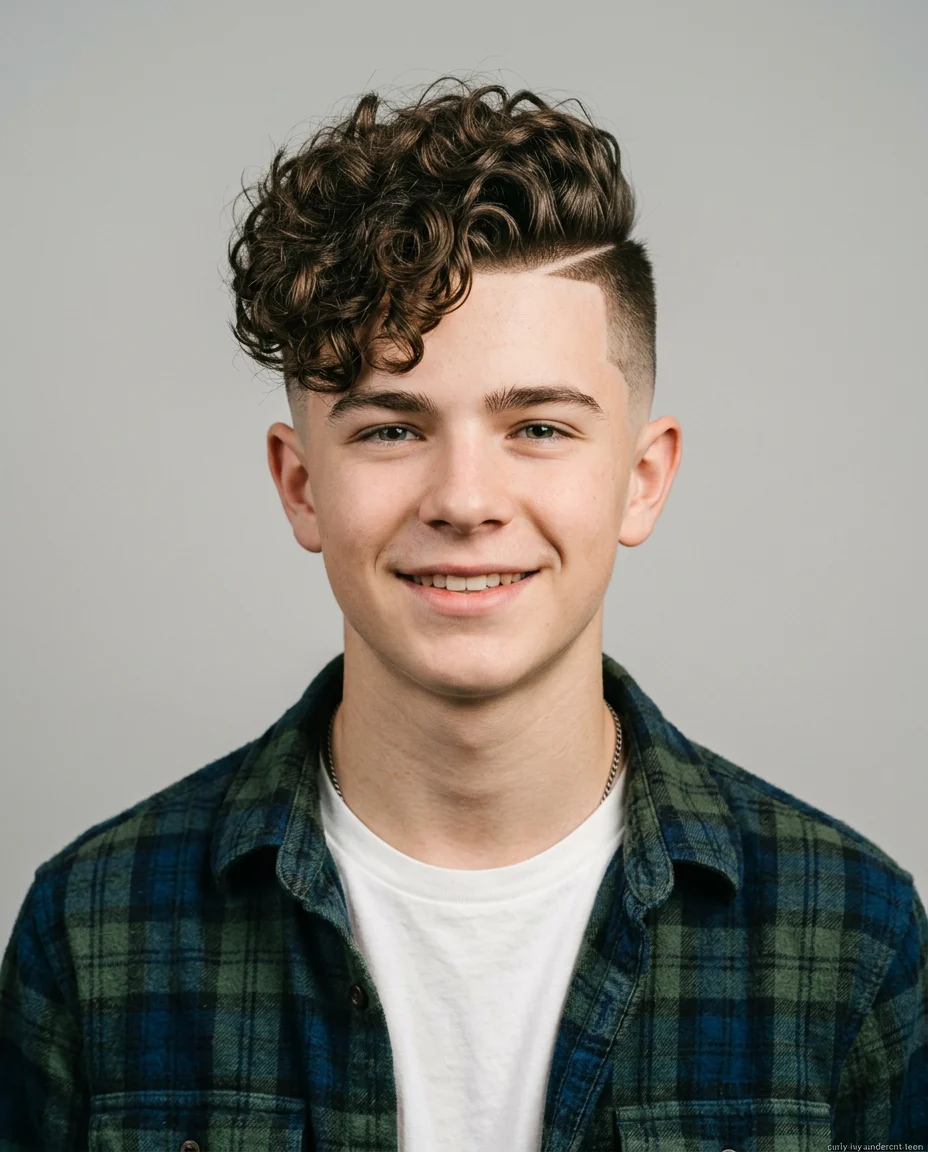
Take the taper and turn it into a disconnected undercut instead, and the contrast gets a lot more dramatic. Sides and back get buzzed down to a number 1, while the top holds 3 inches of curl, sometimes more.
The disconnection is deliberate. There’s no gradual blend here — just a hard stop between short sides and long, curly top.
It’s a bolder look than most on this list, closer to editorial than classroom. Some schools and workplaces have dress codes that don’t love this much contrast, so check before committing to it.
8. Ivy League with Curly Pompadour Blend
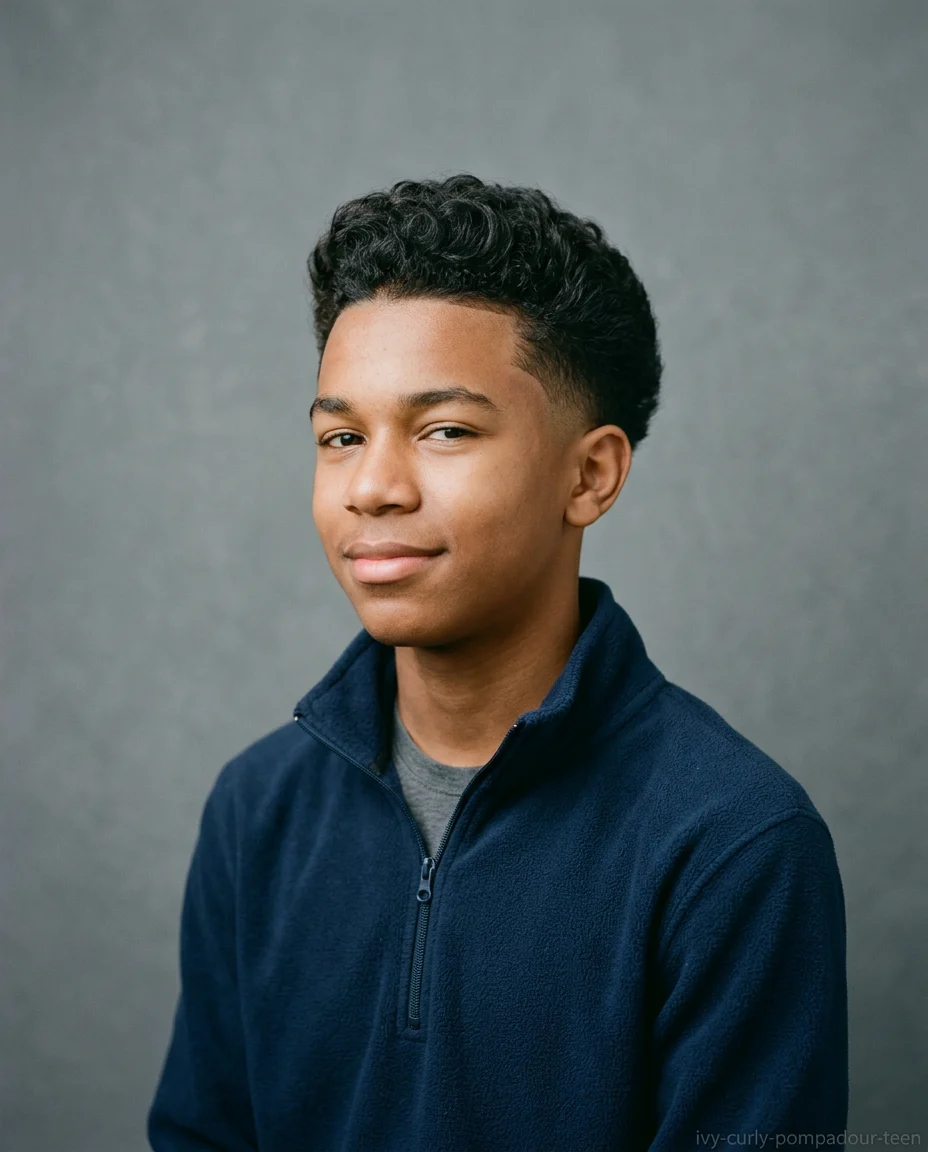
Not quite a pompadour, not quite a classic Ivy League — this sits in between. Top length runs about 3.5 inches, swept back and up rather than forward, with a low taper on the sides.
Curl pattern matters a lot here. Looser curls sweep back easily; tighter coils need more product and more patience to lay in that direction.
Budget 15 minutes for styling until you get the technique down. After that it drops closer to 7 or 8. Humidity is the enemy — this one falls apart fastest in wet heat.
9. Ivy League with Hard Part and Curls
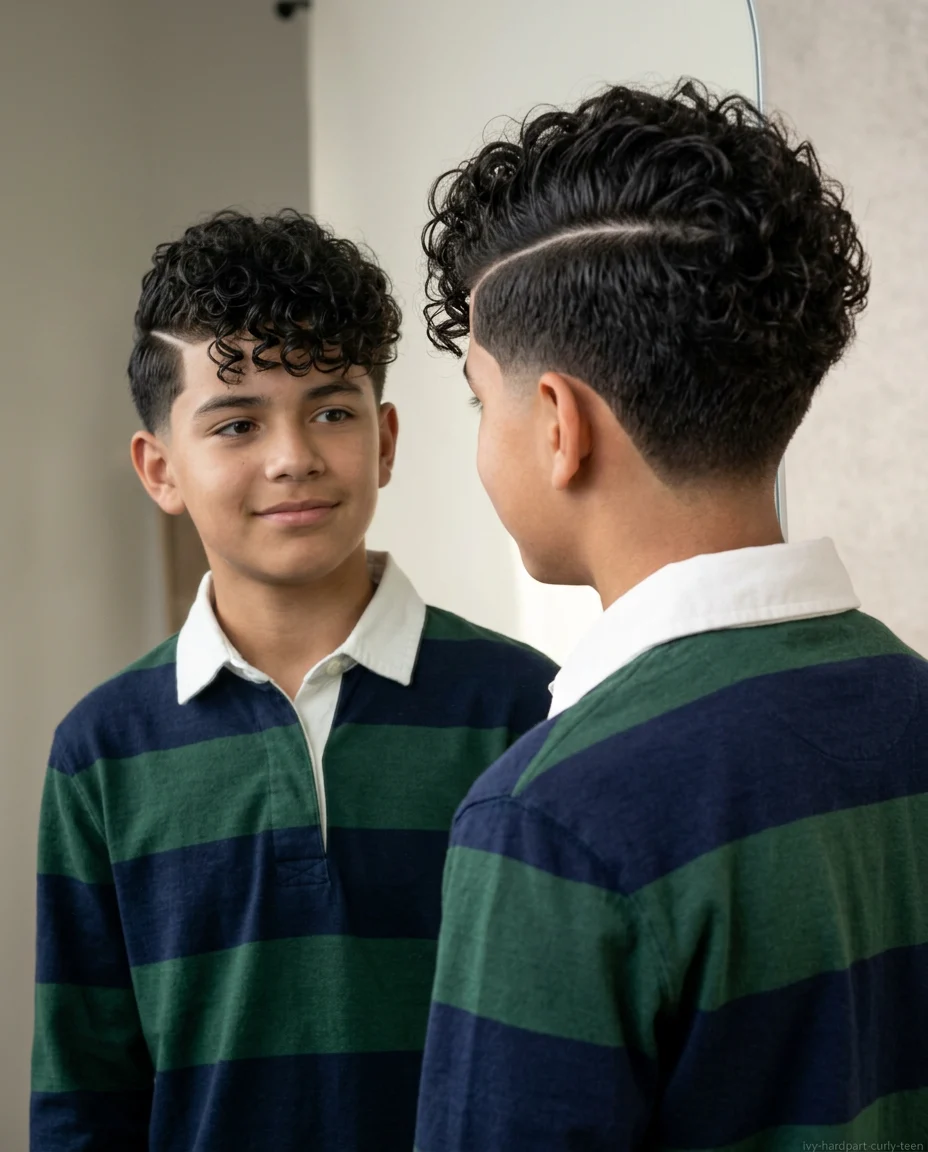
A shaved hard part line, cut into the taper on one side, adds a sharp detail to an otherwise soft, curly top. Length up top sits around 2.5 to 3 inches.
The line needs a touch-up every 2 weeks or it grows out and blurs into the rest of the taper. That’s more upkeep than a plain Ivy League, and most barbers charge a few dollars extra for the detail work.
Worth it if you want something that photographs well. Skip it if you’re not going back to the same barber often enough to maintain the line.
10. Ivy League with Curly Volume and Skin Fade
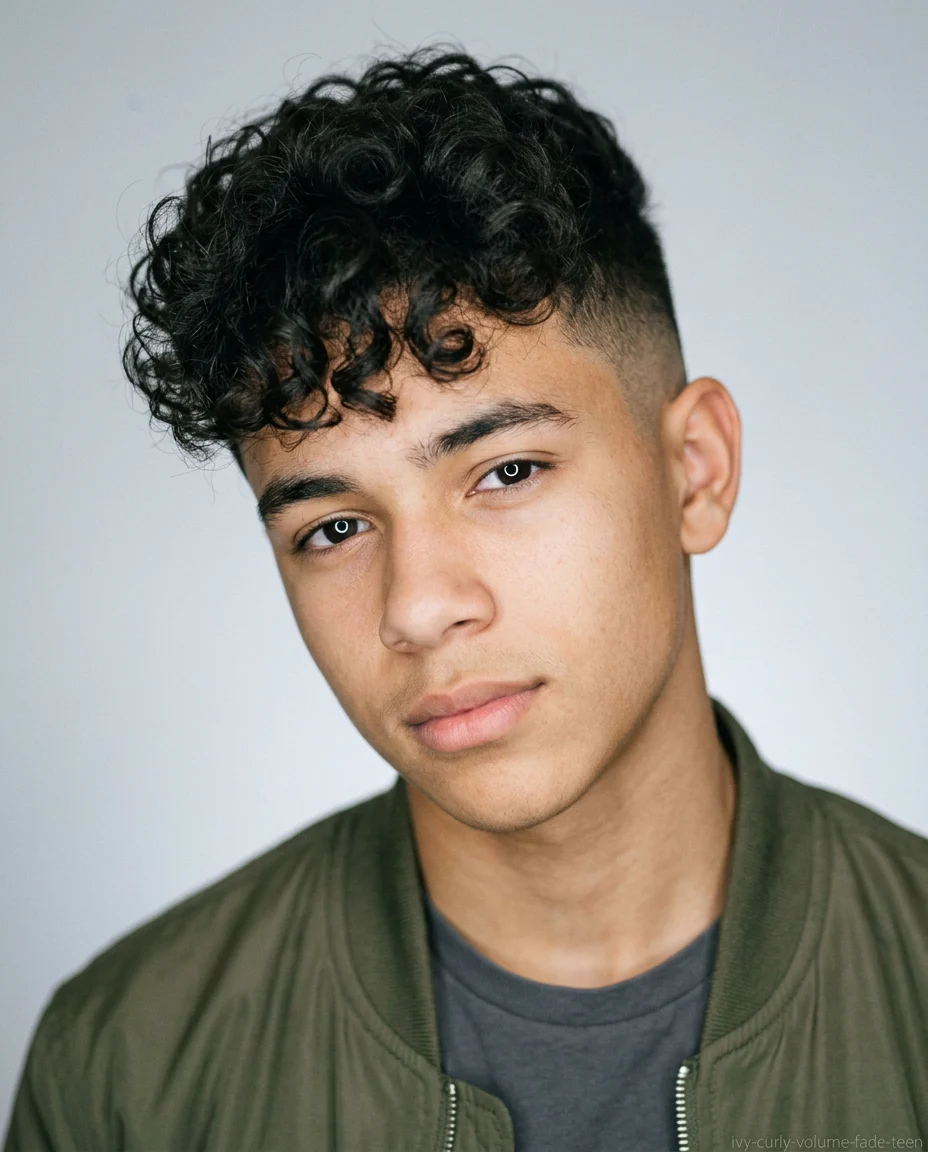
The most dramatic version on this list pairs a skin fade with maximum volume on top — curls left long, around 3.5 inches, with almost no product pushing them down.
The goal is contrast and height at the same time. Sides disappear to skin, and the top reads almost twice as full because there’s nothing competing with it visually.
This needs the most maintenance of anything here: fade touch-ups every 2 weeks, plus a diffuser routine most mornings to keep the volume from collapsing by noon. The payoff is a cut that looks like it took an hour, even on days it only took 10 minutes.