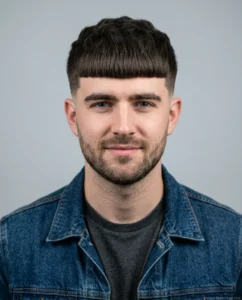
Thick hair gets blamed for making an Ivy League high-maintenance. The honest answer is it depends on the section length and how much natural wave you’re working with. Thick hair actually holds an Ivy League’s shape better than thin hair does — it just needs the right product and a comb, not a miracle.
1. Classic Ivy League

The classic Ivy League keeps about 2 to 3 inches on top and tapers down the sides to somewhere around a half inch. On thick hair, that length holds a soft natural lift without any gel doing the heavy lifting. Comb it to the side after a shower, let it air-dry for 10 minutes, then finish with a light pomade — that’s the whole routine. Most guys mess this cut up by using too much product on day one, which flattens exactly the texture that made thick hair worth keeping longer in the first place.
How often does it need a trim?
Every 3 to 4 weeks. Thick hair grows out of this shape faster than fine hair does, and the sides lose their taper first.
This works better than most people expect on hair that has some natural wave, since the wave does part of the styling for you. Straight thick hair needs a bit more product — start with a dime-sized amount of matte paste and add more only if the front won’t hold. It’s a low-maintenance cut once you know the routine, but the first two weeks after a fresh trim take some getting used to.
2. Ivy League with Skin Fade
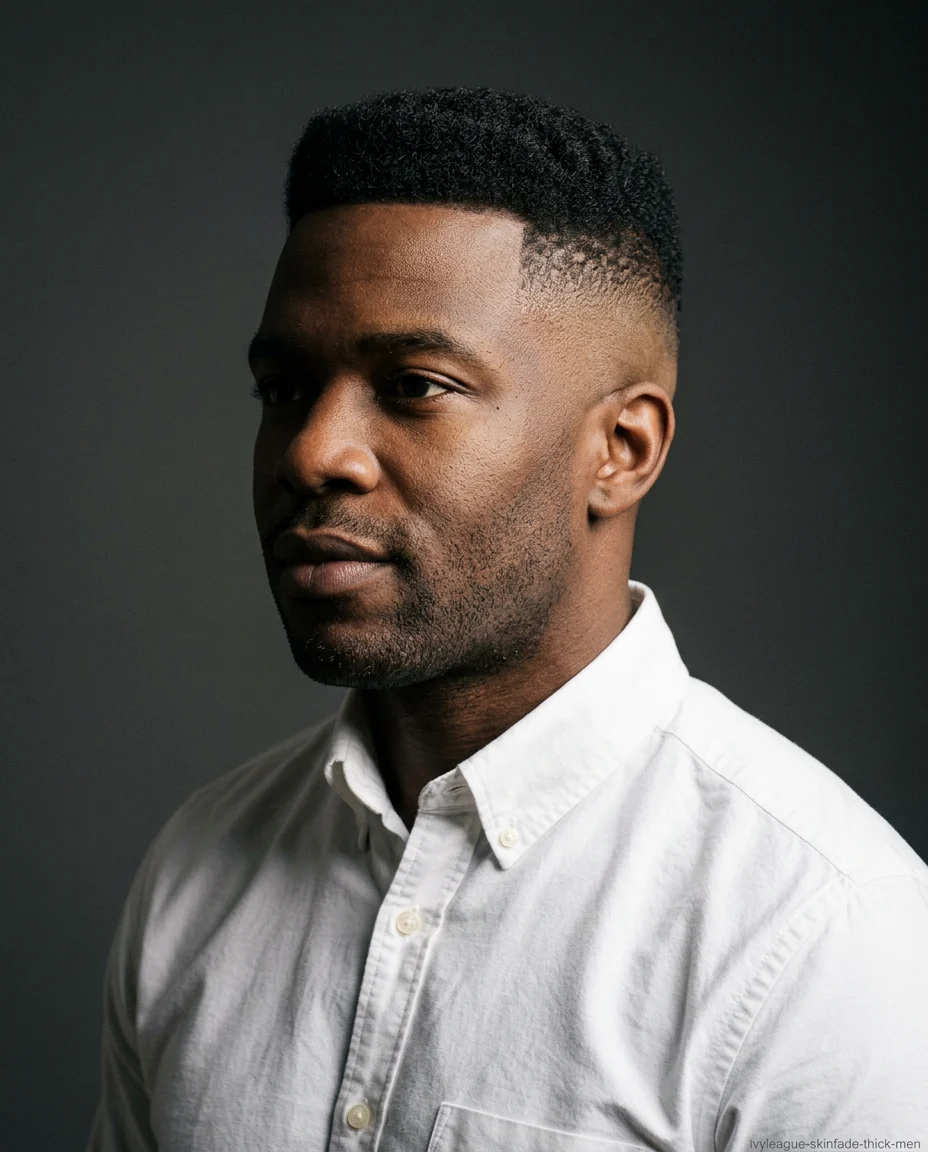
Add a skin fade to the classic shape and the whole cut reads sharper without changing much on top. The fade starts bald at the neckline and blends up to about an inch below where the top length begins, so there’s a hard visual break between the tapered top and the shaved sides. Thick hair on top actually benefits here — the contrast against bare skin makes even a small amount of length look intentional and full.
Is a skin fade harder to maintain than a regular taper?
Yes, noticeably. A skin fade grows out and looks unfinished within 2 weeks, while a regular taper can stretch to 5 or 6.
Barbers usually recommend this to guys who want a lower-maintenance top with a higher-maintenance side, which sounds backwards until you actually live with it. You’re trading trims on top for touch-ups on the sides — some guys get the fade refreshed at a barbershop every 2 weeks even between full haircuts. Skip this one if you can’t get to a chair that often; a grown-out skin fade looks worse than almost any other style left too long.
3. Textured Ivy League
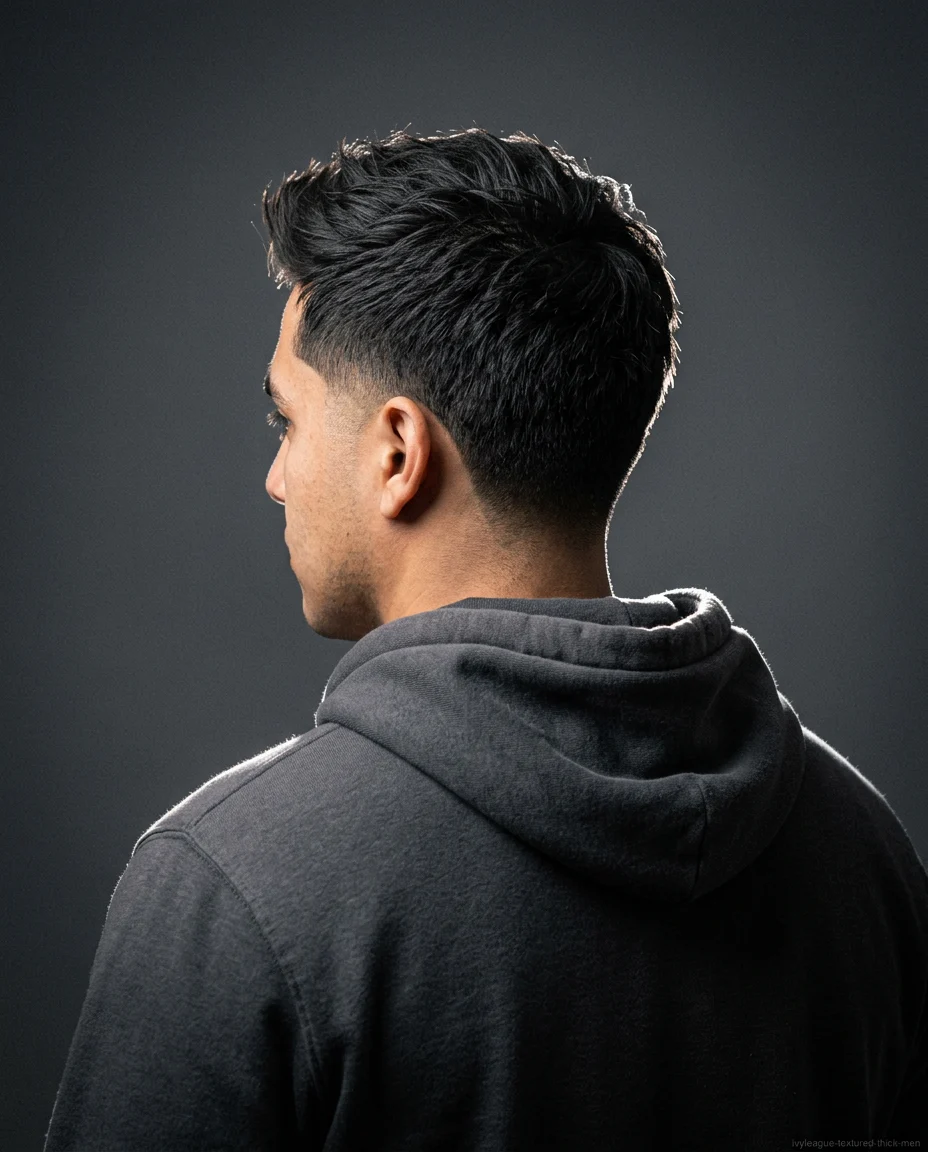
This version leans into thick hair’s tendency to hold shape instead of fighting it. The top gets point-cut rather than blunt-cut, which removes weight and lets individual sections separate instead of sitting as one dense block. Sides stay tapered but not faded. Run a matte clay through damp hair and scrunch upward slightly at the front instead of combing it flat — that’s what gives it the slightly undone look instead of the stiffer classic version.
Does texturizing thin out hair that’s already thick?
A little, and that’s the point. A skilled cut removes bulk without shortening the overall length, so it looks lighter without looking sparse.
Guys with wavy or curly thick hair get the most out of this cut since the point-cutting works with the hair’s natural movement instead of against it. Straight thick hair can still work, but expect a slightly different finish — less separation, more of a soft swoop. Either way, this holds up well between trims because the texture hides regrowth better than a cleaner, blunt shape does.
4. Ivy League with Hard Part

A hard part is a razor-thin shaved line separating the top length from the side taper, usually starting just above the temple. On a standard Ivy League it adds a crisp, almost architectural edge that a comb alone can’t recreate. It needs to be refreshed roughly every 10 to 14 days by a barber with clippers and a fine trimmer — this isn’t something to attempt at home unless you’ve done it before.
Does a hard part work with thick hair specifically?
Better than with thin hair, honestly. Thick strands hide any unevenness in the part line, while thin hair shows every mistake.
The trade-off is upkeep cost and time — you’re now paying for line touch-ups between full cuts, which adds up over a few months. Many barbershops charge $10 to $15 for a quick part refresh. Skip this one if your schedule doesn’t allow for a mid-cycle barber visit; a faded-out hard part just looks like an odd bald patch instead of a deliberate line.
5. Side-Swept Ivy League
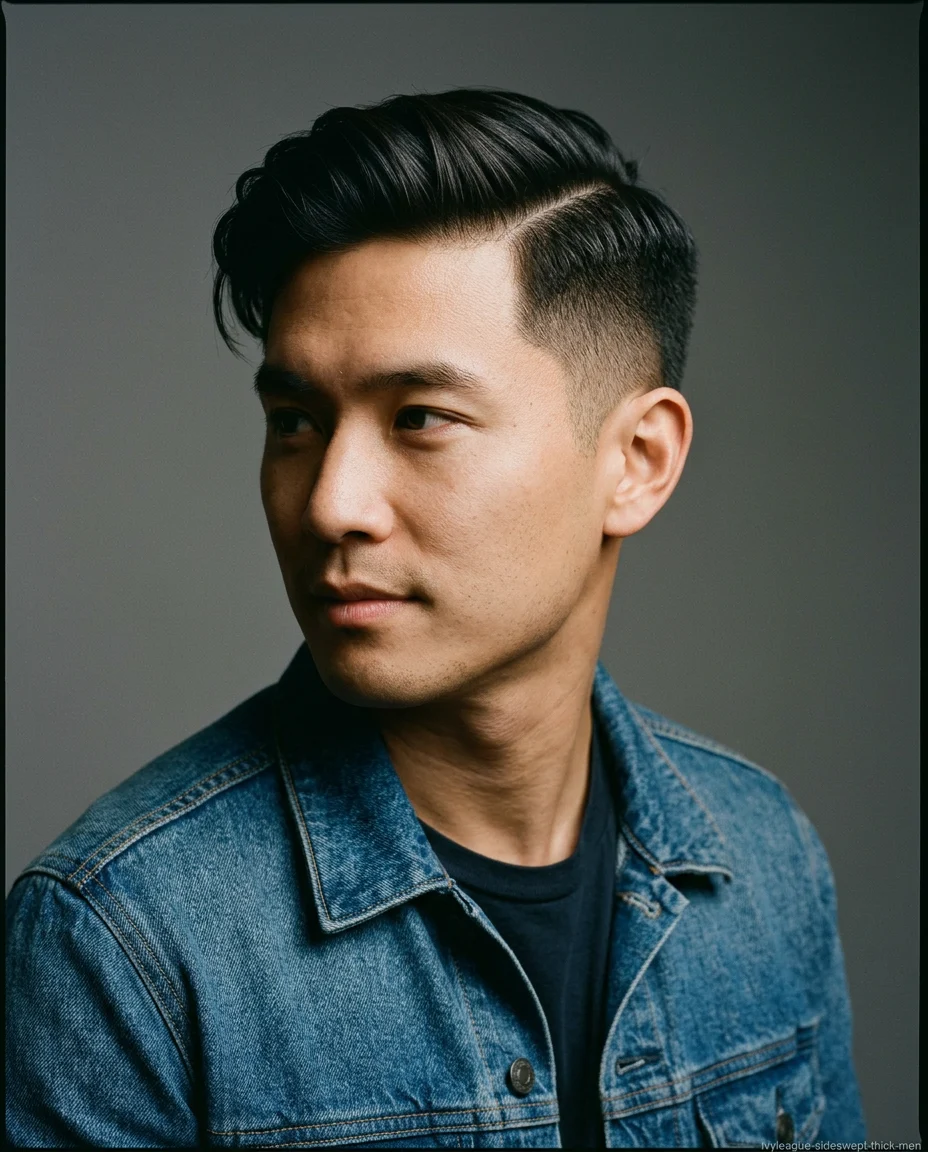
Instead of a straight side part, this version sweeps the top length diagonally across the forehead in one direction, usually finishing just above the eyebrow. Thick hair gives this sweep real volume instead of the flat, thin line you’d get with fine hair. It photographs well because the movement reads even from a distance, which is part of why it shows up so often on grooming boards.
What product keeps the sweep in place all day?
A cream with light hold, not a hard gel. Gel locks the sweep too rigid and cracks by afternoon; cream lets it move naturally and re-set with your fingers.
This works best on hair that’s been growing for at least 6 to 8 weeks past a fresh cut, since shorter length doesn’t have enough weight to hold the sweep’s angle. The honest downside is wind — a strong gust undoes the whole look faster than almost any other Ivy League variation on this list. Keep a small comb in your bag if you’re wearing this on a day with real weather.
6. Ivy League with Taper Fade
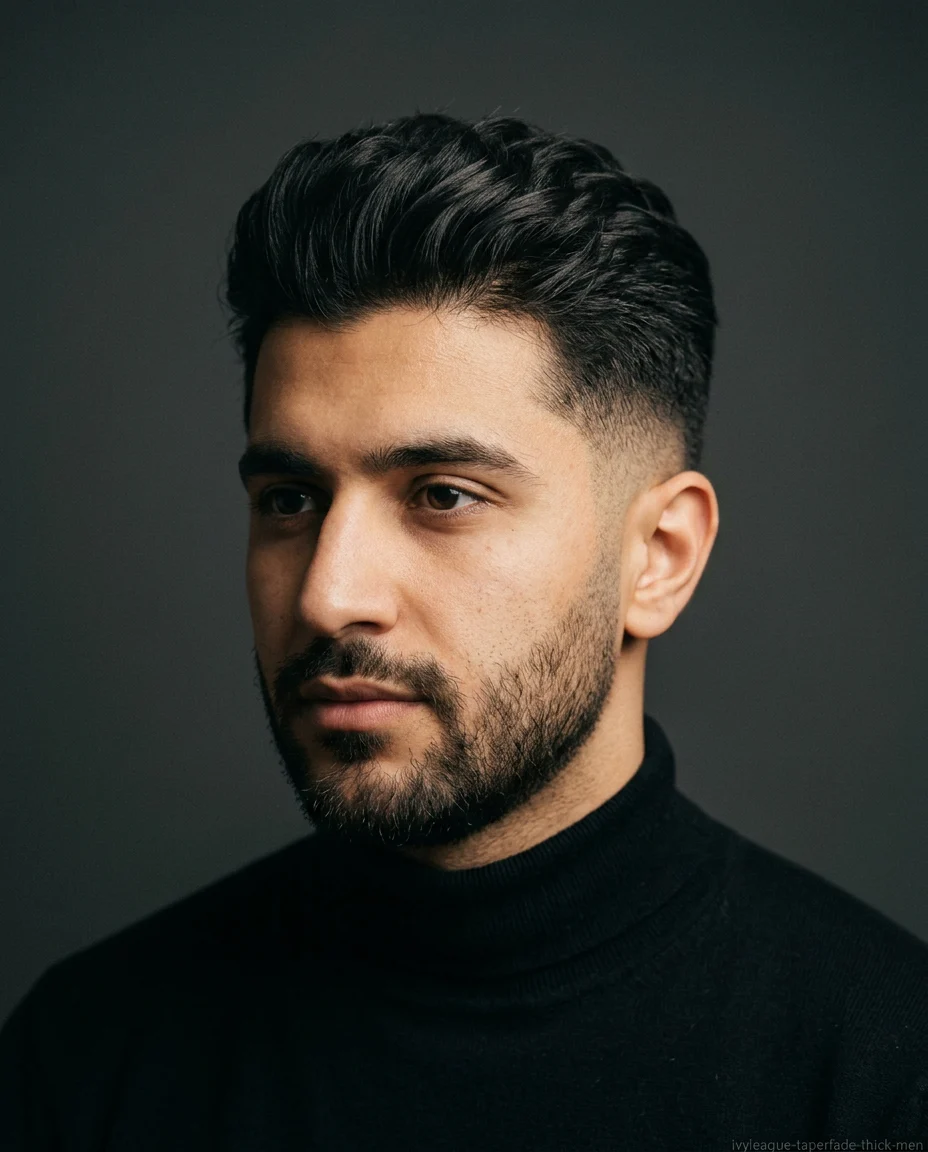
A taper fade blends the sides gradually into the neckline without ever going down to skin, landing somewhere between a classic tapered Ivy League and a full skin fade. It reads as more polished than a basic taper but less aggressive than a skin fade, which makes it the safer pick for office settings or anywhere a sharper cut might stand out too much.
How does this compare to the skin fade for upkeep?
Easier. A taper fade stretches to about 4 weeks before it looks like it needs work, roughly double what a skin fade allows.
Thick hair on top pairs well with this because the fade does enough visual work on its own — you don’t need extreme length or product to make the cut look finished. A short comb-through with a light pomade in the morning is usually enough. This is a solid pick if you want something that reads as put-together without needing daily styling effort.
7. Slicked Ivy League

This takes the classic shape and pushes it fully back and flat using a stronger hold product, usually a pomade with some shine rather than a matte finish. Thick hair holds a slicked style longer through the day than fine hair, which tends to separate and show scalp by the afternoon. It’s a more formal look — better suited to interviews or events than daily wear for most guys.
Does slicking back thick hair take more product than the other styles here?
Yes, close to double. Expect to use a nickel-sized amount instead of a dime, worked through damp hair before it fully dries.
The comb lines stay visible longer on thick hair too, which some guys like and others find too rigid for casual settings. Wash it out completely before bed — leaving pomade in overnight clogs the scalp and can make regrowth patchy over months of repeated buildup. This one’s more about the occasion than the everyday, and it’s fine to keep it that way.
8. Ivy League with Undercut

An undercut takes the sides down short and disconnected from the top, with a visible line where the two lengths meet instead of a gradual blend. It’s a more dramatic contrast than a fade, and thick hair on top makes that contrast even more obvious since there’s real volume sitting above the short sides.
Is this a good first fade-adjacent cut for someone who’s never had short sides before?
It’s actually a solid entry point. The disconnect is more forgiving of small barber inconsistencies than a smooth fade would be.
Styling takes a bit more effort than the tapered versions on this list — you’re building height and direction on top rather than letting it fall naturally, so expect to spend closer to 8 minutes with a blow dryer and brush most mornings. The upside is a look that holds through humidity better than the slicked or side-swept versions, since there’s less reliance on product alone.
9. Spiky Ivy League

This brings some texture and lift to the front section while keeping the Ivy League’s tapered sides intact underneath. Thick hair holds spikes without much product because there’s enough natural body to work with — fine hair usually needs a stronger gel to get the same effect and still falls by midday.
Does this look too young for guys over 30?
Not really, as long as the spikes stay small and controlled rather than exaggerated. Subtle texture reads as styled; tall spikes read as trying too hard past a certain age.
Use a wax or fiber product instead of gel for this one — gel gets crunchy on thick hair and looks stiff by the second half of the day. Work it in with fingertips at the crown, pulling small sections up rather than combing everything in one direction. It’s a faster morning routine than the slicked or side-swept options, closer to 3 minutes once you’ve done it a few times.
10. Ivy League with Long Fringe

This variation leaves more length at the front — around 3 to 4 inches instead of the standard 2 to 3 — and lets it fall forward as a fringe instead of sweeping it to the side. Thick hair carries this length without looking stringy, which is the main risk fine hair runs into with the same cut.
Does the longer fringe get in the way during the day?
For some guys, yes, especially during exercise or humid weather. A light hold cream keeps it in place better than nothing, but it won’t fully solve the problem.
This is the highest-maintenance option on the list in terms of trims — the fringe grows into your eyeline within 3 weeks and needs regular shaping to stay at the right length. It’s worth it if you want something that looks noticeably different from a standard Ivy League, but skip it if you’re not ready for more frequent barber visits than the other nine styles here.