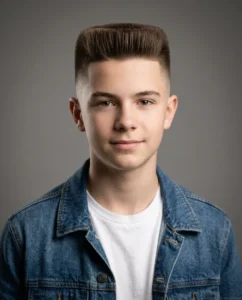
Straight hair holds a faux hawk’s shape better in humidity, with less frizz fighting the style, and medium length is the sweet spot: short enough to spike without a fistful of product, long enough to read as a mohawk silhouette.
1. Classic Medium Faux Hawk
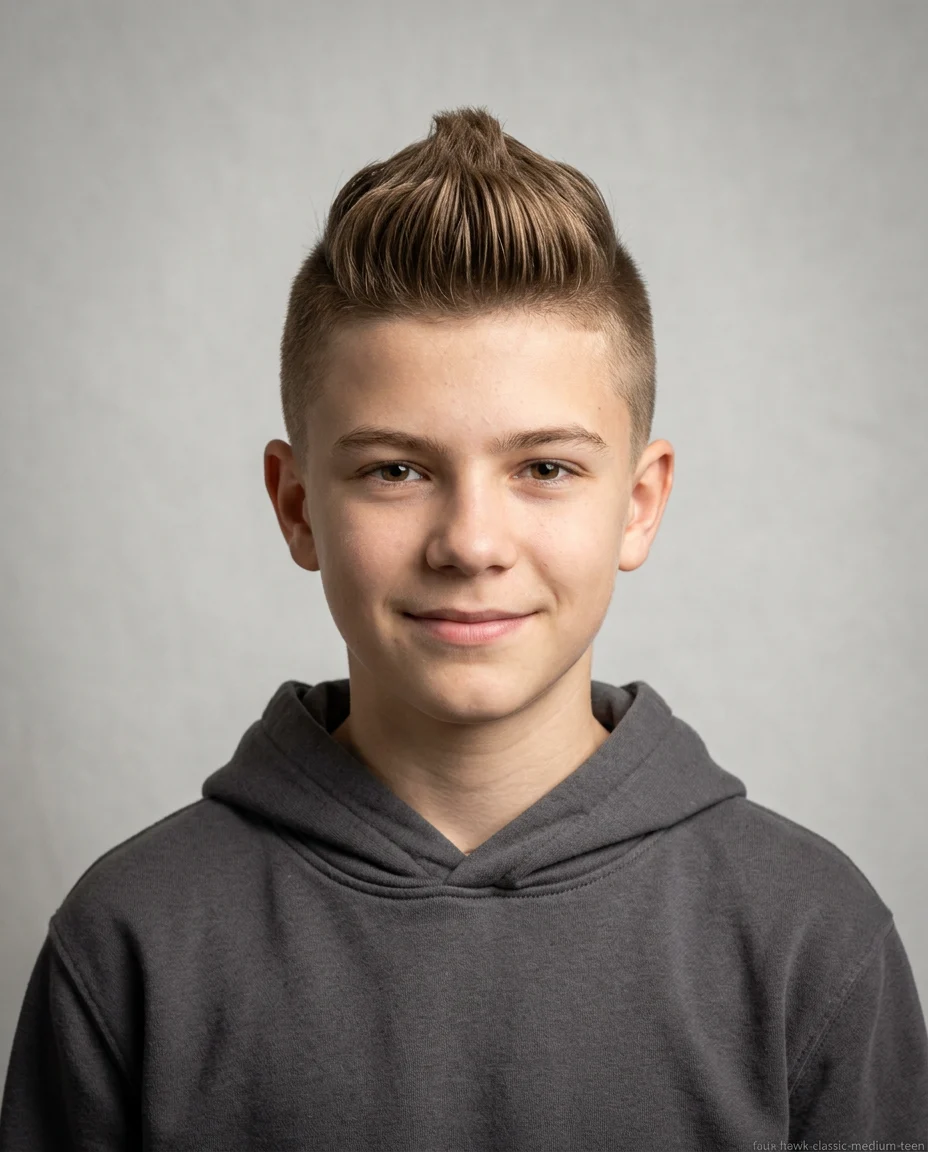
Straight hair makes this one easier. Sides get trimmed to about a half inch, and the middle strip stays around 3 inches, long enough to stand up with a matte paste.
Ask for scissor-over-comb on top so the ends don’t look blunt. A barber who rushes this step leaves a flat ridge instead of a rounded peak, and that’s the difference between sharp and awkward.
Styling takes about 5 minutes each morning. Comb everything toward the center, then pinch the top strip upward while it’s still damp.
2. Medium Faux Hawk with Skin Fade

Skin fades pull all the attention to the top strip, so precision matters more here than almost any other version. Sides go down to skin around the temple, blending up into roughly 3 inches on top.
The fade needs redoing every 2 to 3 weeks or the line grows out fuzzy. That’s the real cost of this look — not the cut, the maintenance schedule.
A light gel holds it through gym class and doesn’t flake by lunch. Skip the heavy wax; it weighs straight hair down instead of lifting it.
3. Textured Faux Hawk with Taper Fade
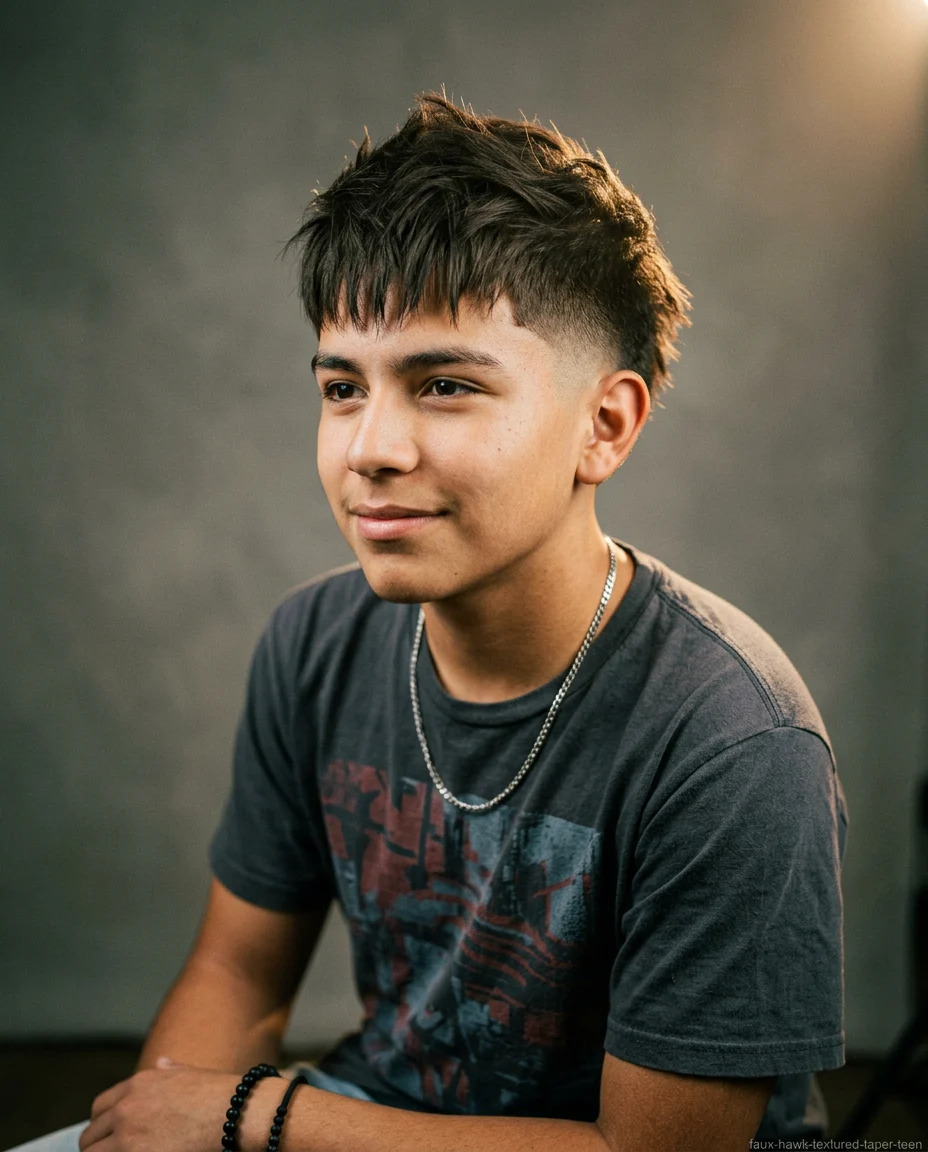
Texture is the trick for straight hair. Without it, the top looks like a flat plank instead of a hawk. A texturizing spray or light razored crop adds movement.
Taper fades keep the sides shorter without going full skin, which suits guys who aren’t ready for something that dramatic. The blend runs from about a quarter inch up to 3 inches.
Most barbers point-cut the top instead of blunt-cutting it. That single change is why some faux hawks look expensive and others look like a bowl cut standing up.
4. Medium Faux Hawk with Hard Part
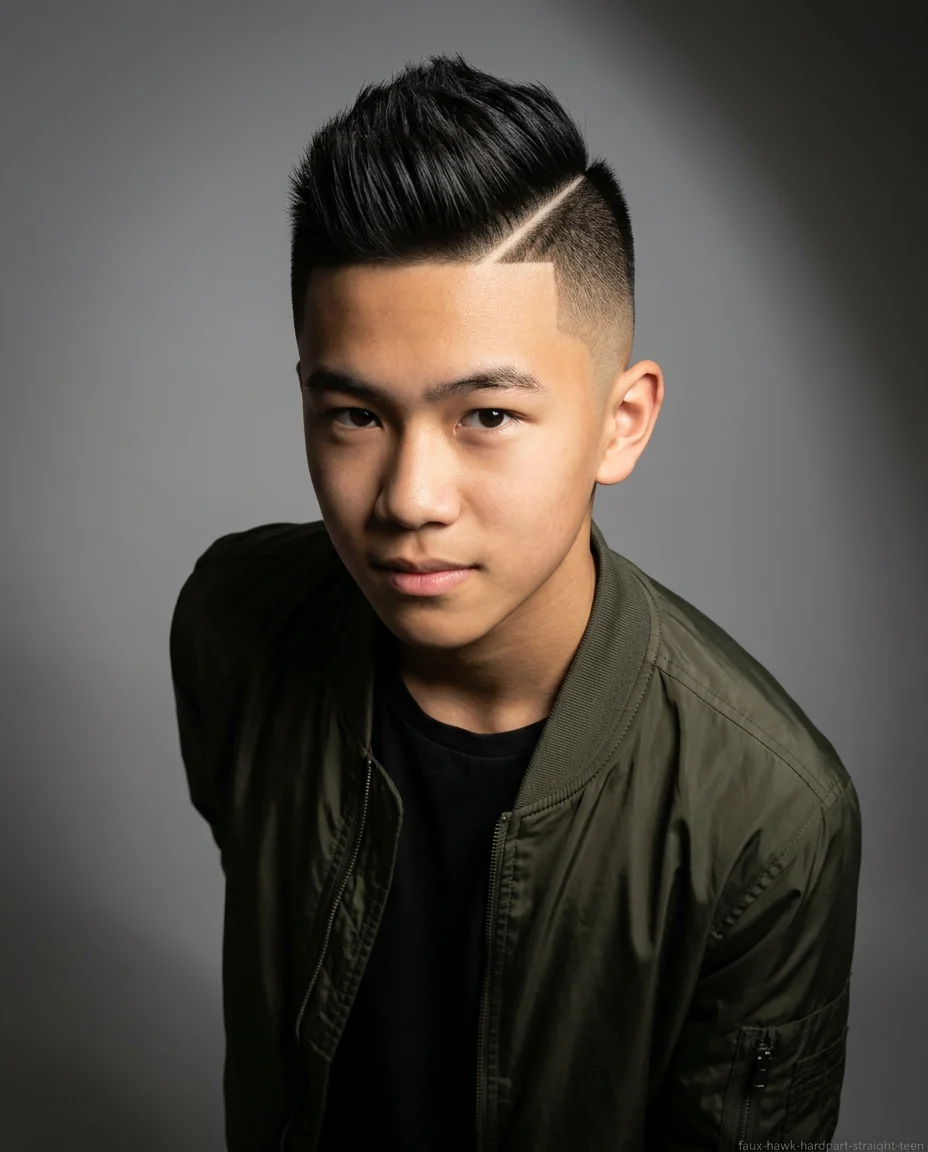
A hard part is a shaved line that separates the fade from the top section. It’s a small detail that reads as deliberate rather than accidental.
This version works best on guys who already part their hair near that spot naturally. Forcing a hard part where the hair doesn’t want to go just means redrawing it weekly.
The line needs a trim every 10 to 14 days to stay crisp. After that it starts blurring into regular growth, and the whole point of it disappears.
5. Slicked-Back Faux Hawk
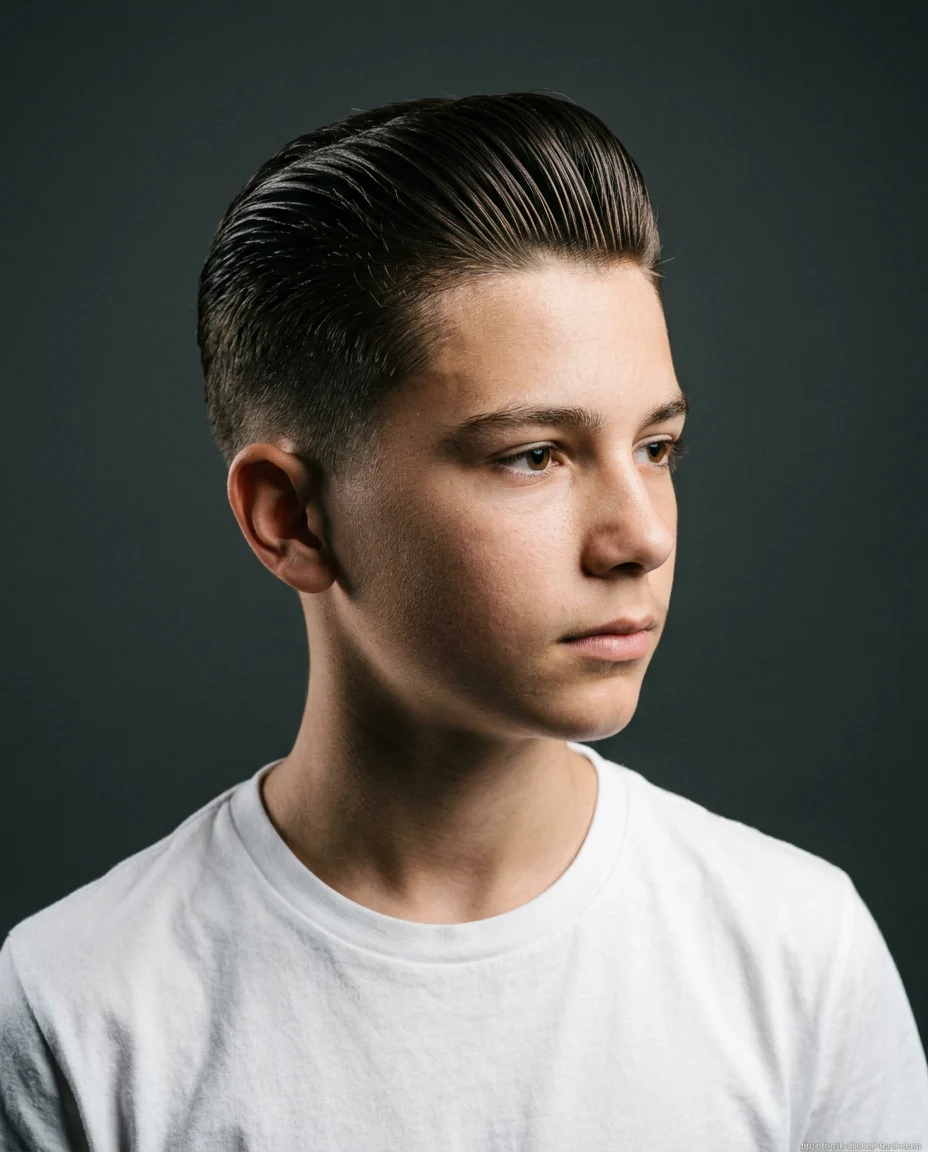
This one skips the spiked-up center entirely. Instead, the top gets combed straight back with a strong-hold gel, and the sides stay tapered close underneath.
Straight hair slicks back cleanly without much fight, which is the main reason this version exists. Curly or wavy hair needs three times the product for the same finish.
It reads more mature than the spiked versions, closer to something you’d wear to a school event. Reapply gel by midafternoon if it starts separating.
6. Messy Textured Faux Hawk
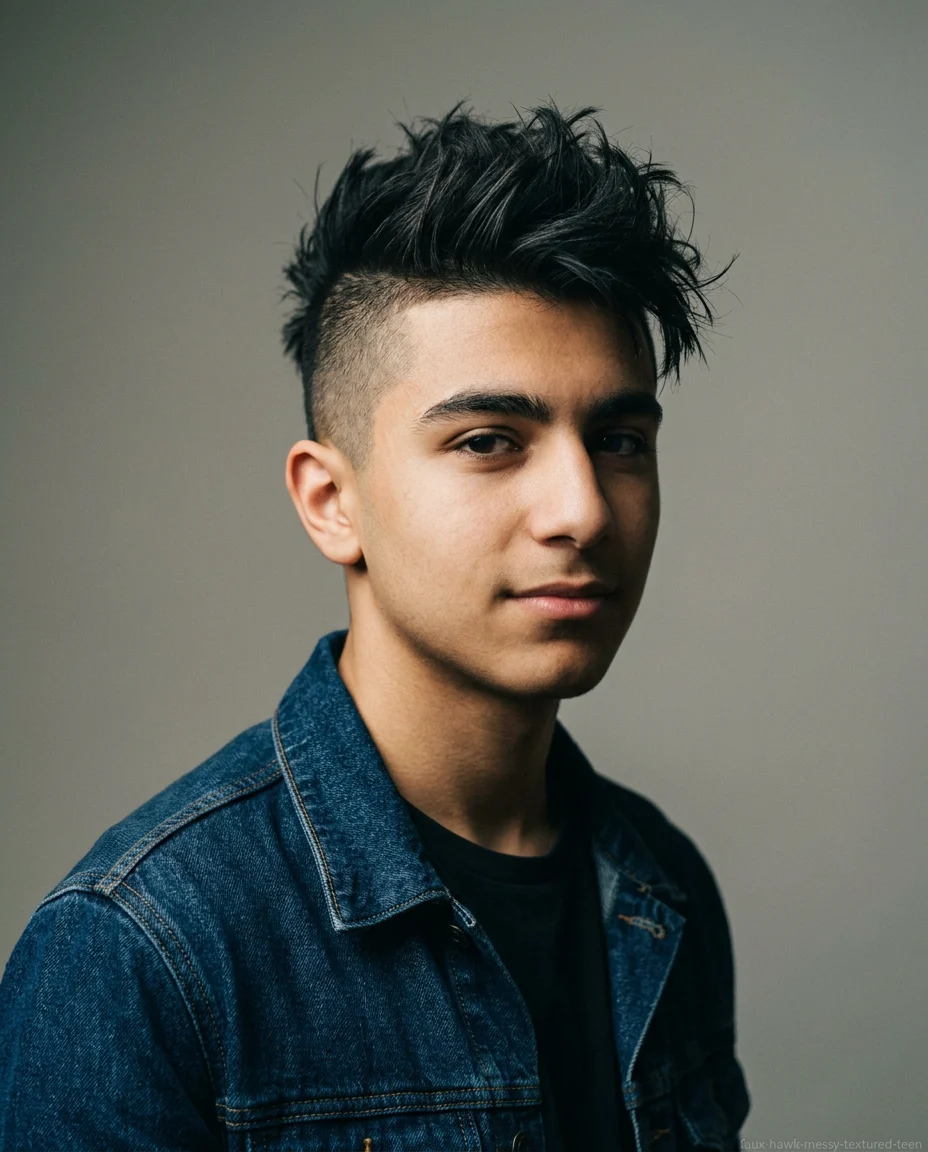
Not every faux hawk needs to look intentional. This version uses a matte clay worked through damp hair with fingers so pieces fall unevenly on purpose.
It hides growing-out sides better than the sharper versions. If a fade is two weeks overdue, messy texture is the one style choice that still looks fine.
The trade-off: it photographs less crisp than a defined faux hawk. Fine daily, less fine for yearbook photos.
7. Faux Hawk with Undercut Sides
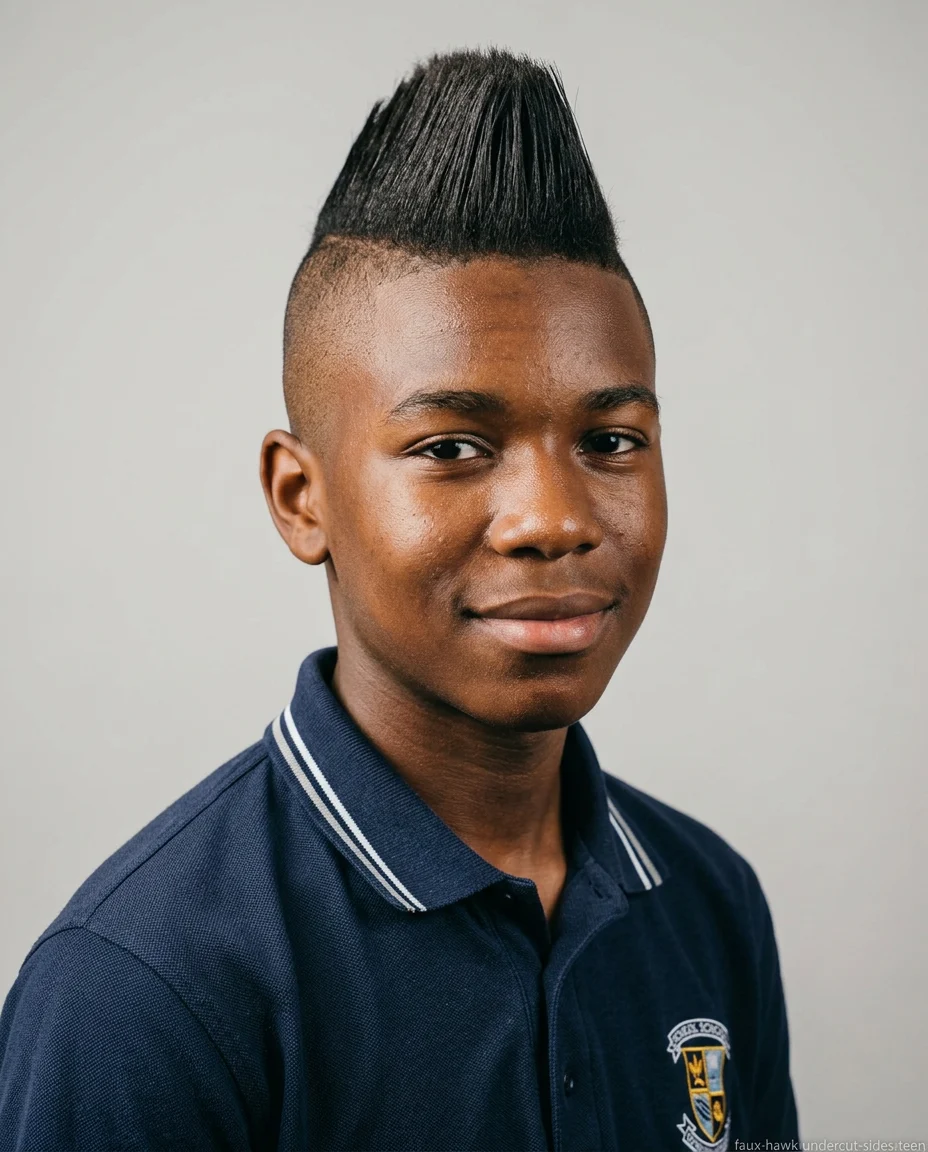
An undercut goes shorter and more abrupt than a fade. Sides get clipped down close with almost no blend, then the top drops straight onto them.
That sharper contrast makes the top strip look wider than it actually is, which helps if a guy’s hair is on the thinner side.
Growing it out is rougher than a fade. There’s a visible line for weeks instead of a smooth transition, so plan the timing around picture days.
8. Medium Faux Hawk with Fringe

Some length gets left at the front instead of pushing everything straight up. The fringe falls forward over the forehead while the rest of the top still peaks behind it.
Straight hair fringe needs almost no product to sit right, which is the appeal here for guys who don’t want a morning styling routine.
It’s a softer look, less aggressive than a full spiked hawk. Works well for school, where a sharp mohawk silhouette might get a second look from a teacher.
9. Spiky Faux Hawk
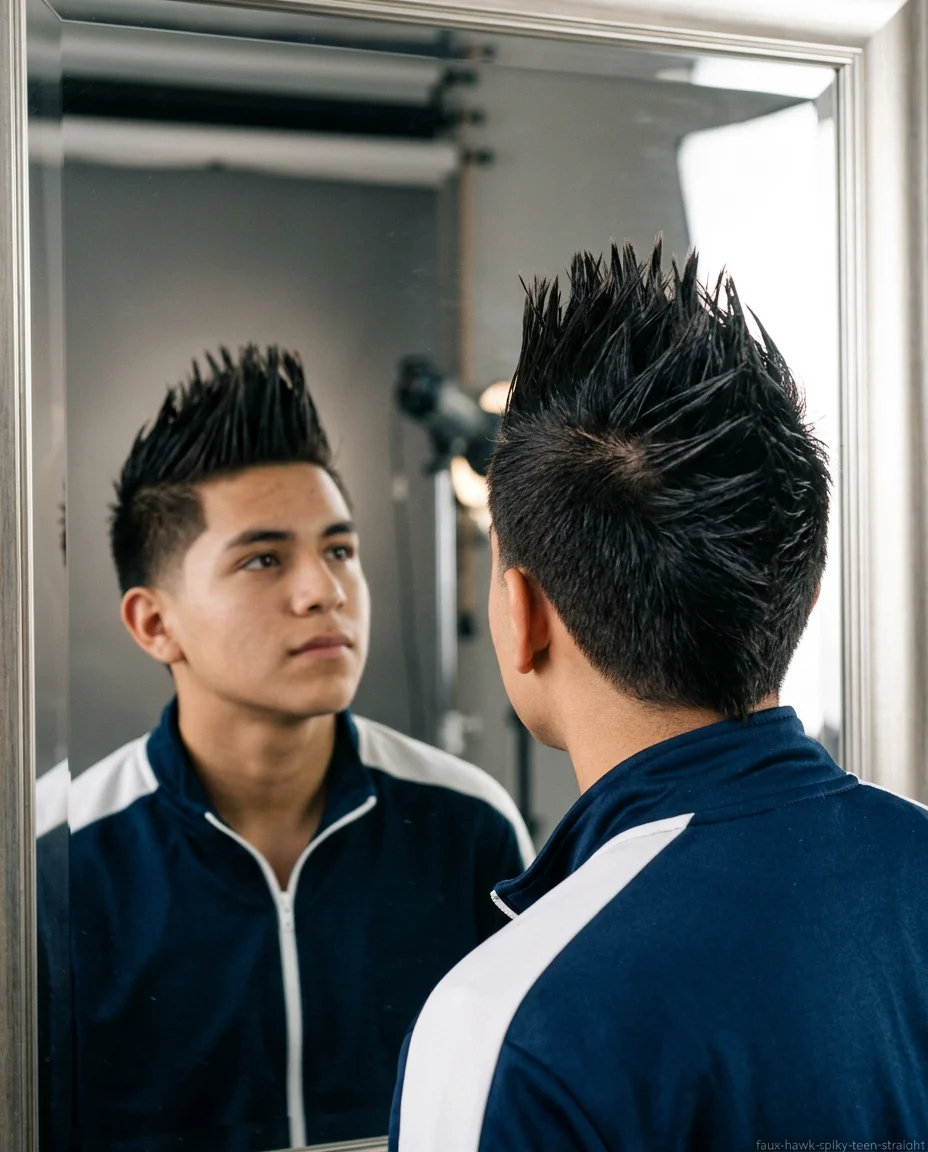
This is the version most people picture first. Individual spikes run down the center strip instead of one solid ridge, each one pulled up and pinched at the base.
It takes more product than any other variant on this list. A strong wax or fiber, applied to hair that’s still slightly damp, not dry.
Humidity is the enemy here. On a hot day spikes can wilt by early afternoon, so guys who pick this one should carry a travel-size tin.
10. Faux Hawk with Low Fade

Low fades start the blend just above the ear instead of higher up, which keeps more length on the sides than a mid or high fade would.
It’s the most conservative fade option on this list, and it grows out slower too, closer to 3 weeks before the line needs touching up.
Good pick for a first fade if a guy’s never had one before. Less commitment, less risk of a barber going too short too fast.
11. Side-Swept Faux Hawk

Instead of standing straight up, the top gets combed diagonally to one side while keeping height near the crown. It’s a faux hawk with a built-in part.
This version leans on straight hair’s natural tendency to fall flat and stay where it’s combed. Curly hair fights this shape constantly; straight hair barely resists.
A light-hold cream works better than gel here. Gel tends to look too wet and defeats the softer, swept-over effect this style is going for.
12. Faux Hawk with Disconnected Undercut
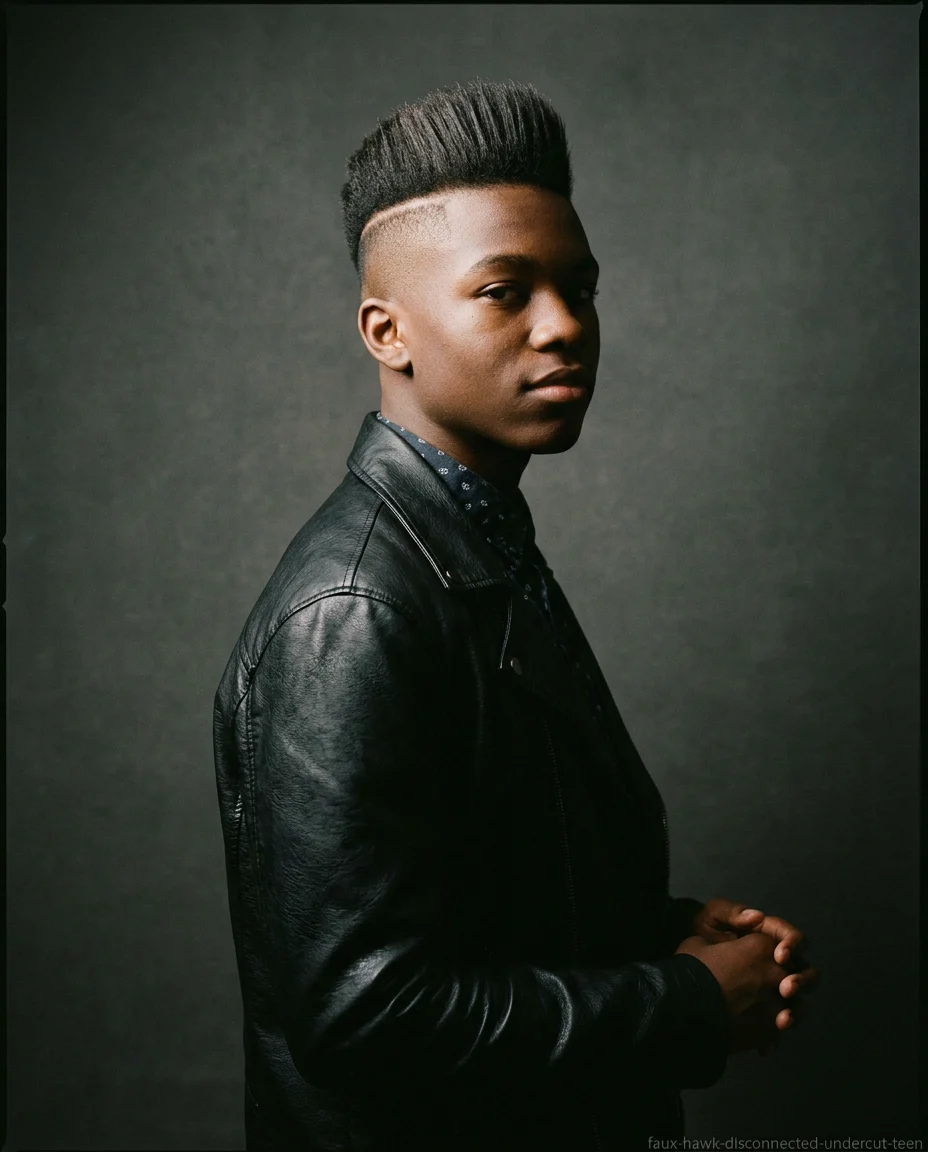
Disconnected means there’s a visible gap between the top length and the shaved sides, no blending, just a hard stop.
It’s the boldest version here. Not every school or workplace dress code loves it, so it’s worth checking before committing to the chair.
Upkeep is lower than a fade since there’s no gradient to maintain. Sides just get buzzed down every few weeks with the same guard length.
13. Faux Hawk with Line Up Design
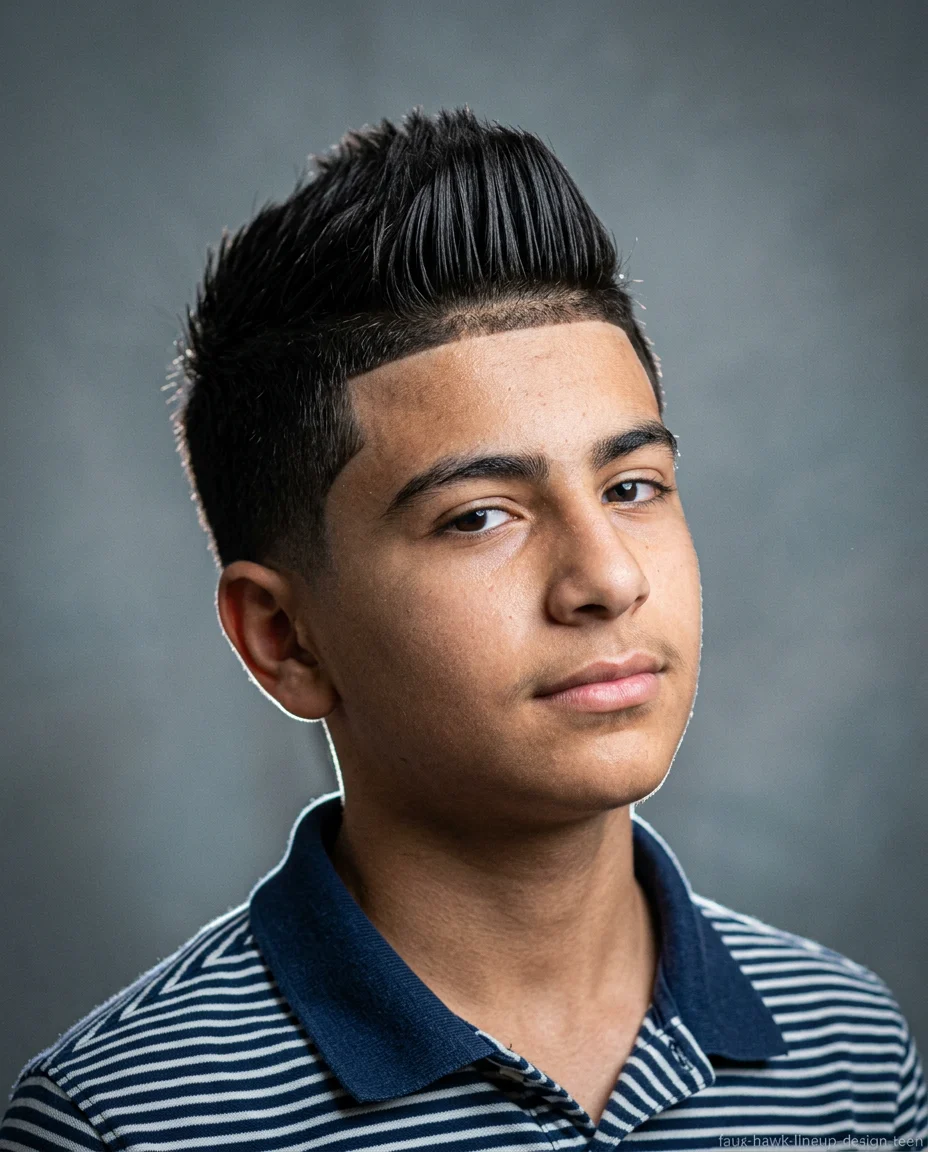
A line up traces a crisp edge around the hairline and temples with clippers, sharpening the whole shape without changing the length anywhere.
Some guys add a shaved parting line or small geometric shape near the temple. Simpler is usually better on a first attempt.
The line fades fastest on this list, about 7 to 10 days before it needs a fresh edge. That’s the real commitment, not the cut itself.
14. Faux Hawk with Temple Fade
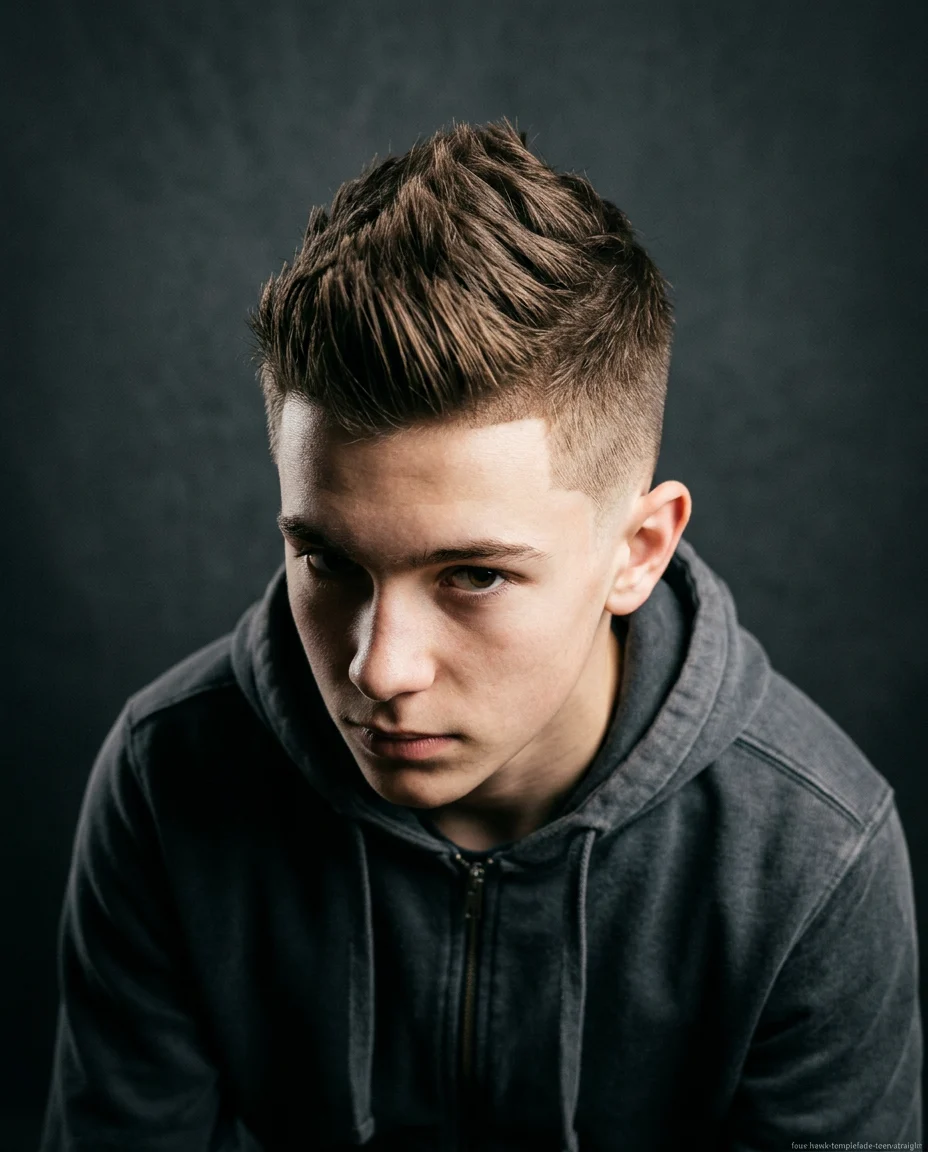
Temple fades taper just the hairline near the temples instead of blending the whole side of the head, leaving more length everywhere else.
It’s a subtler way to get a fade’s sharp edge without a full skin fade running ear to crown.
Straight hair shows this detail clearly since there’s nothing curling over it to hide the taper. Worth asking a barber for specifically — easy to miss if you just say “fade.”
15. Faux Hawk Mohawk Hybrid
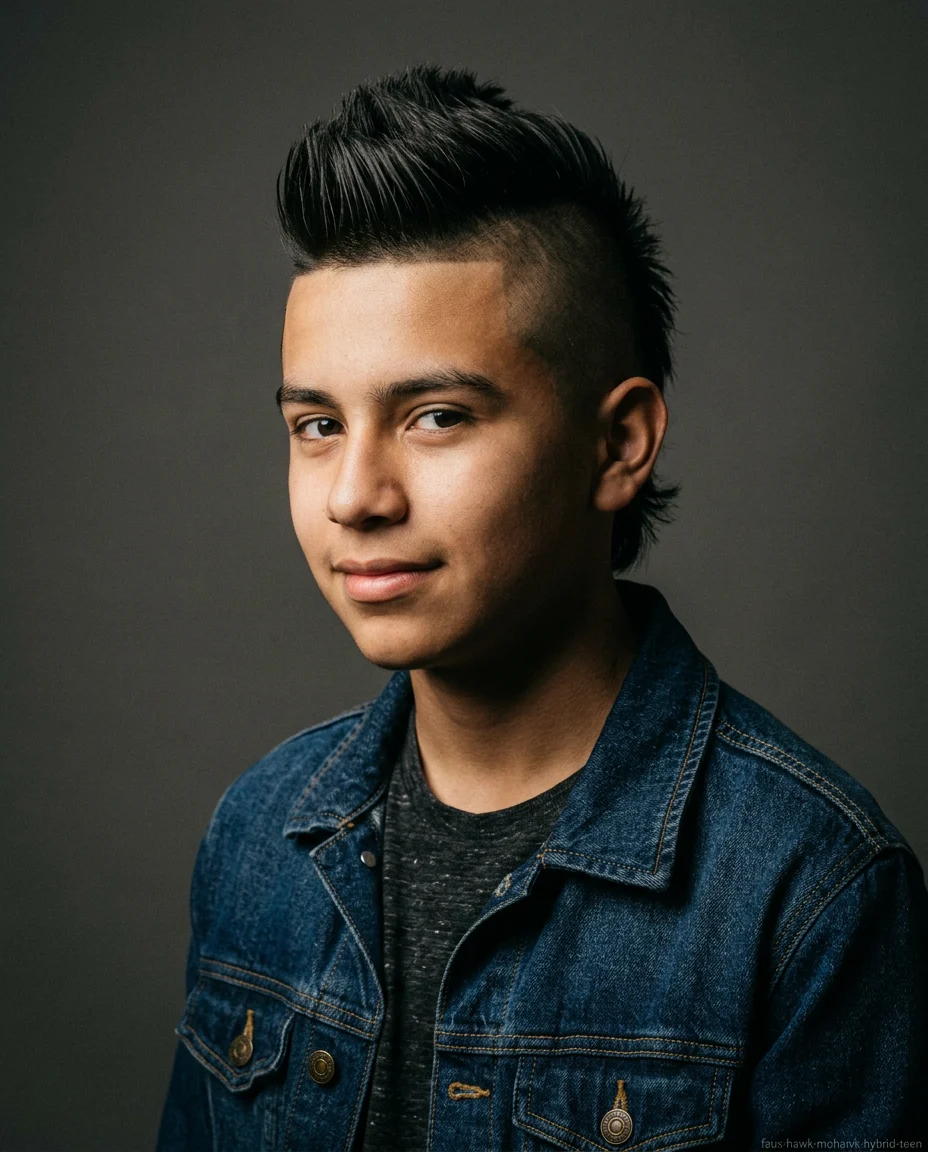
This is the most extreme version on the list, right at the edge between a faux hawk and a mohawk. Sides get taken down almost to skin.
The center strip stays wider than a true mohawk, usually 2 to 3 inches across instead of a narrow one-inch line.
It’s not a look for guys who want to blend in. Confidence matters more than product here, and that’s worth saying before someone commits to it.