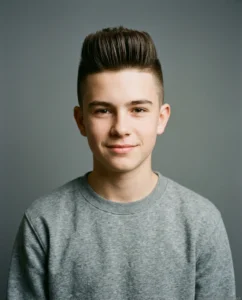
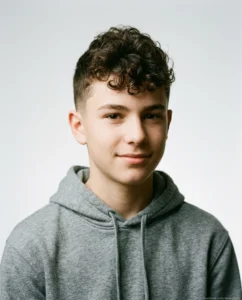
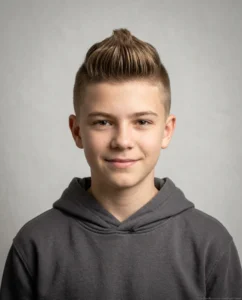
Thick strands are supposed to need extra work for a faux hawk. Not exactly. Thick strands hold the shape better than most textures — the real work is picking the right variation.
1. Classic Short Faux Hawk

Thick, straight hair holds this with almost no effort. Sides stay flat, the top strip keeps its lift all day.
Does it need daily styling?
A dab of paste and 2 minutes with a comb.
Skip it if mornings are already tight.
2. Faux Hawk with Skin Fade
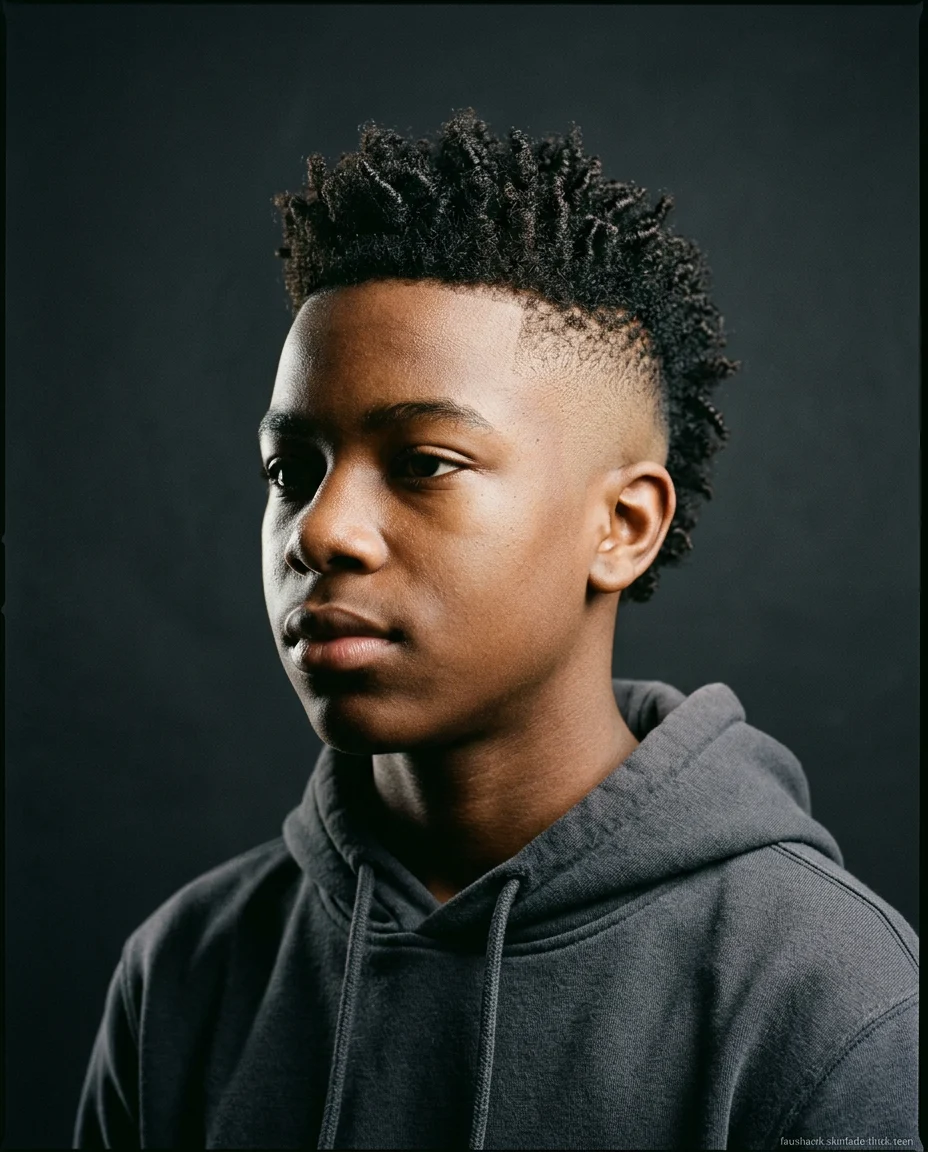
Coily hair gives this fade real contrast — skin-close sides against a dense top left around 2 inches long.
Is it hard to maintain?
Yes. Touch it up every 2 weeks or the fade grows out fast.
The upside: sharp lines make thick hair look deliberate, not bulky.
3. Textured Crop Faux Hawk
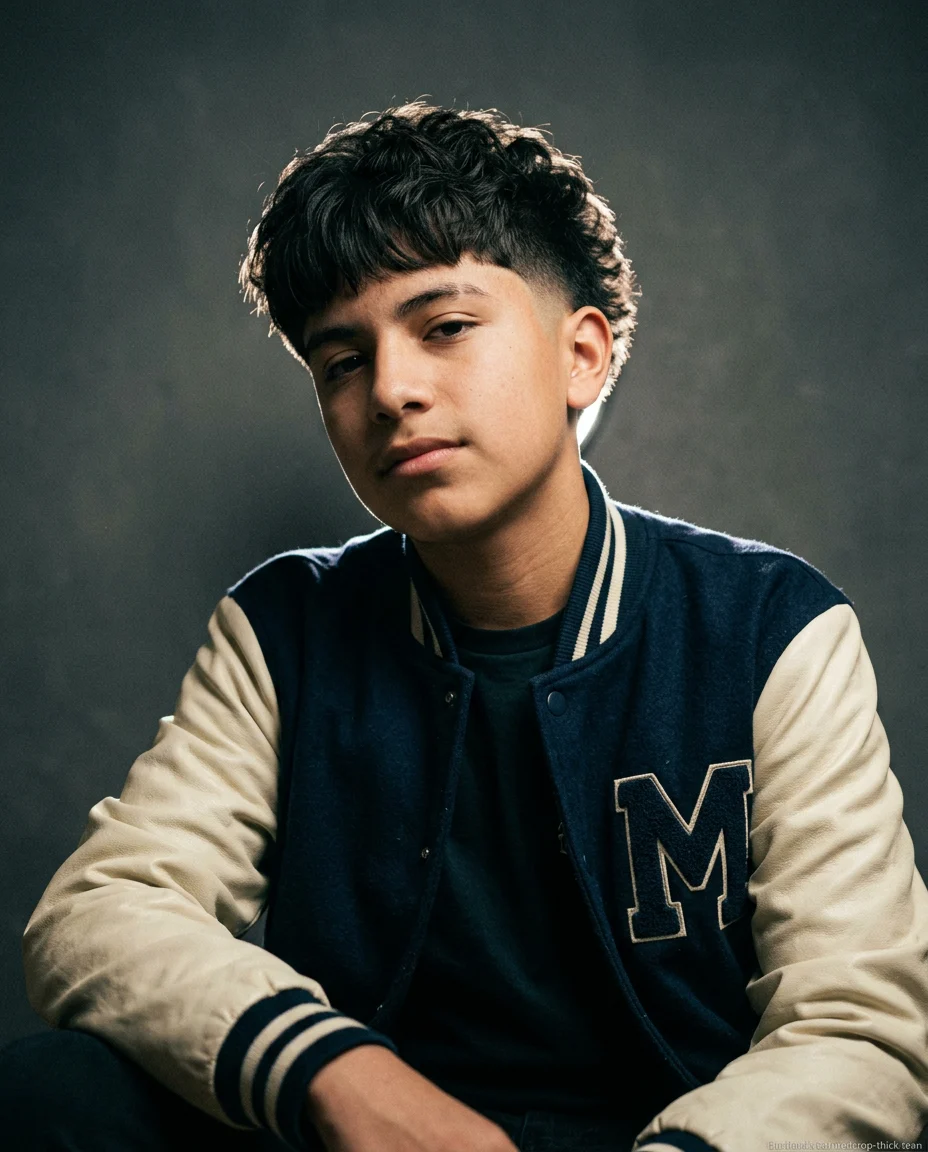
Wavy strands add texture on their own, so the crop looks messier than a standard faux hawk without extra product.
What’s different from a regular crop?
The center strip stays a bit longer and pushes forward, not up.
Forgiving, too. Bad hair days barely show.
4. Faux Hawk with Hard Part
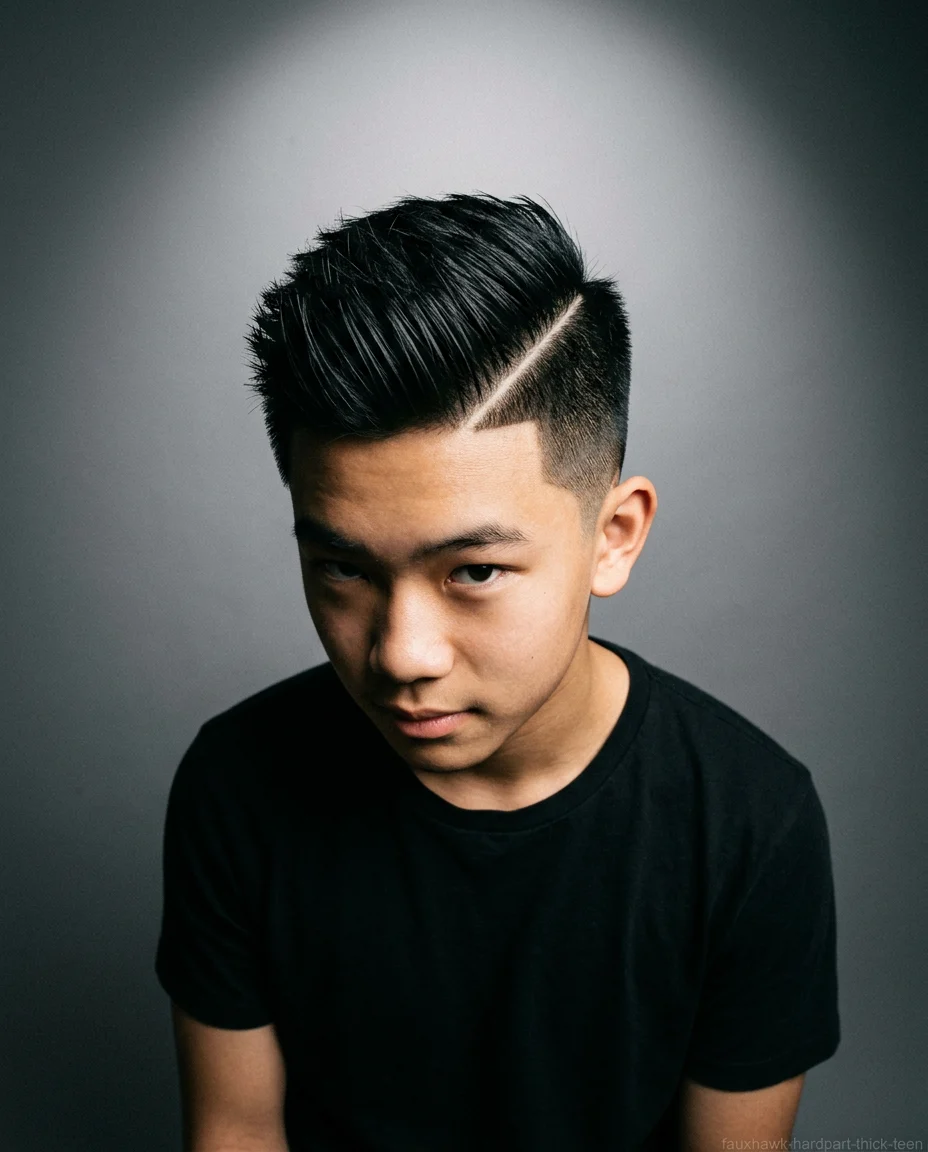
A hard part cuts a clean line into thick, straight hair, separating the fade from the top.
Does the part need upkeep?
Re-cut every visit, roughly every 3 weeks.
It reads sharper in photos than in person.
5. Curly Faux Hawk
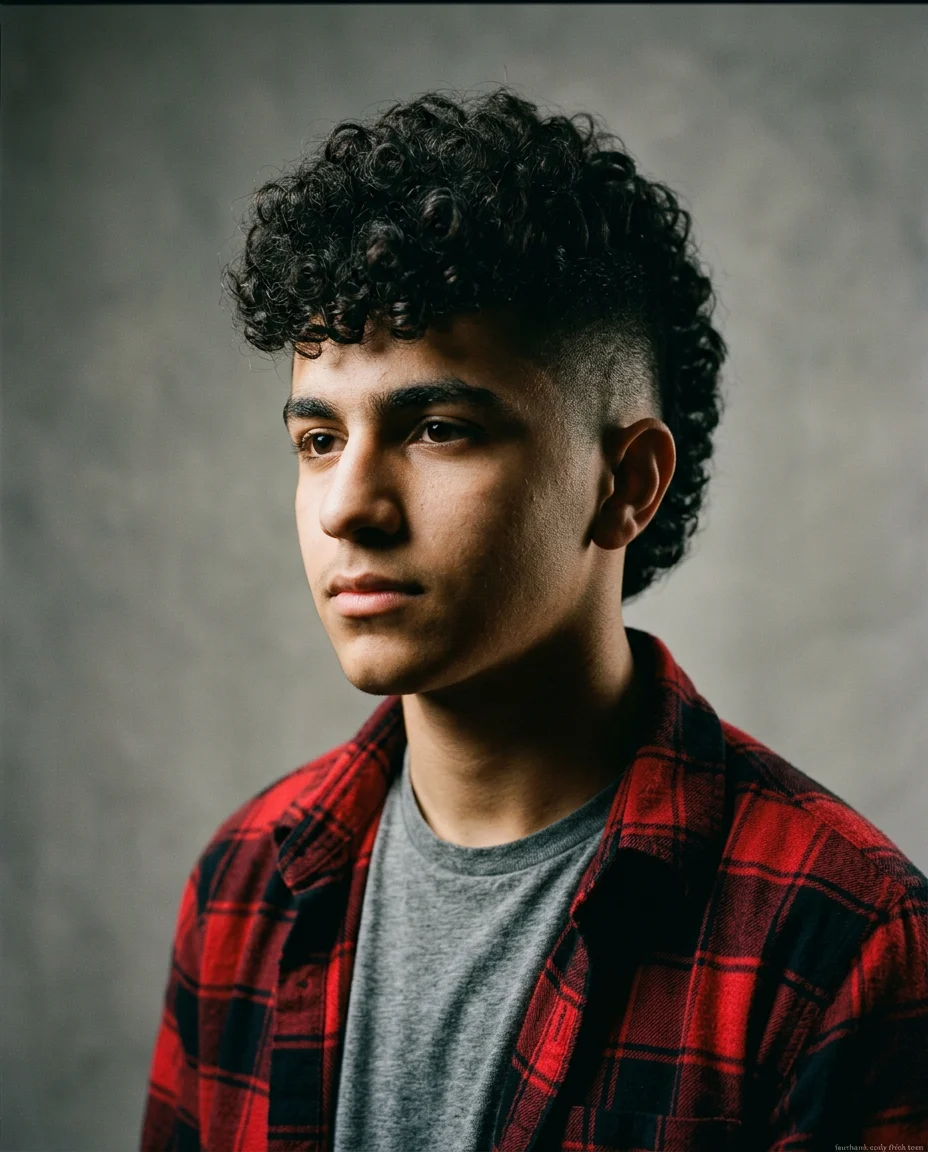
Curly hair changes the shape entirely. Instead of a flat strip, you get a rounded ridge of curls front to back.
Does curl pattern change how long it lasts?
Yes. Tighter curls shrink up, so cuts stay fresh 5 to 6 weeks.
Trade-off: curls need curl cream, not paste, or the shape flattens by noon.
6. Faux Hawk with Taper Fade
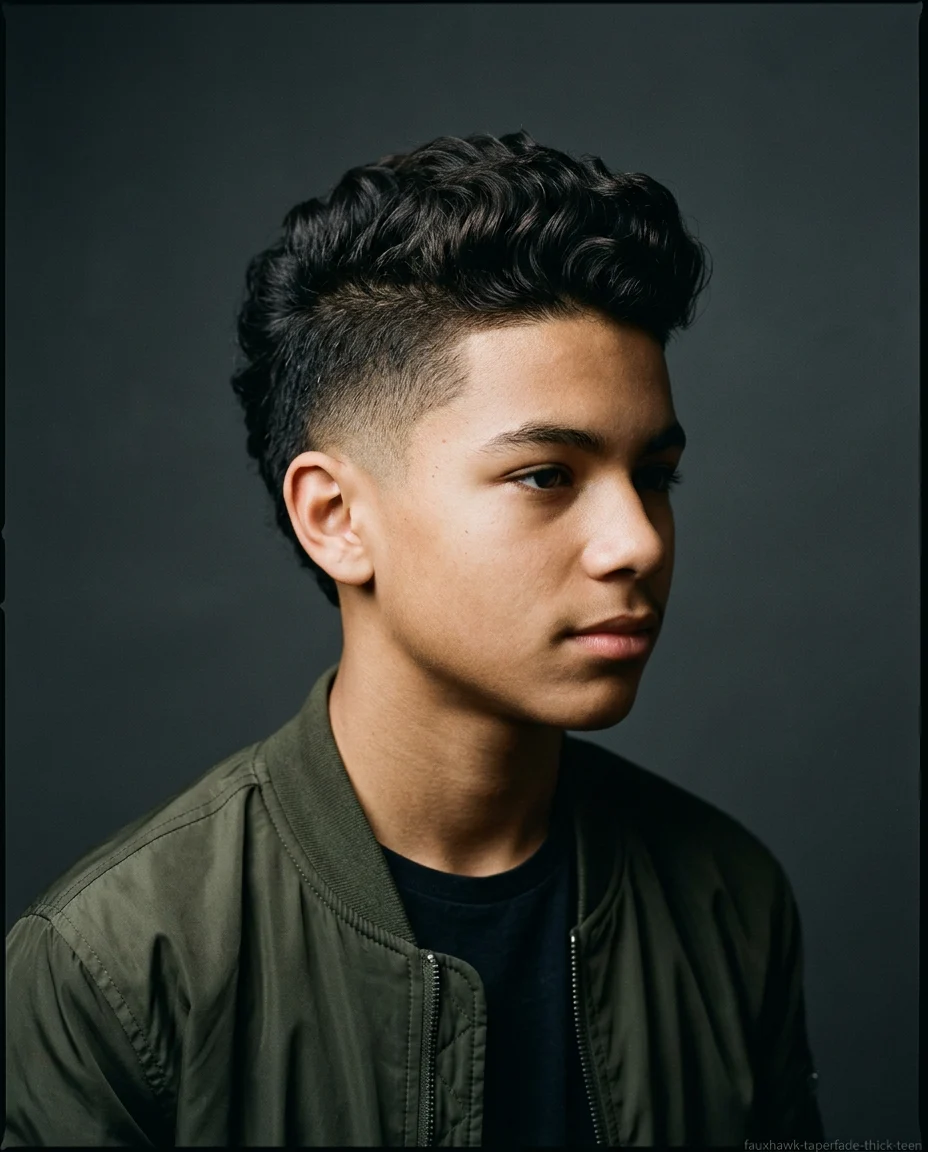
A taper blends slower than a skin fade, which suits wavy hair that already has movement built in.
Good first fade for a teenager?
Usually — more forgiving while a barber learns the client’s hair.
It grows out gently, so cuts can stretch past 4 weeks.
7. Spiky Faux Hawk

The faux hawk most people picture. Short spikes down the center, thick straight hair holding each one.
How much product does it take?
A pea-sized amount of gel, worked in damp.
Not low-maintenance. Expect a redo after gym class.
8. Faux Hawk with Undercut
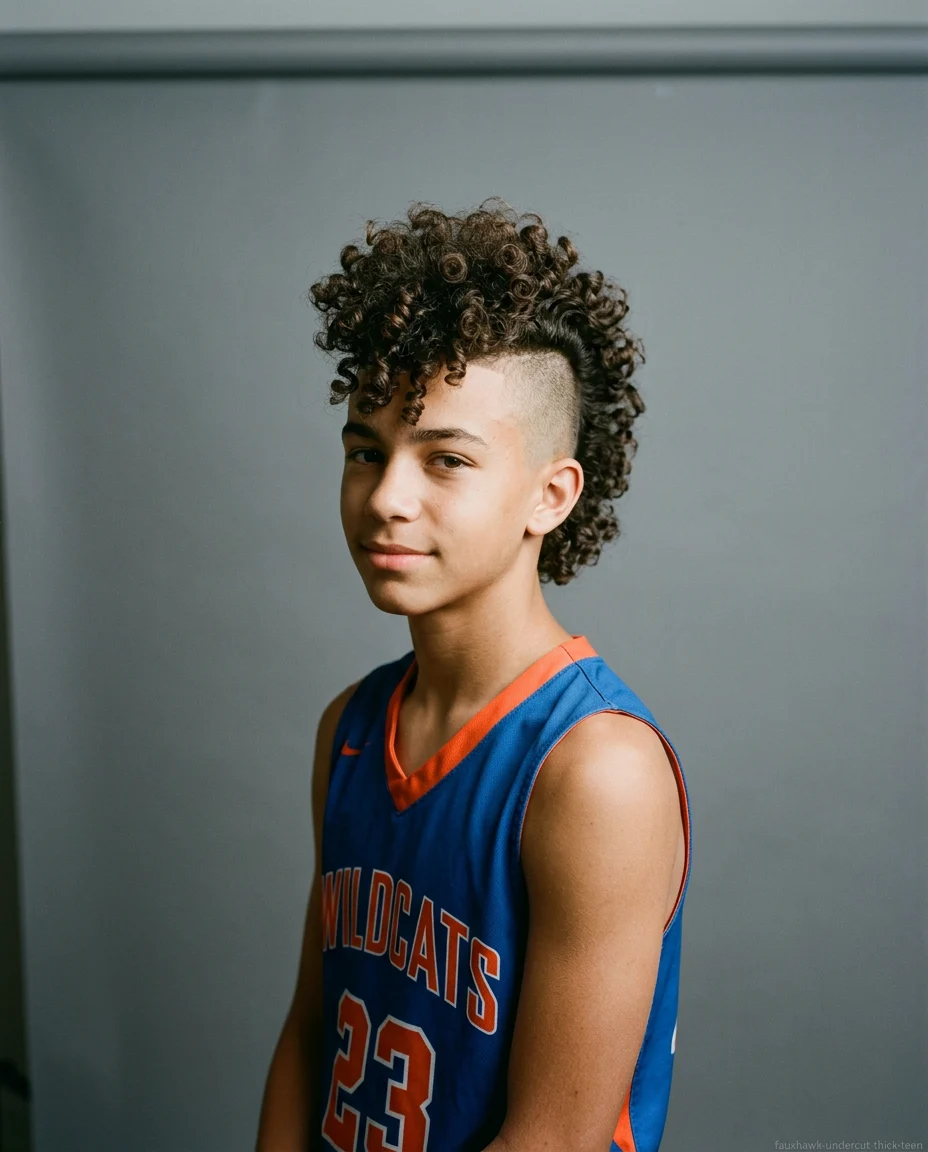
An undercut shaves the sides close while curls stay long and loose on top — bolder than a standard fade.
Does this suit every face shape?
Most, though round faces need extra height to balance it.
The honest answer: it depends on the contrast a barber leaves.
9. Faux Hawk Fringe

A fringe faux hawk pulls the front down and forward instead of straight up, softening thick hair around the forehead.
Hard to grow out?
Not really — it eases into a longer fringe with no awkward phase.
Good for guys not ready to commit to short sides.
10. Faux Hawk with Line-Up
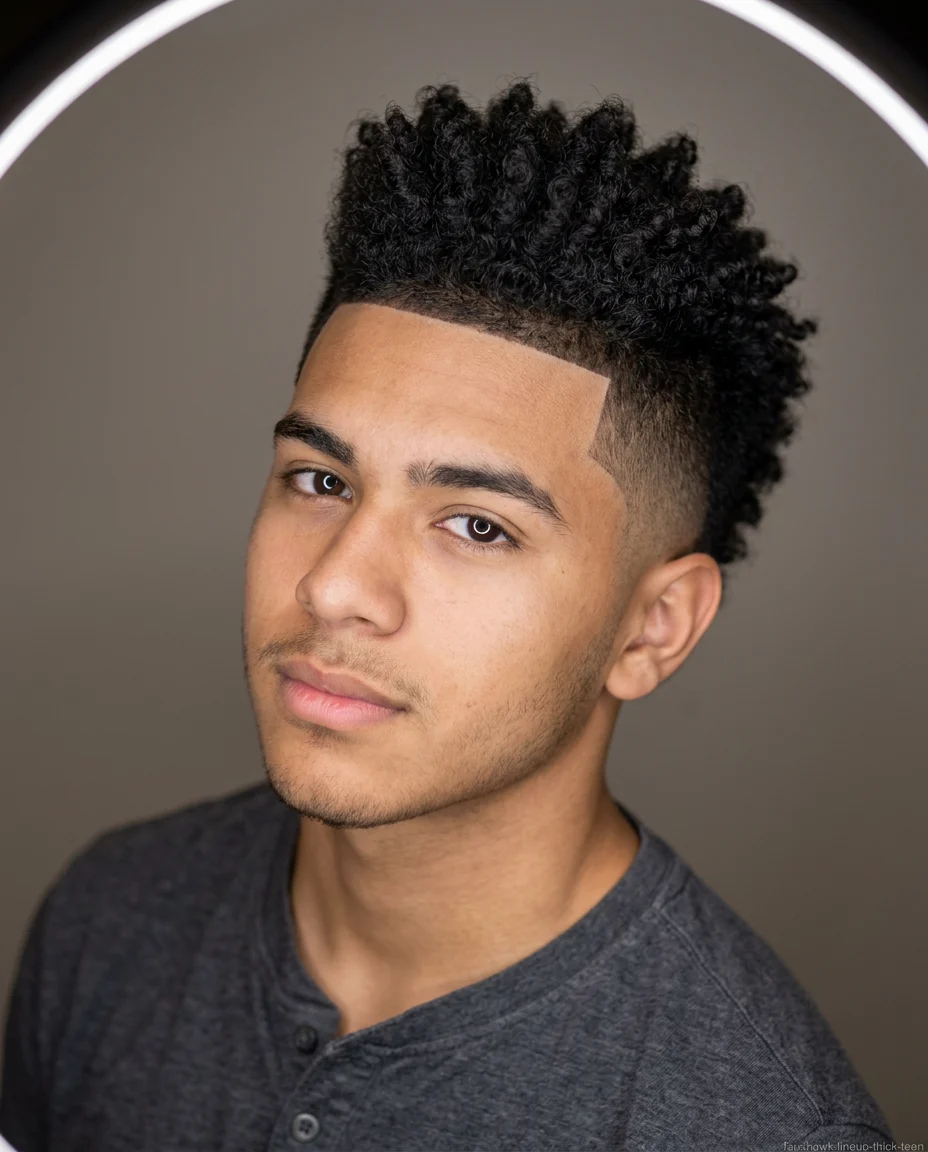
A line-up adds a crisp edge along the hairline, making coily hair’s density look intentional.
How often does the line need refreshing?
Every 10 to 14 days — new growth blurs it fast.
Barbers recommend this pairing most for coily and curly textures.
11. Messy Faux Hawk

Skips sharp lines entirely. Wavy hair gets scrunched with a light cream instead of combed into place.
Does messy mean low effort?
Mostly — about a minute of finger-styling after a shower.
The easiest option here for a teenager who won’t stick to a routine.
12. Faux Hawk with Low Fade
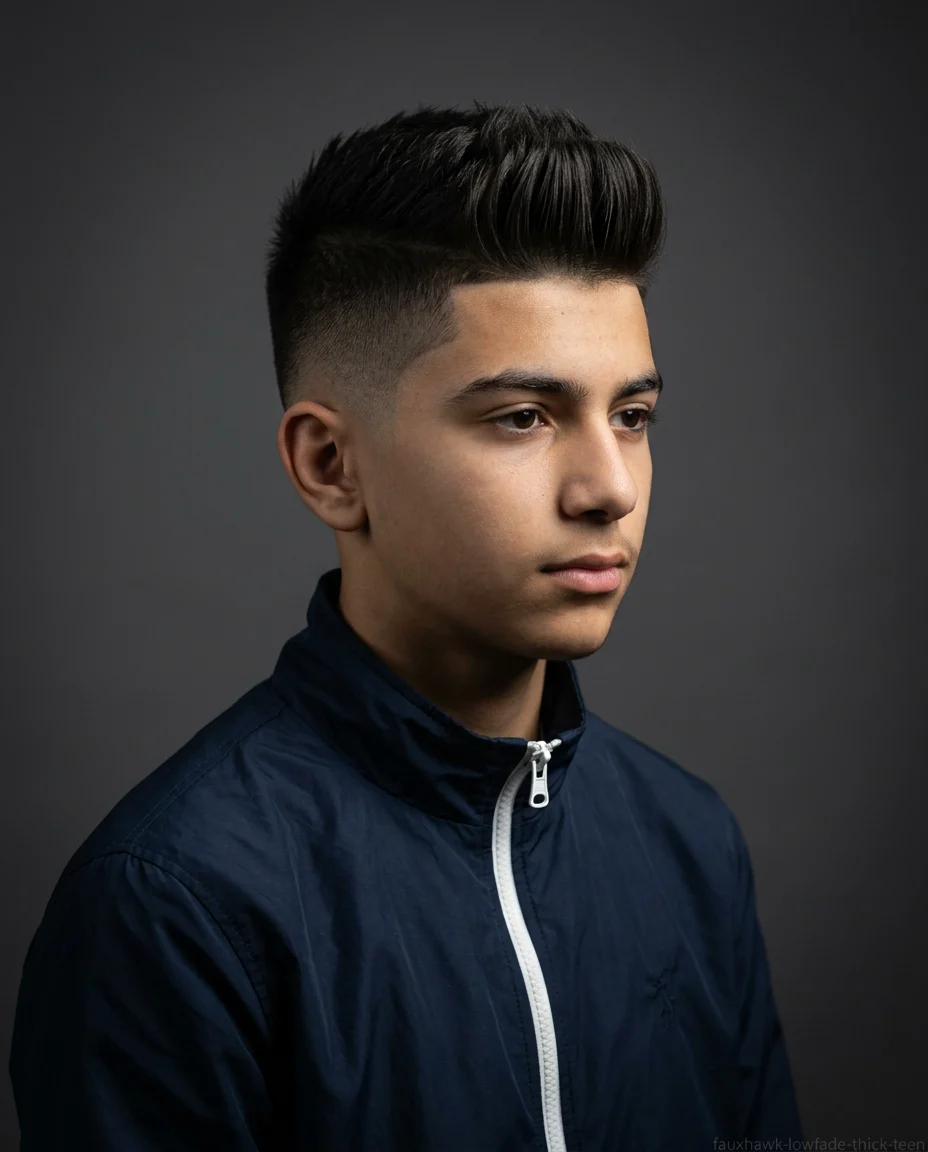
A low fade keeps most length above the ears, suiting thick hair barbers don’t want thinned too aggressively.
Less noticeable than other fades?
Yes — regrowth is less obvious between cuts.
Solid pick for parents who’d rather not see a barber every 2 weeks.
13. Faux Hawk with High Fade

A high fade takes the sides up close to the crown, leaving a smaller island of curls than most faux hawks allow.
Too extreme for a teenager?
Not usually — curl volume balances the height once styled.
Needs more frequent trims. Curly hair looks uneven past 3 weeks.
14. Blowout Faux Hawk
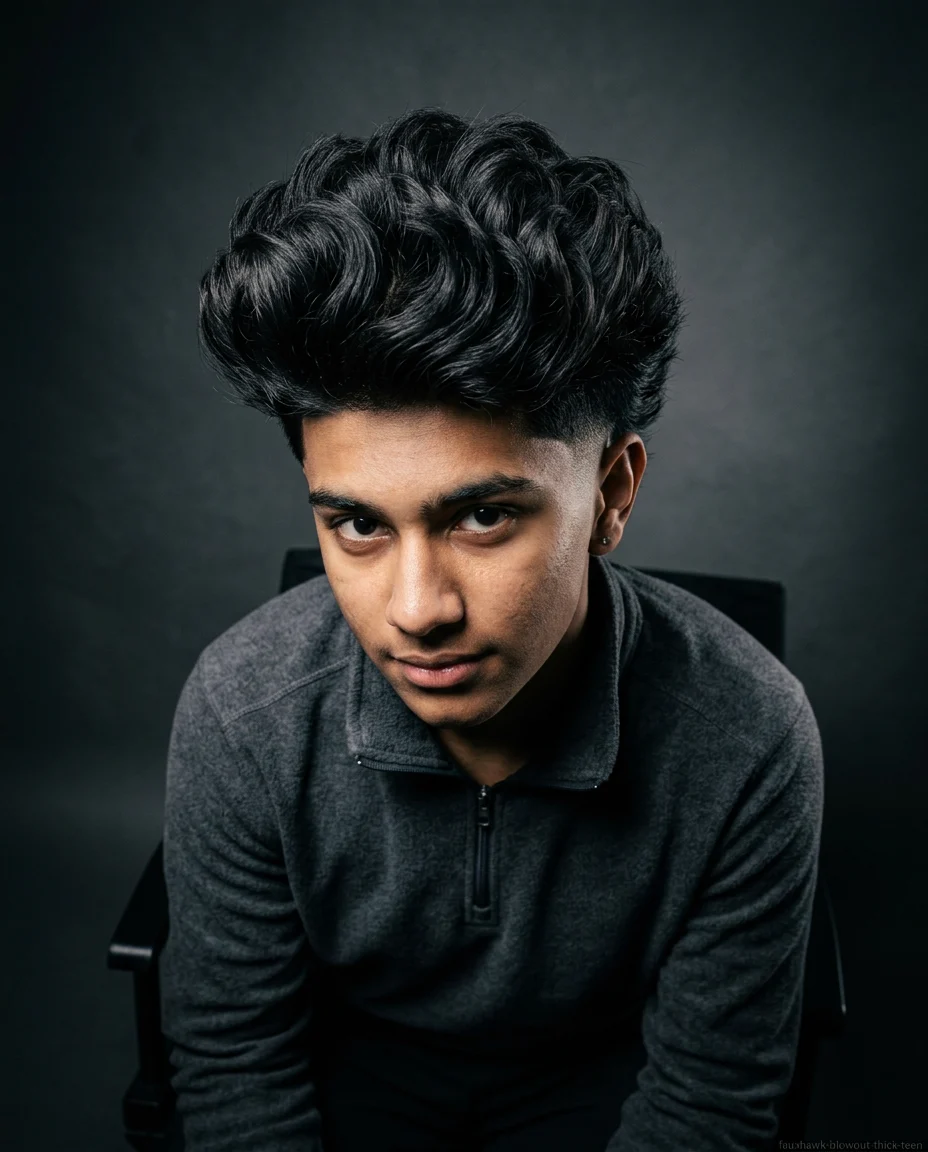
Pushes for maximum height, and thick wavy hair cooperates better here than fine hair does.
What gets the height right?
A round brush, a cool blow dryer, and volumizing spray.
Not wash-and-go. Budget about 8 minutes on mornings height matters.
15. Faux Hawk with Shaved Design
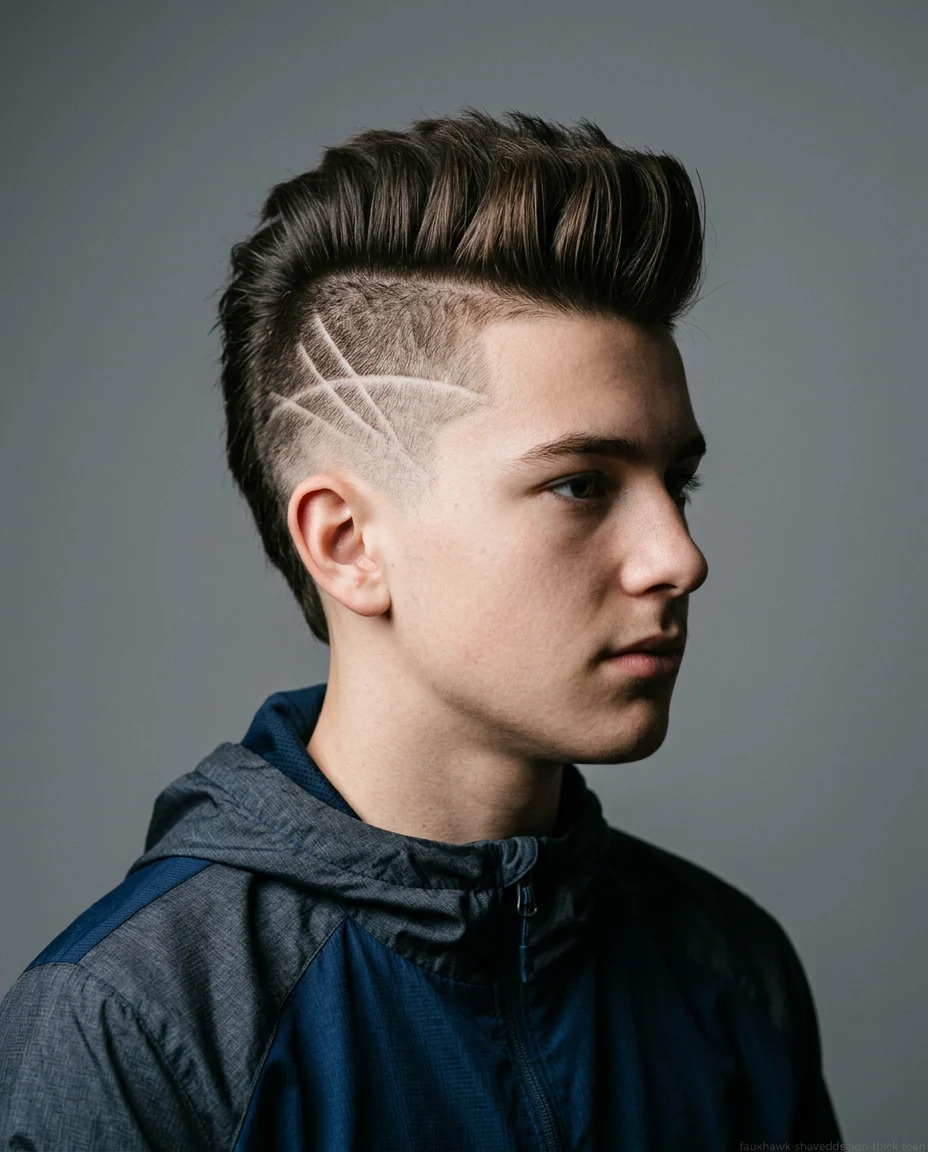
A shaved line or pattern in the fade turns a standard cut into something personal — thick straight hair shows it clearly.
Do the lines need separate touch-ups?
Yes — they blur out within about 2 weeks.
Reality check: only works with a barber who’s done freehand designs before.
16. Faux Hawk Pompadour Hybrid
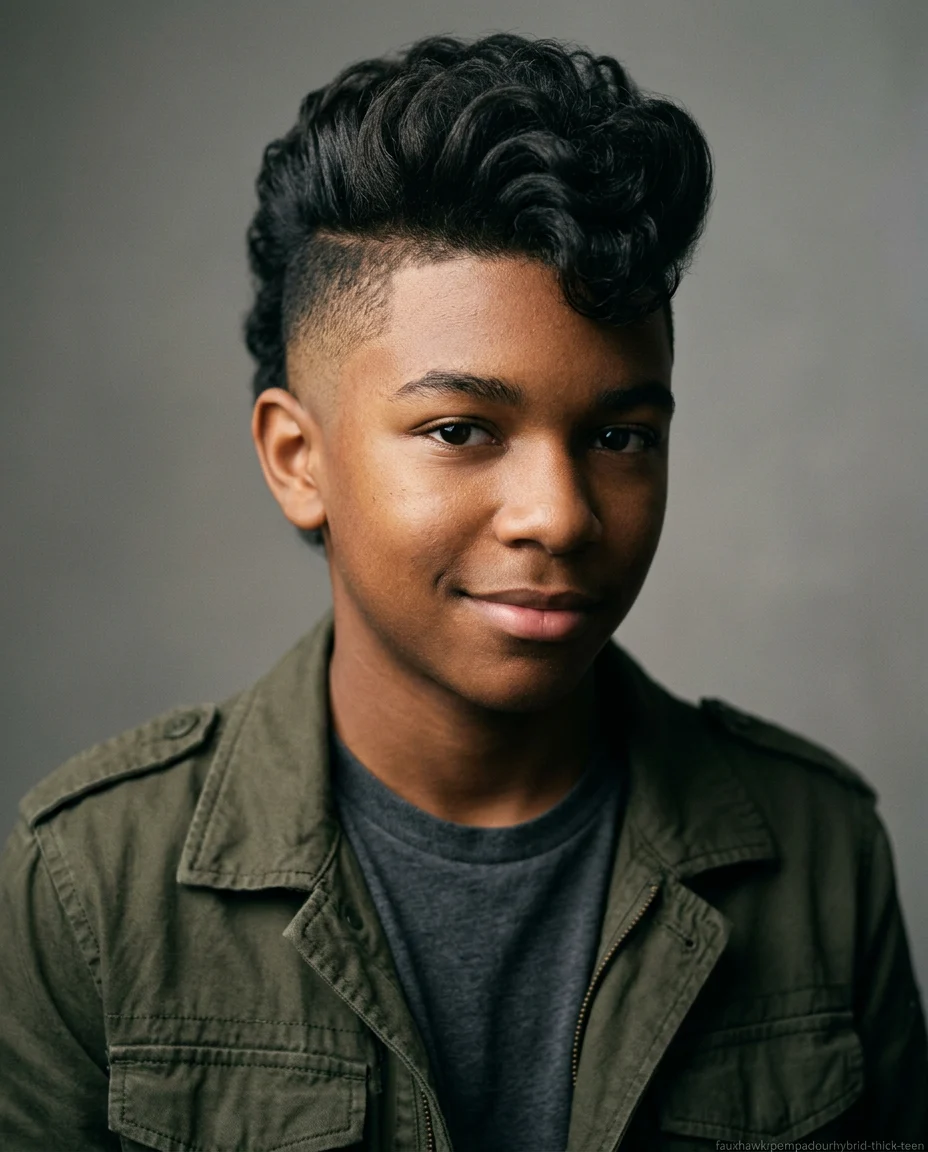
Borrows height from a pompadour but keeps the shaved sides of a faux hawk, giving curly hair somewhere to go besides up.
Harder to style than a regular faux hawk?
A little — needs a comb and a stronger hold product.
Guys who try this one tend to stick with it.
17. Wavy Faux Hawk

Letting natural waves lead means less product and less time, since wavy hair already breaks up the top on its own.
Works without fading the sides?
Yes — a scissor cut still reads as a faux hawk with enough lift.
One of the lowest-maintenance versions here.
18. Faux Hawk with Temple Fade
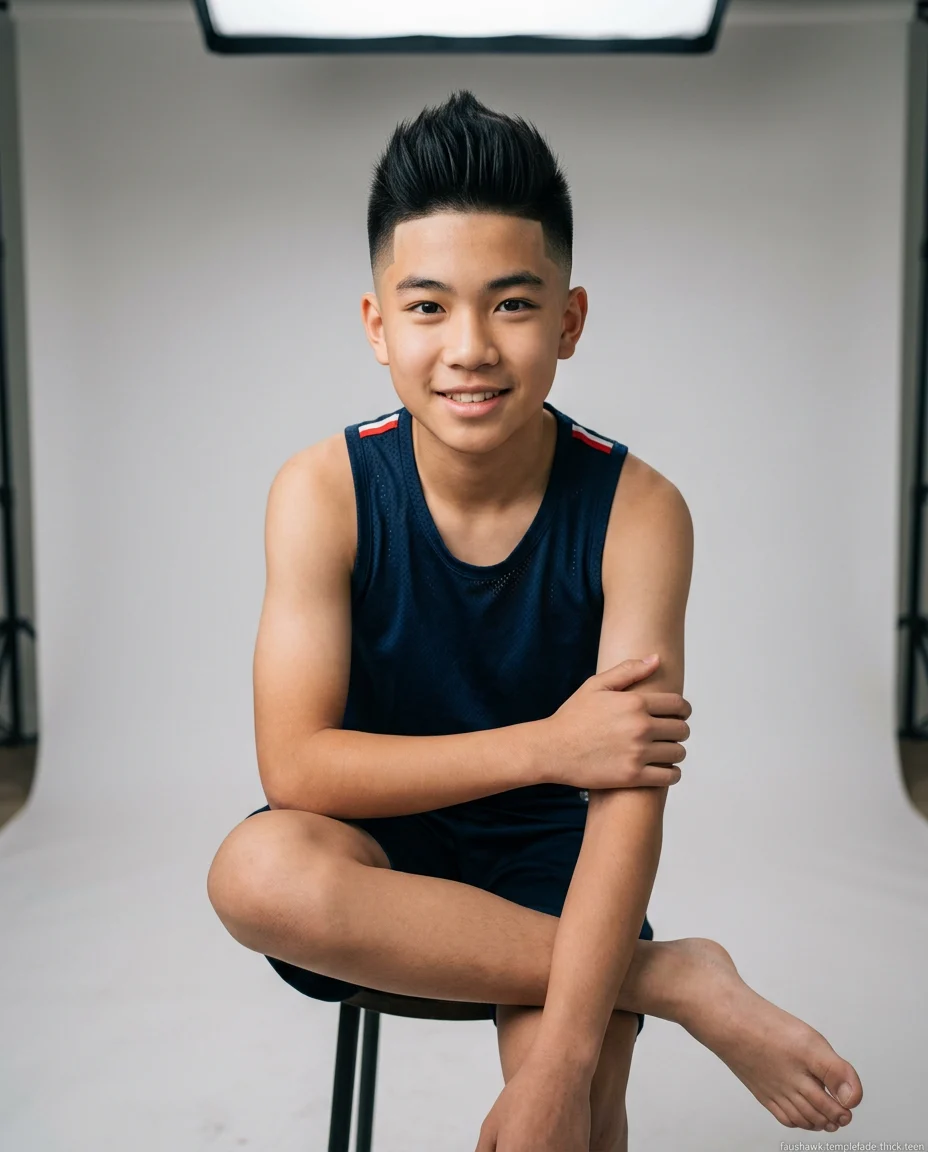
A temple fade tapers around the hairline specifically, leaving more length near the crown than a full fade would.
Why choose it over a standard fade?
Subtler transition — some schools prefer it over a skin fade.
Still needs upkeep. Figure a visit every 3 weeks.
19. Faux Hawk Mohawk Fade
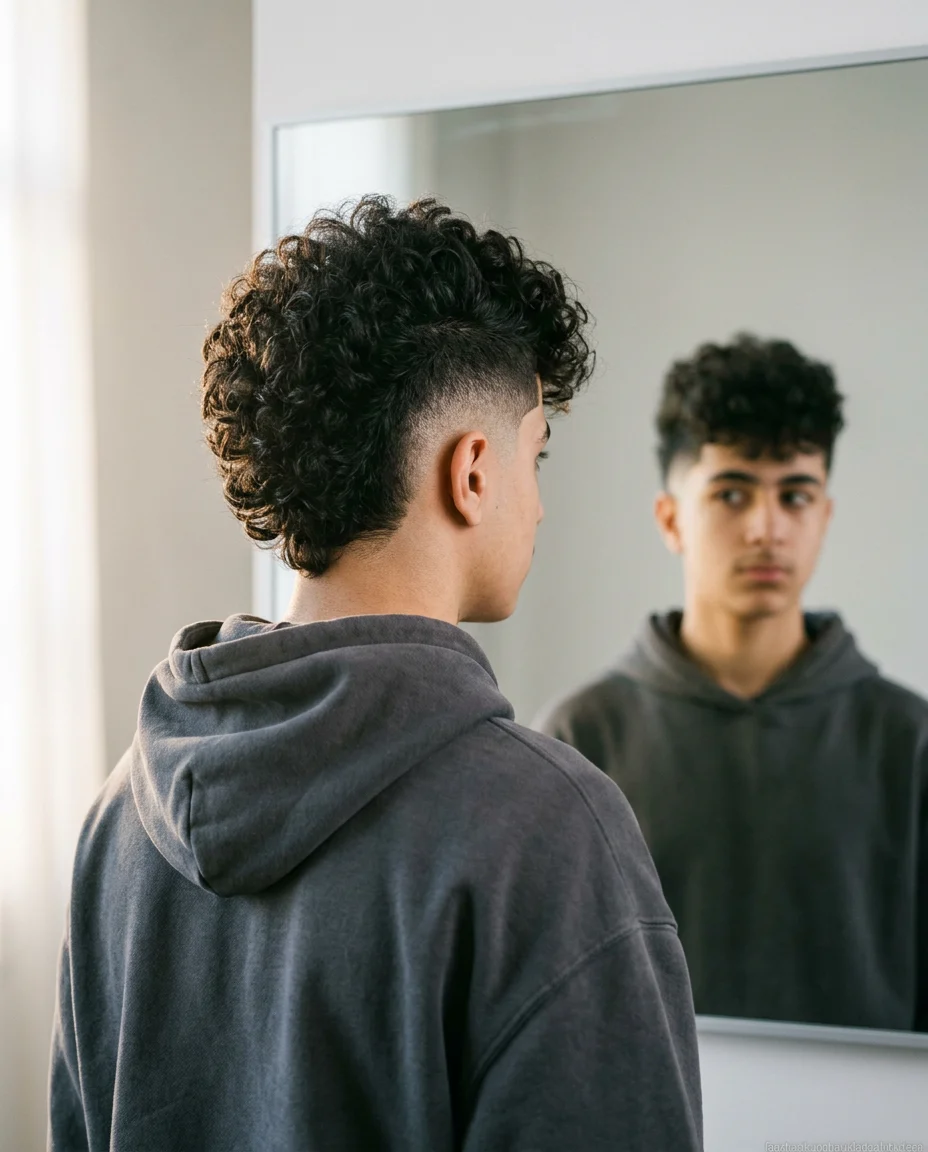
Leans closer to a mohawk than a faux hawk, curls left noticeably longer down the center, sides faded tight.
Too bold for school?
Depends on the school — some dress codes flag it.
Draws attention. That’s either the appeal or the dealbreaker.
20. Two-Tone Faux Hawk
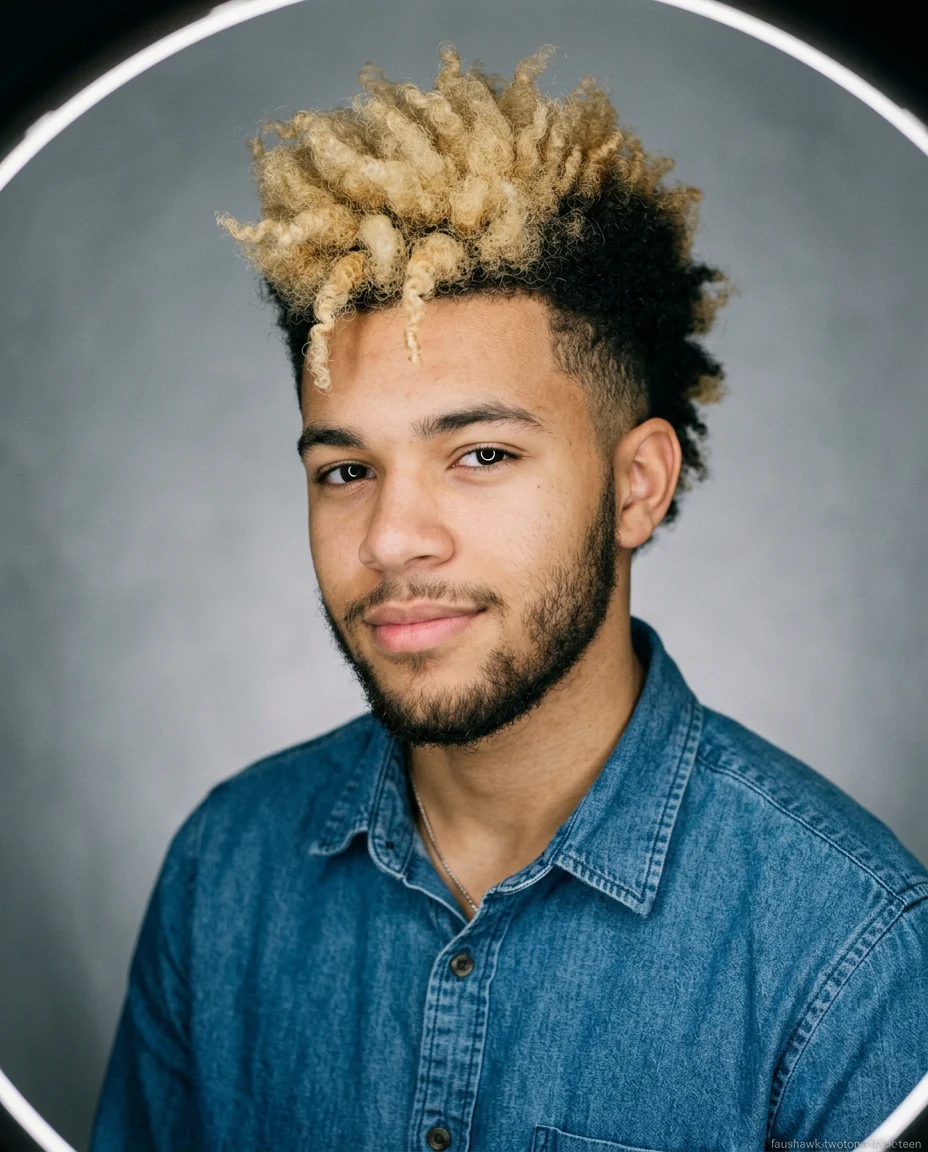
Bleaching just the top adds contrast against coily hair’s natural color, without touching the faded sides.
Does bleach damage thick, coily hair more?
It dries it out faster, so moisturizing matters more than usual.
Cost and time note: budget for extra toner touch-ups beyond the cut.
21. Faux Hawk with Burst Fade
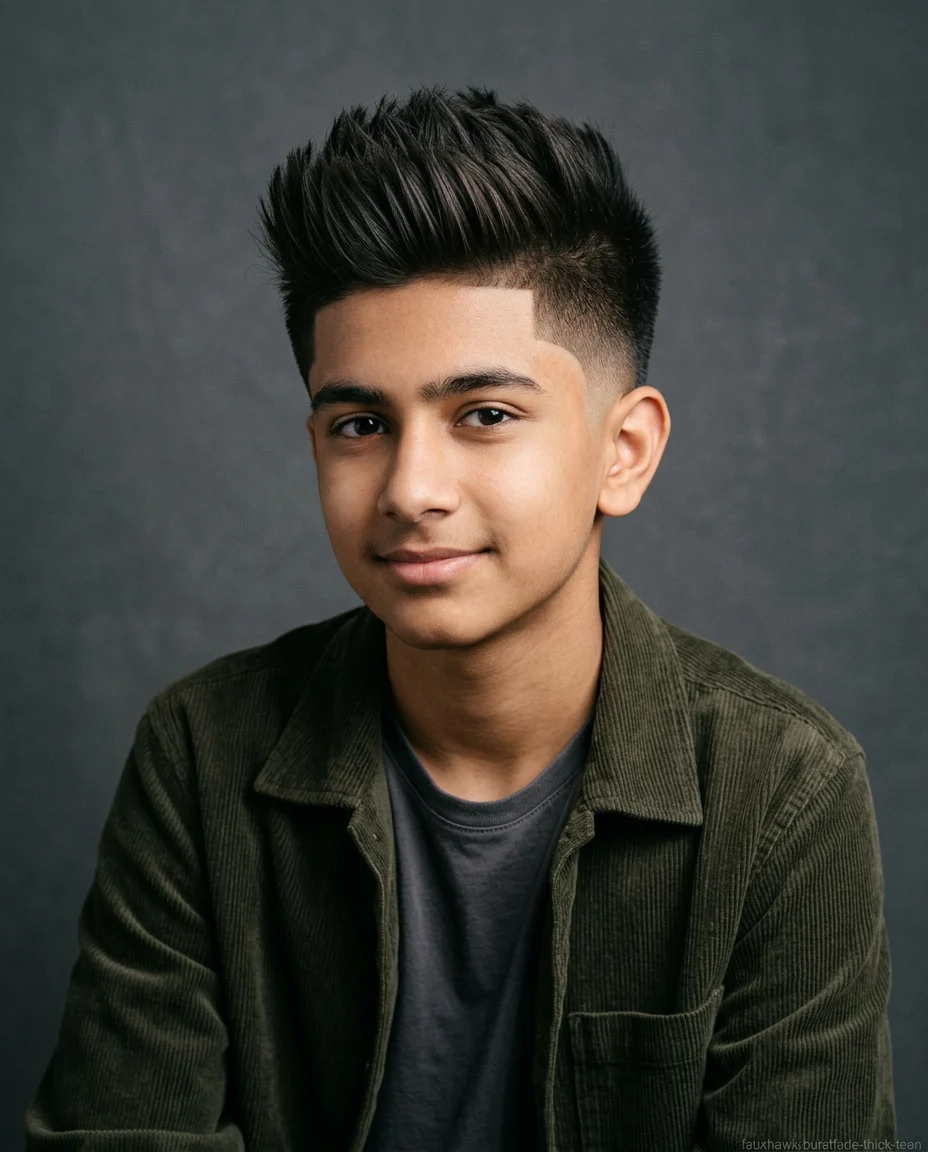
A burst fade curves around the ear instead of running straight, suiting thick hair that holds a rounded top well.
What makes it different from a regular fade?
The radius follows the ear’s curve instead of cutting straight across.
A detail most people won’t consciously notice, but it changes the cut.
22. Faux Hawk Comb Over
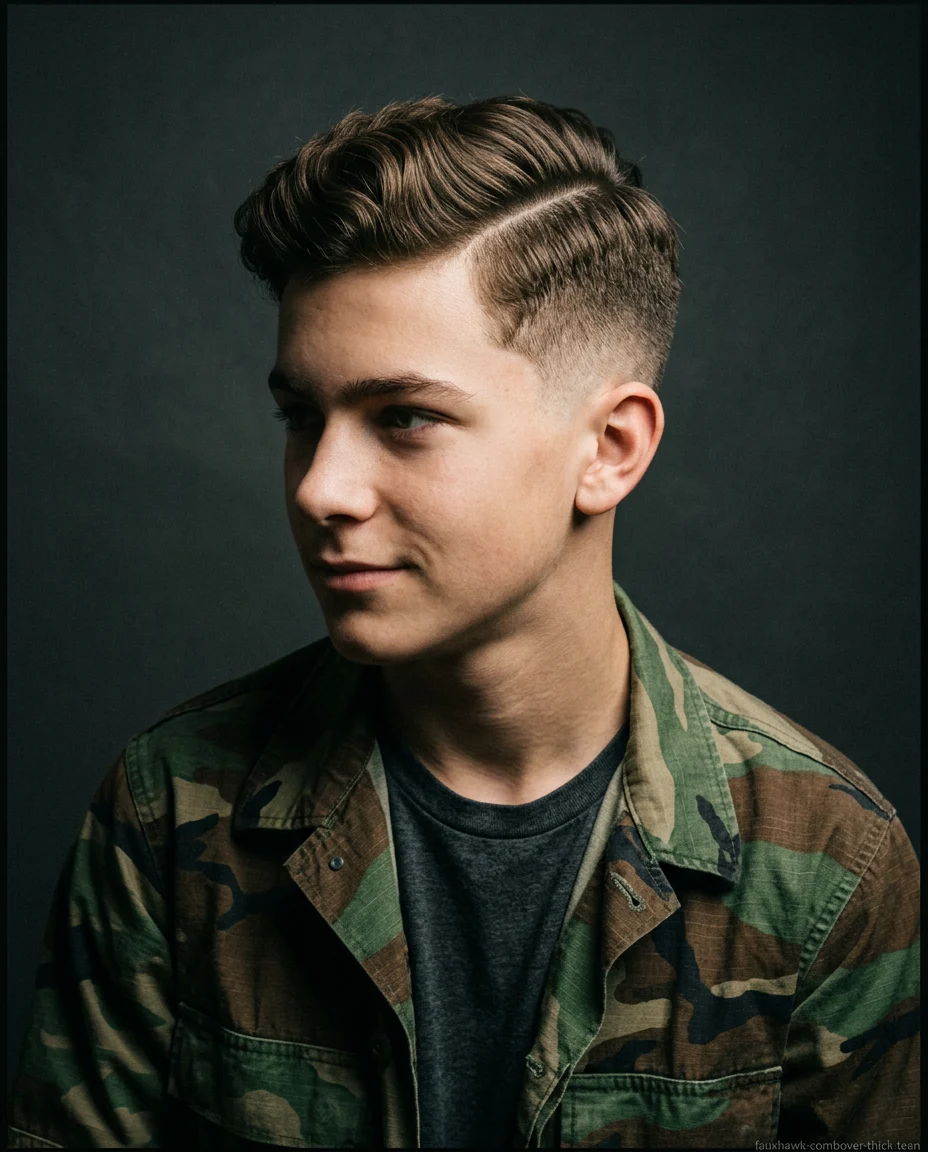
Combs the top to one side instead of straight up, giving wavy hair a more polished, less spiky finish.
Good for a formal setting?
Yes — dressier than a spiked faux hawk, same shaved-side contrast.
Needs a fine-tooth comb and patience most mornings.
23. Faux Hawk with Drop Fade
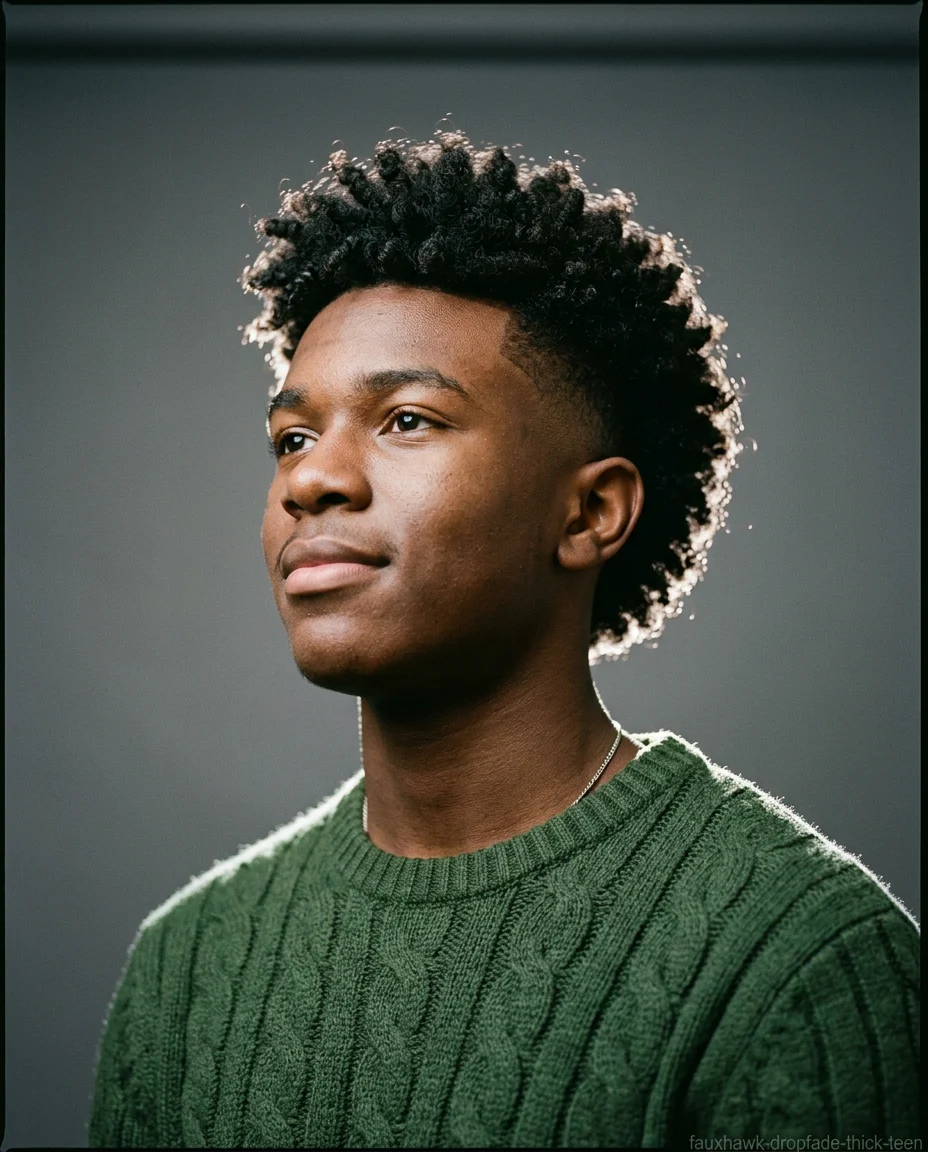
A drop fade dips lower behind the ear, giving curly hair extra room at the back without crowding the sides.
Why pick this over a straight fade?
Suits rounder head shapes better — the dip adds visual length.
A solid closer: full curl volume up top, a clean drop at the back.