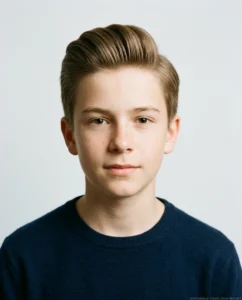
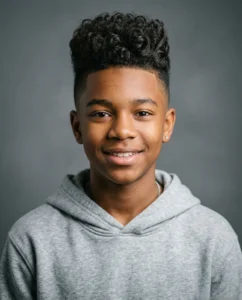
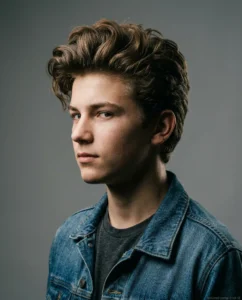
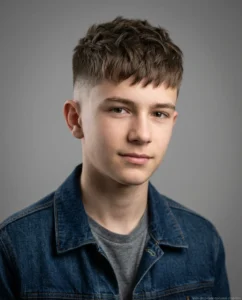
Thin hair is routinely written off for a pompadour. Thin strands can hold a pompadour fine — the trick is cutting less length off the top and leaning on the right product, not fighting your hair type. Here are 17 versions that actually work with fine hair instead of against it.
1. Classic Medium Pompadour

This is the version most guys picture first: hair swept up and back off the forehead, medium length on top, sides kept short but not shaved down. On thin hair it needs a blow-dry lift at the root before any product goes in, or the whole shape collapses by noon. Two to three inches on top is the sweet spot — long enough to sweep, short enough that thin strands don’t just flop sideways.
Q: Will this look thin on top even with good product?
A: Some, especially under direct light. A root-lifting spray before drying hides most of it.
Barbers cutting this for fine hair usually leave slightly more weight at the crown than a textbook pompadour calls for. That extra density is doing the volume’s job, not the styling. Skip it and you’re relying entirely on product, which wears off by early afternoon.
2. Medium Pompadour with Skin Fade
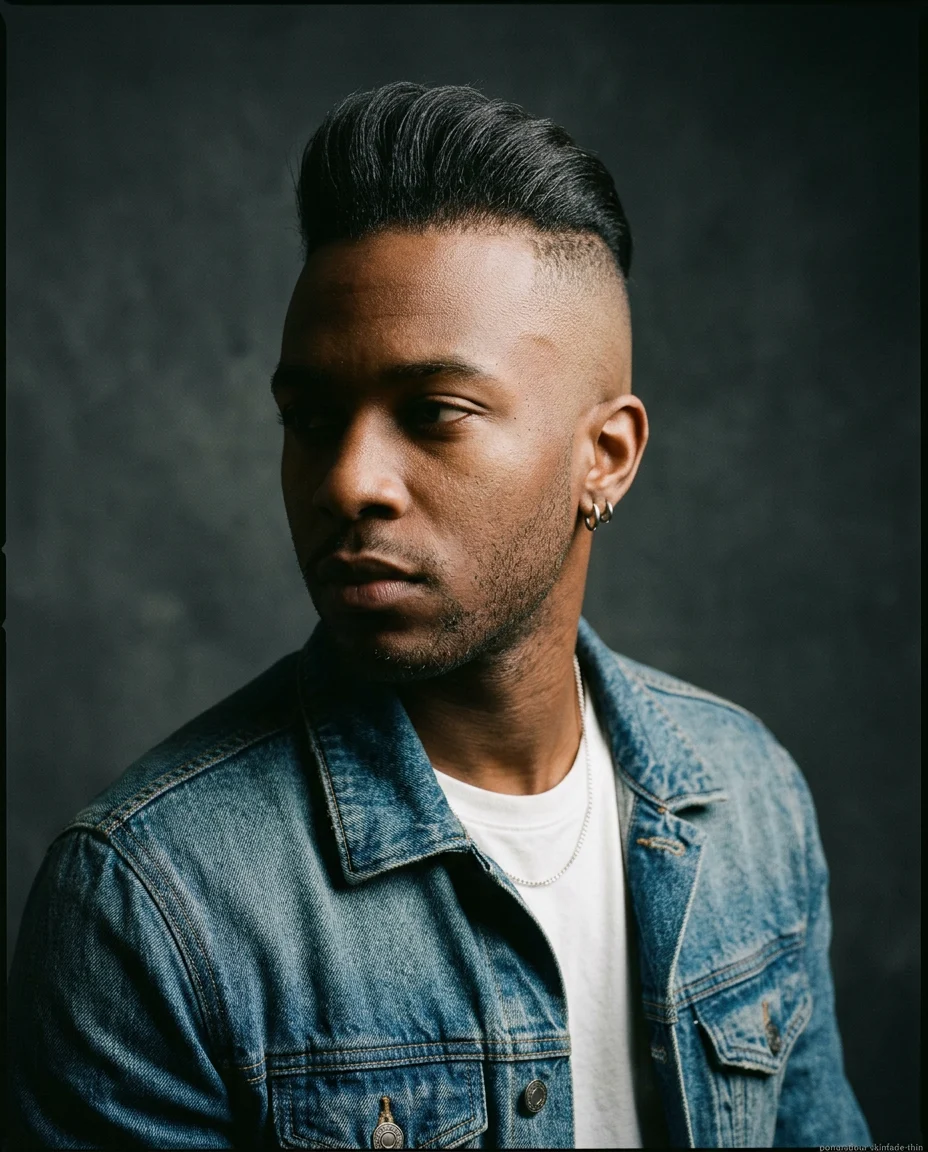
Shaving the sides down to skin does something specific for thin hair — it removes any comparison point. Without short, sparse sides sitting next to it, the top reads as fuller than it actually is. The fade also means less upkeep between cuts, since skin doesn’t grow visibly ragged the way a longer taper does.
Q: How often does a skin fade need a touch-up?
A: Every 2 to 3 weeks. Past that, the line where skin meets hair starts to blur.
This pairing costs more at the chair — skin fades run 10 to 15 minutes longer than a basic taper. Worth it if you’re already committed to short maintenance cycles, less so if you’d rather stretch appointments out.
3. Textured Crop Pompadour

Instead of a smooth sweep, this version is cut with heavy texturizing shears and styled with a matte paste, so individual strands separate rather than blend into one slick shape. That separation is the whole point for thin hair — a flat, glossy finish shows scalp; broken-up texture doesn’t.
Q: Does texturizing thin hair make it look thinner?
A: Done right, no — it’s cutting at varying lengths, not removing bulk you need.
Ask specifically for point-cutting, not thinning shears. Thinning shears remove density; point-cutting just changes how the ends catch light. Most guys with fine hair should never let thinning shears near their top length.
4. Medium Pompadour with Taper Fade
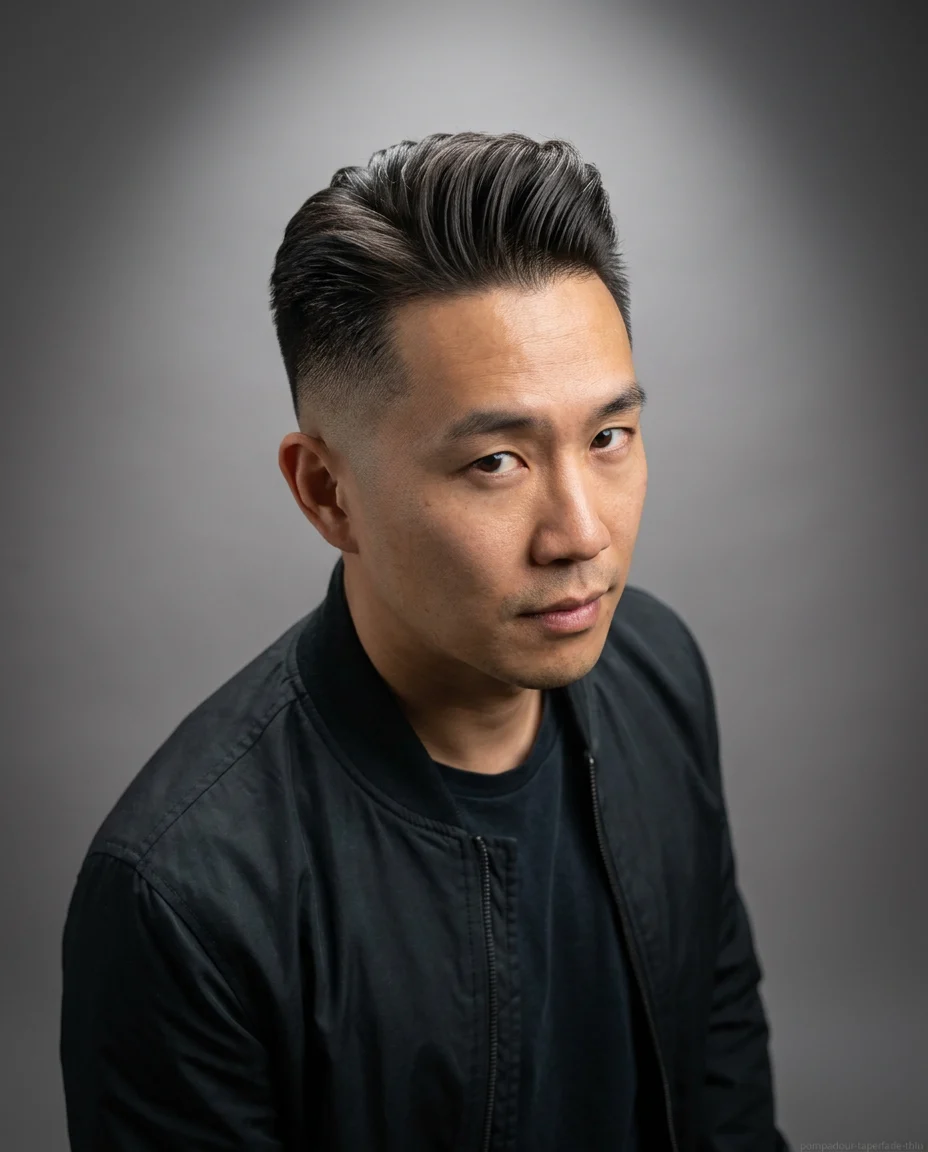
A taper fade keeps a hair’s-breadth more length on the sides than a skin fade, blending down gradually instead of hitting bare skin. It’s a softer look overall and slightly more forgiving if your hairline is uneven, which is common with fine hair that’s started to recede a little at the temples.
Q: Is a taper harder for a barber to mess up than a skin fade?
A: Easier to fix if it goes wrong, since there’s more hair left to work with.
This combo suits guys who want the volume illusion of a fade without the stark, almost-bald sides. It reads a little more conservative, which matters if your workplace leans traditional.
5. Slicked-Back Medium Pompadour
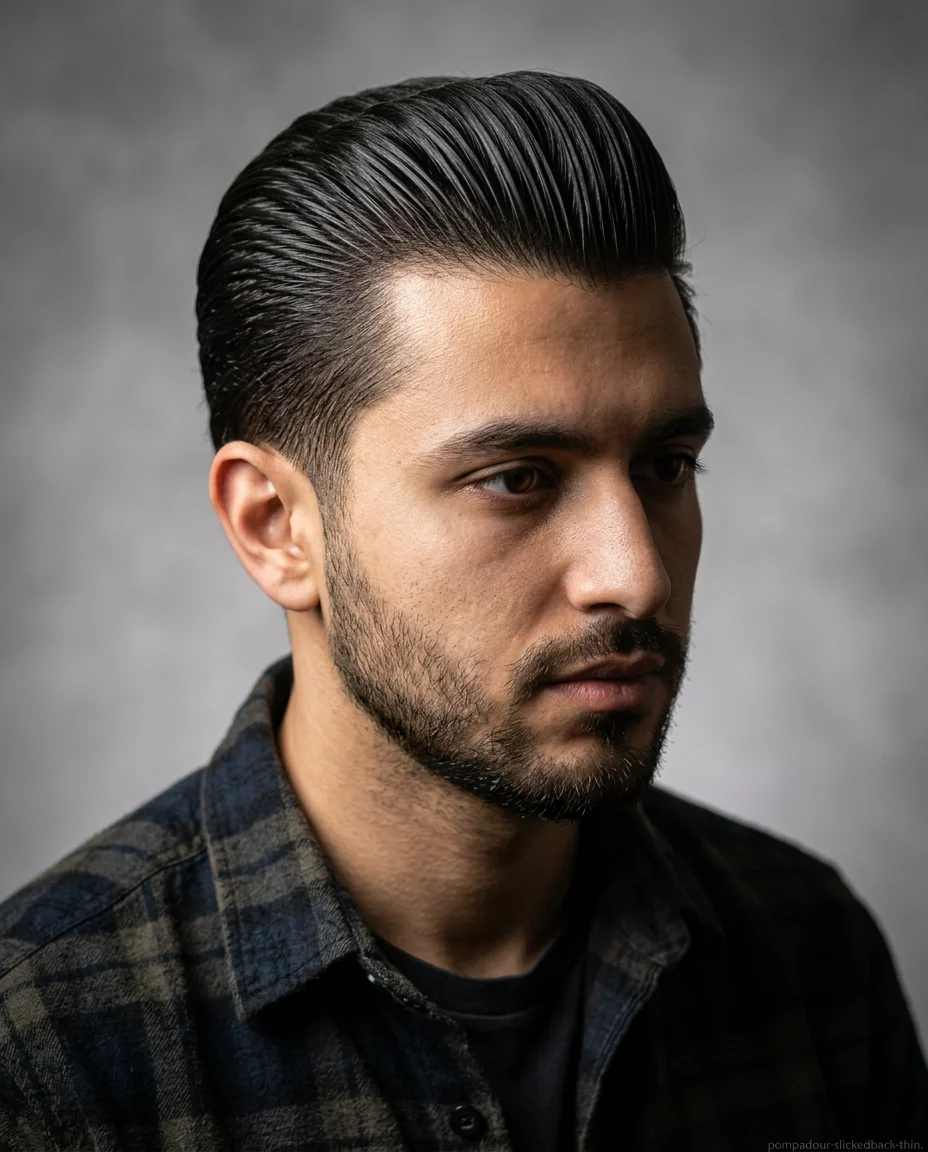
All the length goes straight back with a high-shine pomade, no forward sweep at the front. It’s the cleanest, most controlled version on this list, and it happens to be one of the more honest options for thin hair, since it doesn’t pretend to hide anything — the shine itself becomes the point.
Q: Does a slicked-back style expose thinning more than other pompadours?
A: At the crown, sometimes. A slight fringe left at the front hairline helps.
Water-based pomade beats oil-based here. Oil-based holds longer but weighs fine hair down within a few hours, which flattens the exact volume you built during styling.
6. Medium Pompadour with Hard Part
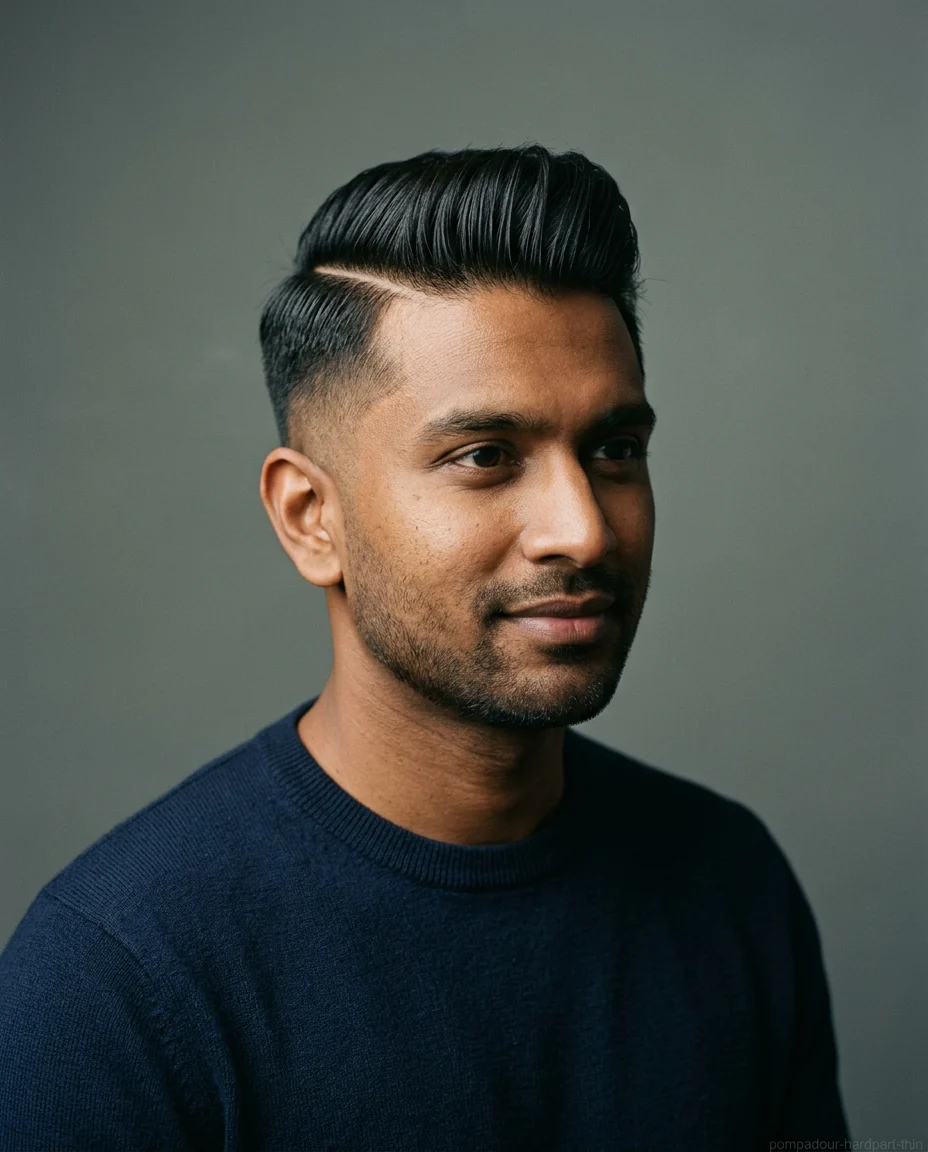
A hard part is a razor-shaved line separating the pompadour from the fade, usually running from the temple back at an angle. It adds a sharp, deliberate edge to a style that can otherwise look a little soft on fine hair. The line itself draws the eye, which is a small but real distraction from density.
Q: Does a hard part need to be redone every haircut?
A: Yes — it grows out fast, usually visible within a week.
This one’s for guys who don’t mind more frequent trims. If you’re stretching cuts past four weeks, skip the hard part; a half-grown-out line looks worse than no line at all.
7. Messy Medium Pompadour
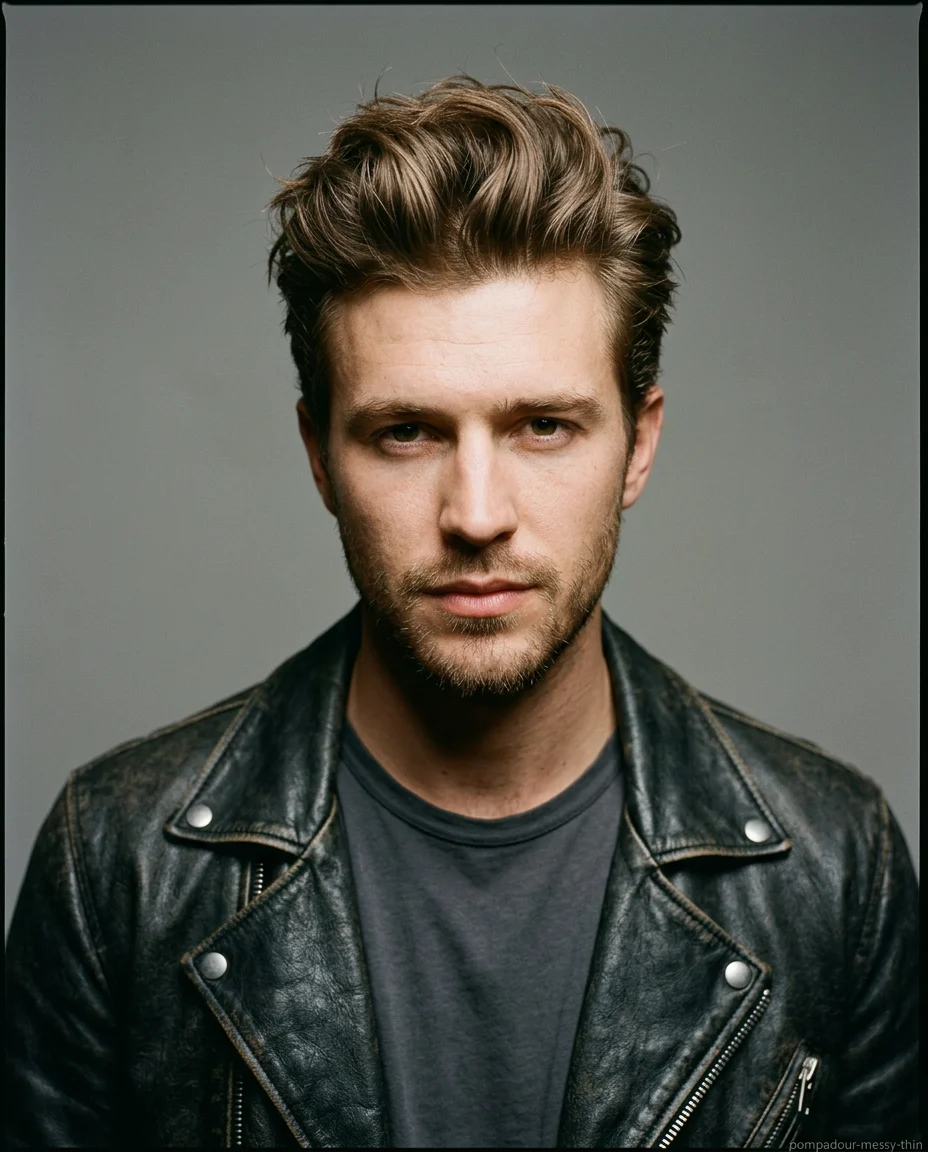
Deliberately undone, this version skips the comb entirely. Fingers and a light clay push the top up and slightly forward, leaving visible separation instead of a smooth sweep. Messy styles are genuinely one of the better options for fine hair, since imperfect texture reads as intentional rather than thin.
Q: Is messy styling actually faster than a clean pompadour?
A: About 8 minutes faster most mornings — no comb, no precise part.
The honest tradeoff is that it looks less put-together for formal settings. Great for daily wear, not what you’d pick for a wedding you’re standing up in.
8. Medium Pompadour with Low Fade
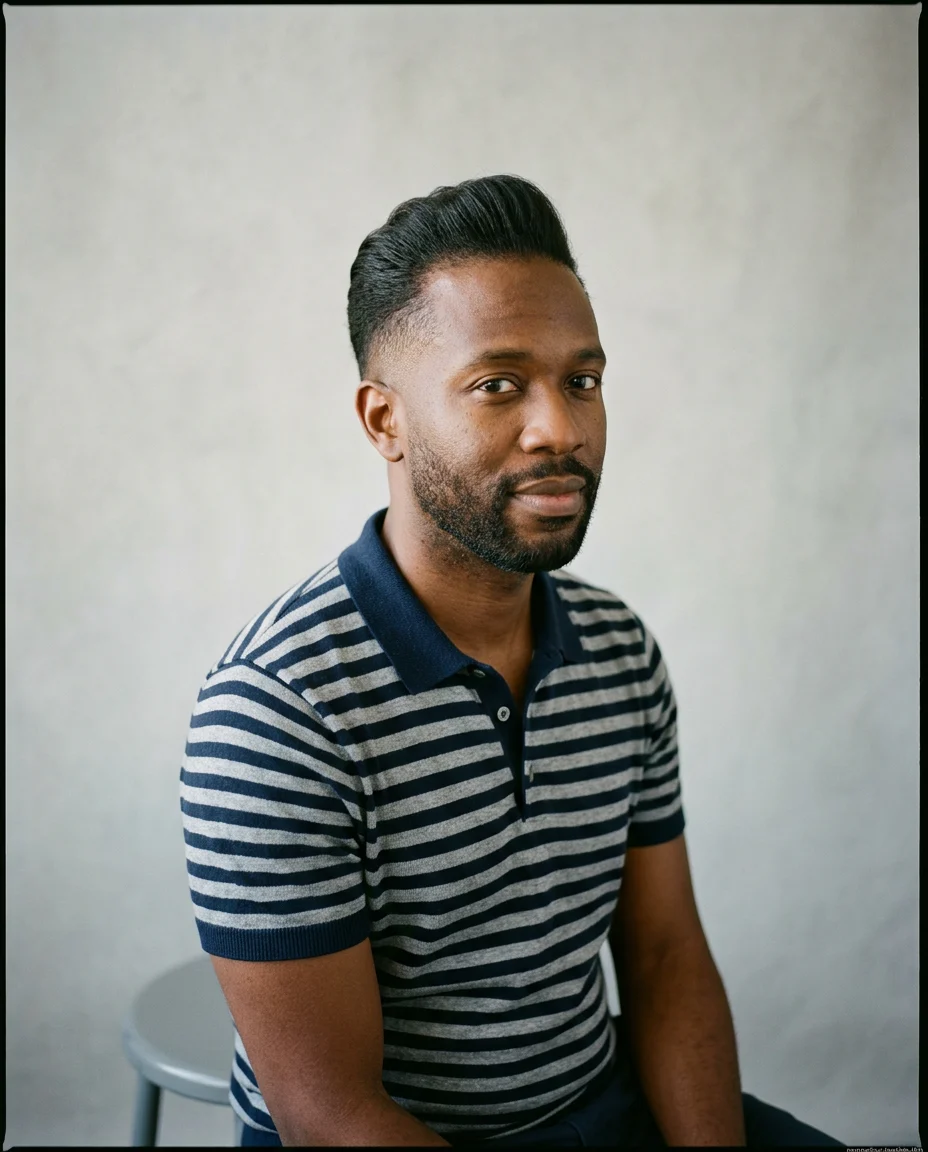
A low fade starts its blend just above the ear instead of higher up the head, keeping more length overall on the sides. It’s the most conservative fade option here — subtle enough for offices that frown on anything too sharp, while still giving the top-versus-sides contrast that makes thin hair look denser.
Q: Is a low fade a good starting point for someone who’s never had a fade before?
A: Usually, yes. Less commitment, and it grows out without looking patchy.
Most first-time fade clients end up here before working their way to something higher. There’s no shame in staying at low — plenty of guys never need more contrast than this.
9. Medium Pompadour with High Fade
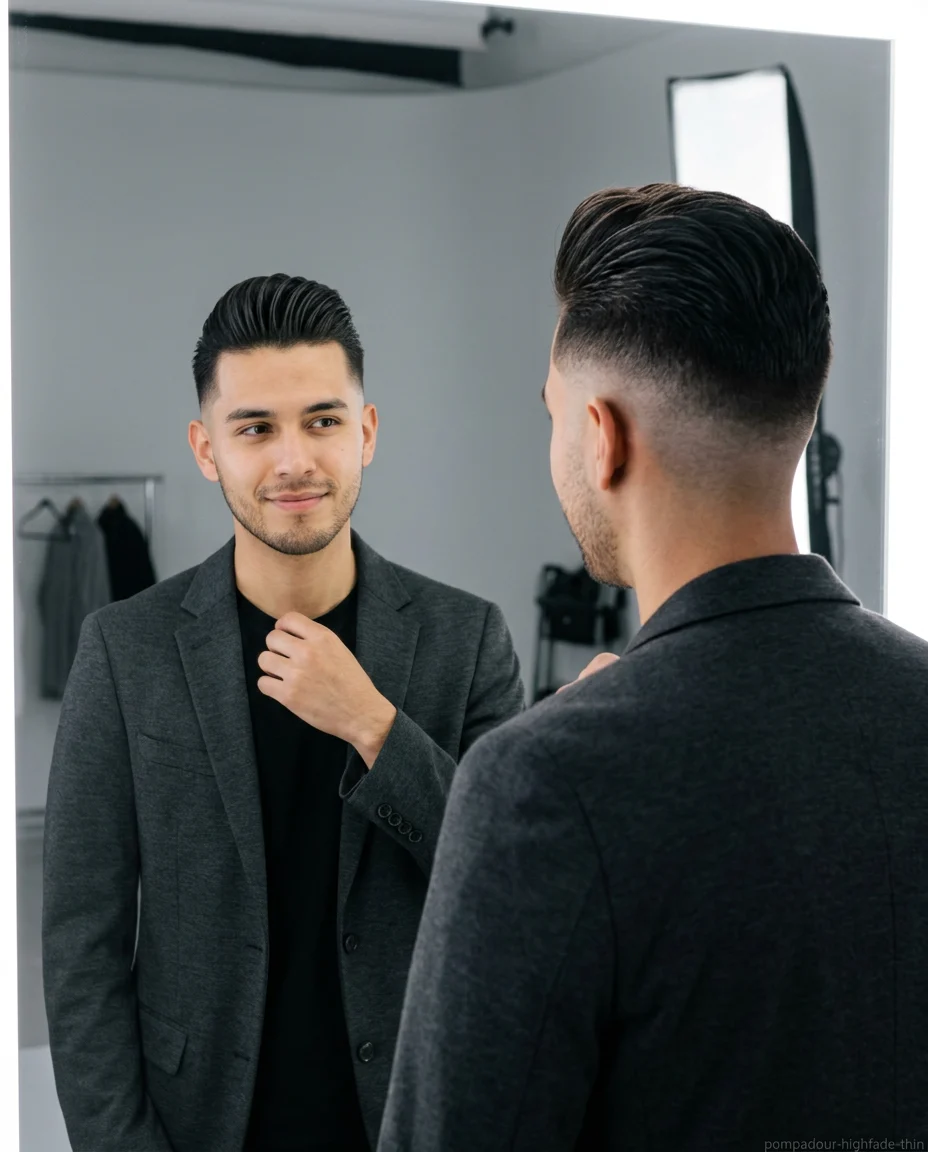
The opposite call: fade blending starts well above the ear, close to temple height, leaving a much smaller strip of longer hair up top by comparison. That shrinks the surface area where thinness would show, which is exactly why barbers recommend it for fine or receding hair more than any other fade height.
Q: Does a high fade look good on every face shape?
A: Not really — it tends to lengthen round faces more than square ones, worth trying a photo simulation first.
This is the boldest fade option on the list. It reads younger and sharper, but it’s also the hardest one to grow out gracefully if you decide to change your mind in a month.
10. Side-Swept Medium Pompadour

Rather than sweeping straight back, the top is directed diagonally across the forehead. It’s a softer silhouette that works well if your hairline has any asymmetry, since the diagonal line distracts from unevenness better than a straight-back sweep does. Fine hair actually holds a side sweep longer than a straight-back style through the day.
Q: Why does a side sweep hold up better than a straight-back pompadour?
A: Gravity works with the direction of the sweep instead of straight against it.
A light-hold cream, not a stiff gel, is the right product here. Too much hold and the diagonal line looks stiff instead of natural.
11. Medium Pompadour with Undercut
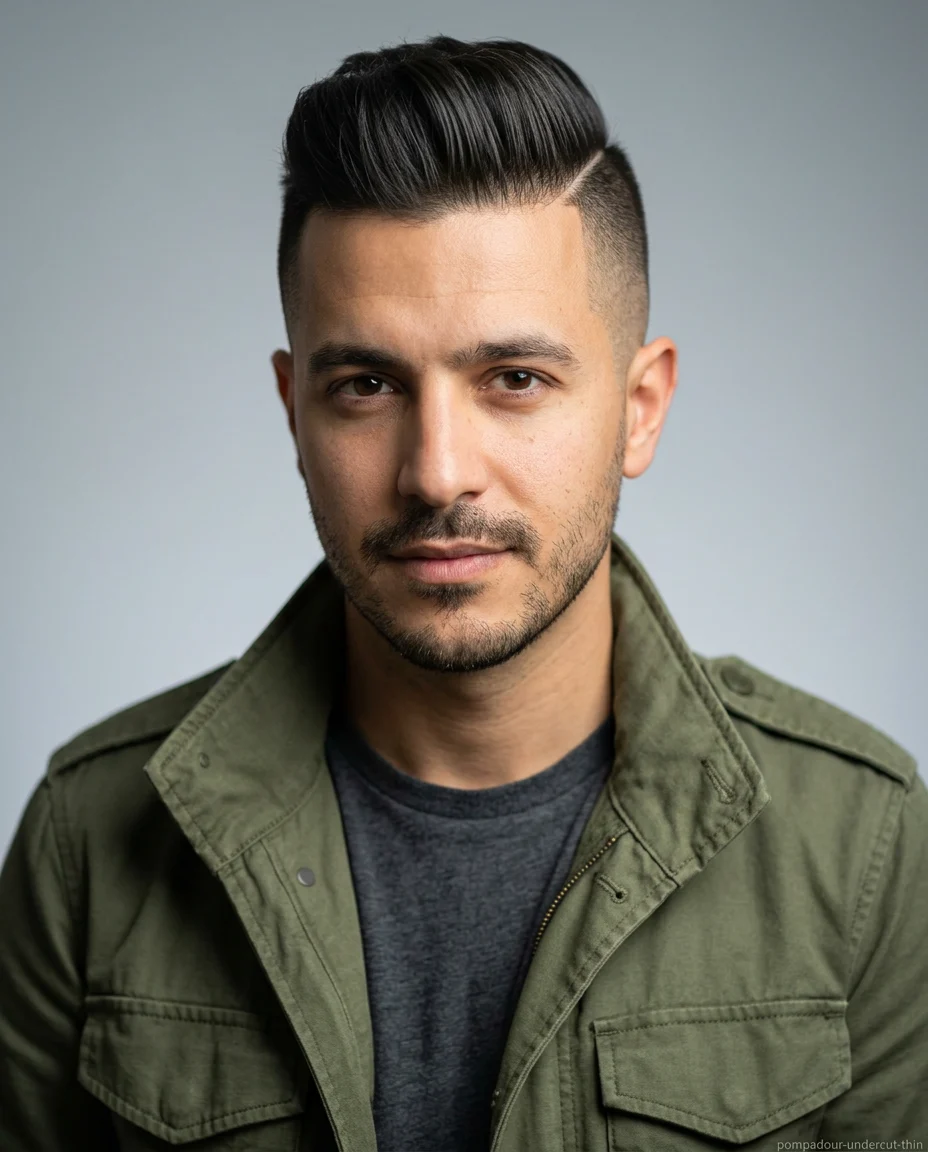
An undercut clips the sides down short and uniform with clippers, no gradual blend into the top — just a clean, visible line where short meets long. That hard contrast is one of the fastest ways to make medium-length top hair look thicker than it is, because the eye reads relative density, not absolute density.
Q: Is an undercut more work to maintain than a fade?
A: Less, actually — the sides are one length, so touch-ups are quicker at the chair.
It’s a more graphic, less blended look overall. Some guys love the boldness; others find it reads slightly dated compared to a soft fade. Depends on what you’re going for.
12. Voluminous Medium Pompadour
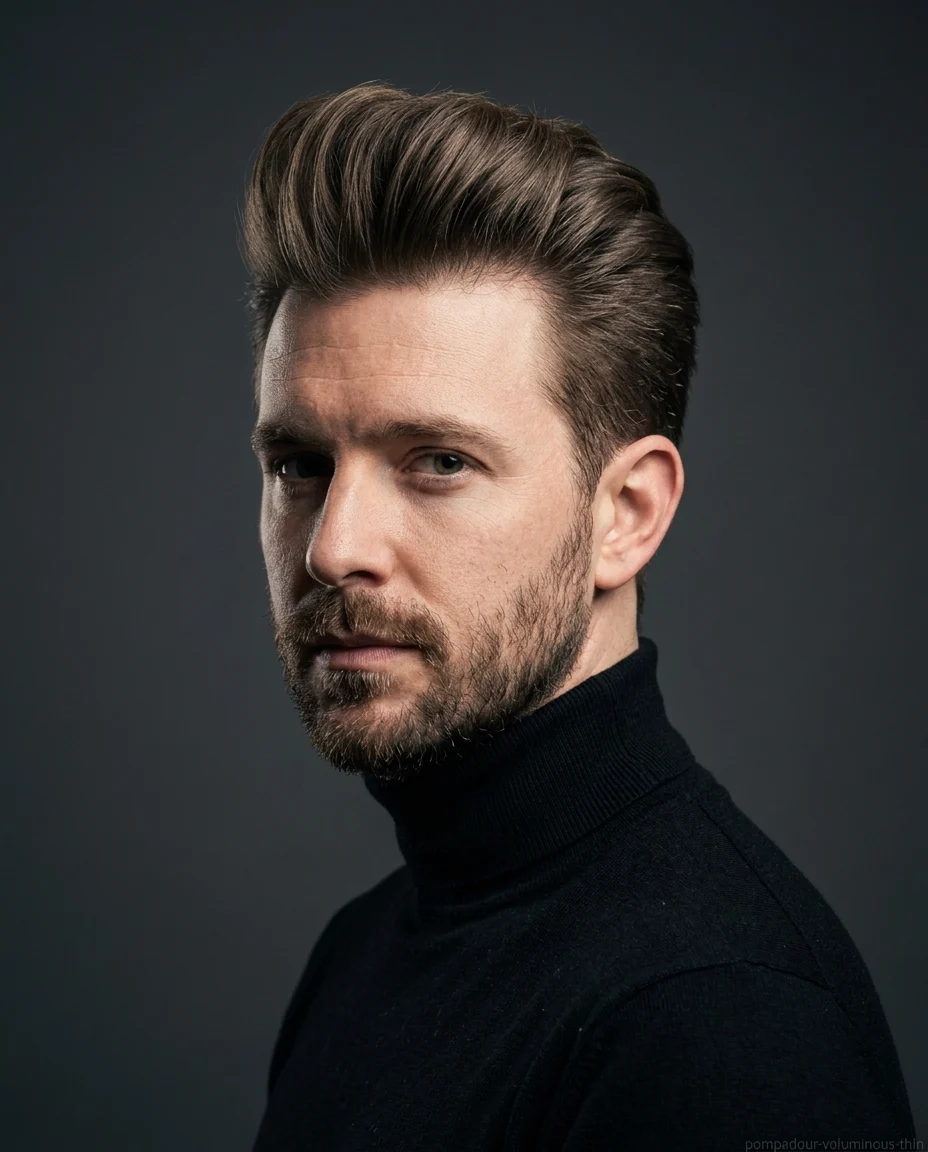
This version leans entirely on styling technique rather than cutting choices — a round brush, a blow dryer on medium heat, and a volumizing mousse applied to damp roots before anything else touches the hair. It takes real time each morning, and it’s the closest thing to a guaranteed fix for hair that looks flat by default.
Q: How long does this styling routine actually take?
A: About 12 to 15 minutes once you’ve got the round-brush technique down.
Worth learning if you have somewhere to be that matters. Not realistic as a daily habit for most guys, which is the honest tradeoff nobody selling volumizing mousse wants to mention.
13. Medium Pompadour with Line Up
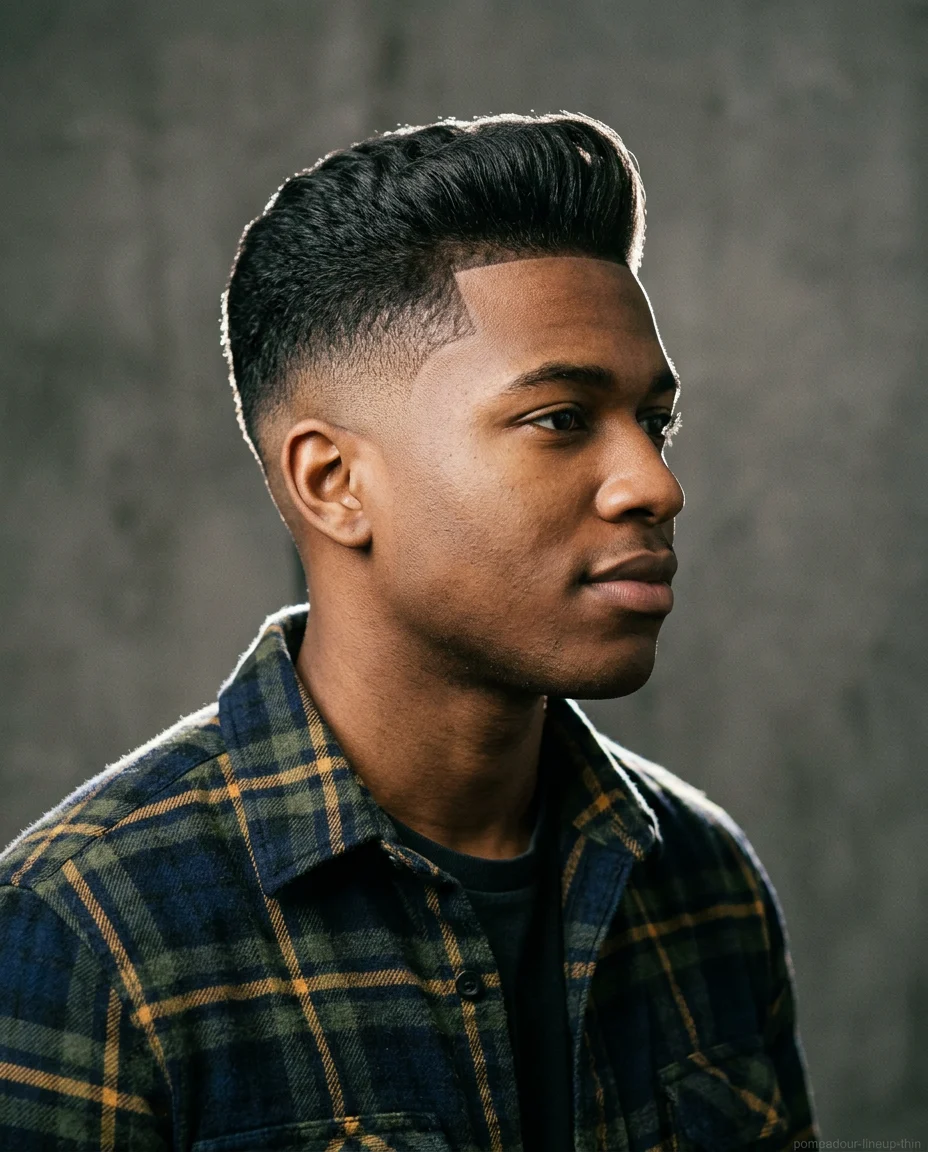
A line up is a razor-sharp edge cut along the hairline and temples, usually paired with a fade underneath. It sharpens the whole style’s outline without touching the top length at all, which makes it one of the lowest-risk additions for someone nervous about losing volume during a cut.
Q: Can a line up be added to any of the other styles on this list?
A: Most of them, yes — it’s an edging technique, not a separate haircut.
It grows out within about a week and a half, faster than most people expect. If you want it looking crisp, plan on a quick edge-up between full cuts.
14. Wavy Medium Pompadour

Natural wave changes the whole calculation for thin hair — waves create their own visual texture without any cutting trick required. A sea salt spray on damp hair, scrunched rather than combed, lets the natural pattern do the volume work a straight-haired guy would need product for.
Q: Should wavy hair be cut differently than straight hair for this style?
A: Slightly shorter layers work better — long layers tend to weigh waves out flat.
The honest catch is humidity. Waves react to weather more than straight styles do, so this one looks different on a dry day than a muggy one.
15. Medium Pompadour with Mid Fade
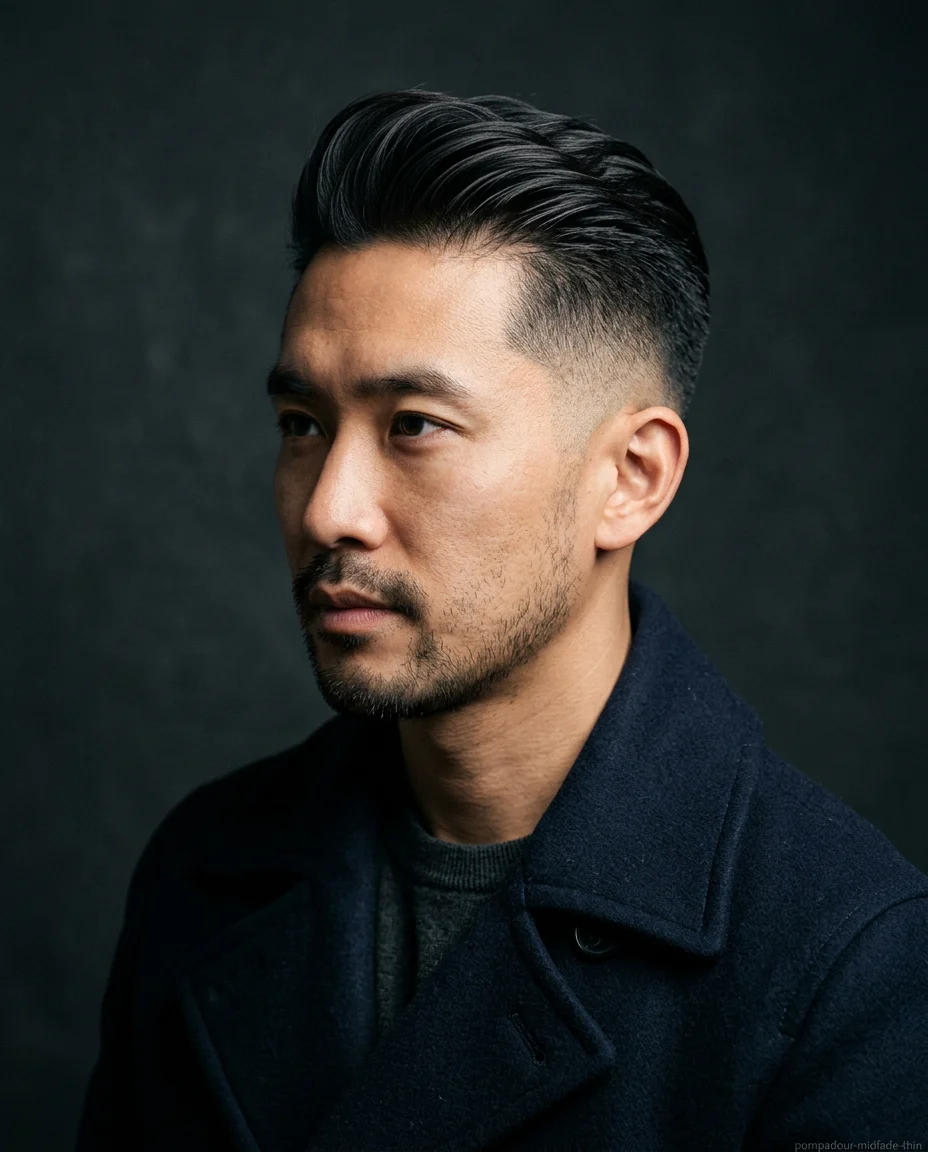
Sitting between low and high, a mid fade blends starting roughly at the temple’s midpoint. It’s the most commonly requested fade height for a reason — enough contrast to build the density illusion, not so much that it feels like a statement haircut. Many barbers default here unless you ask otherwise.
Q: Is mid fade the safest option if I can’t decide on fade height?
A: Pretty much. It’s the middle ground that works for the widest range of face shapes.
If you’ve never had a fade before and don’t want to think too hard about it, this is where to start. You can always go higher next time.
16. Pomade-Finish Medium Pompadour

A heavier, high-shine pomade finish leans into a slicked, almost vintage look rather than trying to fake extra volume. On thin hair this actually works better than most people assume — the shine reads as intentional styling, not as scalp showing through, which is a different problem than the matte look solves.
Q: Does heavy pomade damage thin hair over time?
A: Not the hair itself, but buildup can clog follicles if you’re not washing it out nightly.
A clarifying shampoo once or twice a week keeps this manageable. Skip that step for a month and you’ll notice the shine turning greasy instead of polished.
17. Medium Pompadour with Disconnected Undercut
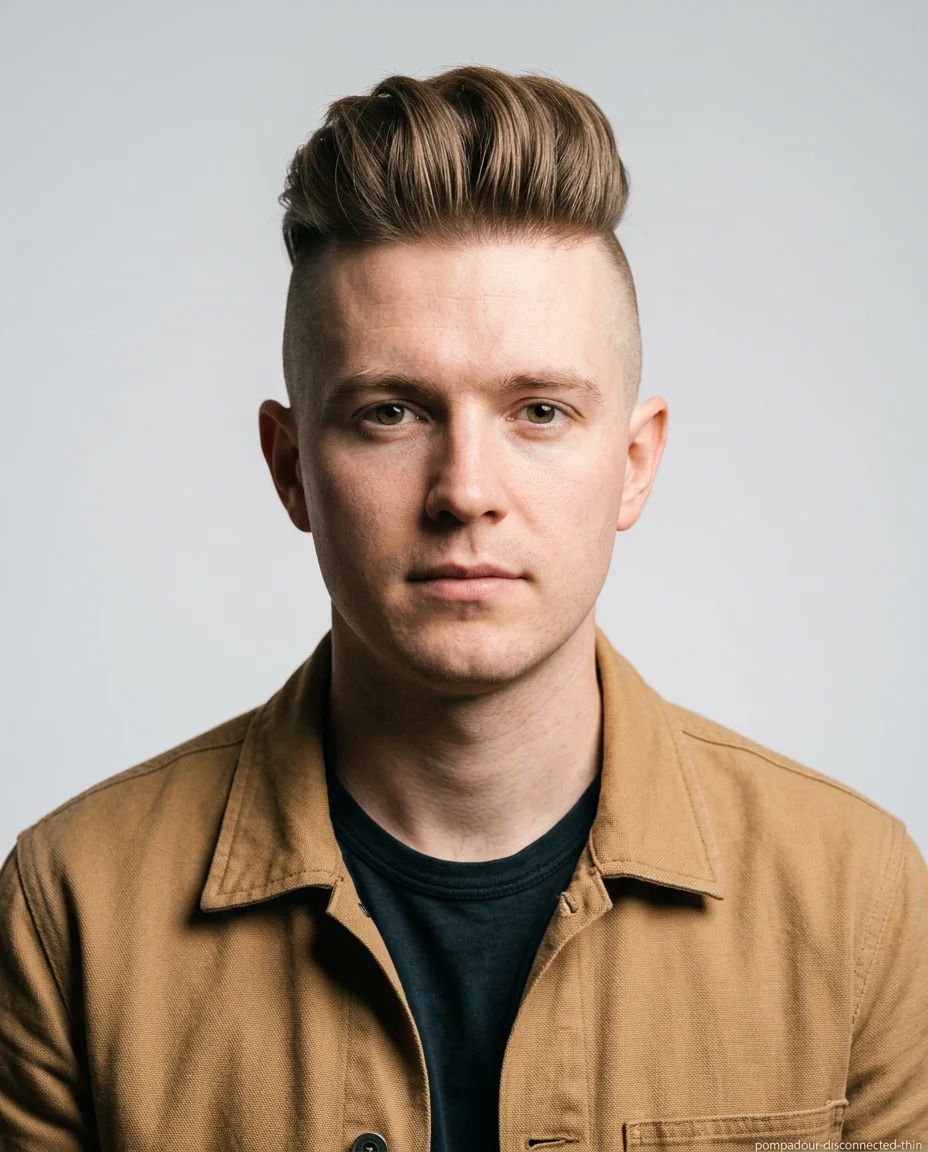
The most dramatic option here: sides buzzed down to near-skin with clippers, top left at full medium length, and zero blending between the two — an intentional, visible break instead of a gradient. It’s not subtle, and it’s not meant to be. For thin hair, the stark contrast does more volume-illusion work than any fade height can.
Q: Is a disconnected undercut appropriate for a conservative workplace?
A: Depends on the office, honestly. It reads bolder than every fade on this list.
This is the style to pick if you want people to notice the haircut, not just the hair. Growing it out gracefully takes real patience — expect an awkward stretch around week five.