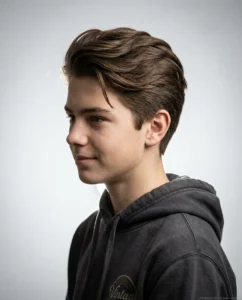
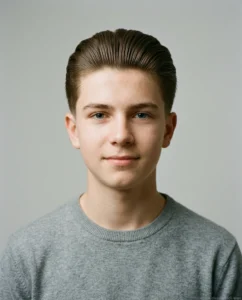
Thick hair does not need the thinning a barber defaults to on an average head of hair. Over-thin it and the pompadour roll collapses instead of standing up, which is the single most common way this cut goes wrong on thick hair.
Classic Long Pompadour
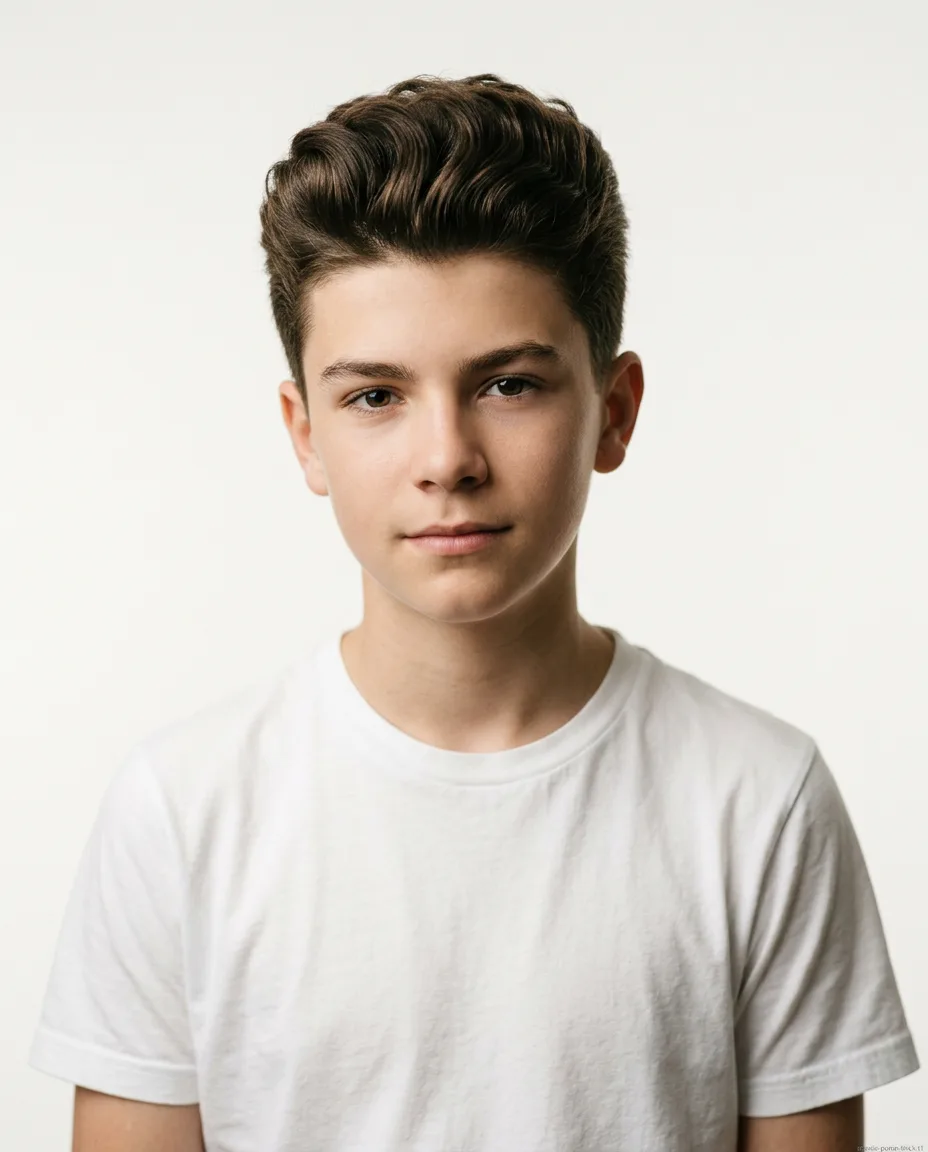
Thick hair holds this shape with barely any product, which makes it a good entry point if you’ve never styled a pompadour before. A light cream is usually all you need.
Ask for 4 inches minimum on top. Thick hair carries length well without looking heavy.
Length is the other variable worth being specific about. Below about 4 inches on top there is simply not enough hair to build a roll, and the shape flattens into a quiff instead. Four to five inches gives you the height without the top starting to fall forward under its own weight by mid-afternoon.
Textured Long Pompadour
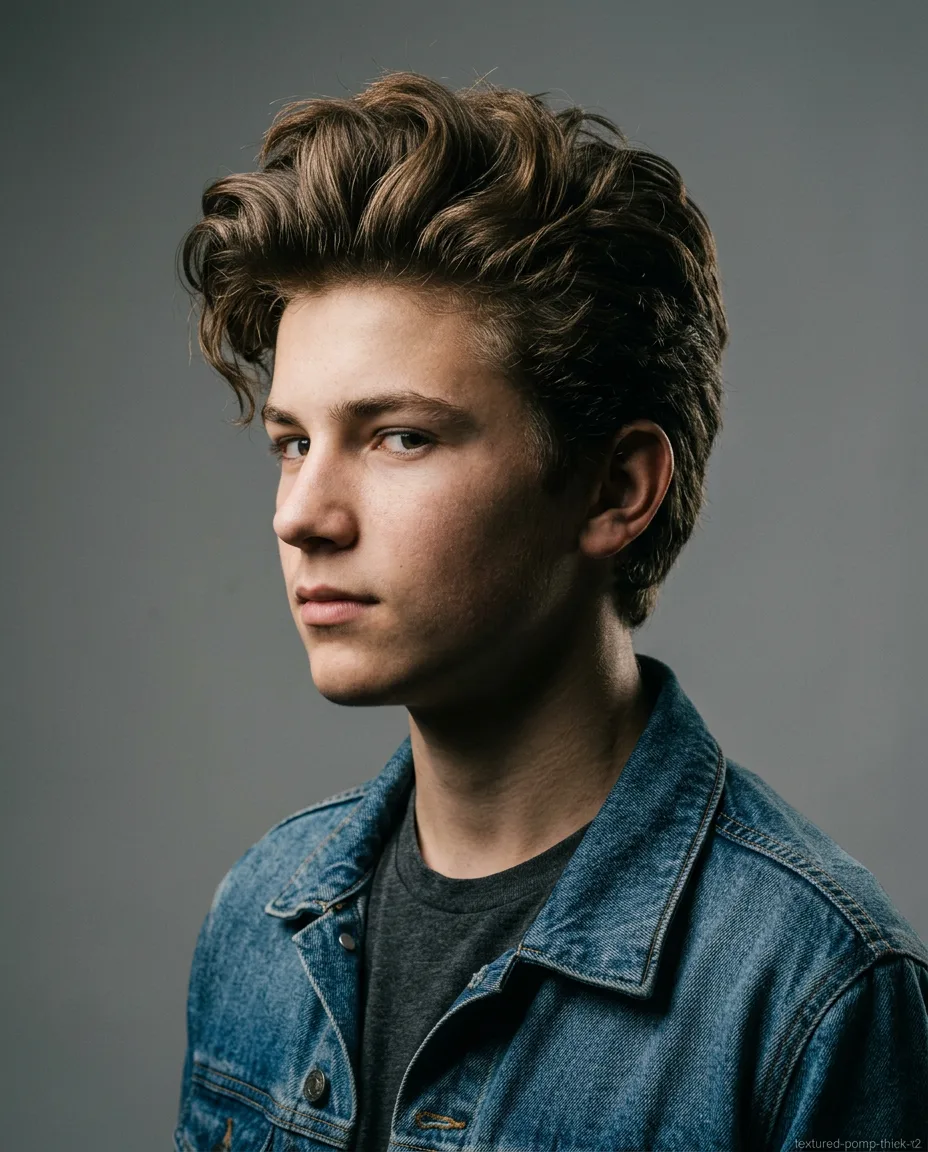
This version works with thick hair’s natural texture instead of smoothing it out. A small amount of clay defines what’s already there.
Less product overall than the classic version needs — thick hair does a lot of the work on its own.
A textured pompadour also survives a school day better than a smooth one. Smoothing thick hair into a clean roll takes product that loses its grip as the day warms up, while a textured finish is meant to look slightly undone from the start, so it degrades into something that still looks deliberate.
Long Pompadour with Taper Fade
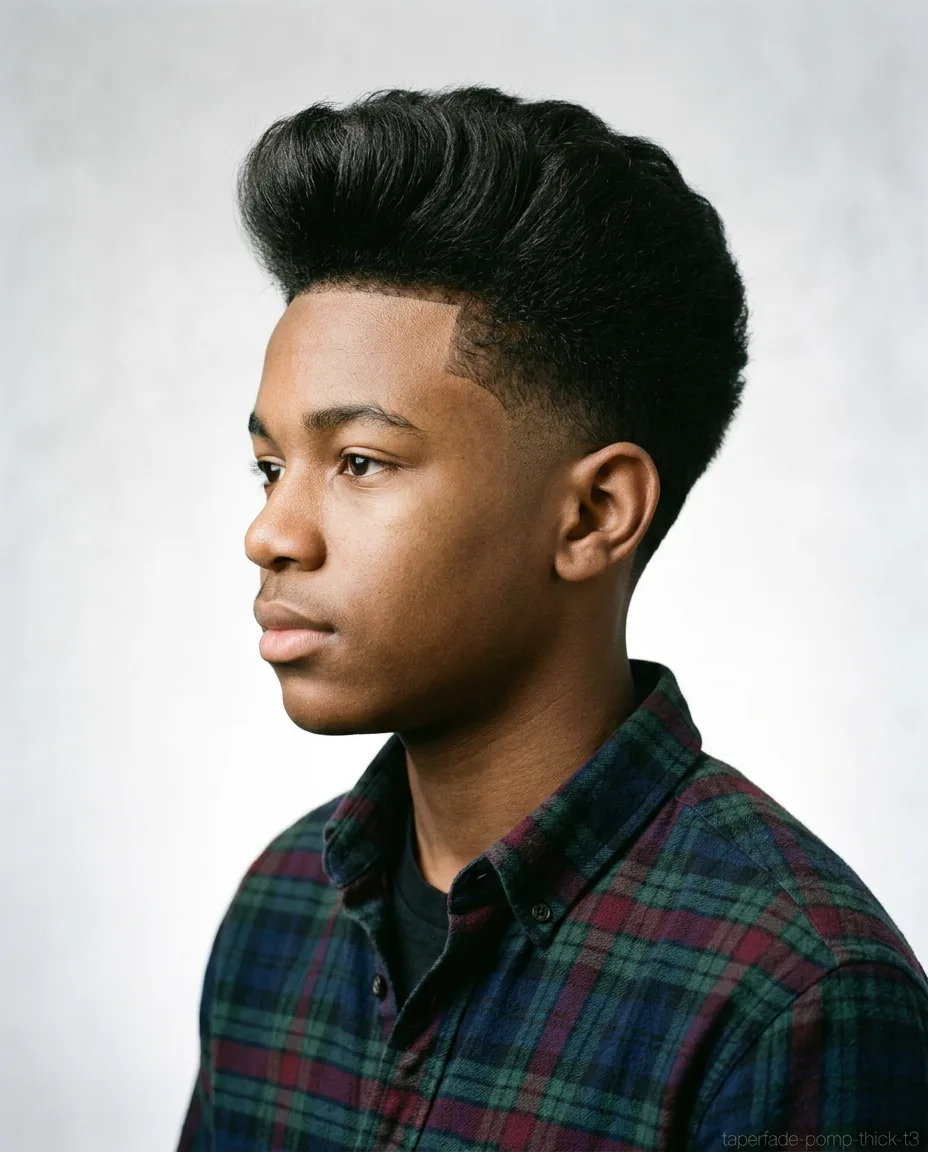
The taper keeps things school-appropriate while thick hair up top gets to be the focus. Safe choice, easy to maintain.
Every 3 weeks keeps this looking fresh. Thick hair fills in the fade slightly faster than thin hair does.
The taper grows out without a visible step, which matters when appointments slip. Three weeks is the ideal, but a taper at five weeks still reads as a haircut rather than a grow-out. The undercut further down this list does not give you that margin.
Ask for the taper to start slightly higher than the barber first suggests. On thick hair a very low taper barely registers against the volume up top, and the contrast between the sides and the roll is most of what makes this read as a pompadour rather than long hair pushed back.
Long Pompadour Undercut

More dramatic contrast than the taper. The shaved sides make the thick volume on top look even bigger by comparison.
Check your school’s grooming policy first — some schools flag undercuts as too extreme.
Contrast is the entire point, so ask for the disconnection to sit high enough to actually show. A shy undercut on thick hair just looks like a heavy-handed fade, which gets you the maintenance schedule without any of the payoff.
Side Part Long Pompadour

Thick hair holds a part line cleanly, no thinning-out concerns like fine hair has. Comb it in while damp and it stays put.
Good option for school photos or anything a bit more formal.
Comb the part in while the hair is damp rather than dry. Thick hair sets its direction as it dries, and a part combed into dry hair lifts and closes again within an hour or two. Damp costs nothing and holds all day.
Voluminous Long Pompadour

Thick hair gets real height here without needing a blow dryer session every morning. Air-drying with a light mousse gets you most of the way there.
Around 5 minutes of morning effort, which is less than most guides claim.
Reach for mousse rather than clay on this one. Clay adds grip but it also adds weight, and weight is what pulls a tall pompadour down over the course of a day. Mousse builds volume at the root while the hair is still damp, then a small amount of clay on the ends holds the shape without loading the roll.
Long Pompadour with Hard Part

The shaved line adds a sharp detail without much extra effort on your end. It’s a small addition that changes the whole look.
Needs a fresh cut every 2 to 3 weeks or it grows out and disappears.
One caution on thick hair: the line has to be cut deep enough to clear the surrounding density or it disappears within days. Ask the barber to go slightly deeper than they would on fine hair, and expect the first pass to sting a little more.