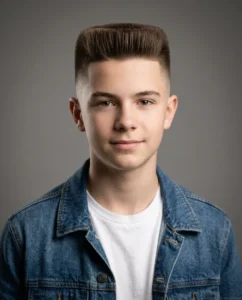
1. Classic Flat Top with Skin Fade
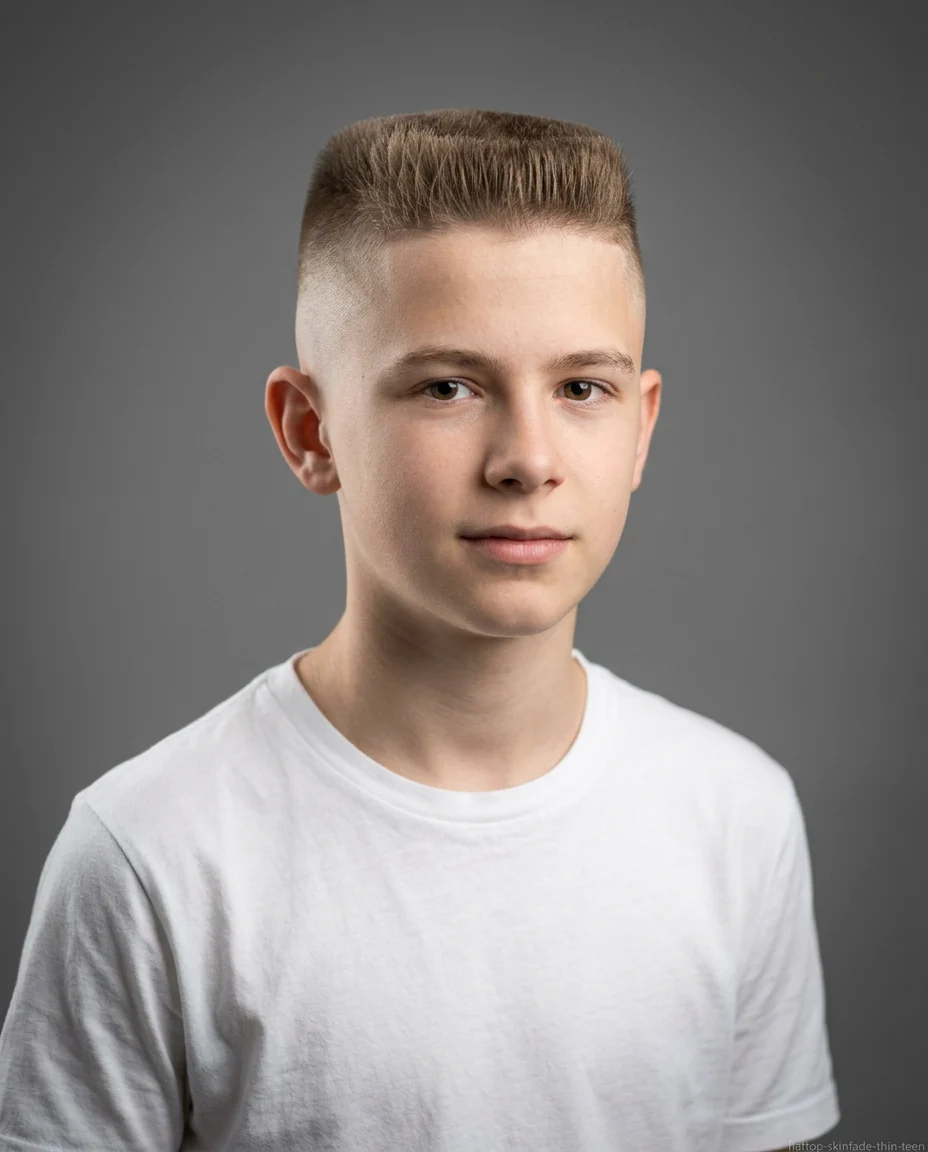
Thin hair fights gravity past an inch — it flops sideways and picks its own part. Flat top clippering over a comb gives it something to stand against.
Sides go down to skin above the ears. A half-inch guard holds under the flat section, so the contrast reads immediately, even across a room.
Plan on a trim every 10 to 14 days. Thin hair shows regrowth at the temples fast, and this cut only looks sharp when the line stays crisp.
2. Textured Flat Top Crop
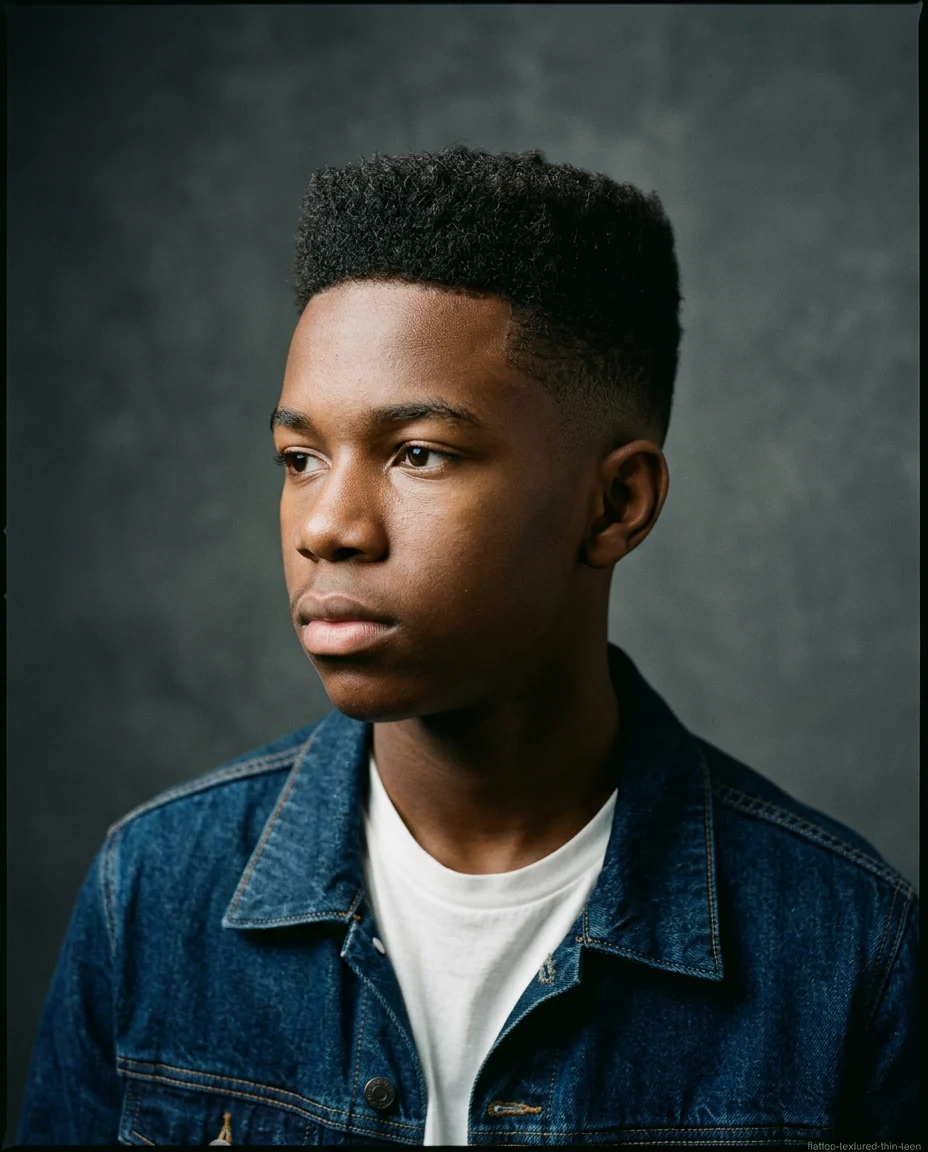
Not every kid wants the boxy, squared-off look. A textured crop keeps the flat plane but roughs up the surface with a matte texturizing spray.
Sides taper down instead of fading to skin, which suits thin hair better. Less shock at the part line, more of a gradual blend.
This one’s forgiving between cuts. It can stretch to three weeks before it looks unkempt, which matters if the barber budget is tight this semester.
3. Flat Top with Taper Fade
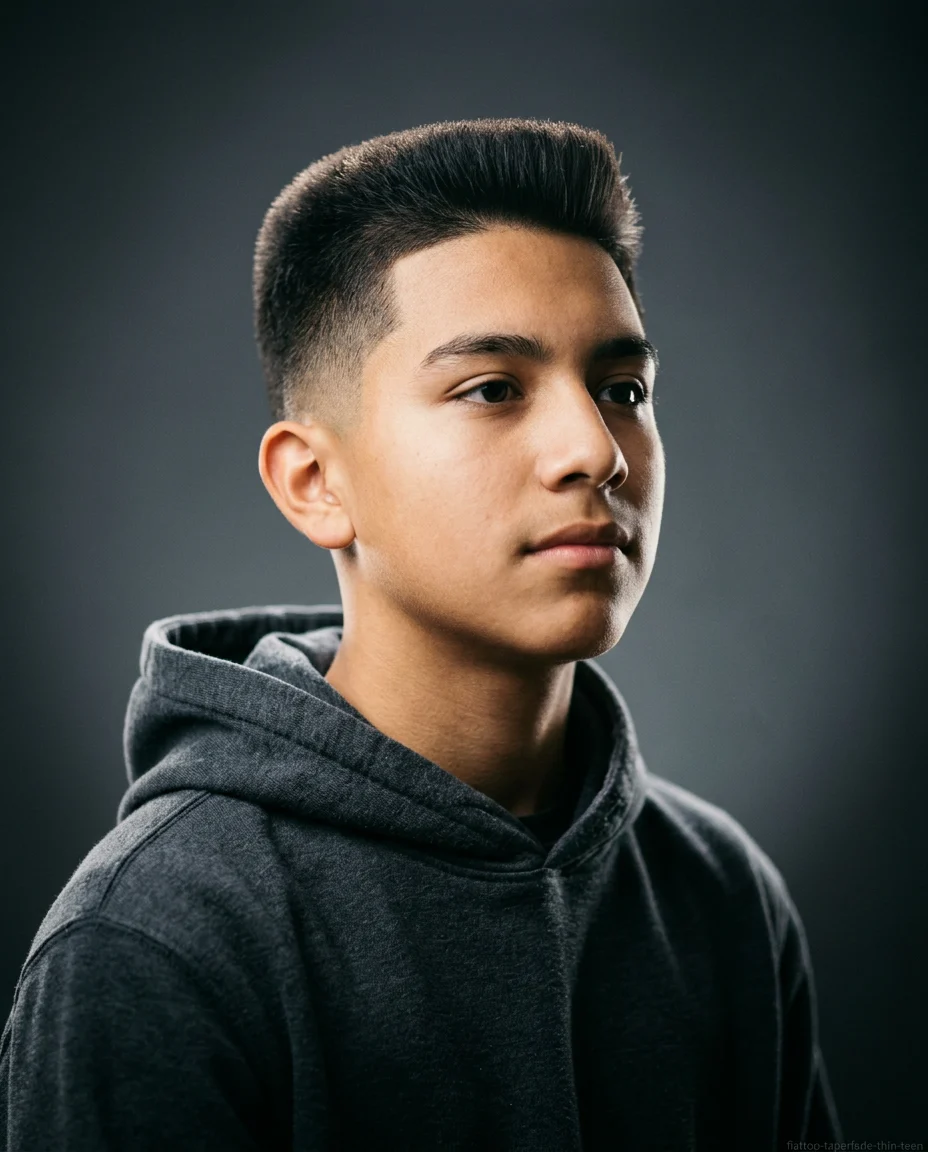
The taper fade is the safer cousin of the skin fade. Sides shorten gradually from the flat top down to the neckline, no hard stop anywhere.
Thin hair handles a taper better than most cuts — less volume fighting the gradient. The blend looks cleaner, faster, with less product.
Most barbers run this one on autopilot. It travels well, reliable even when the regular guy isn’t around and a new stylist takes the chair.
4. High and Tight Flat Top
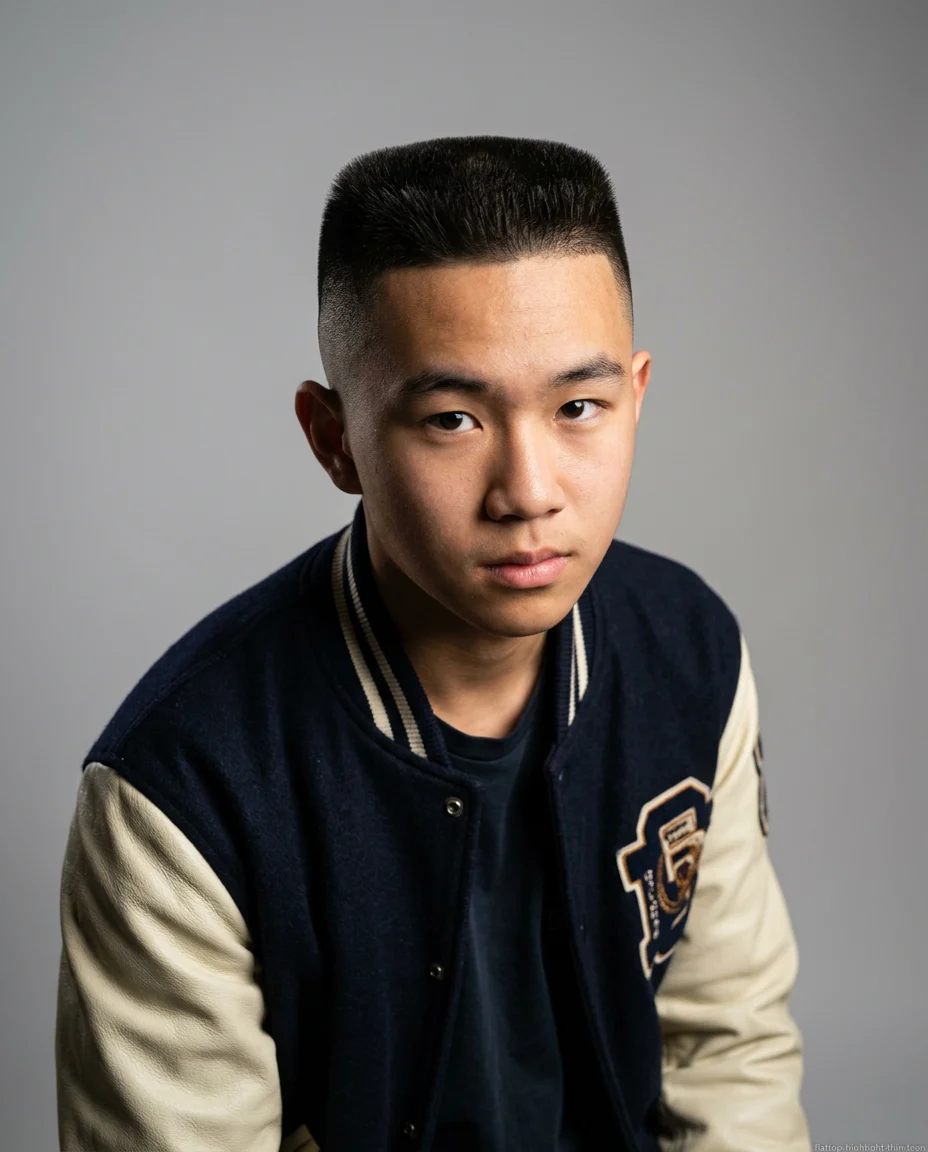
Sides get buzzed to a number 1 or 2, and the flat top sits shorter than usual, maybe half an inch. Low maintenance, full stop.
Thin hair basically stops being a problem at this length. There’s nothing loose enough left to flop or part the wrong way.
The trade-off is obvious: it reads more military than trendy. Fine for some 14-year-olds, a hard pass for a kid chasing a look for school photos.
5. Flat Top with Temple Fade
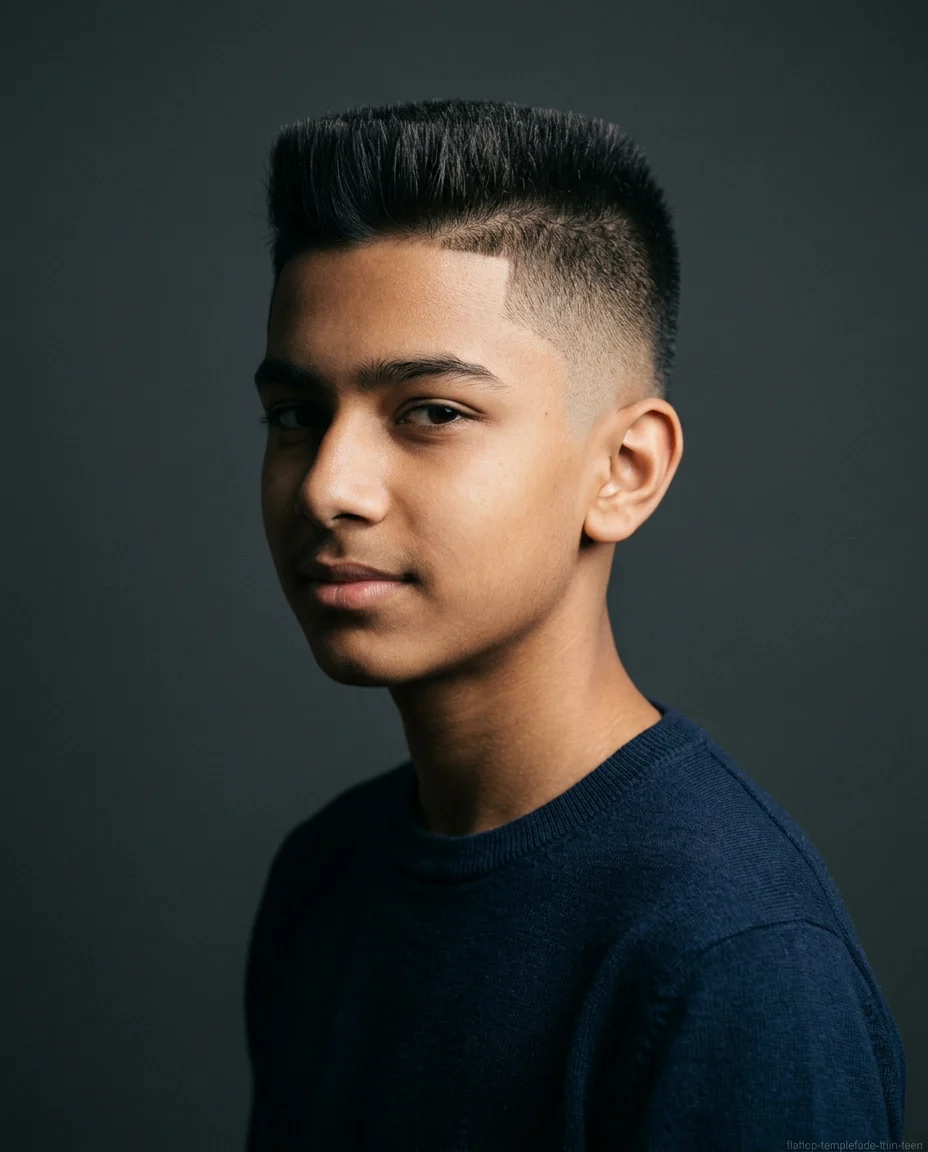
A temple fade shaves just the hairline around the temples, leaving the sides longer than a full fade would.
It works with thin hair because it draws attention to the forehead and brow instead of the crown, where thinning usually shows first on teenage scalps.
Barbers charge close to the same as a standard fade for this one. No real cost difference, just a different shape decision.
6. Ivy League Flat Top
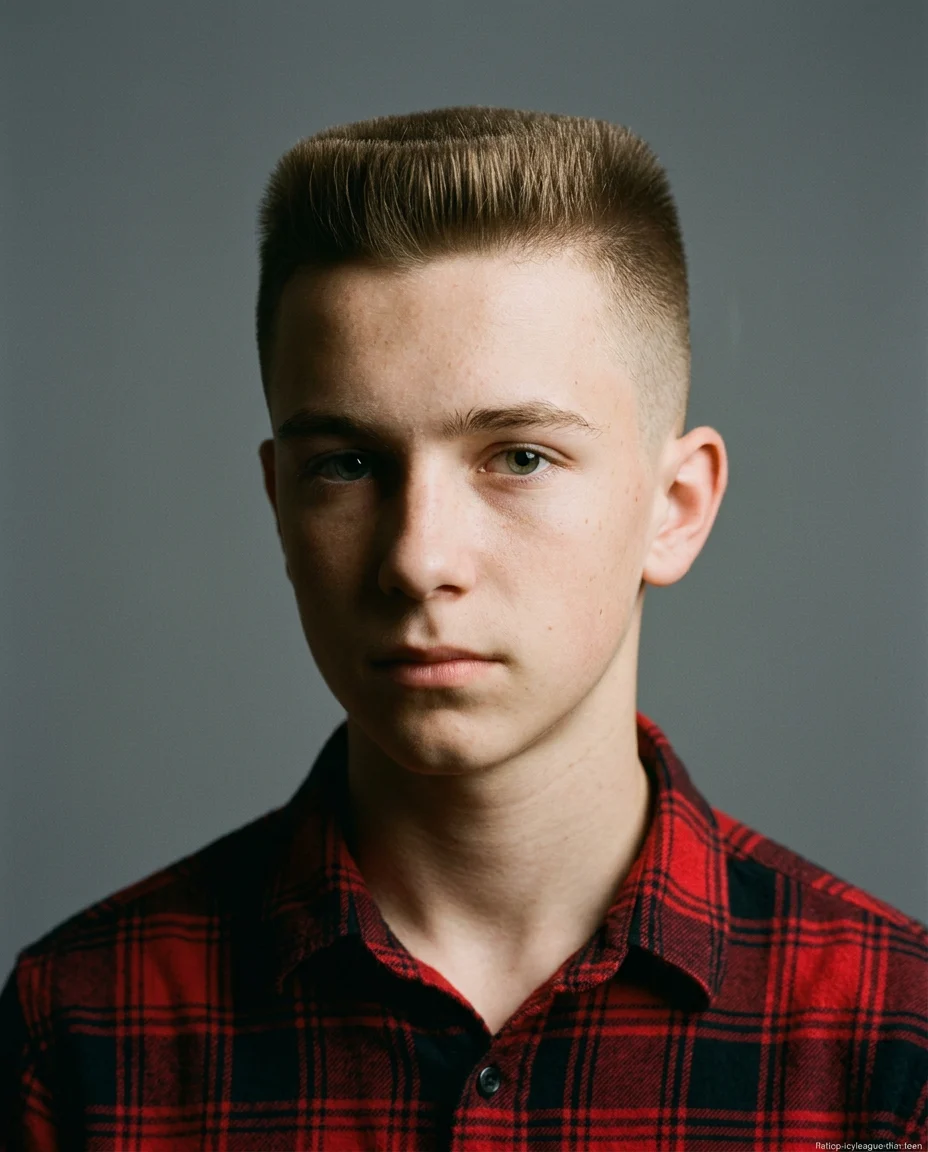
The Ivy League version keeps more length on top, close to an inch and a half, blended flat instead of pushed into a full pompadour.
It needs a matte clay to hold, not gel. Gel weighs thin hair down until it looks wet instead of styled.
This is the pick for a kid who wants something that photographs well but still passes a school dress code without anyone asking questions.
7. Flat Top with Hard Part
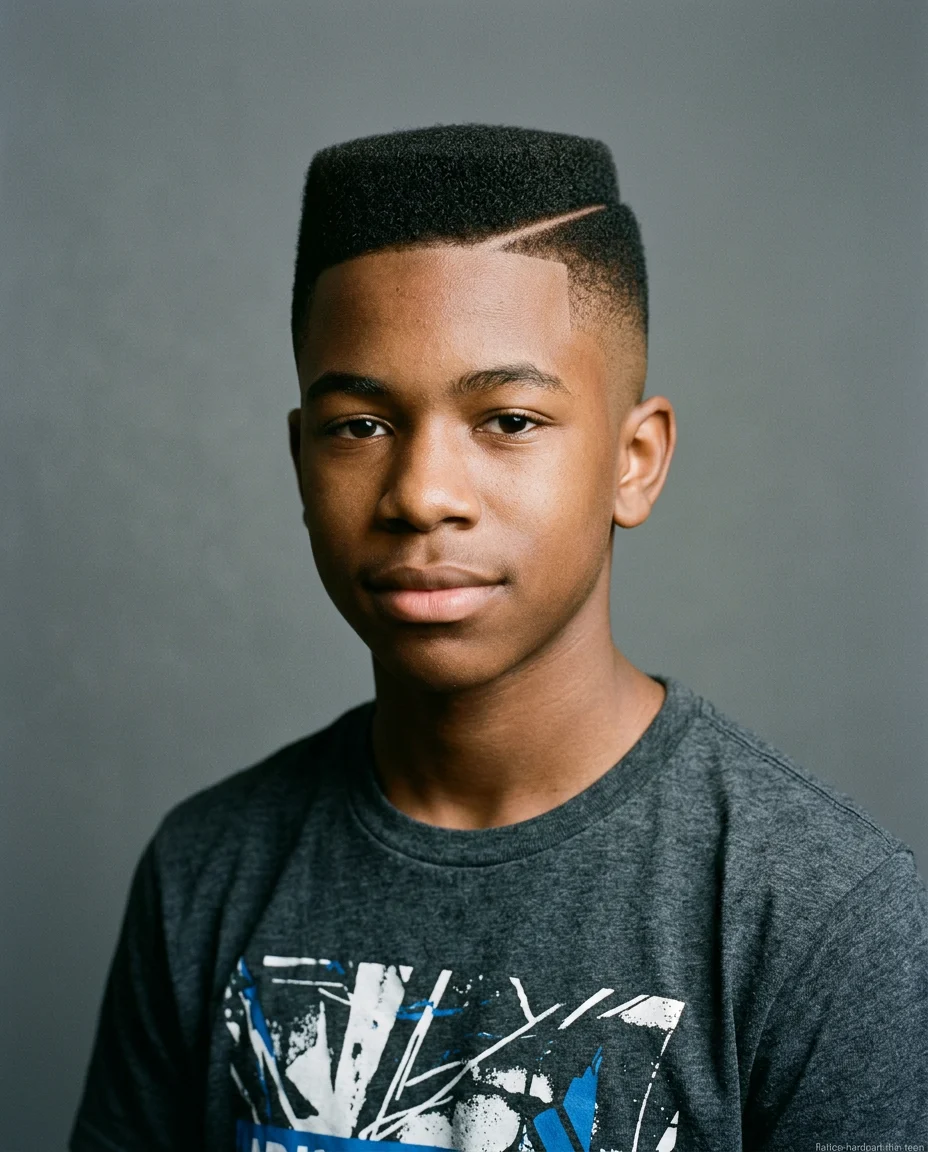
A hard part is a shaved line cut into the side, separating the flat top from the fade below it.
On thin hair it does something clever. It creates a visual edge where the hair itself can’t build enough density to do it alone.
It needs redefining every 2 to 3 weeks, or the line grows soft and starts looking accidental instead of deliberate.
8. Buzzed Flat Top Fade
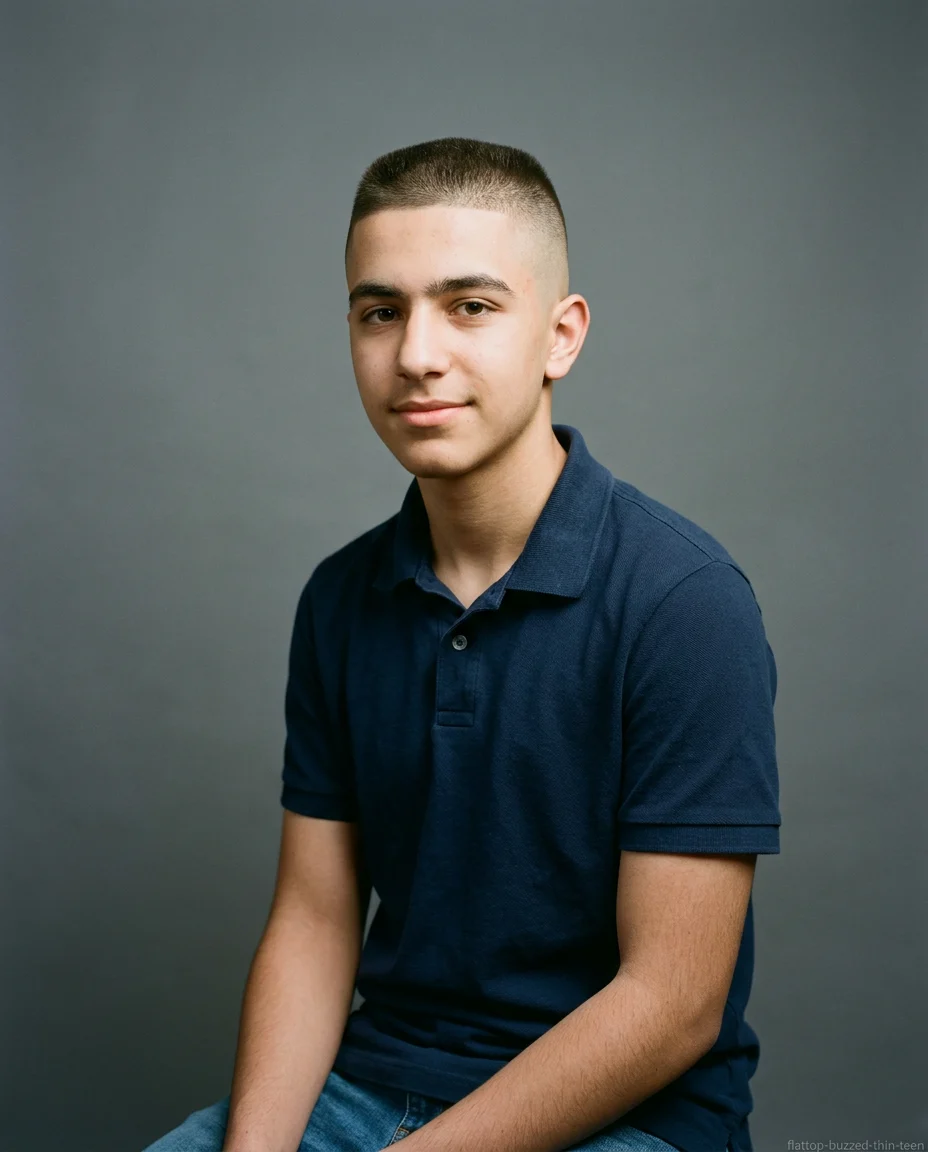
This drops the top to a half inch — still flat, still faded, with almost no morning styling required.
Thin hair actually looks thicker at this length. Shorter strands stand up on their own without product, which reads as fuller than it really is.
Skip this one if the kid actually likes doing his hair. It removes styling from the equation entirely, and some 15-year-olds take that personally.
9. Flat Top with Undercut Sides
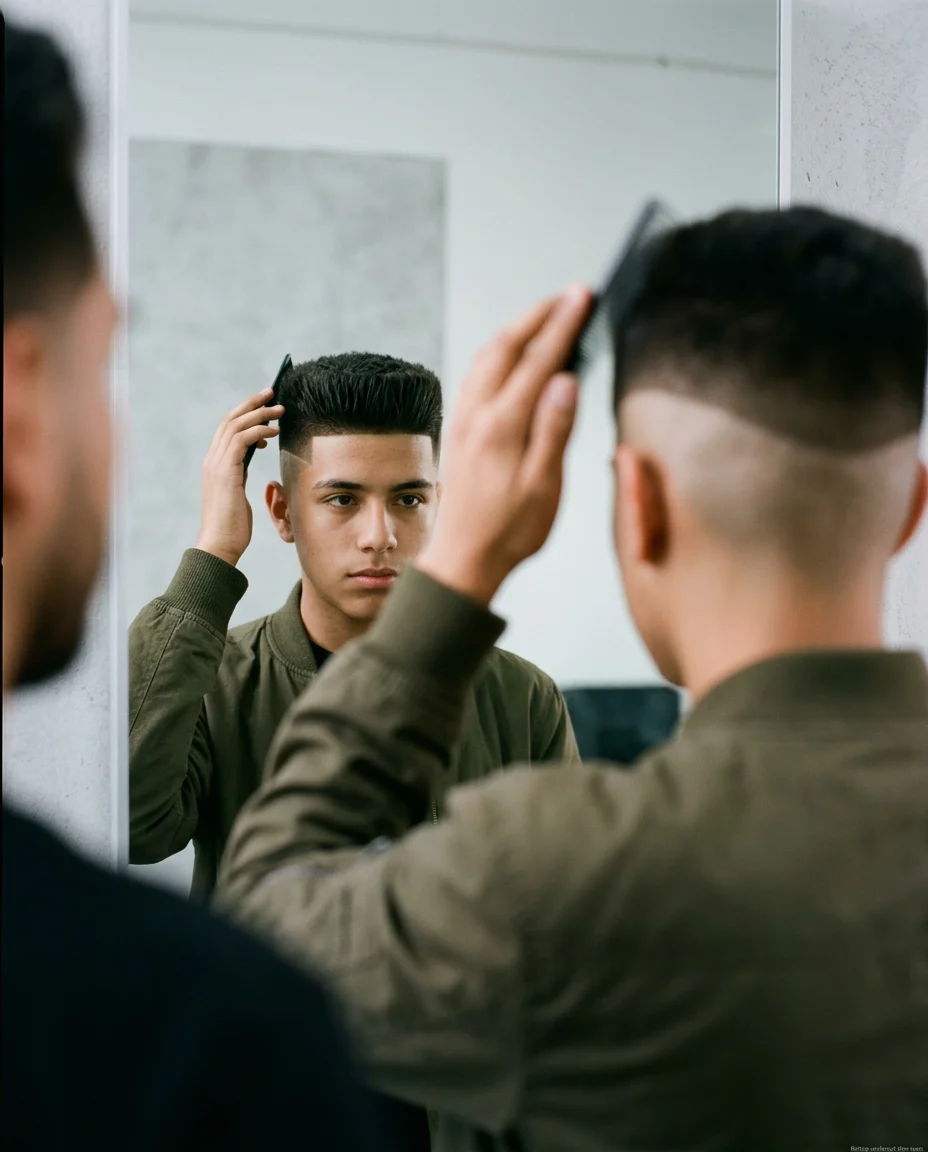
The undercut takes the sides down hard and short, almost to skin, while the top stays a touch longer than the skin-fade version.
It’s a bigger contrast jump than a regular fade, and it reads older. More like a 17-year-old’s cut than a middle schooler’s.
Growth shows fast at this contrast level — figure a touch-up every 10 days to keep it sharp.
10. Low Flat Top Fade
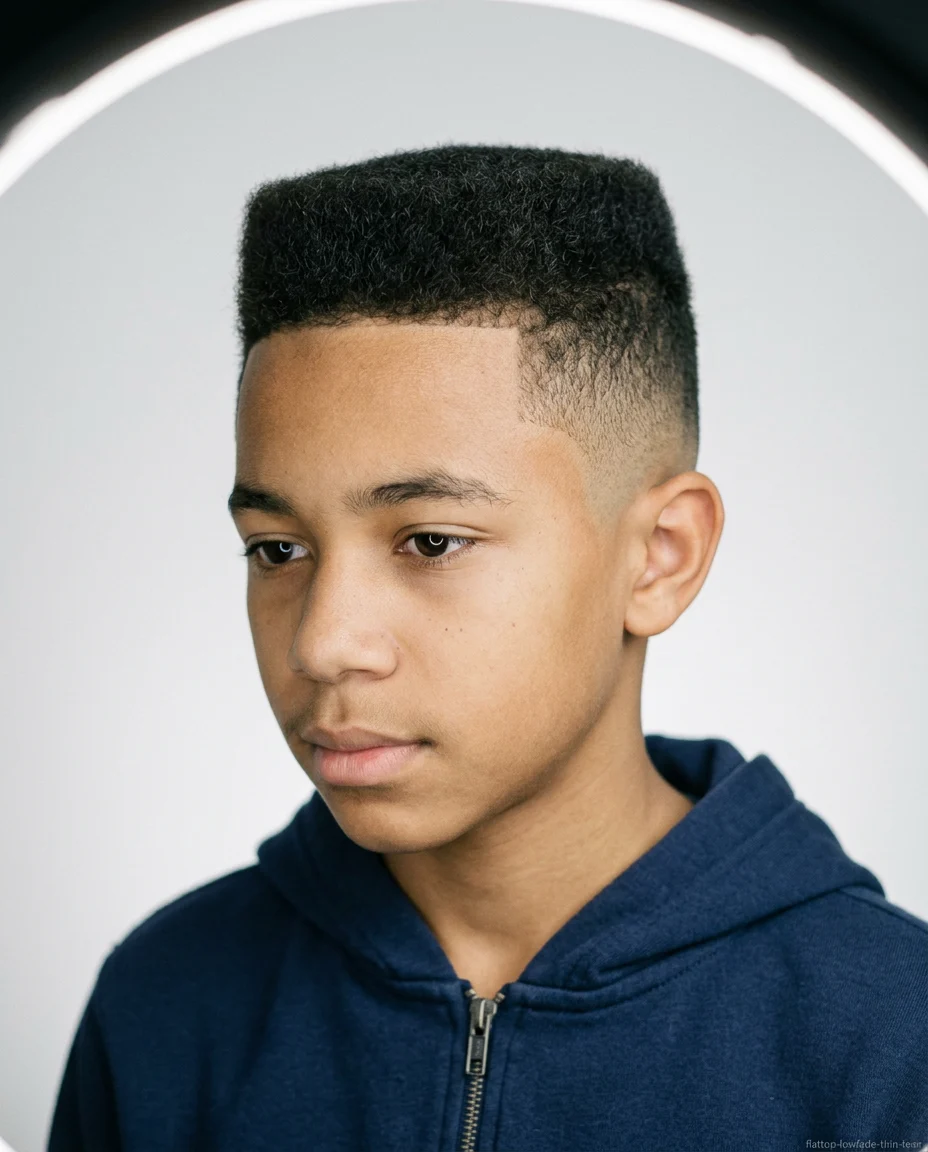
A low fade keeps the fading action close to the ear instead of climbing toward the crown.
It’s the gentlest transition here, which favors thin hair that can’t support a dramatic high fade anyway.
Request this for a first-ever fade — less can go wrong, and it still reads as a real haircut, not just a trim.
11. Flat Top with Design Line

A single shaved line through the side, sometimes two, adds a graphic element that thin hair can’t fake with texture alone.
Barbers usually charge $5 to $10 extra for a design line, and it needs redoing whenever the fade gets refreshed.
This works better as a statement than a daily default — for a kid who wants to stand out, not blend in.
12. Flat Top Crew Cut
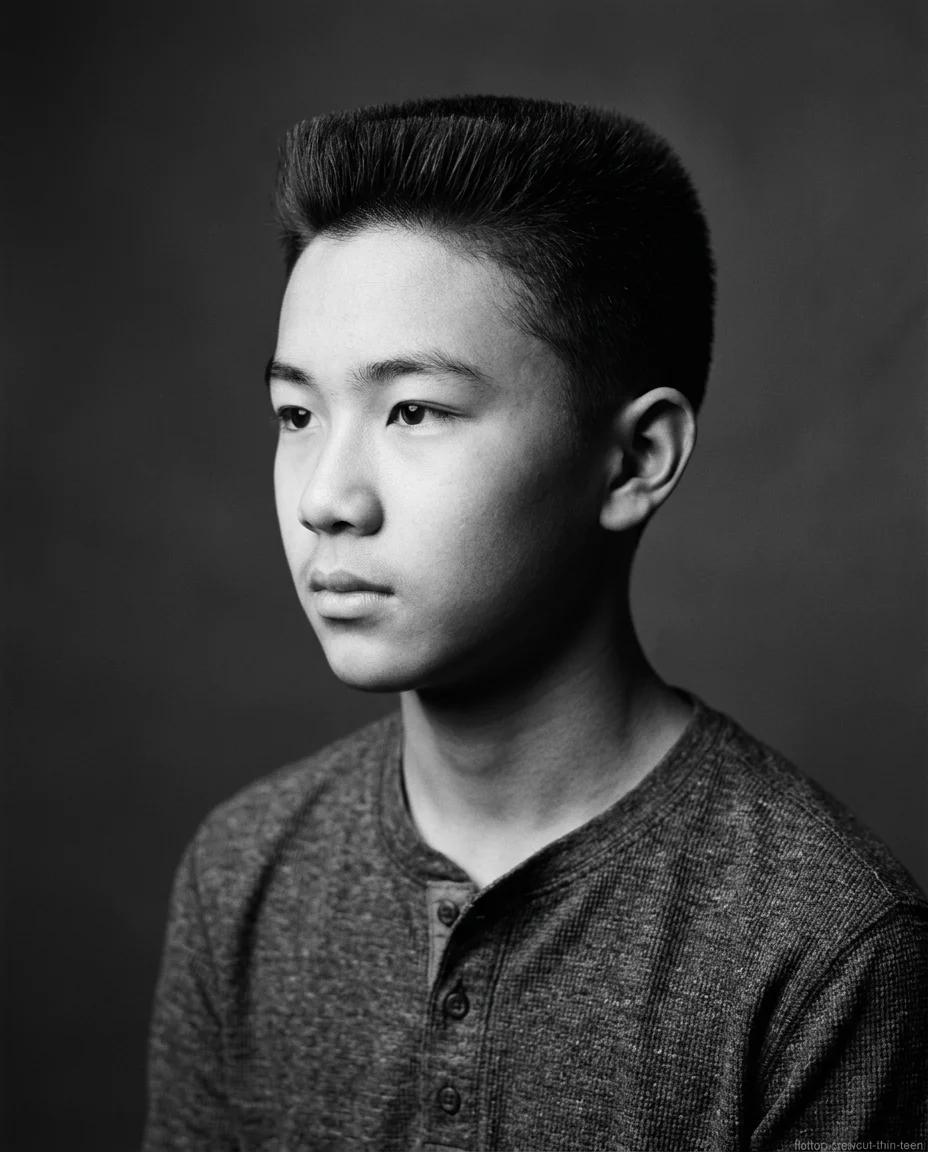
A crew cut hybrid keeps a slight taper at the front and sides instead of a sharp fade, styled a touch looser on top.
It’s the least demanding cut here to maintain — thin hair barely shows the difference between week one and week three.
It looks plain next to the fade versions. Reliable, not flashy — pick it for a kid who hates sitting in the chair.
13. Flat Top with Burst Fade
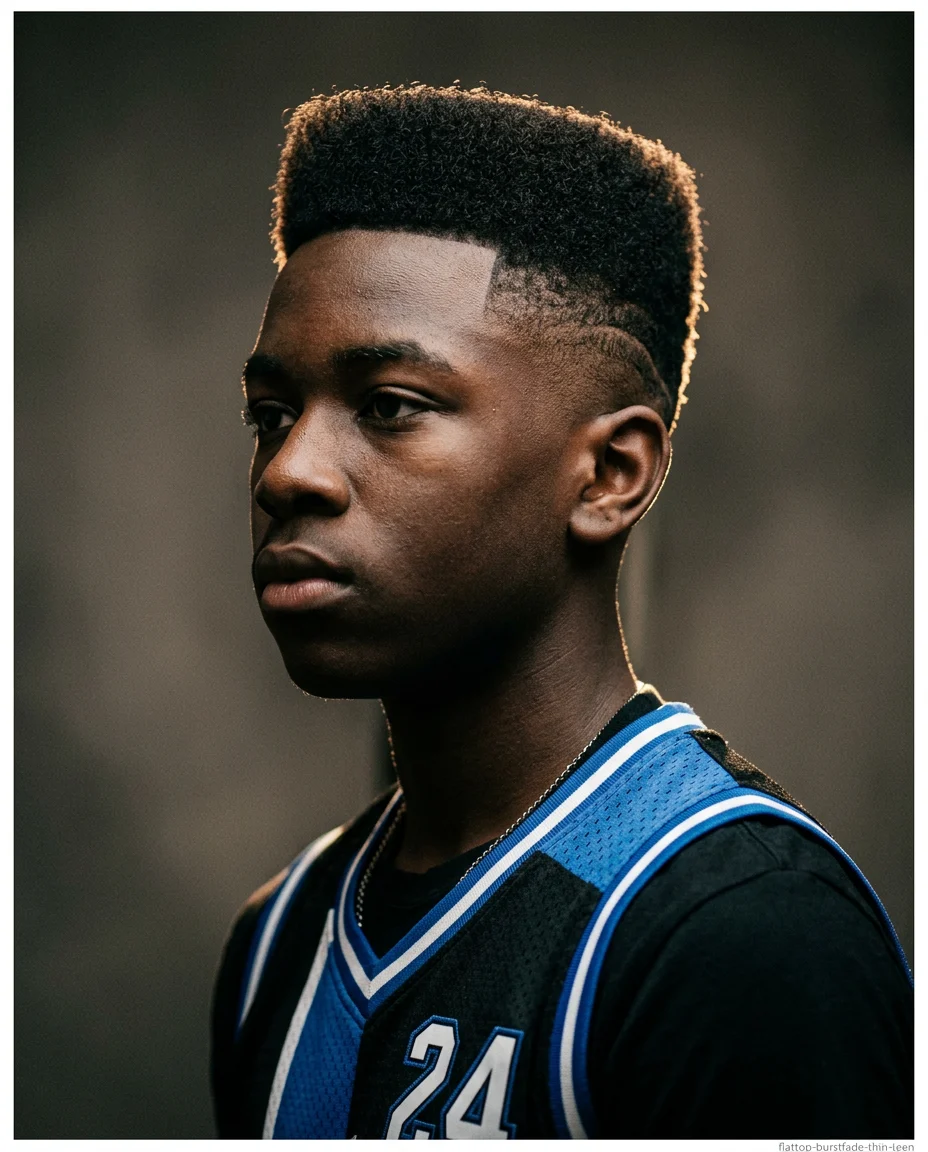
A burst fade curves around the ear instead of running straight down the neck, leaving a bit of length at the back.
It suits thin hair well — the curved line distracts from thin spots at the nape a straight fade would expose.
It’s harder to execute than a standard fade — confirm the barber has done one before. Not every shop handles this well.
14. Flat Top with Mid Fade
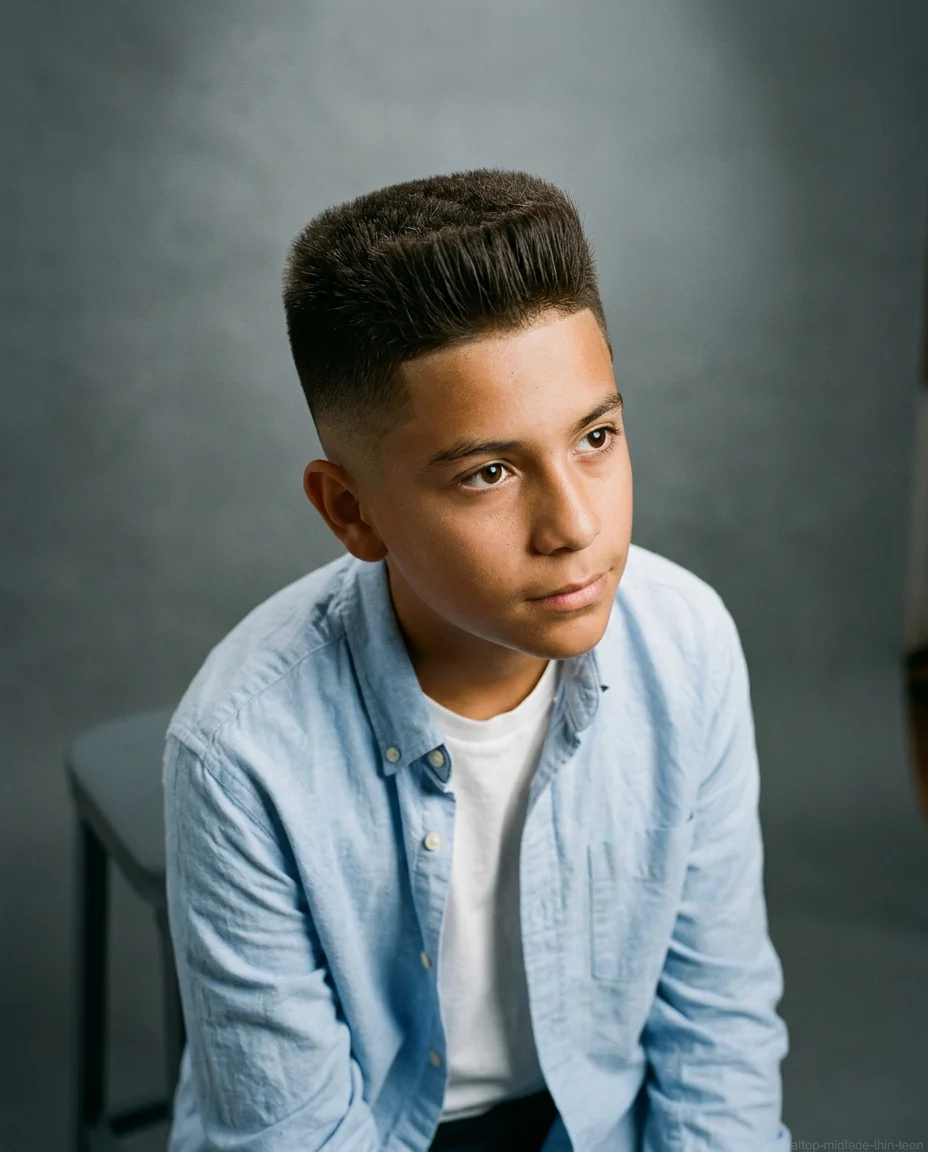
The mid fade splits the difference between low and high, starting the blend around the middle of the side.
For thin hair, this sits close to the sweet spot — enough contrast to look sharp, without regrowth looking patchy within a week.
Most guides skip this one for the more dramatic high fade, which is why people default to something harder to maintain than it needs to be.
15. Flat Top with Line Up
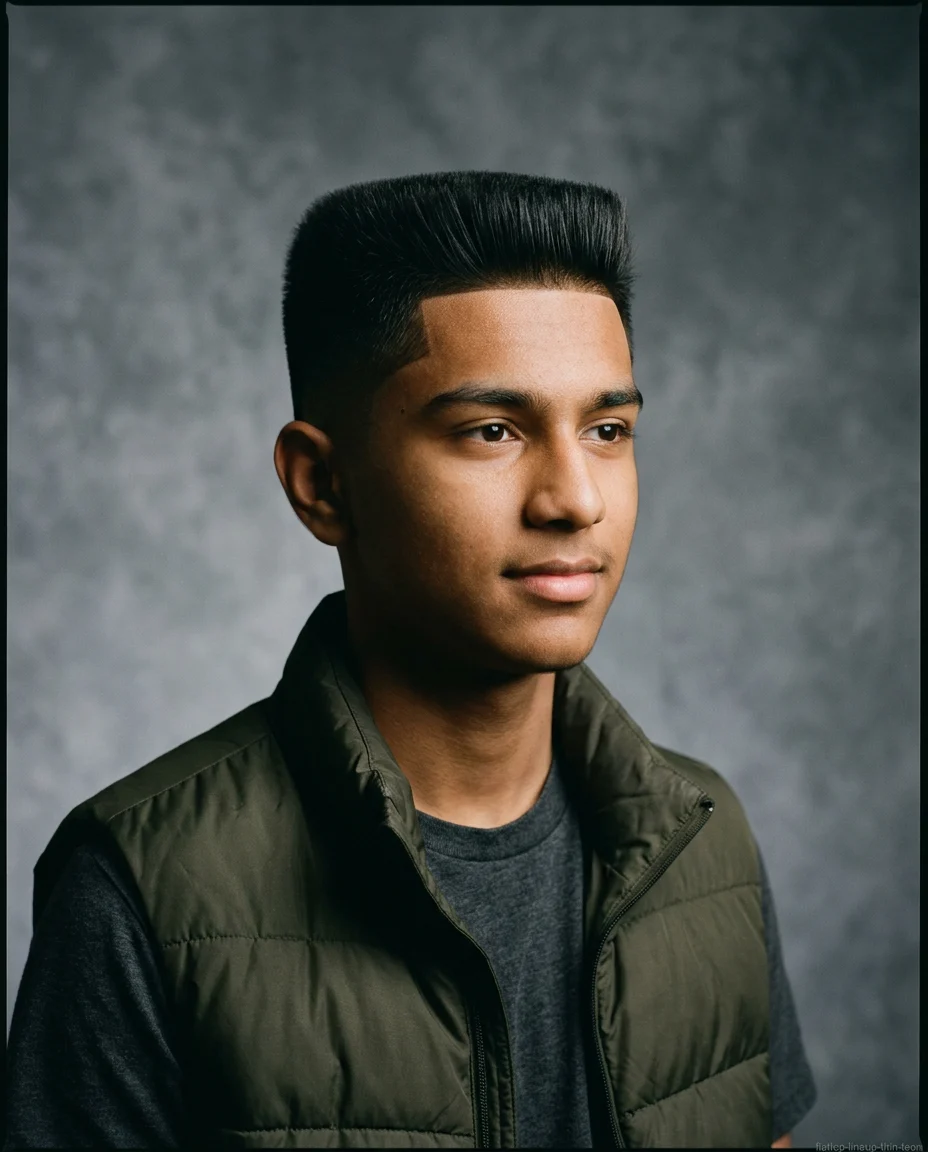
A line up sharpens the hairline and sideburns into a crisp edge, usually done with a straight razor, not clippers.
On thin hair, the sharp line reads intentional even when the top is still growing in or sparse in spots.
It softens in about a week as new growth blurs the edge — factor that into how often the kid wants a touch-up.
16. Short Flat Top with Fringe

This keeps a short fringe at the front instead of a fully squared top, angled down just above the brow.
It’s one of the few flat top variations that gives thin hair something to style each morning, with a small amount of matte paste.
The trade-off is upkeep — a blow-dry and comb most mornings, more effort than most 14-year-olds want before school.
17. Flat Top with Drop Fade
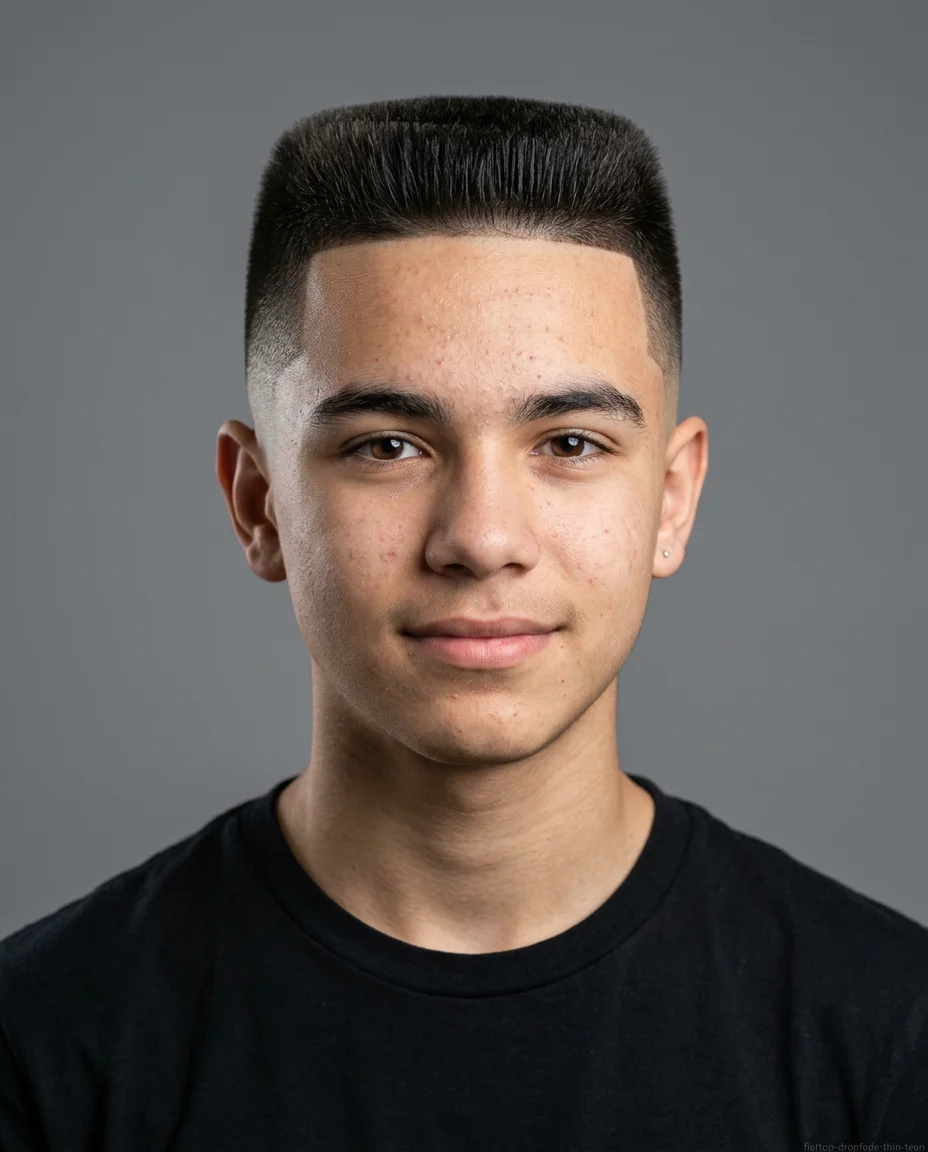
A drop fade curves the line down behind the ear instead of level, adding movement to an otherwise rigid shape.
It’s a good option for older teens, 17 or 18, who want the flat top look without it reading quite so structured.
This is the boldest cut here to get wrong, so bring a photo reference — “drop fade flat top” alone leaves too much to interpretation.