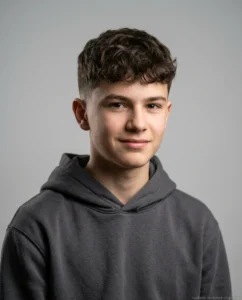
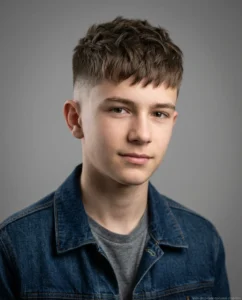
Thin hair gets treated as a limit on what a low fade can do, and it is not much of one. Thin hair holds a low fade better than most teens expect — the tighter taper hides gaps that thicker hair usually just covers up anyway. Here are nine ways to wear it that work with fine strands instead of fighting them.
1. Medium Low Fade with Textured Crop
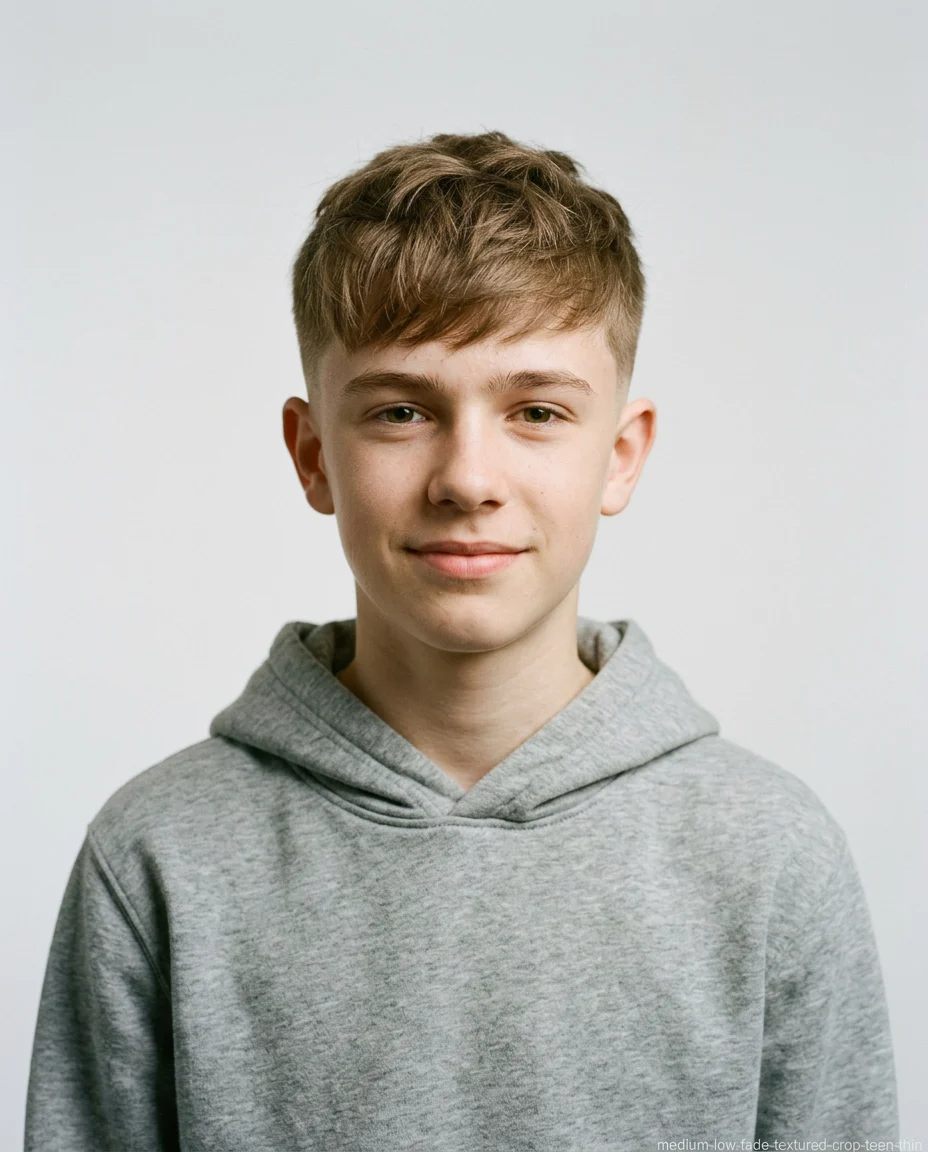
Thin hair looks thicker with texture on top, and a crop cut short enough to sit up on its own does exactly that. The low fade keeps everything tidy below the ears, so the eye goes to the texture instead of noticing what’s missing at the roots. A matte paste, worked in while the hair’s still slightly damp, gives it lift that gel just weighs down.
Does texture actually add volume, or does it just look messy?
Done right, it adds volume. A barber texturizes with point-cutting shears, not a razor — that leaves enough weight near the root for strands to stand instead of flop.
Ask for a number 2 or 3 on the sides, tapering into a 1 near the hairline, with the top left around 2 to 3 inches. Cut too short on top and thin hair goes flat again within a day.
2. Medium Low Fade with Side Part
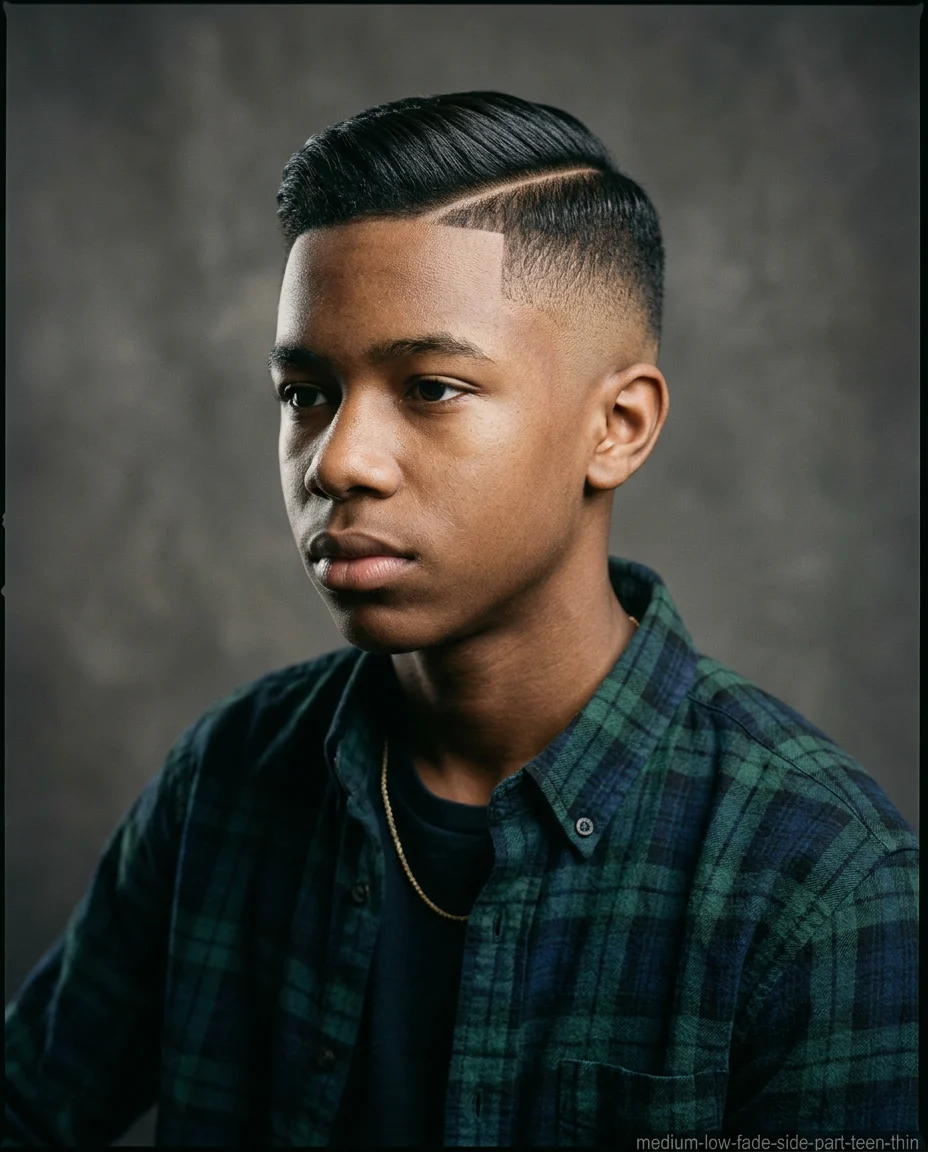
A side part reads more grown-up than most cuts on this list. It works for thin hair because the part line itself creates an illusion of density — hair combed toward a hard line always looks fuller than hair left to fall on its own. Pair it with the low fade and you get something that photographs well without much daily effort.
How often does the part need touching up during the day?
Once, usually, if the barber cuts a defined line instead of just a comb part. A light hold cream keeps it in place through most of a school day without going greasy by lunch.
This one skews a little formal, so it’s not the pick for a kid who wants something loud. For thin hair specifically, though, it’s one of the lowest-maintenance options here.
3. Medium Low Fade with Comb Over
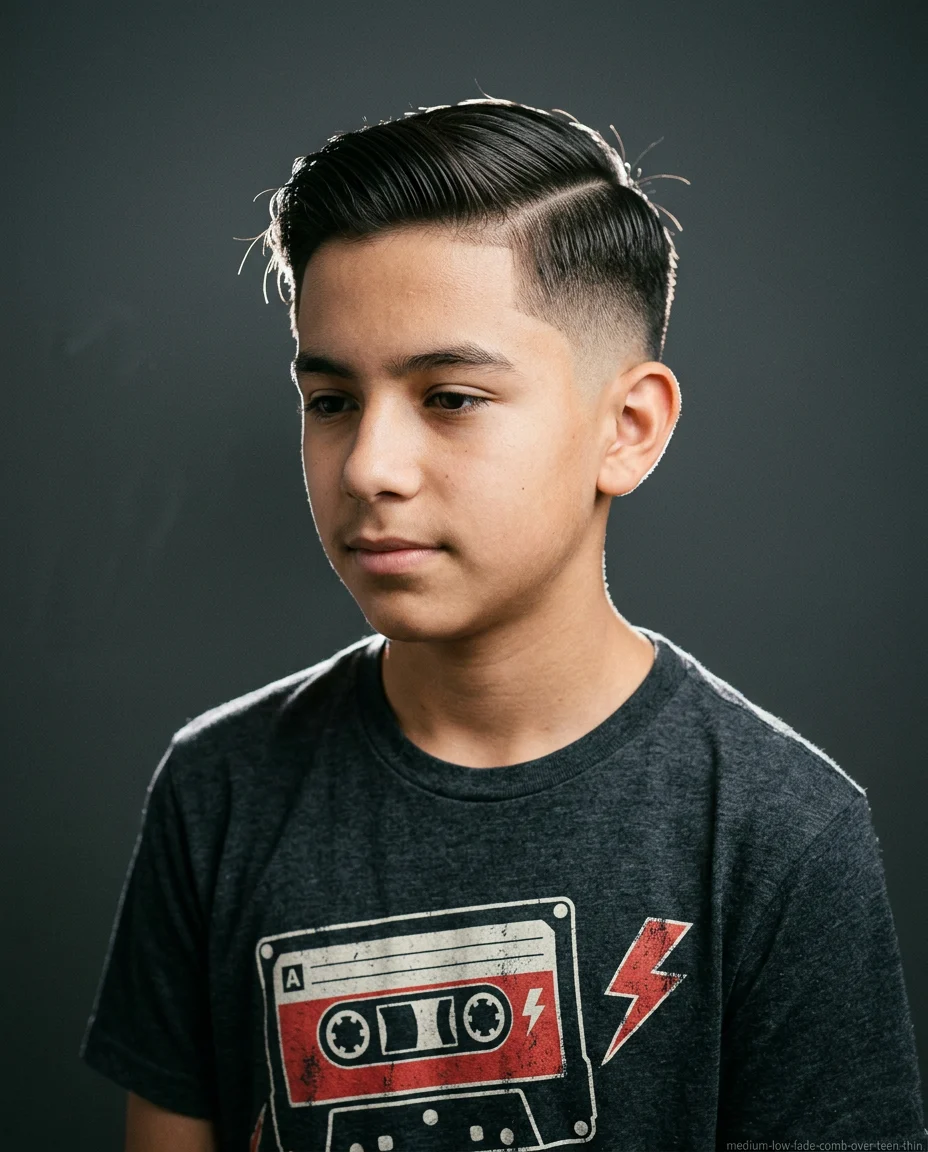
The comb over asks more of thin hair than some of the other cuts here. It needs enough length on top to sweep across — usually 3 to 4 inches at the front, tapering back. Done on fine hair, it can look sparse if the barber doesn’t leave enough density near the crown.
Is a comb over a bad choice for thin hair, then?
Not automatically. It just needs a barber who checks crown density before cutting, and probably a fiber-based styling product instead of a wax that clumps fine strands together.
Blow-dry it back and away from the face while it’s damp, then set with a light spray. Skip this one if mornings are already rushed — it takes closer to 5 minutes to style than most cuts on this list.
4. Medium Low Fade with Curtain Fringe
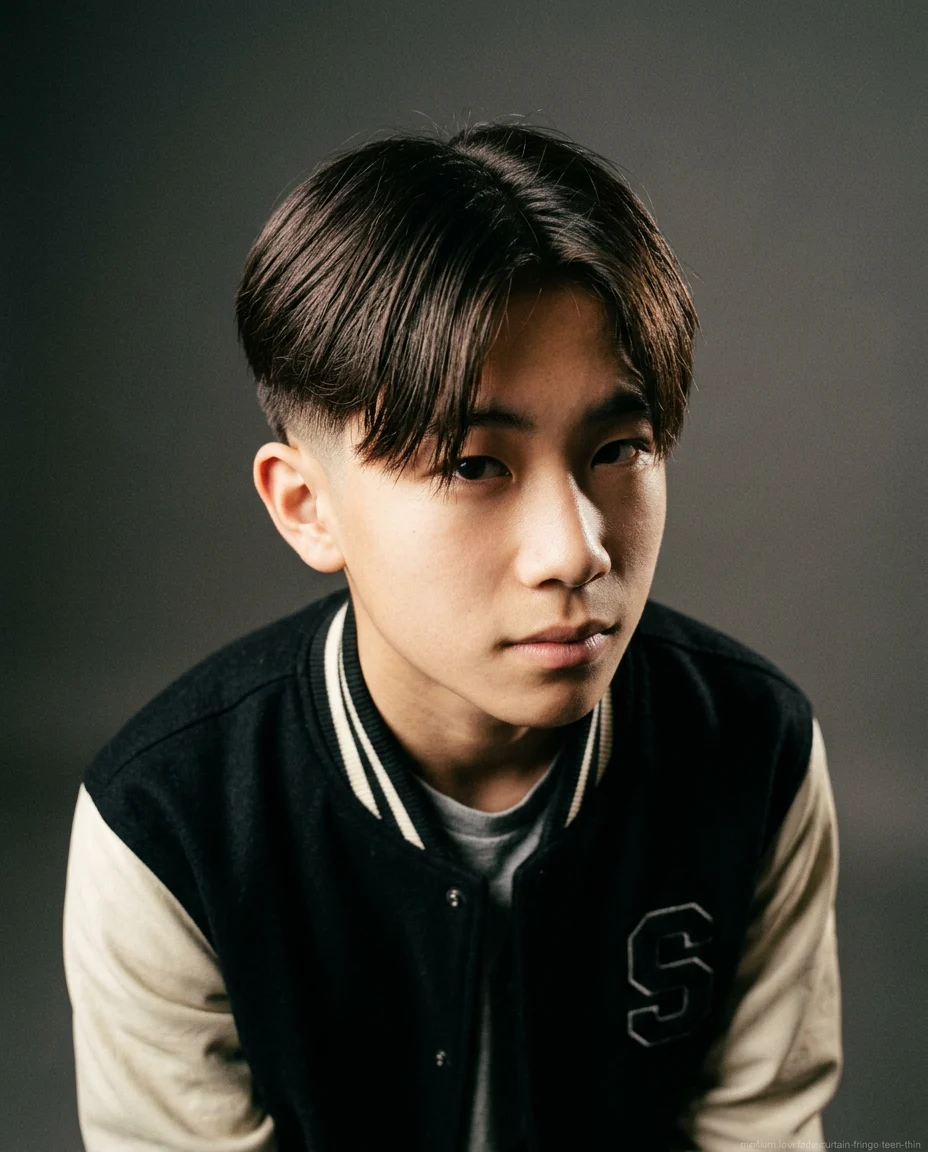
Curtain fringe puts more hair around the face, and that’s a smart move for thin hair since it draws attention away from the crown — where thinning usually shows first, if it’s going to show at all. The fade stays clean and low on the sides while the fringe splits down the middle.
Does the fringe need a specific length to actually part on its own?
Around 3 inches, cut with a slight curve rather than straight across. Shorter than that and it just sits flat instead of curtaining.
It’s a trend that’s been around a few years now and isn’t going anywhere fast. The trade-off is upkeep — trims every 3 weeks, or the curtain effect grows out into something closer to a mop.
5. Medium Low Fade with Spiky Top

Spikes solve the flat-hair problem better than almost anything else on this list. Short length on top, usually 1.5 to 2 inches, styled up and out with a strong-hold wax while damp. The low fade underneath cleans up the rest.
Will spikes actually hold on thin hair, or fall by afternoon?
They’ll hold if the product is right. Pomade won’t do it — go with a matte clay or fiber wax, and blow-dry the roots up before applying anything.
This is a cut for a kid who doesn’t mind spending 5 minutes with product every morning. Skip it if he’s the type who’ll just run a hand through it and call it done.
6. Medium Low Fade with French Crop

French crop keeps the top short and blunt across the front, somewhere around an inch and a half, with a fringe that sits straight instead of swept to a side. On thin hair it reads cleaner than longer styles — there’s less length for the hair to reveal how fine it actually is.
Does the blunt fringe need much daily work?
Barely any. A little matte cream pressed in with fingers, not a comb, and it’s done in under 2 minutes.
The low fade does most of the heavy lifting here. Get it too high and the cut starts looking like a standard crop instead of a French one — ask the barber to keep the fade line just above the ear.
7. Medium Low Fade with Messy Quiff
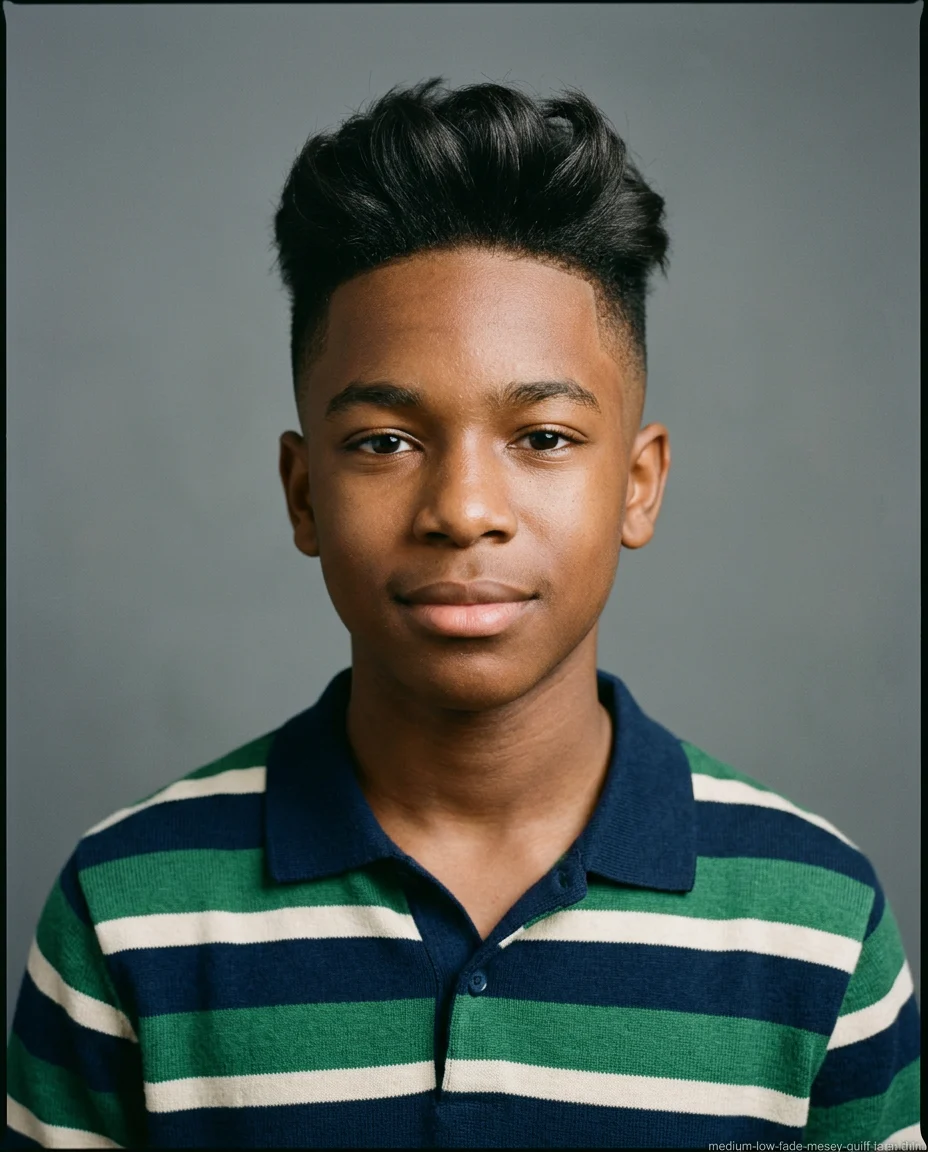
A quiff needs volume at the front, which is the one thing thin hair struggles to fake without help. Blow-drying against the direction of growth for about a minute before applying product gets most of the lift a thicker head of hair would have naturally.
What’s the honest downside here?
Time. This is the highest-maintenance cut on the list for thin hair specifically — the volume doesn’t hold itself the way it would on coarser hair.
Sea salt spray before blow-drying helps the strands grip each other instead of sliding flat. Worth it if the kid actually wants to spend the extra few minutes. Not worth it if he doesn’t.
8. Medium Low Fade with Line Up

A sharp line up along the front hairline and temples makes any cut on this list look more deliberate, and it costs almost nothing in extra chair time. On thin hair, a crisp edge does more visual work than volume does.
How often does a line up need refreshing?
Every 10 to 14 days, sooner if the hairline grows out fast. It’s a quick touch-up — 5 minutes at most, not a full cut.
Pair it with whatever top style already works. This isn’t really a standalone cut so much as a finishing detail. Skip it if the kid’s hairline is uneven — a line up only looks sharp when there’s a clean shape underneath it.
9. Medium Low Fade with Faux Hawk

Faux hawk pulls length toward the center of the head, which concentrates whatever density thin hair has into one strip instead of spreading it thin across the whole top. The low fade tapers in tight on both sides, making the center strip look denser by contrast.
Is this too bold for a first fade cut?
It can read that way. Ask for a soft faux hawk — less height, less product — if the goal is something that still passes for an everyday cut at school.
Styling takes a stiff wax or gel run straight up the center part while hair’s damp, then a blast of cold air to set it. The honest answer is it depends how much attention the kid actually wants. This one gets noticed.