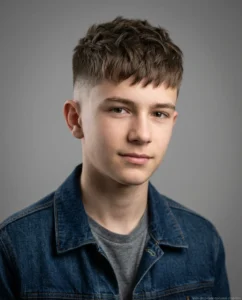
Thin hair and fades have an undeserved reputation for not mixing. A medium low fade works with thin hair better than most guys assume. The trick is where the taper starts and how much weight stays up top. Get that wrong and thin hair looks thinner. Get it right, and it reads three shades thicker without adding a single strand.
1. Textured Crop with Medium Low Fade

A textured crop puts the fade right above the ear, low enough that it barely shows in a side photo. Up top, the hair stays around 2 to 3 inches, cut with a razor to break up the strands and fake density. This is the cut many barbers reach for first when someone mentions thin hair — it hides scalp shine without looking like a comb-over in disguise. Product does some of the lifting too, but the cut has to earn its keep before styling even enters the picture.
Does the texture actually add volume, or is that just what the barber tells you?
Both, honestly. The choppy ends catch light differently than one smooth layer, so hair looks fuller from a few feet away. Up close, the volume is mostly the cut — the styling paste just holds the lift in place for the day.
Maintenance runs every 3 to 4 weeks, tighter than a lot of guys expect from something this low-key. Skip a trim past that and the fade grows soft, blending into a shape that no longer reads as intentional. Matte clay works better here than anything glossy — shine on thin hair just draws attention to the scalp underneath.
2. Low Fade Buzz Cut

Buzzed to a single length, this is the cut guys pick when they’ve stopped trying to disguise thinning and started working with it instead. Skin fade starts low, maybe half an inch above the ear, and the top runs a uniform 3/8 to 1/2 inch. No texture to fake, no part to maintain — just even coverage that reads as a choice, not a compromise. It’s the lowest-maintenance option on this list by a wide margin.
Isn’t a buzz cut the worst option for thin hair?
That’s the common assumption, and it’s backwards. Even-length hair at a short setting hides gaps between follicles better than longer hair ever could, since there’s no length for thin patches to show through.
A trim every 2 weeks keeps the fade sharp, though some guys stretch it to 3 before the line gets fuzzy. Cost is low, and the whole cut takes about 10 minutes of chair time. The one real trade-off: there’s nowhere to hide if the hairline has already receded past the temples.
3. Slicked-Back Low Fade
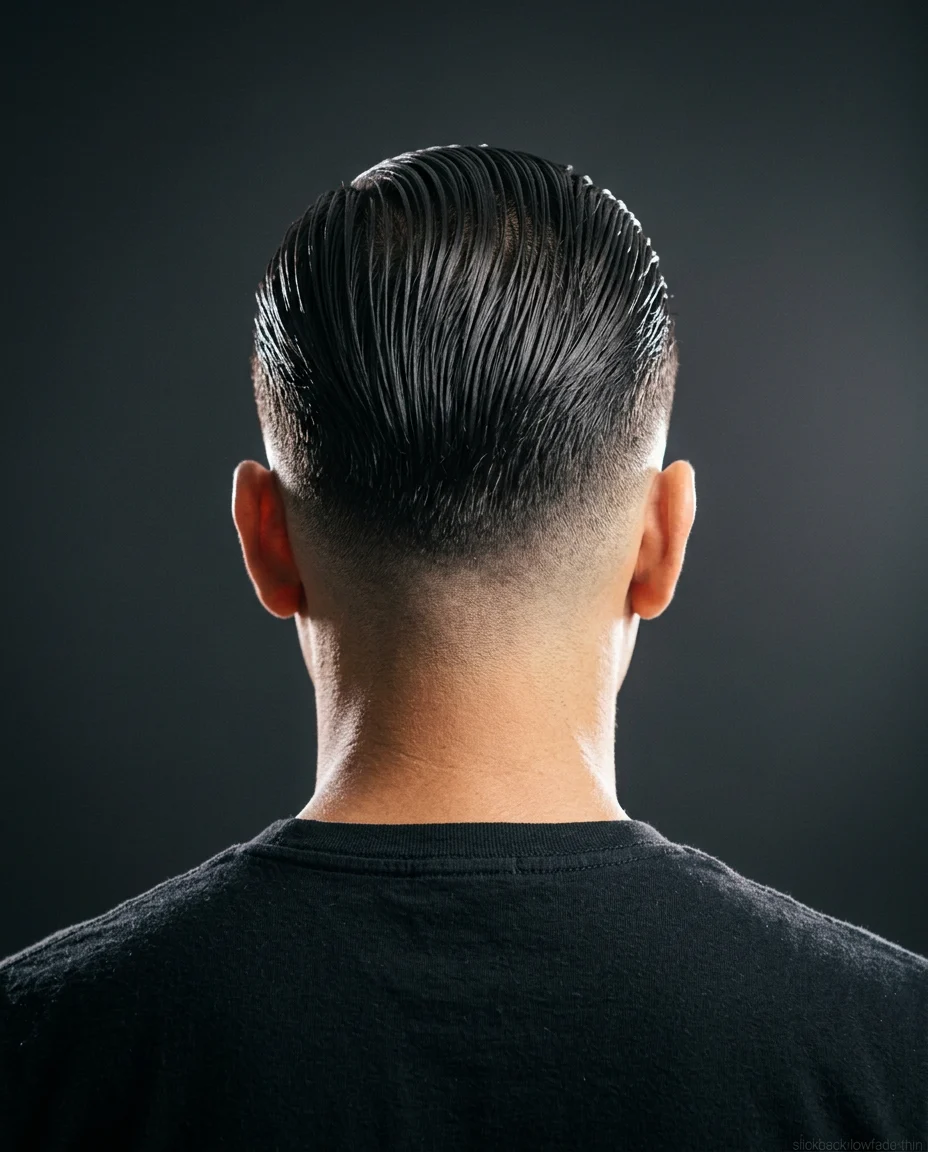
Length on top runs 3 to 4 inches, combed straight back and held with a strong-hold pomade. The fade stays low and tight, which keeps the eye moving upward toward the slicked section instead of settling on the sides. This works on thin hair specifically because slicking it back flattens strands against each other, creating the illusion of a denser mass than what’s actually there.
Won’t slicking thin hair back just show the scalp more?
Only with the wrong product. A water-based pomade with real hold compresses hair into visible sections rather than separating each strand — that’s what shows scalp. The right product keeps it looking like one continuous surface.
This one demands a blow-dry and comb routine most mornings, about 5 minutes once you’ve got the motion down. Humidity is the enemy — it’ll soften the hold by early afternoon in anything above 70% humidity. Reapply a small amount at lunch if the day calls for it.
4. Side Part with Medium Low Fade
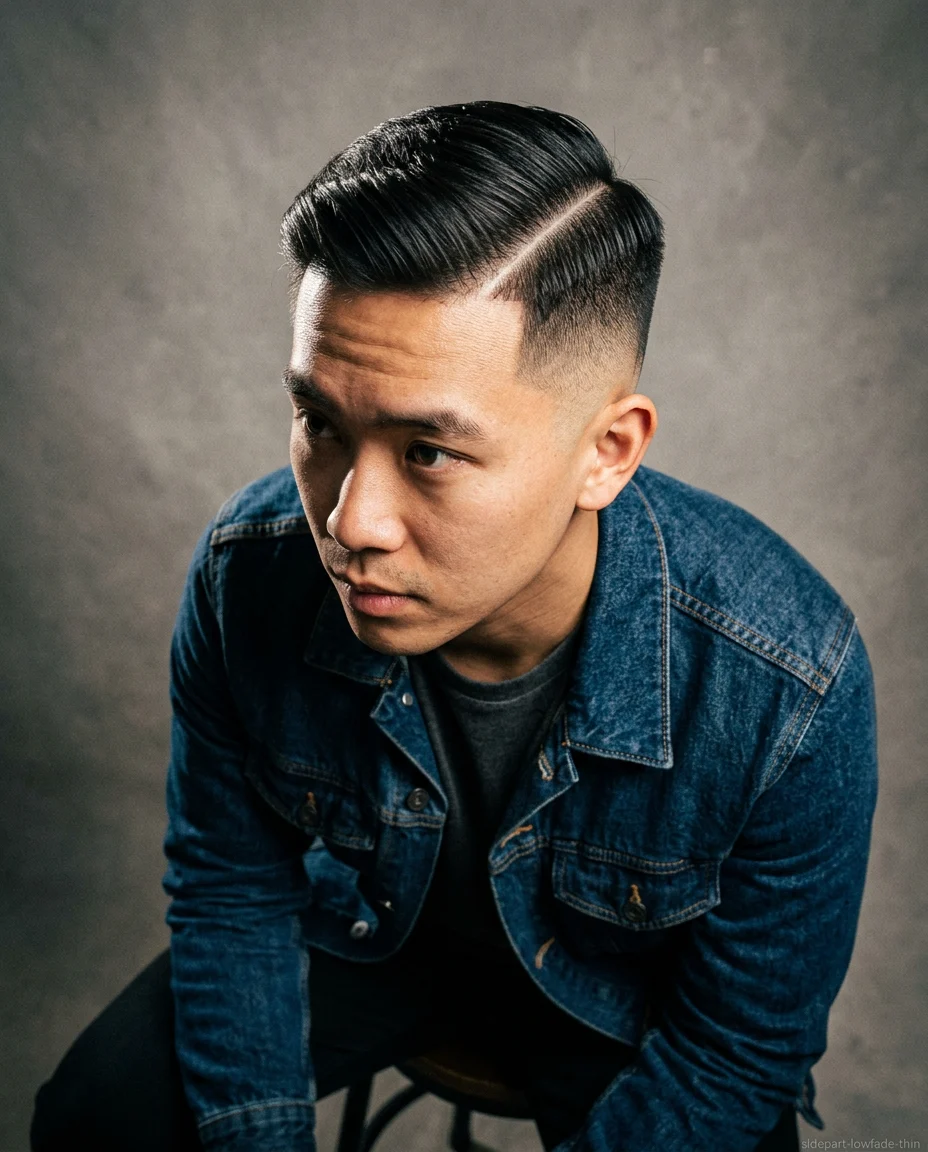
A hard or soft part cuts a visible line into 2.5 to 3 inches of length on top, fading down into skin around the low point above the ear. The part itself does a lot of work camouflaging thin spots — it draws a straight, deliberate line that pulls attention away from irregular density nearby. This is one of the more formal-reading cuts on the list, which makes it a strong pick for office settings.
Does the part need to be cut in, or can it just be combed?
Combed works for a soft part. A hard part — the razor-thin shaved line — needs a barber to cut it in every 2 to 3 weeks, since it grows out and blurs fast.
Styling takes a comb and a medium-hold cream, nothing heavier. The trade-off is upkeep on the part line itself if you go the hard-part route — it’s the first thing to look unkempt as everything else grows in fine.
5. Low Fade Crew Cut
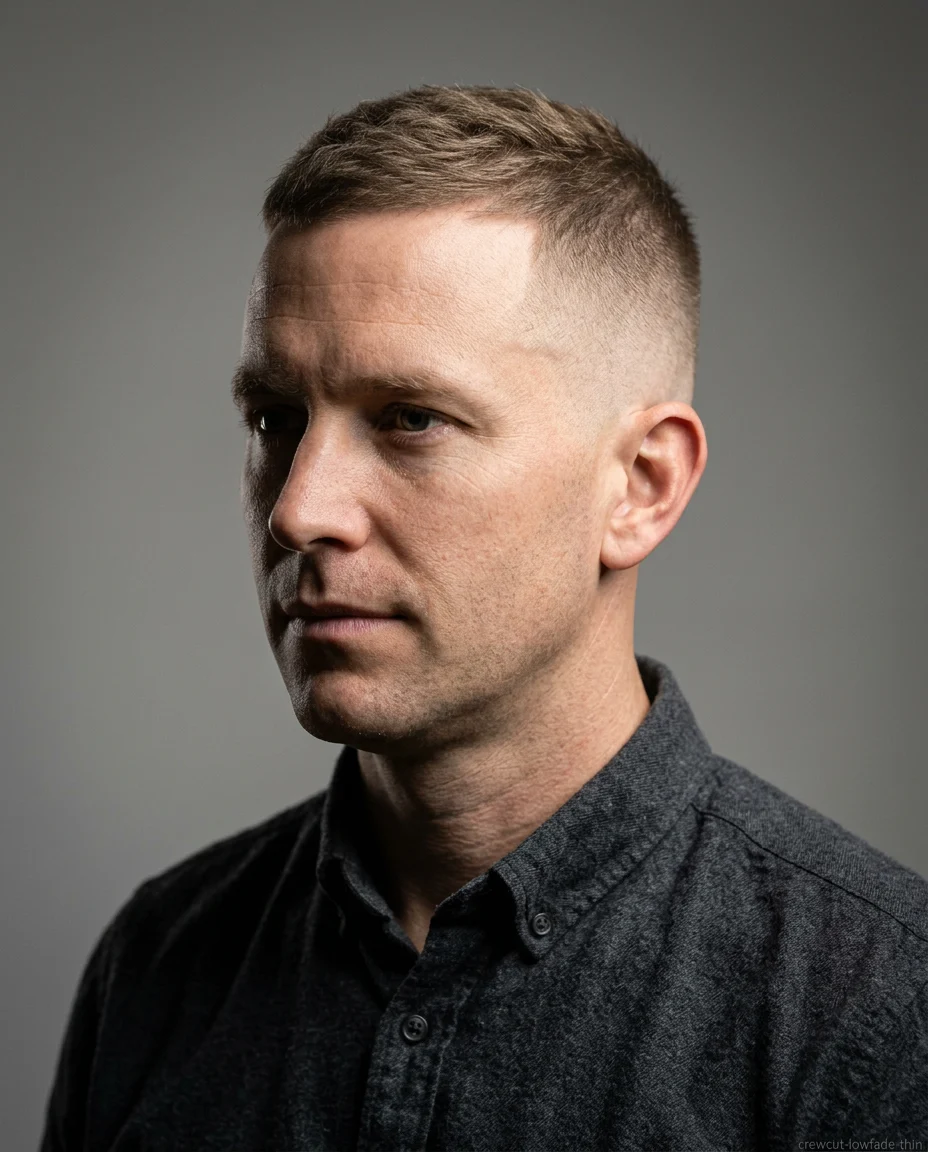
Top length sits around 1 to 1.5 inches, tapering down into a low skin fade that barely clears the ear. It’s a shorter, sharper cousin of the buzz cut, with just enough length up top to run a comb through if you want texture on a given day. Thin hair reads well here because the short length keeps every strand standing at roughly the same angle, which reads as coverage even where the count is lower.
Is a crew cut too plain for a going-out look?
Depends on styling. Dry, it’s understated. Add a matte paste and rough the top up with fingers, and it goes from office-safe to something with actual texture in under a minute.
Trims every 3 weeks keep the fade from creeping upward into a shape that looks unfinished. It’s forgiving of a bad hair day in a way longer cuts aren’t — there’s just not enough length for hair to do anything dramatic.
6. Textured Quiff with Low Fade

The front section grows out to 3 to 4 inches and gets pushed up and slightly forward, while the low fade handles the sides underneath. This is one of the higher-maintenance cuts here, but it’s also the one that adds the most visible height and volume for thin hair specifically — the lift at the front is doing real structural work, not just cosmetic.
How much product does a quiff actually need?
More than most guys use at first. A dime-size amount of a strong-hold cream or wax, worked in while damp, then a quick blast with a hairdryer pointed up and back. Skip the dryer and the lift falls flat within an hour.
Expect to restyle daily — this isn’t a wash-and-go cut. The upside is real: guys with thin hair report this as the style that reads fullest in photos, since the raised front section changes the whole silhouette from the side.
7. Low Fade Comb-Over
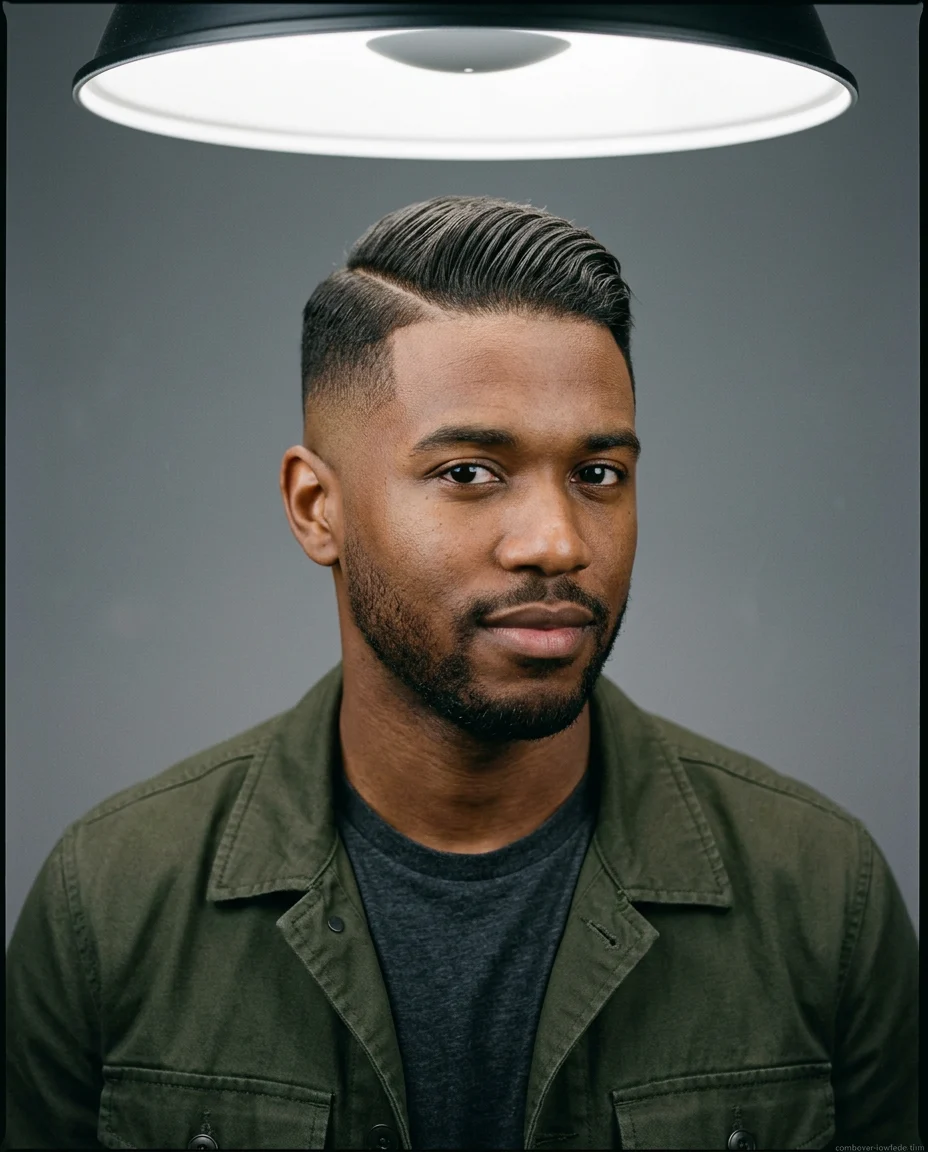
Length on top stays around 2 to 3 inches, combed to one side across a defined part, with the fade dropping low along the sides. The comb-over gets an unfair reputation from decades of bad execution, but paired with a proper low fade and the right length, it’s one of the more reliable options for covering gaps near the crown without looking dated.
Doesn’t a comb-over just draw attention to thin spots?
Only when the length-to-coverage ratio is off. Too short, and there’s nothing to comb anything over. Get the top length right and the strands actually overlap instead of leaving gaps between them.
A blow-dryer and round brush make the difference between this looking intentional and looking like an old habit. Reset the part every morning — it drifts by afternoon, and a drifted part is the fastest way to make this cut look accidental instead of styled.
8. Low Fade Pompadour

Top length runs 3.5 to 4.5 inches, swept back and up off the forehead with real volume at the crown, fading low into the skin at the sides. This is the boldest cut on the list, and it’s not subtle about it. For thin hair, the height at the front and crown compensates for lower density elsewhere on the scalp — it’s essentially borrowing visual weight from one area to cover another.
Is a pompadour realistic for hair that’s actually thin, not just fine?
Yes, with a caveat. It needs enough length to build the roll — usually a minimum of 3.5 inches. Below that, there’s not enough hair to create the shape, regardless of product.
This is a 10-minute-a-day styling commitment minimum, using a strong pomade and often a hairdryer for lift. Trims every 3 to 4 weeks keep the proportions right. Skip a trim too long, and the front section gets heavy enough to fall instead of stand.
9. Low Fade Fringe
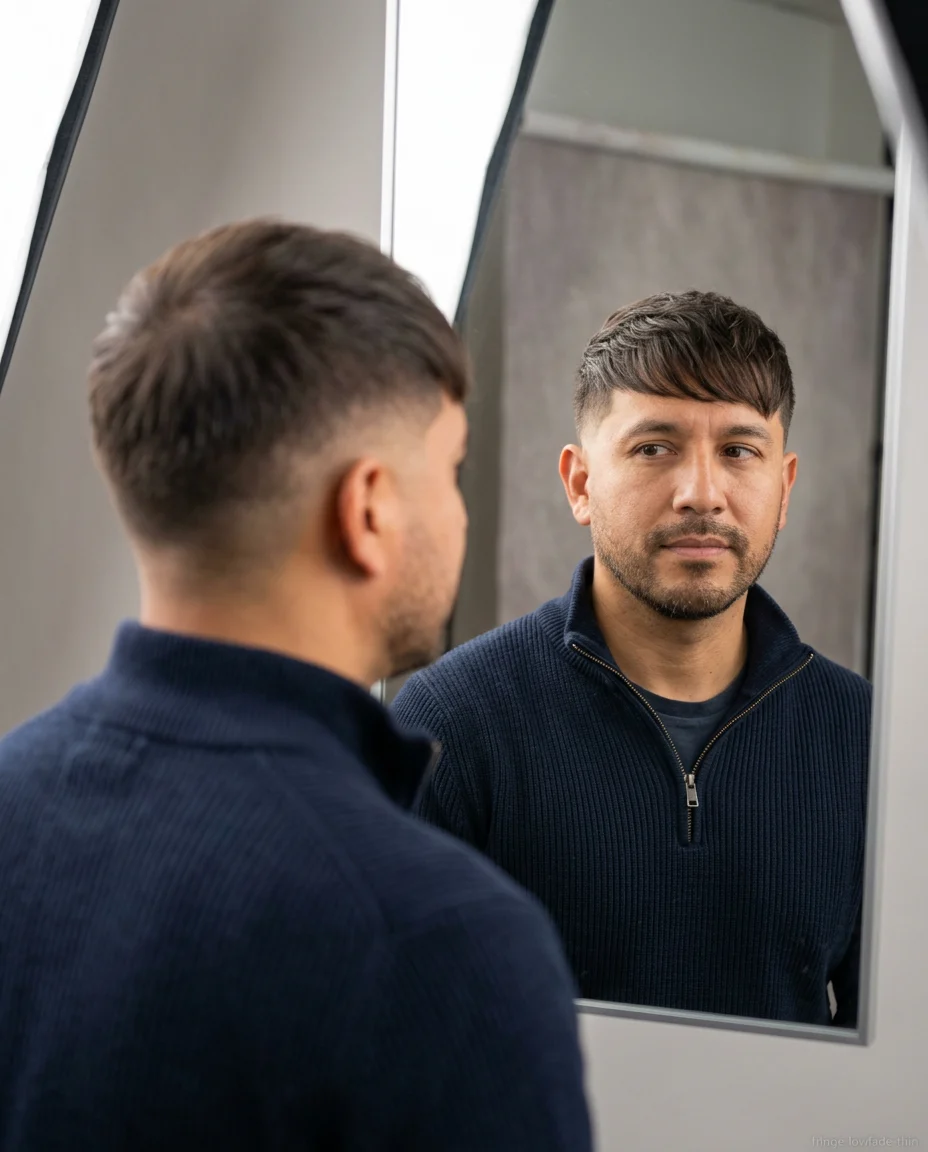
The fringe stays forward instead of swept back, cut to 2 to 3 inches and left loose across the forehead, with a low fade cleaning up the sides. It’s a younger, more casual read than the pompadour or slick-back, and it happens to work well on thin hair because a forward fringe covers the hairline — usually the first place thinning shows.
Does a fringe work if the hairline has already started receding?
It can help disguise the early stages. Past a certain point of recession, though, a fringe with nothing behind it to blend into just looks like a toupee edge — that’s the honest limit of this style.
Low maintenance day to day: towel-dry, a small amount of matte product, tousle forward with fingers. Trims every 4 weeks or so, since a bit of extra length here doesn’t ruin the shape the way it would on a slicked style.
10. Hard Part Low Fade
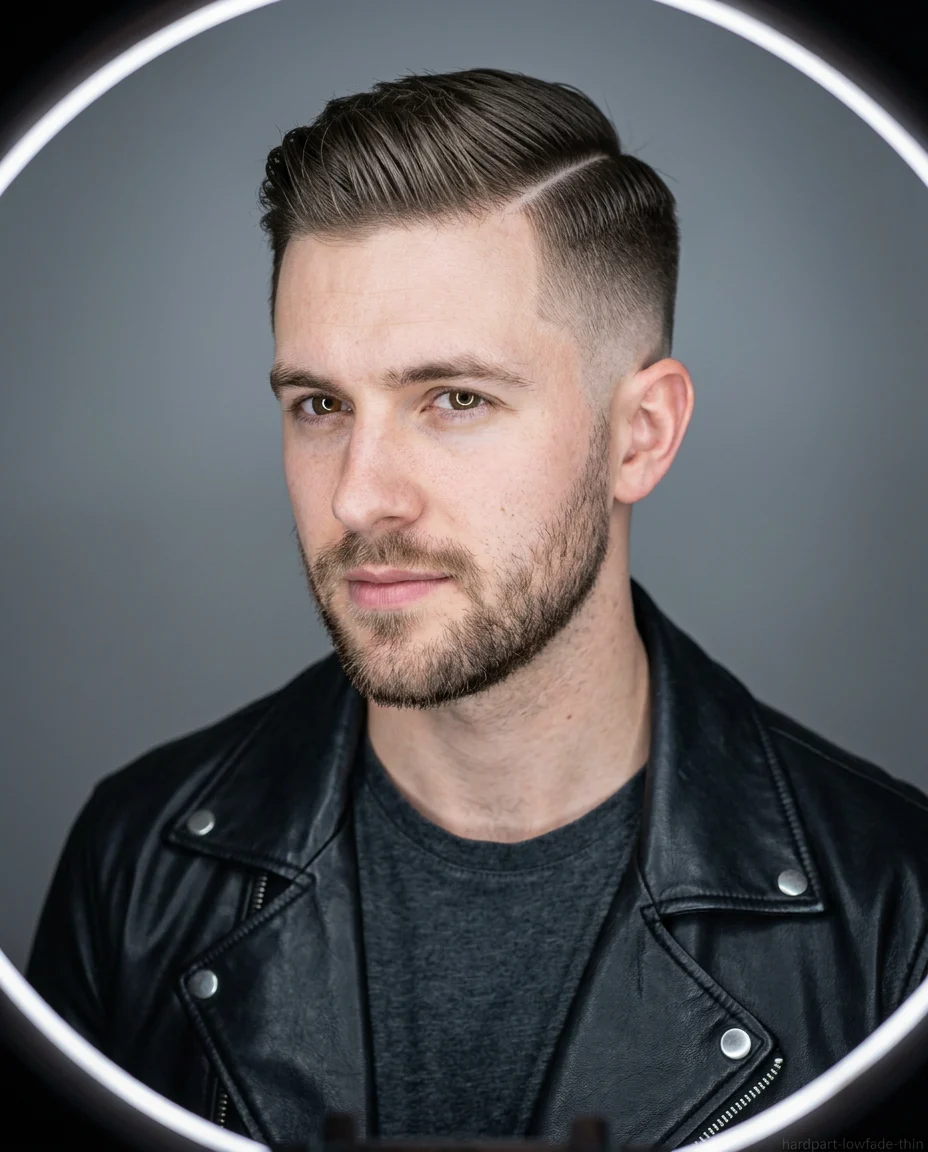
A crisp, razor-shaved line separates 2.5 to 3 inches of combed-back or side-swept top from a low fade underneath. The hard part reads more polished than a soft comb-over part, and the sharp edge draws the eye in a way that distracts from density variation nearby — it’s a bit of a magic trick, honestly, using one clean line to redirect attention.
How often does the part line need touching up?
Every 2 weeks minimum if you want it crisp. It’s the fastest-growing-out detail on this whole list — the fade can go 3 weeks before it looks off, but the part line looks messy well before that.
This cut skews more formal and works best with a defined jaw, since the sharp lines pair oddly with softer face shapes. Cost runs a bit higher too, since many barbers charge extra for the razor part on top of a standard fade.
11. Low Fade Faux Hawk

Center strip runs 2.5 to 3.5 inches, styled up into a narrow ridge, with everything else fading low and tight on both sides. It’s the most attention-grabbing cut here by design — not for every setting, but for guys with thin hair who want one dense-looking strip rather than trying to fake volume across the whole scalp.
Is a faux hawk too young or too try-hard for guys past their 20s?
Not inherently. Keep the ridge lower and less spiked — closer to 1.5 inches of lift instead of 3 — and it reads as a modern textured cut rather than a statement style.
Daily styling with a strong wax or clay, worked into the center strip while dry for the most control. Trims every 3 weeks keep the sides from softening and blurring into the center section. It’s a commitment, and it’s not subtle — know that going in before booking the appointment.