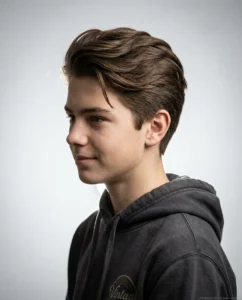
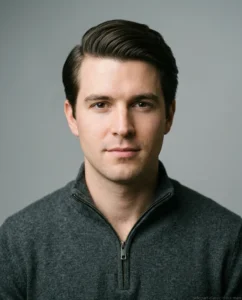
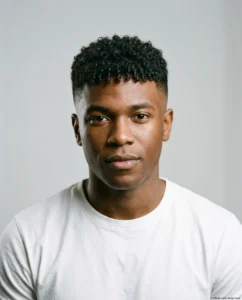
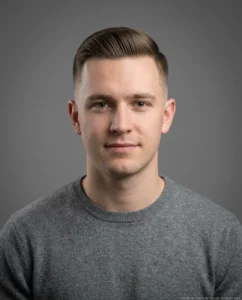
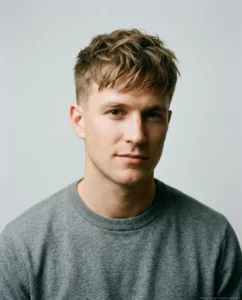
The long faux hawk tends to end the fight with a curl pattern rather than continuing it. Instead of flattening curls into a shape meant for straight hair, it uses the height the curl already produces.
Ten versions are covered below, all built around directing curl height and density up through the center rather than working against it.
1. Classic Curly Faux Hawk

Sides kept short, center left longer and directed upward with a light curl-defining cream. The curl pattern provides most of the height naturally — minimal product needed to hold shape.
This is the entry point for anyone new to the faux hawk. Low product commitment, forgiving on off days.
Curl pattern decides how much product you actually need. A looser 3A wave wants a cream to clump the curls together; a tighter 4A coil already clumps on its own and mostly needs moisture rather than hold.
2. Curly Faux Hawk with Skin Fade
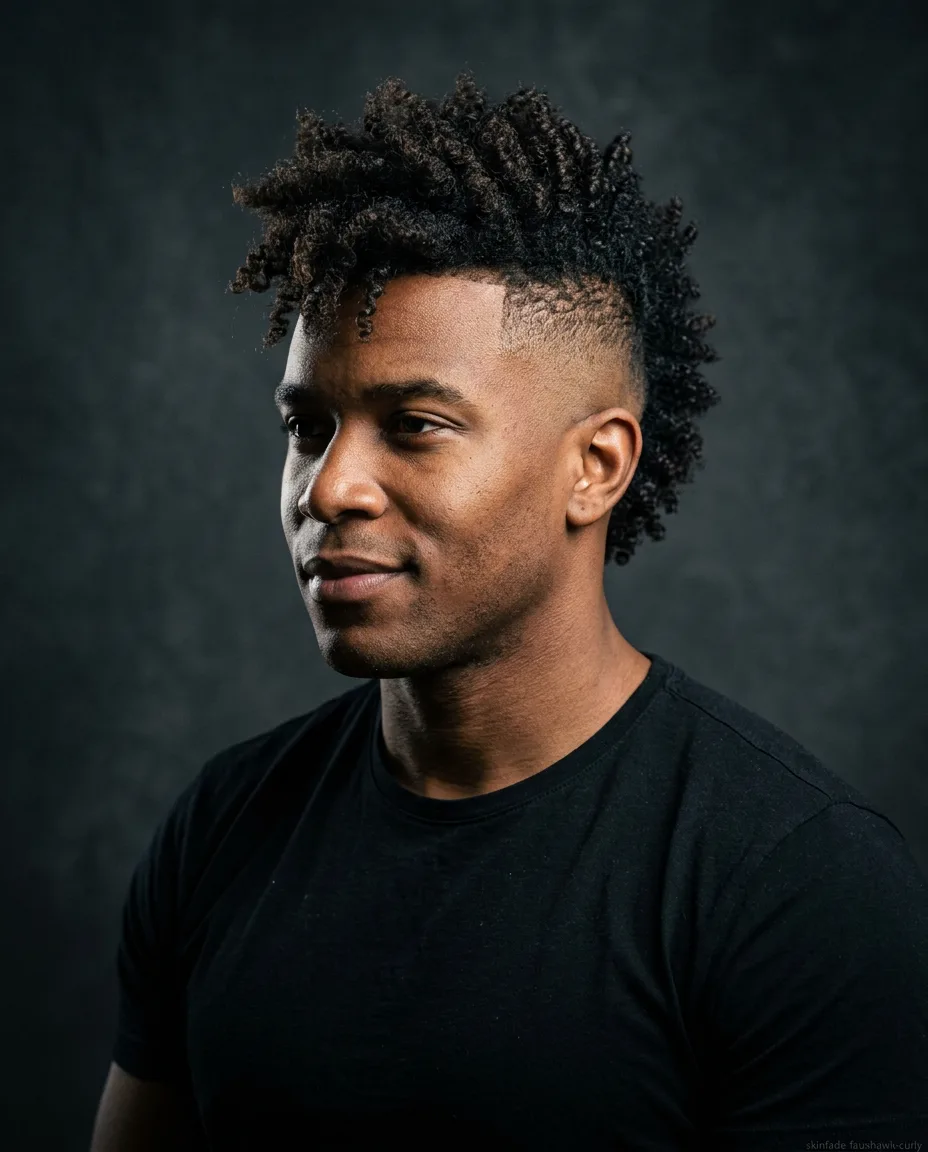
Bare skin on the sides creates sharp contrast against the curled center strip. It’s the boldest, most photographed version of this style.
Maintenance runs every 2 to 3 weeks — the trade-off for that sharp contrast is a tighter barber schedule.
Keep the fade below the temple. Climbing higher leaves a band of scalp between the shave and the point where curl density actually starts, and that gap reads as a mistake rather than a design choice.
3. Curly Faux Hawk with Taper Fade
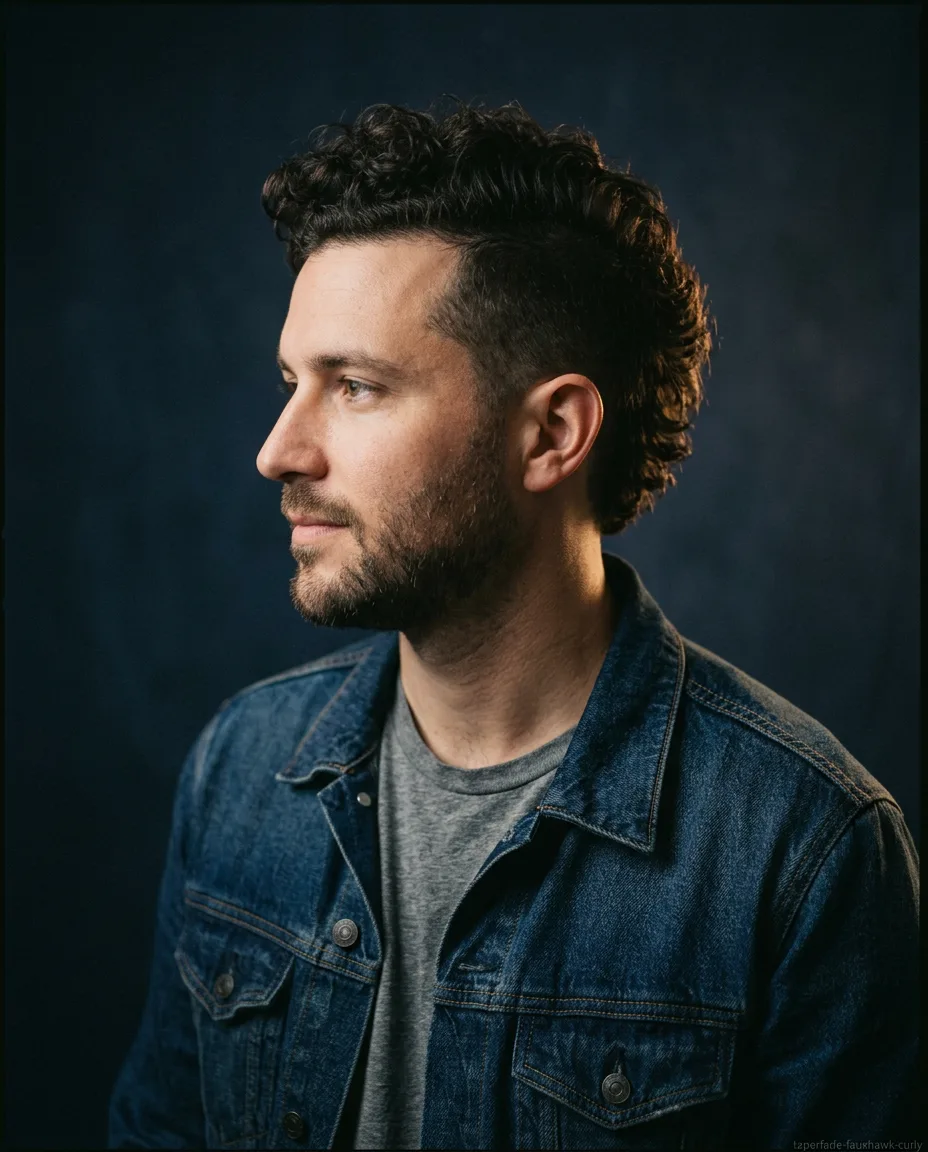
A softer transition than the skin fade, stretching appointments out to 4 to 5 weeks. Better suited to more conservative workplaces.
This is the safer starting fade if you’re not sure how committed you are to frequent maintenance yet.
It is also the version that survives a missed appointment. A taper at five weeks still looks like a haircut, which is not true of the skin fade above it.
4. Curly Faux Hawk Undercut
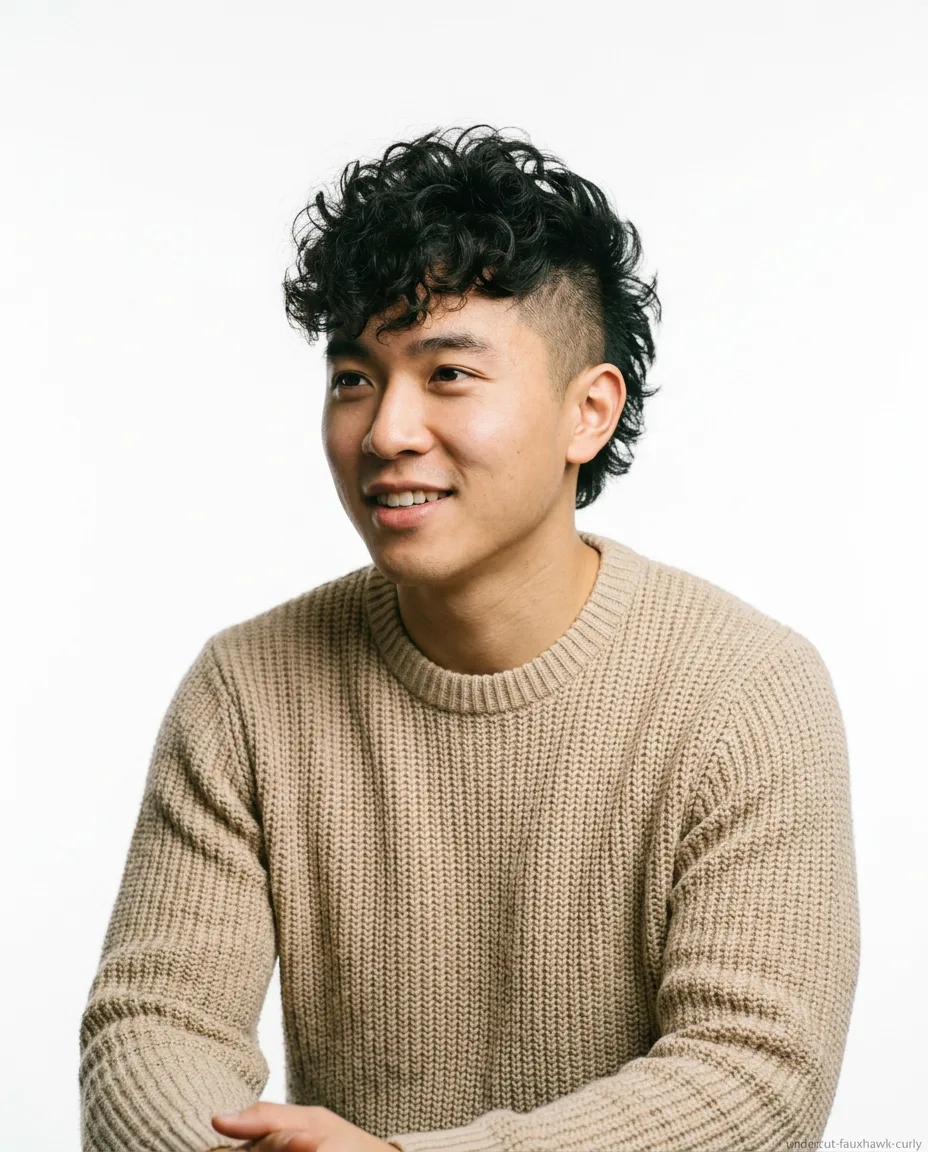
Disconnected sides rather than a gradual blend, pushing the contrast further than either fade option above. This is the most dramatic version on the list.
Bring a specific reference photo — vague direction on disconnect height tends to produce inconsistent results with this style.
The disconnection shows more in profile than head-on, because the curl spills over the line when viewed from the front. Check a side-view photo before committing to it.
5. Textured Curly Faux Hawk

Point-cutting through the center strip adds separation between individual curls, giving the height a more piece-y, less uniform look.
This technique works especially well on tighter curl patterns, where separation reads more clearly than on looser waves.
Ask for it cut dry. Curls shorten as they dry, and point-cutting done on wet hair lands in entirely the wrong place once the curl springs back up.
6. Curly Faux Hawk with Beard

A full beard balances out the height and boldness of the faux hawk shape, keeping the overall look from feeling too top-heavy.
Get the beard lined up at the same appointment. A sharp faux hawk with an unkempt beard looks unfinished.
Keep the beard shorter than the centre strip. Matching the two lengths turns head and face into one continuous mass of texture, which is the failure mode of this pairing.
7. Curly Faux Hawk with Hard Part
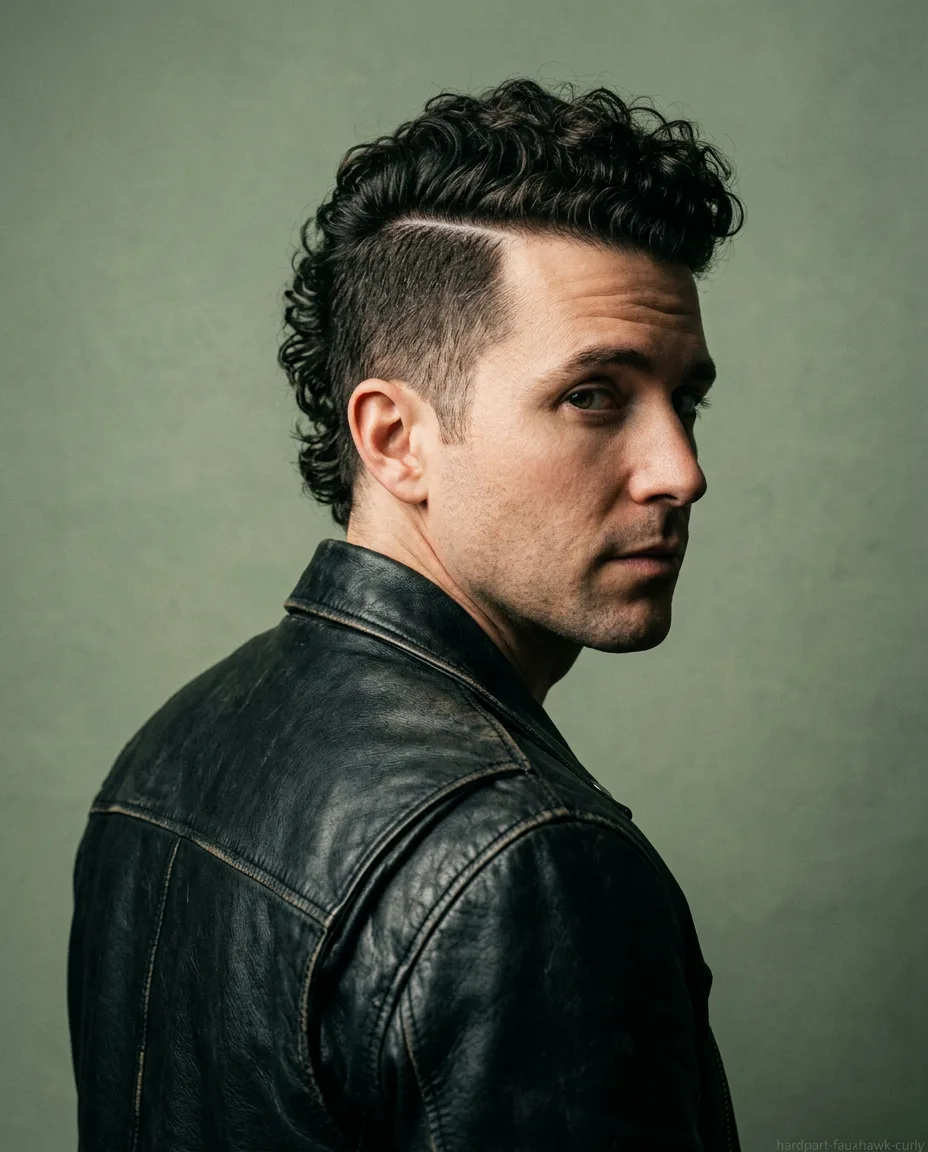
A shaved line on one side adds a crisp geometric detail against the rounded curl height of the center strip — a contrast within the contrast.
This needs re-shaving every 10 to 14 days, separate from the regular haircut schedule.
Cut the line where the curl naturally wants to separate rather than where a comb says it should. Against the curl direction it closes over within days.
8. Voluminous Curly Faux Hawk
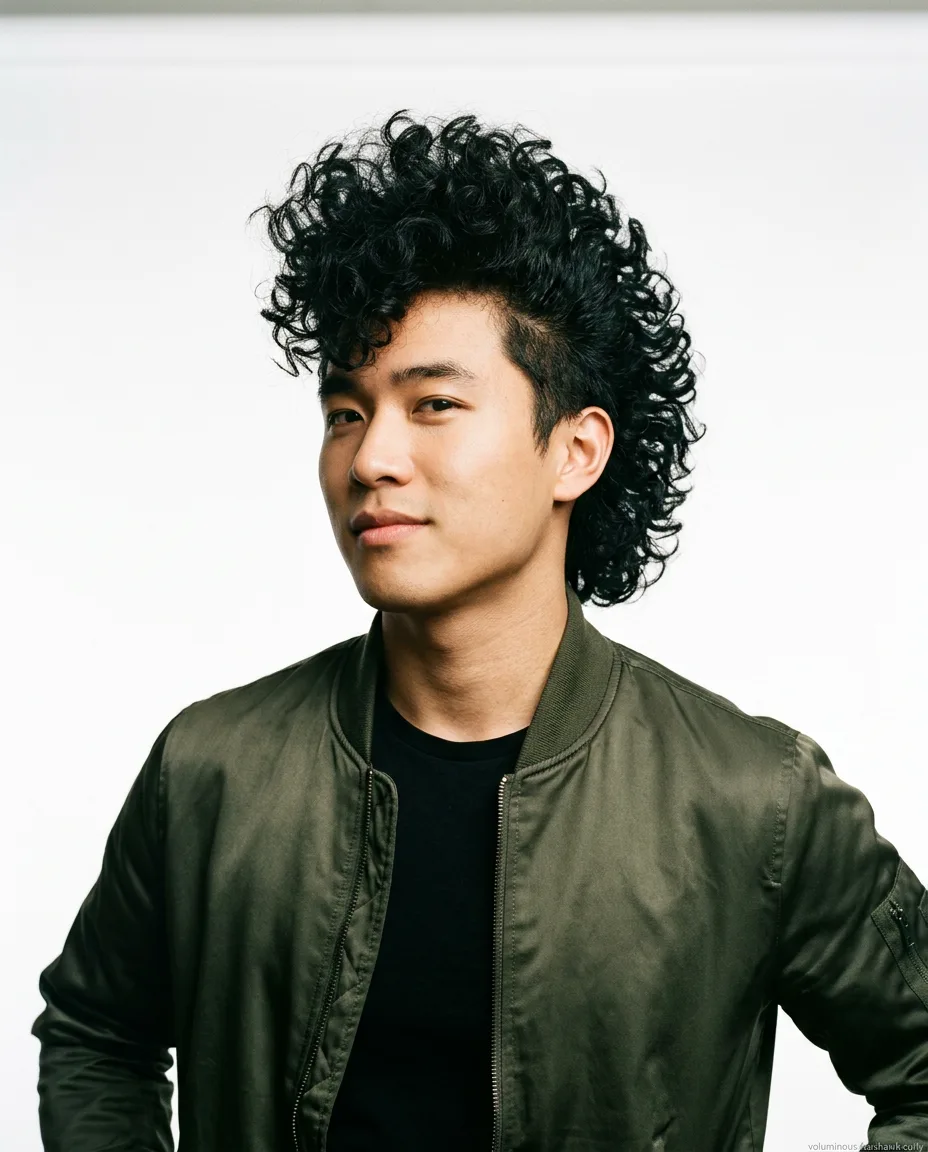
For guys with dense, high-volume curls, this version leans fully into height rather than controlling it down. The center strip sits noticeably taller than the classic version.
A strong-hold gel is necessary here, not optional — without it, dense curl volume tends to lose shape by midday.
Height has a ceiling on curly hair. Past about five inches at the crown the weight starts pulling the curl down, and the strip widens instead of rising.
9. Curly Faux Hawk with Mid Fade
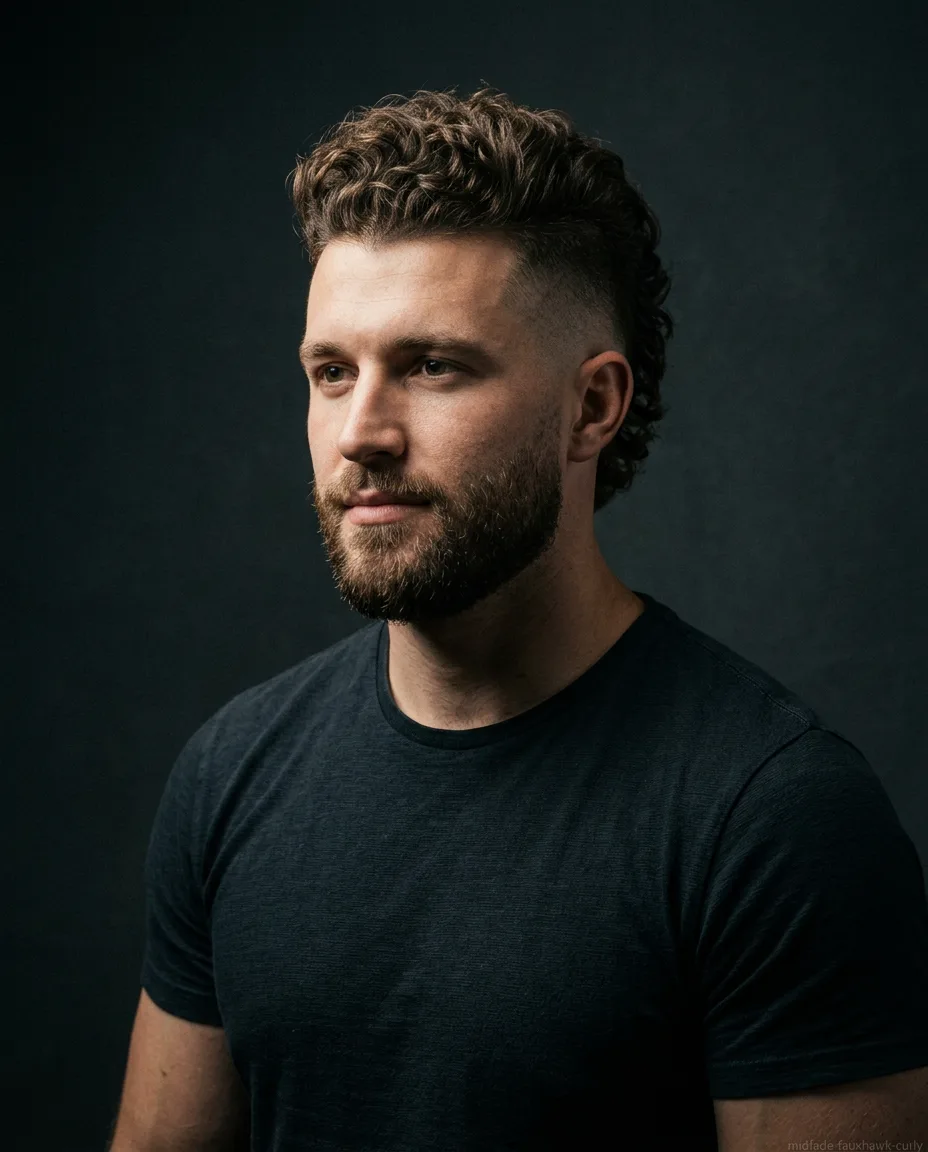
The balanced middle option — sharper than a taper, less extreme than skin. It’s the most commonly requested fade pairing for this style overall.
Touch-ups land every 3 to 4 weeks, a reasonable middle point for most schedules.
It is also the version to ask for without a reference photo. Mid fade, keep the strip long is a sentence most barbers execute correctly on the first attempt.
10. Curly Faux Hawk with Drop Fade
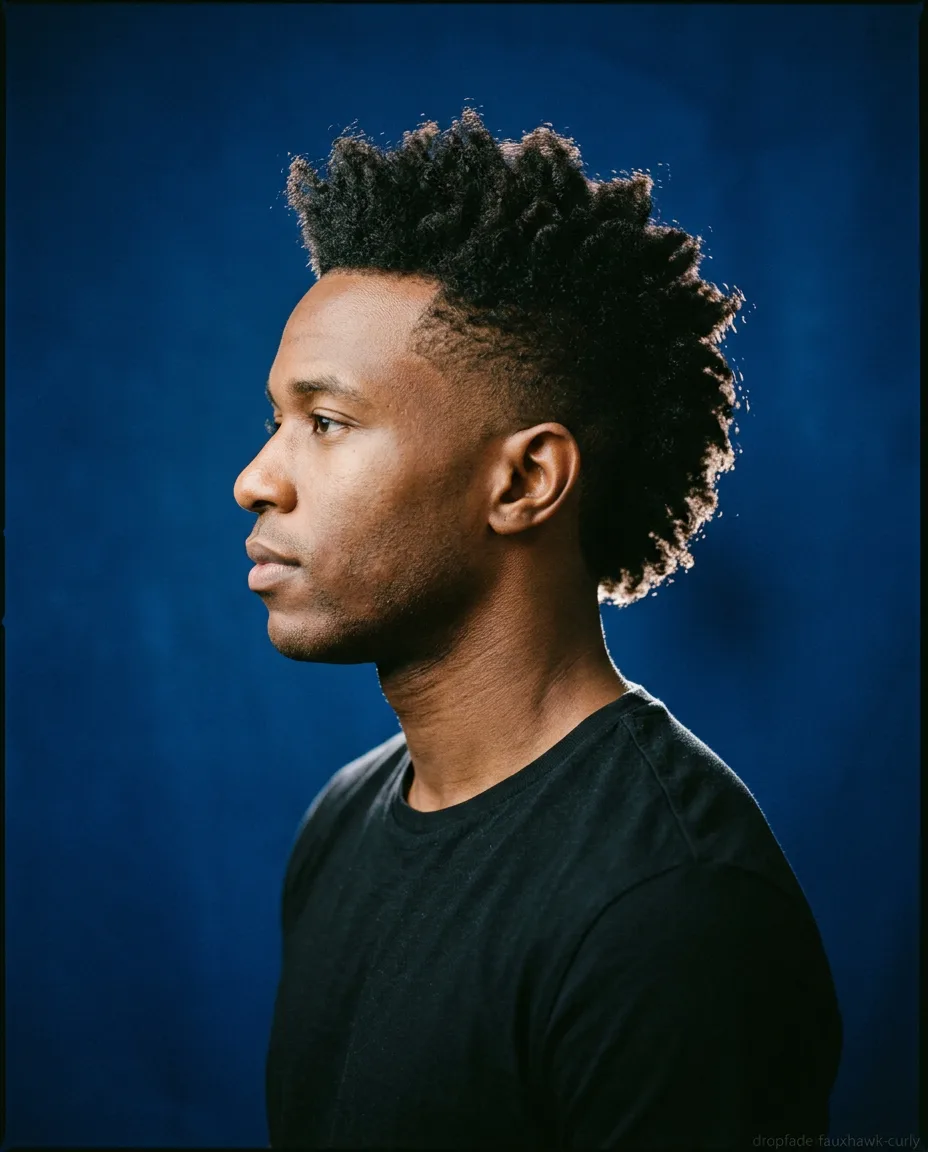
A curved fade line following the head shape rather than cutting straight across, which softens the transition into curl-heavy center height.
Confirm your barber does drop fades regularly before booking — it’s more technique-dependent than a straight fade line.
The curve takes longer to blend on curly hair than on straight, so budget extra time in the chair. Rushed, it leaves a visible ridge behind the ear.