This cut just needs the right length and the right cutting technique so it doesn’t turn into a helmet. These nine takes on the medium shag show what that actually looks like on guys with real, thick hair.
Classic Medium Shag

The classic medium shag keeps length around the ears and jaw, then chops in heavy layers through the crown so thick hair falls instead of puffing out. On finer hair this cut can look thin fast. Thick hair does the opposite — it holds the shape for weeks past when a normal cut would need a trim.
You’re looking at a trim every 6 to 8 weeks, longer than most short fades but shorter than most people expect from something this shaggy. Ask for the layers to start around ear height, not lower. Start them too low and the weight just sits there instead of moving.
This works better on guys who already have some wave or texture. Pin-straight thick hair can look bottom-heavy in this cut until it’s grown out past 4 months.
Medium Shag with Curtain Fringe

Curtains split the fringe down the middle and let it fall on both sides of the forehead, which reads younger without looking like you’re trying too hard. On thick hair the curtain holds its part naturally — you barely need product to keep it in place.
The rest of the cut stays shaggy through the back and sides, usually landing around 3 to 4 inches at the crown. Where guys go wrong is cutting the fringe too blunt. It needs point-cutting at the ends, or it reads like a bowl cut circa 1998.
Best for guys with a straight or slightly receding hairline — it covers the top corners without looking like a comb-over. If your hairline is already well back, skip this one.
Textured Shag with Skin Fade

Pairing a skin fade with shag layers up top is the move if you want something that still looks sharp at the sides for work. The fade tapers from skin at the neckline up to about an inch and a half, then the shag texture takes over.
Thick hair needs the fade blended a full half-inch higher than a barber might do on fine hair, or the transition looks like a shelf instead of a gradient. Expect fade touch-ups every 3 weeks even if the top only needs a trim every 2 months.
The upkeep cost is real — you’re basically running two haircut schedules on one head. Most guys who pick this one already get regular fades and just add the shag on top, not the other way around.
Layered Shag with Side Part

A hard or soft side part gives a shag more structure, which matters more once you hit your 40s and want something that still reads professional in a meeting. The part sits just off-center, and the layers do the rest of the work.
This is the lowest-maintenance version on this list. A blow dry with a round brush and a light pomade gets you there in about 6 minutes, and thick hair holds a part far better than thin hair does — no clips, no spray needed.
The honest answer on how long you can go between cuts is 9 to 10 weeks, longer than the classic shag because the part hides regrowth better than the choppier styles do.
Shaggy Crop with Taper

The crop keeps length short on top — around 2 inches — with a tapered back and sides instead of a hard fade. It’s the shag for guys who don’t want to deal with length past their ears.
Texture comes from a heavy scissor-over-comb technique through the crown, not from layering length like the classic shag does. That makes it faster to style: towel-dry, a dime of clay, scrunch upward, done in under 5 minutes most mornings.
Thick hair is honestly the only hair type this really works on. Fine or thin hair falls flat in a crop this short and just looks like a regular short cut with extra steps.
Curly Medium Shag

If you’ve got natural curl or wave, this is the version that needs the least convincing from your barber. The layers are cut dry, curl by curl, so the shape follows how your hair actually falls instead of how it looks wet.
Product matters more here than technique — a curl cream with some hold, not a gel that crunches. Thick curly hair can shrink up 30% to 40% from wet to dry, so length that looks right cut wet often ends up too short once it dries.
Ask specifically for a dry cut if your curl pattern is tighter than a loose wave. Skip this one if you’re not willing to let it air dry most days — diffusing every morning gets old fast.
Medium Shag with Undercut

This one hides a disconnect underneath the shag — the sides and back get buzzed short, almost skin-close in spots, while the top stays long and shaggy enough to fall over and cover the transition.
It’s a bolder look than most of the cuts here, closer to what younger guys wear, and it doesn’t always age gracefully on a 40-something guy in a business-casual office. Know your workplace before you commit to it.
Maintenance splits the difference — the undercut needs a touch-up every 2 to 3 weeks, but the shaggy top can go 10 weeks or more without a trim since it’s meant to look a little overgrown anyway.
Salt-and-Pepper Medium Shag

Gray coming in doesn’t need to be hidden under this cut — it’s actually one of the better styles for showing it off, since the choppy layers catch light differently across the lighter and darker strands.
Thick graying hair tends to get wirier and more resistant to lying flat, which sounds like a problem until you realize that’s exactly the texture a shag wants. Less product, not more, is usually the fix if yours is fighting you.
Talk to your barber about leaving slightly more weight through the crown than a younger guy would get. Thinner styling through gray hair can expose scalp in a way that reads older than intended.
Medium Wolf Shag
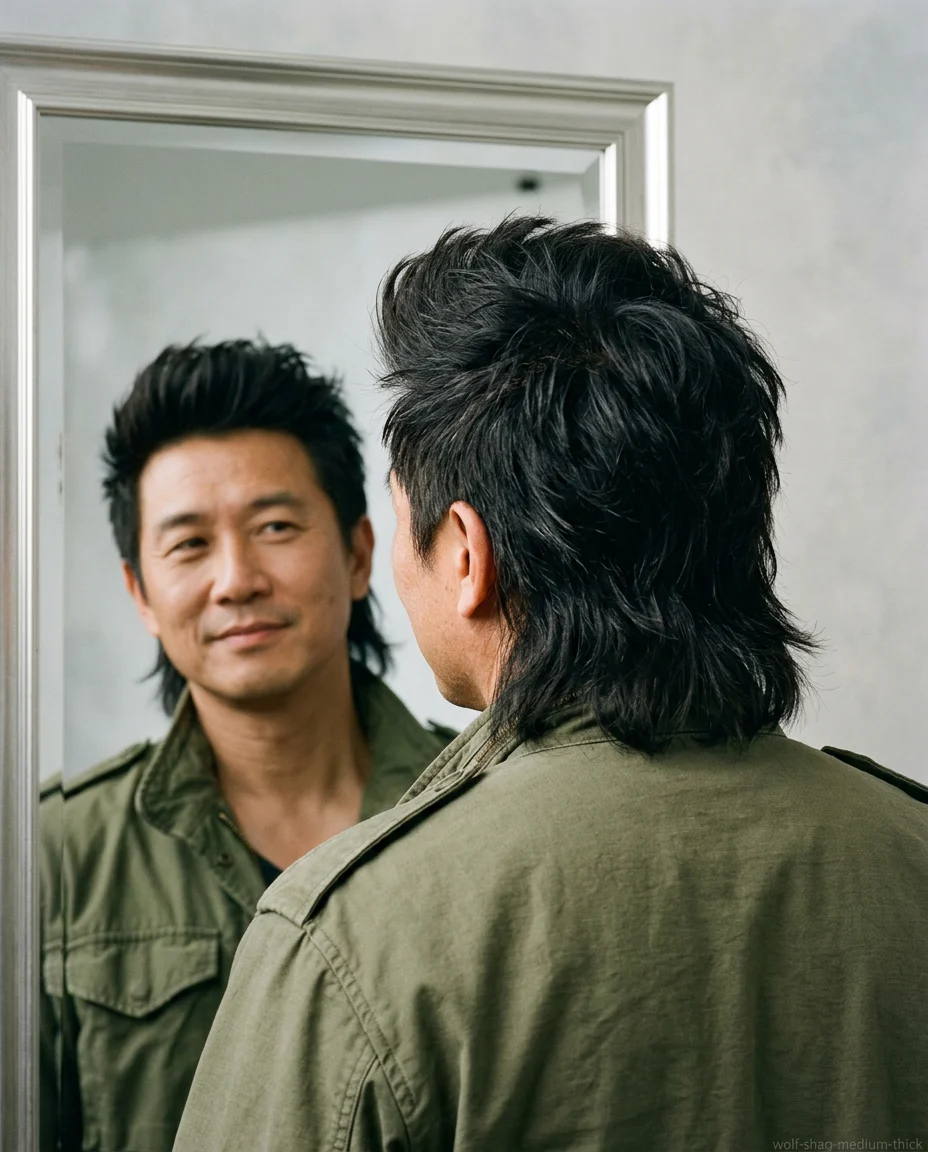
The wolf shag pushes the layering harder than any other cut on this list — mullet-length pieces in the back, choppy shag texture everywhere else, and volume pushed up and out rather than combed down.
It’s the highest-commitment option here. Growing it out from a normal short cut takes about 4 to 5 months before there’s enough length to actually layer this way, and not every barber is comfortable cutting it correctly yet.
The trade-off is worth it if you want something that doesn’t look like every other guy’s haircut at the gym. If you want something safer for client-facing work, the layered shag with a side part is the better call.