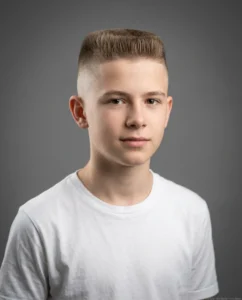
1. Thin Hair Textured Crop Mid Fade
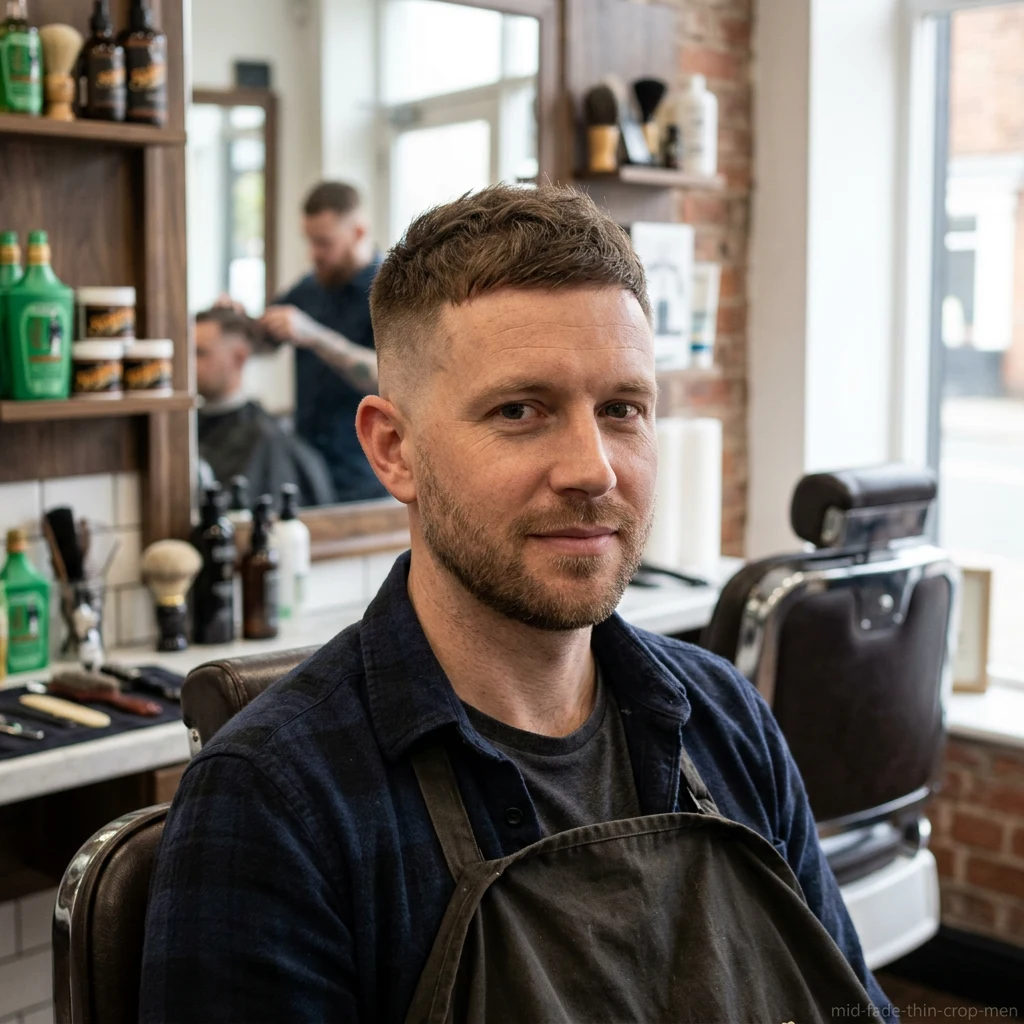
Short on top, around 1.5 to 2 inches, kept slightly choppy instead of smoothed flat. This is one of the better starting points for thin hair, since shorter length naturally reads as denser than longer hair does — there’s less surface area for the scalp to show through. The mid fade adds contrast that draws the eye away from the top altogether.
A matte texture paste, worked through with fingers rather than a comb, builds the illusion of thickness without weighing the hair down. The honest answer here: thin hair styled too long almost always looks thinner, not fuller. Shorter is usually the better call.
2. Thin Hair Crew Cut Mid Fade

Around 1 inch on top, simple and low-maintenance, mid fade keeping the sides tidy. This is probably the most forgiving cut on this list for thin hair, since there’s barely any length for thinness to become noticeable in the first place. A crew cut doesn’t try to hide anything — it just removes the problem.
Styling takes under 2 minutes: towel-dry, a small amount of matte pomade, done. No blow-drying required, which is a real advantage for guys who don’t want a long morning routine just to manage their hair.
3. Thin Hair Quiff Mid Fade
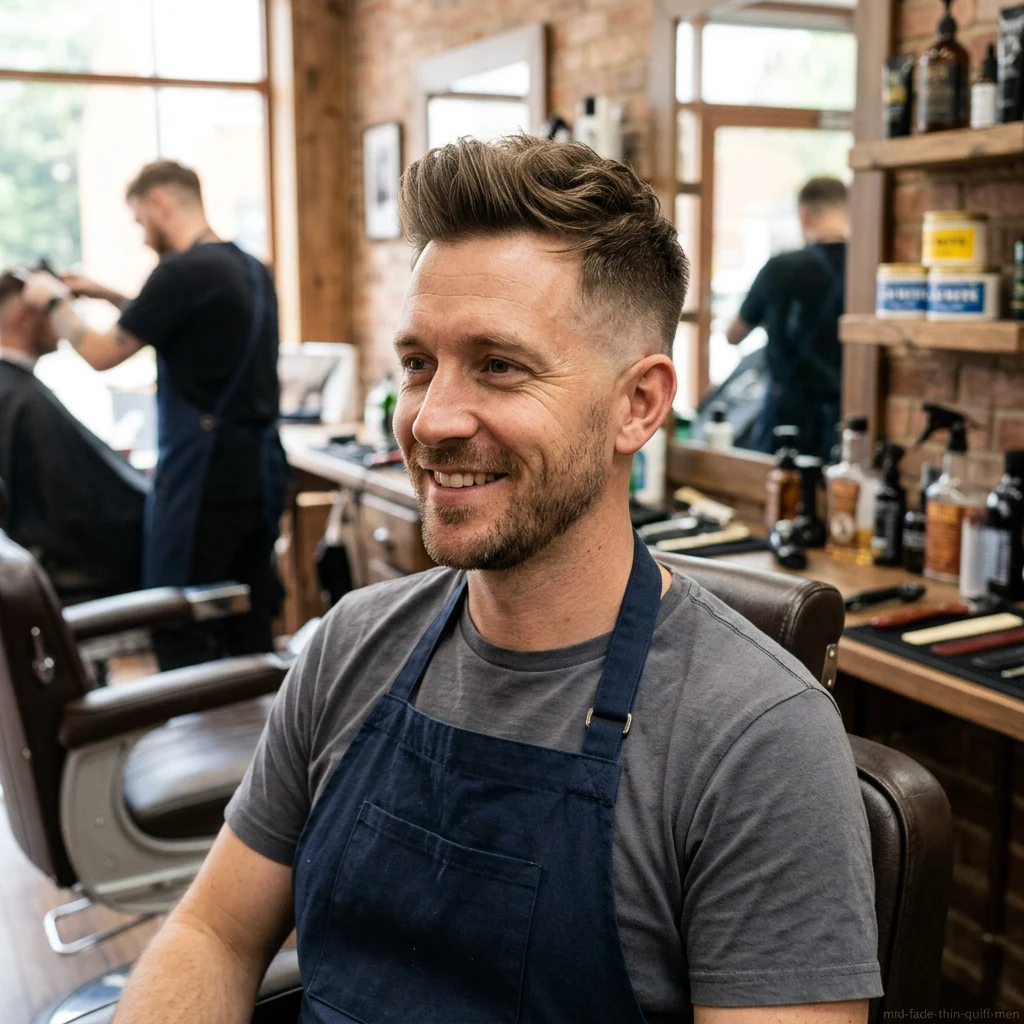
Around 2.5 to 3 inches, swept up and slightly forward, mid fade tapering in below. A quiff actually works well for thin hair because the lift creates volume at the root, which is exactly where thin hair needs the most help. Length alone won’t do that — height does.
A volumizing mousse on damp hair, then a blow-dry with a round brush lifting the roots, makes the biggest difference here. Skip the blow-dry and the quiff usually falls flat by midmorning, especially on finer hair that doesn’t hold its own weight well.
4. Thin Hair Side Part Mid Fade
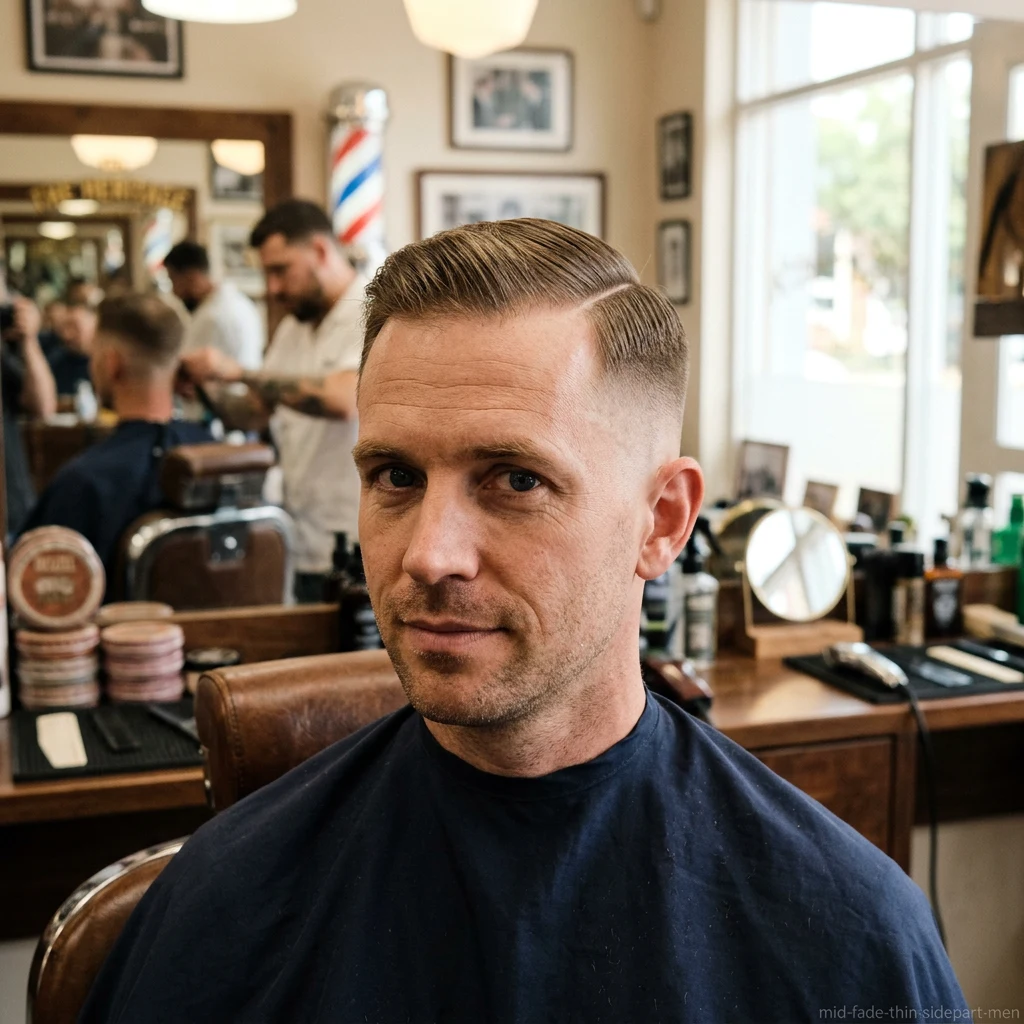
A defined part, hair combed across, mid fade clean on the sides. This is a more formal option, suited for office settings or anywhere a polished look matters. Thin hair holds a part reasonably well, though the part line itself tends to show scalp more visibly than it would on thicker hair.
A lightweight pomade with a matte finish works better here than a high-shine product. Shine combined with a part line can make thin hair look even sparser than it actually is, which is the opposite of what most guys want from this cut.
5. Thin Hair Slick Back Mid Fade
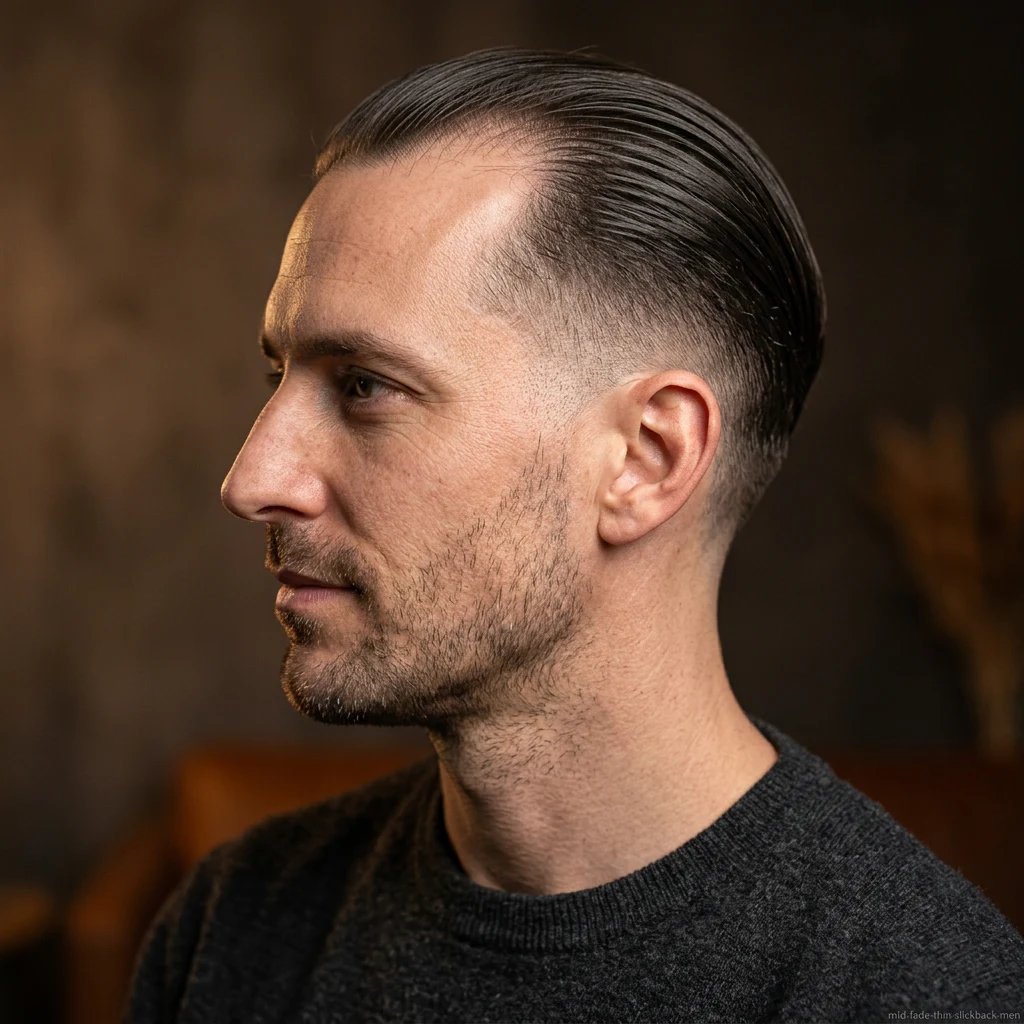
All hair combed straight back, glossy finish, mid fade tight on the sides. This is a riskier pick for thin hair specifically — the wet, slicked finish tends to emphasize exactly how much hair is actually there, rather than disguising it. It can still work, but it’s not the most forgiving option on this list.
If going this route, a lighter-hold pomade applied sparingly avoids the overly slicked, scalp-revealing look that heavier products create. Most guys with thin hair get better results from the quiff or textured crop instead, but for a specific event or formal occasion, this still has its place.
6. Thin Hair Buzz Cut Mid Fade

Extremely short, under half an inch, blending directly into the mid fade with almost no visible transition. This is the most honest option on the list — instead of trying to disguise thin hair, it just removes the question entirely. There’s no length for thinness to be noticeable, no scalp-versus-hair contrast to manage.
Zero styling required. No product, no blow-dry, no daily routine. For guys who’d rather not think about thinning hair as a daily concern, this is usually the simplest answer.
7. Thin Hair Spiky Mid Fade

Short textured spikes, around 1.5 to 2 inches, mid fade underneath. Spikes work surprisingly well on thin hair because the upward direction of each section creates the appearance of more density than a flat style would, similar to how a quiff uses height for the same effect.
A strong-hold paste, applied to damp hair and worked upward in small sections, holds the spikes through most of the day. This isn’t a wash-and-go style, though — expect a few minutes of actual styling each morning, not just a quick product pass.
8. Thin Hair Comb Over Mid Fade
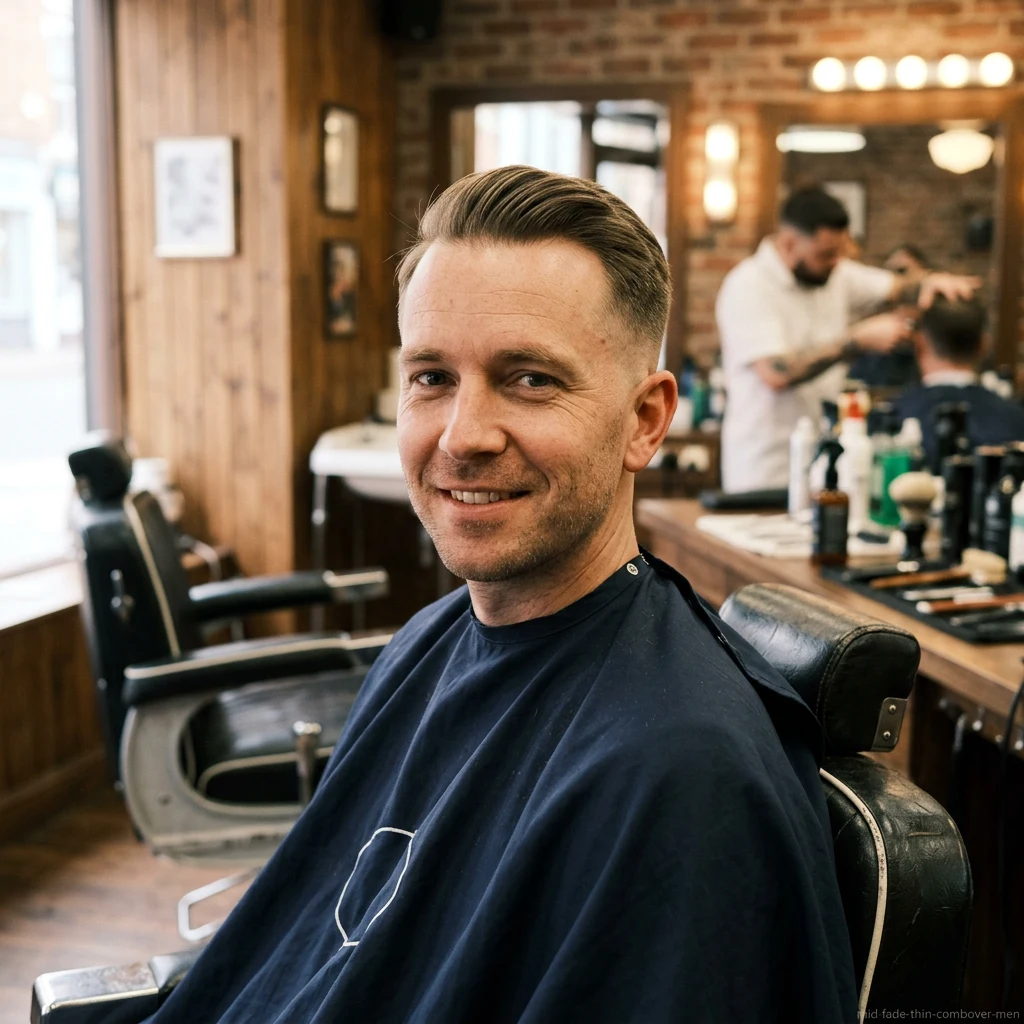
Length swept to one side over a mid fade, a softer alternative to the slick back. A matte finish here, rather than gloss, keeps the focus on shape instead of shine. This style sits somewhere between casual and formal, which makes it versatile across most settings.
The trade-off compared to a quiff: there’s less built-in volume here, since the hair lies closer to the head instead of standing up. For thin hair, that means the comb over needs a bit more product help to avoid looking flat by the afternoon.
9. Thin Hair Caesar Cut Mid Fade

Short, horizontal fringe across the forehead, mid fade on the sides. This is a low-maintenance, no-fuss option that works well for thin hair specifically because the short, even length doesn’t give thinness much room to become obvious. There’s no height to manage and no part to maintain.
A small amount of matte product, pressed in rather than combed through, finishes the look in under 2 minutes. This is one of the easiest cuts on this list to maintain day to day.
10. Thin Hair Pompadour Mid Fade

Volume built up and back, around 3 to 4 inches, mid fade sharp on the sides. A pompadour is more demanding for thin hair than a quiff, since it needs more sustained height across a larger section, not just at the front. It can absolutely work, but it takes more product and more styling time than most other options here.
A blow-dry with a round brush, building volume from the roots, followed by a strong-hold paste, is non-negotiable for this one. Skip either step and thin hair just won’t hold the shape long enough to be worth the effort.