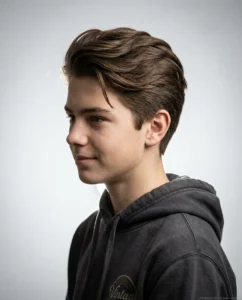
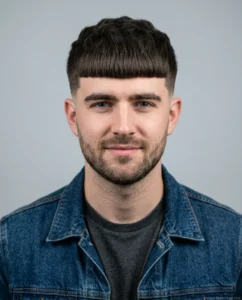
The long side part is one of the few cuts where density genuinely helps. Here’s the honest answer: thick hair is the one texture that makes this cut effortless. The extra density gives the part somewhere to hold, and it keeps the top from ever looking thin or see-through.
Classic Long Side Part

This is the version most guys picture first. Hair on top runs 3 to 4 inches, combed to one side over a part cut in with the clippers or a straight razor. Thick hair holds this shape through a full workday without much product. That’s the whole appeal, honestly — low maintenance styling that still reads as put-together.
Q: Does this work for a receding hairline?
A: It actually helps. The side part draws the eye across instead of up, which softens a receding line better than most cuts do.
One trade-off worth naming: thick hair grows out fast on top, so the part starts to blur after about 4 weeks. Budget for a trim on that schedule, not the usual 6.
Long Side Part with Skin Fade
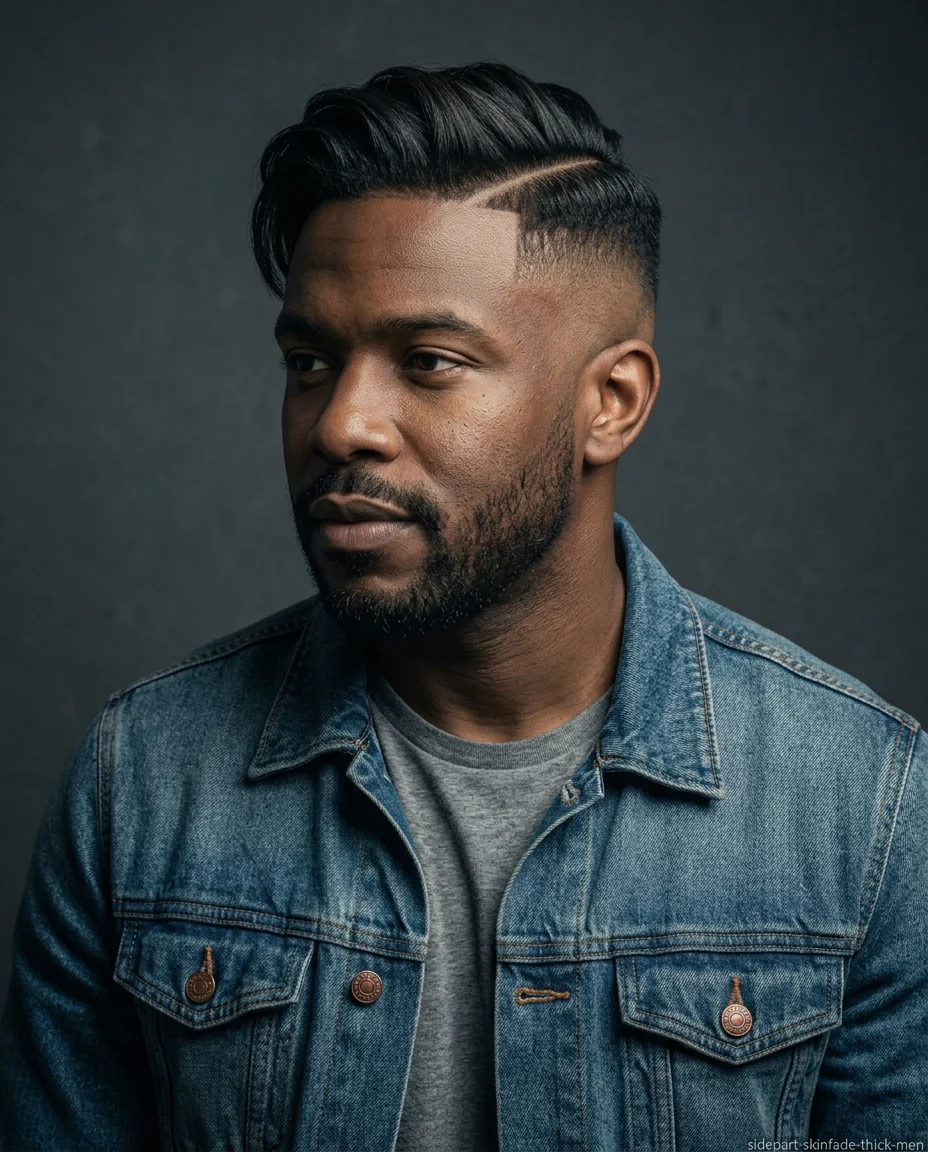
Skin fade on the sides, long length up top — this pairing does a lot of the heavy lifting for guys with thick hair who feel like their head looks too big. The fade removes bulk at the sides. And the length on top stays exactly where the density is doing its job.
Q: How skilled does the barber need to be for this?
A: More than average. A bad skin fade on thick hair shows every uneven line. Ask to see fade work in their portfolio first.
Expect a fade touch-up every 2 to 3 weeks even if the top only needs cutting every 5. Two different maintenance clocks running at once — most guys don’t realize that going in.
Long Side Part with Undercut
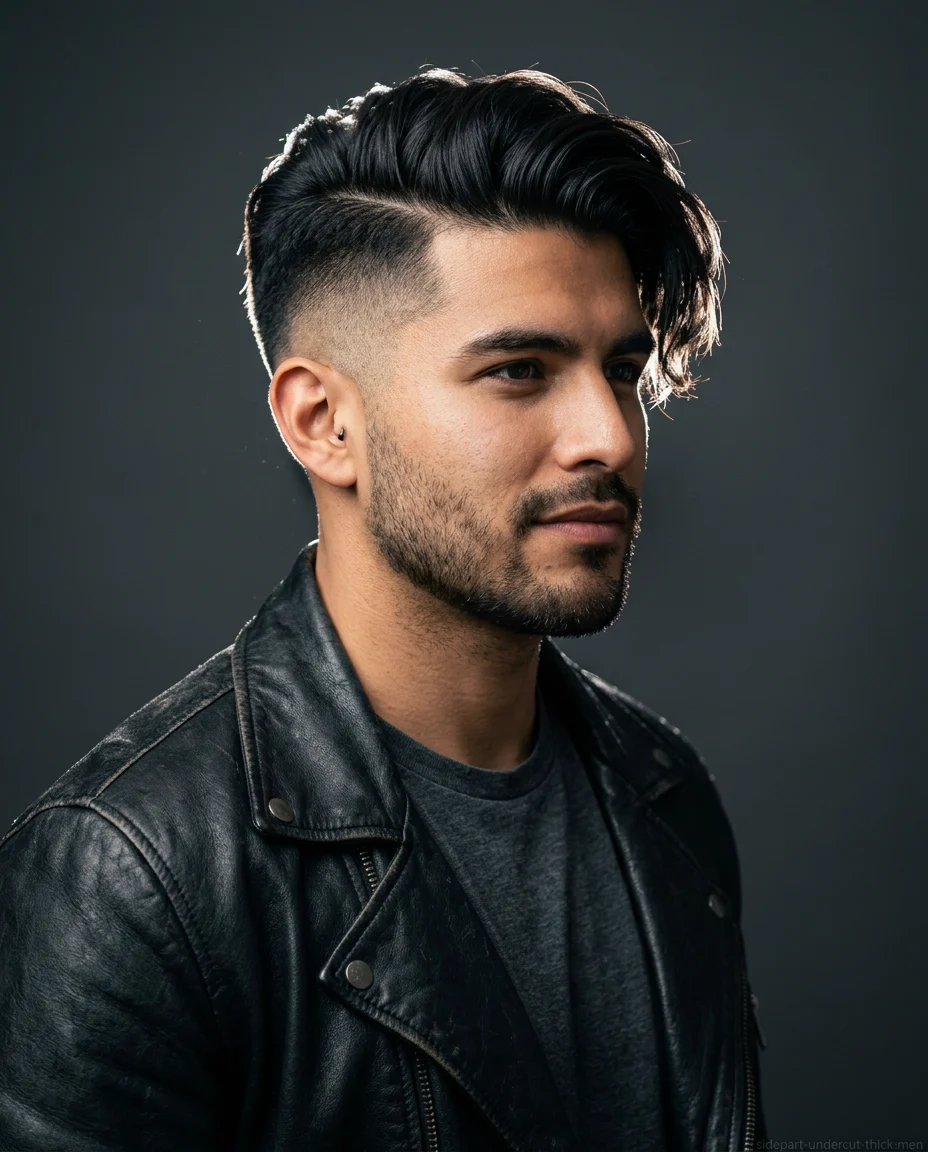
An undercut sits harder and more disconnected than a fade. It’s a bold look, and thick hair on top makes the contrast even sharper against the shaved sides. Guys who want something that reads as intentional rather than just neat tend to land here.
Q: Is this too much for an office job?
A: Depends on the office. Combed flat, it reads professional. Left messy with visible undercut, it leans creative-industry more than corporate.
The undercut needs a clean shave-line refresh every 2 weeks or it starts to look grown-out rather than styled. That upkeep is the real cost of this one.
Textured Long Side Part

Point-cut or texturized ends break up the density instead of fighting it. Thick hair left totally blunt can look heavy. Texturizing removes weight without shortening the length, so the part still falls the same way but with more movement at the surface.
Q: Does texturizing damage thick hair?
A: Not when it’s done with shears or a razor at the ends only. It’s cosmetic thinning, not chemical thinning — no lasting damage.
This works best on hair that’s already a little wavy. Bone-straight thick hair sometimes looks unfinished with heavy texturizing, so ask your barber to go light first and adjust from there.
Long Side Part Pompadour Blend

Take the front section, add height and a slight brush-back, then let the rest fall into a standard side part behind it. Thick hair holds that lifted front section without needing three product layers to do it. That’s the advantage over guys with fine hair attempting the same look.
Q: What product actually holds the front lift?
A: A matte clay or fiber paste, applied to towel-dried hair, not fully dry hair. Wait too long and thick hair resists restyling.
Morning styling takes about 6 minutes once you’ve got the blow-dry angle down. Skip the blow-dry and the front section just falls flat by noon.
Slicked-Back Long Side Part
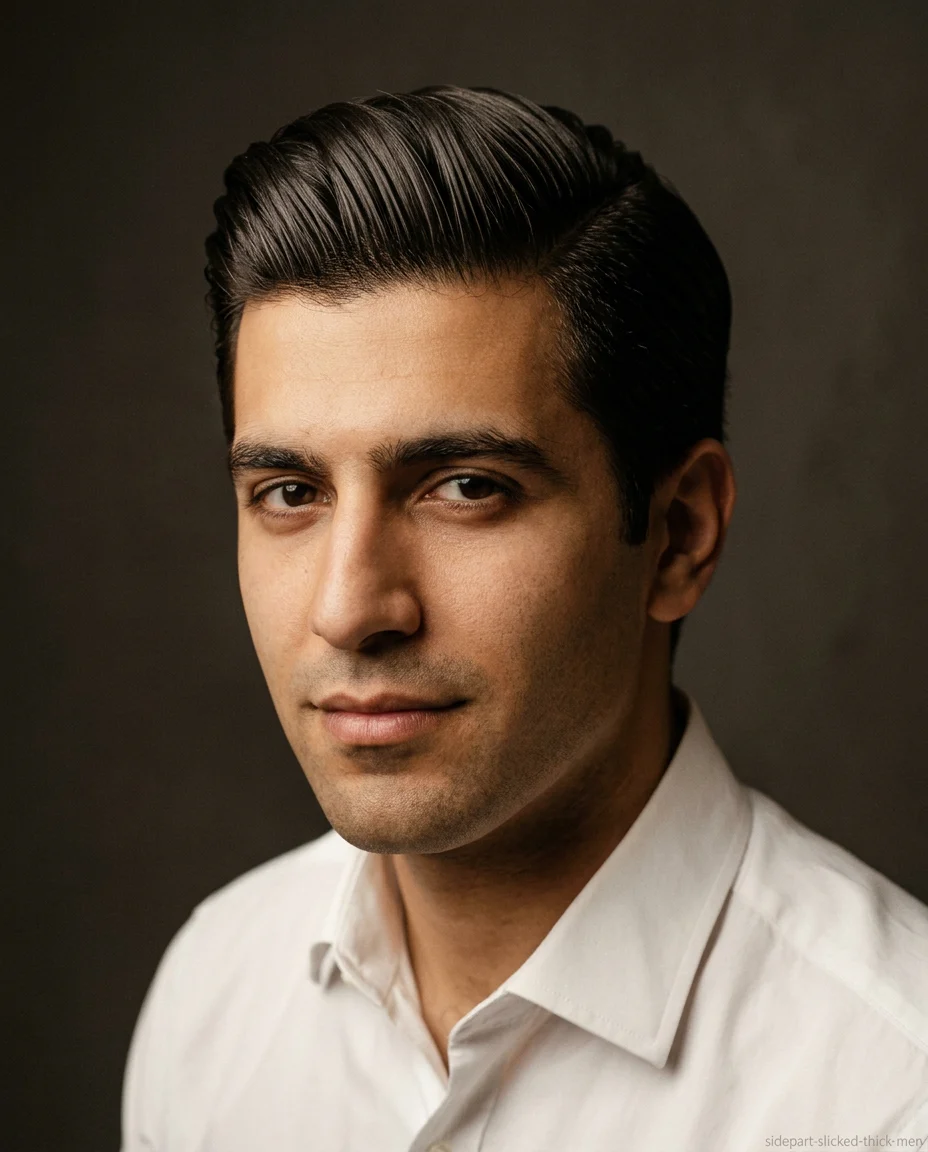
A wet-look pomade over a long side part gives thick hair a polished, almost old-Hollywood finish. It’s the version that photographs the best, which is probably why it shows up constantly on Pinterest boards for this exact cut.
Q: Will this look greasy in person?
A: Only if you overdo the product. A dime-sized amount of oil-based pomade on thick hair goes further than you’d think — start small.
Humidity is the real enemy here. In anything above 70% humidity, expect to reapply pomade by early afternoon or the slick finish starts to lift at the crown.
Hard Part Long Side Part

A hard part is a shaved line cut directly into the part itself, sitting under the standard long side part. It turns a soft styling choice into a permanent, barbershop-cut line. Thick hair actually needs this more than thin hair does — without it, the natural part can wander throughout the day.
Q: Does the line grow out awkwardly?
A: Yes, within about a week and a half. This is one of the higher-maintenance versions on this list, not a set-it-and-forget-it option.
If you travel a lot or skip barbershop visits during busy weeks, this might not be the one. The line only looks sharp when it’s fresh.
Wavy Long Side Part

Guys with thick, wavy hair sometimes fight their natural texture trying to force a flat side part. Don’t. Let the wave show through the top section instead, and just clean up the part line at the sides. It looks less styled and more lived-in, which a lot of guys actually prefer.
Q: Do I still need product for this?
A: A light sea-salt spray helps define the waves without weighing thick hair down the way heavier creams do.
The trade-off: this version looks different every single day depending on humidity and how you slept. Some guys love that variety. Others find it frustrating by day three of a bad hair week.
Long Side Part with Taper Fade
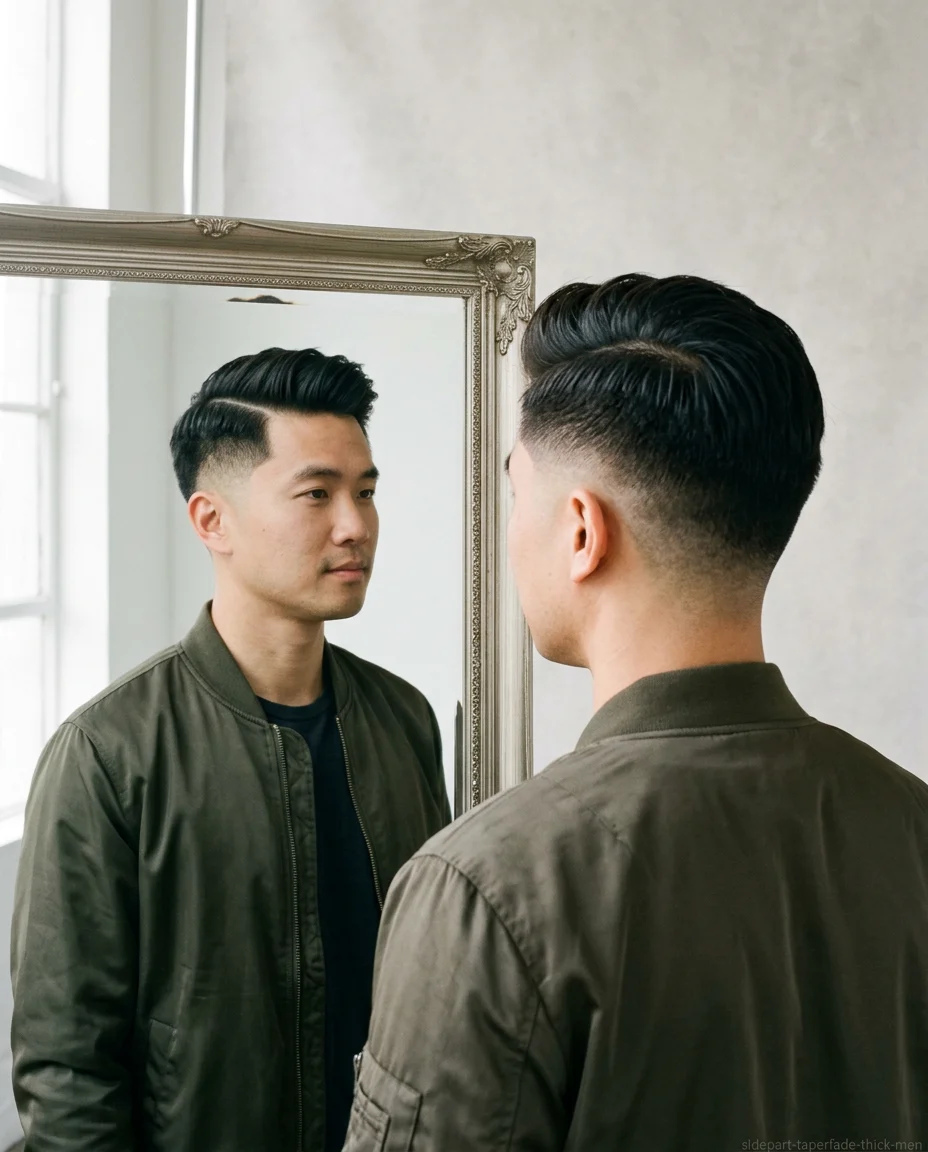
A taper fade blends more gradually than a skin fade, staying a little longer at the sides. For thick hair, that gradual blend hides the transition point better, so there’s less risk of a visible line if you go 5 weeks between cuts instead of 3.
Q: Is a taper fade more forgiving than a skin fade?
A: Considerably. It grows out softer, which matters if your schedule doesn’t allow tight 2-week fade appointments.
This is the version many barbers recommend to first-time fade clients with thick hair — lower risk, still sharp, and it buys you an extra week or two before it looks unkempt.
Messy Long Side Part

Same cut as the classic version, styled deliberately unkempt instead of combed flat. Run a matte paste through damp hair, push it roughly to one side with your fingers, and stop. Thick hair holds this kind of loose shape all day without collapsing, which is exactly why it works here and not on finer hair types.
Q: How is this different from just not styling at all?
A: The part line is still cut in cleanly underneath. The mess is on top of a structured base — that’s what separates styled-messy from actually unstyled.
Twenty seconds of finger-styling, no comb, no mirror check needed. It’s the fastest option on this entire list.
Long Side Part with Low Fade

A low fade keeps the fade zone close to the hairline instead of climbing toward the temple. It’s a subtler statement than a skin or taper fade, and it suits guys whose workplace leans conservative but who still want the length and part up top.
Q: Will a low fade even be noticeable?
A: Barely, from a distance. Up close it’s clean and defined. That’s the appeal for guys who don’t want their haircut to be the first thing people mention.
Maintenance sits in the middle: not as forgiving as a taper, not as demanding as a skin fade. Plan on a touch-up around the 4-week mark.
Business Long Side Part

Shorter overall than most versions here, this is the long side part built for client meetings and video calls. The length up top stays around 2.5 inches instead of 4, and the sides stay short but not faded. Conservative, but thick hair still keeps it from looking thin on camera.
Q: What’s the fastest way to style this before a 7am call?
A: Comb-through with a small amount of pomade while hair is still damp. About 90 seconds, no blow dryer required.
This is the version that holds up longest between cuts — 6 to 7 weeks is realistic, since there’s less length to grow out of shape.
Long Side Part with High Volume Swoop
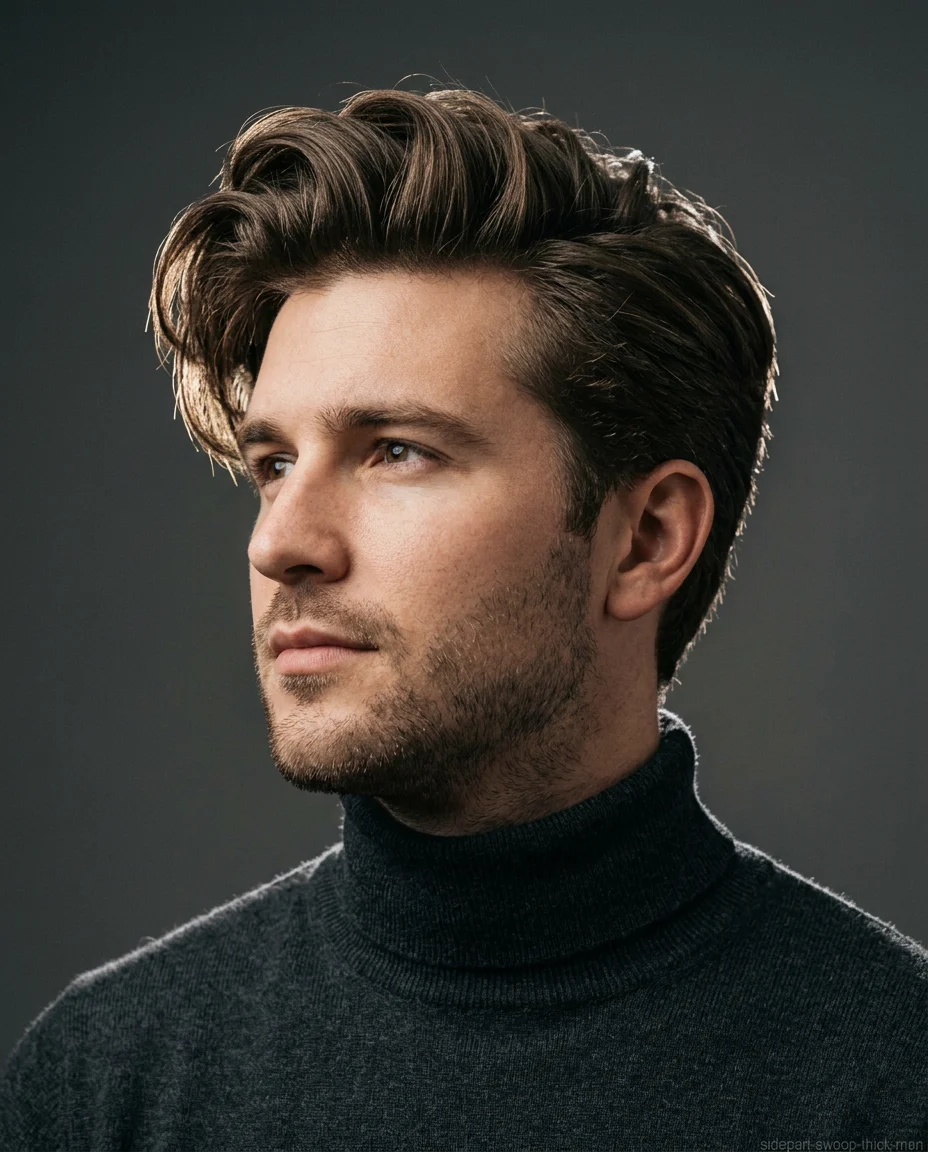
This is the most dramatic version on the list. Extra length on top, blow-dried up and over into a swooping front section that catches the light. Thick hair is honestly the only texture that can pull this off without a full can of hairspray holding it together.
Q: Does this require a diffuser or round brush?
A: A round brush, yes. Diffusers are more for curly texture — a round brush gives you the directional lift this style depends on.
Realistically, this needs a 10-minute styling routine most mornings. If that’s more time than you want to spend, one of the shorter versions above will serve you better.