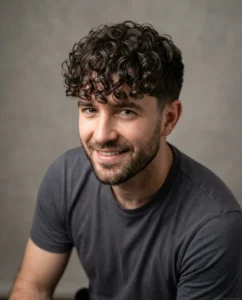
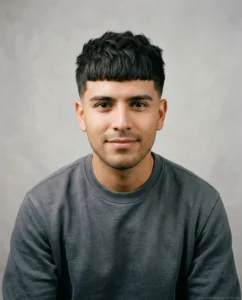
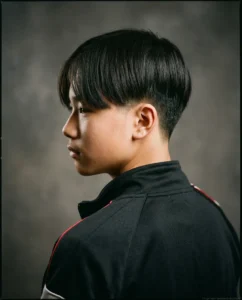
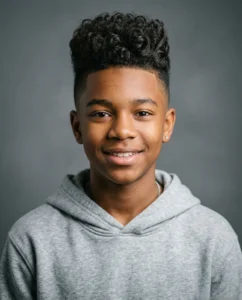
Curly hair and a fringe sound like a difficult pairing on paper. For teen boys it mostly works, and it works because curls need somewhere to fall instead of frizzing sideways off the crown. A medium fringe gives them that. Below are eight versions worth bringing in on a phone screen.
1. Curly Fringe with Skin Fade

This one is among the most popular choices for curly-haired teens, and it earns that. Skin fade on the sides, curls left full through the fringe, cut either straight across the forehead or angled — the choice depends on face shape more than personal taste. Round faces do better with a diagonal line. Square jaws can wear it straight without looking boxy.
Q: How often does this need a trim?
A: Every 3 to 4 weeks for the fade. The curls on top can stretch to 6 weeks between cuts, since length up there is the whole point.
The catch is upkeep. That fade grows out fast, and by week three it starts looking patchy instead of sharp. This gets sold as a low-maintenance cut. It isn’t — it just hides the maintenance in a part of the head you can’t see yourself.
2. Textured Curly Fringe with Taper Fade

Softer than the skin fade version above, and a lot more forgiving for a first-time curly cut. The taper blends into the neckline instead of cutting off sharp, so growth between appointments looks intentional rather than sloppy. Texture gets added through the fringe with point-cutting shears, which breaks up the curl pattern just enough that it doesn’t clump.
Q: Does this work on tighter curl patterns?
A: Yes, arguably better than on loose waves. Tighter curls hold the texturing longer, sometimes 5 to 6 weeks before it needs redoing.
Ask for point-cutting specifically — a barber using only clippers on the fringe will flatten the texture this cut depends on.
3. Curly French Crop Fringe
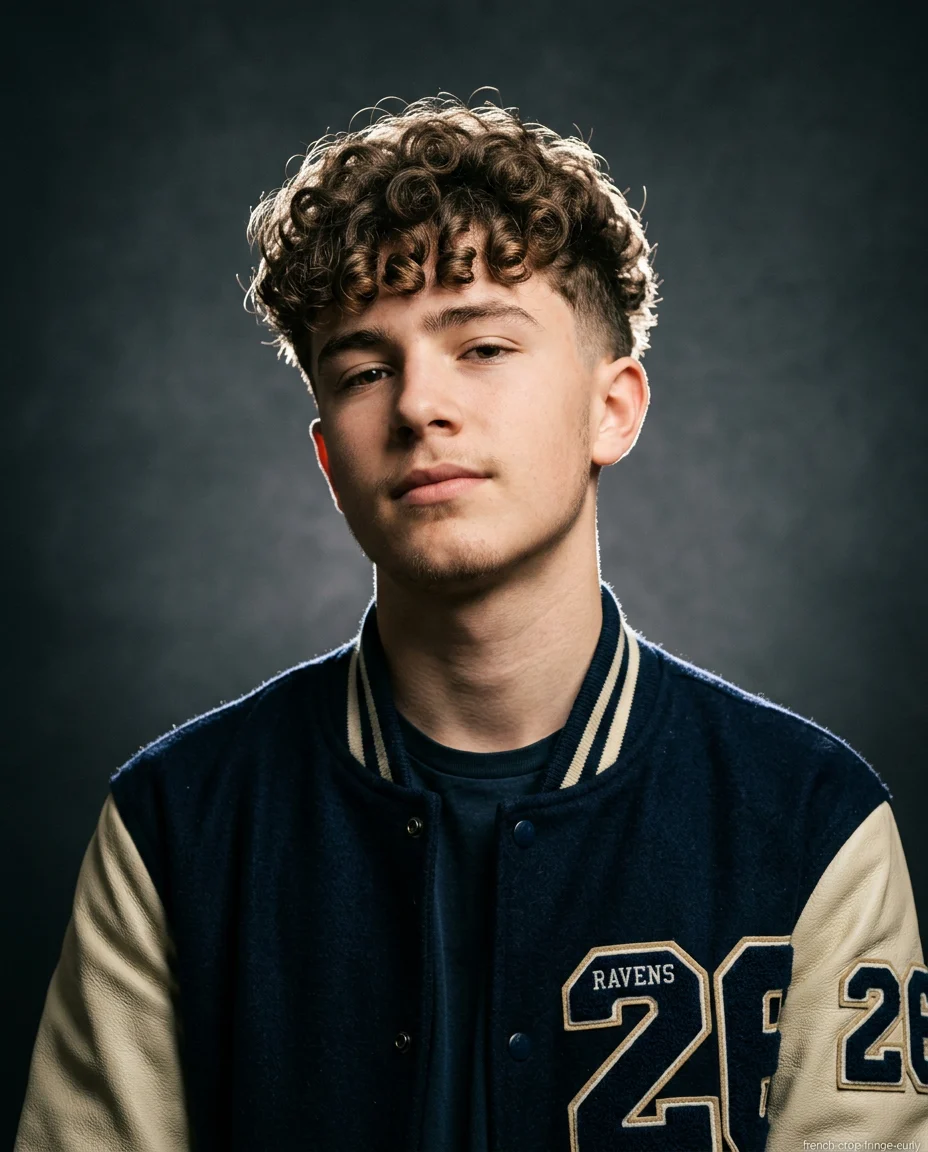
Short on top, cropped fringe, tight sides. This is the version to pick if a teen wants low daily effort more than a statement look. About 1 to 2 inches of length on top is enough for the curls to show without turning into a full afro silhouette, and the fringe itself sits just above the eyebrows rather than sweeping to the side.
Q: How much styling does this need each morning?
A: Honestly, close to none. A curl cream worked through damp hair and it air-dries into shape in about 10 minutes.
Where it falls short is versatility — there’s really one way to wear this cut, so it’s a poor pick for anyone who likes switching up their look week to week.
4. Curly Fringe with Undercut

More contrast than a fade gives you. The undercut shaves the sides down close and keeps a hard line instead of a gradual blend, which reads a lot more grown-up on a 16 or 17-year-old than it does on a 14-year-old. The fringe stays long and curly, sometimes 3 to 4 inches, so the drop from top-length to shaved-side is dramatic on purpose.
Q: Is this a good option for school dress codes?
A: Check first. Some schools flag hard undercuts as “extreme,” even though the top length is perfectly ordinary. Worth a five-minute look at the handbook before booking.
Most guides skip that dress-code detail entirely, and it’s the actual reason some parents come back and ask for a fade instead.
5. Side-Swept Curly Fringe
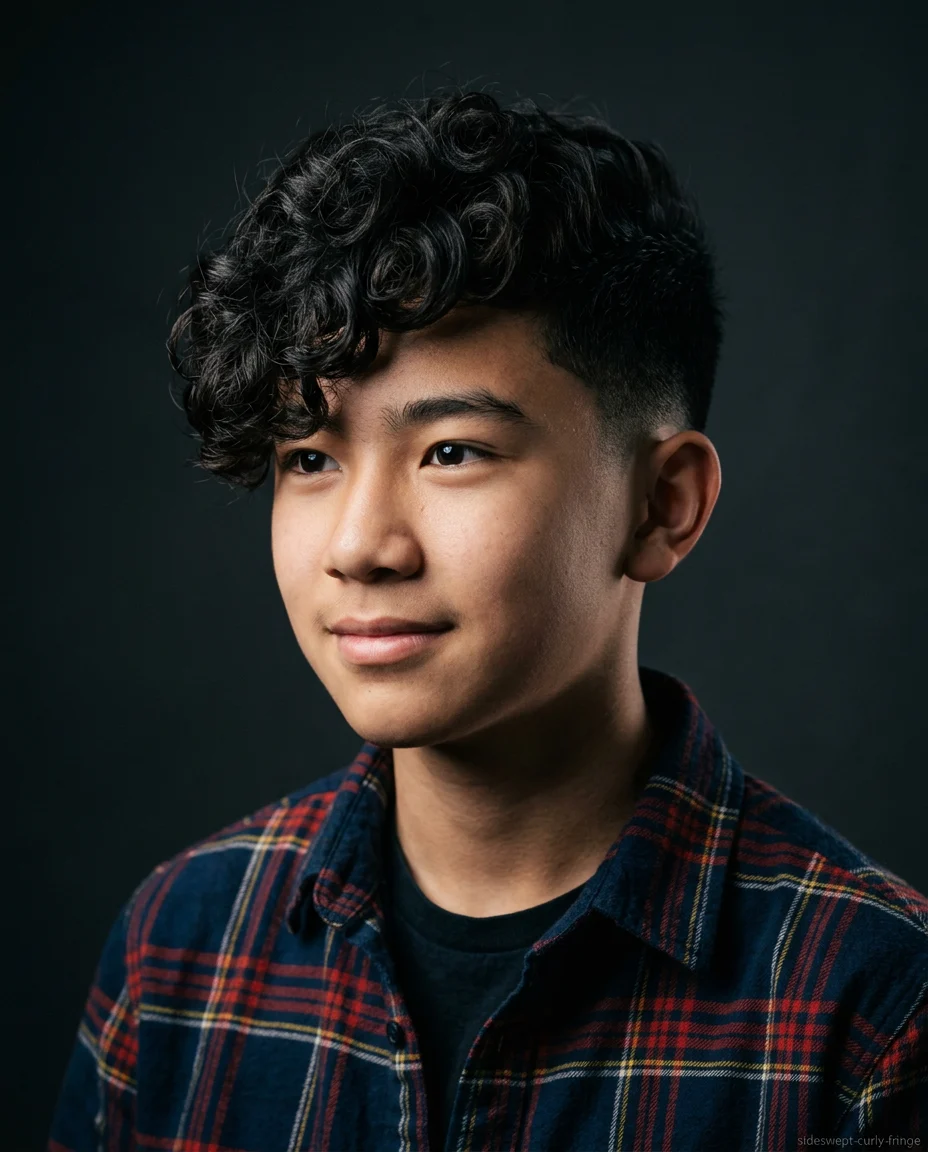
Instead of falling straight down, the fringe gets cut on an angle and pushed to one side. And it’s one of the few curly cuts that photographs well from almost any angle, which is part of why it keeps showing up on style boards. Sides stay a bit longer than a typical fade — a low taper usually, not a skin fade — so the whole shape reads softer.
Q: Does product help hold the sweep in place?
A: A light curl cream does more than gel here. Gel tends to crunch curls together instead of letting them sit separately, which kills the swept look by midday.
The honest answer on maintenance is it depends on curl looseness — tighter curls hold the sweep on their own, looser ones need product every single morning.
6. Curly Fringe Quiff

Height at the front instead of a flat fringe. The curls get pushed up and slightly back rather than down over the forehead, which takes more effort at the sink but gives a noticeably different silhouette than the other cuts on this list. Sides taper down short, usually a mid fade, to keep the visual weight up top where it belongs.
Q: How long does styling take each day?
A: About 8 minutes with a blow dryer on low heat and a diffuser attachment. Skip the diffuser and it can take twice as long to get the same lift.
This is the least low-maintenance option here, and it should be picked with that in mind rather than for the photo alone.
7. Curly Fringe with Low Fade and Line Up
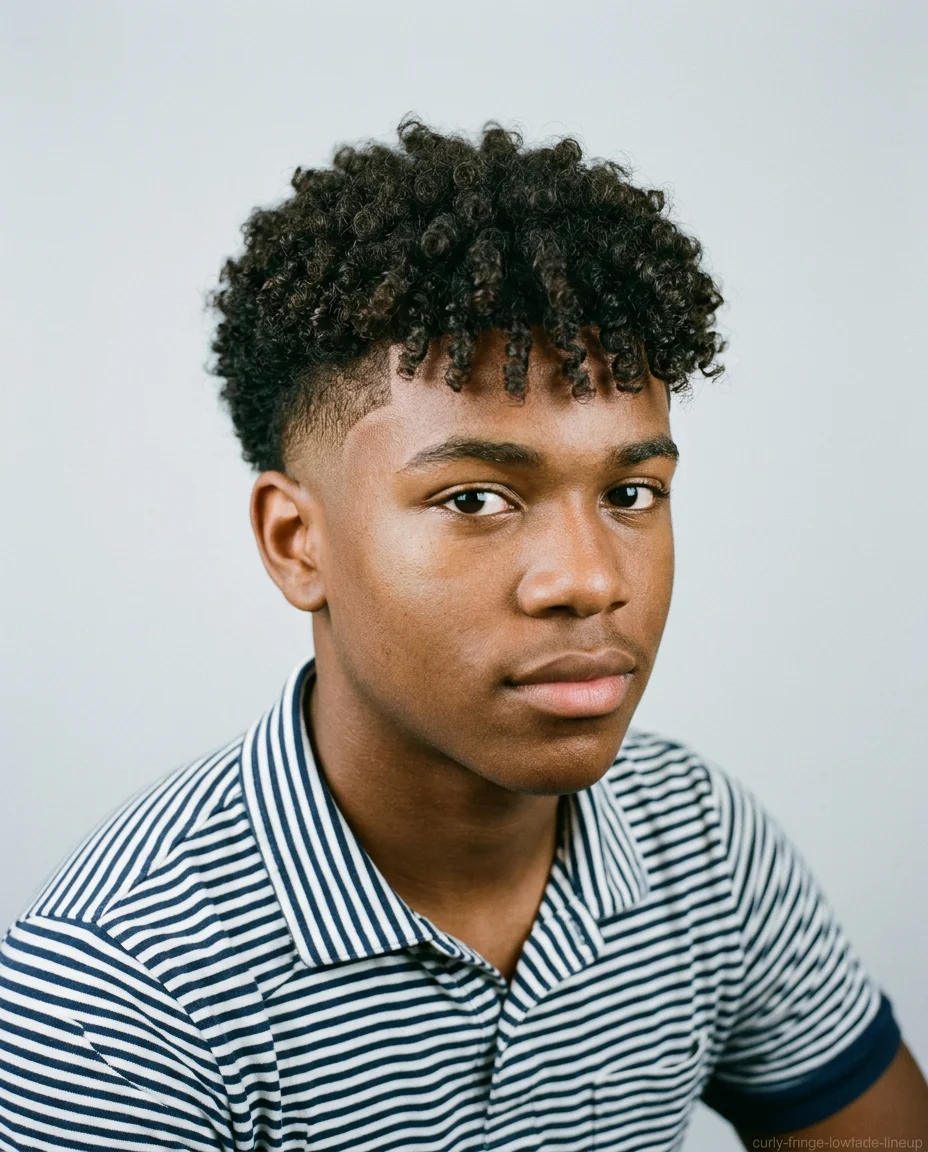
A low fade sits closer to the ears than a mid or high fade, so it reads more subtle from a distance — good for a teen who wants a fresher look without a cut that screams “new haircut” at school on Monday. Add a line-up around the hairline and the fringe edge sharpens considerably, which barbers sometimes call the “finishing touch” but really just means a razor line at the temples and forehead.
Q: How soon does the line-up need redoing?
A: Around 10 to 14 days. It grows out faster than the fade underneath it, since it’s cut razor-thin to begin with.
Skip this if the teen isn’t going to a barber every couple weeks anyway — a half-grown-out line-up looks worse than no line-up at all.
8. Choppy Curly Fringe with Long Top
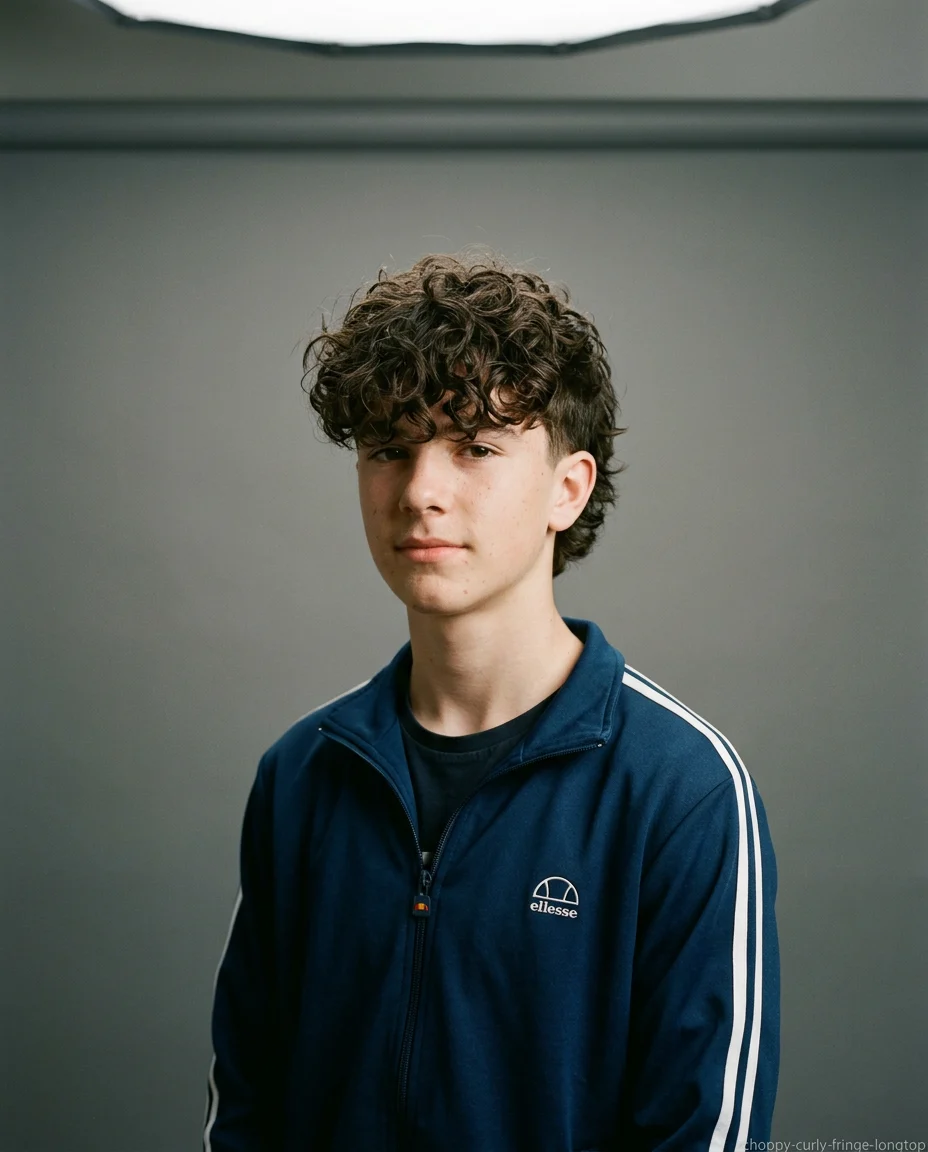
The longest option on this list, and the one with the most texture. Top length runs 3 to 5 inches, cut with a choppy, uneven finish rather than a clean blunt edge, so the curls stack on each other instead of falling in one uniform direction. Sides stay long too, usually just trimmed rather than faded, which is the main thing separating this from every other cut here.
Q: Will this look messy instead of intentional?
A: Only if the chop is uneven in the wrong places. A barber working section by section, not just eyeballing the whole head at once, keeps it looking deliberate.
This cut needs the least frequent trims of the eight — every 6 to 8 weeks — but it needs the most patience while it grows into shape.