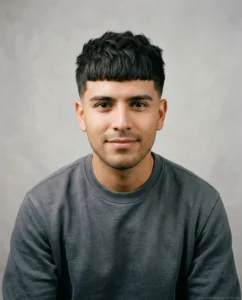
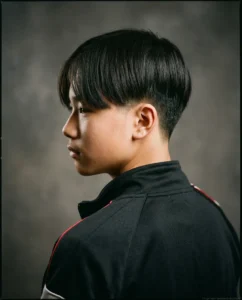
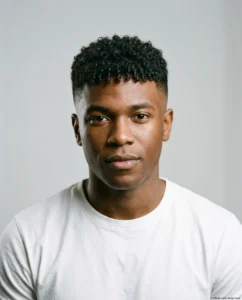
Curly hair handles a longer fringe differently than straight hair does: more volume, more bounce, and less need for precise styling before it looks finished.
Curly Long Fringe Classic

The classic version lets curls fall forward naturally across the forehead, cut to around 4 inches at the longest point.
Curl pattern does most of the styling work here. A curl cream and a scrunch is usually all it takes.
This tends to be the most requested version for guys transitioning from a shorter buzz cut into something longer up top.
The cut matters more than the product here. Ask for the fringe to be cut dry, curl by curl, rather than combed flat and taken off straight across. A wet cut shortens by an inch or more as it dries, and a blunt line across curls reads as a helmet rather than a fringe. If the barber reaches for a comb and scissors without looking at the curl pattern first, that is the moment to say something.
Agree on length before anything is cut. Four inches at the longest point is roughly where the fringe starts to fall properly rather than sitting flat on the forehead, but curl pattern changes that reading: a tight 3C coil at four inches sits noticeably shorter than a loose 3A wave measured the same way. Ask the barber to pull one curl straight and show you where it actually lands.
Curly Long Fringe Skin Fade
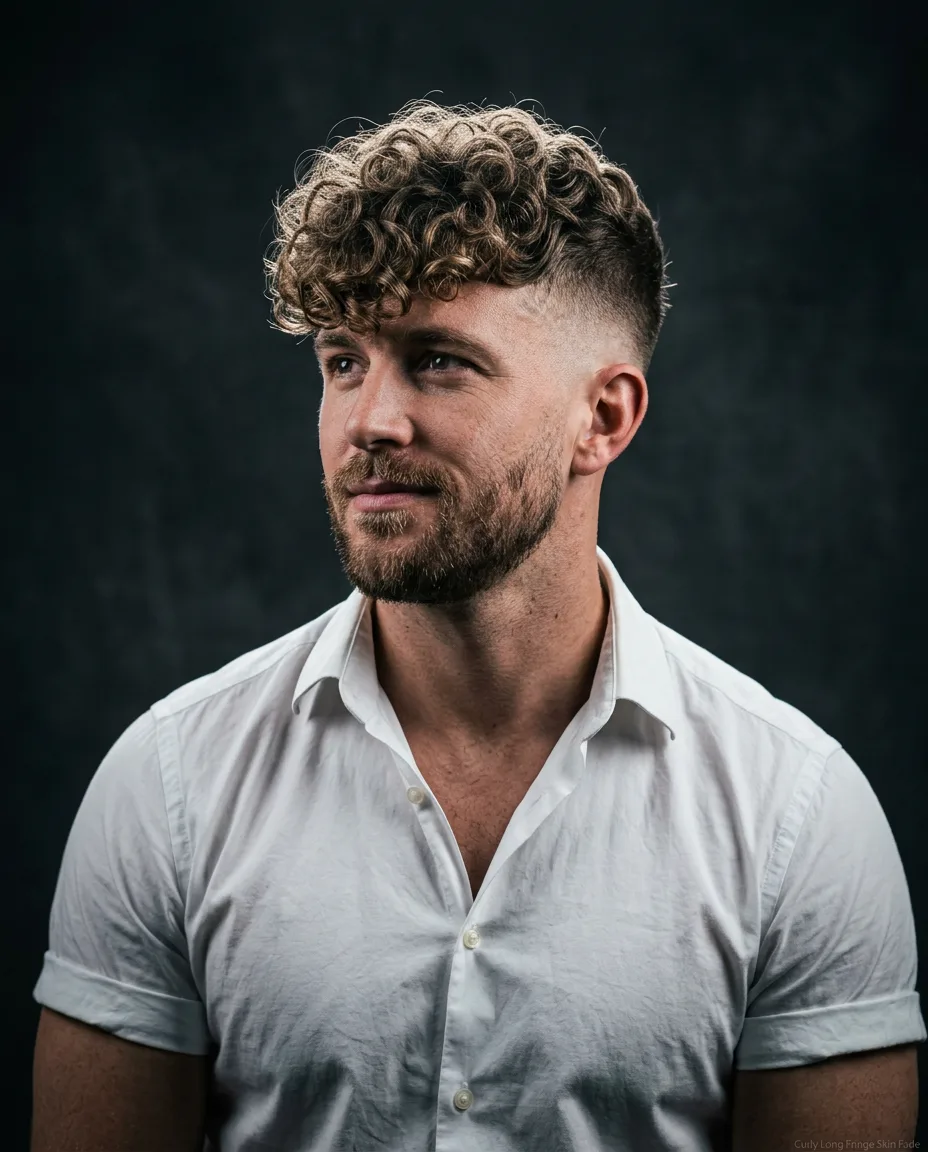
Pairing a skin fade with a long curly fringe creates real contrast, tight sides against loose volume up front and on top.
This combination photographs especially well, which is part of why it’s become one of the more shared styles on Pinterest lately.
Expect a touch-up every 2 to 3 weeks to keep the fade line sharp against the curl.
Settle one thing before the clippers start: how far up the fade should travel. On curly hair a skin fade that climbs above the temple leaves a visible band of scalp between the shaved section and the point where curl density actually begins, and that gap reads as a mistake rather than a design choice. Keeping the fade lower usually avoids it entirely.
Curly Long Fringe Undercut
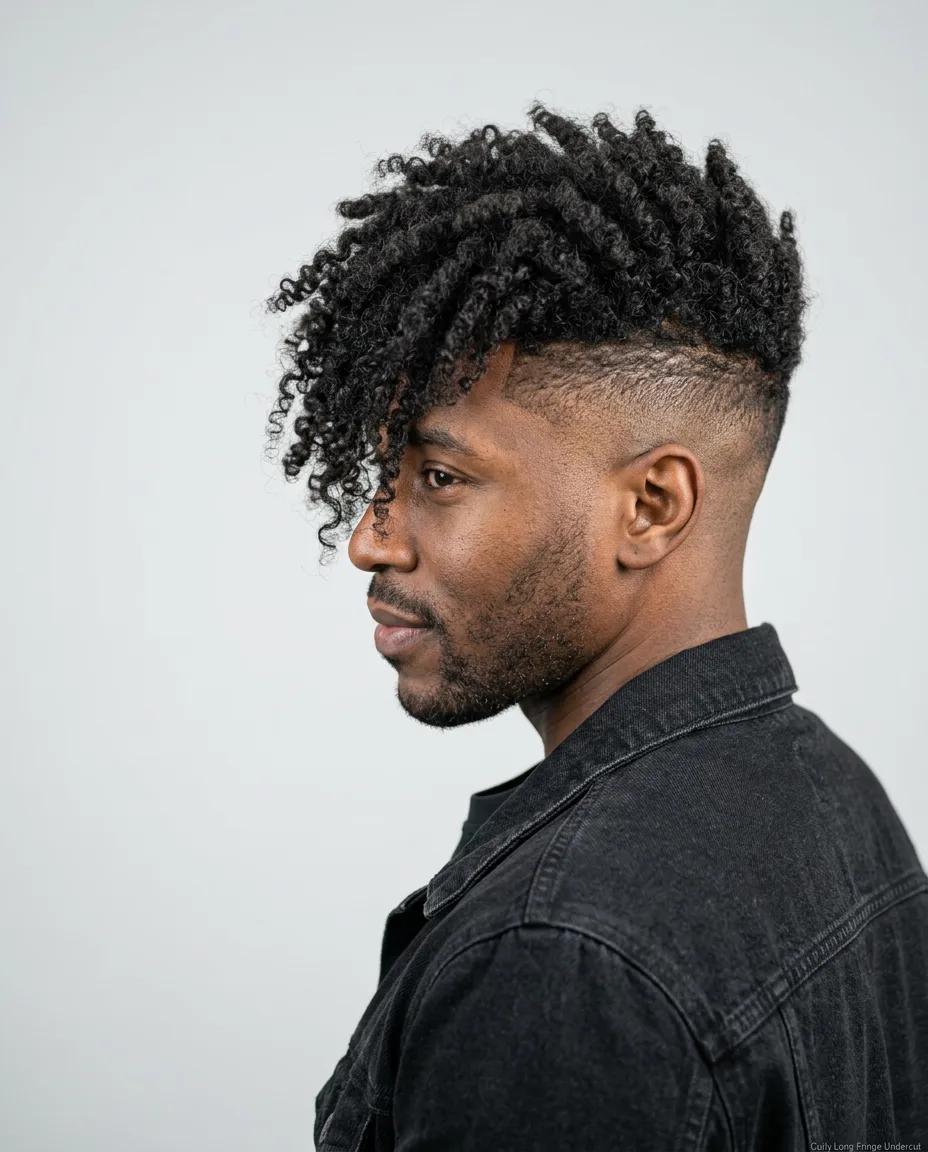
An undercut gives the fringe even more room to grow, sometimes past 5 inches, without the sides competing for visual attention.
This is the version guys pick when they’re actively growing their hair out and want the sides to stay manageable in the meantime.
Styling takes a bit longer here, closer to 6 minutes with product worked through damp curls.
The grow-out is the honest trade-off. An undercut has no gradient to soften it, so once the sides reach about half an inch the step between lengths is obvious in profile. Most guys running this version either commit to a three-week trim or accept a scruffier month in the middle of growing everything out.
Curly Long Fringe Taper Fade
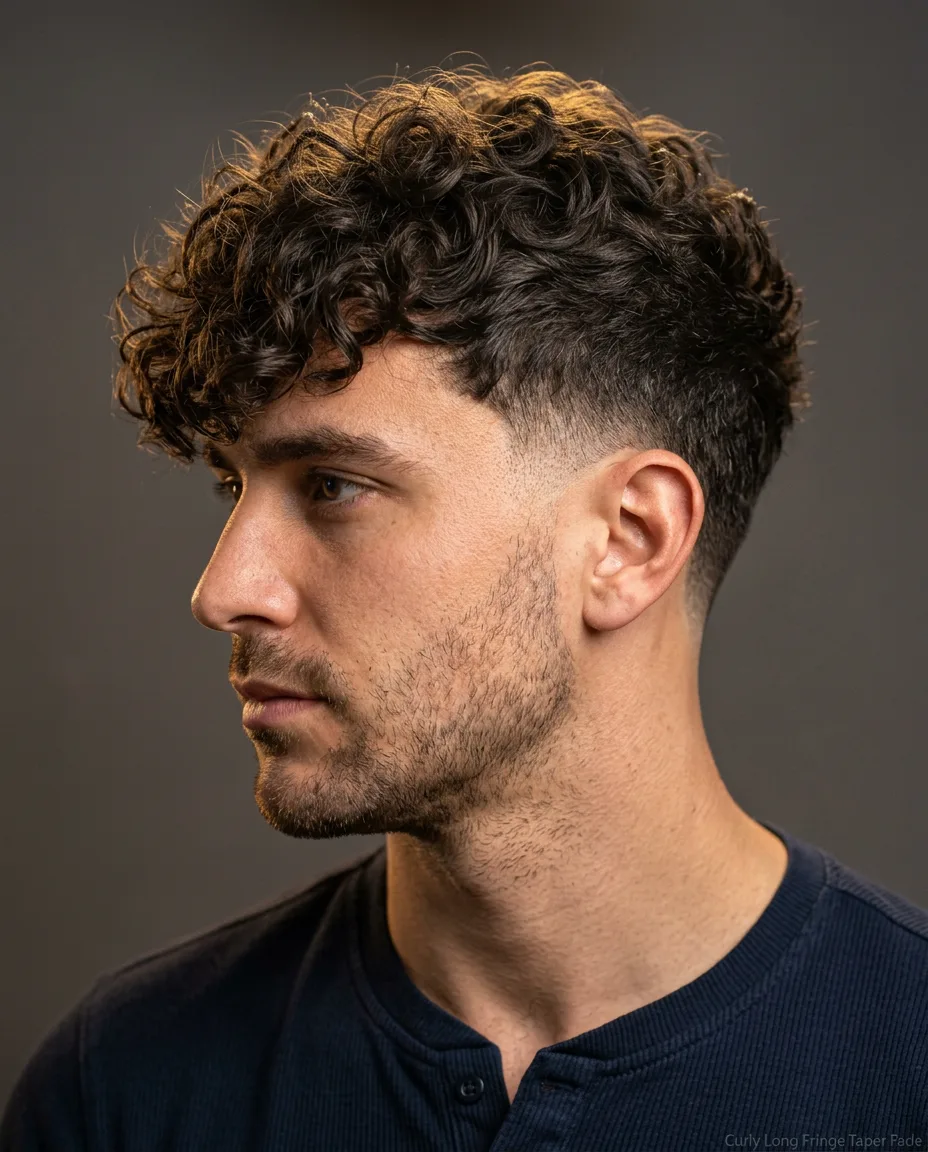
Taper fades are the lower-maintenance choice compared to a skin fade, growing out gradually rather than needing a hard line refreshed constantly.
This is usually the safer recommendation for guys trying this style for the first time.
Appointments can stretch to 5 weeks without the cut looking overgrown or messy.
It also suits an office better than the skin fade does. The taper keeps the sides short without the bare-skin contrast that announces itself, so the fringe stays the only part anyone actually notices. That makes it the version worth asking for if you want length up front without the haircut doing the talking.
Curly Long Fringe Hard Part
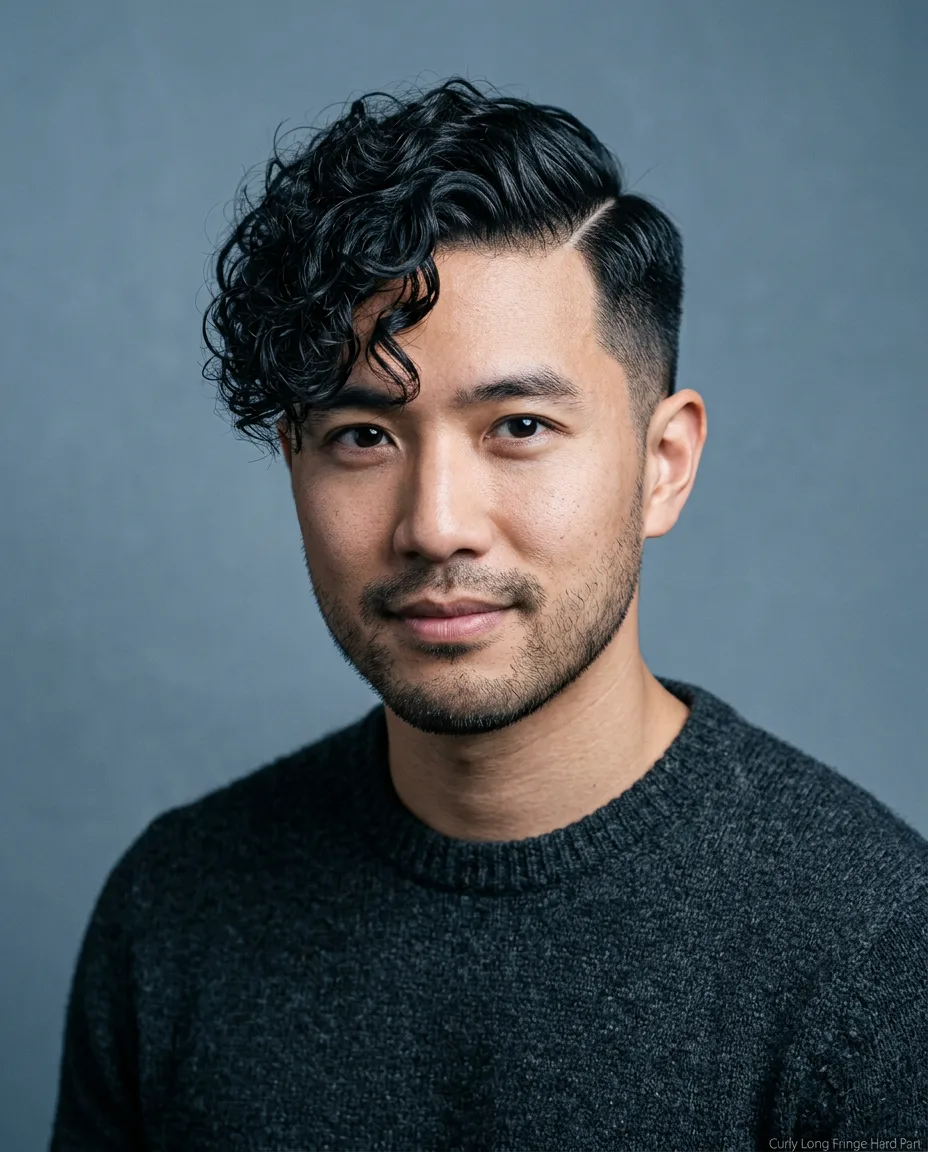
A shaved part line adds a sharp, deliberate detail against the softer curl texture of the fringe itself.
It’s a striking combination visually, but it does need refreshing every 10 to 14 days to stay clean.
Skip this add-on if regular touch-up visits aren’t realistic with your schedule.
Ask for the line to be cut deeper than a barber would take it on straight hair. Curls close over a shallow part within a couple of days, and a half-visible hard part reads as an accident rather than a choice. The line also needs to sit where the curl naturally wants to separate, not where a comb says it should.
Curly Long Fringe Textured

Texturizing the fringe removes some bulk from denser curl types, keeping the fall of the fringe lighter and easier to style.
Without this step, thicker curl patterns can end up looking heavier and less defined than intended.
Ask for point cutting specifically if your barber isn’t already familiar with texturizing curly hair.
Point-cutting and thinning shears are not the same tool, and the difference matters on curls. Thinning shears remove density at the mid-length, which pushes shortened strands out through the longer ones and creates frizz rather than movement. Point-cutting only breaks the blunt ends, so the curl keeps its weight and the fringe still falls forward properly.