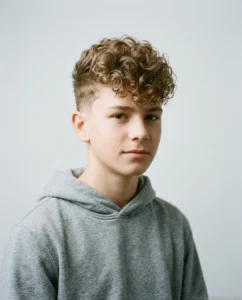
1. The Classic Short Drop Fade
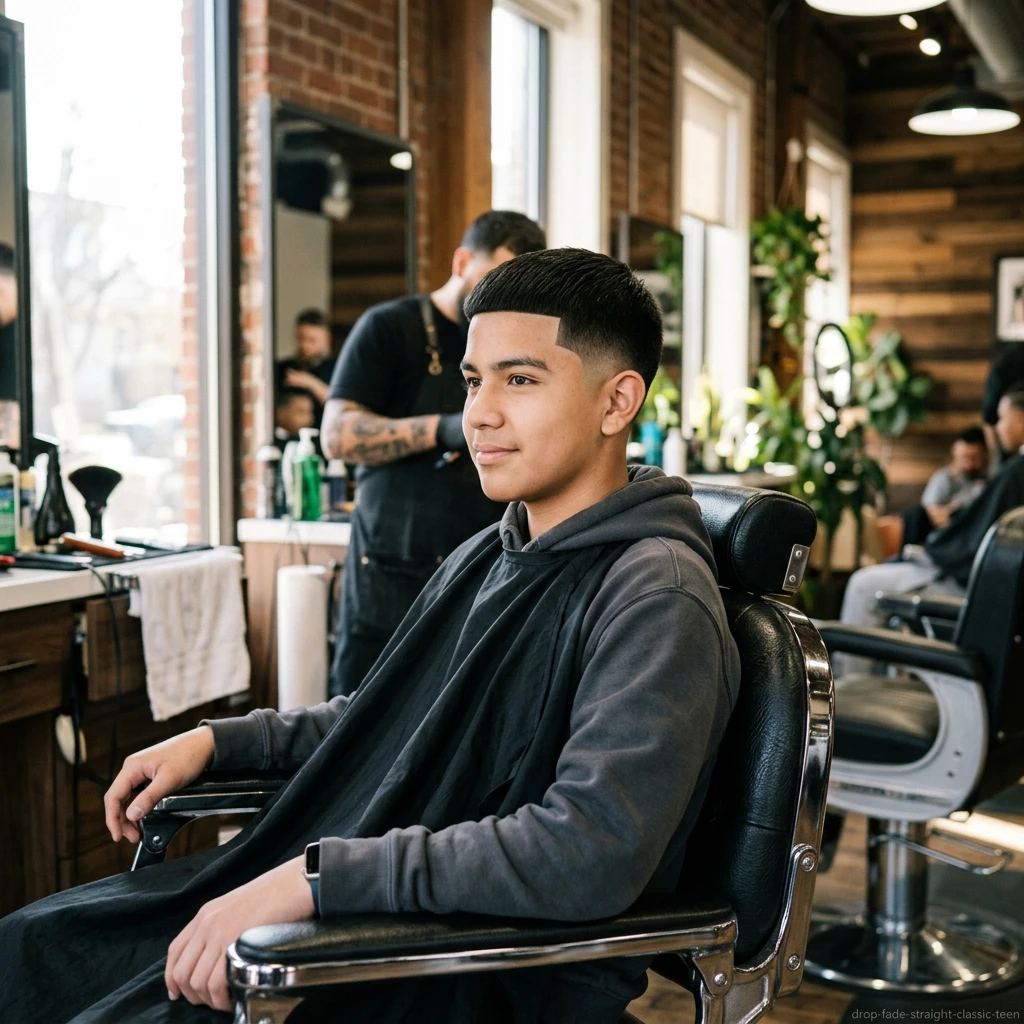
The classic drop fade is the starting point for a reason. It follows the natural curve of the ear, sweeping down behind it instead of cutting straight across like a standard fade. On straight hair, that curve shows up cleanly — every gradient from full length on top to skin at the bottom is visible without any frizz or texture getting in the way. Straight hair is actually the best hair type for this cut, though most guides don’t say that outright.
The drop in the fade usually hits somewhere between the mid and lower ear level, which leaves enough weight on the sides to balance a short top. Ask for a 1.5 or 2 guard on the sides blending down to a zero — that’s a pretty safe starting point if your teen has never had a fade before. Too aggressive on the first try is harder to fix than going slightly conservative.
2. Drop Fade with a Textured Crop
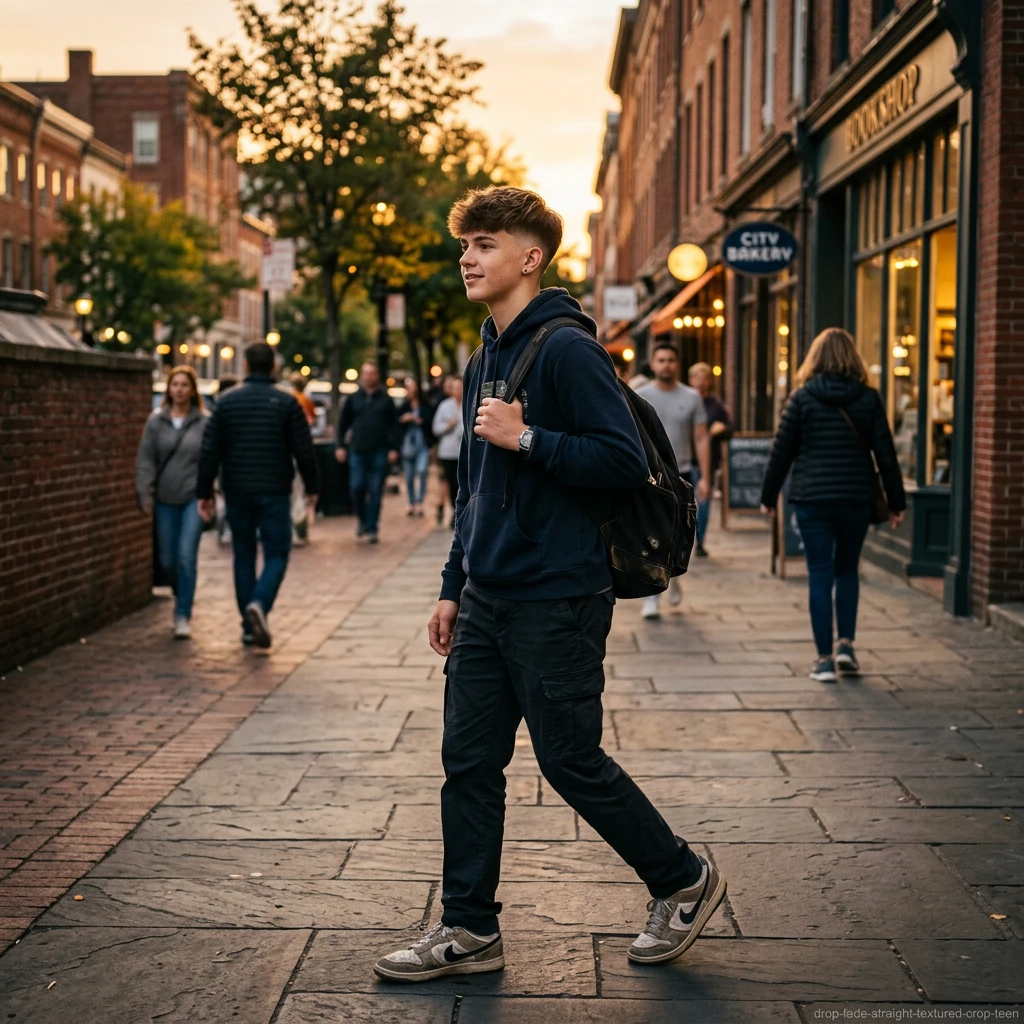
Pair a drop fade with a textured crop on top and you’ve got one of the most popular teen cuts right now. The crop keeps the length short — usually 1.5 to 2 inches on top — while the texture stops it from looking flat. Straight hair holds a textured crop well because it doesn’t collapse the way fine or thin hair sometimes does. Run a small amount of matte clay through it after washing and the pieces separate without looking like you tried too hard.
The drop fade underneath does most of the heavy lifting here. It makes the crop look intentional rather than just short. Without a clean fade, a cropped top on a teen can read as an unfinished haircut. With the drop fade, the whole thing comes together in about 20 minutes at the chair — which is genuinely one of the faster cuts to maintain.
3. Drop Fade with a Slick Back
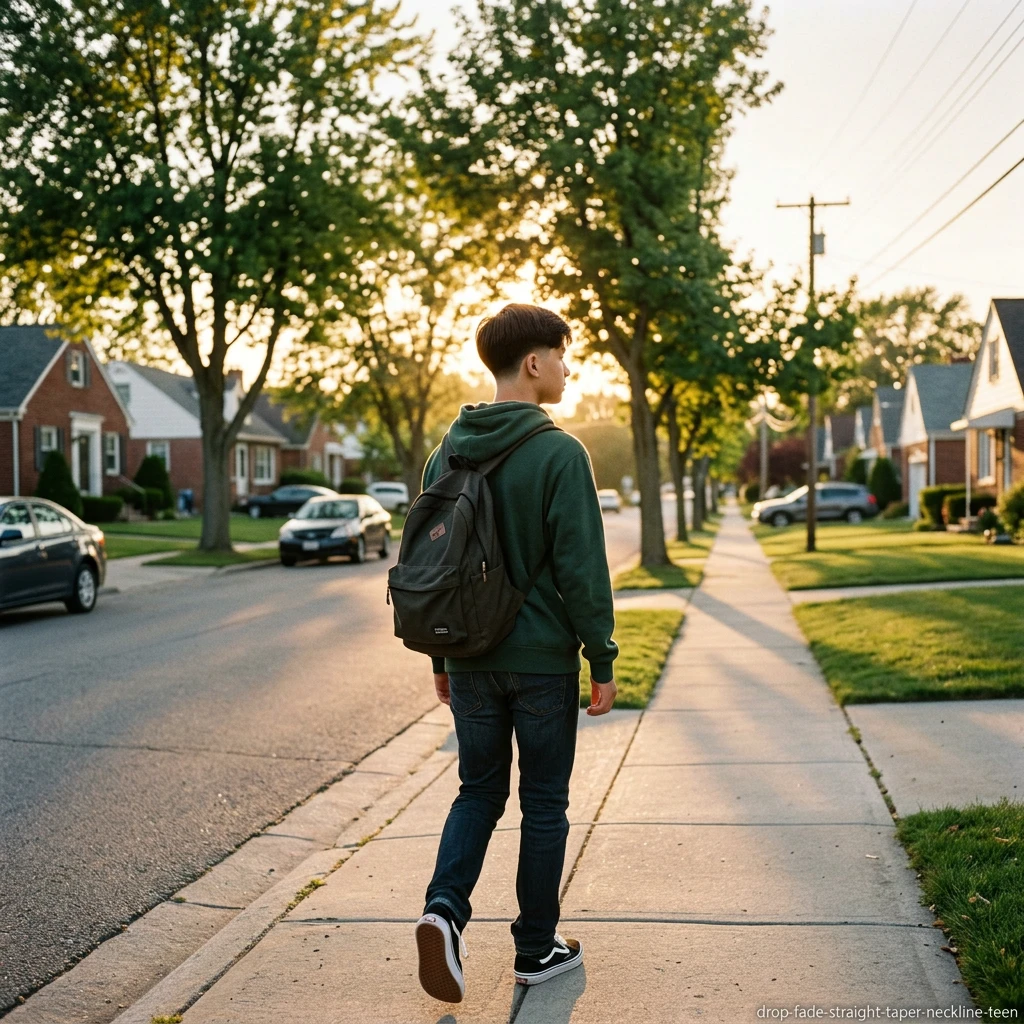
Straight hair and a slick back were made for each other. The hair lays flat naturally, so you’re not fighting the texture to get it to stay swept back — a light pomade or medium-hold gel is all it takes. Add a drop fade underneath and the whole thing reads as polished without being overdone. It’s one of those cuts that works equally well on a school day or at a family event, which matters more than people admit.
Length-wise, you need at least 3 to 4 inches on top for a slick back to actually stay put. Any shorter and it won’t have the weight to stay swept. The drop fade should sit fairly low on this one — a high fade competes with the length on top, while a lower drop keeps the proportion balanced. If your teen already has longer straight hair on top, this is the cut to ask for at the next appointment.
4. Drop Fade with a Comb Over

The comb over drop fade has been popular for a few years and it’s not going anywhere. Straight hair makes this style easier to execute than most other hair types — the hair lies flat, holds a side part cleanly, and doesn’t require any heat styling to get right. A hard part cut in by the barber sharpens the whole look by a noticeable amount, though it does require touching up every 3 to 4 weeks to stay clean.
There’s a version of this that’s very conservative and school-appropriate, and there’s a sharper version that pushes toward something more fashion-forward. The difference is mostly in the contrast — a high-skin fade under a comb over looks more aggressive, while a drop fade softens it. For teen boys, the drop fade version is the more versatile pick. It doesn’t read as trying too hard and it still looks put-together when the hair grows out slightly between cuts.
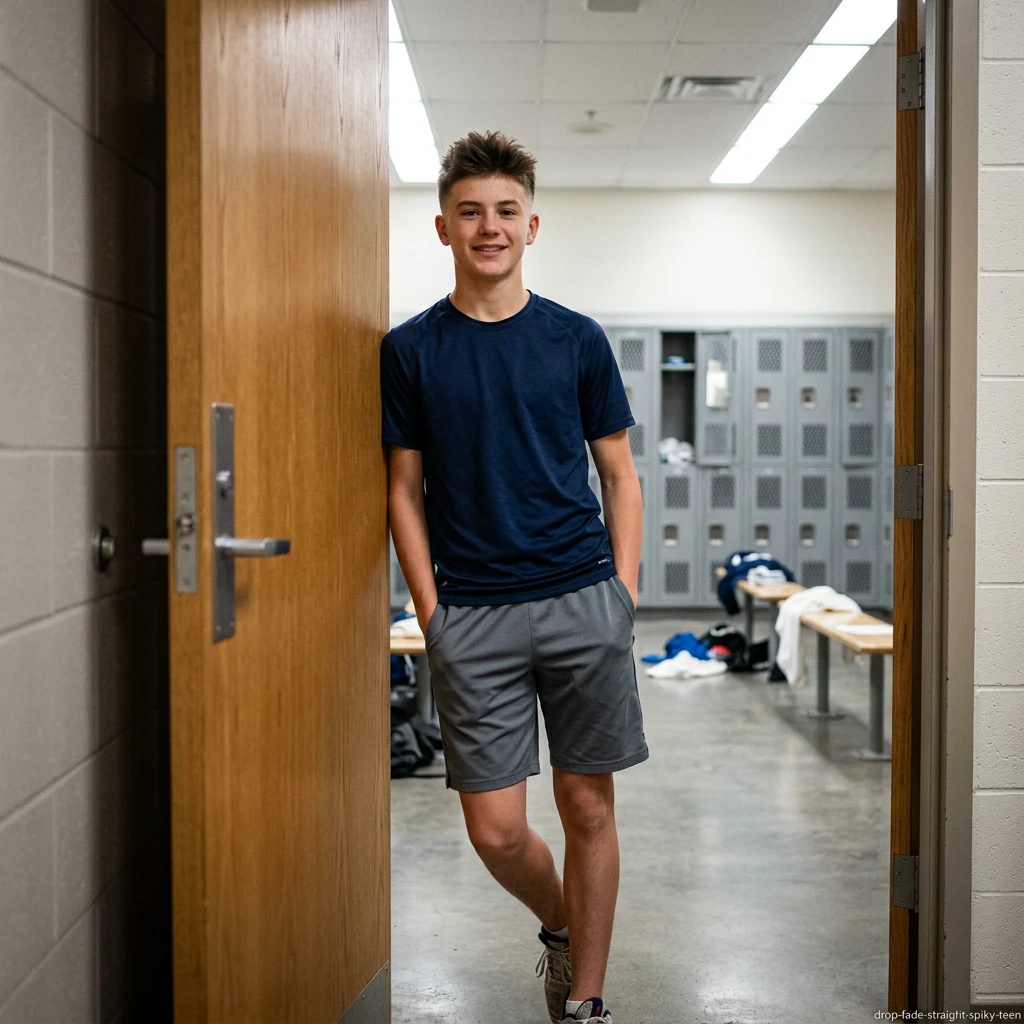
5. Drop Fade with a Spiky Top

Spiky hair on a drop fade looks better on straight hair than on any other texture. The spikes actually stand up without needing much product because straight hair doesn’t have natural curl pulling it back down. A small amount of firm-hold wax worked through the ends and pushed upward is enough. It takes maybe 90 seconds in the morning, which is about the right amount of effort to ask of most teenage boys.
The drop fade keeps the spiky top from looking too juvenile. Without a clean fade underneath, spiky hair can read as a 2005 throwback. The fade modernizes it. Keep the spikes relatively short — under an inch in height — and the whole thing stays on the right side of the trend line. Go too tall and it starts looking like a costume. The sweet spot is textured and slightly disheveled rather than perfectly upright.
6. Drop Fade with a Side-Swept Fringe
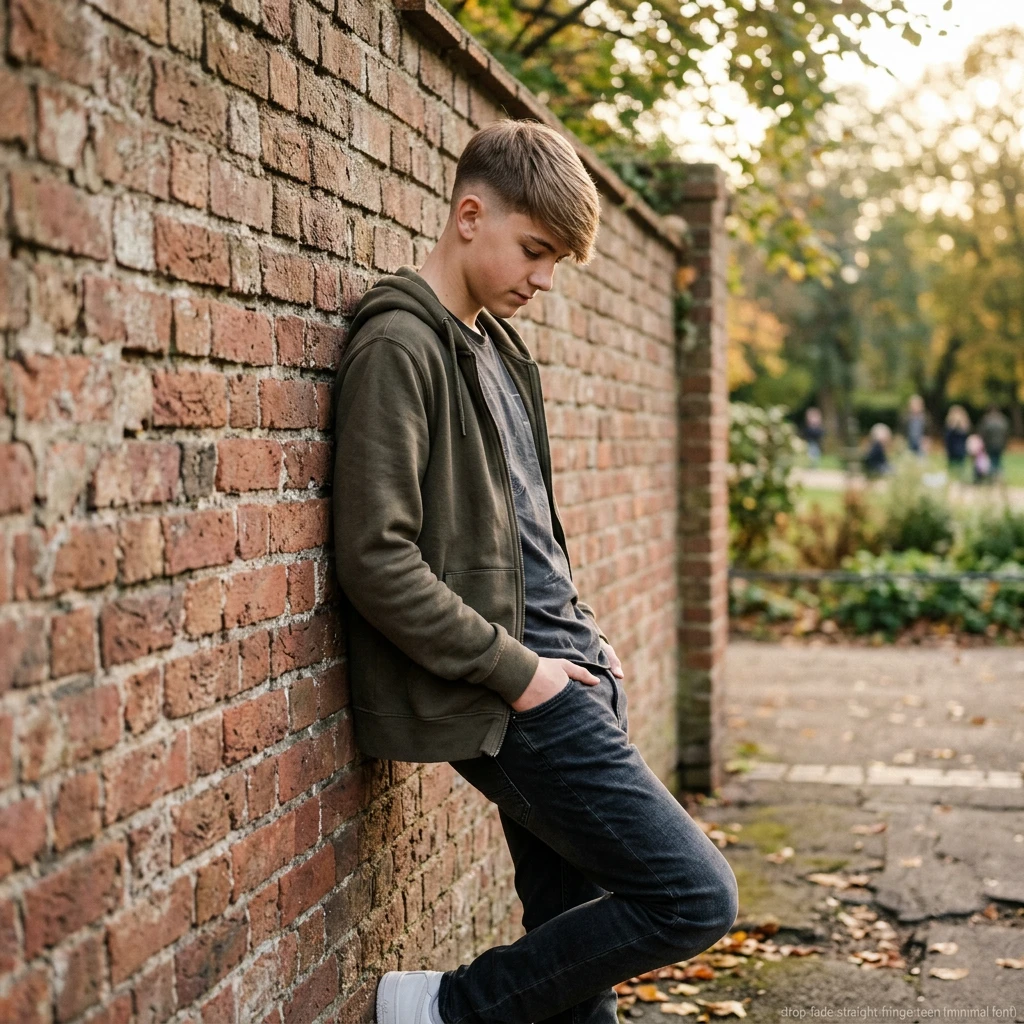
A side-swept fringe with a drop fade is one of those combinations that photographs well from almost every angle. The fringe adds some softness at the front while the fade gives structure on the sides and back. Straight hair moves well in a sweep — you’re not fighting curl or wave to get it to fall in one direction. Most of the time, it’ll stay swept to the side on its own after one pass with a comb while the hair is slightly damp.
The fringe should land somewhere around the eyebrow. Too long and it starts covering the face in a way that’s more emo than intentional. Too short and it loses the sweep entirely and just becomes a regular short cut with an uneven front. The drop fade underneath this style should sit relatively low — it lets the fringe be the focus without the sides competing for attention. This works especially well on teen boys with oval or square face shapes.
7. Drop Fade with a Crew Cut
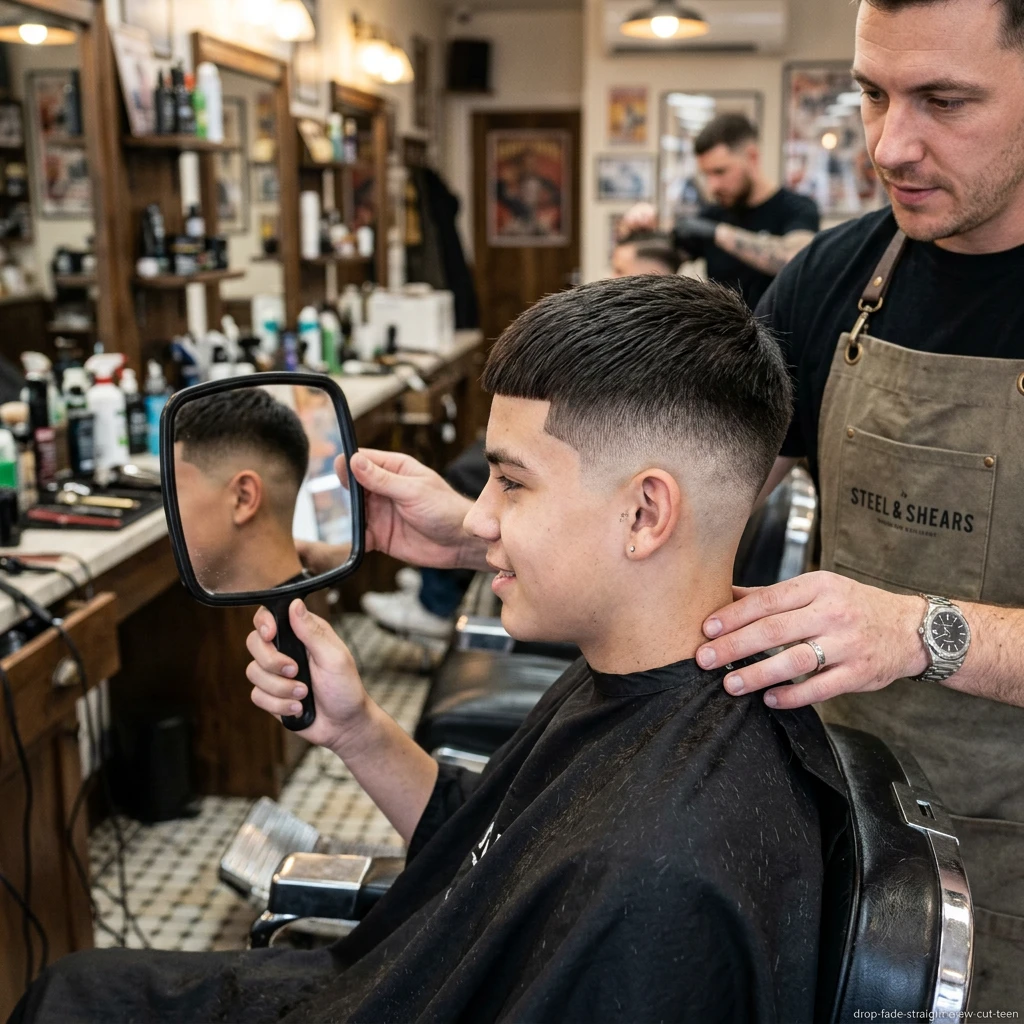
The crew cut drop fade is the lowest-maintenance option on this list. It’s short on top — usually a 3 or 4 guard across the crown — with slightly more length left at the front hairline. The drop fade underneath rounds everything out and gives it a modern edge that a standard crew cut doesn’t have. Straight hair makes the gradient on the sides look particularly sharp because there’s no texture to blur the lines between guards.
This is also one of the easier cuts to grow out without it looking awkward. The crew cut length on top grows predictably with straight hair, so there’s a longer window between barber visits before it starts losing its shape. Realistically, most teen boys can go 5 to 6 weeks between cuts with this style and still look intentional. If low maintenance is the goal, this is the honest answer.
8. Drop Fade with a Side Part
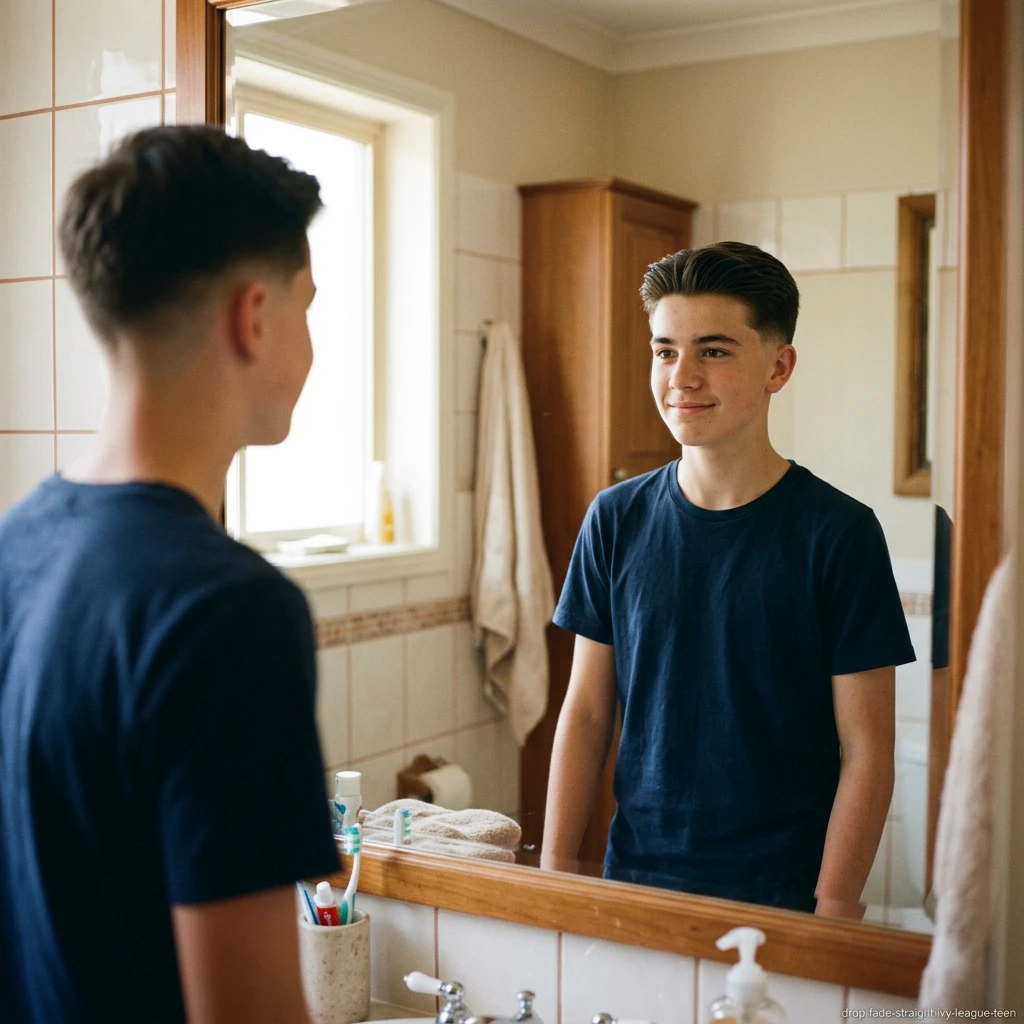
A side part on straight hair is clean in a way that other hair types just can’t replicate. The hair divides and stays divided. No flyaways, no curl fighting the part line, no need for product to hold it in place for more than a few hours. Combine that with a drop fade and you get a cut that reads as sharp and put-together without any obvious effort. That combination is worth more than most styling guides give it credit for.
The part can sit where it naturally wants to, or it can be cut in as a hard part. The natural part version is softer and more casual. The hard part version looks more intentional and holds up better through sports practice or a long school day. Both work with a drop fade. The difference comes down to how much upkeep the teen is realistically going to do — the natural part version is forgiving, the hard part version requires a touch-up every few weeks.
9. Drop Fade with an Ivy League
The ivy league is a crew cut that keeps a little more length at the front — enough to comb or push to one side. It’s a classic style but the drop fade version is genuinely more modern than it sounds. Straight hair handles the ivy league well because the extra length at the front lies flat and can be styled without much product. A light cream or low-hold pomade is all you need to keep it looking clean through the day.
This style has a wider range than most people expect. It’s clean enough for a school photo or a family event, but with a messier finish at the front it also works for everyday wear. The drop fade is what separates it from the standard ivy league. That arc behind the ear adds a contemporary element to what is otherwise a fairly traditional cut. For teen boys who want something that won’t raise an eyebrow at school but still looks current, this is a solid pick.
10. Drop Fade with a Faux Hawk
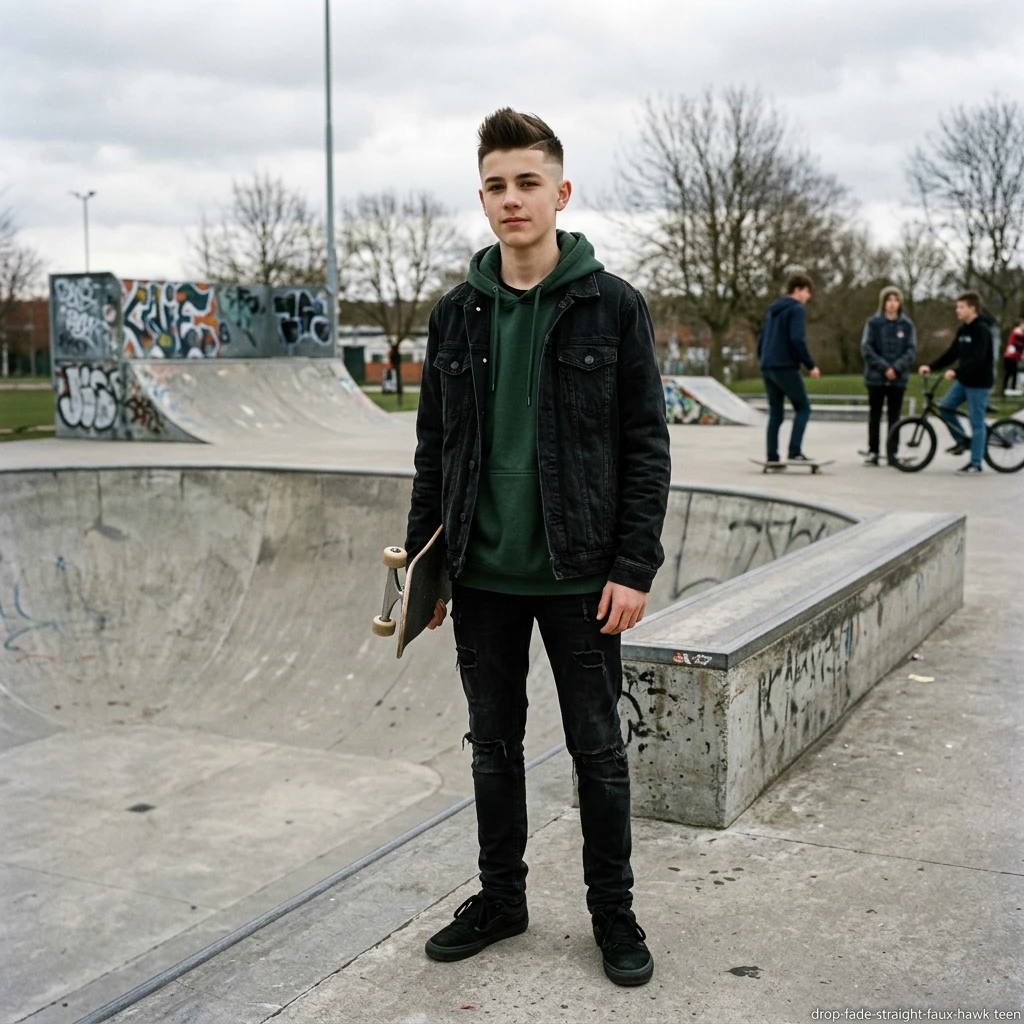
The faux hawk drop fade is one of the more expressive options on this list without going over the line into anything that’ll cause issues at school. Straight hair builds a faux hawk easily — you push the sides inward and the center up, and the hair cooperates without much resistance. The drop fade on the sides makes the whole shape pop, because the contrast between the tapered sides and the height at the center is more visible on straight hair than on textured or curly hair.
A firm-hold wax or paste is the right product for this. Gel works, but it creates that wet, crunchy look that most teens want to avoid. Wax lets you build height without the sheen. The faux hawk version with a drop fade is less aggressive than a faux hawk with a skin fade — the arc of the drop softens the sides and makes the overall shape less severe. It’s a style with some personality, but it’s not trying to make a statement about anything.
11. Drop Fade with an Edgar Cut
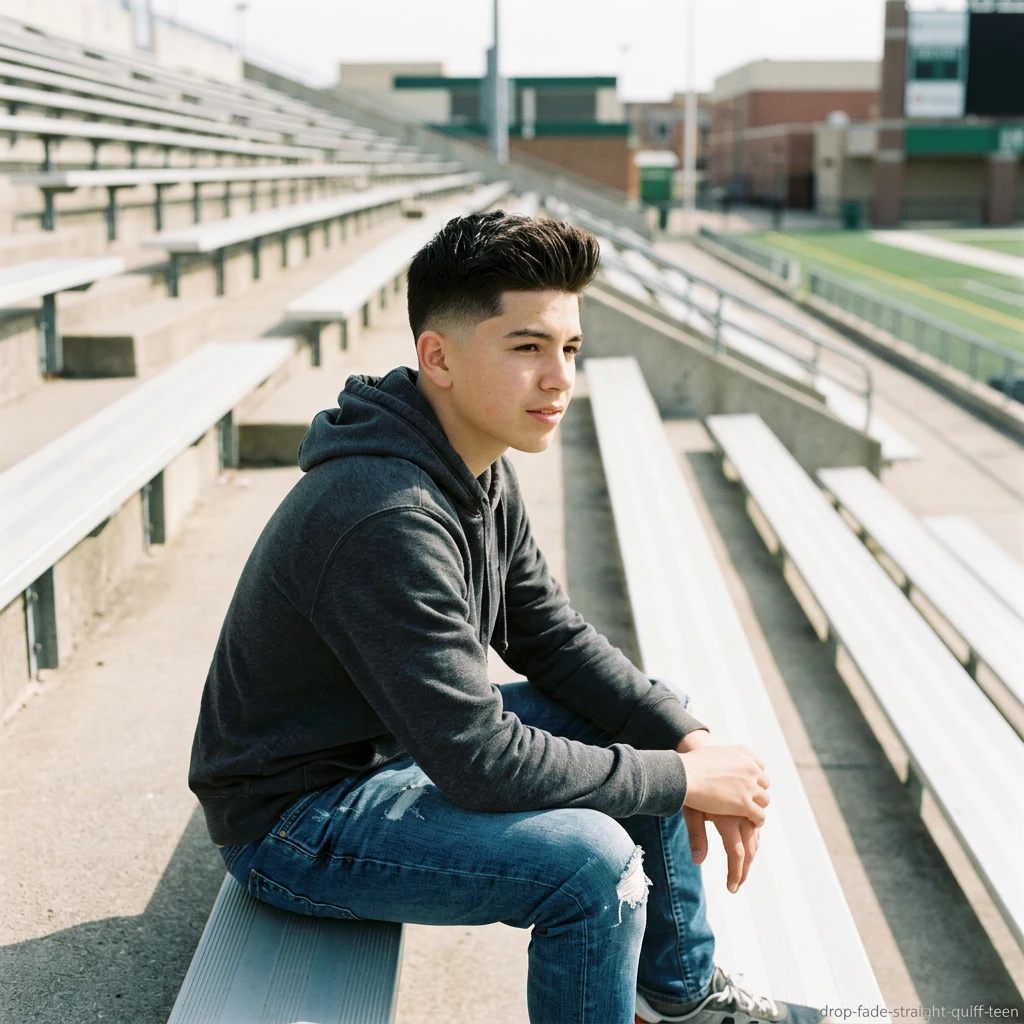
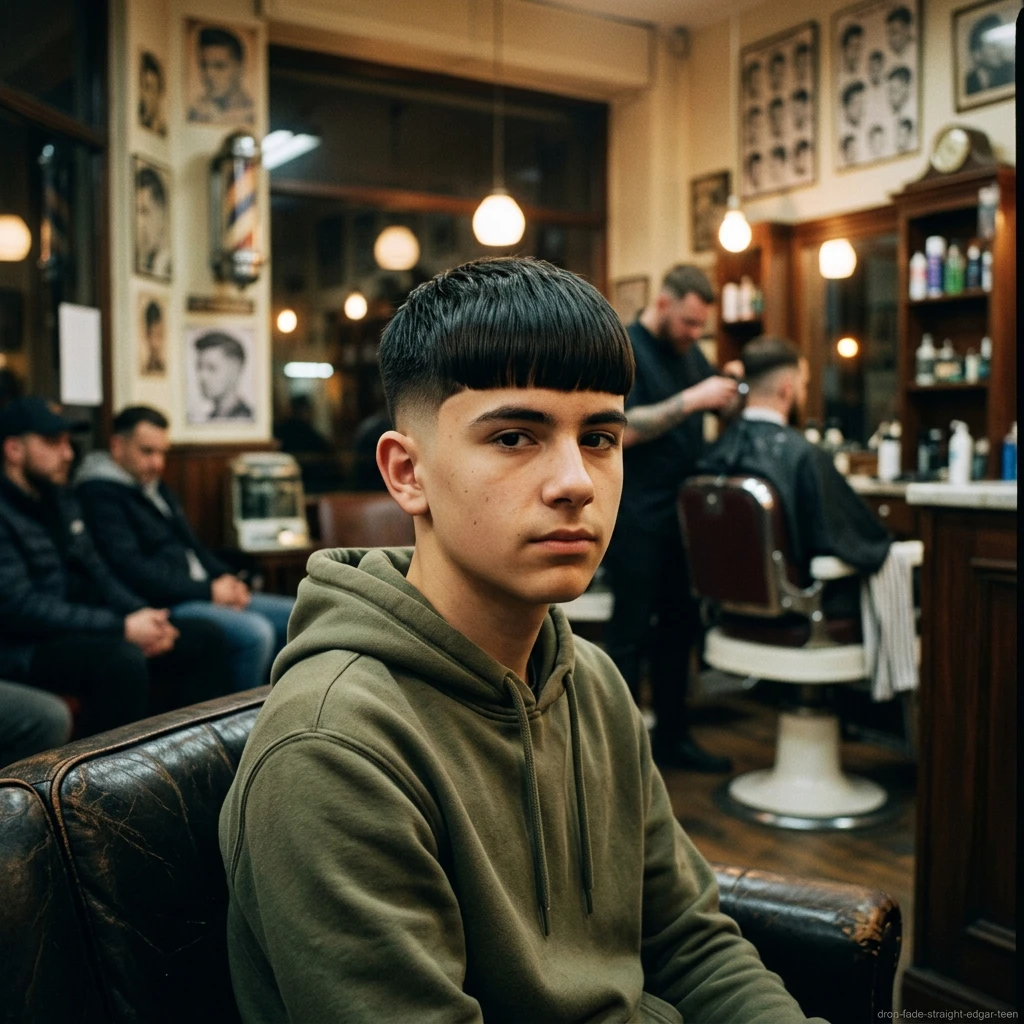
The edgar cut has a blunt, horizontal fringe across the forehead and a flat or slightly rounded top. It looks sharp on straight hair specifically — the blunt line across the front reads cleanly because there’s no curl pulling the ends in different directions. On anything but straight or slightly wavy hair, the edgar fringe tends to get uneven or start curling at the corners, which takes away from the whole effect. Straight hair holds it correctly.
Paired with a drop fade, the edgar becomes one of the more distinctive cuts on this list. It’s popular in certain regions and social circles, so it’s worth checking whether it fits the vibe before committing. The top is usually kept flat and short — under 2 inches — with the blunt fringe sitting at or just above the eyebrows. The drop fade underneath completes the shape and gives it that tapered finish that the edgar cut needs to work properly. A line-up at the hairline is non-negotiable with this style.
12. Drop Fade with a Tapered Neckline
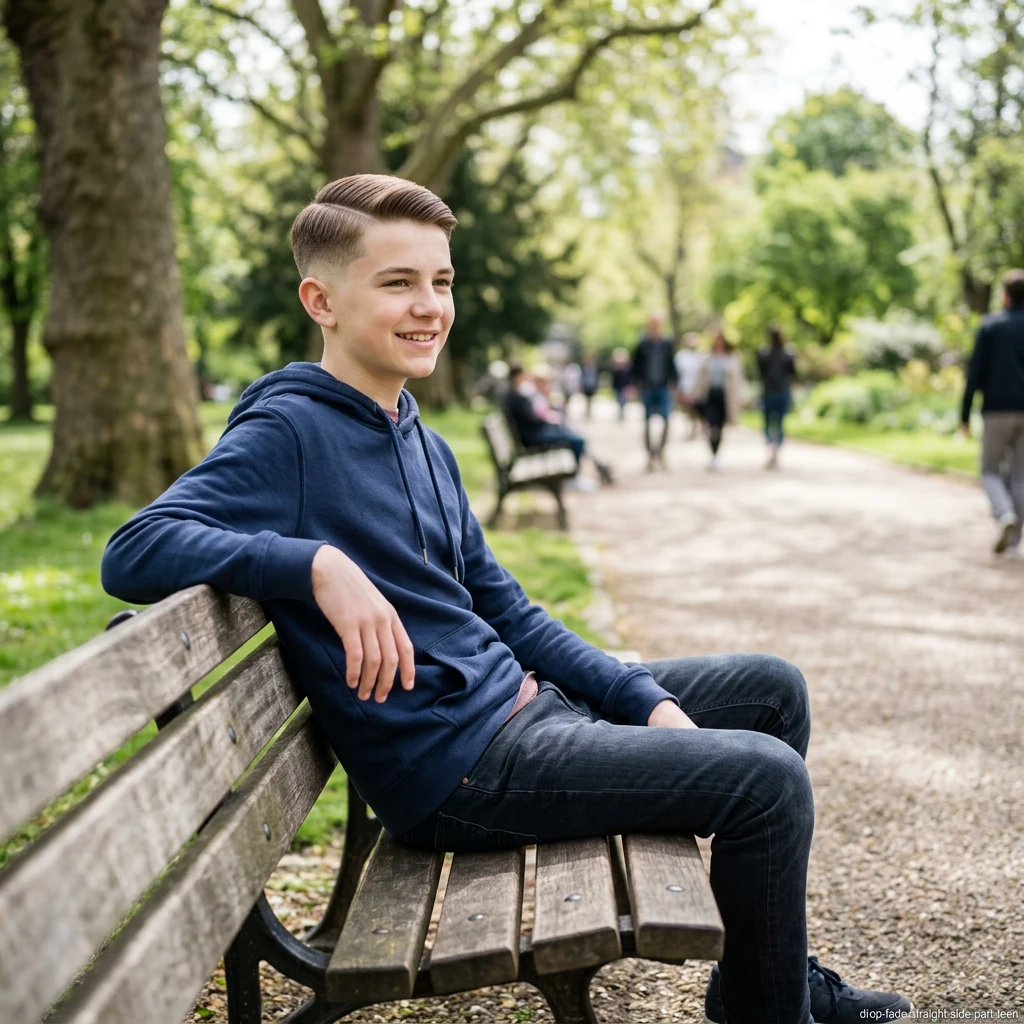
Adding a tapered neckline to a drop fade is a finishing detail that most people notice without being able to say exactly why. Instead of a hard square or blocked edge at the neckline, the hair tapers gradually down to the skin. It’s a slightly more refined finish that makes the back of the head look clean from every angle. On straight hair, this taper is clearly visible because the hair lies flat — there’s no texture softening or obscuring the edge.
This isn’t really a standalone style as much as it’s an upgrade to any of the cuts on this list. Request it in addition to whatever top style you choose — textured crop, slick back, comb over, or anything else. It adds maybe 5 minutes to the appointment and makes a genuine difference in how polished the cut looks, especially from behind. Any barber can do it, but you have to ask for it specifically because not everyone will include it as a default.
13. Drop Fade with a Quiff
A quiff is volume at the front of the head — hair pushed up and slightly back, with some height behind the hairline. It’s a more dramatic top than a slick back or comb over, and straight hair handles it better than you might expect because it holds volume without needing much heat or product. A blow dryer on medium heat while brushing the front section upward and back sets the quiff in about 2 minutes. Most teens are willing to put in that time when the result actually looks good.
The drop fade underneath a quiff creates a strong contrast between the volume on top and the tapered sides. That contrast is the whole point of the style. The fade should drop low enough to give a clear visual separation between the voluminous top and the clean sides — a fade that’s too subtle loses that effect. Straight hair is ideal here because it holds the lift without constant re-styling. Product-wise, a medium-hold pomade or styling cream with some volume-building properties works better than wax for this specific style.
14. Drop Fade with a Buzz Cut Top
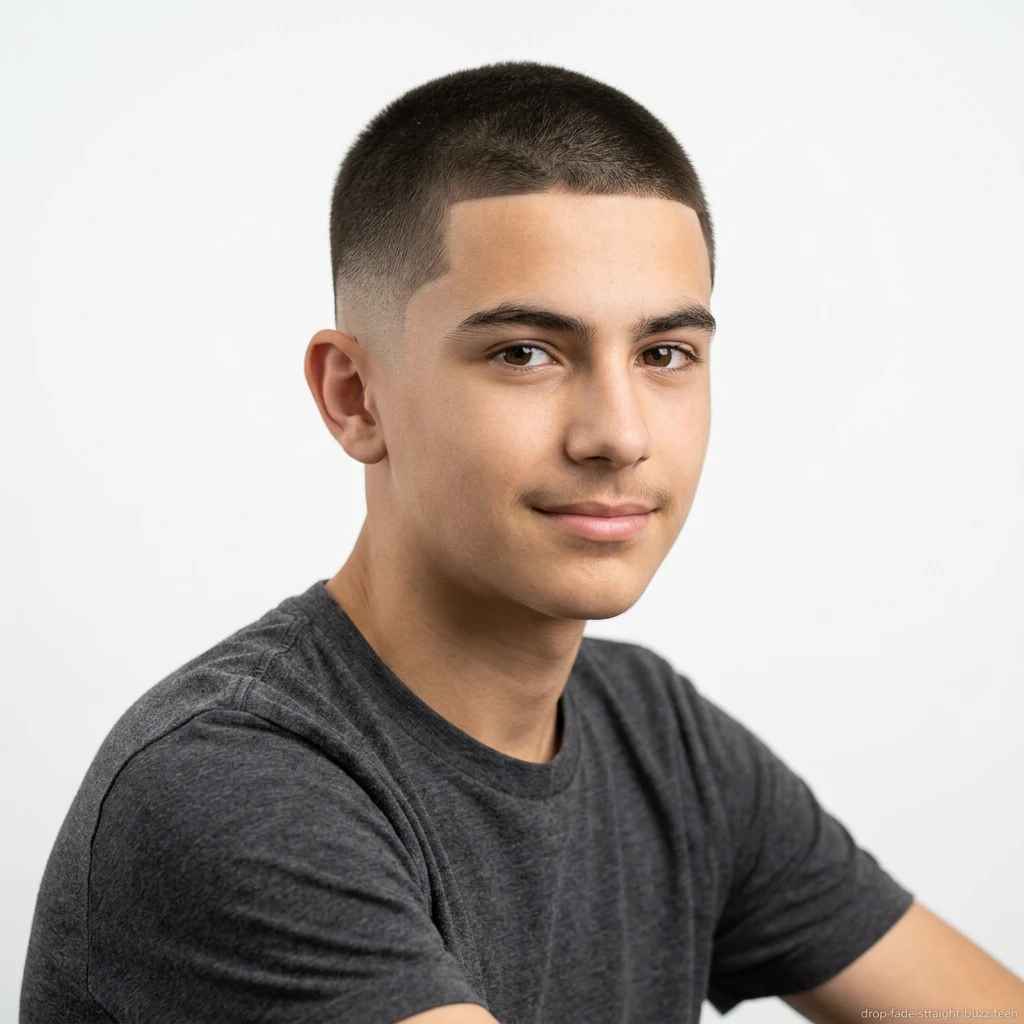
A buzz cut with a drop fade is the easiest cut on this list to maintain and probably the lowest-effort option a teen can choose while still looking like the cut was intentional. The top is kept uniform — usually a 3 or 4 guard — and the drop fade curves down behind the ear on the sides. On straight hair, the uniform buzz on top shows no texture variation, which means the fade on the sides is what gives the cut its shape and character. The cleaner the fade, the better the whole thing looks.
This is also one of the more athletic-friendly options. It’s practical in the summer, works under a helmet, and doesn’t require any product or styling time at all. The trade-off is that it grows out quickly and loses its sharpness faster than longer styles. Realistically, a buzz drop fade needs a touch-up every 2 to 3 weeks to stay tight. That’s more frequent than most other cuts on this list, so factor that in before committing. For teens who are in the barber chair regularly anyway, that’s a non-issue.