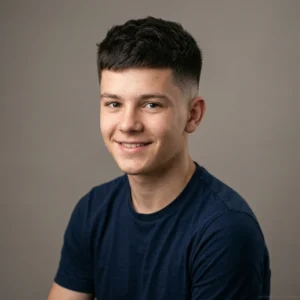
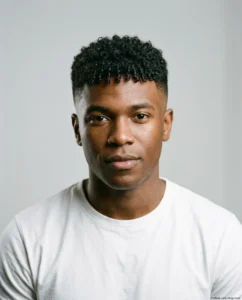
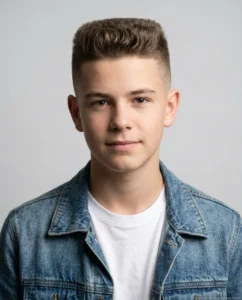
Wavy hair is probably the most forgiving texture when it comes to fades. It’s not as unpredictable as curly hair, not as rigid as straight hair — it sits somewhere in the middle, which means it adapts well to almost every fade variation without requiring a lot of product or effort to look intentional. The wave does most of the work for you.
The challenge is that most guides don’t distinguish between wavy and straight hair when recommending fades. They treat them the same. They’re not the same. Wavy hair has movement, natural volume, and a tendency to flow in directions that straight hair simply doesn’t. These 9 styles were chosen specifically because they work with that movement rather than against it.
1. Mid Fade with Wavy Textured Top

Start here if you’re not sure where to begin. The mid fade with a wavy textured top is the most wearable, most forgiving, most adaptable style on this list. The fade hits around the temples and ears — not too high, not too low — and the top is kept at around 2 to 3 inches with the waves left to do what they naturally do. You’re not fighting the texture. You’re just framing it.
Wavy hair at this length has enough weight to sit without looking puffy, and enough movement to add visual interest without needing constant restyling. A small amount of sea salt spray on damp hair, scrunched and air-dried, brings out the wave pattern and adds a bit of grip. That’s genuinely all most men need for this style. Morning routine under 3 minutes.
2. Skin Fade with Wavy Side Part

The skin fade with a wavy side part is one of those combinations that looks considerably more put-together than the effort required to maintain it. The sides go all the way to skin — precise and clean — while the waves on top are combed to one side with a defined part. The natural movement of wavy hair makes the side part look full and textured rather than flat and stiff the way it sometimes does on straight hair.
This is a high-maintenance style in one specific way — the skin fade needs to be refreshed every 10 to 14 days or the sides start to look grown-out and the contrast disappears. Everything else is easy. The waves hold the side part naturally, a light-hold pomade keeps them in the right direction, and the whole thing takes about 2 minutes to style. Worth the barber visits if you want to look consistently sharp.
3. Low Fade with Natural Waves

The low fade is the most relaxed option on this list — and for a lot of men, that’s exactly what they’re looking for. The graduation starts close to the natural hairline and stays subtle, which keeps the overall shape softer and more understated. The waves on top are left completely natural — no product, no reshaping, just the hair doing what it does.
This works especially well for men who have naturally strong wave patterns that don’t need any encouragement. Type 2b and 2c waves in particular look excellent with a low fade because the movement on top reads as intentional without any intervention. It also grows out better than almost any other style on this list — the gradual graduation means the sides don’t look obviously grown-out after 3 or 4 weeks. Good for men on a budget who can’t make it to the barber every 2 weeks.
4. High Fade with Wavy Slick Back

This is the boldest style on the list and it earns that status. The high fade cuts aggressively tight from just above the temples all the way up, leaving the sides almost bare. The wavy hair on top — kept at 3 to 5 inches — is slicked straight back with pomade, the waves creating ridges and texture in the slicked surface that a straight-haired man simply can’t replicate. It looks expensive. It looks intentional. It gets noticed.
Wavy hair is actually better suited to the slick back than straight hair for one reason — the waves create natural grip. Straight hair tends to slip out of place over the course of a day. Wavy hair, once slicked back, tends to stay there with less product. A medium-hold pomade with shine worked through damp hair and combed straight back is the standard approach. Let it air dry for the most natural-looking finish.
5. Drop Fade with Wavy Fringe

The drop fade curves down behind the ear before tapering into the neckline — softer than a standard fade, more relaxed in overall feel. Paired with a wavy fringe pushed forward over the forehead, you get a look that’s casual without being sloppy, stylish without being try-hard. It’s been everywhere on social media for the past 18 months and it’s not hard to see why.
Wavy hair is the ideal texture for this fringe. The waves give the fringe weight and movement, so it drapes forward naturally rather than springing back up like straight hair sometimes does. You don’t need much — a light sea salt spray on damp hair, pushed forward with your fingers, and left to air dry gives you exactly the right amount of casual texture. Avoid blow-drying the fringe — heat lifts the roots and pushes the fringe back, which defeats the whole point.
6. Taper Fade with Wavy Crop

The taper fade with a wavy crop is the most low-maintenance combination on this list. The taper is gradual — starting close to the hairline and fading slowly up the sides — which keeps the overall shape conservative and the growing-out process graceful. The top is kept short, around 1.5 to 2.5 inches, with the waves left to coil and move naturally at that length.
At 2 inches, wavy hair sits close to the head but still has enough length for the wave pattern to show. It doesn’t need product. It doesn’t need styling. You wash it, maybe run your fingers through it, and it looks fine. That might sound too simple, but a surprising number of men want exactly that — a cut that looks deliberate without requiring any work. The taper fade wavy crop delivers that consistently.
7. Temple Fade with Wavy Comb Over

The temple fade targets the area around the temples and forehead hairline specifically, leaving the sides relatively full while creating definition right where the hair meets the face. The wavy comb over on top sweeps the waves to one side in a natural, relaxed arc — less structured than a hard side part, more movement than a slick back. It’s the kind of style that works at a job interview and at a bar on the same day.
Wavy hair handles the comb over better than most people expect. The waves create natural direction — they already want to flow somewhere. All you’re doing is encouraging them to flow to one side consistently. A light-hold cream or pomade worked through and finger-combed to one side is enough for most wave patterns. The style settles and looks more natural after an hour or two than it does immediately after styling.
8. Mid Fade with Wavy Quiff

The wavy quiff is one of those styles that photographs well, wears well, and works across a surprisingly wide range of contexts. The mid fade keeps the sides defined from the temples down, and the wavy hair on top — 3 to 4 inches — is pushed upward and slightly forward into a full, rounded quiff shape. The waves add volume and texture to the quiff that straight hair can’t produce without a lot of product and effort.
Getting the shape right requires a blow dryer and a round brush, or at minimum a diffuser. Air drying leaves the waves lying flat and the quiff shape collapses. Blow dry the roots upward on medium heat, shaping with a round brush as you go, until the hair is about 80% dry. Then let it finish air drying. Finishing with a light-hold matte clay adds definition without weighing the waves down or making the quiff look stiff.
9. Skin Fade with Wavy Pompadour

The pompadour on wavy hair is a different animal from the pompadour on straight hair. Straight hair gives you a smooth, uniform sweep. Wavy hair gives you ridges, movement, visible texture — a shape that looks alive rather than sculpted. The skin fade underneath keeps the sides razor-clean, which throws all the attention upward to the wavy volume on top. It’s dramatic without being costume-y.
You need at least 4 inches on top for this to work — ideally 4 to 5. The pompadour requires length to build the upward sweep, and wavy hair needs slightly more length than straight hair because the wave reduces the apparent length. A medium-hold pomade with some shine, worked through damp hair and combed back with a round brush while blow-drying on medium heat, gives the most volume and the cleanest shape. The waves will show through the pomade finish and that’s exactly what you want.
Final Thoughts
Wavy hair gives you a natural advantage with fades that most men don’t fully use. The movement, the volume, the way waves catch light and create texture without product — all of that works in your favour. The styles on this list go from genuinely zero-effort (the low fade with natural waves, the taper fade wavy crop) to styles that need a few minutes each morning (the pompadour, the quiff, the slick back). Pick the one that fits your actual life, not just the one that looks best in a photo.
Save your favourites to Pinterest and bring a reference photo to your next appointment. Telling your barber you have wavy hair and showing them what you want is the fastest way to walk out with exactly the right cut.