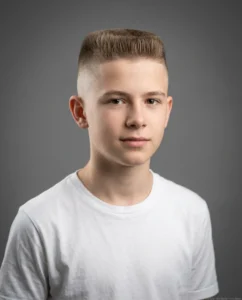
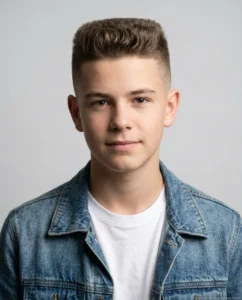
Thin hair gets bad advice more than almost any other hair type. Go longer to add weight. Avoid short cuts. Use volumizing products. Some of that is true some of the time, but the broader picture is more straightforward: the right cut matters far more than any product you put in afterward. And the right cut for thin hair, more often than not, involves a low fade.
Here’s why barbers recommend it. A low fade removes length from the sides gradually, which reduces the visual contrast between the hair on top and the near-bare sides. That contrast is what makes thin hair look sparse — when there’s a hard line between full and empty, the eye goes straight to the empty. A low fade softens that line. The top looks denser by comparison, and the overall shape looks more proportional. These 10 cuts are what experienced barbers reach for when a client with thin hair sits in the chair and asks what actually works.
1. Low Fade with Buzz Cut

The buzz cut is the most honest cut on this list — it doesn’t try to disguise thin hair, it just makes the whole head uniformly short so the thinness stops being a variable. When every section of hair is the same length, there’s no contrast between dense and sparse areas, and sparse patches that were visible at longer lengths simply disappear into the overall texture. Paired with a low fade, the sides blend gradually into the buzz rather than dropping sharply, which gives the cut a finished, deliberate look rather than something you did yourself with clippers on a Sunday afternoon.
This works better than most men with thin hair expect. The objection is usually that going short will make thinning look more obvious — but that’s backwards. Length on thin hair emphasizes the gaps between strands. Short hair closes those gaps visually. The only real limitation is face shape: very long or very narrow faces benefit from a slightly longer top to balance the proportions, so a pure buzz is worth thinking through before committing. If that’s a concern, the crew cut or the Ivy League further down the list give you the same density benefits with a bit more length on top.
2. Low Fade with Thin Hair Side Part

A side part on thin hair works better at shorter lengths than most guides admit. The longer the hair on top, the more the thinness shows — strands separate, the scalp becomes visible through the part, and the comb-over effect starts looking like exactly what it is. At around 1.5 to 2 inches on the longer side, though, the hair has enough density relative to its length to hold a clean part without gapping. The low fade on the shorter side removes the bulk comparison that makes thin hair look even thinner, and the overall shape reads as neat and considered.
This cut suits men in their 30s and 40s particularly well — it’s a classic shape that ages well and reads as intentional at any setting from casual to professional. The styling is minimal: a light pomade or a low-hold cream combed through on damp hair, parted on the natural side, and left to dry. Avoid heavy products — they weigh thin hair down and make it look flat and greasy rather than styled. The fade needs touching up every 3 weeks, and the top can go a week or two longer before it starts losing the clean part definition.
3. Low Fade with Thin Hair Quiff

A quiff on thin hair sounds counterintuitive — you’d think it needs volume to work. But a short, tight quiff at around 2 to 2.5 inches actually creates the illusion of density because the hair is pushed forward and slightly upward, which reduces the surface area visible from the front and makes the strands appear closer together. The key word is short. A long quiff on thin hair deflates and separates. A short one stays compact and looks fuller than it has any right to.
Blow drying is your friend on this cut specifically. On thin hair, a quick 2-minute blow dry on low heat — lifting the front section upward and forward with a round brush or your fingers while drying — adds body that stays in place significantly better than air drying. A volumizing mousse applied to damp hair before blow drying amplifies this effect further. Finish with a light matte clay for hold without weight. The low fade keeps the sides tight enough that the modest volume on top reads as a real quiff rather than just hair that hasn’t been combed down yet.
4. Low Fade with Thin Hair French Crop

The French crop is one of the better-kept secrets for thin hair. The blunt fringe line across the forehead does something clever — it creates a visual boundary at the front that makes the hair above it look denser by contrast. On thin hair, a fringe that ends in a clean horizontal line draws the eye to the edge rather than to the scalp behind it. The result is a cut that reads as having more coverage than it actually does. Barbers who work with thin hair regularly tend to recommend this cut more than any other, and the fringe is exactly why.
The fringe length matters more on thin hair than on other types. Too long — past the mid-forehead — and thin hair starts to look wispy rather than blunt. The fringe should sit just at or slightly above the eyebrows for the density illusion to hold. No product is required on this cut for most men, which is a genuine advantage. The low skin fade underneath keeps the sides tight enough to frame the cropped top without exposing too much scalp at the temples. Touch up the fringe every 2 to 3 weeks — thin hair grows evenly but the blunt edge loses its precision quickly.
5. Low Fade with Thin Hair Crew Cut

The crew cut is probably the most consistently recommended cut for thin hair among barbers, and it earns that reputation. Short on the sides, slightly longer on top — usually around half an inch to an inch — with the top tapered slightly toward the front. At that length, thin hair looks intentionally short rather than sparse, and the low fade underneath blends the sides into the top so smoothly that the whole cut reads as one uniform shape rather than hair that’s doing its best against thin odds. It’s a very clean, very reliable option.
What makes the crew cut work specifically for thin hair is the length ratio. The top is short enough that individual strands don’t have room to separate and expose the scalp, but long enough to have a direction and a slight texture. The sides, faded down to almost nothing, remove all the comparison points that would make the top look thin by contrast. Maintenance is easy — every 3 to 4 weeks, no daily styling required, and on the days you want to look slightly more put together a small amount of matte clay through the top takes about 30 seconds.
6. Low Fade with Thin Hair Ivy League

The Ivy League is a crew cut with slightly more length at the front — enough to push forward or part to the side. On thin hair this extra length at the front is actually useful because it gives you the option to cover the hairline slightly, which is where thinning tends to show first on most men. At around 1.5 to 2 inches at the front tapering shorter toward the crown, the Ivy League sits in the exact right zone for thin hair — long enough to style, short enough to look dense. The low fade keeps the sides from competing with whatever coverage you have on top.
This cut also ages well as hairlines recede, which is worth thinking about if you’re already noticing some thinning at the temples. The front section can be pushed forward to cover the hairline partially, and the low fade blends the temples cleanly without drawing attention to where the hair starts and stops. A lightweight volumizing spray on damp hair, blow dried forward with the fingers, gives the front section enough body to hold a slight forward push all day. Avoid heavy pomades — they separate thin strands and defeat the whole purpose of the cut.
7. Low Fade with Thin Hair Slick Back

The slick back on thin hair is a more committed choice than the others on this list — it requires the right product, the right length, and a willingness to lean into a more polished, deliberately styled look. Done right, it works because slicking thin hair back flattens the strands against the scalp, which actually reduces the visibility of thinning by eliminating the air gaps between strands that make sparse hair look sparser. The hair reads as sleek rather than thin. The low fade underneath keeps the sides tight so the slicked top has enough contrast to look intentional.
Product selection is everything here. A light-hold gel or a water-based pomade — not a heavy oil-based product — applied to damp hair and combed straight back is the approach. Heavy products weigh thin hair down so much that it stops sitting against the scalp and starts clumping, which is the opposite of what you want. The cut needs at least 2.5 to 3 inches on top for the slick back to have enough length to reach the crown and lay flat. Shorter than that and the hair won’t reach back cleanly and will start flipping up at the front within an hour.
8. Low Fade with Thin Hair Comb Over

The comb over on thin hair is genuinely underrated when it’s done at the right length. Keep it short — around 1.5 to 2 inches on the longer side — and the comb-over reads as a clean, modern side part rather than a compensating move. The hair sweeps to one side naturally, the low fade keeps the shorter side tight, and the overall effect is a well-groomed, considered cut that suits thin hair better than most men realize. The mistake most people make is going too long on top, which is where the comb-over starts to look desperate rather than deliberate.
A light cream or a low-hold pomade combed through on damp hair is enough to direct thin hair to one side without weighing it down. Let it air dry in position or give it a quick blow dry in the direction you want it to fall. Thin hair actually holds a comb-over direction well once it dries because there’s less weight pulling it back to its natural fall. This cut suits men of most ages and works in most professional settings, which makes it one of the more practical options here for men who need a cut that covers multiple contexts without overthinking it.
9. Low Fade with Thin Hair Messy Top

A deliberately messy top on thin hair works surprisingly well at short lengths, and the reason is simple: texture hides thinness. When thin hair is combed flat or slicked down, every gap between strands is visible. When it’s pushed in different directions with a matte product, the strands cross over each other and create the visual impression of more coverage than actually exists. At around an inch to an inch and a half, pushed loosely upward and forward with the fingers and a small amount of clay, the top reads as textured rather than sparse. The low fade ties the whole thing together.
This is the lowest-maintenance cut on the list from a daily styling perspective. A tiny amount of matte clay — seriously, less than you think — worked through dry or slightly damp hair with the fingers, pushed roughly upward, takes about 45 seconds. That’s the entire routine. The matte finish is important: shine products on thin hair emphasize the scalp showing through, while matte products create a light-diffusing effect that makes the hair look denser. This works better on darker hair than on very light or grey hair, where the scalp contrast is higher, but it’s a solid option across most hair colors.
10. Low Fade with Thin Hair Textured Crop

The textured crop is the cut that barbers most consistently recommend for thin hair, and it’s on this list last but not because it’s the least effective — it’s the opposite. It gets the final spot because it’s the summary of everything that works for thin hair in one cut: short enough that thinness doesn’t show, textured enough that what hair exists looks deliberate and full, and paired with a low fade that frames the top without exposing the scalp at the sides. On a wide range of thinning patterns and hair types, this cut delivers a better result than almost anything else.
The crop works particularly well when the barber takes the time to point-cut the top section rather than bulk-cutting it straight across. That texturing at the ends is what gives thin hair its apparent fullness — each strand ends at a slightly different length, which prevents the hair from laying flat in one transparent sheet. At around an inch on top, the crop sits in the ideal zone for thin hair: short enough to hide thinning, long enough to show texture. No product needed on most days. On days you want the texture to read more clearly, a small amount of sea salt spray on dry hair does the job in about 10 seconds.